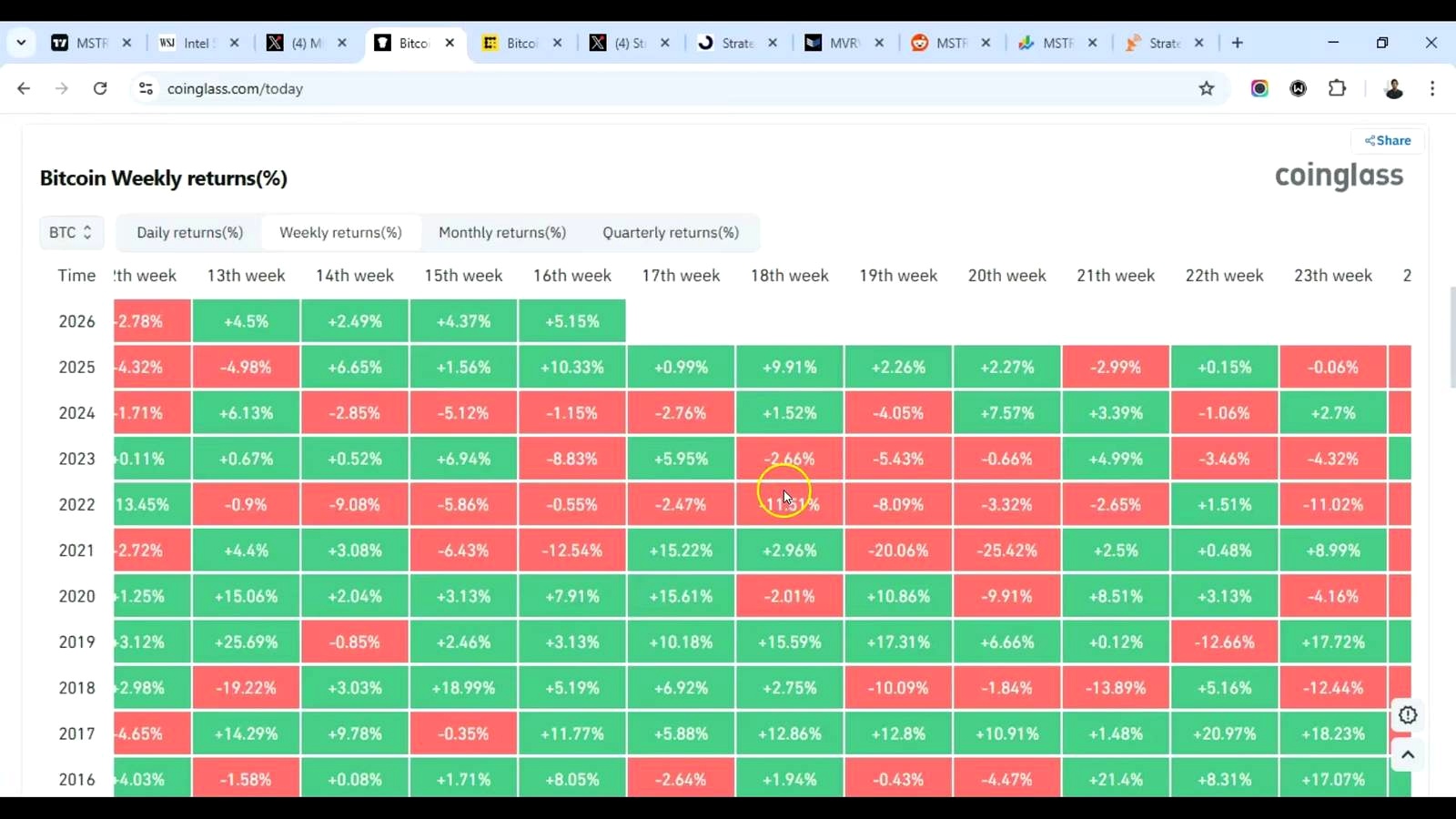
Bitcoin is back at what was described as the most important level on the chart: $74,000. At the same time, oil, inflation expectations, bond markets, stocks, gold, silver, and crypto are all reacting to a highly uncertain macro backdrop shaped by war, market dislocation, and debate over whether capital is rotating into Bitcoin and crypto.
The discussion centers on a market environment where Bitcoin has surged while gold and silver have fallen and stocks have wavered. That has raised a key question: whether this is the start of a broader capital rotation into Bitcoin and crypto, or simply another volatile phase in a still-divided market.
Bitcoin Returns to a Key Resistance Level

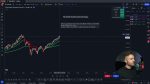
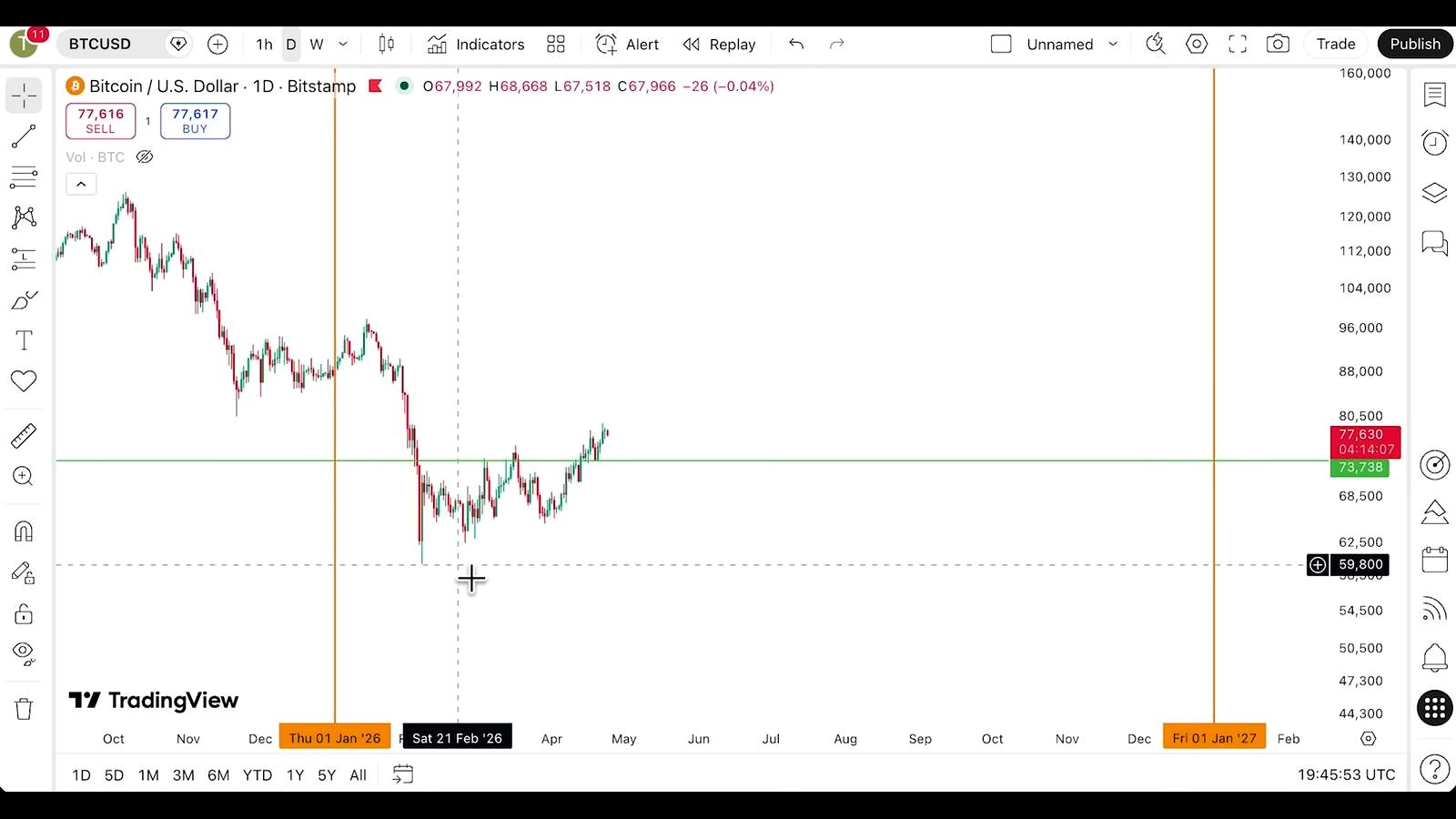
Bitcoin has pushed back to $74,000, a level repeatedly described as the key resistance on the chart. The move has drawn attention because it comes during a period of intense geopolitical uncertainty and unusual cross-market behavior.
Above $74,000, the tone becomes much more optimistic for many market participants. There is also a view that if Bitcoin breaks through this level, fear of missing out could accelerate the move.
- Bitcoin is back at $74,000 resistance
- That level is viewed as the most important level on the chart
- A break above it could shift sentiment sharply
- Some expect altcoins to react strongly if that breakout happens
Why $74,000 Matters
The $74,000 level is being tested as Bitcoin rises while much of the traditional flight-to-safety narrative looks mixed. Gold and silver have been down, stocks have wavered, and oil has remained central to the macro story.
That combination has made Bitcoin’s behavior stand out. Some participants see that as evidence of a rotation into Bitcoin, while others argue it is still a bear market rally in a highly speculative asset class.
War, Oil, and the Macro Backdrop

Much of the market conversation is being driven by oil and the effects of the war involving Iran. The closure of the strait and the resulting uncertainty around shipping, insurance, and control of the route have become major factors for crude and for inflation expectations.
At the same time, there was repeated emphasis on how little is actually known. The uncertainty is unusually high, and there is concern that disinformation is widespread. The result is a market trying to price an event without clear information.
Oil at the Center of the Market Narrative
Oil was the dominant topic. Several points stood out:
- WTI staying above 100 was described as a key problem for crude and for stocks
- High oil is seen as a major factor for future market direction
- The forward curve was not showing a durable inflation shock
- One-year-out Brent around 76 versus front-month near 100 was described as a steep curve
There was also a view that crude oil is its own worst enemy. At high prices, it brings on more supply, curtails demand, and can contribute to global recessions. That framework was compared to 2008, when oil peaked near 145 in July and fell to 32 by December.
Uncertainty Remains Exceptionally High
Another key point was that no one outside the relevant governments appears to know exactly what is happening. Markets are trying to function in an environment where military and strategic information is unavailable, and where visible price action is being interpreted through incomplete data.
Even with that uncertainty, equity futures were still up at one point, challenging the idea that markets always hate uncertainty. One interpretation offered was that markets may not be calm at all, but rather overconfident.
Inflation, the Fed, and Bond Market Signals

The inflation discussion focused on whether war-driven oil pressure would keep the Federal Reserve constrained. Weak fourth-quarter consumer spending was noted, but February CPI was expected to jump a little, which could keep hawkish pressure in the FOMC.
There was also discussion that the Fed has priced out cuts because of inflation fears. At the same time, 5-year and 10-year inflation expectations were described as levels the Fed and market could still live with, suggesting the market does not yet expect a durable inflation shock.
Key Bond Market Observations
- 5-year TIPS were priced around 2.25%
- 10-year breakevens were closer to 2.4%
- The market does not appear to expect a durable inflation shock
- 30-year auctions were strong while shorter maturities were weak
One view was that 30-year yields are unlikely to break above 5% without another Fed hiking cycle, while the 10-year remains stuck in a range. Another argued that bond traders should be watched closely because they may react faster than they did in 2022 if inflation fears intensify again.
Conflicting Views on Treasuries
There was a strong debate over whether Treasuries or Bitcoin would be the better performer. One side argued that Treasury should beat everything this year, especially if high oil crushes consumer spending and reinforces a recessionary path. Another side argued that Treasuries have already been among the worst performers recently and that monetary debasement ultimately benefits assets like Bitcoin.
The comparison to China and Japan also came up. Their high debt and low yields were cited as examples that printing and debt expansion do not automatically produce the market response many expect.
Stocks, Commodities, and Rotation Across Markets
Stocks, commodities, and crypto are not moving in a simple pattern. Commodities had been up roughly 20% on the year, largely because of energy. At the same time, gold and silver dropped while oil remained the central inflation and recession signal.
The S&P 500 was described as a bit oversold on a 14-day RSI basis, and the market was also seen rotating out of some giant AI names into other names. That created a picture of internal market movement rather than a single directional move.
Signs of Rotation
- Gold slipped lower
- Silver was down
- Oil was up and remained a major concern
- Stocks were segmented and nuanced rather than uniformly risk-on or risk-off
- Crypto moved broadly higher
One framing described the market as moving water from one side of the boat to the other. Another pointed to low liquidity, saying market plumbing was weaker even when prices were higher.
Is Capital Rotating Into Bitcoin and Crypto?

A major part of the discussion focused on whether Bitcoin and crypto are seeing a true capital rotation. One cited data point said that since the start of the US-Iran war, US stocks erased 2.4 trillion, gold and silver lost 2.5 trillion, while Bitcoin rose 12.5% and crypto markets gained 10%, adding 240 billion.
That was presented as a small slice of evidence, but enough to raise the question seriously. Not everyone agreed on the interpretation.
The Bullish View on Crypto
The bullish side argued that the move has been broad-based. Ethereum, XRP, Solana, and other crypto assets were up alongside Bitcoin. That broad participation suggested more than a narrow safe-haven move and pointed instead to renewed risk appetite and structural buying.
There was also emphasis on Bitcoin surviving repeated tests without failing. The longer it goes without failing entirely, the stronger confidence may become in higher long-term outcomes.
The Bearish View on Crypto
The opposing view was that crypto remains in a bear market. That side pointed out that Bitcoin had fallen sharply from prior highs, that the Bloomberg Galaxy Crypto Index had dropped significantly from its peak, and that the asset class had still not seen a full purge of excesses.
Under that framework, Bitcoin may bounce from support and may even trade above $74,000 for a while, but that would not by itself prove the bear market is over. The case for caution remained centered on volatility, high correlation to risk, and the belief that many speculative parts of the crypto market still need further cleansing.
STRC, Preferreds, and Bitcoin Demand

Another important theme was the role of financial instruments linked to Bitcoin demand. STRC, described as the preferred at the top of the preferred stack for MicroStrategy, was highlighted as a major force. The argument was that these instruments offer high yield tied to the idea that Bitcoin does not fail.
As demand for these preferred structures grows, they can raise capital and direct much of it into Bitcoin purchases. That creates a mechanical source of demand that may exceed mining supply.
How the Structure Works
- Preferred securities are sold into the market
- Some capital is reserved for interest payments
- The remaining capital is used to buy Bitcoin
- Additional vehicles may then buy these preferreds, creating another layer of demand
This process was described as a powerful driver that has little to do with the immediate economy and much more to do with financial structure, yield demand, and long-term confidence in Bitcoin.
It was also noted that if demand pushes these instruments above par, issuers can continue selling into the market and buy even more Bitcoin. That dynamic was presented as one reason Bitcoin’s equilibrium price may be moving higher.
Deflation, AI, and the Bigger Economic Tension
The conversation broadened beyond Bitcoin and oil into deflationary pressure from technology and AI. The idea was that technology is rapidly lowering the cost of producing services and software, while the monetary system keeps expanding in response to debt, deficits, and political pressure.
That tension was described as one of the defining structural forces in the market: deflation in production and services alongside inflation in money supply.
AI and Economic Pressure
- AI was said to be disrupting industries rapidly
- Large layoffs were described as already occurring
- Low-level jobs were said to be harder to find
- Kids coming out of college were described as struggling to find work
- Coding and repetitive work were seen as especially vulnerable
This argument tied back into deficits and debasement. As more people lose traditional economic footing, pressure rises for more government support and more deficits, which feeds the inflationary side of the equation even while technology remains deflationary.
Conflicting Conclusions, Same Market Stress

Despite major disagreement over Bitcoin, Treasuries, oil, and inflation, there was broad agreement on one point: the market is under unusual stress. Some see overconfidence, some see peak fear, and some see a setup for recession and deflation. Others see rising monetary debasement and stronger long-term support for Bitcoin.
What makes this moment especially important is that these debates are converging at the same time Bitcoin is pressing against $74,000. That level now sits at the center of a much wider macro argument.
FAQ
Why is $74,000 important for Bitcoin?
$74,000 was described as the most important resistance level on the Bitcoin chart. A move above it could make many market participants much more optimistic.
Is Bitcoin acting like a flight-to-safety asset?
Some argued that capital may be rotating into Bitcoin and crypto as gold, silver, and stocks have struggled. Others rejected the idea that this is a true safety trade and said crypto is still behaving like a speculative market.
What role is oil playing in the market?
Oil was central to the entire discussion. High oil, especially WTI above 100, was described as a major problem for inflation, consumer spending, and stocks.
What did the bond market signal?
Views were mixed, but key observations included 5-year TIPS around 2.25%, 10-year breakevens around 2.4%, strong 30-year auctions, and concern that inflation fears could still shape bond trader behavior.
What is the argument for Treasuries outperforming?
One view was that if oil stays high and the economy moves further into a recessionary trajectory, Treasuries could become the best-performing asset by year-end.
What is STRC’s significance for Bitcoin?
STRC was described as part of a structure that raises capital through preferred securities and channels much of that capital into Bitcoin buying, potentially creating demand beyond mining supply.
Is the crypto market broadly participating, or is this only Bitcoin?
The move was described as broad-based. Ethereum, XRP, Solana, and other assets were also up, which was used as evidence that the rally was not limited to Bitcoin alone.
Is crypto still in a bear market?
That depends on the view. One side said crypto remains in a bear market and still needs a deeper purge. The other side said much of the purge has already happened and that Bitcoin continues to lead the space.
How does AI fit into the macro picture?
AI was discussed as a major deflationary force that is disrupting jobs, software production, and repetitive work, adding another layer of pressure to an economy already shaped by debt, deficits, and war.
Reference Video

John Burnell focuses on Bitcoin infrastructure, wallet security and blockchain technology. He writes educational articles explaining how Bitcoin works and how the technology evolves.