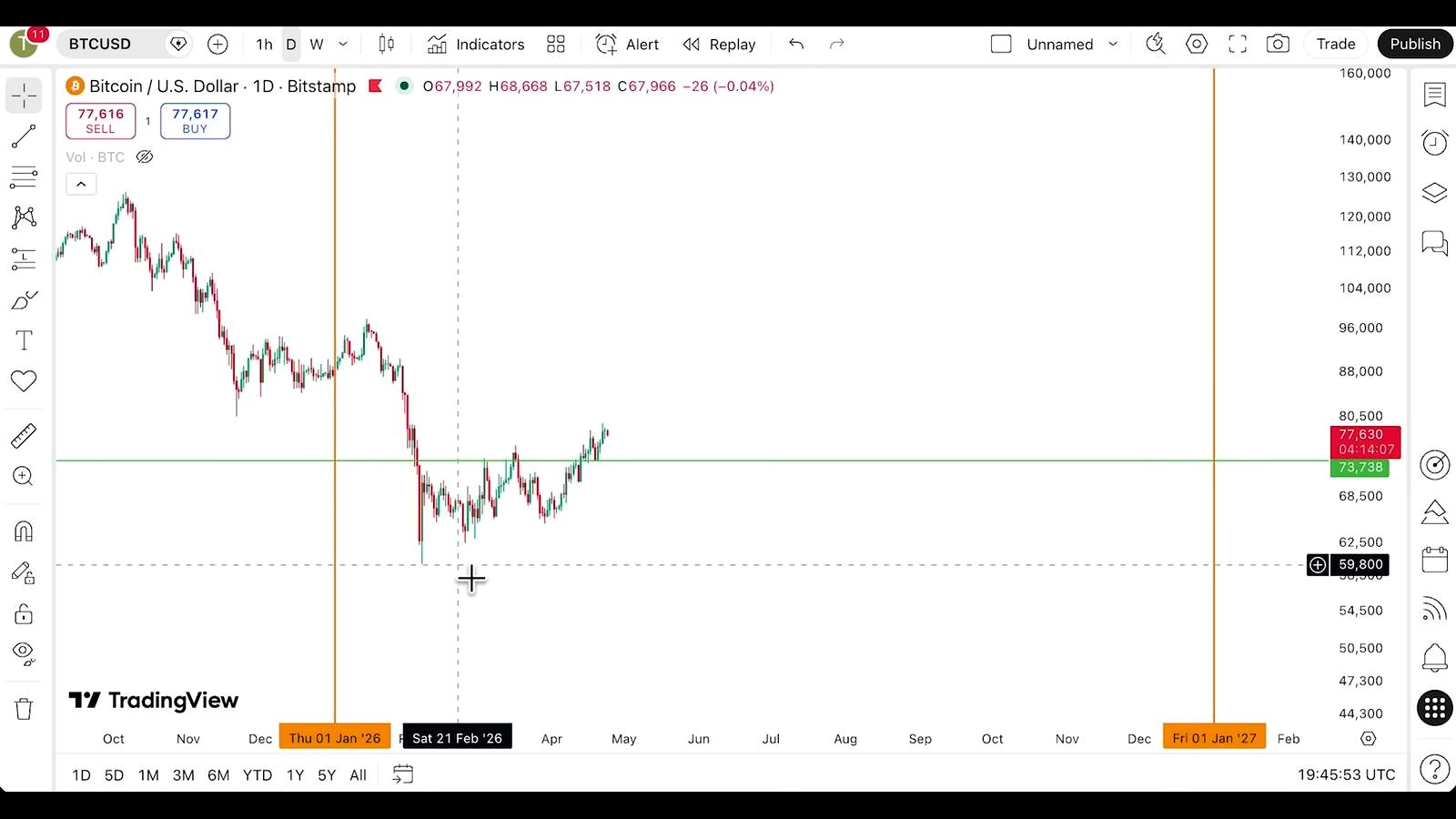
For people who want to mine Bitcoin at home, the Canaan Avalon Q is presented here as the best home Bitcoin miner available right now. It is designed specifically for home use and aims to balance power, practicality, size, and noise better than most alternatives.
At the same time, it is not described as a magic passive-income money-printing machine. Whether it makes sense depends on electricity cost, climate, technical comfort level, and realistic profit expectations.
What the Avalon Q Is
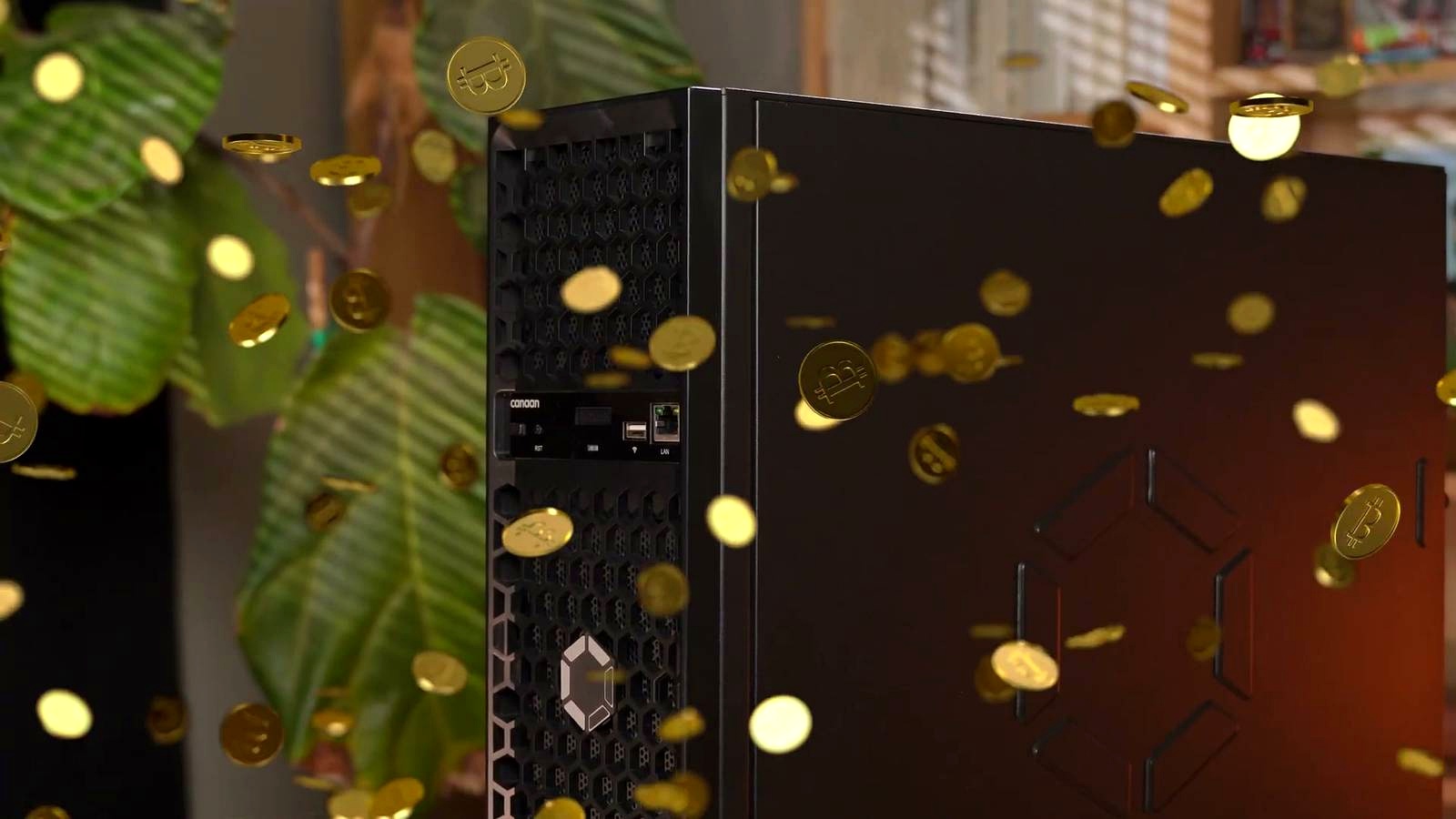
The Avalon Q is a Bitcoin mining rig made by Kanan, a miner manufacturer that has been around since 2013 making hardware for Bitcoin mining. This Q model is their latest attempt to build something for home users that does not scream like a data center machine when plugged in.
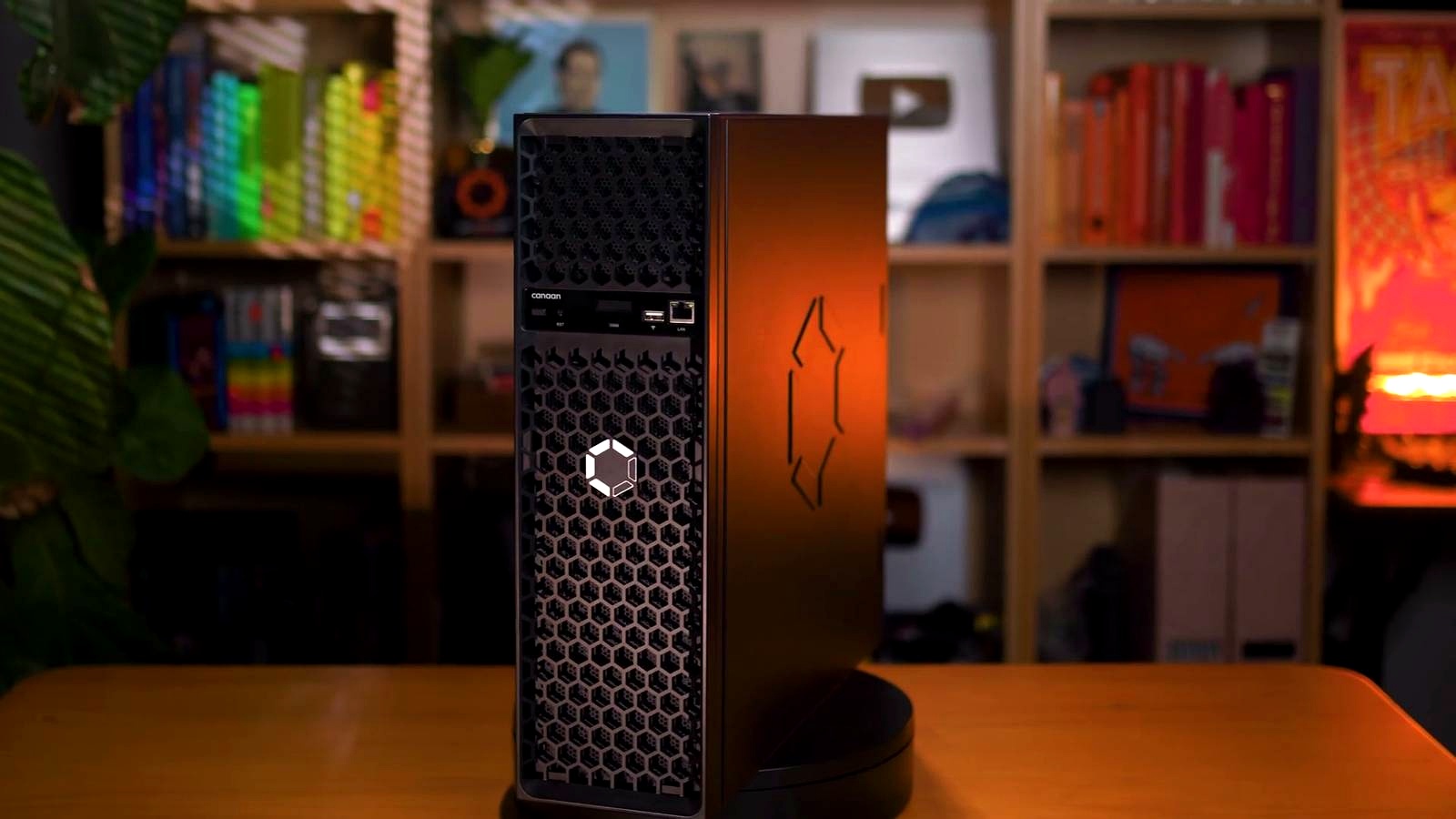
Most Bitcoin mining machines sound like jet engines, but the Avalon Q is built to be much more suitable for apartments, offices, and other home environments. People on Reddit and YouTube say it looks and sounds more like a gaming PC than a typical loud miner.
Why It Stands Out for Home Use
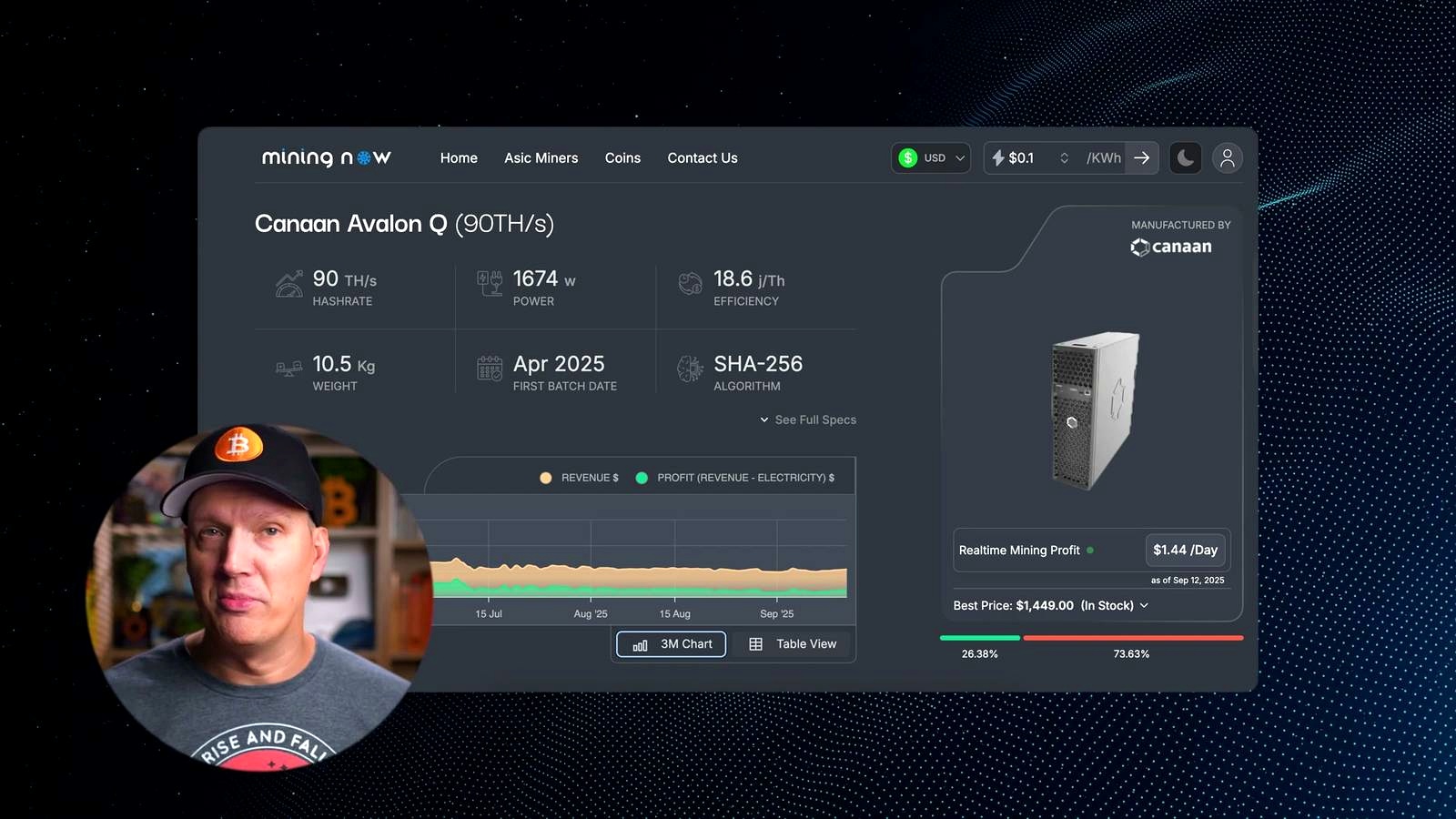
The main argument for the Avalon Q is that it balances power and practicality better than most alternatives. It is not the most powerful miner on the market. More powerful options include Bitmain’s S21 series and the newer S23 series, but those are described as too loud and too power-hungry for most home setups.
The Avalon Q reaches around 90 terahash in max mode, which is described as plenty for a solo home miner or a casual pool miner if electricity cost is right. It is built to run without needing a warehouse or earplugs.
Size and Design
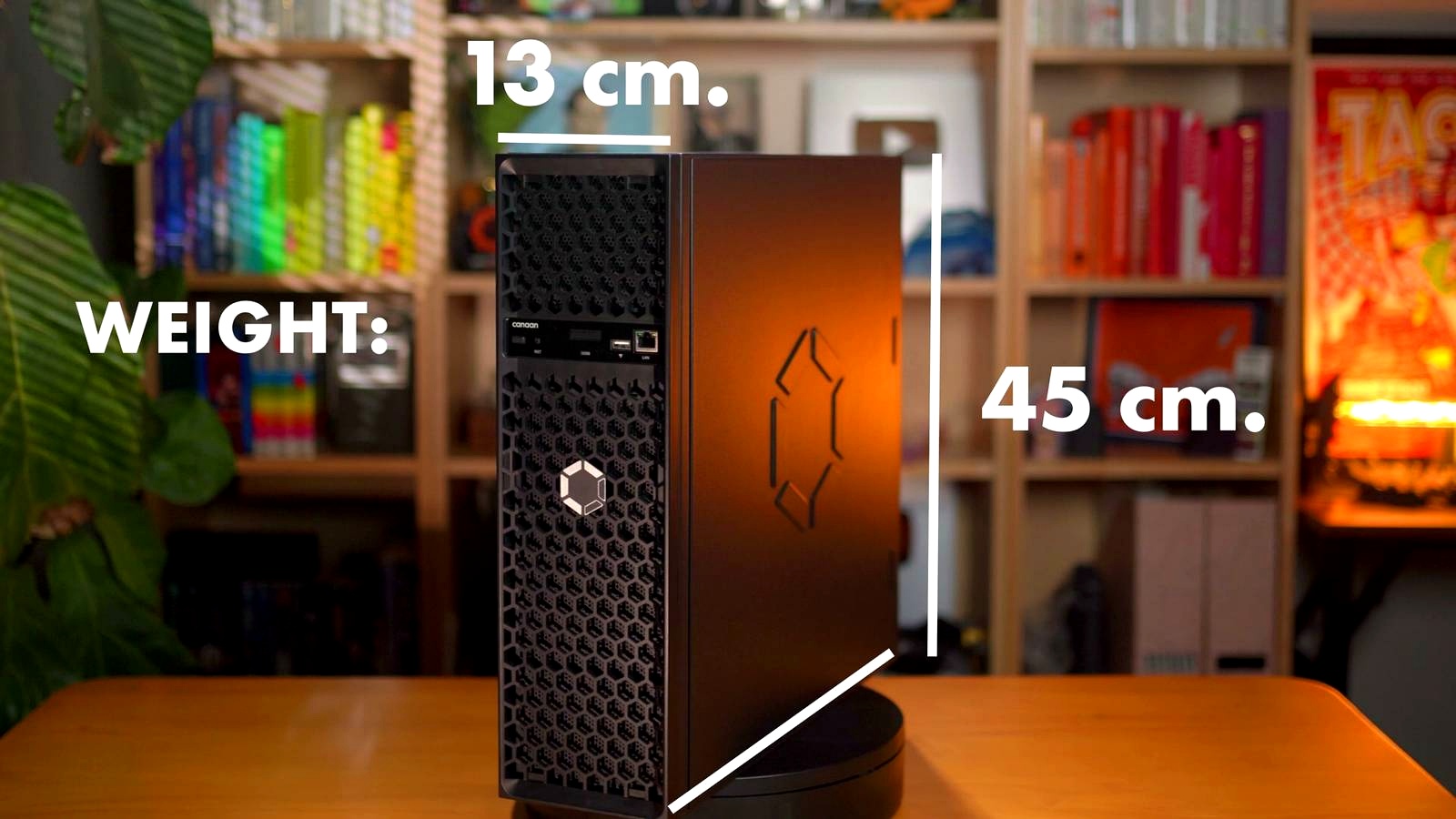
For what it offers, the unit is described as compact:
- 18 inches tall
- 5 inches wide
- 17 inches deep
- About 24 pounds
In metric terms, that is:
- 45 cm tall
- 13 cm wide
- 44 cm deep
- Around 11 kg
Its footprint is roughly that of a mid-tower desktop computer, so it can fit on a shelf or under a desk without dominating a room. It has no massive fans or exposed wires, uses a black case, and is described as sleek and able to blend in.
Power Requirements and Modes

One of the strongest home-use advantages is that the Avalon Q works on standard 110 to 240 volt household power. In the US, that means it can usually be plugged into a standard outlet, unlike many large professional ASIC miners.
Its power draw is adjustable through different modes:
- Eco mode: about 830 watts at 54 terahash
- Standard mode: 1,360 watts at 80 terahash
- Super mode: 1,674 watts at 90 terahash
Its overall power efficiency is given as 18.6 joules per terahash, which is described as pretty good and more efficient than some older or other home options.
Setup and App Control

The setup is described as relatively plug-and-play. You connect power, hook up Ethernet, and use the Avalon Family app on your phone to configure pools and wallets.
The app also lets users:
- Switch between modes
- Check stats
- Monitor the miner from a phone
The miner is presented as beginner-friendly, and deep technical knowledge is said not to be necessary. There are remote control options if needed. Some users have reported app crashes and connectivity issues, and that appears to be the main technical complaint. However, once running, it is said that almost everybody reports that it just works.
Kanan also offers setup help for a fee. The recommendation given here is to try setup yourself first because it is not that hard and because learning about mining is one of the biggest reasons to buy something like this.
Noise Levels

Noise is described as maybe the most important home-mining specification. The Avalon Q is much quieter than normal Bitcoin miners.
- Eco mode: just under 40 dB, quieter than a fridge hum
- Standard mode: around 50 dB, like a background conversation
- Super mode: 60 to 65 dB, more like a dishwasher running
In super mode, it is said that you really do not want to be in the same room with it. In eco mode, and maybe even standard mode, you will likely not even notice it running in your room.
Other users reportedly confirm this. One Reddit user said it was surprisingly quiet and did not affect the electricity bill as much as feared. Another said they ran it in a garage and barely noticed it. It is also said to be far quieter than normal Bitcoin miners, which can scream at 75 to 85 dB or more.
Earnings and Profitability
The Avalon Q’s earnings depend on Bitcoin’s price, network difficulty, and electricity cost. The mode options matter because they let users adjust performance based on setup, power rates, time of day, or solar generation.
At current Bitcoin levels and around $0.10 per kilowatt-hour electricity, the stated profits are:
- Super mode: $35 a month or $421 a year
- Standard mode: just over $26 a month or $315 a year
- Eco mode: $24 a month or $288 a year
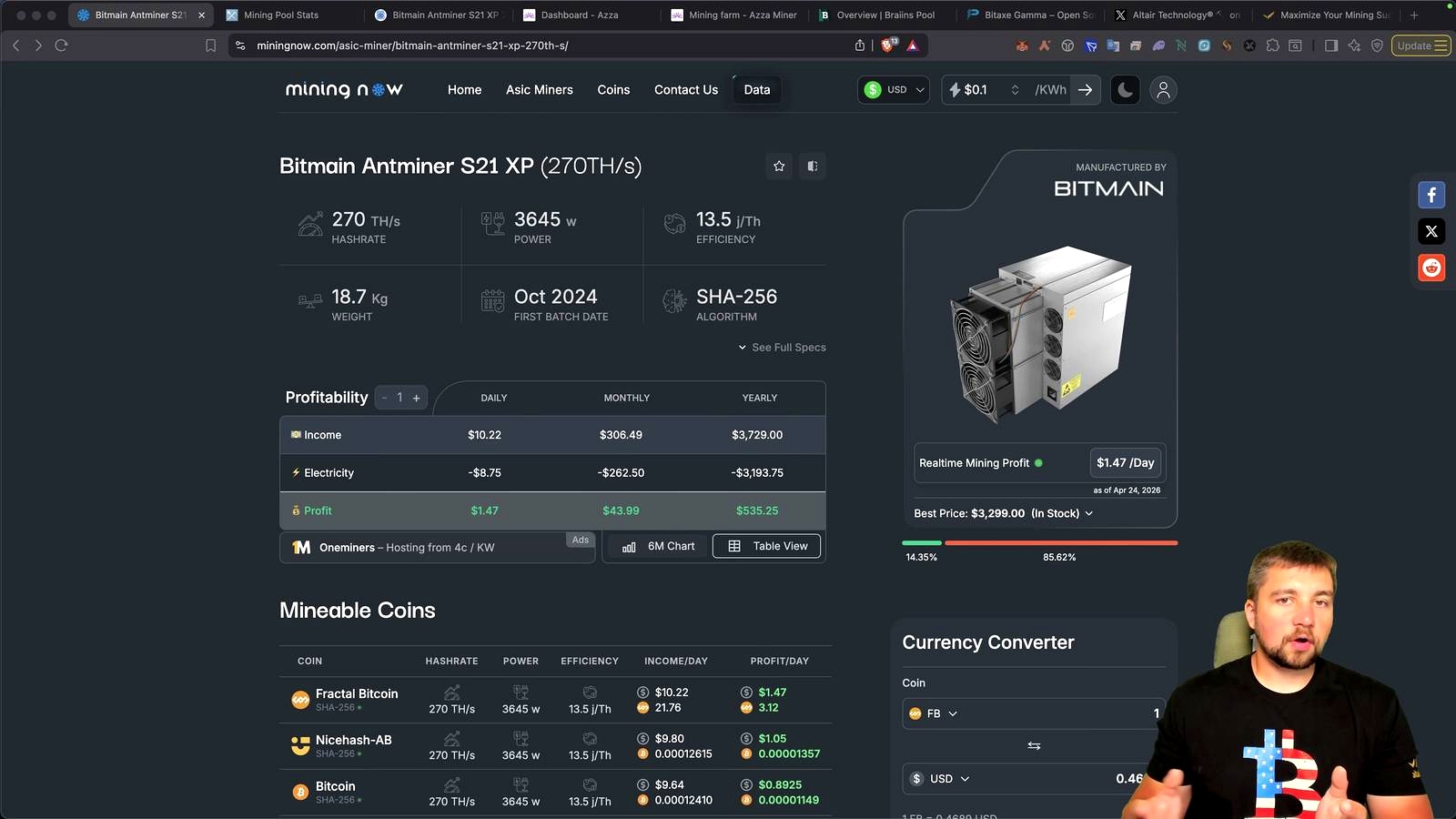
For updated estimates, sites such as whattomine.com or miningnow.com are mentioned for checking current profits.
Future Bitcoin Price Scenarios Mentioned
If Bitcoin were to hit $150,000, the Avalon Q is said to earn $57 a month or about $680 a year. If Bitcoin reached $300,000, it would earn $114 a month or $1,363 a year. However, this assumes network difficulty stays the same, and it is explicitly said that it will not.
Who It Is For
The Avalon Q is aimed at home enthusiasts who want a real mining machine without going fully professional. It is presented as a fit for:
- Bitcoin holders looking to accumulate slowly
- People with cheap power wanting passive income
- People with solar panels
- Beginners who want to learn more about mining
- Solo miners chasing lottery blocks
- Pool miners who want steady payouts
- People in cold climates who may benefit from the heat output
- Office users who want something quiet and normal-looking
For someone with solar panels, it is described as a particularly strong fit because it does not use a ton of electricity to begin with and can become a set-it-and-forget-it miner.
The chance of solo mining the next Bitcoin block with this machine is given as about 1 in 10 million. That is compared to the odds of becoming the next president of the United States or being picked as an astronaut. If a block is hit, it is said that it could be worth over $400,000 at today’s prices.
Why It May Be Worth Considering
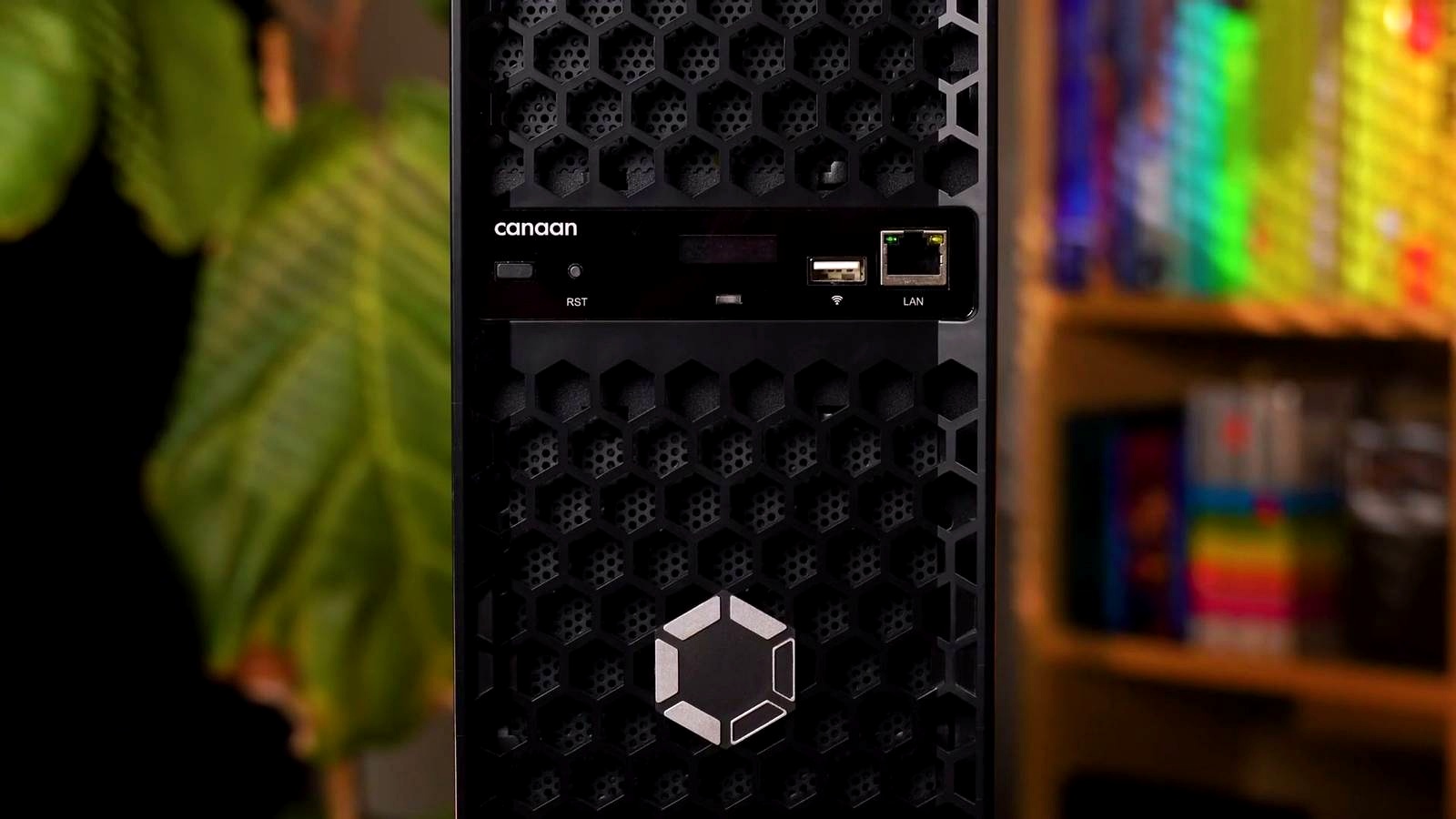
The Avalon Q is described as purpose-built for home use, unlike most other miners. It is quiet, compact, and efficient in ways industrial rigs are not. It is said that you can run it in a living room without it sounding like a vacuum or pushing the power bill into orbit.
Its adjustable power modes also provide flexibility. A user can run eco mode during expensive peak hours and switch to super mode when electricity is cheaper. For users on time-of-use billing or those with solar, this flexibility is described as massive.
The app integration is also highlighted. Users can monitor temperatures, hash rate, and earnings from a phone. Support for solar mining is also mentioned.
In terms of reliability, people on Reddit reportedly mention stable performance, including some running multiple machines in one house with zero issues. Kanan is said to have a reputation for reliable hardware, and the build quality is described as really solid. Some users reportedly say they have had zero downtime on Avalon miners after a full year or more.
Compared with other home miners like the Avalon Mini 3 or the Nano 3S, the Q is said to deliver much more power. Compared with large noisy Antminers, it is presented as the clear choice for home comfort.
Drawbacks and Limits
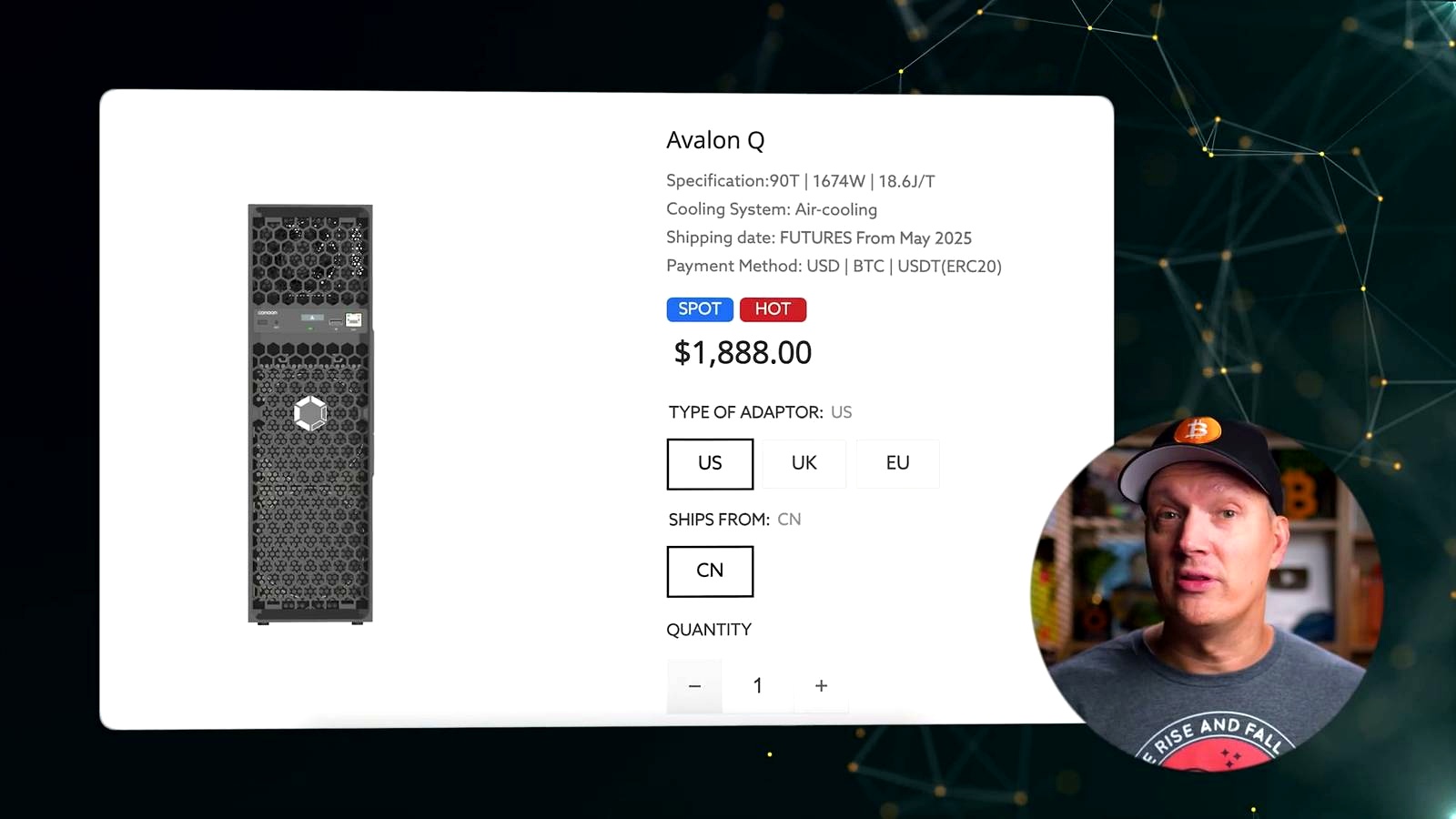
The biggest downside mentioned is price. At $1,888 upfront, it is not cheap, and return on investment can take a while, especially if Bitcoin falls or network difficulty rises.
It is also said that a DIY home Bitcoin miner can be built for much less money. Even so, the Avalon Q is described as looking and feeling much higher quality than other machines, including some professional ones, and as very sturdy and likely to last a long time.
Electricity cost is another major factor. If rates are over 13 cents per kilowatt-hour, it is said that you might actually lose money in super mode. On the other hand, with solar, it is described as likely to remain profitable even if Bitcoin drops a lot.
There is also still noise and heat to consider:
- Super mode is not silent
- It sounds like a gaming computer under full load
- It pumps out heat like a space heater
- This can be great in winter but unpleasant in summer
If you live in a hot climate and do not have good ventilation, that could be a dealbreaker.
There are also electrical considerations if running multiple machines. Care must be taken not to overload circuits. A dedicated 20 amp circuit may be needed for super mode. On a standard 15 amp circuit, usage is said to be limited to eco or standard mode because super mode pushes too much.
Overall Conclusion
The bottom line given here is that the Avalon Q does a good job of bringing professional mining into home environments. It is not a no-catch money-printing machine, and it will not work for everyone.
Its success depends heavily on specific circumstances, especially electricity cost, climate, technical comfort level, and profit expectations. But for balanced home mining with some upside, it is presented as definitely worth considering.
FAQ
- What is the Canaan Avalon Q?
It is a Bitcoin mining rig designed specifically for home use, made by Kanan.
- How powerful is it?
It reaches around 90 terahash in super mode, 80 terahash in standard mode, and 54 terahash in eco mode.
- How much power does it use?
It uses about 830 watts in eco mode, 1,360 watts in standard mode, and 1,674 watts in super mode.
- Is it loud?
It is much quieter than typical Bitcoin miners. Eco mode is just under 40 dB, standard mode is around 50 dB, and super mode is 60 to 65 dB.
- Can it run on normal household power?
Yes. It works on standard 110 to 240 volt household power, and in the US it can usually plug into a standard outlet.
- Is setup difficult?
It is described as relatively plug-and-play. You connect power and Ethernet, then use the Avalon Family app to configure pools and wallets.
- How much can it earn?
At the stated current Bitcoin levels and around $0.10 per kilowatt-hour, profits are listed as $35 a month in super mode, just over $26 a month in standard mode, and $24 a month in eco mode.
- Who is it best for?
It is aimed at home enthusiasts, beginners who want to learn mining, people with cheap electricity, solar users, solo miners, and pool miners.
- What are the biggest drawbacks?
The biggest downsides mentioned are the $1,888 upfront price, electricity costs, heat, and the fact that super mode can still be fairly noisy.
- Is it a guaranteed passive income machine?
No. It is explicitly described as not being a magic passive-income money-printing machine.
Source Video

John Burnell focuses on Bitcoin infrastructure, wallet security and blockchain technology. He writes educational articles explaining how Bitcoin works and how the technology evolves.