Bitcoin inspires strong opinions from believers, skeptics, traders, and traditional finance figures alike. Its story combines a practical breakthrough in digital payments, intense speculation about price, criticism around regulation and energy use, and a culture that often seems split between disruption and mainstream adoption.
At the center of the debate is a simple question: why does Bitcoin have value, and where could that value go next? The answers range from digital gold comparisons to skepticism, with plenty of hopes, dreams, and speculation in between.
Why Bitcoin Was Considered Innovative

The core innovation of the Bitcoin network was proposed in 2008 by the anonymous Satoshi Nakamoto as a solution to a long-standing problem in digital currencies. The problem was how to send money digitally between two people without a financial institution having to verify the transaction.
A simple way to frame it is this: if someone wants to buy two large pizzas but has no cash, how can that money be sent digitally without a bank or other institution validating it? Two years later, that transaction was successfully performed, although at today’s bitcoin price those two pizzas would cost about $615 million.
The White Paper and “Doing the Work”
Bitcoin is often defended with the phrase “do the work.” But the white paper itself is presented more like a pamphlet than an enormous body of material. The idea is straightforward enough to read quickly, even if the debate around its significance has lasted much longer.
The Extreme Range of Bitcoin Price Expectations
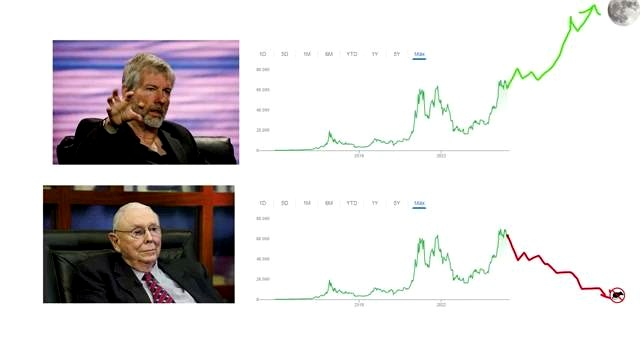
Bitcoin attracts both very bullish and very bearish views. Some argue that one day it could become the new global reserve currency, replacing fiat and reaching prices in the tens of millions per coin. Others argue it is a scam and going to zero.
Between those extremes, the discussion becomes less certain. One argument says it cannot go to zero because someone on Reddit said he would buy all 21 million for 1 cent each. Another says it also cannot go to tens of millions per coin because that would imply an EV valuation of about $400 trillion.
That leaves a very wide range between 1 cent and $10 million a coin, which is why Bitcoin price prediction remains so contested.
What Prominent Voices Have Said
- Charlie Munger called Bitcoin “rat poison,” a clearly bearish view.
- Michael Saylor described Bitcoin as “a swarm of cyber Hornets serving the goddess of wisdom feeding on the fire of Truth exponentially growing ever Smart hard faster and stronger behind a wall of encrypted energy,” which is presented as bullish.
Why People Say Bitcoin Has Value

The most common response from people into crypto is that Bitcoin is “digital gold.” The immediate follow-up is why gold has value, and the answer often becomes that gold is scarce and that people have valued it since the dawn of humanity.
The criticism of this explanation is that it can become circular: it is a good store of value because it is. That leaves the value case feeling intuitive to some people and incomplete to others.
The Counterargument From Traditional Finance
People from traditional finance often argue that a digital asset is not real, so an infinite amount of them can be created and therefore they have no value. The response to that argument is that if digital assets had no value, it would be hard to explain how founders of nearly every crypto project could rug pull and buy yachts.
Bitcoin Culture, Libertarianism, and Skepticism
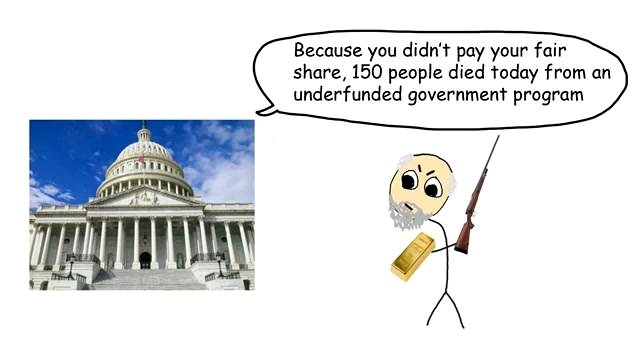
Bitcoin is described as having a strong bias toward anti-government sentiment and libertarianism. That ideological tilt shapes much of the culture around it and helps explain why many supporters view the network as more than just a financial asset.
At the same time, evaluating a technology by the character of the people who believe in it remains tempting, especially in a space where both conviction and absurdity can coexist.
Crypto Versus Traditional Finance
There is a recurring sense that many people in decentralized finance are not deeply familiar with how the existing financial system works. As a result, they often reinvent the wheel and run into mistakes that have already happened before.
The collapse of FTX is used as an example. In crypto, the reaction was that there was no oversight or transparency and everyone knew it was possible, but they did not think it would happen. In traditional finance, the reaction was simpler: what they were doing was illegal.
The suggestion is that many participants did not really learn the lessons of 2008, partly because they were too young at the time.
Regulation and Risk in Crypto Markets

A major threat to the crypto industry has been regulation, especially because for a long time there was so little of it. The lack of oversight made it possible to take extreme risks very easily.
One example given is being able to go on Binance and buy 75 times leveraged Dogecoin futures without a single confirmation window. In 25 seconds, that could mean making three times your money or losing everything.
That has begun changing in recent years after so many people repeatedly lost all their money.
Environmental Criticism of Bitcoin
Another major criticism is environmental. Mining new Bitcoin is described as extremely energy intensive because it relies on brute forcing math problems with a huge amount of compute.
Bitcoin mining was banned in China because the government decided that expending that much energy to solve arbitrary math problems was excessively wasteful.
Bitcoin as a Speculative Asset

For most people, the single biggest concern is bitcoin’s price. Even though it does not produce anything in the literal sense, from the time it could easily be bought publicly by speculators, it has been one of the best performing assets of all time.
Critics compare that claim to saying a winning $2 Powerball ticket is the best performing asset of all time. The answer offered is simple: if you bought a winning lottery ticket, that would still be correct.
Popular Bitcoin Price Theories

Two common theories are presented often enough to be worth considering.
1. Taking Half the Market Cap of Gold
The first theory says Bitcoin could take at least half the market cap from gold because they serve similar monetary purposes. That would put both at around an $8.4 trillion market cap at today’s prices, or about $420,000 per coin.
2. The Stock-to-Flow Model
The second theory is the stock-to-flow model created by Twitter user Plan B. The basic idea is explained through scarcity: if you have 100 food and 100 hungry people, then reduce the food supply to 50 while demand stays the same, price should rise. The logic is then extrapolated further as supply becomes even tighter.
Using this model, the predicted price of Bitcoin in 2030 is $4 million a coin.
Bitcoin ETFs and the Shift Toward Mainstream Finance
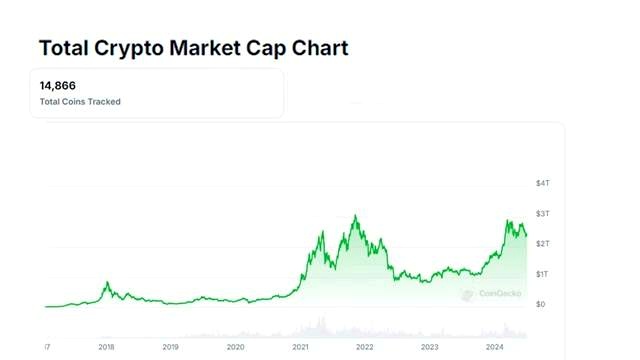
With the creation of Bitcoin ETFs, regulatory oversight emerging and giving the green light, and money from traditional finance pouring into the crypto ecosystem, many investors see blue skies ahead for prices to climb further.
But this shift has also created a tension. Over time, favorite crypto assets appear to trade more and more in lockstep with traditional financial assets, while ownership becomes increasingly concentrated on centralized exchanges and mainstream financial products.
From Disruption to Exposure
Only a few years ago, the space was about disrupting traditional finance. Now much of the excitement centers on products that let people get exposure to the network without being part of it, largely in the hope that this drives the price higher.
That has led some critics to argue that a movement built to resist the system is becoming more like the system it once opposed.
The Search for a Convincing Long-Term Case
Despite repeated claims that people have “done the work,” the long-term argument for the future of the technology or the price is still presented as unconvincing. The broad feeling is that much of the discussion remains driven by hopes, dreams, and speculation.
That uncertainty is part of what keeps the Bitcoin debate alive. The technology has a clear origin story and a clear breakthrough, but the future still appears open to interpretation.
The Meaning of HODL
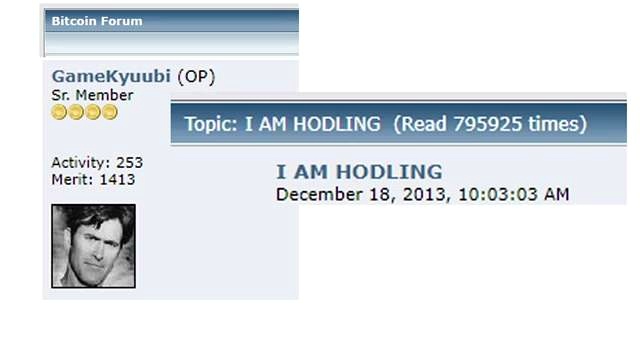
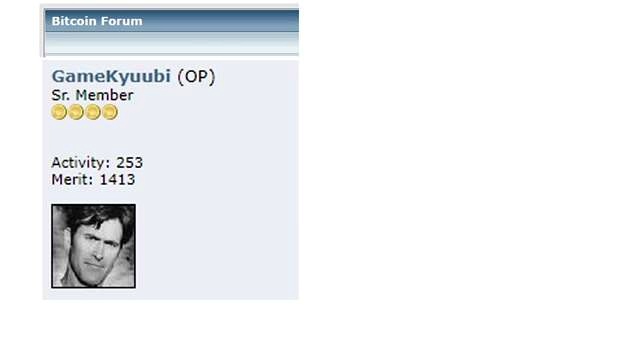
One of the most memorable explanations of Bitcoin behavior came from a 2013 Bitcoin Talk forum member named GameKyuubi, who titled a thread “I AM HODLING” during a huge selloff.
He explained that he was holding because he was a bad trader and knew it. Good traders, he wrote, could spot the highs and the lows and make money, but the people in between hold. In zero-sum games such as this, traders could only take your money if you sell.
That post turned “hodling” into something more than a typo. It became a philosophy of refusing to trade badly by refusing to trade at all.
The Logic Behind Holding
- You cannot make a bad decision if you never decide.
- You cannot regret things that could never be different.
- Traders can only take your money if you sell.
Privacy, Data Brokers, and Incogni

Unlike market volatility, data brokers getting access to personal information is not something solved by simply saying no. Those brokers can sell data to whoever wants to buy it, potentially putting it into the hands of robocallers, scammers, or the government.
This often happens because people give permission nearly all the time whenever they sign up for things online.
How Incogni Works
Incogni can contact data brokers on your behalf and request removal of your information. These brokers actually have to remove your information if you ask, but contacting all of them individually is described as ridiculously tedious.
Incogni automates that process in a seamless way. Once you sign up, it immediately does the work. Over a six-month period, it completed an additional 12 hours of work and a couple dozen more requests.
Discount Offer
Using the code casually at the link below gives 60% off an annual plan.
FAQ
What problem was Bitcoin designed to solve?
Bitcoin was proposed as a way to send money digitally between two people without a financial institution having to verify the transaction.
Why do people call Bitcoin digital gold?
People in crypto often say Bitcoin is digital gold because they see it as scarce and serving a similar monetary purpose.
What are the main criticisms of Bitcoin?
Main criticisms mentioned include unclear intrinsic value, speculative price behavior, lack of regulation in parts of crypto, concentration on centralized platforms, and the energy intensity of mining.
What are two common Bitcoin price theories?
One theory says Bitcoin could take at least half the market cap of gold, implying around $420,000 per coin at today’s prices. Another is the stock-to-flow model, which predicts $4 million per coin in 2030.
What does HODL mean?
HODL comes from a 2013 forum post titled “I AM HODLING.” It represents the idea of holding Bitcoin rather than trying to trade every rise and fall.
How does Incogni help with privacy?
Incogni automates the process of contacting data brokers and requesting that they remove your personal information, saving the effort of doing it manually.
Reference Video

An Indian crypto journalist covering the developments in the Bitcoin and blockchain industries. Her work helps readers understand key changes in the world of digital assets.