It feels strange to watch a market this tense act this quiet. Bitcoin is sitting under $70,000, looking almost frozen, while the bigger story may be happening just off to the side.
Gold just suffered a brutal drop, fear is back in crypto, and yet Bitcoin is still standing in the same zone. That contradiction is exactly why this moment matters.
Bitcoin price is stuck, but not for the reason most people think
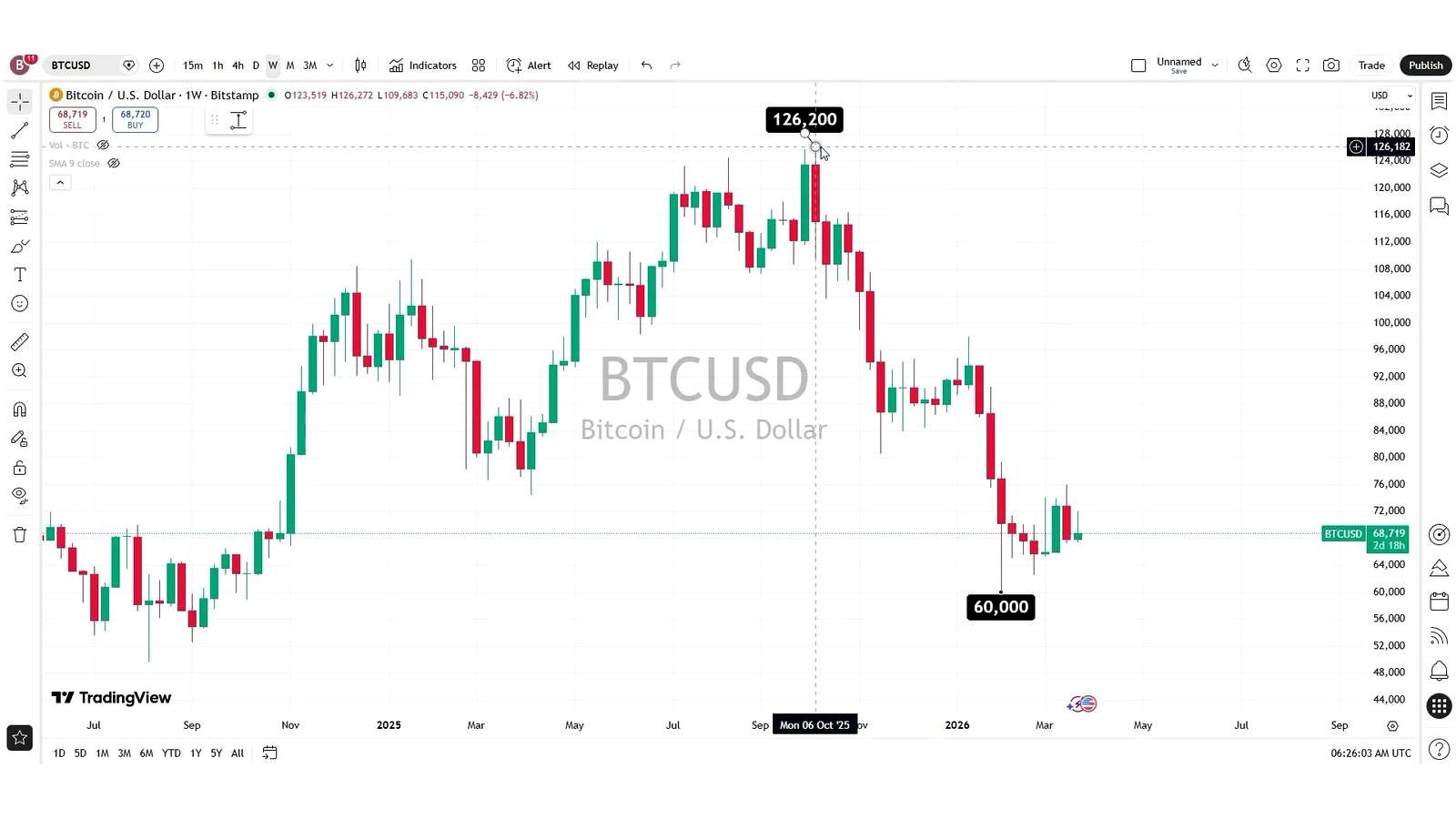
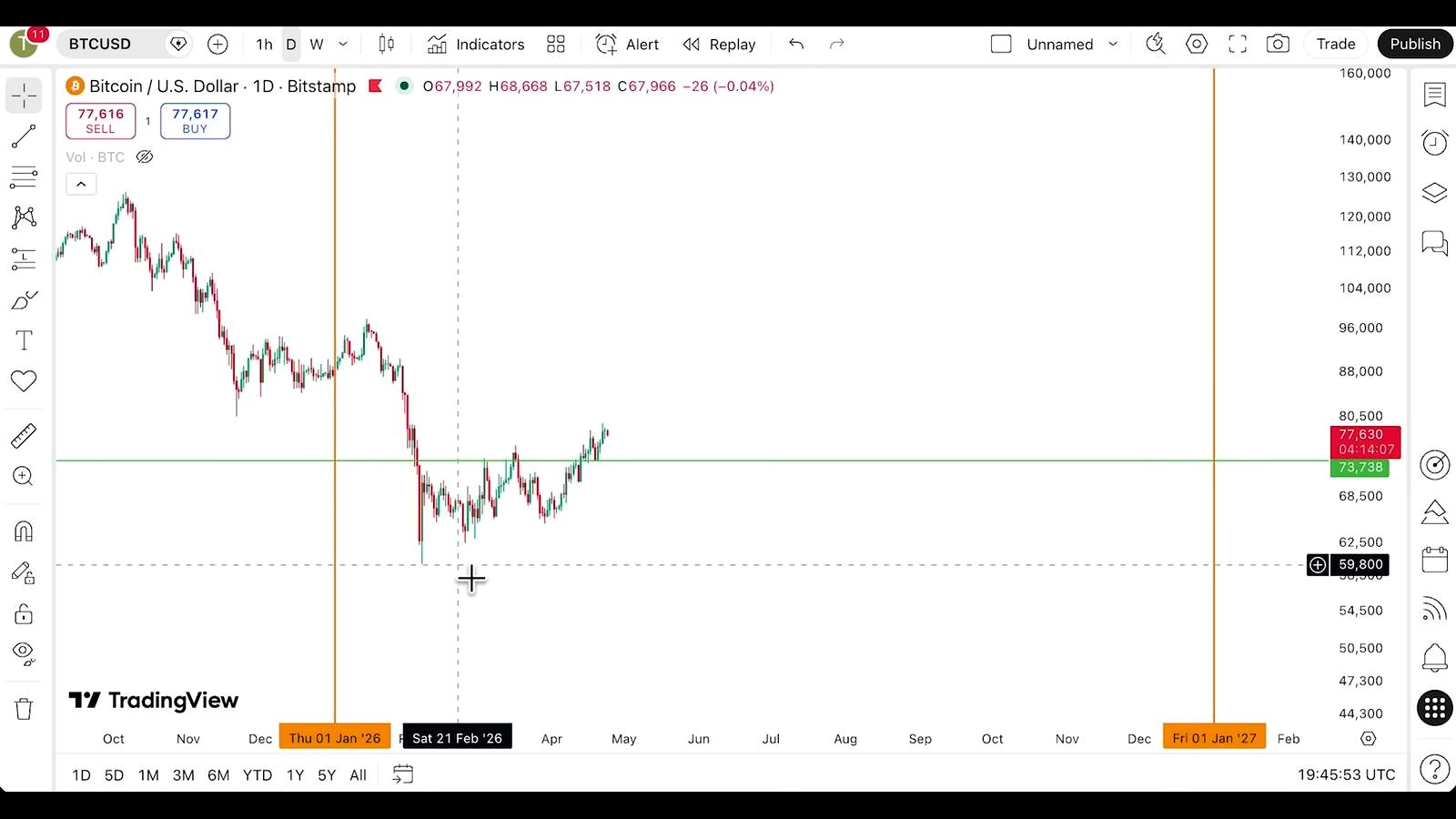
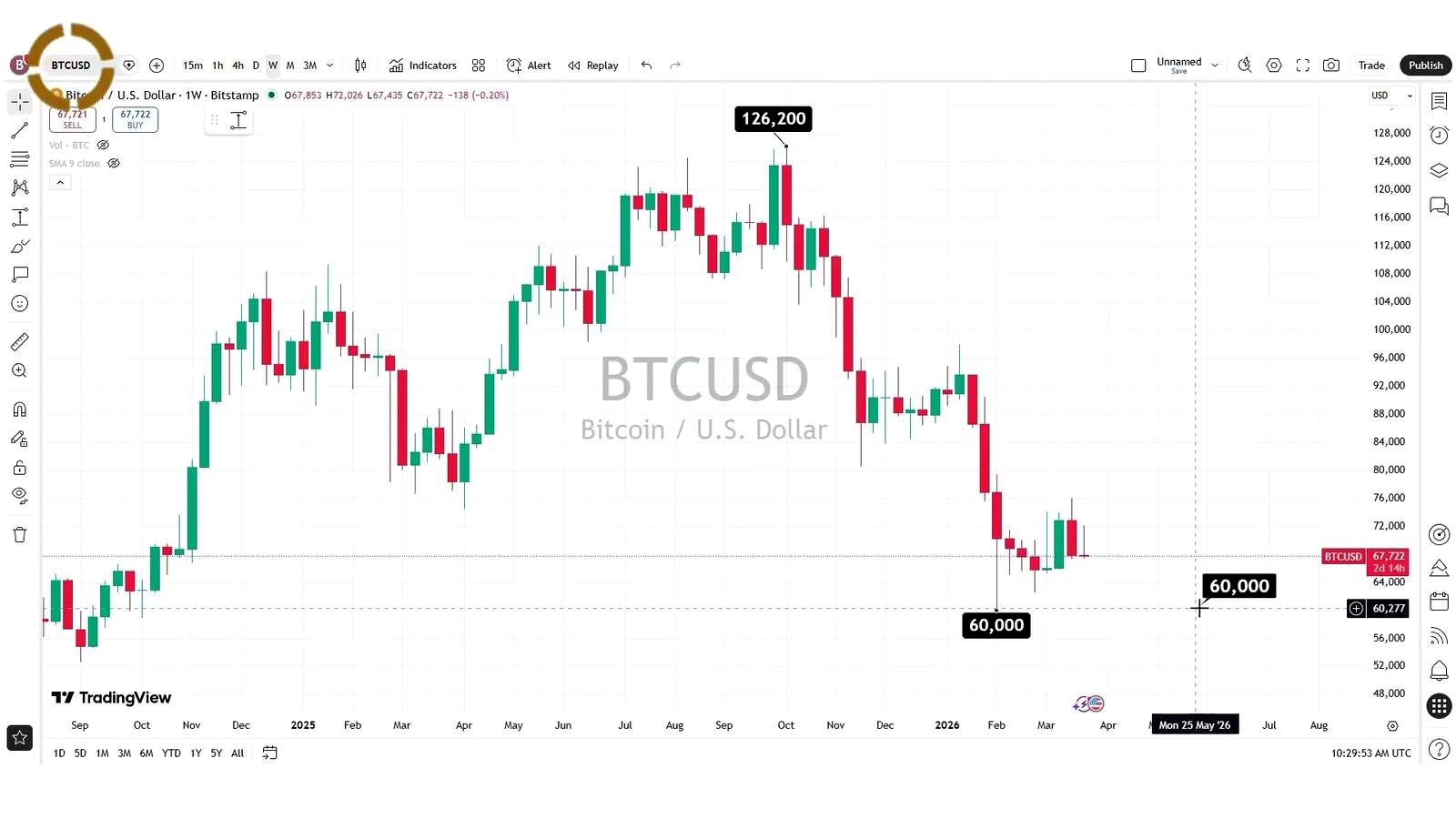
Bitcoin is currently trading below $70,000, far from the $126,000 all-time high it reached in October 2025. After that peak, the market turned fast. By early February 2026, price had fallen to $60,000, a 52% drop in just four months, with five straight months of red candles.
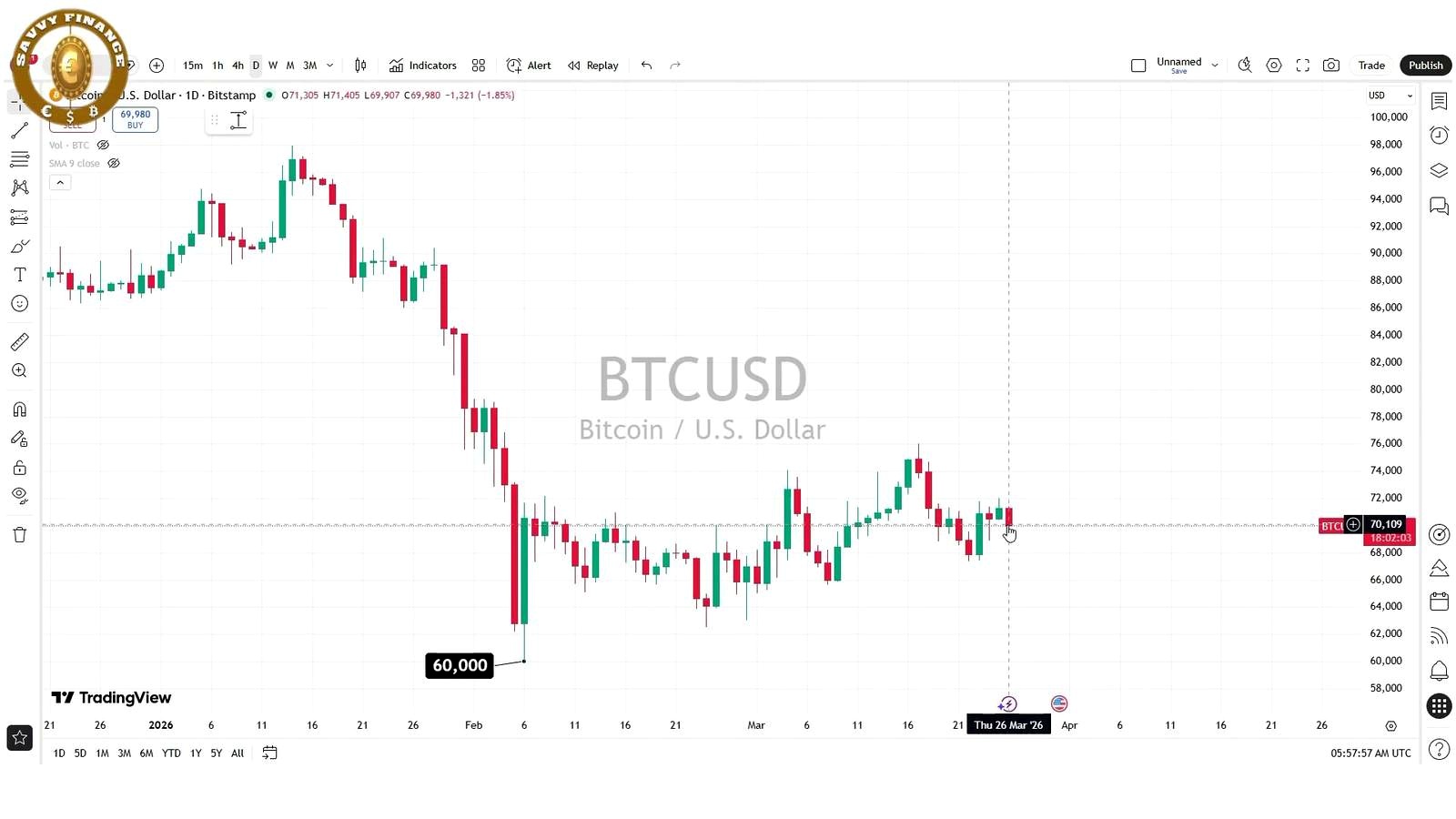
Now, in late March, Bitcoin has bounced but not broken free. It has been grinding between $68,000 and $71,000. No clean breakout. No fresh collapse. Just a market that keeps getting pushed back every time it tries to move higher.
The fear and greed index sits at 29 out of 100, deep in the fear zone. That helps explain the mood. Traders are either nervous, exhausted, or unsure what comes next.
Plan B’s explanation: Bitcoin is trapped in an “epic battle”

Plan B, one of the most followed Bitcoin analysts and the creator of the stock-to-flow model, offered a direct answer to the question everyone keeps asking: why is Bitcoin not pumping?
His answer was blunt. Around half the market is selling, while the other half is buying. Until one side runs out of strength, price stays pinned.
The 3 groups still selling Bitcoin
According to Plan B, the pressure is coming from three different camps:
- OG holders who were scarred by the 2021 crash from $69,000 to $17,000
- Technical traders who saw overbought signals during the run from $60,000 to $126,000
- Four-year cycle believers who think the peak already happened in October 2025, exactly 18 months after the April 2024 halving
These sellers are not acting randomly. Each group believes it has a reason to exit.
Why OGs are selling fast
People who have been in Bitcoin since 2016, 2017, or earlier remember what it felt like to hold through a 75% collapse. That kind of pain changes behavior. When this cycle pushed beyond $100,000 and then to $126,000, many of them took profits quickly.
For them, this was not excitement. It was a chance not to relive the last disaster.
Why technical traders stepped out
Chart-driven traders saw a market flashing overbought signals as Bitcoin surged from $60,000 to $126,000. Their systems told them to sell, so they sold. It was a mechanical decision, not an emotional one.
Why cycle believers think the move is already over
The four-year cycle crowd has a simple framework: Bitcoin tends to rally for about 18 months after the halving, then top out and enter a bear market for a year or two.
The last halving was in April 2024. Eighteen months later was October 2025. That is exactly when Bitcoin hit $126,000. To this group, the cycle has already played out on schedule.
The other half of the market is buying every drop

Plan B says the other 50% of the market is made up of buyers who are looking at Bitcoin very differently.
Fundamental investors see scarcity
These buyers focus on what Bitcoin is: a fixed supply asset with only 21 million coins. No government can print more. No company can issue more. Supply does not respond to demand.
That matters, especially during periods of stress. These investors do not move because of RSI readings. They buy when price falls.
Traditional finance is no longer standing outside
BlackRock, Fidelity, and wealth managers have had spot Bitcoin ETFs live since January 2024. Billions have flowed in every month. When Bitcoin drops, their systems treat it as a buying opportunity.
Banks are also building Bitcoin exposure through regulated instruments. That creates a very different kind of support than previous cycles.
This is why Bitcoin has been stuck near $68,000 instead of collapsing to $40,000 or ripping back to $100,000. One side is unloading. The other is absorbing.
What ends the stalemate?

Plan B’s conclusion is simple: the market changes when sellers run out of ammo.
That means:
- the last traumatized OG finishes exiting
- the last RSI trader finishes taking profit
- the last cycle believer completes the bear-market trade
If institutional buyers are still there when that happens, Bitcoin does not drift higher slowly. It moves fast.
Gold just crashed — and Bitcoin’s reaction may be the bigger story
While Bitcoin has looked dull, gold has been anything but stable.
Gold peaked at $5,594 per ounce in January 2026. It is now around $4,335, a 22% drop in less than two months and its worst fall since 1983.
That collapse came after a huge run. Gold had climbed more than 64% in one year. Central banks were buying. Retail piled in. It was widely treated as the safest place to hide.
What triggered the gold selloff
The turning point came when the Strait of Hormuz, the waterway carrying roughly 20% of the world’s oil, was shut down by Iran.
That sent oil prices sharply higher and reignited inflation fears. The Federal Reserve turned more hawkish. The stronger dollar made gold more expensive globally. Leveraged gold traders needed cash, so they sold.
The selling was heavy. The SPDR Gold ETF recorded $2.91 billion in outflows in a single day, the biggest outflow in more than a decade.
Bitcoin dipped — then held
Bitcoin briefly dropped below $68,000 when tensions peaked. Then it recovered. It held its range while gold entered an official bear market.
That contrast has become one of the strongest talking points among Bitcoin bulls.
The “great rotation” idea is getting louder
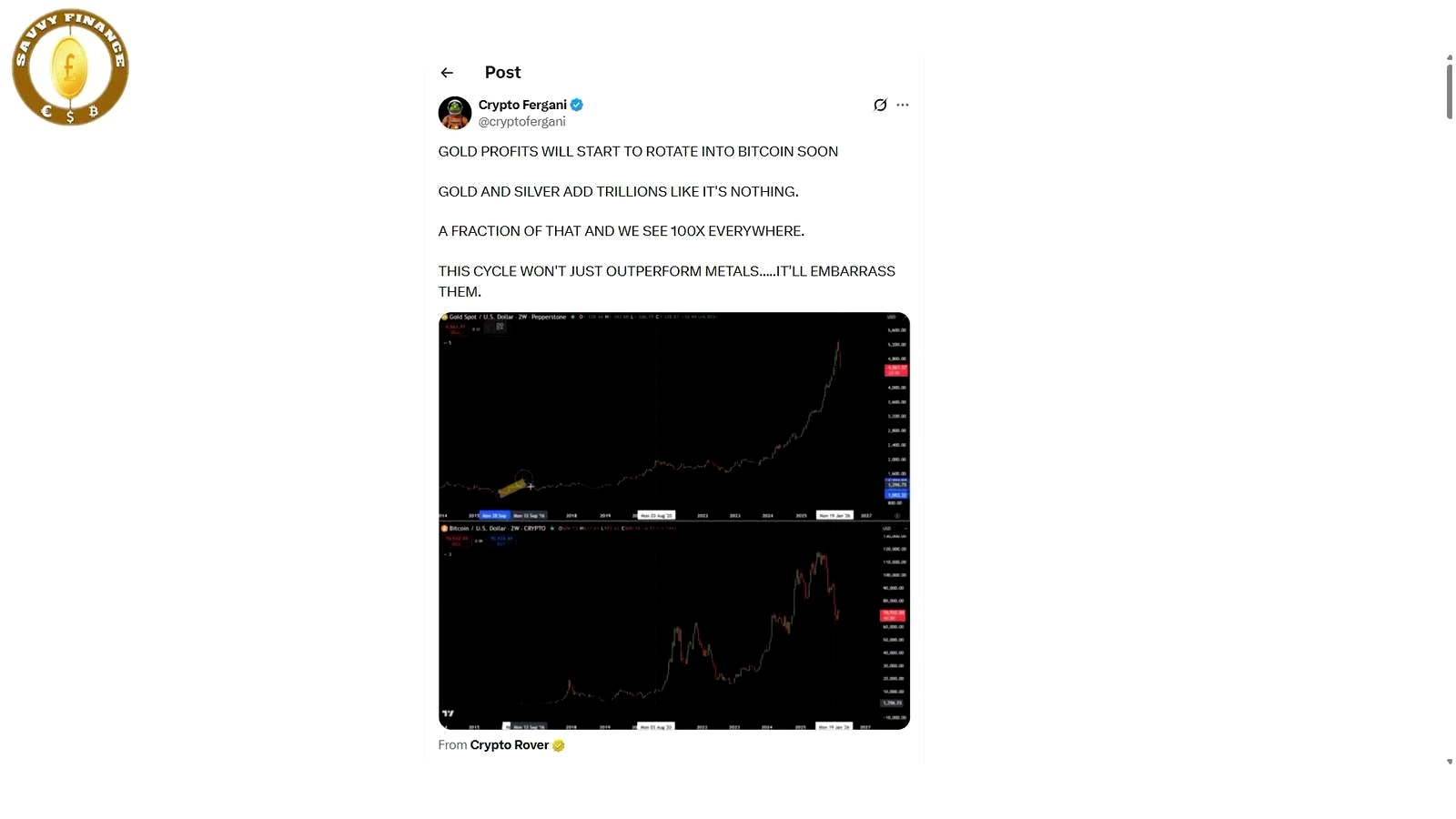
Analyst Gordon posted that gold is now dumping while Bitcoin is holding strong, adding that “the great rotation will begin soon.” Crypto Fergi went further, arguing that profits leaving gold could rotate into Bitcoin.
There is an obvious bias there. But the structural point is harder to dismiss: money is leaving gold ETFs, and for the first time, Bitcoin infrastructure inside traditional brokerage accounts is already in place.
The same investors who used to buy gold through GLD can now access Bitcoin through ETFs in the same environment.
Plan B says gold and Bitcoin are not enemies
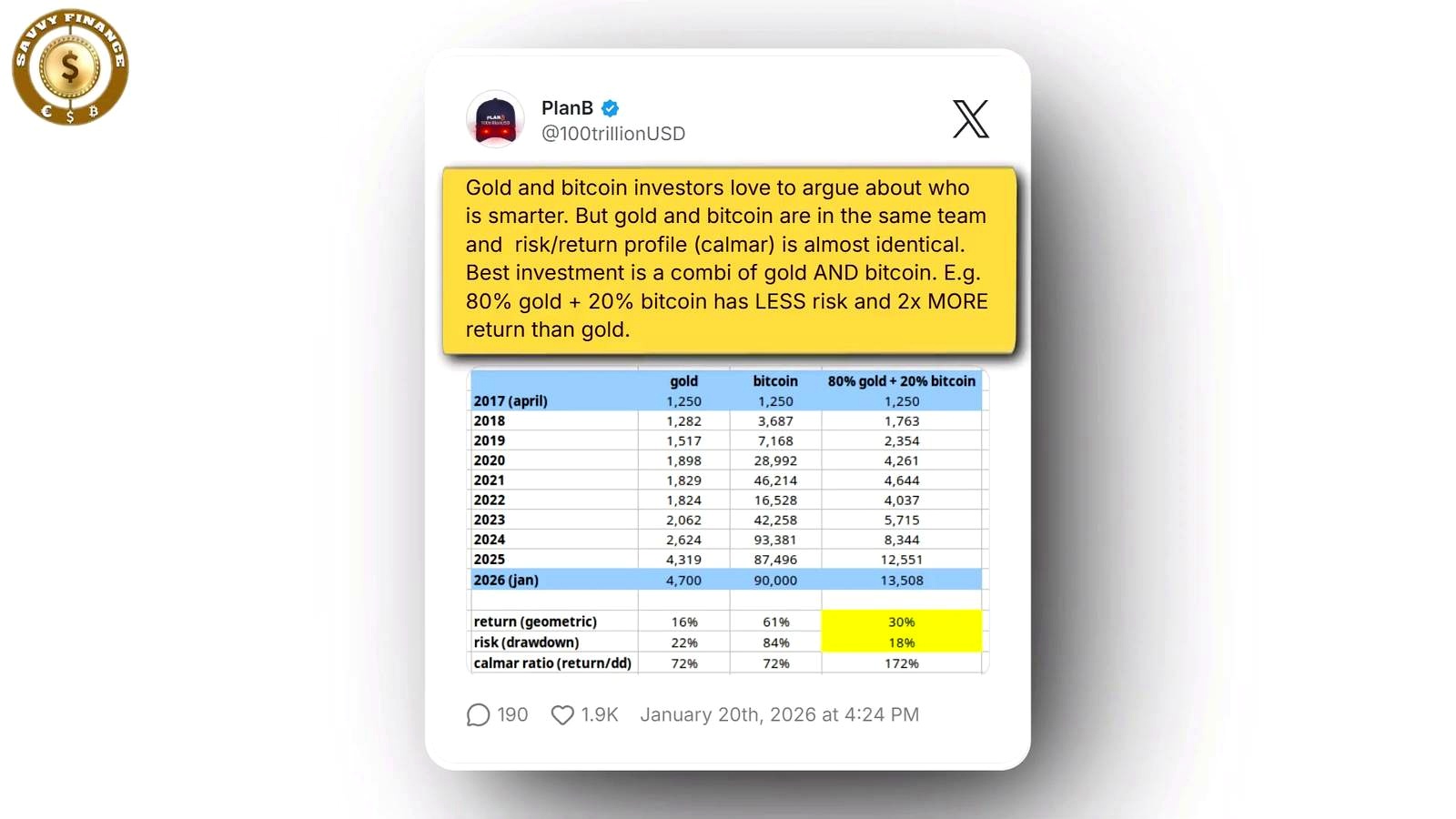
Plan B has argued for a long time that the fight between gold investors and Bitcoin investors misses the point. In his view, both assets respond to similar forces:
- dollar weakness
- inflation
- loss of trust in government
- geopolitical chaos
He said gold and Bitcoin are “on the same team” and pointed to a mix of 80% gold and 20% Bitcoin as a combination that historically had less risk and two times more return than gold alone.
That matters now because gold just got hit hard, while Bitcoin did not break down with it.
The bear case is still very real
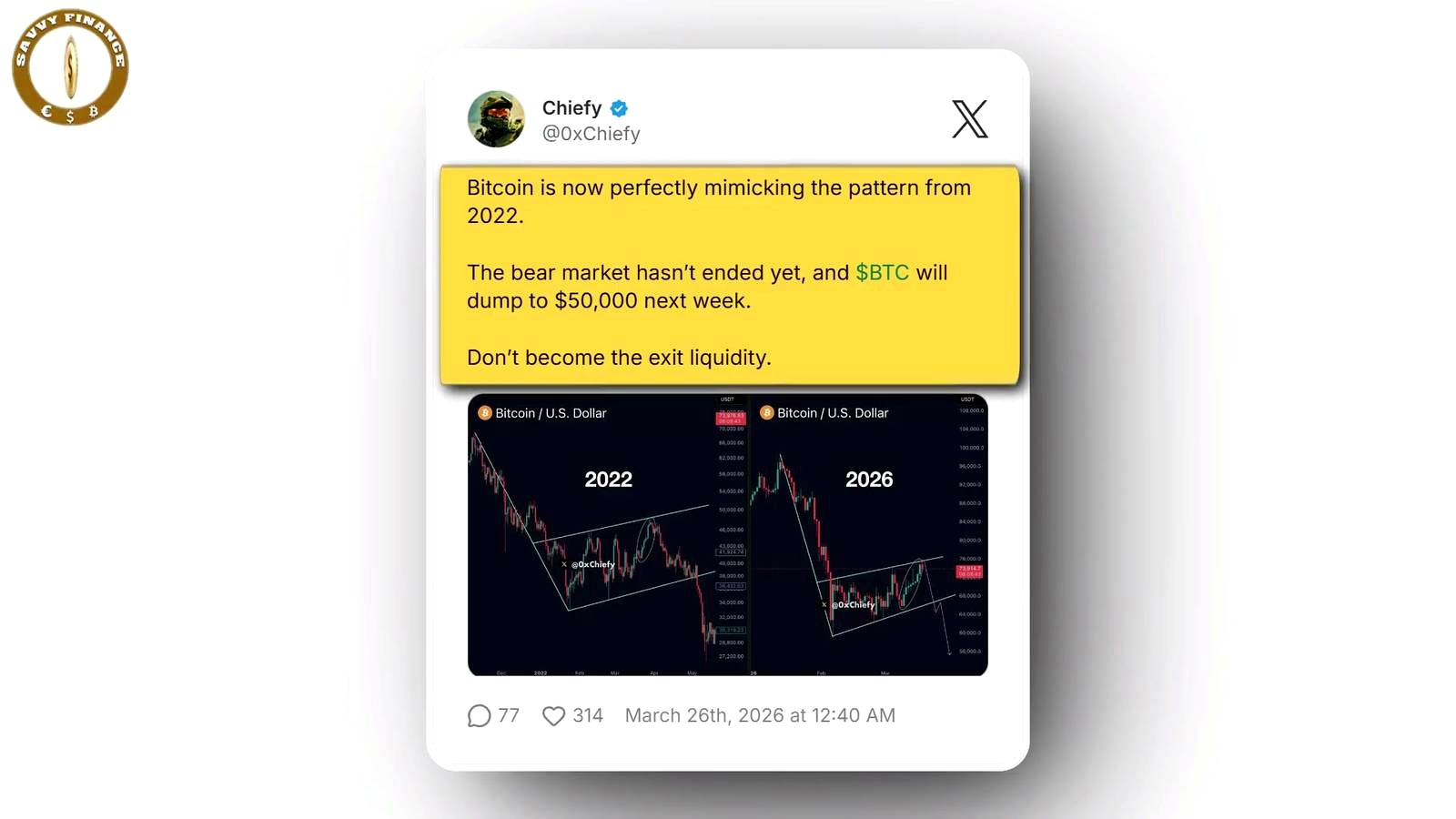
Not everyone sees strength here. On March 25, 0x Chiefy posted that Bitcoin is “perfectly mimicking” the 2022 pattern and warned that the bear market may not be over.
His call is clear: Bitcoin could dump to $50,000 if this bounce fails.
The key line is $60,000
Chiefy’s argument hinges on one level: $60,000. That was the February low, and it is now the most important price on the chart.
If Bitcoin breaks below it, the bearish comparison to 2022 becomes much harder to ignore. If $60,000 holds, that thesis weakens quickly.
That is the number that matters most right now, more than any dramatic prediction.
Why the 2022 comparison matters — and why it is incomplete
The comparison has some weight because 2026 shares one important feature with 2022: a hawkish Federal Reserve.
Oil price spikes tied to the Hormuz closure have pushed inflation fears higher and killed expectations for rate cuts. The Fed is on pause, and that pressure matters for risk assets.
But 2022 also had something 2026 does not: the collapse of FTX, a major crypto exchange failure that destroyed trust overnight. That specific shock is not present now.
The chart may look similar. The market structure is not the same.
Plan B’s bigger claim: Bitcoin is still deeply undervalued
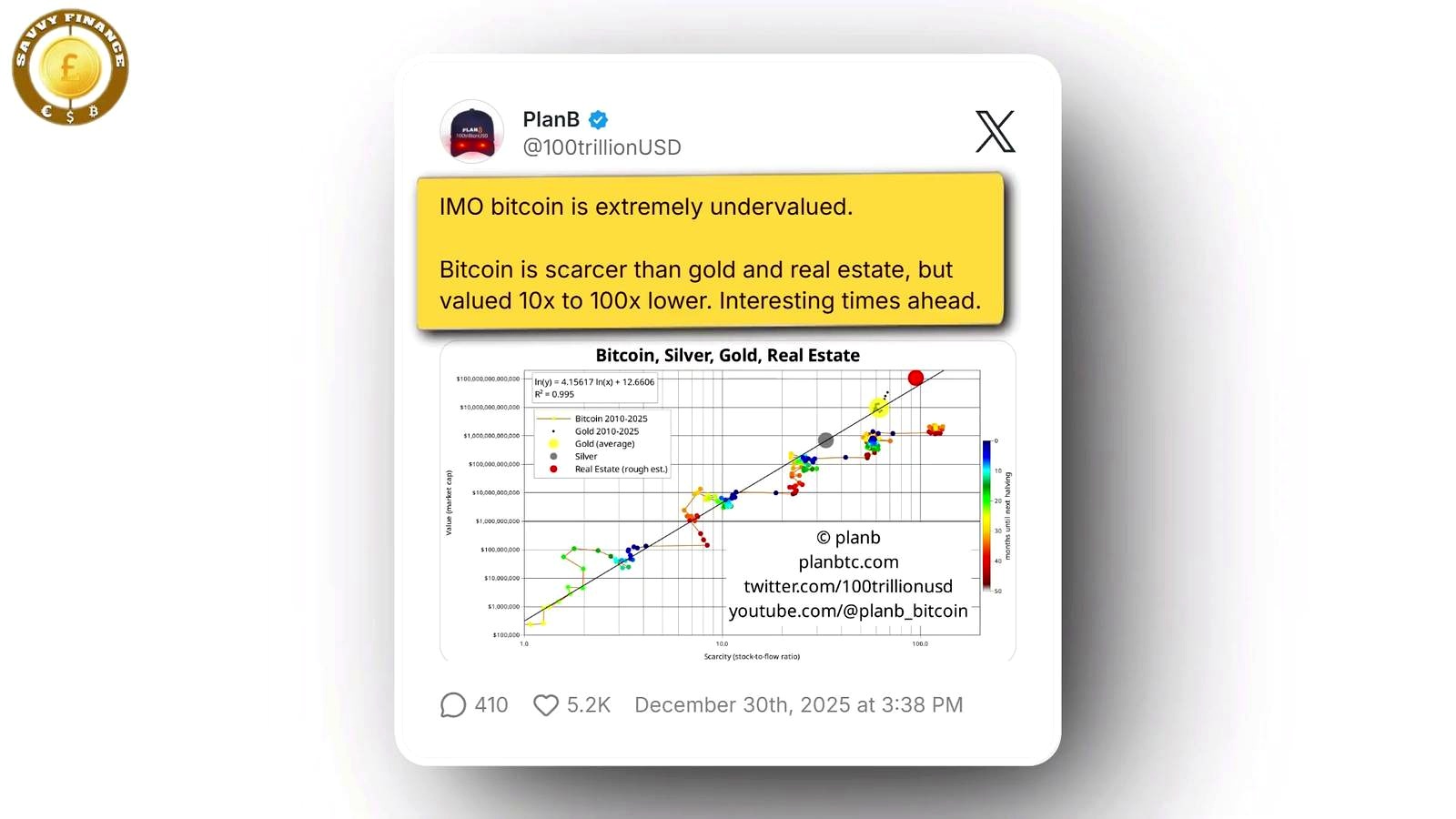
Plan B also made a broader argument that goes beyond this month’s price action. He said Bitcoin is “extremely undervalued” because it is scarcer than gold and real estate, yet valued 10 to 100 times lower.
The numbers behind that argument
- Gold market cap: roughly $18 trillion to $20 trillion
- Global real estate: around $300 trillion to $400 trillion
- Bitcoin market cap at $68,000: about $1.3 trillion
That means Bitcoin is worth roughly 7% of gold and less than 1% of global real estate.
Why scarcity is central to the bull case
There will only ever be 21 million Bitcoin. Plan B stresses that this is not a promise or a policy. It is fixed in code.
Gold supply grows every year, with roughly 3,500 tons mined annually. Real estate supply also expands as new buildings and cities are developed. Bitcoin supply does not respond to demand at all.
If a billion new people wanted Bitcoin tomorrow, supply would still remain 21 million.
That is the gap Plan B keeps pointing to. Either Bitcoin is being mispriced, or the market has not fully caught up to what it is.
Why this moment feels more important than it looks
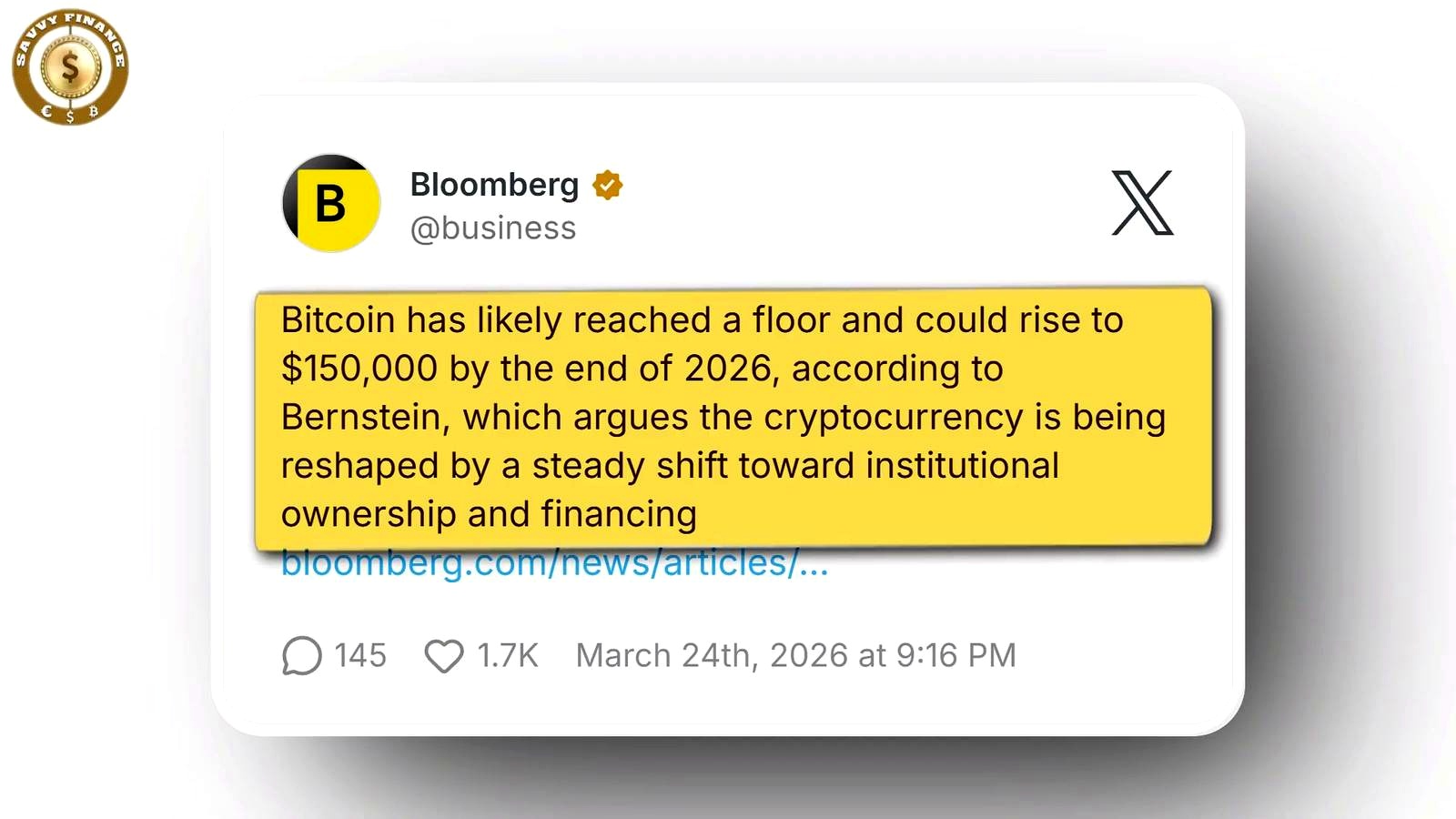
Bernstein analysts reiterated a year-end 2026 Bitcoin target of $150,000 in March. BlackRock and Fidelity ETFs remain active. A US House Financial Services Committee hearing on digital assets took place this week.
The traditional financial system is still building around Bitcoin, even with the market under pressure.
That is why the current range matters. Bitcoin is down from $126,000 to around $68,000, and the sellers have been active for five months. Yet price is still sitting near $68,000, not $30,000, not $15,000.
Gold fell 22% in under two months. Bitcoin held. That does not settle the debate, but it does make the standoff harder to ignore.
What to watch next
According to the material around this debate, the next phase depends on three things:
- Whether Bitcoin holds $60,000
- Whether the Federal Reserve shifts on rates
- Whether gold ETF outflows start rotating into Bitcoin ETFs
Those are the real pressure points. Everything else is noise around them.
FAQ
Why is Bitcoin not pumping right now?
Plan B says Bitcoin is stuck because the market is split. About half is still selling, including OG holders, technical traders, and four-year cycle believers, while the other half is buying through fundamentals, ETFs, and regulated institutional exposure.
What price is Bitcoin trading at now?
Bitcoin is trading below $70,000 and has been ranging mostly between $68,000 and $71,000 in late March 2026.
Why is $60,000 so important for Bitcoin?
$60,000 is the February low and the main level tied to the bearish 2022 comparison. If it breaks, the case for a move toward $50,000 gets stronger. If it holds, that bear thesis weakens.
What happened to gold?
Gold fell 22% in less than two months after peaking at $5,594 per ounce in January 2026. It dropped to around $4,335, marking its worst decline since 1983.
Why does the gold crash matter for Bitcoin?
Because money is leaving gold ETFs, and Bitcoin now has ETF infrastructure inside the same traditional brokerage environment. That has led some analysts to argue that part of those flows could rotate into Bitcoin.
What is Plan B’s undervaluation argument?
He argues that Bitcoin is scarcer than gold and real estate but is valued far below both. At around $1.3 trillion in market cap, Bitcoin is only a fraction of gold’s value and less than 1% of global real estate.
Is Plan B saying Bitcoin cannot go lower?
No. His argument is not that Bitcoin cannot fall further. It is that the market may not have seen a true full cycle top yet, and that calling the cycle finished may be too big a conclusion based on too little evidence.
Source

An Indian crypto journalist covering the developments in the Bitcoin and blockchain industries. Her work helps readers understand key changes in the world of digital assets.