A dramatic clash is unfolding between old money and new money. Within hours of Jaime Diamond going on national television to push against Bitcoin legislation, Kraken received a Federal Reserve master account, while the president of the United States attacked big banks for trying to sabotage crypto legislation.
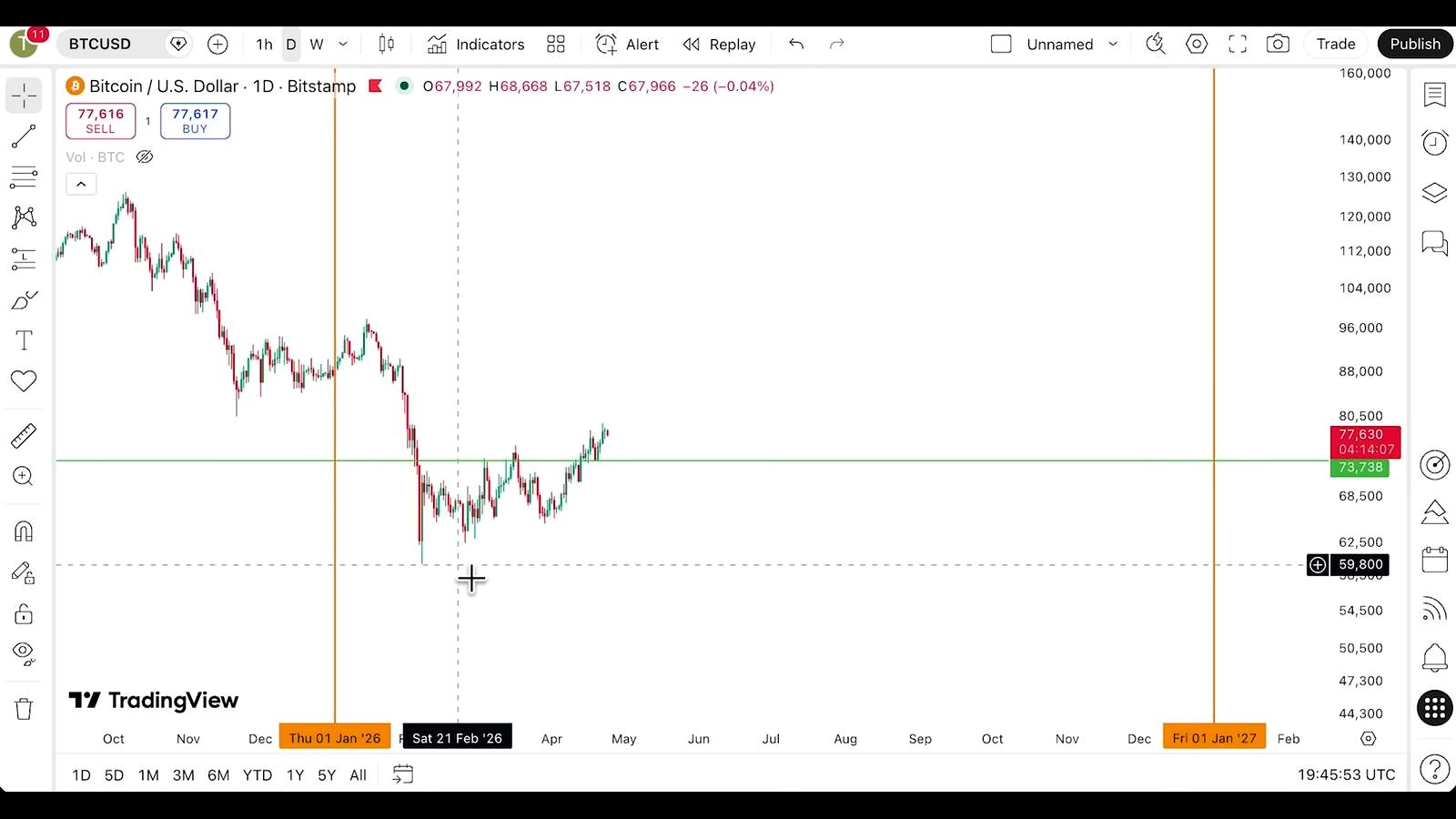
At the same time, Bitcoin surged, touched 74K, and outperformed stocks and gold as conflict in the Middle East intensified. The biggest shift may not be the price move itself, but what is happening inside the financial system’s plumbing.
Bitcoin’s Latest Move Is Turning Heads

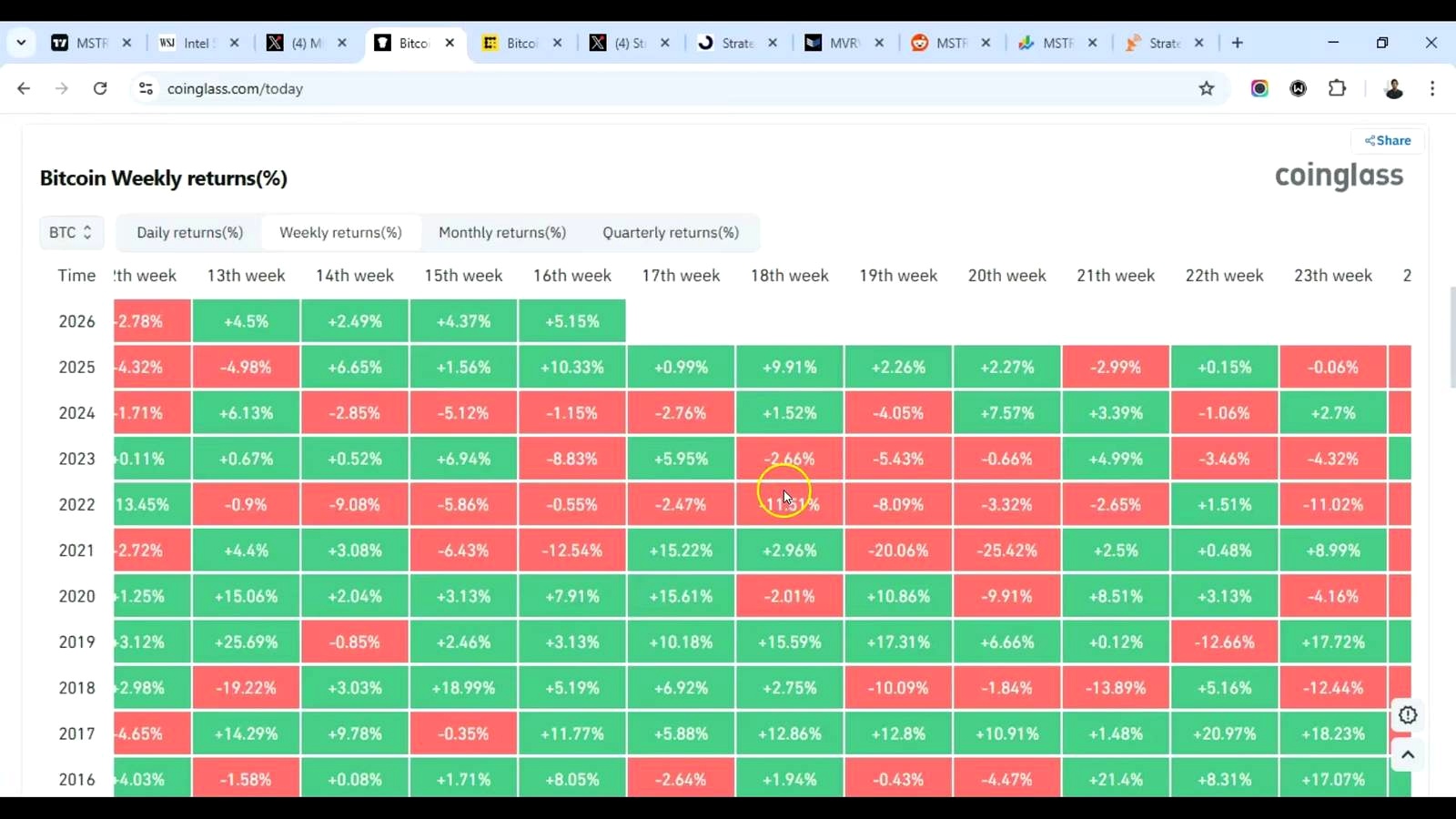
As war in the Middle East escalated, Bitcoin held its ground and outperformed gold for the first time in well over a year. Bitcoin rose more than 14% in three days and touched 74K, outperforming both stocks and gold since the war broke out.
That shift stands out because for most of 2025 and early 2026, Bitcoin had been treated as a risk-on asset. This week, it started behaving like what it is described as: a neutral, hard monetary asset that does not care who is bombing whom.
Why the price action mattered
- Bitcoin outperformed gold for the first time in well over a year
- Bitcoin rose over 14% in three days
- Bitcoin touched 74K
- Bitcoin outperformed stocks and gold after the war broke out
The Real Story: Infrastructure, Not Just Price
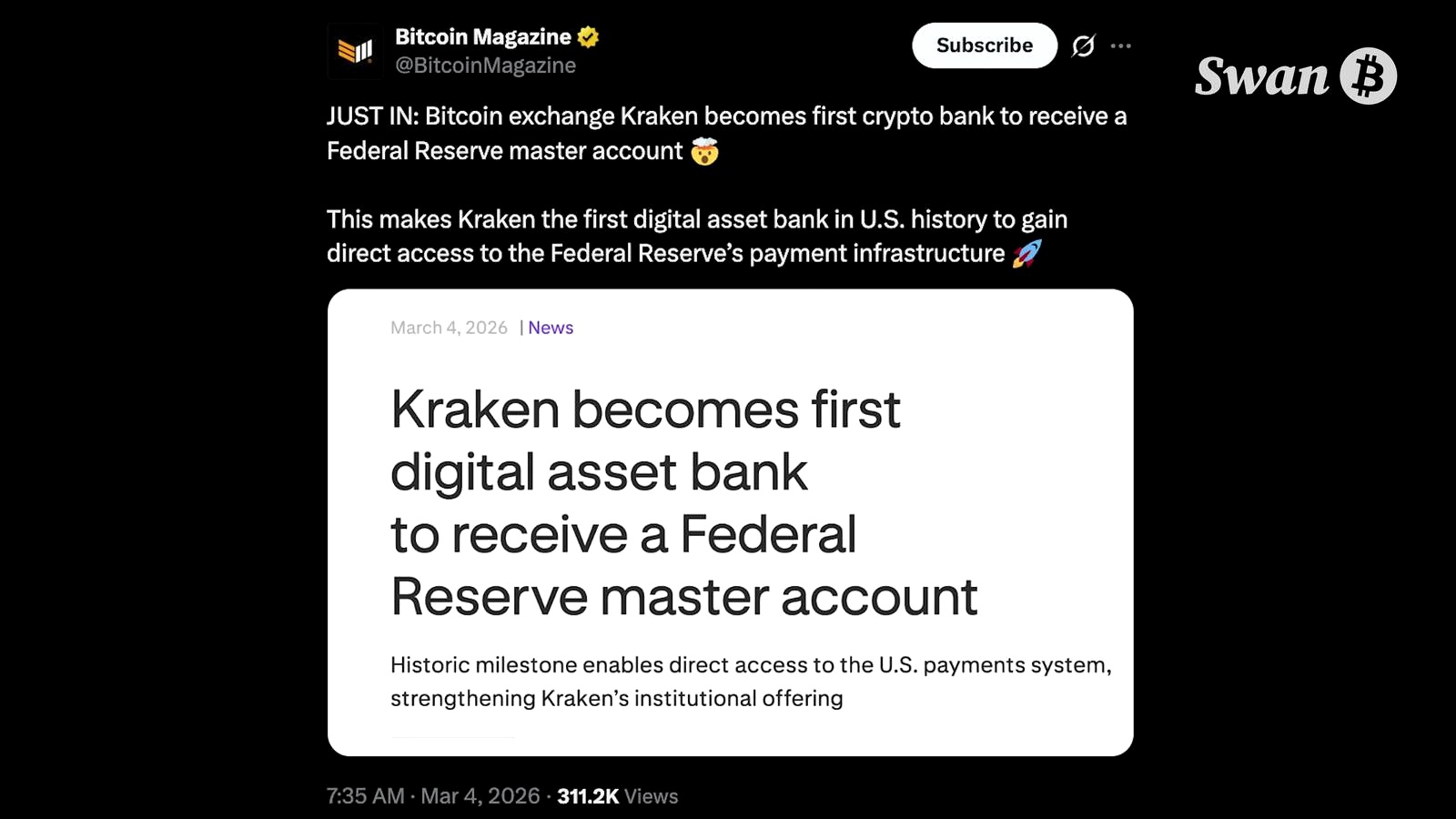
The price spike was tied directly to infrastructure developments. Kraken received a Federal Reserve master account, giving it direct access to Fedwire, the settlement rail where $4.5 trillion moves every single day.
On the same day, Morgan Stanley filed for a spot Bitcoin ETF with BNY Melon as custodian. These were described as more than headlines. They were framed as plumbing changes, and plumbing changes are presented as the clearest sign that adoption is accelerating.
What changed in the plumbing
- Kraken received a Federal Reserve master account
- The account provides direct access to Fedwire
- Fedwire moves $4.5 trillion every day
- Morgan Stanley filed for a spot Bitcoin ETF
- BNY Melon was named as custodian
Old Money vs New Money Is Now Out in the Open
The bigger story is the conflict behind the scenes. On one side is Jaime Diamond, representing big banks and banking lobbies that are fighting to preserve their control over money, yield, and financial plumbing.
On the other side are Kraken, Coinbase, Morgan Stanley, BNY Melon, the CFTC, and the president of the United States, all described as moving in the same direction: toward Bitcoin and crypto-native financial infrastructure.
The two sides of the fight
Old money: big banks, banking lobbies, and efforts to preserve a monopoly on money, yield, and system plumbing.
New money: Kraken, Coinbase, Morgan Stanley, BNY Melon, the CFTC, and political support moving toward Bitcoin and crypto-native infrastructure.
Jaime Diamond’s Case Against Crypto Legislation
Jaime Diamond, CEO of JP Morgan Chase, argued that if crypto firms want to pay interest-like rewards on balances, they should be regulated as banks. He said banks face restrictions and requirements including FDIC insurance, AML, BSA, community responsibility obligations, liquidity requirements, capital requirements, transparency requirements, reporting requirements, board requirements, and government requirements.
His position was that if crypto companies want to act like banks, they should become banks and operate under bank law. He argued for what he called a fair and balanced level playing field by product and said the public would pay the price if firms were allowed to operate without comparable regulation.
Key points from Diamond’s argument
- Rewards are the same as interest
- Rewards on transactions could be a compromise, but not on balances
- If a firm holds balances and pays interest, it should be regulated as a bank
- Banks operate under extensive regulatory requirements
- The financial system should be safe and regulated
The Counterargument: Protection, Not Fairness
The opposing view is that this is not really about fairness. It is about making the playing field so expensive that only banks can stand on it.
The critique says Diamond wants crypto companies to carry the full weight of a regulatory apparatus designed for fractional reserve banks, not for companies holding 1:1 reserves backed by US treasuries. It also argues that stable coins do not rehypothecate customer assets and do not lend deposits out repeatedly, but instead hold treasuries dollar for dollar.
It was further argued that the Genius Act already explicitly forbids stable coin issuers from doing the things that make banks dangerous in the first place.
Why critics say the bank argument falls apart
- The rules were designed for fractional reserve banks
- Stable coins were described as holding 1:1 reserves backed by US treasuries
- Stable coins were described as not rehypothecating customer assets
- The Genius Act was said to already forbid key bank-like risks
The Political Signal Changed Fast
Within hours of Diamond’s CNBC appearance, President Trump posted a direct response attacking banks for trying to undermine the Clarity Act and the Genius Act. Eric Trump followed with an even stronger response, calling the banking lobby’s efforts anti-American and anti-consumer.
That moment was framed as a major shift. The president of the United States was publicly taking the side of crypto against the banking establishment. The message was that the political calculus has changed and that Bitcoin and crypto are now a constituency and a voting block.
What made the politics so striking
- The president publicly attacked banks over crypto legislation
- Eric Trump called lobbying efforts anti-American and anti-consumer
- The Trump family was presented as arguing for a decentralized financial future
- Bitcoin and crypto were described as a constituency
The Banking System’s Safety Claims Came Under Fire

The argument for tighter crypto restrictions rests on the assumption that the banking system is the safe and responsible alternative. That assumption was challenged by discussion of fraud, weak underwriting, and missing due diligence in shadow banking and private credit.
Jeff Snder’s description focused on “cockroaches” in the system: overextended and overleveraged risk-taking, no real controls, and banks extending credit without basic underwriting or due diligence. In case after case, collateral was described as fraudulent or double posted.
The critique was blunt: the same system demanding more regulation for crypto was presented as riddled with failures, while regulators missed it.
Problems highlighted inside the old system
- Overextended and overleveraged risk-taking
- Little or no due diligence
- Fraudulent or double-posted collateral
- Credit extended without basic homework
- Regulators missing major problems
The Fed System Went Down While Bitcoin Kept Running
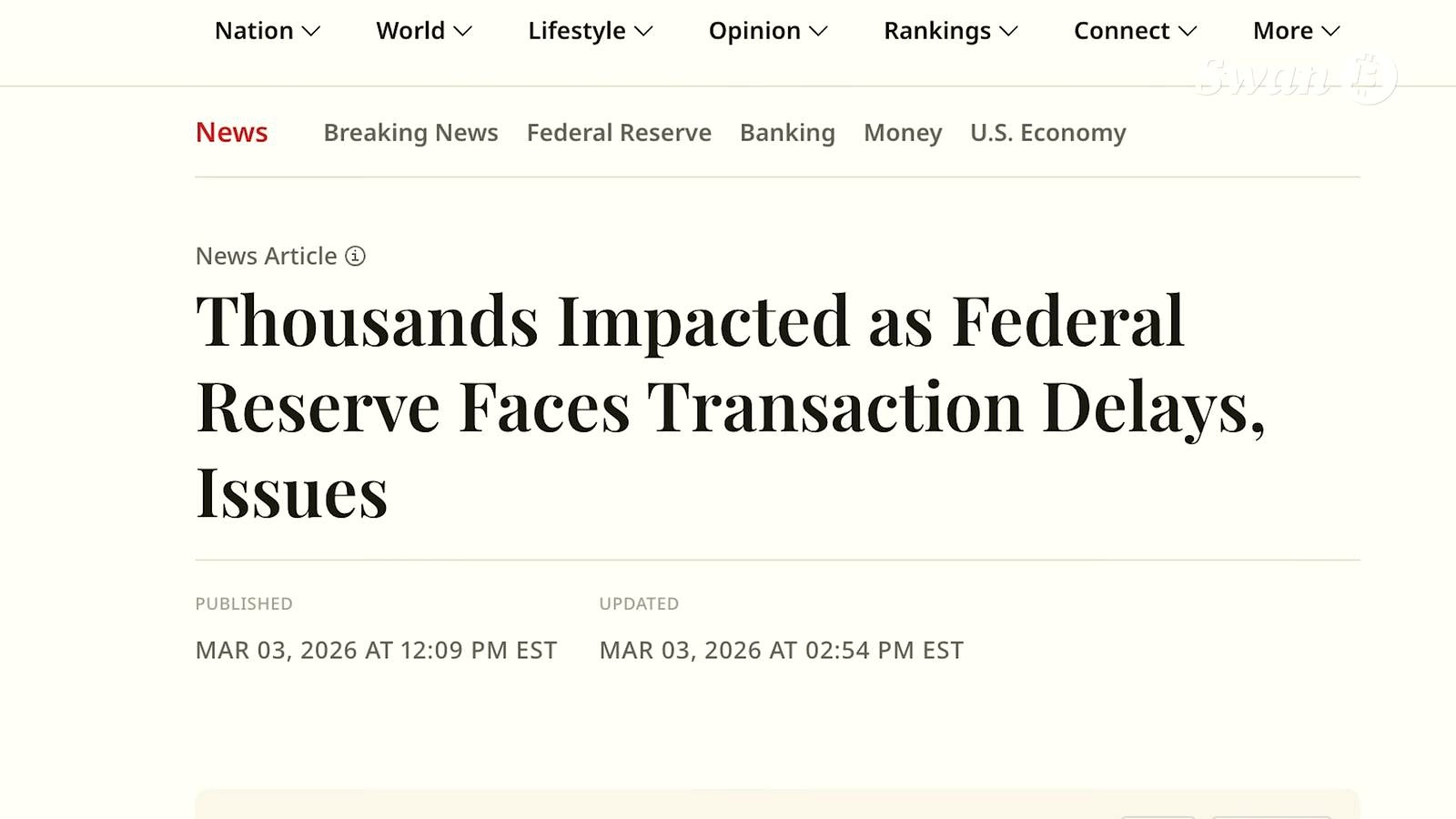
Two days earlier, the Federal Reserve’s system went down, causing a service disruption that delayed payments across the United States. The plumbing that was described as safe and well regulated literally broke.
In contrast, Bitcoin’s network was described as having maintained 99.99% uptime since the first block was mined in January 2009. The contrast was drawn clearly: no cockroaches, no bailouts, and no service disruptions.
The contrast that stood out
- The Federal Reserve system experienced a disruption
- Payments across the country were delayed
- Bitcoin was described as maintaining 99.99% uptime since January 2009
Why Kraken’s Fed Access and Morgan Stanley’s ETF Matter
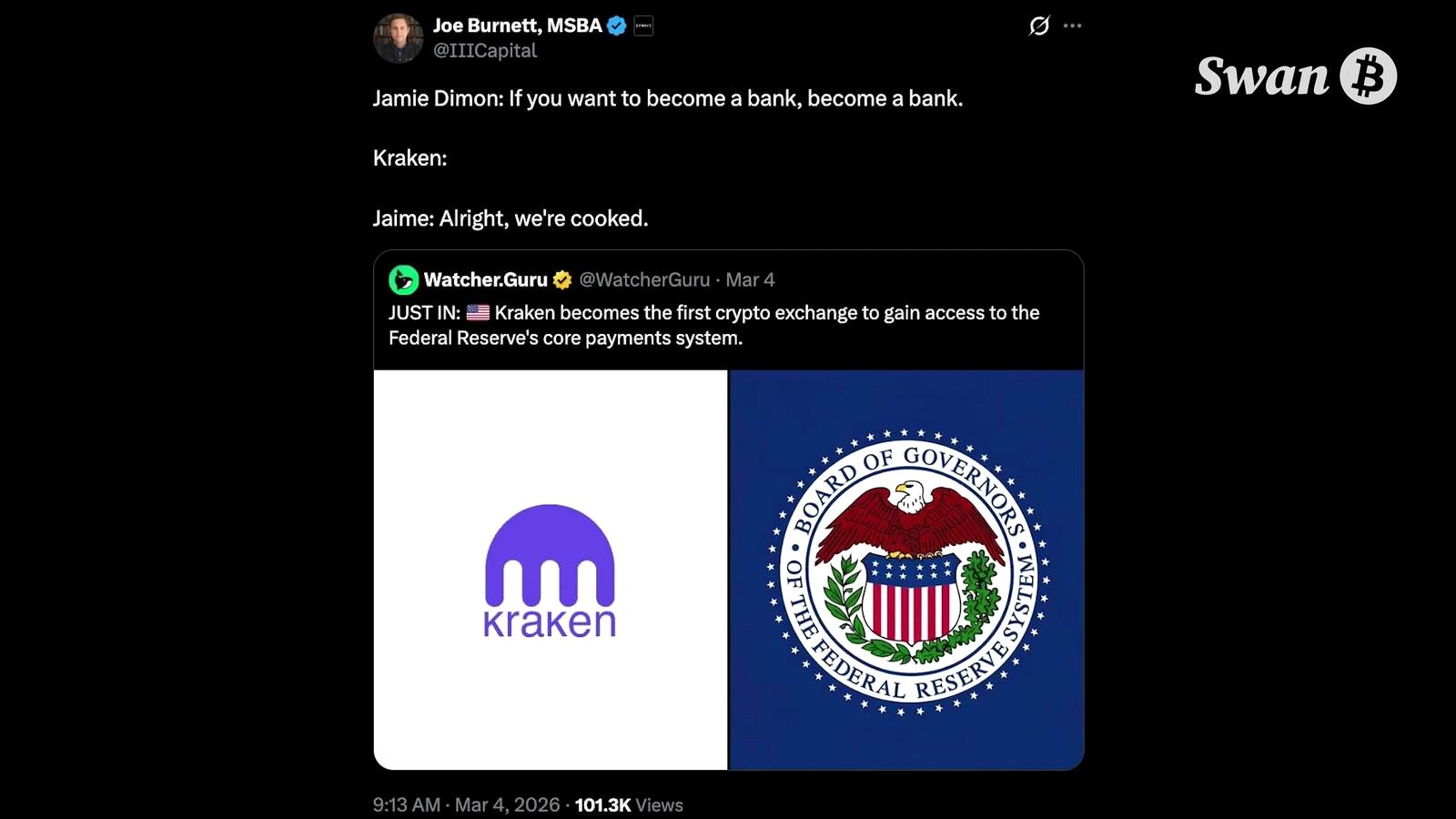
Kraken’s Federal Reserve master account was described as far more than a symbolic victory. It gives direct access to the same pipes used by every major bank in America.
Morgan Stanley’s Bitcoin ETF filing added another major signal. The filing, paired with BNY Melon as custodian, was framed as institutional distribution gearing up. Along with the CFTC moving toward perpetual futures, these moves were presented as proof that the system is bending toward Bitcoin.
The core idea is that banks may fight Bitcoin in public while the infrastructure absorbs it in private.
Why Neutral Money Is Back at the Center
This conflict was also tied to a bigger global backdrop. Escalation in the Middle East, strikes on Iran, market shock, and a move toward hard assets were all presented as reminders of why neutral money matters.
Parker Lewis connected the issue to currency debasement, broken international trust, and the problems of a fiat system that depends on trust. If countries no longer trust each other’s currencies, and if currencies can be weaponized or frozen, then the demand for neutral money grows.
The global pressures described
- Money printing and debasement
- Broken international trust
- Currencies placed at the center of political and economic conflict
- Loss of confidence when currencies can be weaponized or frozen
Why Bitcoin Was Presented as the Answer
The case made here is direct: the answer is not gold, not stable coins, and not CBDCs. Gold was described as having been confiscated whenever it became too effective as an escape valve. Stable coins and CBDCs were described as digital versions of the same broken trust.
Bitcoin was presented as open, neutral, and auditable. No nation controls it. No central bank can print more of it. It was also presented as not being subject to outages, shadow bank fraud, or hidden “cockroaches” in the plumbing.
Why Bitcoin was singled out
- Open
- Neutral
- Auditable
- No nation controls it
- No central bank can print more of it
The Direction of the Fight
The central claim is that Bitcoin is winning even while banks continue fighting it. Banks are described as lobbying against crypto legislation with one hand while building Bitcoin products with the other.
The old money versus new money war was framed as already decided. The castle does not get stormed. The castle installs Bitcoin because the spreadsheets demand it. And with every plumbing change, political shift, and macro shock, the distance between Bitcoin and the center of the global financial system gets smaller.
FAQ
Did Kraken really receive access to the Federal Reserve system?
Yes. Kraken received a Federal Reserve master account, which was described as giving direct access to Fedwire.
Why is the Federal Reserve master account such a big deal?
It was presented as a plumbing change rather than a symbolic headline. Direct access to Fedwire means access to the same settlement rail used by major banks, where $4.5 trillion moves every day.
What did Jaime Diamond argue on television?
He argued that if crypto firms want to hold balances and pay interest-like rewards, they should be regulated as banks and operate under bank law with the same restrictions and requirements.
Why are banks accused of trying to block crypto competition?
The criticism is that banks want rules written so crypto can never compete on equal footing, especially by blocking stable coin issuers from paying yield to customers.
What political shift happened the same week?
The president of the United States publicly attacked big banks for trying to undermine the Clarity Act and the Genius Act, while Eric Trump called the banking lobby’s efforts anti-American and anti-consumer.
How did Bitcoin perform during the market turmoil?
Bitcoin rose more than 14% in three days, touched 74K, and outperformed stocks and gold since the war broke out.
Why was Bitcoin described as neutral money?
It was described as open, neutral, and auditable, with no nation controlling it and no central bank able to print more of it.
What is the broader conclusion from these developments?
The conclusion presented is that the plumbing, the politics, and the macro backdrop are all moving in the same direction: toward Bitcoin, with no sign of reversal.
Original Source

John Burnell focuses on Bitcoin infrastructure, wallet security and blockchain technology. He writes educational articles explaining how Bitcoin works and how the technology evolves.