The material presents a broad argument about money, inflation, government control, and Bitcoin. It links everyday financial pressure, declining purchasing power, and social instability to what it calls “broken money,” while presenting Bitcoin as a possible alternative.
Across the discussion, the themes are consistent: inflation is described as a loss of purchasing power, fiat money is described as vulnerable to manipulation, and Bitcoin is described as sound, open, and nonpolitical money. The article below organizes those ideas into a coherent overview.
From One-Income Households to “Broken Money”
The discussion opens with a cultural comparison: in the days of The Brady Bunch, one working parent was said to be able to support a family with six kids, a live-in maid, and even a dog. The question raised is simple: what happened?
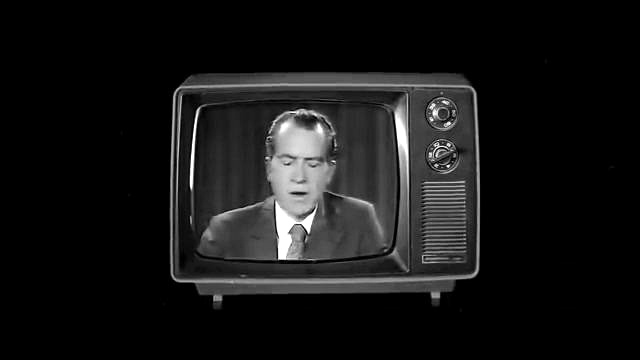
The answer given centers on the U.S. dollar leaving the gold standard. On August 15, 1971, President Nixon announced that he had directed Secretary Connally to suspend temporarily the convertibility of the dollar into gold or other reserve assets. The material argues that this decoupling of gold from currency allowed more money to be printed and claims the reason was to pay for the Vietnam War.
The Argument About Inflation

The core claim is that the more dollars are printed, the more the dollar loses purchasing power. The material says that when money supply expands, the currency is diluted, and that this dilution is the driver of inflation.
It distinguishes between two kinds of inflation:
- Physical inflation: price increases caused by events such as a tornado or hurricane creating a temporary shortage of goods and services.
- Monetary inflation: the much more common form, described as the source of 98% of inflation in the world, caused when goods, services, and assets are priced in a currency that is itself inflationary.
An example is given: if things are priced in dollars and the supply of dollars doubles while the supply of houses does not, then prices will probably double over time. The material also says wages typically do not keep up, especially in hyperinflation, so inflation eats into purchasing power.
How Inflation Affects Ordinary People
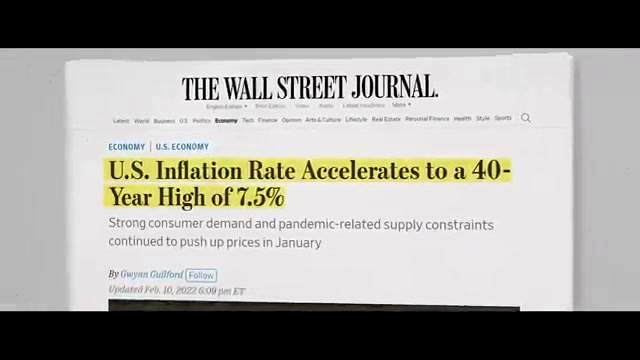
The discussion describes inflation as a direct attack on working people. If someone is paid a salary, they are exchanging time and effort for money that becomes less valuable every day. The claim is that this leaves less room for creativity and innovation because people are forced to keep “punching their ticket.”
It rejects the idea that inflation is good, calling that “nonsense,” and asks why the devaluation of hard-earned money should be considered beneficial. According to the material, inflation benefits “the people at the tippy top.”
Several social consequences are listed:
- People feel left behind.
- Businesses collapse.
- Families collapse.
- People lose their lives.
- More people work multiple jobs just to make ends meet.
- There are more dual-income households and fewer households with one person working and one person staying home.
The material states that the average income in the United States is now $5,000 less than the average cost of living for basic human needs such as food, shelter, and transportation. It says this means most Americans in that category cannot make ends meet.
How Money Is Created
The explanation given is direct: money is printed digitally. A central bank is said to have the ability to create money digitally, and actual currency is also printed and distributed through the Federal Reserve Banks.
The current financial system is described as being built for the elite and designed to ensure that those who control institutions and already have large amounts of money can profit more at the expense of regular working-class citizens. The material also says the system promotes the wealth of a minority.
Debt, Credit, and Dependency
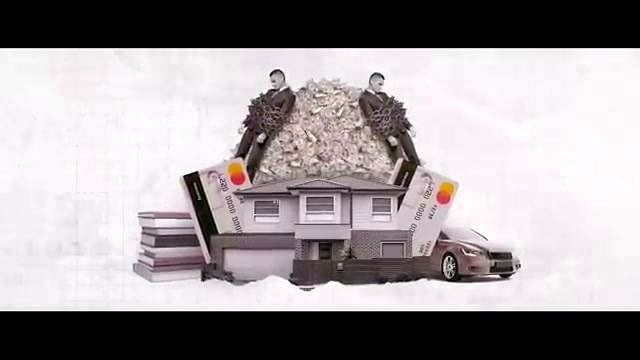
The system described in the material is not only inflationary but also debt-based. It says the incentives exist for the Fed to provide extremely cheap credit to banks, which then mark it up and lend it out, creating what the speakers call “debt slaves” or indentured servants.
People, in this account, are encouraged to take on debt they cannot sustain. The material says this is not good stewardship and points to many people working multiple jobs as evidence that the economic structure has a problem.
It also says inflation leads many people to max out credit cards and take on more debt, which only creates bigger problems.
Historical Illustrations of Currency Debasement
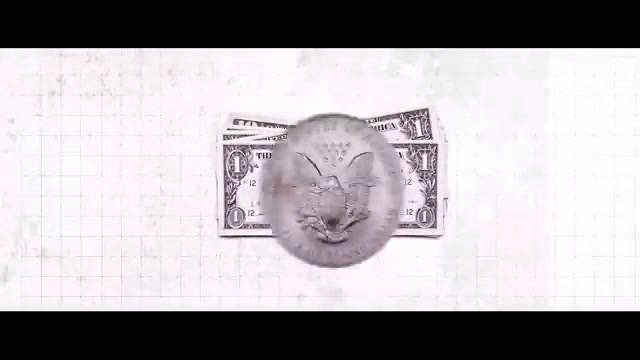
The discussion compares modern inflation to older forms of currency dilution. It explains that in medieval and earlier periods, local sovereigns, kings, or governments issued their own currencies, and one of the great temptations was to dilute them.
A silver dollar is used as an example. The claim is that what was once worth one dollar now requires $38 Federal Reserve Note dollars to buy $1 of silver, showing the destruction of purchasing power.
The material also explains “sound money” through gold coins. Kings and queens would mix cheaper metals into gold coins so they could create more coins from the same amount of gold. The public, it says, discovered that pure and diluted coins made different sounds when dropped. From this comes the definition: sound money is money that cannot be diluted.
Why Bitcoin Is Presented as Different

Bitcoin is presented as the opposite of inflationary fiat currency. The central idea is that with Bitcoin, “you just can’t do that” — meaning you cannot print more at will.
Several qualities are emphasized:
- Bitcoin has a limited supply of 21 million.
- It is open to everyone and free for everyone to join.
- It is described as nonpolitical.
- It does not discriminate based on race, gender, ethnicity, or geographic location.
- It is built by the people for the people.
- It gives users total control over their money.
The material repeatedly describes Bitcoin as “people’s money” and says the government cannot make it.
Bitcoin as Peer-to-Peer Digital Money
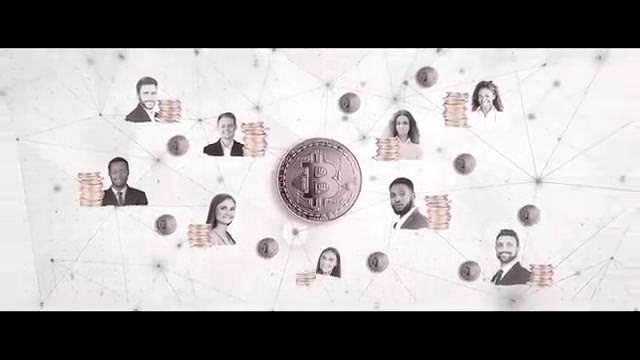
Bitcoin is described as a digital asset that moves through the internet without a third party such as a bank or credit card company approving the transaction. A simple definition is given: Bitcoin is a piece of software that allows two parties to exchange value over the internet in a transparent and trustless fashion, as easy as sending an email.
A major concept explained is the double spend problem. In ordinary digital files, when a picture is sent, copies remain on both devices. Money cannot work like that. The material says Bitcoin solved this decades-old computer science dilemma, making peer-to-peer transfer of money in digital form possible for the first time.
What the Blockchain Is
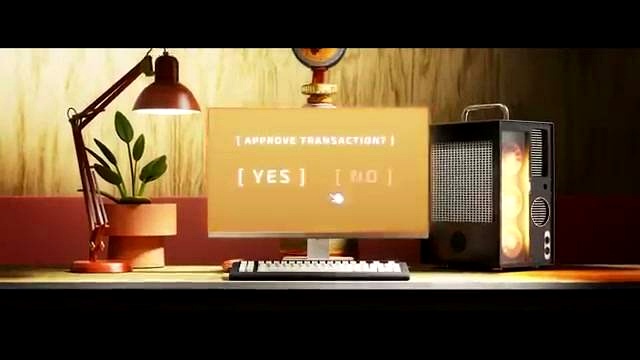
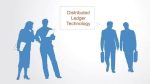
The blockchain is described as a ledger. More specifically, the Bitcoin blockchain is a digital ledger of transactions where all the computers on the network have to agree to add a block. It is a chain of blocks, each containing a list of transactions, and the whole network verifies that those transactions are accurate.
The article also explains that ledgers are not new. They are traced back to the 11th century and were popularized in Florence during the Renaissance. In traditional finance, separate ledgers must reconcile across banks and merchants, which can take days or even up to 30 days with credit cards. Those systems also involve fees.
By contrast, Bitcoin is described as one universal ledger updated and distributed around the world every 10 minutes, requiring no middleman.
Ownership, Wallets, and Keys
Bitcoin is described as a digital bearer instrument: he or she who holds it owns it. The material explains storage through a locker analogy. A locker has a public address that anyone can use to deposit something into it, but only the person with the private key can open it and move things out.
Bitcoin wallets are explained in the same way. There is a public address for receiving funds, but only the holder of the private key can unlock and move them. A secret phrase, often 12 or 24 words, is described as the way most people store the information used to create the secret key. That phrase, the material says, is the piece that must be kept safe.
Bitcoin Compared With Gold

The material says Bitcoin shares some characteristics with gold but has important advantages:
- It is more transferable than gold.
- It is more portable than gold.
- It is more divisible than gold, down to eight decimal points.
- It is more verifiable than gold.
Gold is described as requiring work to extract and as not being controlled by one party. Bitcoin is said to have some of these same characteristics. Unlike gold, however, the material says Bitcoin can be transferred anywhere in the world in seconds or in about 10 minutes for very large values.
CBDCs Versus Bitcoin
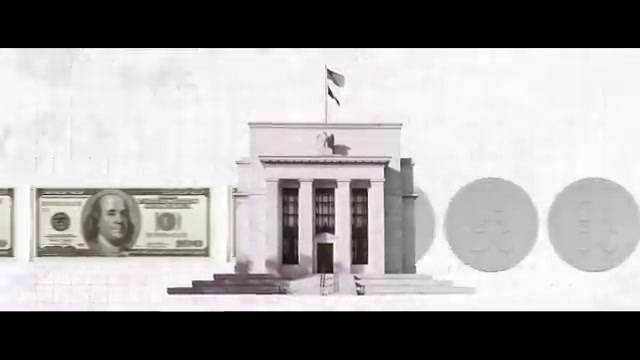
A major section contrasts Bitcoin with central bank digital currencies, or CBDCs. CBDCs are described as central banks trying to digitize fiat currency into a digital dollar.
The concerns listed are severe. According to the material, CBDCs would allow governments to:
- Surveil every transaction an individual makes.
- Turn off a bank account if they disagree with someone’s actions.
- Cancel transactions.
- Program what people are allowed or not allowed to buy.
This is contrasted with Bitcoin, which is described as decentralized, permissionless, and controlled by no government.
The material gives several imagined or discussed examples: a digital wallet being frozen after criticism of a president, a person being denied alcohol for exceeding a weekly limit, and citizens escaping with savings “in their head” so border guards cannot confiscate their wealth. In this contrast, the first two are presented as CBDC outcomes and the last as a Bitcoin outcome.
Bitcoin, Freedom, and Property Rights
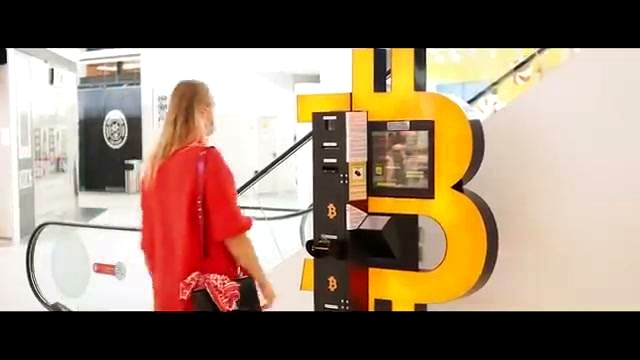
The speakers repeatedly describe Bitcoin as giving people back control over their time, energy, money, and lives. It is said to provide digital property rights and to let people be their own bank.
One claim is that before cryptocurrency, a bank was needed to allow participation in internet-based finance, but now money native to the internet exists. The material says Bitcoin allows anyone anywhere in the world to use it at any time for any reason, that no one can censor them, and that everyone operates by the same rules whether billionaire, president, or someone making $1 a day.
Several examples are used to illustrate this:
- A family leaving the Soviet Union in 1989 could only take $100 per person and would have preferred to carry their earned value with them.
- People crossing borders cannot easily carry large amounts of cash or gold, but Bitcoin can be carried through private keys or even 12 words.
- When bank accounts in Moscow were blocked by a regime, Bitcoin savings allowed activities to continue.
- When governments or payment platforms block or censor people, Bitcoin is presented as an escape from that control.
Financial Inclusion and Access

The material says that 50% of the planet does not have a bank account and is therefore shut off from the global economy. Without access to a credit card or digital payment method, many people cannot shop online or fully participate economically.
Bitcoin is presented as inclusive and open to everyone around the world. It is described as a math-based system trying to remove politics from money.
Examples of financial inclusion are emphasized:
- People in Africa dealing with broken or defective currencies.
- People in Nigeria using Bitcoin for peer-to-peer transactions, with the claim that more than 30% of people use it.
- Argentinians using Bitcoin to get around capital controls and restrictions on moving dollars.
- Women in Afghanistan receiving money directly through Bitcoin when they lacked bank accounts and would otherwise have to rely on male relatives’ accounts.
Bitcoin in Times of Crisis
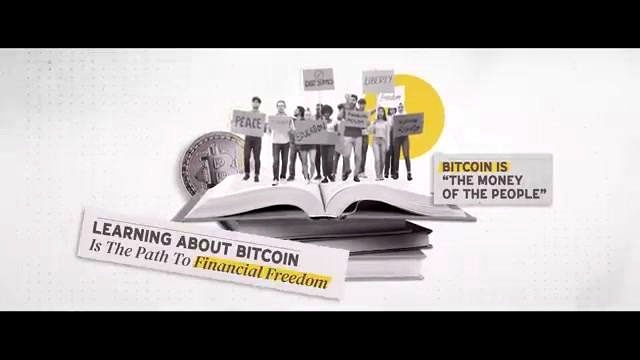
The material describes Bitcoin as a “life raft” when currencies fail or when war breaks out. One example given is the war in Ukraine: on a Saturday night, the only way described for getting money into Ukraine outside banking hours was Bitcoin, which was used to help buy supplies.
Bitcoin donations are also described as a plan B for activists and organizations. The claim is that during protests or political turmoil in places such as Russia, Belarus, Ukraine, and elsewhere, it is important to have a financial tool that cannot be turned off when freedom is at stake.
Moral and Religious Arguments
The material repeatedly frames Bitcoin not only as a technology but as an ethical idea. It says Bitcoin is based on truth, integrity, balance, and conservation of energy. It is described as ethical and peaceful, not a currency that worships violence.
Many religious perspectives are mentioned:
Christianity and the Bible
The material says the Bible distinguishes just money from unjust money and argues that government fiat currency is not just money because it steals from the poor and gives to the rich. It also says money itself is not evil, but the love of money is evil.
Scriptural references are invoked about honest weights and measures, and inflationary policy is compared to diluting wine with water.
Islam
In Islam, lending at interest is described as forbidden, with riba meaning surplus, excess, interest, usury, and money creation. Sound money is described as money that cannot be created from nothing and therefore requires proof of work.
The material also cites a hadith in which the Prophet refused price fixing because he did not want to cause injustice, using that to argue for a free market economy as fundamentally just. Bitcoin is then described as the most Islamic form of money ever invented and, more broadly, as deeply aligned with the Abrahamic faiths.
Judaism
The material compares Judaism to blockchain through the idea of transmission as a chain, with individuals validating teachings like full nodes. Bitcoin is described as useful to a dispersed people who have had to move from country to country and need money they can take with them without interference from third parties.
Buddhism
Buddhism is described as decentralized because one must validate teachings personally rather than trust them blindly. This is compared to block validation and to a system based on rules that benefit all beings rather than a select subset.
Vedic and Hindu Thought
The material says economics should aim at material and spiritual well-being, especially for the weakest in society, and that monetary profit is only a byproduct. It argues that printing money to stimulate shopping or debt ignores the real metrics that make life worth living.
Bitcoin, War, and Peace

A major claim in the material is that fiat money funds wars because governments can print money instead of asking citizens directly to pay for conflict. The argument is that war becomes easier to finance when its cost is pushed into the future through currency debasement and inflation.
The material states that the United States spent $8 trillion on regime-change wars over the past 20 years and argues that the middle class ultimately pays through inflation. It also says central banks can print money to fund both sides of a war.
Bitcoin is therefore presented as a “currency of peace.” The idea is that under a Bitcoin standard, governments could not debase money to hide the cost of war. If leaders had to ask populations directly for permission and payment, the material argues, many wars would not happen.
A Different Future

The discussion ends on a hopeful note. Bitcoin is described as a unifying technology that brings Republicans, Democrats, conservatives, and libertarians into the same room because it reflects values they share.
It is also described as a basis for a more fair, inclusive, savings-based, and equity-based system rather than one driven by cheap debt and endless money creation. The material says a sound form of money could put society back on an even keel, make life affordable again, and allow people to plan for the future.
Some speakers imagine a future in which Bitcoin becomes a reserve currency, or even the world standard. Others say that even before that, Bitcoin is already expanding in the nations that need it most, especially where governments have failed, where currencies are collapsing, or where people need a financial tool that cannot be turned off.
The final sentiment is simple: people should not steal, should not wage war, and should have a form of money they can trust, so future generations can live together in peace and harmony. In that view, Bitcoin embodies hope, purity, and truth.
FAQ
- What does the material mean by “broken money”?
It refers to a monetary system in which governments and central banks can print more money, reducing purchasing power, increasing inflation, and causing social and economic harm.
- What happened in 1971 according to the material?
It says President Nixon suspended the convertibility of the dollar into gold on August 15, 1971, taking the dollar off the gold standard.
- How does the material define inflation?
It distinguishes physical inflation caused by temporary shortages from monetary inflation caused by an inflationary currency. It says monetary inflation is much more common.
- Why is Bitcoin described as superior in the material?
Because it is presented as limited in supply, nonpolitical, open to everyone, resistant to dilution, and not controlled by governments or central banks.
- What is the blockchain according to the material?
It is a digital ledger of transactions where the network agrees on updates, creating a chain of blocks that records transactions accurately.
- What is the difference between Bitcoin and a CBDC in this material?
Bitcoin is described as decentralized and permissionless, while a CBDC is described as government-controlled, surveilled, programmable, and capable of restricting transactions.
- What role does Bitcoin play in freedom and property rights here?
The material says Bitcoin allows people to hold and move their wealth directly, be their own bank, and protect their savings from censorship, confiscation, or debasement.
- How is Bitcoin linked to peace in the material?
It argues that fiat money helps fund wars through money printing, while Bitcoin would make it harder to hide or debase the cost of conflict, making war less affordable.
Source

An Indian crypto journalist covering the developments in the Bitcoin and blockchain industries. Her work helps readers understand key changes in the world of digital assets.