Is Bitcoin rising on speculation, or because the market is being rewired underneath it? As traders debate whether the latest move can last, Altcoin Daily argues the real driver is not social-media hype but a deeper shift in institutional adoption, corporate treasury demand, and a friendlier U.S. regulatory backdrop.
The Core Thesis: Bitcoin’s Bid Is Broadening
According to Altcoin Daily, Bitcoin’s rally is set to continue because the demand base is expanding in several directions at once. The host’s case rests on a cluster of bullish inputs: corporate buying led by Michael Saylor’s Strategy, large financial firms such as Morgan Stanley and Charles Schwab moving further into crypto, and a regulatory tone in Washington that appears more constructive than the enforcement-heavy posture seen in prior years.
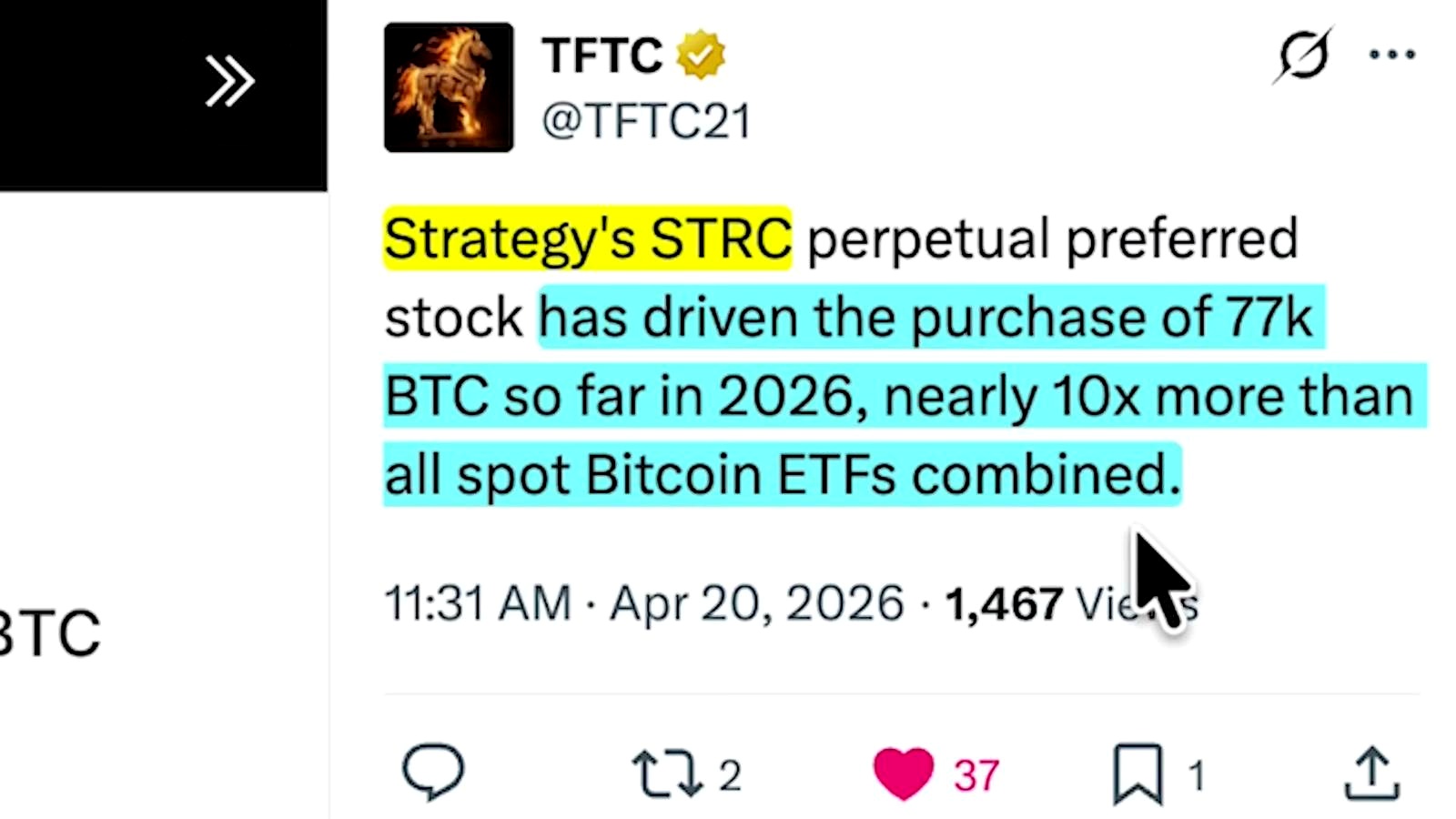
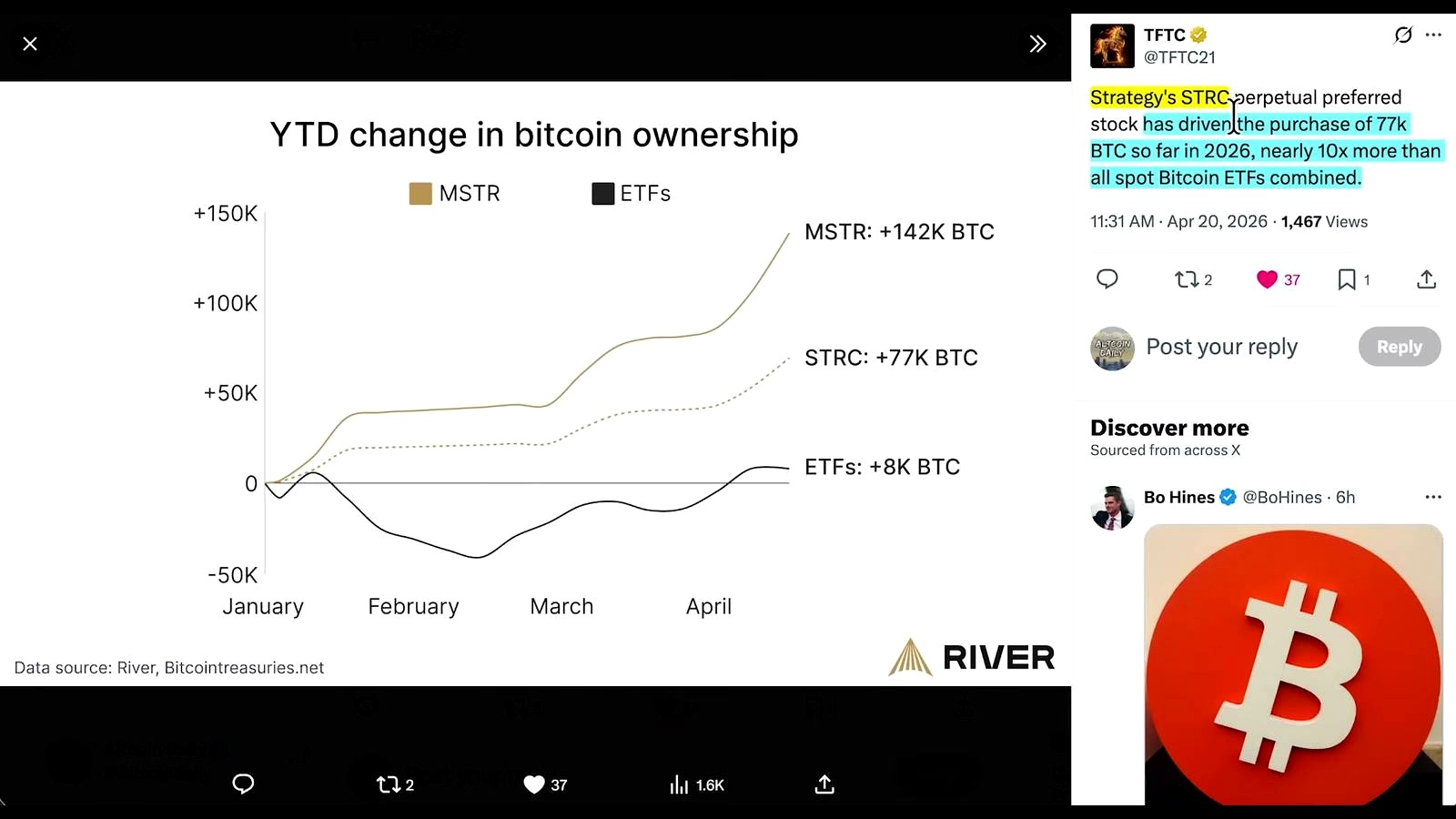
The biggest numerical claim in the video is Strategy’s latest purchase of $2.54 billion in bitcoin in a single week. Altcoin Daily says that buying amounted to roughly 2.5 months of Bitcoin supply purchased in one shot, and adds that Strategy could reach 1 million bitcoins by or before August. The host also says Strategy has bought 77,000 Bitcoin so far in 2026, which he describes as nearly 10x more than all spot Bitcoin ETFs combined over the same period. He ties that acceleration to Strategy’s perpetual preferred stock offering, which he says now offers an 11.5% return.
That thesis broadly aligns with one of the market’s strongest post-ETF narratives: Bitcoin is no longer only a retail momentum trade. It is increasingly being framed as a treasury reserve asset, a portfolio diversifier, and a macro hedge. That said, the bullish case is no longer contrarian. Institutional adoption has become the market consensus. The harder question now is not whether institutions are here, but whether their buying can continue to outpace profit-taking, miner supply, and any macro shock that drains risk appetite.
In the broader market context, Bitcoin tends to benefit when liquidity expectations improve, sovereign debt concerns rise, or investors look for assets outside the traditional fiat system. It also tends to struggle when real yields surge, the dollar strengthens sharply, or broader risk assets roll over. So Altcoin Daily’s thesis fits the macro story, but it remains conditional on supportive liquidity and continued demand from large allocators.
Supporting Analysis: Treasury Companies, Wall Street, and Regulation

Altcoin Daily places heavy emphasis on the idea that Bitcoin demand is becoming institutionalized. Beyond Strategy, the host highlights Michael Saylor’s prediction that there will be “thousands and thousands” of Bitcoin treasury companies, with a major treasury player in every capital market and room for “a hundred” more successful firms in each major market. That is an aggressive vision, but it captures a real shift: public companies increasingly see Bitcoin not just as a speculative asset but as a balance-sheet strategy.
The host also points to a Fidelity presentation that framed Bitcoin’s average annual return over the last 5 years at 65%. In that framing, companies with excess cash must weigh whether their internal projects can outperform the “opportunity cost of Bitcoin.” That is a provocative way to think about treasury management, though it also depends on a company’s time horizon, liabilities, and tolerance for mark-to-market volatility.
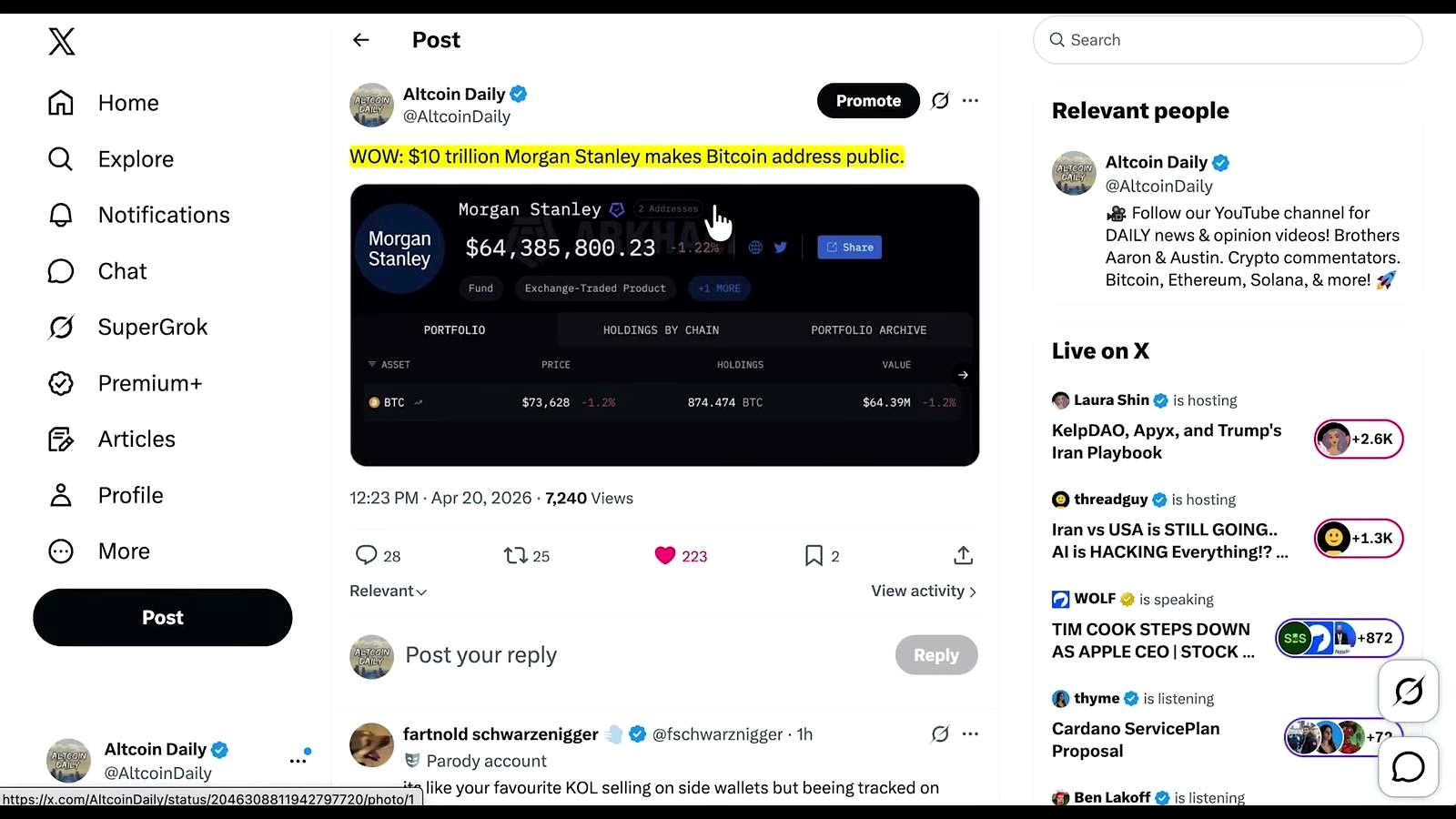
On the Wall Street side, Altcoin Daily says Morgan Stanley has revealed a Bitcoin public address and describes the firm as a 10 trillion-dollar institution that has started with roughly 64 million dollars in bitcoin, or about 800 Bitcoin, in one wallet. The host presents that as an early signal rather than a final position, especially as BlackRock continues pushing Bitcoin products to clients. He also notes Charles Schwab’s crypto education push to clients tied to 12.2 trillion in assets.
One of the more practical points in the video comes from Schwab’s risk framing. A moderate investor using a 60/40 portfolio, 60% stocks and 40% bonds, might keep Bitcoin to no more than 2.7% of total portfolio value if they want it to represent just 10% of the portfolio’s risk. A more aggressive investor with 96% in stocks might tolerate Bitcoin driving 20% of total portfolio risk, implying an allocation just under 7%. That matters because mainstream adoption may come not through maximalist allocations, but through small, rules-based positioning across very large pools of capital.
Regulation is the third pillar of the thesis. Altcoin Daily highlights comments from SEC Chair Paul Atkins, who said the agency had made “huge progress” in its first year and had moved away from “regulation through enforcement.” Atkins outlined an “ACT” strategy, advance, clarify, and transform, aimed at embracing innovation, clarifying digital asset treatment with the CFTC, and updating the rulebook to fit modern markets. For crypto investors, the key point is simple: clearer rules tend to reduce institutional hesitation.
What Could Go Wrong
The clearest risk to this thesis is that the market may be extrapolating a few high-profile demand sources too far into the future. Strategy’s buying has become central to bullish sentiment, but concentration cuts both ways. If its financing conditions deteriorate, if preferred-share demand weakens, or if equity-market appetite for Bitcoin-linked vehicles cools, one of the market’s largest marginal buyers could slow down. A trade built around one dominant accumulator is powerful, but fragile.
There is also a valuation risk embedded in the “Bitcoin as corporate treasury” narrative. What looks compelling during an uptrend can become much less attractive during a 30% to 50% drawdown. Boards and CFOs may embrace Bitcoin when price momentum is favorable, but many will become more cautious if volatility returns or if accounting and disclosure pressures intensify.
Altcoin Daily also leans heavily on a benign regulatory trajectory. But even a friendlier SEC does not eliminate policy risk. Legislative delays, inter-agency disputes, tax changes, or a tougher turn in election-year politics could all disrupt the narrative. And macro remains the biggest omitted variable. If inflation reaccelerates in a way that forces tighter monetary policy, or if recession fears trigger broad deleveraging, Bitcoin could trade more like a high-beta risk asset than a pure hedge against currency debasement.
Finally, the host’s long-term $1 million Bitcoin framing depends on continued market-share gains in the store-of-value market. That is plausible, but not automatic. Gold, Treasurys, cash, and money-market funds remain formidable competitors, especially for conservative institutions that still view Bitcoin as too volatile for core reserve status.
What to Watch Next
The next test for this thesis is whether institutional demand remains visible in hard data rather than headlines. Traders should watch for continued disclosures from corporate treasury buyers, signs that Strategy stays on its current acquisition pace, and whether major wealth platforms keep expanding Bitcoin education or product access.
On policy, any concrete progress on the Clarity Act or further SEC guidance distinguishing tokenized securities from digital commodities would strengthen the institutional case. On the macro side, liquidity conditions matter: easier financial conditions would support Altcoin Daily’s view, while a sharp rise in yields or dollar strength would challenge it. If Bitcoin holds up through the “big dips” the host warned about and still attracts fresh treasury and advisor flows, that would be a stronger confirmation than any single bullish headline.
FAQ
What is a Bitcoin treasury company?
A Bitcoin treasury company is a business that holds bitcoin on its balance sheet as a strategic reserve asset, rather than keeping excess capital only in cash, bonds, or other traditional instruments. Strategy is the best-known example.
Why do small portfolio allocations to BTC matter so much?
Because large wealth managers oversee trillions of dollars. Even a 2% to 3% allocation across a small slice of those assets can translate into meaningful inflows for Bitcoin, whose liquid supply is limited.
What does “regulation through enforcement” mean?
It refers to a regulatory approach where agencies rely more on lawsuits and penalties than on clear forward-looking rules. Markets generally prefer explicit guidance because it reduces uncertainty for issuers, custodians, and institutional investors.
How does Bitcoin compare with gold as a hedge?
Both are often discussed as alternatives to fiat-based stores of value. Gold has a much longer history and lower volatility, while Bitcoin is more volatile but easier to move across borders and potentially offers higher upside if adoption grows.
What happened the last time Bitcoin drew major institutional attention?
Previous waves of institutional interest, including corporate treasury buying and ETF-related adoption, helped re-rate Bitcoin higher but also introduced crowding risk. When macro conditions turned or momentum faded, drawdowns were still severe despite the stronger narrative.
Original Source

John Burnell focuses on Bitcoin infrastructure, wallet security and blockchain technology. He writes educational articles explaining how Bitcoin works and how the technology evolves.