That moment when a new tax form lands in your inbox and the numbers look big, vague, and somehow incomplete? That’s where a lot of crypto investors are right now. The problem isn’t just confusion. It’s that a form meant to create clarity can make your tax bill look much worse than it really is.
This is the first tax season where many exchanges and brokers are sending out the new 1099-DA, and people are staring at proceeds, seeing “NA” for cost basis, and wondering what exactly they’re supposed to do next. The answer matters, because getting it wrong can mean overpaying by a lot.
What the new 1099-DA is really doing
The 1099-DA is now being sent by exchanges to crypto investors, and an identical copy is also filed with the IRS. That means the form is not just for your records. It is also being used as a check.
In simple terms, the IRS can look at the 1099-DA and ask whether the person tied to that form reported crypto income on their tax return. That is the point of the form. It acts as an enforcement mechanism.
- One copy goes to the user
- One identical copy goes to the IRS
- It helps flag who may need to report crypto-related tax activity
Why the form feels incomplete this year
Here’s the part that is frustrating people: for this first year of implementation, only the proceeds of sales need to be reported. The cost basis is not required to be reported this year.
That means the form may show what your Bitcoin was worth when you disposed of it, but not what you originally paid for it. And that missing number changes everything.
Proceeds are not the same as taxable income
If you sold Bitcoin worth $6,000, the 1099-DA may report that $6,000 as proceeds. But that does not automatically mean you made a $6,000 gain.
If your original cost basis was $4,000, then your actual gain would only be $2,000. Without that basis, someone reading the form too quickly could wrongly assume the full proceeds amount is taxable income.
That is the core issue. The proceeds number is only part of the story.
Why “NA” on cost basis can become expensive
When the cost basis field shows “NA,” it can create a dangerous shortcut. A tax professional who is not aware of the reporting limitation could treat the proceeds as the full taxable amount. For investors with lots of trades, that can mean paying far more than necessary.
The warning here is simple: if you do not report basis, you could overpay by a lot.
Yes, you really do need to dig into it
For anyone hoping to just estimate or skip the hassle, the advice was direct: you should be digging into it. To accurately report crypto taxes, you need the records of your transactions, especially the original buy transaction that established the cost basis.
That can be tedious. It can also be a spreadsheet exercise if you do it manually. But it is still necessary if you want the return to reflect your actual gain or loss.
How to fix missing crypto cost basis

The solution starts with your transaction history. If your original purchase happened on an exchange where you traded, that record is what sets the basis.
- Find the original buy transaction
- Match it to the amount later sold or disposed of
- Calculate the gain or loss from basis versus proceeds
- Use that number, not just the proceeds figure, for tax reporting
For people with thousands of trades, this can quickly become overwhelming. That is the gap automation tools are trying to fill.
Why missing data happens so often

Even when using crypto tax software, missing cost basis is common. And often, it comes down to incomplete data.
If one wallet was never synced, or a decentralized exchange swap was left out, the system may not have the information needed to connect an asset’s history. The result is the same: missing basis, errors, and a lot of head-scratching.
The most common reasons basis goes missing
- A wallet was forgotten and never imported
- Some swaps on a decentralized exchange were not included
- Transaction history from one platform was missing
- The software only had partial records to work with
One point stood out clearly: the software is only as good as the data you give it.
How Coin Ledger was described as handling the problem

Coin Ledger was presented as a way to automate the process by connecting exchanges and wallets, pulling in transaction data, calculating cost basis, and generating tax forms with that information.
It was also described as useful for people who want to track holdings and basis before they even generate tax forms.
What the free portfolio tracker shows
The portfolio tracker was described as completely free and able to show:
- Cost basis
- Current value
- Unrealized returns
- Areas where cost basis is missing
That last point matters. If something is missing, the tracker can help surface where the gap is coming from so it can be filled in.
Support options when things still don’t add up
When users run into missing data or reconciliation issues, the recommendation was to contact support. A chat widget is available, with support described as running from 8 to 8 and also on weekends.
There is also AI customer support trained on a very large volume of prior customer conversations, which was described as answering a large share of questions quickly. More specialized cases can still be handled by humans.
What happens if you don’t report correctly
There was a clear distinction between not filing and filing in good faith with mistakes. The point made was that the IRS is generally much more lenient with people who make an honest effort and later need to correct errors.
That does not mean guessing is ideal. But it does mean trying to report accurately matters.
Why “they don’t have the data” is not a safe strategy
One question raised the idea that if the exchange does not report cost basis, maybe someone could simply report no capital gains and assume there is nothing to compare against.
The response was blunt: yes, someone could do that, but if an audit happens, the burden falls on the taxpayer. Audits can involve digging through bank records and tracing where funds came from. The issue is not limited to what appears on one form.
In other words, missing exchange data does not guarantee invisibility.
Switching platforms and recovering old records

For users coming from another crypto tax platform, there was no magical one-click migration described. The practical path is to sync wallets and exchange accounts again so the data can be rebuilt inside the new platform.
It is not elegant, but it is straightforward.
If an exchange no longer supports US customers
This is another headache that keeps coming up. The recommendation was to contact that exchange directly and request transaction history for tax reporting purposes. Usually, that history can still be provided, and then imported.
For some exchanges, existing integrations may still work. But if access is blocked, the fallback is to email support and request the records you need.
Canada support was also highlighted
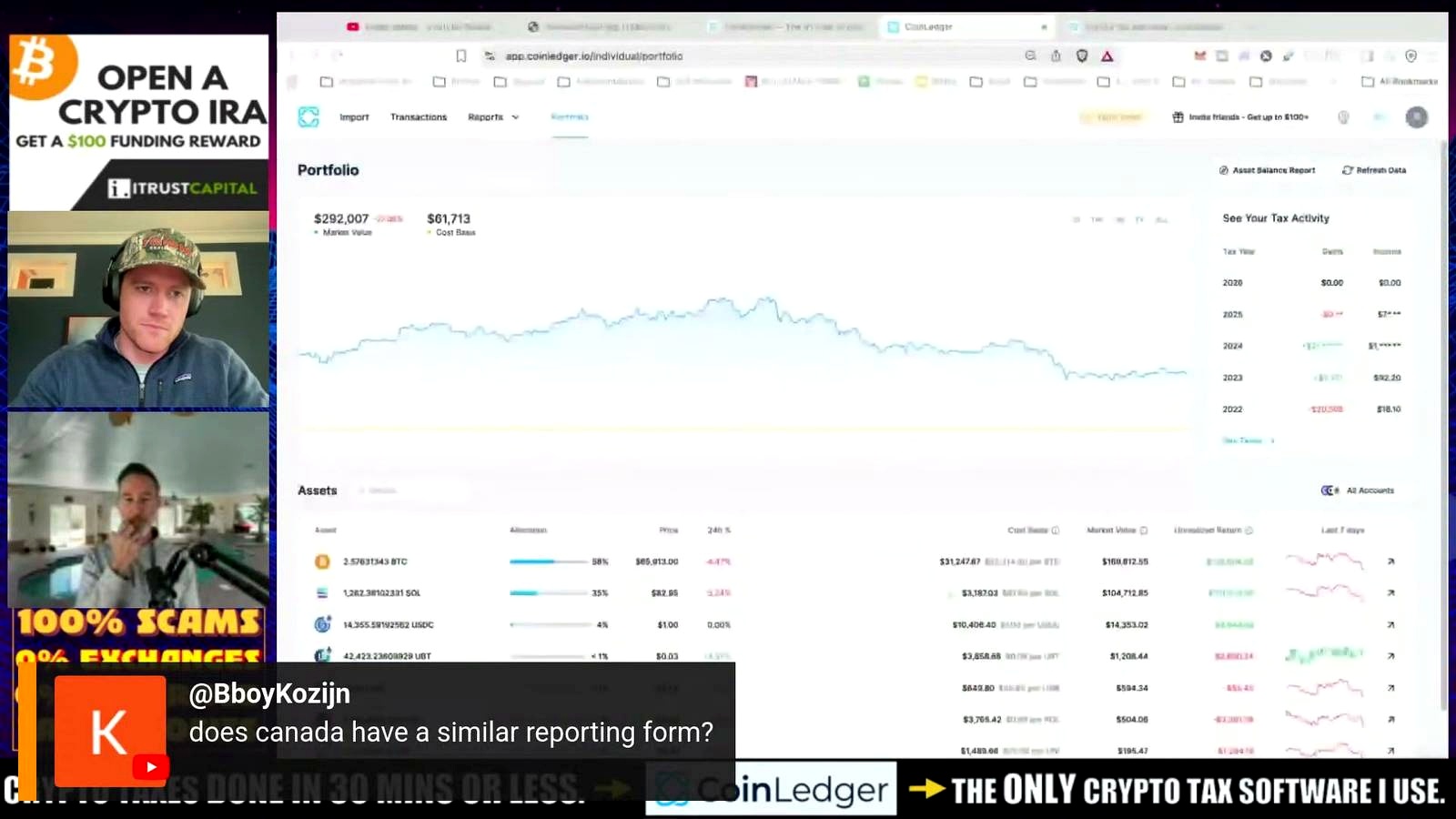
The discussion was mostly centered on the US, but Canada was specifically mentioned as being fully supported end to end, with the relevant CRA form available in a similar workflow: import the data, map it to the tax forms, and download the results.
The tax deadline pattern says a lot

If you are putting this off, you are not remotely alone. The busiest stretch was described as the weekend before the filing deadline, often by a huge margin.
That final rush says something very human: people procrastinate, especially when the paperwork looks confusing and the numbers look scary. But the closer it gets, the less room there is to calmly sort out missing wallets, missing swaps, and missing basis.
FAQ
What is the 1099-DA for crypto?
It is a form exchanges and brokers now send to crypto investors, while also filing an identical copy with the IRS. It is used to help determine who may need to report crypto-related tax activity.
Why does my 1099-DA show proceeds but no cost basis?
Because this year only proceeds of sales are required to be reported. Cost basis is not required to be reported this year, which is why many forms show “NA.”
Are proceeds the same as taxable gains?
No. Proceeds are what the asset was worth when it was disposed of. Taxable gain or loss depends on proceeds minus cost basis.
What happens if I don’t include cost basis?
You may end up overpaying your taxes by a lot, because the proceeds amount alone does not show your real gain or loss.
Can I fix missing cost basis manually?
Yes. The process described is to use your transaction records, find the original buy transaction, and calculate the basis from there.
Why is my crypto tax software still showing missing basis?
Because missing basis often comes from missing data, such as an unsynced wallet, omitted decentralized exchange swaps, or incomplete transaction history.
What should I do if an exchange no longer supports US customers?
Reach out to the exchange and request your transaction history for tax reporting purposes. That history can then be imported.
Is the IRS more lenient if I file in good faith?
The discussion said yes. The IRS was described as much more lenient toward people who make an honest good-faith effort, even if mistakes are later discovered.
Can I just ignore crypto reporting if the exchange didn’t provide full data?
You could choose not to report, but that does not remove the risk. In an audit, bank records and other financial records may still be reviewed, and the burden falls on you.
Is there a free way to track cost basis?
The portfolio tracker discussed was described as free and able to track cost basis, value, unrealized returns, and missing basis issues.
Video Source

John Burnell focuses on Bitcoin infrastructure, wallet security and blockchain technology. He writes educational articles explaining how Bitcoin works and how the technology evolves.