Stocks are pushing to fresh highs while crypto still looks stuck in a frustrating holding pattern. The key question for traders is whether Bitcoin is lagging before a catch-up move, or signaling that risk appetite is weaker than equity markets suggest.
According to Altcoin Daily, that gap could close fast if a mix of Treasury liquidity, a more dovish Federal Reserve path and U.S. crypto legislation starts to align.
The Core Thesis: Bitcoin Is Coiling as Liquidity Returns
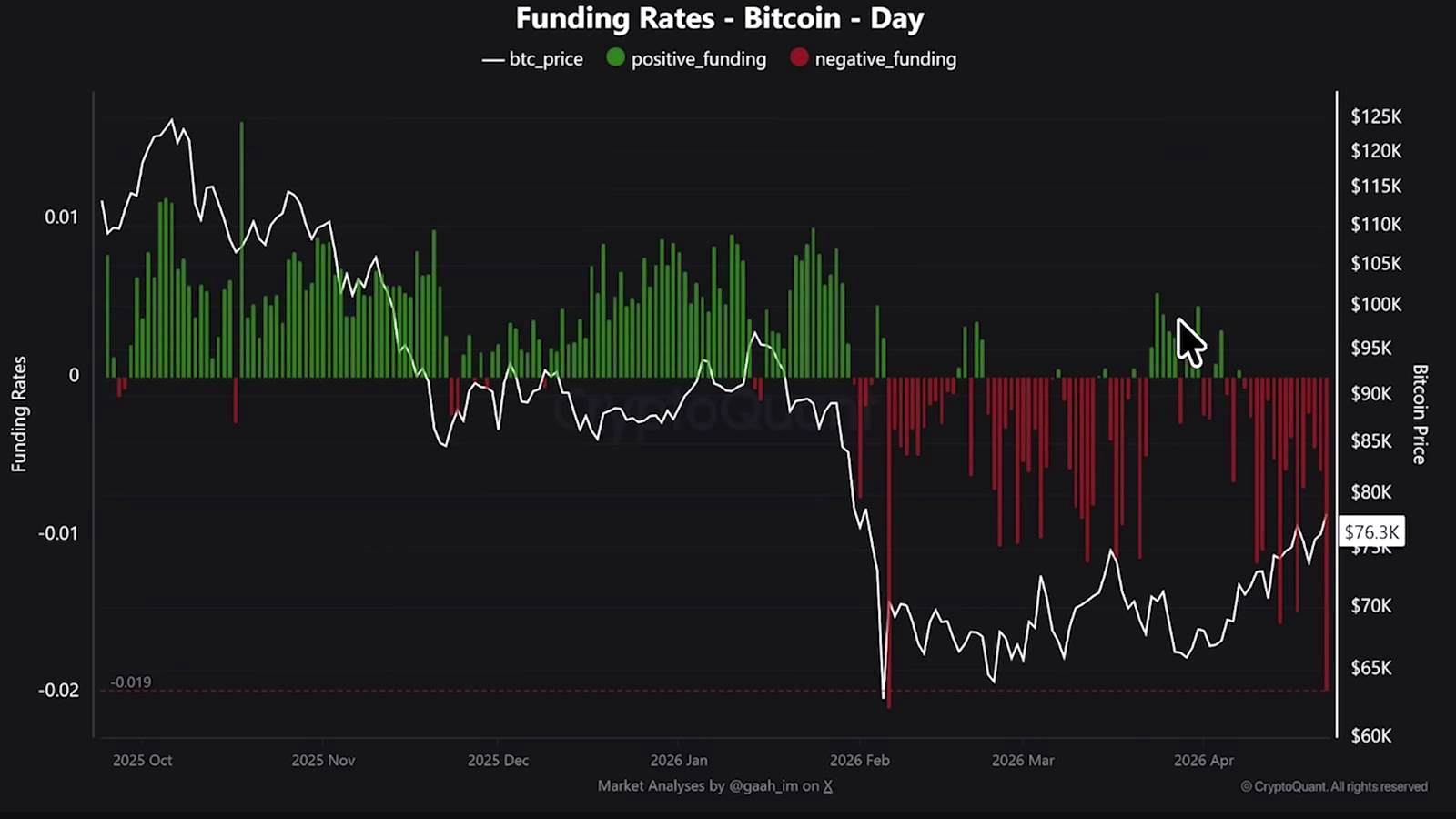
According to Altcoin Daily, the main bullish case is straightforward: Bitcoin is being temporarily suppressed by bearish positioning in leverage markets even as broader liquidity conditions are turning risk-friendly. The host points to the S&P 500 at 7,160 and says equities making new highs are the “canary in the coal mine” for what could come next in crypto.
The analyst’s argument rests on several overlapping claims from the video. First, he says Bitcoin funding has turned “extremely bearish, ” framing that as a contrarian signal rather than a reason to expect deeper downside. He pairs that with a citation from Swissblock’s head of macro, who said “a bounce is coming and a strong one.” Second, Altcoin Daily argues that U.S. liquidity is quietly improving through Treasury debt buybacks and related balance-sheet channels. In the video, he says the Treasury had just bought back another $15 billion of its own debt, bringing this year’s total to $138 billion, including almost $50 billion in April alone. He also cites $40 billion-plus of Fed balance-sheet expansion returning and a $90 billion Treasury General Account release, describing it as a “multi-channel liquidity environment.”
That macro framing matters because Bitcoin has historically responded well when dollar liquidity improves, even if the mechanism is not official quantitative easing. The broader market context, however, is more contested than the video suggests. Many macro traders do see easing financial conditions as supportive for BTC. But others would argue that if liquidity were the whole story, Bitcoin should already be tracking equities more closely. Spot ETF flows, real yields, regulatory headlines and derivatives positioning all shape the path from liquidity to price. In other words, the thesis is plausible, but not uncontested.
Why the Analyst Thinks Bitcoin’s Weakness Is Temporary
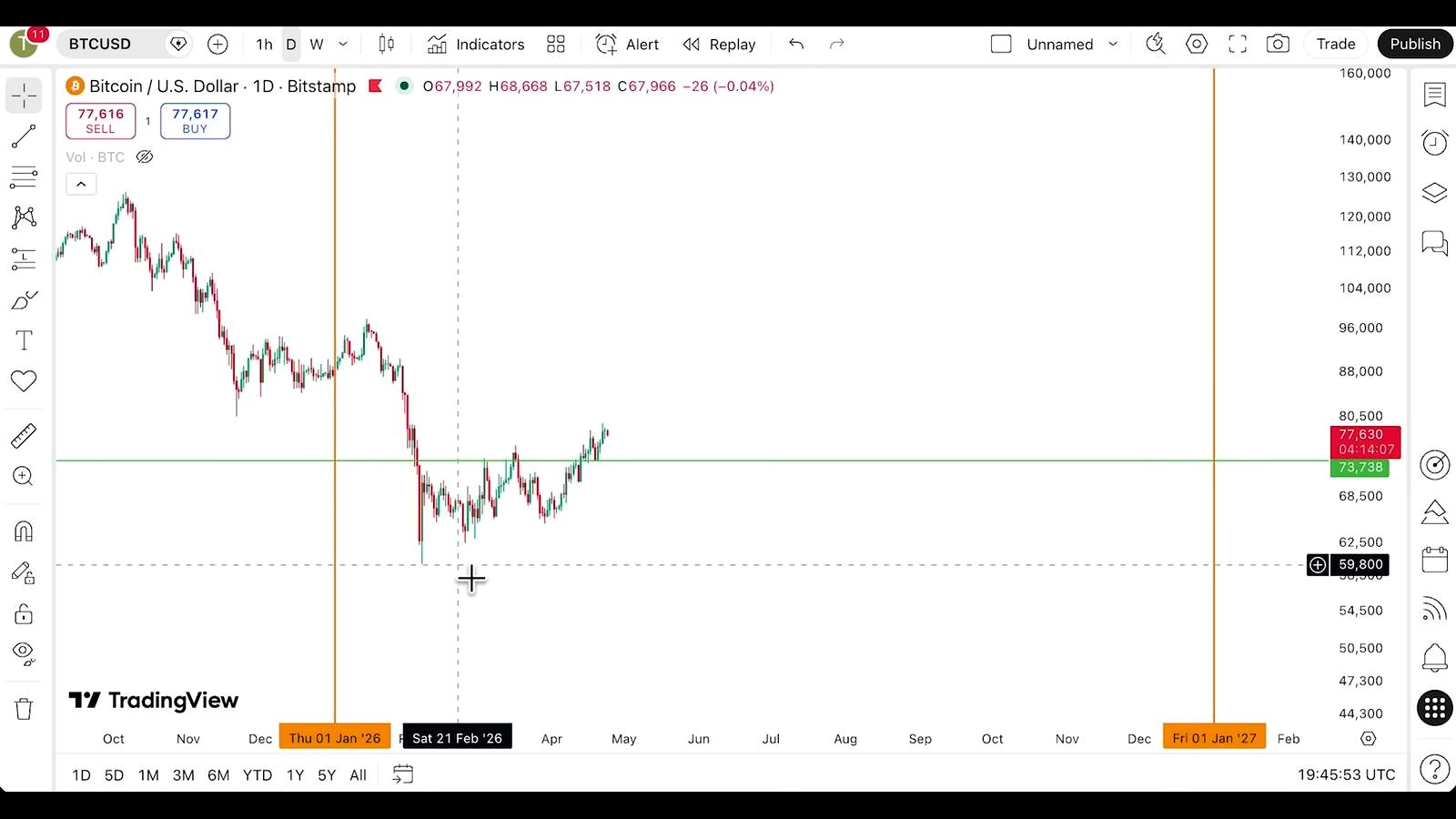
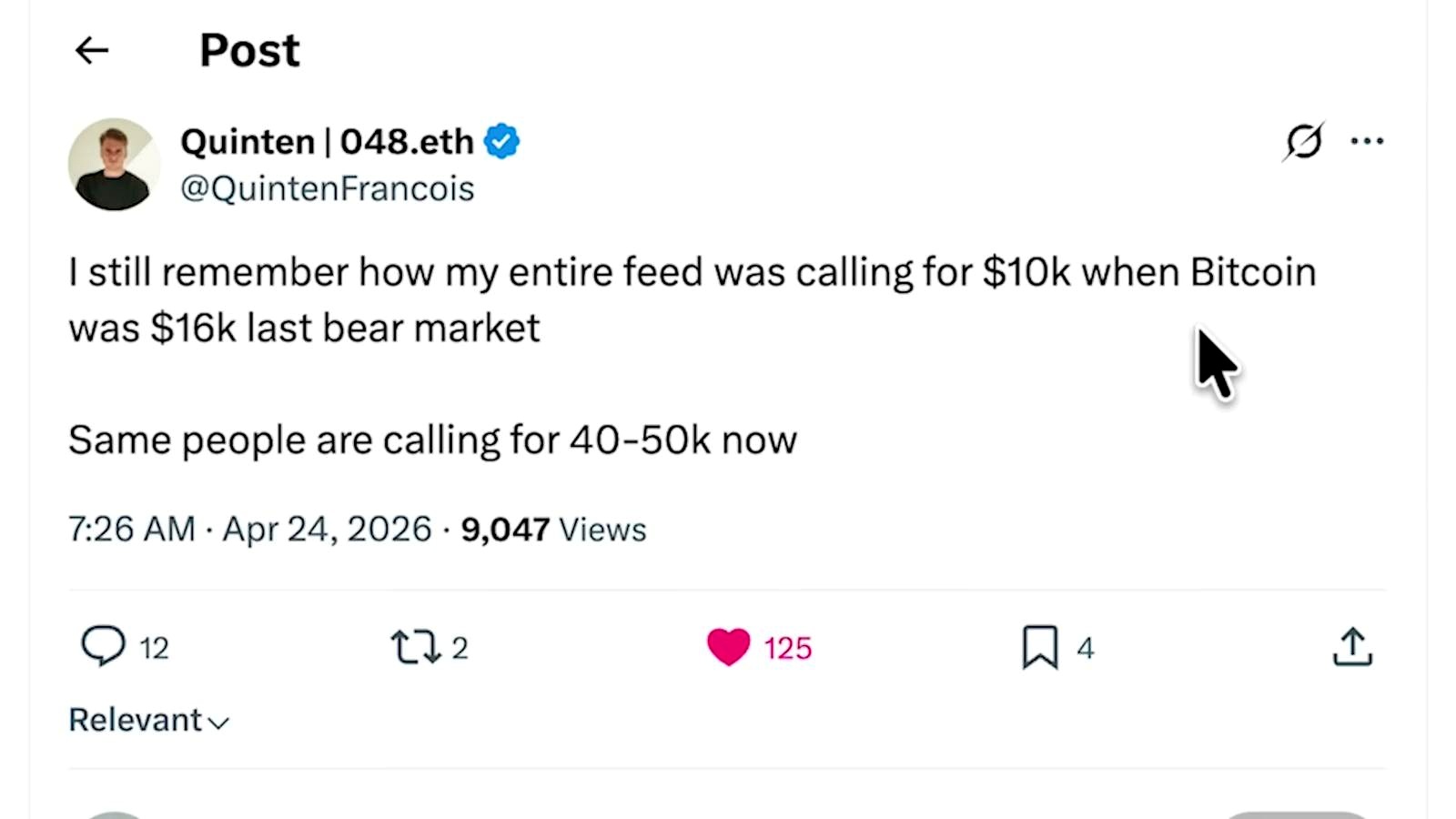
Altcoin Daily argues that current sentiment looks backward-looking and too bearish. The host compares today’s calls for $40,000 to $50,000 Bitcoin with the last bear market, when many traders were calling for $10,000 while BTC was around $16,000. His point is that retail often wants exposure near highs but turns fearful during consolidation. In the video, he says people wanted to buy at $95,000, $100,000 and $110,000, but fewer want it now, while “bigger wallets” and institutions are still accumulating.
He reinforces that institutional angle with a Fidelity reference. Altcoin Daily says the director of global macro at $7 trillion Fidelity believes “Bitcoin is continuing to build a large base” for the next major wave. The host adds that the same Fidelity executive had previously called for a possible bottom at $65,000 in December, and now believes the market is moving higher.
Another pillar of the thesis is that Bitcoin’s long-term adoption curve still looks early. The video cites Tom Lee’s view that 95% of investors still have zero Bitcoin exposure. Lee also compares Bitcoin-wallet adoption to the internet in 1996, suggesting the network could still be in an early exponential phase. Altcoin Daily goes a step further and argues Bitcoin’s utility rises in a world shaped by AI and cyber-fraud, where trust in digital content erodes and the blockchain becomes more valuable as a verifiable system of record.
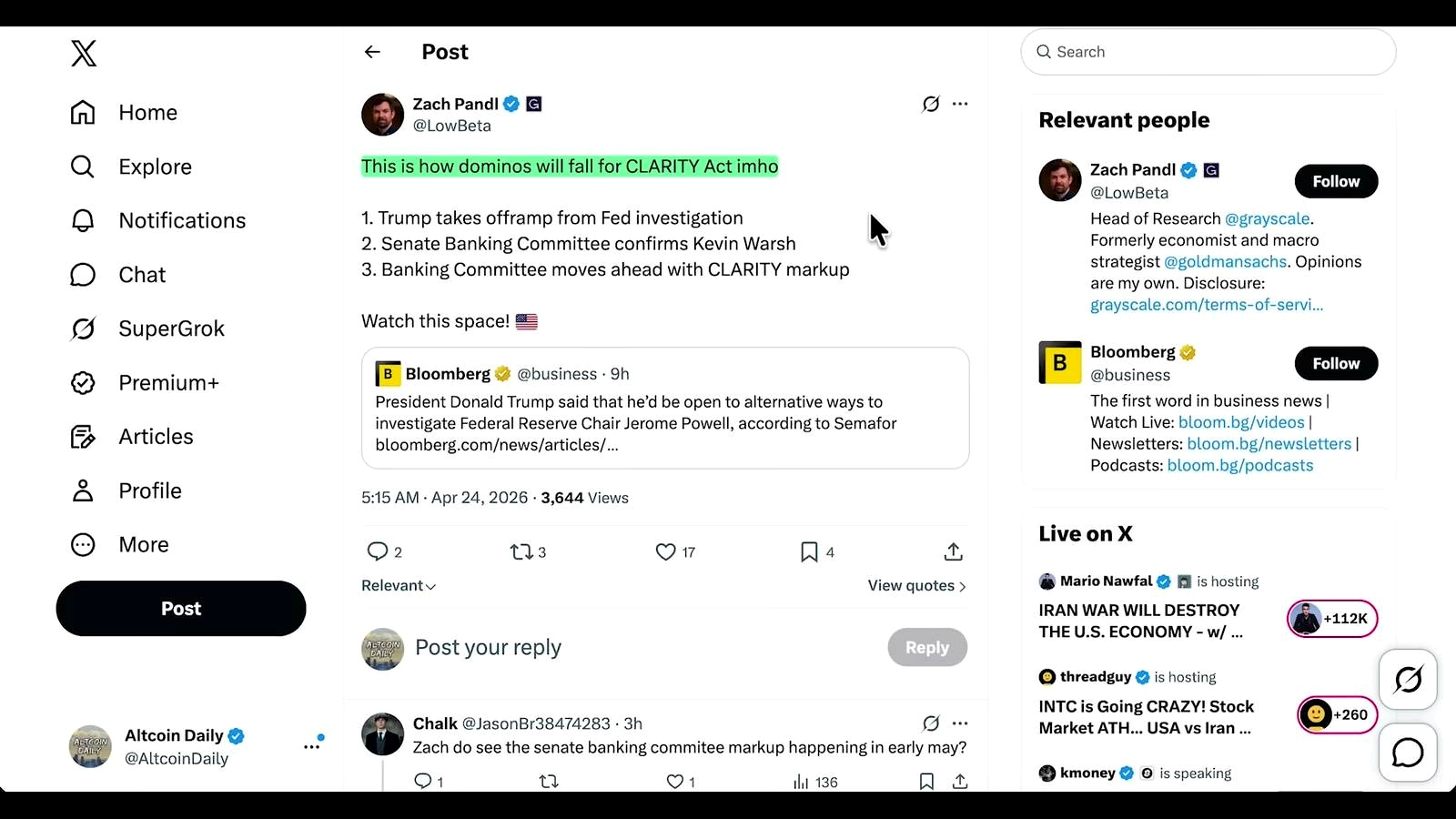
On regulation, the host says the pro-crypto Clarity Act is widely seen as unlikely to pass, but he still thinks it could happen and would be “huge for markets.” He lays out a three-step “domino” sequence, citing Grayscale research: Trump taking an offramp from a Fed investigation, the Senate Banking Committee confirming Kevin Warsh as the new Fed chair, and the same committee moving forward with Clarity Act markup. He also highlights comments from Senator Cynthia Lummis saying there is bipartisan and presidential support to advance the bill.
What Could Go Wrong
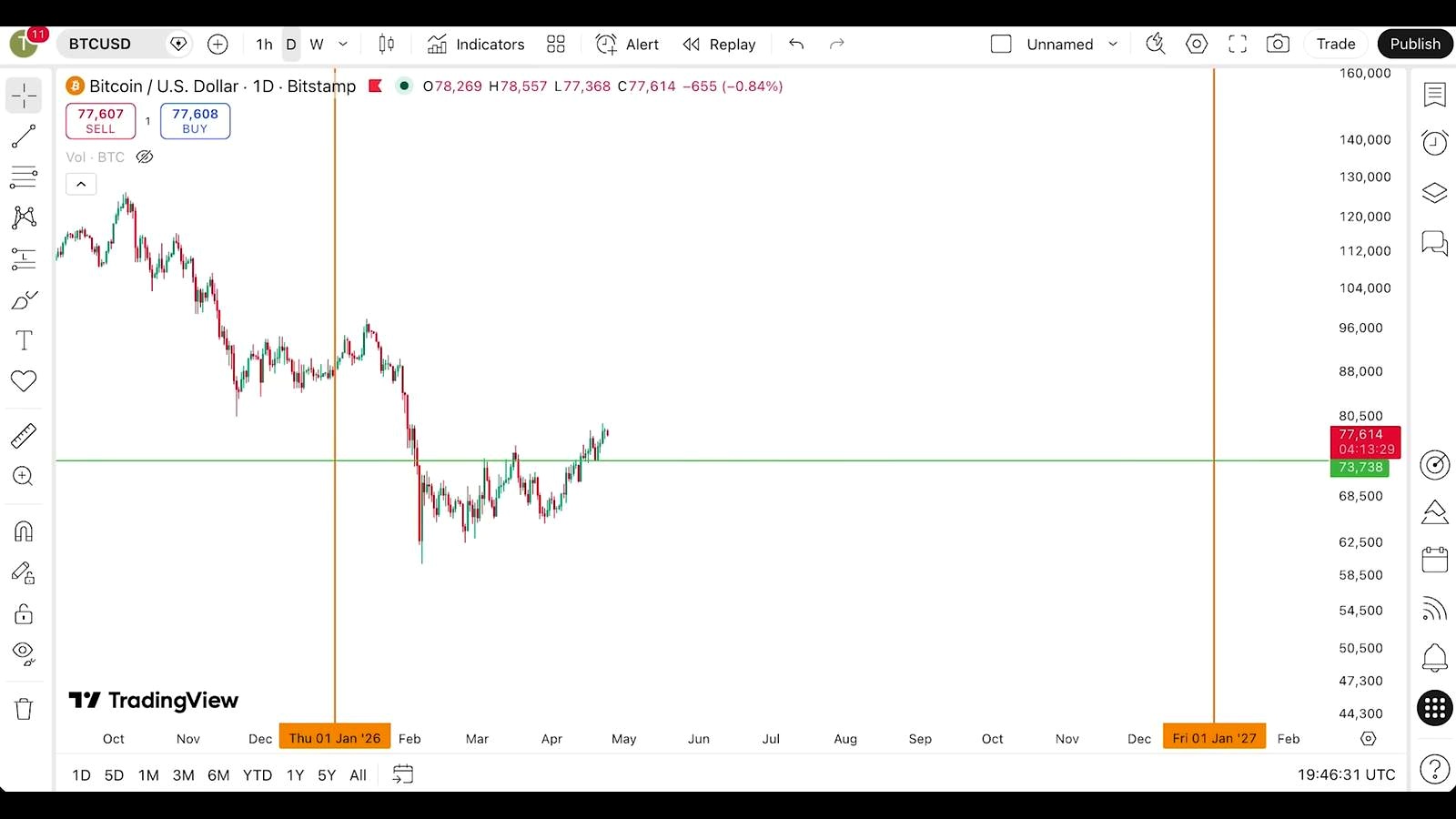
The clearest threat to this thesis is the one the video briefly acknowledges: Bitcoin could still make a lower low later this year. Altcoin Daily itself says that if price “consolidates too low for too long, it will break lower.” That is a real risk, not a throwaway caveat. Choppy sideways action can drain momentum, weaken conviction and eventually lead to liquidation-driven downside if spot demand fails to absorb supply.
There are also gaps in the bullish argument. Treasury buybacks and short-term liquidity injections do not always translate into sustained crypto upside. Liquidity can support stocks more directly than Bitcoin, especially if institutional allocators still see BTC as a high-volatility satellite asset rather than a core holding. A stronger dollar, sticky inflation or higher-for-longer real rates could also blunt the effect of any “not QE” liquidity boost.
Regulation is another two-sided trade. The host treats the Clarity Act as a major upside catalyst, but legislative calendars are notoriously unreliable, especially with November midterms approaching. The video says some analysts think the next meaningful opportunity, if this effort fails, may not come until 2030. Even if that timeline proves too pessimistic, delay would still matter because markets often price hope before policy. If the bill stalls, sentiment could cool quickly.
And while bearish funding can set up a squeeze higher, it can also simply reflect genuine caution. If macro deteriorates or ETF demand weakens, “smart money is buying” can turn into a crowded narrative rather than a durable signal.
What to Watch Next
The next few checkpoints are concrete. First, traders will watch whether Bitcoin can keep making higher lows rather than simply drifting sideways. Altcoin Daily says that pattern would support the bullish case; prolonged weak consolidation would not.
Second, policy watchers should track whether the Senate Banking Committee advances Clarity Act markup and whether bipartisan support hardens into actual legislative movement. Third, macro markets will focus on any confirmation that Kevin Warsh is moving into the Fed chair path and whether rate-cut expectations rise alongside that shift.
Finally, watch whether equity strength broadens further. The host points to the Russell 2000 and argues equities lead while crypto follows. If stocks keep climbing, liquidity remains easy and Bitcoin still fails to respond, that would weaken the catch-up narrative.
FAQ
What does “bearish funding” mean in Bitcoin markets?
Funding refers to periodic payments between long and short traders in perpetual futures. When funding is bearish or negative, short positions are dominant enough that shorts typically pay longs less, or longs pay less than usual, depending on exchange structure. Traders often read deeply negative funding as a contrarian signal because crowded shorts can fuel a squeeze higher.
What are Treasury buybacks, and why do crypto traders care?
Treasury buybacks happen when the U.S. government repurchases its own outstanding debt. On their own, they are not the same as Federal Reserve quantitative easing. But traders care because buybacks, TGA changes, repo activity and balance-sheet shifts can affect system liquidity. More liquidity tends to help risk assets, including equities and sometimes Bitcoin.
How is this Bitcoin setup different from the 2022 bottom?
The comparison in the video is mainly about sentiment. In 2022, many traders expected more downside even after Bitcoin had already fallen sharply toward $16,000. Today’s parallel is that many are again calling for lower levels, such as $40,000 to $50,000, despite stronger institutional participation and a more mature market structure. The difference is that Bitcoin now trades in a market shaped by spot ETFs, larger treasury buyers and a more active policy debate in Washington.
Why does AI matter for Bitcoin in this argument?
The video uses AI in two ways. First, Kevin Warsh is cited arguing that AI could make “almost everything cost less, ” which would support a less inflationary growth backdrop and potentially easier Fed policy. Second, Tom Lee’s comments frame AI-driven fraud and deepfakes as reasons verifiable networks become more valuable. In that view, Bitcoin benefits from being a trusted blockchain in a low-trust digital environment.
What would invalidate the bullish catch-up case for BTC?
A few things would do it: Bitcoin making a fresh lower low after failing to establish higher lows; liquidity conditions tightening instead of easing; Clarity Act momentum fading without replacement policy support; or equities continuing to rally while BTC underperforms for an extended period. If those happen together, the idea that Bitcoin is merely delayed rather than fundamentally weak becomes harder to defend.
Content Source

John Burnell focuses on Bitcoin infrastructure, wallet security and blockchain technology. He writes educational articles explaining how Bitcoin works and how the technology evolves.