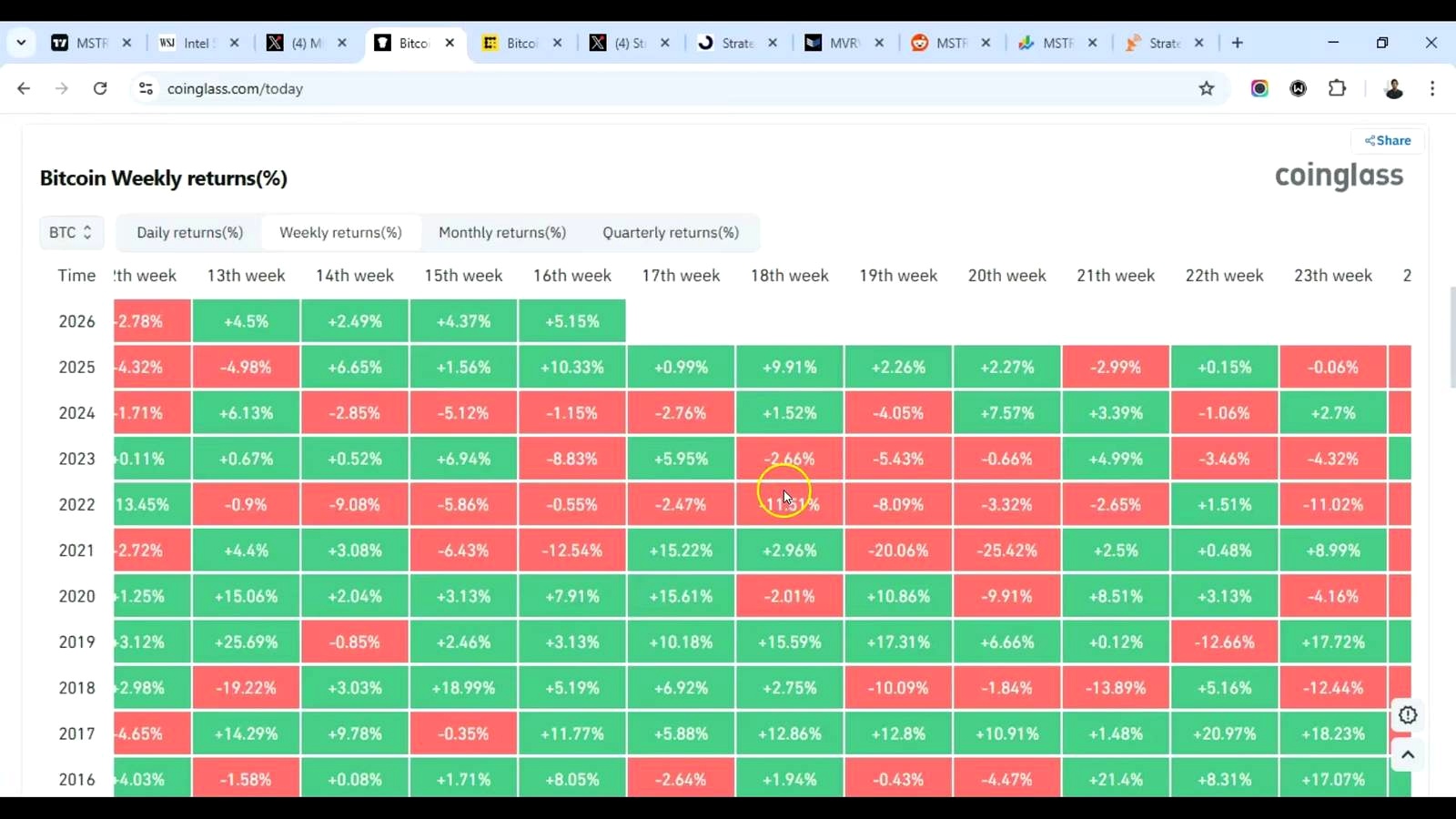
Is this Bitcoin pullback just a pause, or the start of another leg down? At the same time, Wall Street’s appetite for crypto exposure keeps widening, creating a sharp contrast between weak price action and growing institutional buildout.
Bitcoin’s near-term setup has weakened
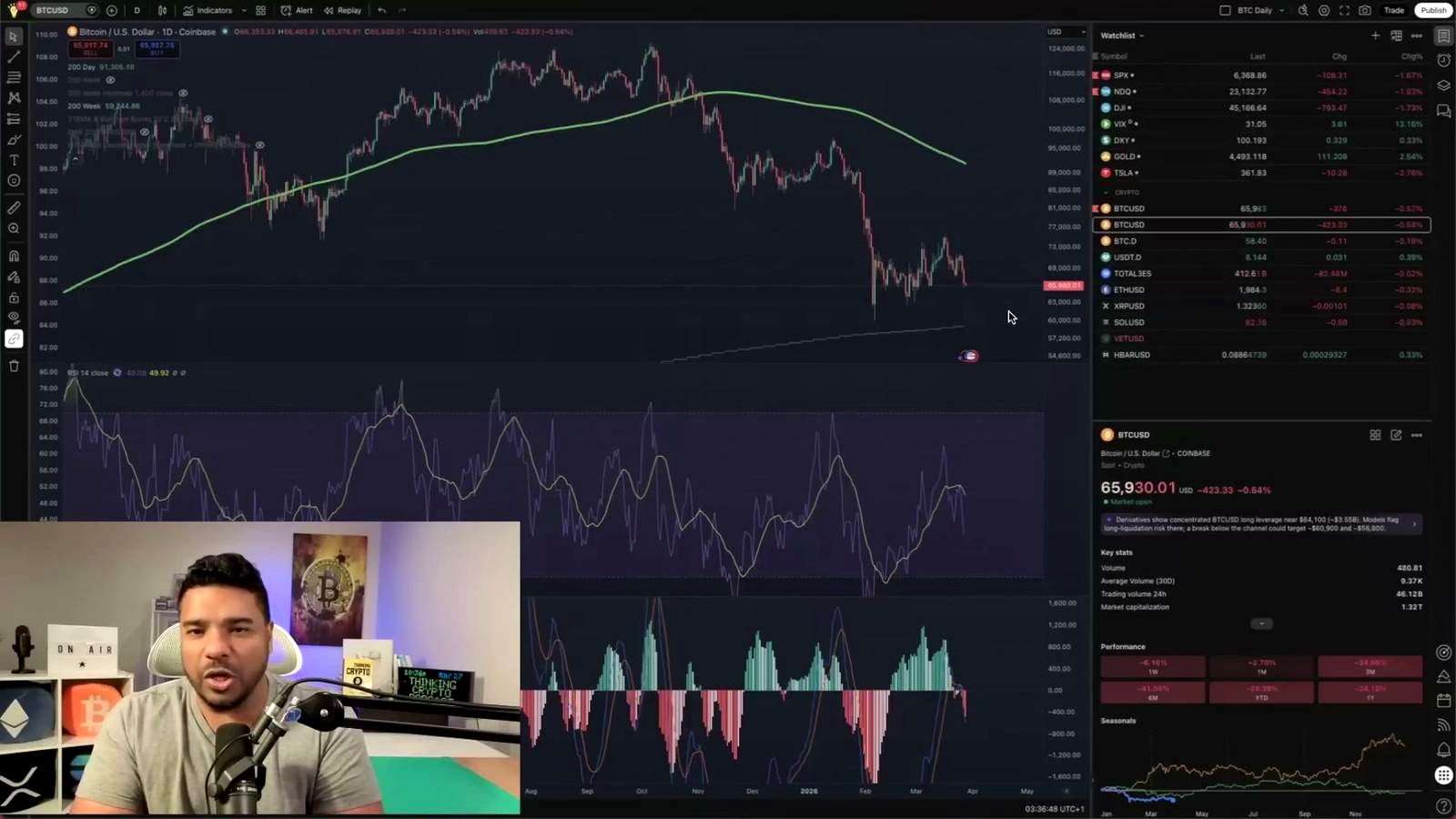
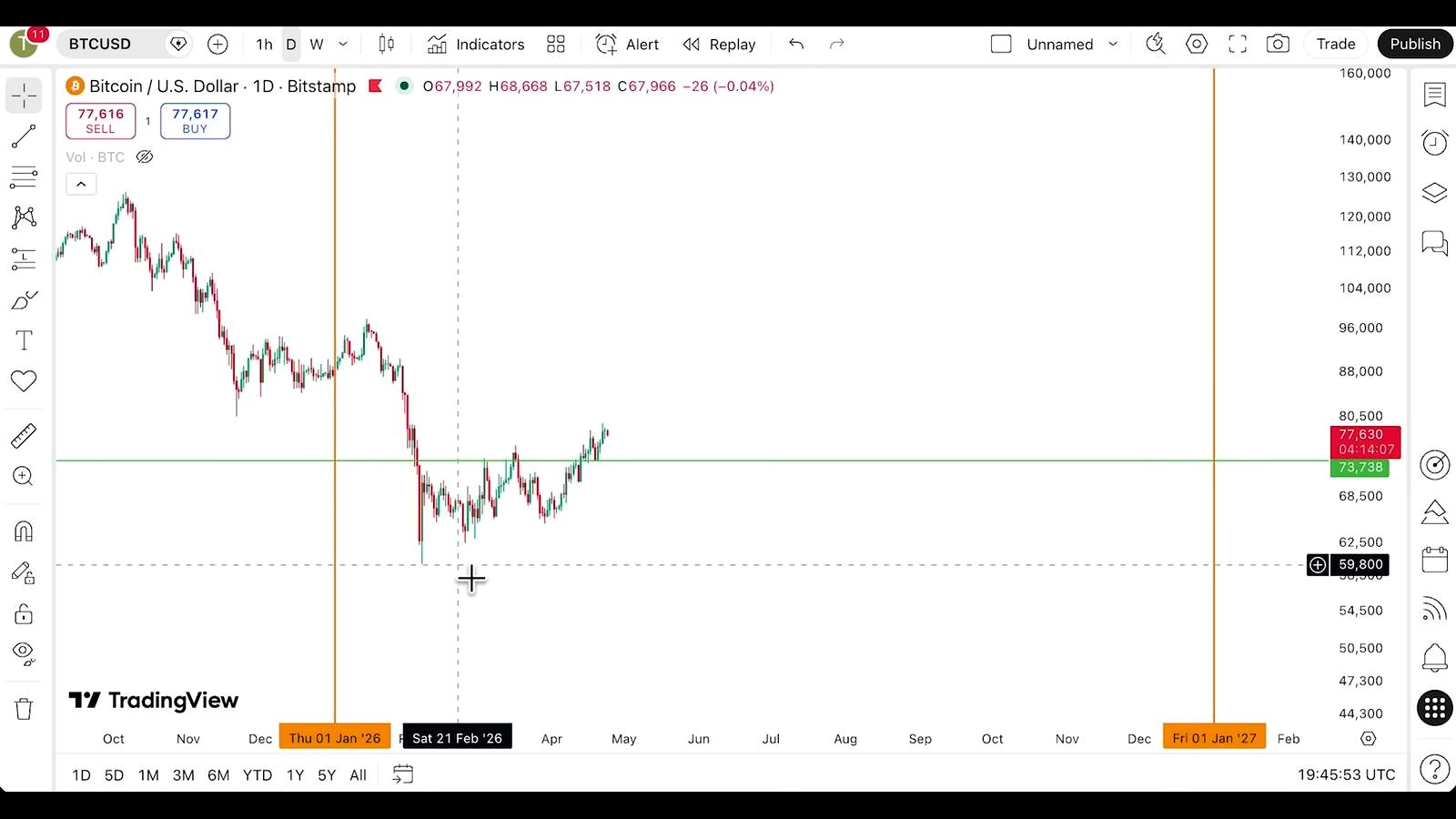
According to Thinking Crypto, the most urgent development is Bitcoin’s technical deterioration after dropping below $66,000. The host said the rising channel he had been watching now appears invalidated, reducing the odds of a continued push higher in the immediate term.
He said the recent move now looks more like a relief rally than a breakout attempt, with no move to fresh all-time highs. While he had been looking for Bitcoin to reach $80,000 or slightly above, he now sees increasing risk of another decline before a durable bottom forms.
Thinking Crypto argues that a deeper drop into the $50,000 to $54,000 zone is possible, and that range is where he expects Bitcoin could find a bottom if the selloff continues. He tied that caution to a still-unfinished weekly setup, saying the next weekly close, specifically Sunday’s close, will matter for confirming whether the market can stabilize or whether the bearish turn is taking hold.
Key Bitcoin numbers from the video
- Current trading level discussed: below $66,000
- Previous upside expectation: $80,000 or a bit higher
- Potential downside bottom range: $50,000 to $54,000
Macro pressure is part of the problem
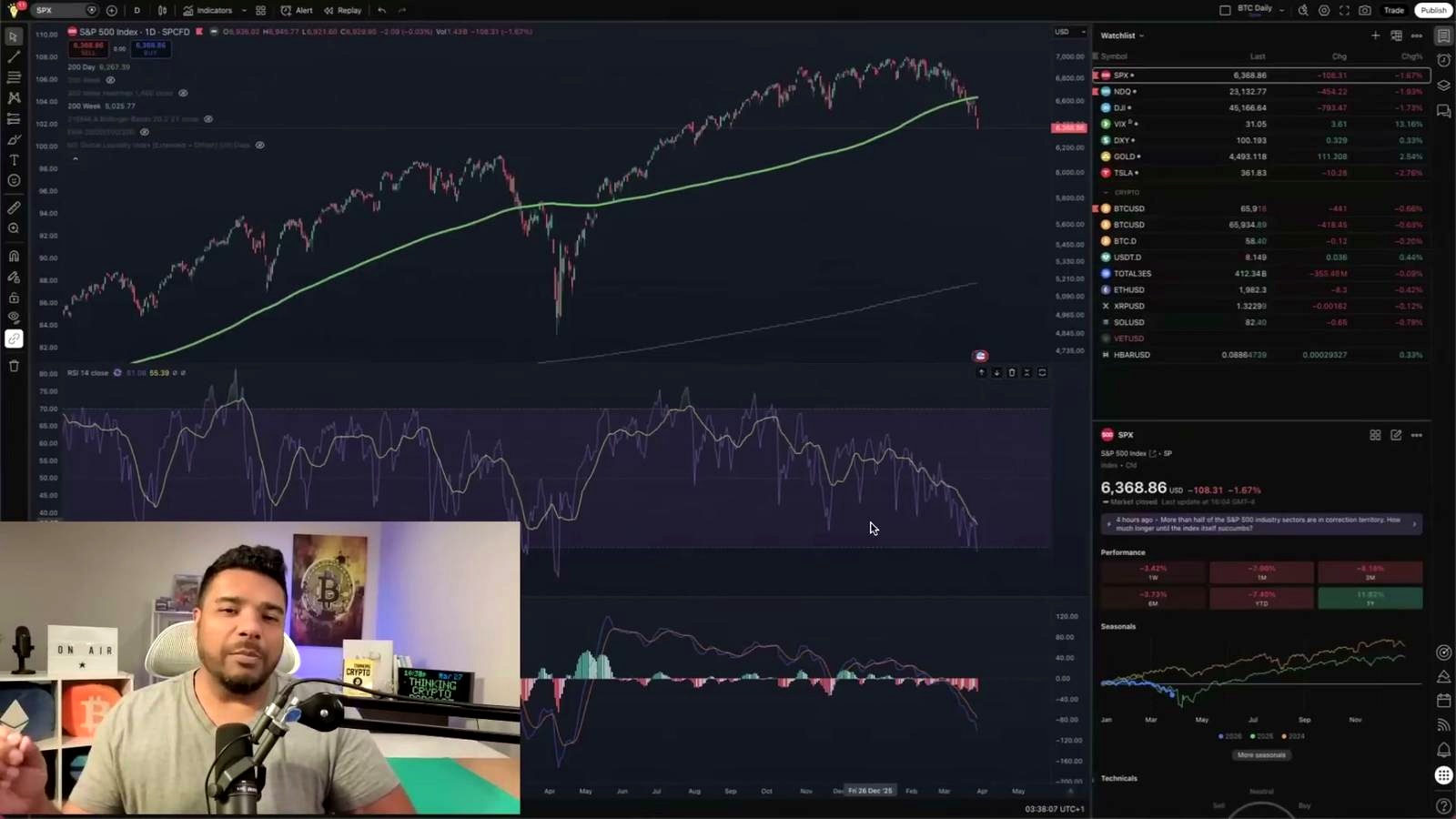
According to Thinking Crypto, the weakness in Bitcoin is not happening in isolation. He pointed to broader macro stress, including the economy, oil prices, the war involving Iran, and visible softness in equities.
He said the stock market is showing “a ton of weakness, ” though he flagged one potential offset: the S&P 500 is touching an oversold zone. In his view, that could trigger a bounce or relief rally in stocks, which may help Bitcoin recover somewhat. But he did not frame that as a setup for new highs. Instead, he described it as a possible short-term lift before further rollover.
That distinction matters. The host’s baseline is not that crypto is breaking into a new expansion phase right now. It is that risk assets may squeeze higher briefly, but the broader structure still looks fragile.
Morgan Stanley is preparing to compete aggressively on Bitcoin ETF fees
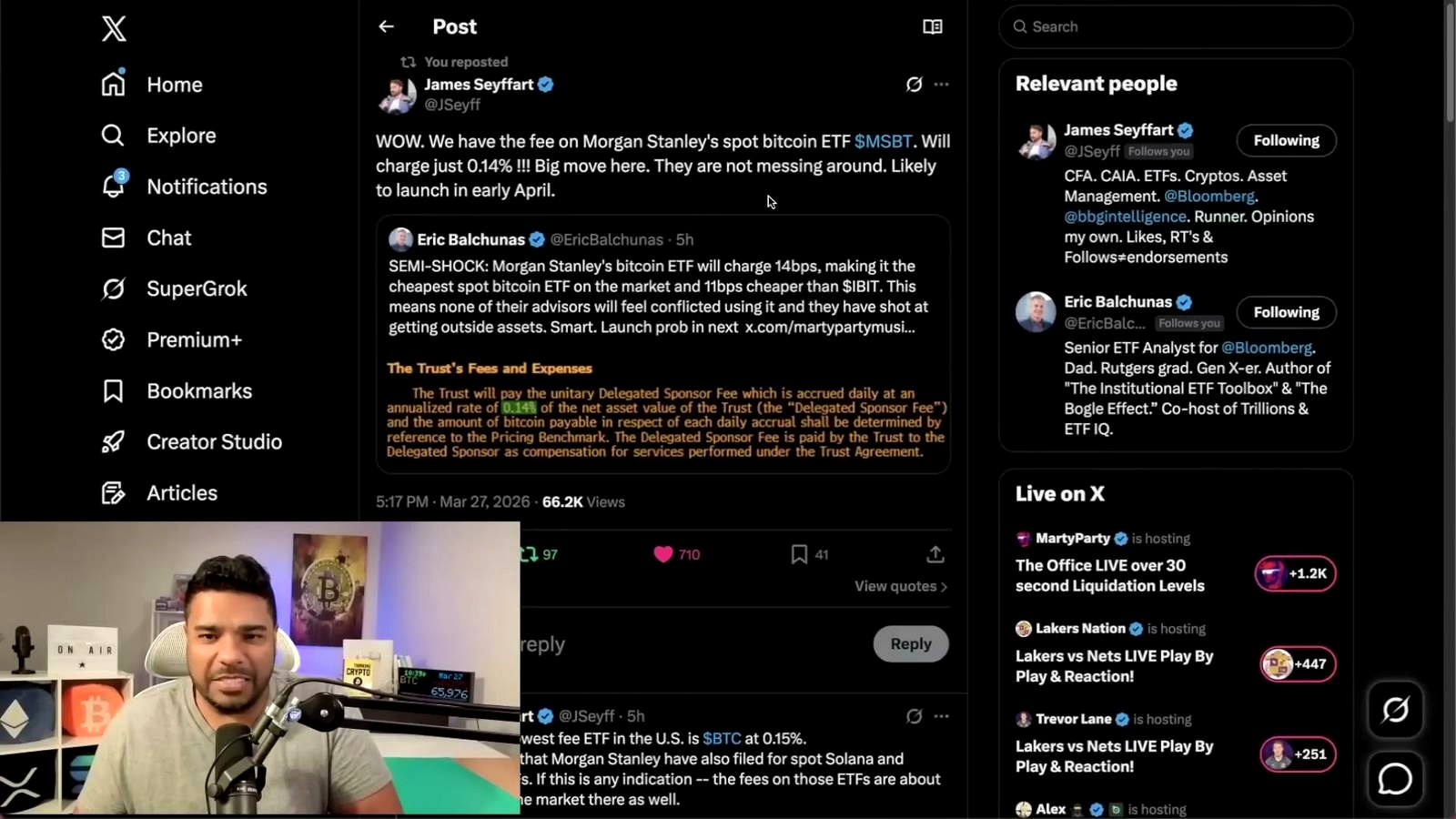
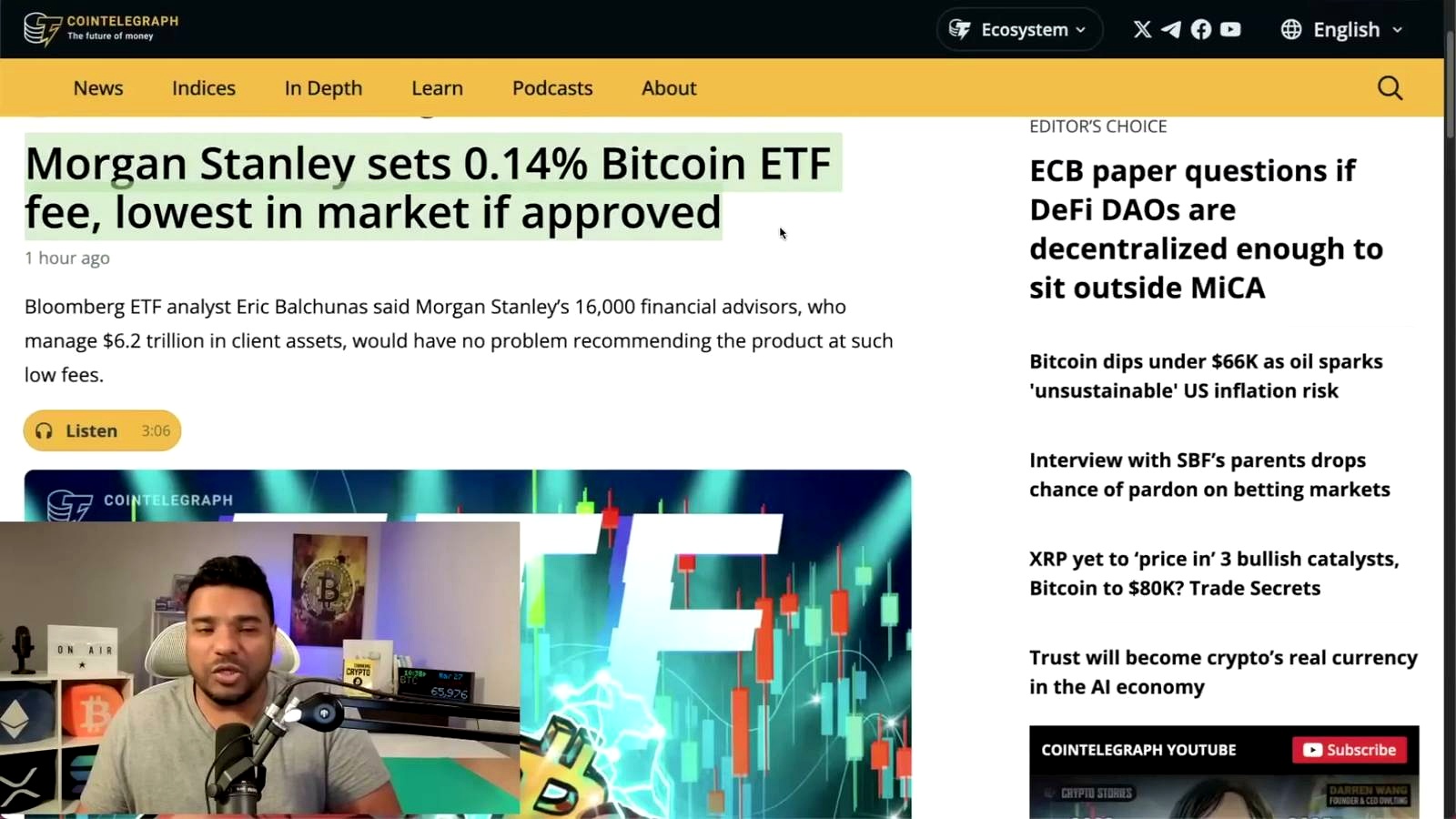
According to Thinking Crypto, Morgan Stanley’s planned spot Bitcoin ETF could arrive with one of the most aggressive pricing strategies in the market. He highlighted a proposed fee of 0.14%, calling it the lowest in the market once approved.
The fund, identified in the video as MSBT, has not yet been fully approved. But Bloomberg ETF analyst James Seyffart, as cited by the host, said the product is “likely to launch in early April.”
Thinking Crypto said the low fee signals Morgan Stanley is serious about making an impact despite arriving after firms such as BlackRock and Fidelity established early positions. He also said the intensifying fee competition is positive for the market overall.
The other reason he is watching this closely is distribution. Morgan Stanley has a large client base and significant capital pools, which could matter if the ETF goes live and gains traction. The host did not give any inflow estimates, but he made clear he is watching for whether Morgan Stanley can convert that reach into meaningful demand.
Key ETF numbers from the video
- Proposed Morgan Stanley spot Bitcoin ETF fee: 0.14%
- Likely launch timing cited by Bloomberg’s James Seyffart: early April
Institutional crypto expansion is broadening beyond Bitcoin
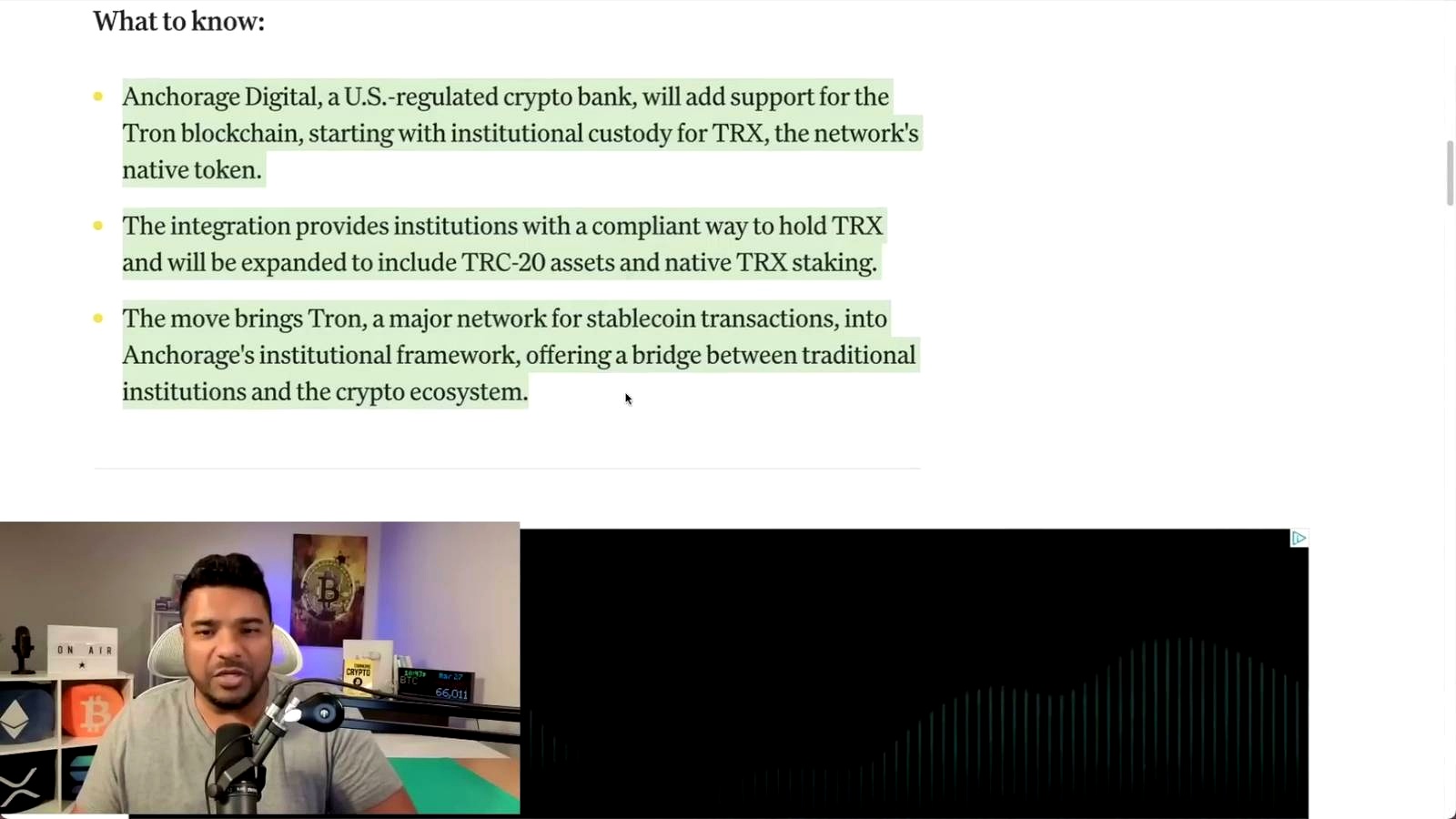
According to Thinking Crypto, one of the clearest themes in the current market is that institutional infrastructure keeps expanding even while prices remain under pressure.
He pointed to Anchorage Digital adding support for Tron custody, starting with institutional custody for TRX. He said the offering will later expand to include TRC20 assets and native TRX staking, giving institutions a compliant route into another major blockchain ecosystem. He also described Tron as a major network for stablecoin transactions, making the integration notable from a payments and settlement perspective.
The host also highlighted a much larger capital commitment elsewhere in crypto markets: the Intercontinental Exchange, owner of the New York Stock Exchange, is doubling down on Polymarket with a fresh $600 million investment. He added that ICE’s total commitment to Polymarket stands at about $2 billion.
For Thinking Crypto, that is part of a larger pattern. He sees traditional financial heavyweights increasingly willing to back blockchain-based platforms rather than build everything internally from scratch. He also said he expects more of this if the Clarity Act advances and regulatory rules become more explicit.
Key institutional adoption numbers from the video
- Fresh ICE investment in Polymarket: $600 million
- Total ICE commitment to Polymarket: about $2 billion
Ripple’s XRP Ledger is adding AI-assisted security measures
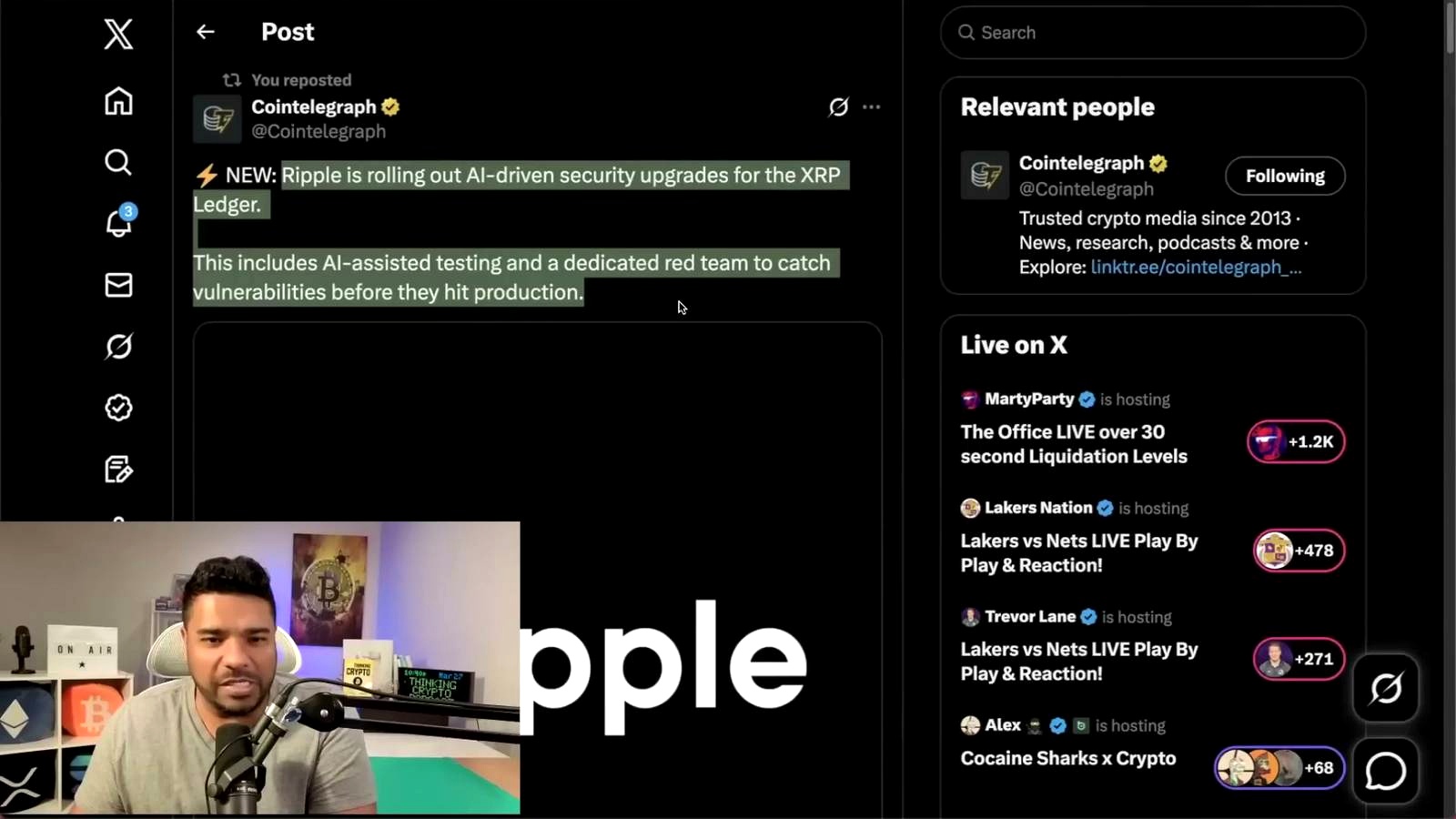
According to Thinking Crypto, Ripple is rolling out an AI-driven security upgrade for the XRP Ledger. He said the changes include AI-assisted testing and a dedicated red team designed to catch vulnerabilities before they reach production.
He quoted RippleX head of engineering Jay Oto-Ikeni saying the initiative covers AI-assisted testing across the development lifecycle, a dedicated red team, and higher standards for evaluating changes before they go live. Oto-Ikeni also said the goal is to strengthen reliability as the XRP Ledger scales for global payments, tokenized assets, and institutional use cases.
The host framed that effort as part of a broader industry shift, arguing that major blockchains will increasingly use AI in different parts of the development and security process.
Political friction is still shaping the market backdrop
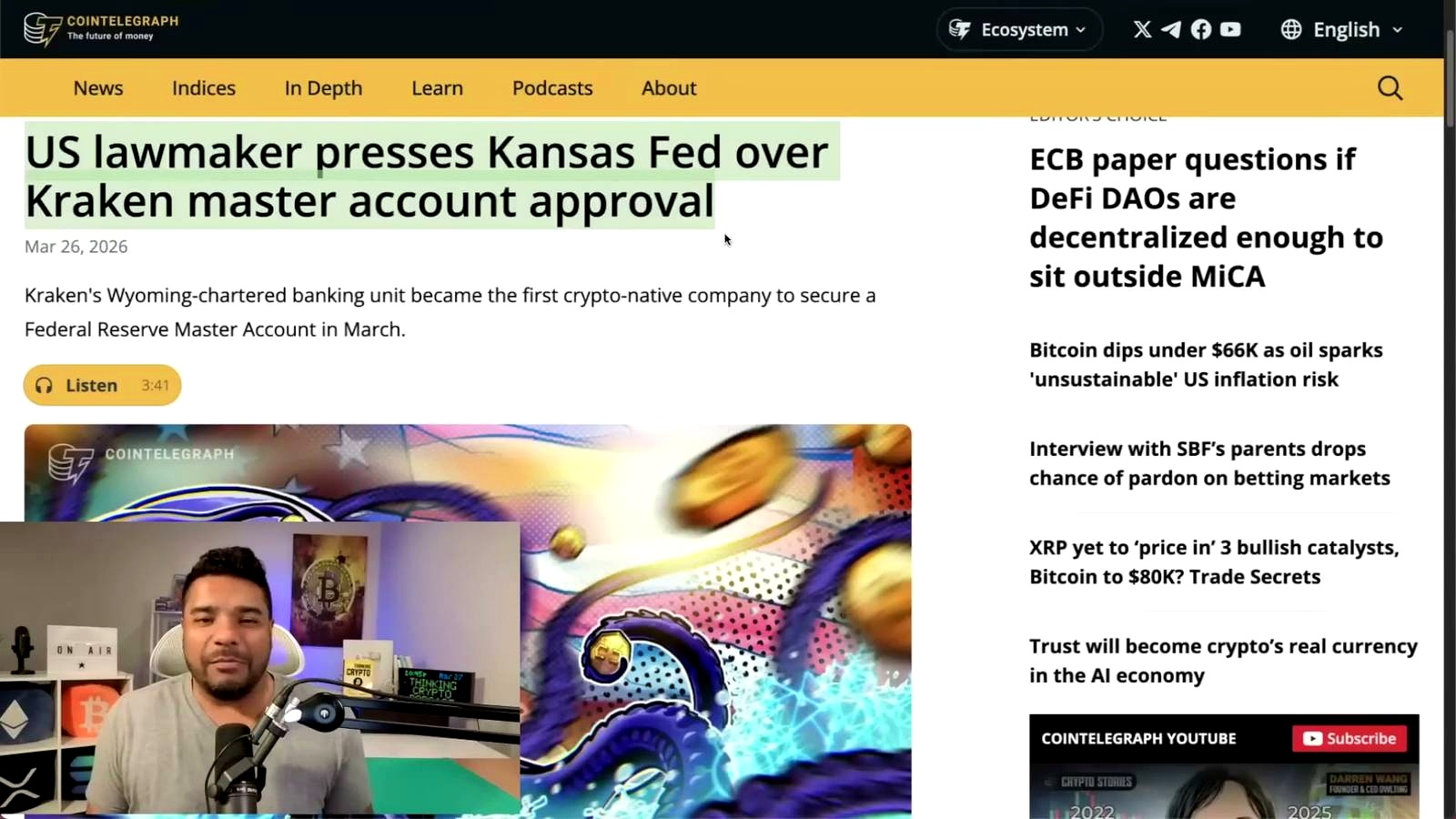
According to Thinking Crypto, not every part of the crypto policy story is moving in the industry’s favor. He pointed to pressure from Democratic lawmakers over the approval of Kraken’s limited-purpose master account by the Federal Reserve Bank of Kansas City.
He specifically named Maxine Waters as seeking answers over that approval. The host characterized the pushback as part of a broader effort by incumbent financial interests to slow crypto-native firms and limit their access to core banking rails.
That is also why he repeatedly returned to the Clarity Act. In his view, clearer legislation would reduce the ability of political actors to obstruct crypto firms through indirect pressure points rather than direct legal findings.
This was one of the most opinionated parts of the video, and it reflected the host’s broader thesis that regulatory ambiguity continues to be used as a competitive weapon.
Tether’s reported KPMG audit is another legitimacy test for stablecoins

According to Thinking Crypto, KPMG has been identified as the auditor for Tether’s USDT, a development he presented as a major credibility marker given KPMG’s status as one of the Big Four accounting firms.
He said the move fits with Tether’s effort to meet requirements tied to legislation such as the GENIUS Act, and he described it as another step in legitimizing the company’s operations. The host acknowledged longstanding skepticism around Tether, especially in its early years, but argued that applying old concerns to its current structure is no longer justified.
He also noted that Tether has already been producing attestations and said Cantor Fitzgerald has backed the company’s reserve claims. For him, bringing in a top-tier auditor raises the stakes further. The next thing he wants to see is the completed audit itself.
What to watch next
The immediate signal is Bitcoin’s weekly close. Thinking Crypto made clear that Sunday’s finish could help determine whether this is a temporary wobble or the start of a move toward the $50,000 to $54,000 region.
Beyond price, there are three institutional markers to watch. First, whether Morgan Stanley’s 0.14%-fee ETF wins approval and launches in early April. Second, whether expanding custody and trading support for assets like TRX leads to broader institutional participation outside Bitcoin and Ethereum. Third, whether Tether’s KPMG audit delivers the kind of transparency stablecoin critics have demanded.
Taken together, the video sketches a market with two stories unfolding at once: shaky near-term Bitcoin structure and a steadily deepening institutional foundation underneath crypto.
FAQ
What is Thinking Crypto’s main Bitcoin call right now?
He is turning more cautious. The host said Bitcoin trading below $66,000 weakens the bullish case and raises the chance of a drop into the $50,000 to $54,000 area before a bottom forms.
Why does Morgan Stanley’s ETF fee matter so much?
A fee of 0.14% would undercut rivals and could pressure the broader Bitcoin ETF market on pricing. The host sees that as evidence that competition among major Wall Street firms is still intensifying, not slowing down.
Did the video give any specific Bitcoin upside target that is still active?
The only clear upside figure mentioned was $80,000, but the host referenced that as a prior expectation, not his current base case. He said the probability of continued upside is now getting lower.
What is the significance of the XRP Ledger security update?
The importance is less about a price catalyst and more about infrastructure maturity. The measures described in the video focus on AI-assisted testing, pre-production checks, and vulnerability detection, all aimed at making XRPL more reliable for payments and institutional applications.
What was the biggest non-Bitcoin dollar figure mentioned?
The largest capital number in the video was the Intercontinental Exchange’s total commitment to Polymarket, which the host said is about $2 billion, including a fresh $600 million investment.
Reference Video

John Burnell focuses on Bitcoin infrastructure, wallet security and blockchain technology. He writes educational articles explaining how Bitcoin works and how the technology evolves.