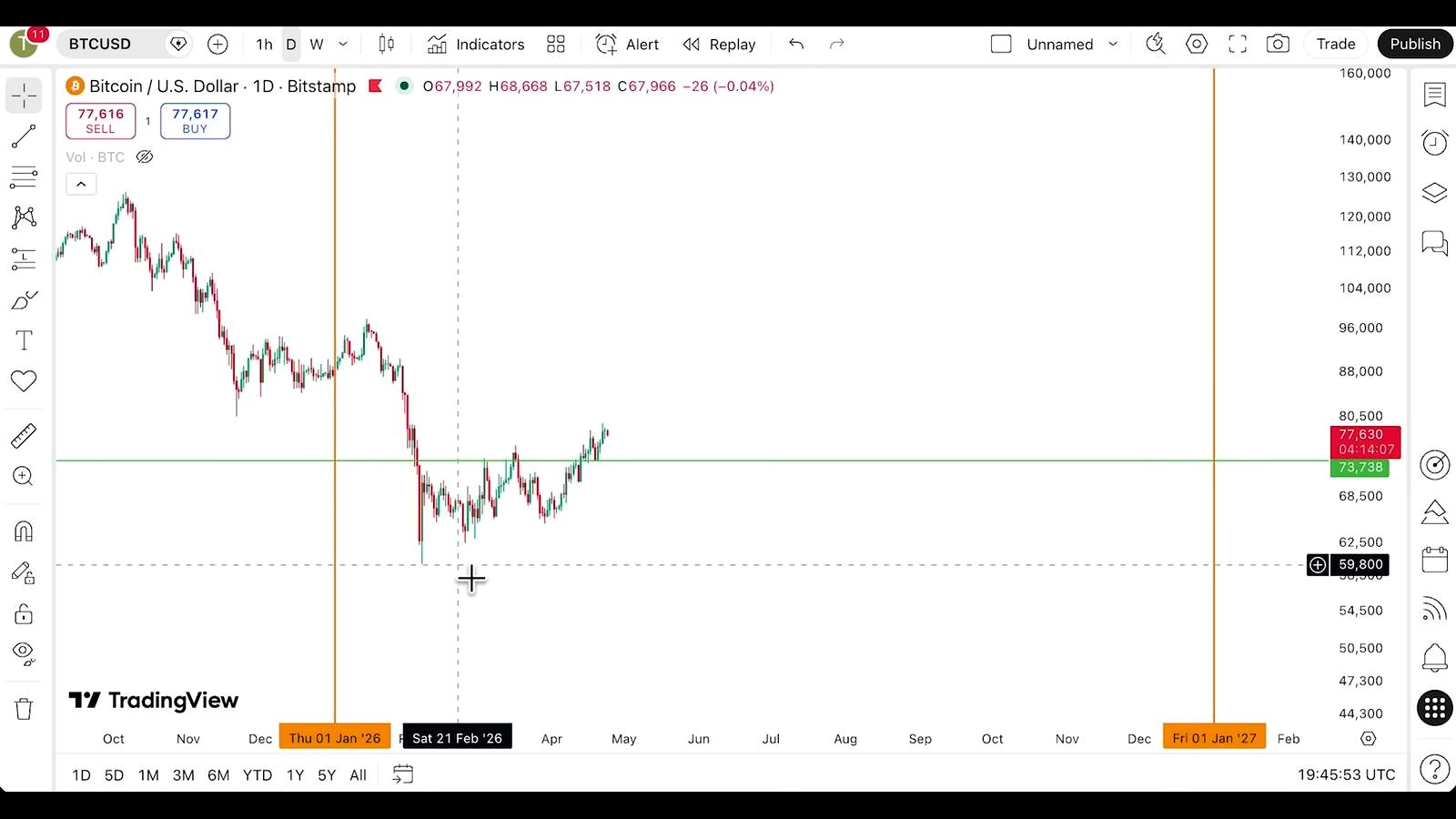
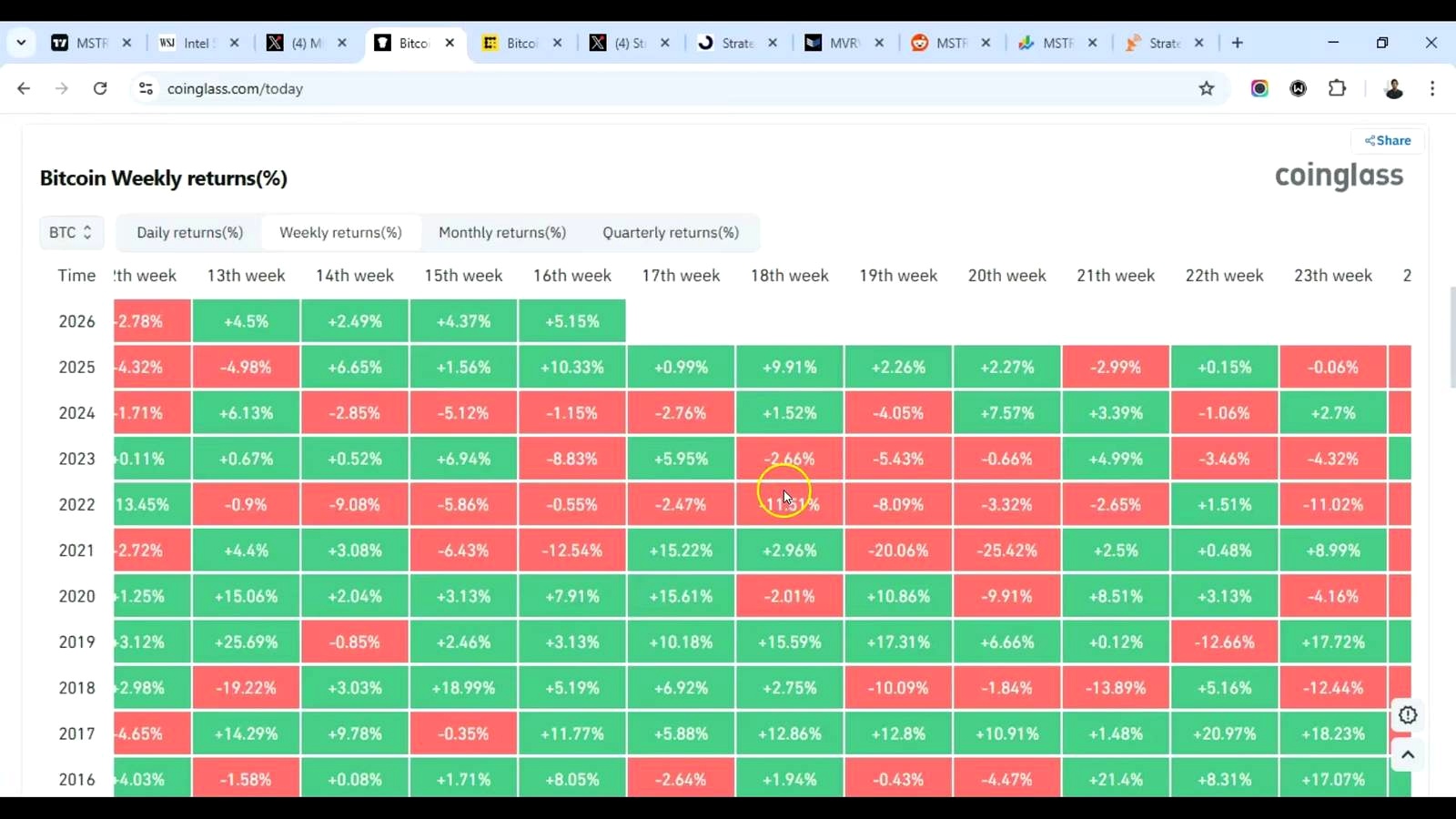
Bitcoin has fallen 22% since the beginning of 2026 and 19% over one year, raising fresh questions about whether the market is entering a true bearish phase. At the same time, the broader context points to a mix of volatility, geopolitical tension, macro uncertainty, institutional transformation, and a growing debate over Bitcoin’s place next to gold.
The current move is being analyzed through several lenses: Bitcoin’s inherent risk profile, turbulence across US markets, the impact of geopolitical events, the widening gap with gold, and the rapid institutionalization of the crypto sector. These combined factors help explain why the decline is being watched so closely.
Bitcoin’s 22% Drop in 2026: A Sharp Fall, but Not Necessarily a Bear Market

One of the main explanations given for the decline is simple: Bitcoin is a very risky asset. Its volatility is described at around 60%, compared with roughly 17 for the CAC 40. In that framework, a major move in Bitcoin does not necessarily carry the same meaning as a similar-looking move in traditional markets.
According to this view, a 40% fall in Bitcoin can be compared in scale to roughly a 12% decline in the CAC 40. That kind of move may be serious, but it does not automatically mean the end of a cycle.
What a Real Bear Market Looks Like in Bitcoin
The decline seen since the start of 2026 is not being presented as a classic bear market by all observers. Examples cited for a true bear market are much deeper collapses, such as:
- Bitcoin falling from 20,000 to 3,000
- Bitcoin falling from 60,000 to 12,000
In this reading, Bitcoin regularly experiences violent corrections as part of its normal behavior. It is even described as an asset in which, roughly once a quarter, a single weekend can erase 30% of its value.
That is why some market participants continue to treat these phases as part of a long-term asset cycle rather than a final trend reversal.
Macro Uncertainty Is Weighing on Bitcoin
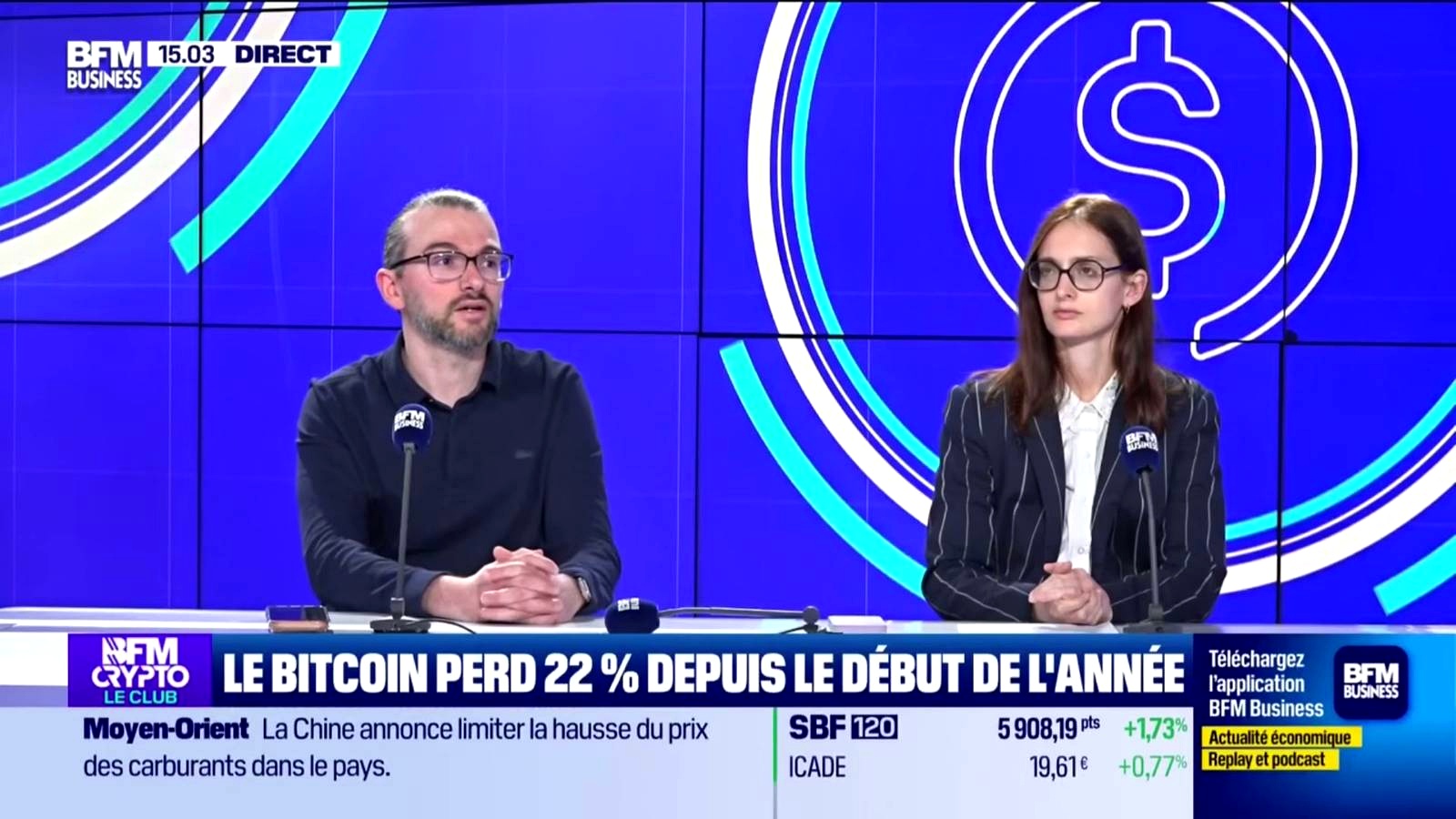
Looking beyond crypto alone, the decline also fits into a broader market environment marked by hesitation. American technology stocks are themselves in uncertainty, and capital flows in and out of US markets are being described as highly reactive to current events.
Several external elements are contributing to this waiting period:
- Uncertainty in US markets
- Geopolitical developments, especially around Iran
- Questions about future Federal Reserve policy
- Key mid-March rate decisions expected to clarify direction
In that setting, Bitcoin is not moving in isolation. The market is described as being in a zone of turbulence, with many participants choosing to wait rather than commit aggressively.
Geopolitical Tensions, Gold, and Bitcoin’s Divergence
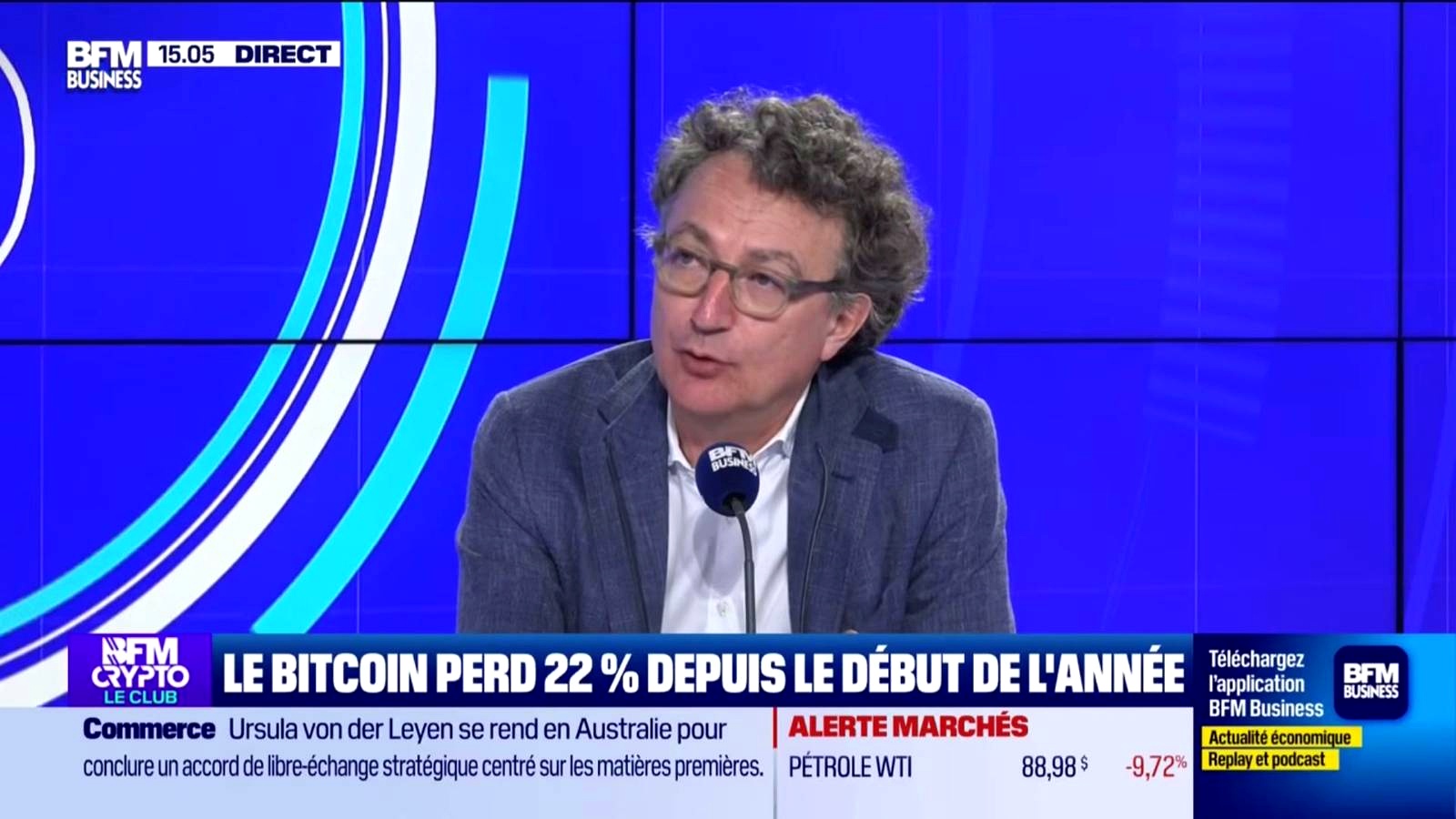
Another major explanation for Bitcoin’s price weakness is the geopolitical backdrop. As tensions rose, the immediate reaction was to move away from risky assets and buy gold. That pattern is presented as a classic market reflex during periods of rising geopolitical noise.
What stands out now is the size of the gap that has opened between gold and Bitcoin. That divergence is said to resemble the one seen at the beginning of 2020 during the Covid shock, when gold rallied strongly while Bitcoin remained flat.
Why the Gold-Bitcoin Gap Matters
The current gap is described as so large that it may naturally attract reallocations. The logic is that once profit-taking appears on gold, part of that capital can move into the lagging asset. In this comparison, Bitcoin is clearly presented as the asset lagging behind.
Historically, to make gold and Bitcoin curves roughly coincide, the comparison cited requires:
- A lag of around 200 days on the gold time series
- A multiplication of the vertical scale by 15
This statistical view reinforces the idea that the current divergence is not just anecdotal but potentially meaningful for future market rotation.
From Safe Haven Debate to Capital Transfer
In March, some experts noticed that Bitcoin appeared more interesting as a safe-haven asset than gold or other traditional assets, notably because Bitcoin allows money to be transferred. In that same context, gold also increased and was gaining credibility as a safe haven asset.
The debate is therefore not settled. Gold has benefited from geopolitical stress, but Bitcoin is increasingly being discussed in the same conversation. Whether Bitcoin becomes a viable heir to the benchmark safe-haven asset for capital protection remains an open question.
Can Strategy Explain Bitcoin’s Price Action?
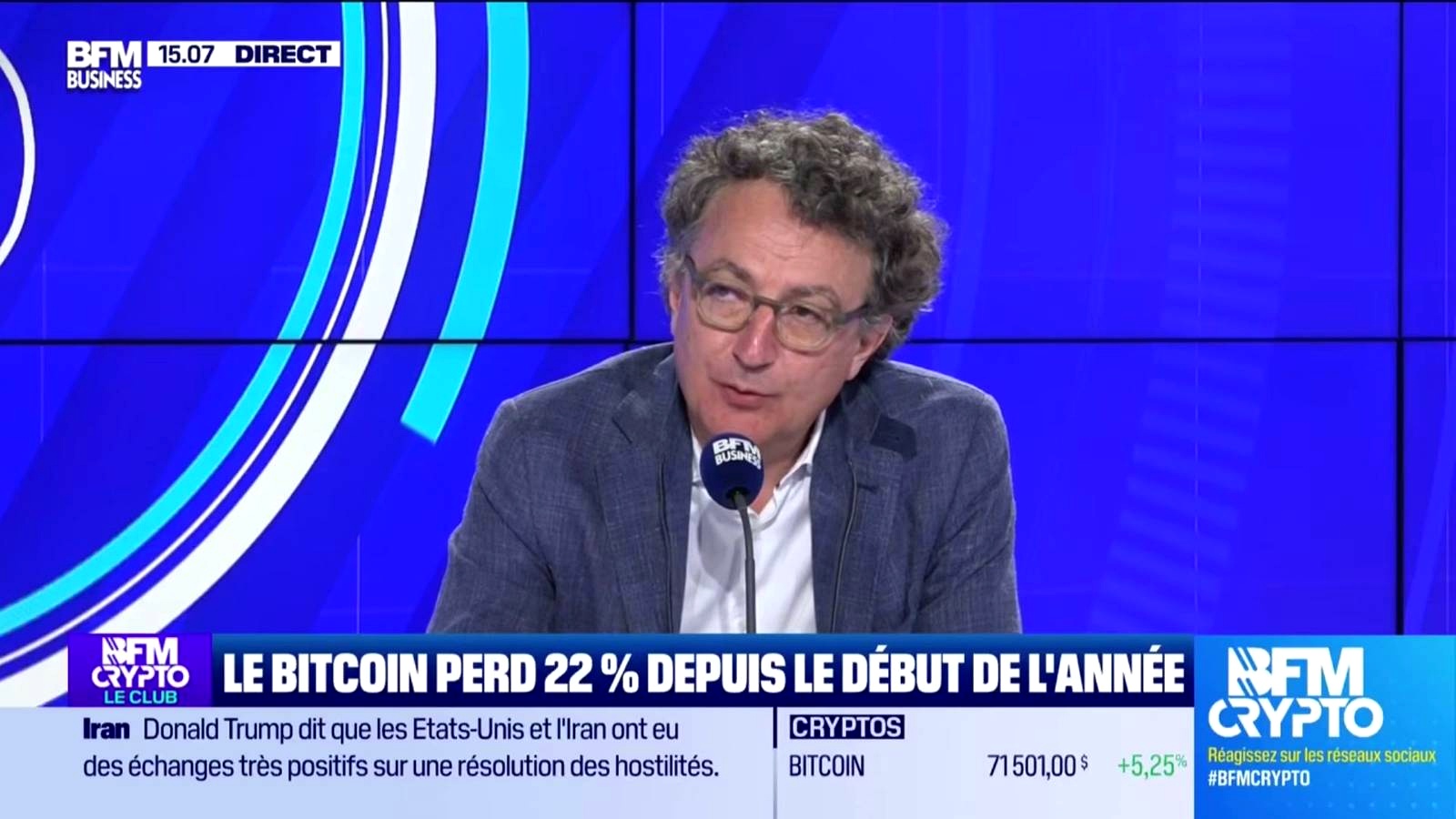
Some analysts have also linked Bitcoin’s moves to the activity of Strategy, which is acquiring historic quantities of Bitcoin. However, the view expressed here is that, compared with Bitcoin’s daily trading volume, these purchases remain two orders of magnitude below what would likely create a major short-term price effect.
That does not mean the company’s role is insignificant. On the contrary, its accumulation strategy is considered structurally important.
Why Strategy’s Bitcoin Accumulation Is Drawing Attention
The company is seen as applying a reserve institute model modernized for Bitcoin. The core idea is that the world needs an asset whose value is recognized and cannot be questioned. In the past, that role was associated with gold. In this thesis, Bitcoin is now presented as the technological answer.
The argument rests on several qualities attributed to Bitcoin:
- It is presented as effectively indestructible
- It is effectively rare
- It is technologically auditable
- It is tradable
This broader thesis helps explain why some companies are building strategies around massive Bitcoin reserves.
Is Strategy a Ponzi Scheme? The Distinction Being Made

The criticism that this type of structure resembles a Ponzi scheme is directly rejected in the discussion. A Ponzi scheme is defined through three conditions:
- There are contributors
- The contribution is redistributed almost immediately
- There is never any real investment
That is why this case is presented as fundamentally different. The contributions are said to be used to invest in Bitcoin, meaning there is a real underlying investment rather than an empty redistribution mechanism.
Why the Strategy Still Raises Concern
Even if it is not considered a Ponzi scheme, the structure still worries some observers for factual reasons tied to leverage and the possibility of a liquidation threshold.
At the same time, the company is described as having enough liquidity so far to cover interest and continue operating through the different options and bonds it has issued.
- About $10 billion in debt
- About $70 billion in assets
- Bitcoin would need to be divided by 6 or 7 for a major problem to emerge
- The issue would not be immediate because there are around 3 years of cash reserves
In that sense, the strategy is framed as speculation in the noble sense of the word: a vision of the future translated into an investment structure.
Gold Versus Bitcoin: Auditability and Trust

A key part of the debate now centers on the comparison between gold and Bitcoin. Gold is said to suffer from a major problem: it is not auditable in a definitive way without extreme measures. Even though billions of dollars in paper gold are traded every day, the stocks of paper gold and real gold are described as never having been fully audited.
That criticism is pushed further by arguing that even major national reserves have not always been seriously audited. In contrast, Bitcoin is put forward as an asset that is technologically auditable.
This difference is central to the thesis that Bitcoin could eventually challenge gold’s role in the storage of value.
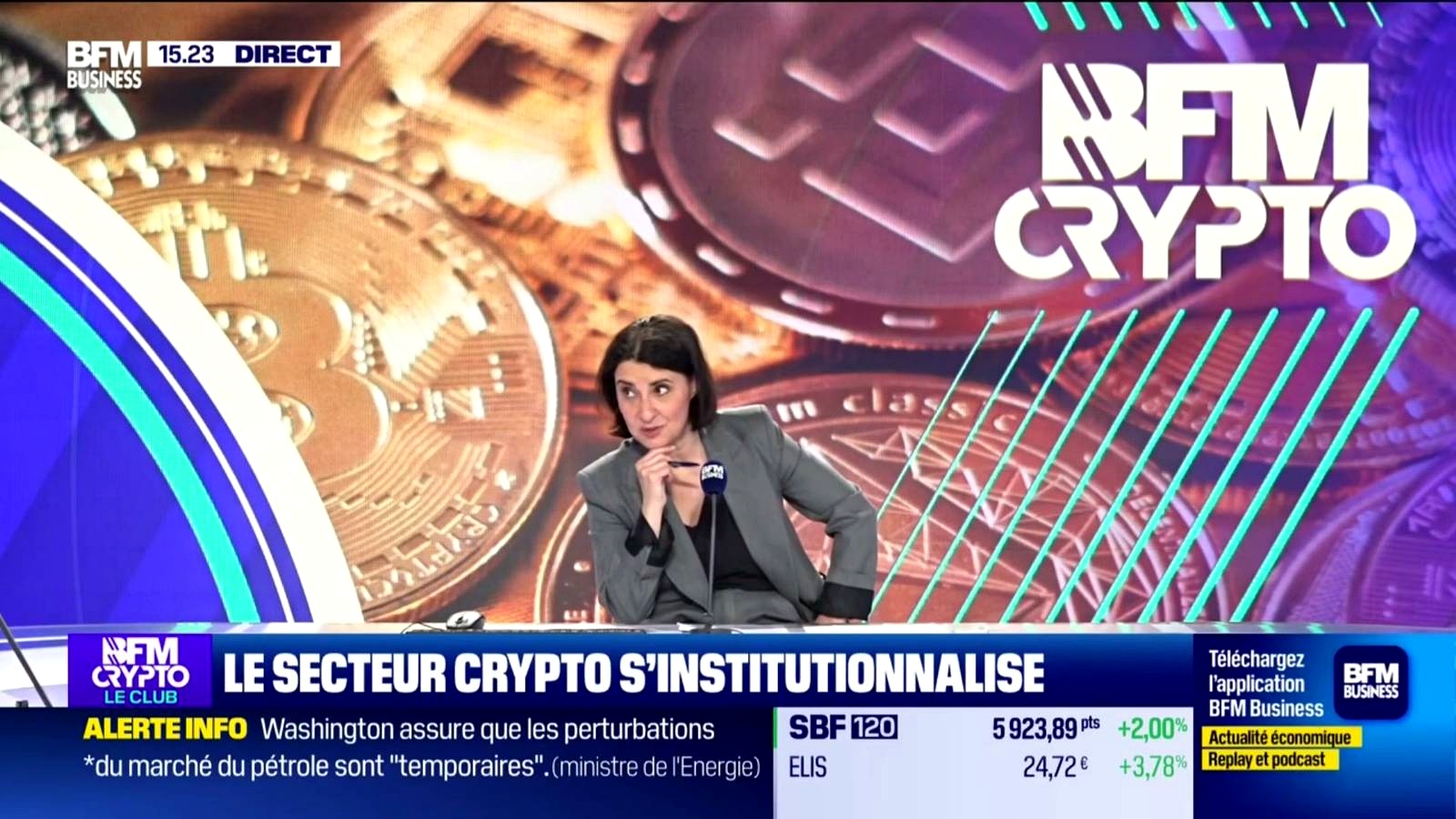
Institutionalization Is Accelerating Despite the Current Uncertainty

While Bitcoin’s price has weakened, the sector itself is undergoing a transformation. More institutional investors, both crypto-native and traditional, are positioning themselves in the market. ETFs are described as an accelerator that has both increased awareness and made market access easier.
At the same time, the industry is maturing through regulatory frameworks such as:
- MiCA in Europe
- The Clarity Act expected to bring more clarity in the United States
The Gap That Still Needs to Be Closed
The main question is whether the crypto ecosystem is already institutional-ready. The answer given is nuanced. There is strong progress, but there is still a gap between what institutions expect and what the industry currently offers.
Recent protocol failures and vulnerabilities show that some parts of the ecosystem still fall short of institutional standards. One example cited is a protocol failure over the weekend that exposed a loss of more than $25 million.
For institutions, the issue is not only financial. There is also an image and trust dimension. Unlike crypto-native individuals seeking the highest possible return while accepting elevated risk, institutions cannot afford the same level of exposure.
Why Transparency Matters More for Institutions
Institutions operate on trust. They carry the confidence of investors and therefore need much stronger guarantees around transparency, reliability, and operational safety. That is why the sector’s progress is increasingly focused on building infrastructure that works hand in hand with institutions and regulators.
Examples from France were cited as signs of that movement, including companies working to support traditional institutions as they build strategies around blockchain technologies.
Crypto Is Not Only Transforming Itself, It Is Also Transforming Finance

The transformation goes beyond the crypto sector alone. The argument made is that crypto will also transform finance itself. Tokenization is one of the clearest examples.
A calculation mentioned in the discussion illustrates the current complexity of traditional finance: when one investor buys a share sold by another on the market, there can be 15 intermediaries between them.
By contrast, a tokenized system is described as one in which securities could be held directly in a wallet and transferred regardless of location, with everyone accessing the same price.
What Blockchain Changes in Finance
- 24/7 market logic enabled by crypto rails
- Fewer intermediaries
- Greater transparency
- Trading that is described as uncensorable
- A new framework for tokenized securities
The level of transparency in crypto is described as unprecedented compared with traditional finance, where counterparties can remain opaque even when highly rated. In this view, once securities are tokenized, finance itself could be completely transformed.
The US Regulatory Shift Could Change Everything for Crypto
Another major development behind the sector’s outlook is the changing position of the US regulator. After years of uncertainty, the US market regulator has acknowledged that most cryptocurrencies are not financial securities and can instead be classified as commodities.
This is presented as a historic moment because it changes the environment for both individuals and platforms.
Why This US Move Matters
For users, this classification reduces the risk of buying assets that later become delisted or considered illegal on platforms. For platforms, the regulatory environment becomes easier to navigate, with another regulator seen as more flexible particularly on listing issues.
The policy shift is linked to a more pro-crypto US administration and a new tone at the SEC. The result is a broader pro-crypto turn that is expected to give the ecosystem more room to innovate and develop.
Clarity, Stablecoins, and the Rules of the Game
This follows other positive signals from the United States, including the clarification of the stablecoin framework. That clarification is described as having triggered an explosion in volumes and liquidity flows, while bringing many traditional companies into the subject.
The next key expectation is the Clarity Act, which should finally define the rules of the game more clearly. That would be a major accelerator for entrepreneurs, who have long faced the challenge of building companies without knowing exactly how regulators would act.
Why the Current Bitcoin Drop Is Being Watched So Closely
The 22% decline since the start of 2026 is therefore not being read through a single cause. It sits at the crossroads of Bitcoin’s normal volatility, macro hesitation, geopolitical stress, gold’s rally, institutional repositioning, and major regulatory change in the United States.
For some, the current weakness reflects a risky asset under pressure in a turbulent environment. For others, it may also be part of a wider reallocation process before a new phase of adoption. What is clear is that the sector is no longer being shaped only by retail enthusiasm: institutions, regulators, and market infrastructure are now central to the story.
FAQ
Why has Bitcoin fallen 22% since the start of 2026?
Several factors are highlighted: Bitcoin’s high volatility, uncertainty in US markets, geopolitical tensions, questions about future Fed policy, and broader hesitation across risk assets.
Is Bitcoin in a bear market?
Not according to the interpretation presented here. A real Bitcoin bear market is described as much deeper, with examples such as a fall from 20,000 to 3,000 or from 60,000 to 12,000.
How volatile is Bitcoin compared with the CAC 40?
Bitcoin’s volatility is described as around 60%, compared with roughly 17 for the CAC 40.
What role do geopolitical tensions play in Bitcoin’s decline?
As tensions increase, markets tend to move away from risky assets and into gold. That dynamic has contributed to the current gap between gold and Bitcoin.
Why is the gap between gold and Bitcoin important?
The divergence is described as unusually large, similar to the one seen at the start of 2020. Some observers believe profit-taking on gold could eventually be transferred toward Bitcoin, which is lagging behind.
Is Strategy responsible for Bitcoin’s short-term price moves?
The view expressed is that Strategy’s purchases are historically large but still too small relative to Bitcoin’s daily volume to have a major short-term effect on price.
Is Strategy considered a Ponzi scheme?
No. The distinction made is that a Ponzi scheme has no real investment, while in this case the funds are used to buy Bitcoin.
Why do some investors compare Bitcoin with gold?
Because Bitcoin is increasingly discussed as a store-of-value asset and because it is considered technologically auditable, unlike gold, which is criticized for auditability issues.
What are institutions looking for in crypto?
They are looking for maturity, transparency, stronger regulatory frameworks, and lower operational risk than what many crypto-native participants may be willing to accept.
Why is the US regulatory shift seen as historic for crypto?
Because the recognition that most cryptocurrencies are commodities rather than financial securities changes the rules for platforms and users, and is expected to support innovation and market development.
Content Source

An Indian crypto journalist covering the developments in the Bitcoin and blockchain industries. Her work helps readers understand key changes in the world of digital assets.