It sounds ridiculous at first. A stock built around Bitcoin, designed to feel steadier than the dollar, paying a huge monthly dividend while the asset underneath can still swing like a stormy river.
And yet that tension is exactly why STRC is turning heads. The pitch feels almost too clean, which is why the real story starts when you ask the uncomfortable question: what’s the catch?
Why STRC feels so unusual

The simplest way to understand STRC is through the metaphor used to explain it: Bitcoin is the river. It has flood years and drought years. Some people can camp right on the riverbank and live with the chaos. Most can’t.
STRC is presented as the dam built on that river. Instead of taking the full force of Bitcoin’s up-and-down moves, investors get a smoother engineered flow: an 11.5% annualized dividend, paid monthly, with a share price designed to stay at $100.
That is the appeal in one line: exposure to Bitcoin-driven purchases without living through the full violence of Bitcoin itself.
How STRC works

When someone buys a share of STRC, that money helps Strategy expand its access to what the speaker calls the “Bitcoin River.” Strategy captures more Bitcoin, and STRC holders get cut in on the flow through the dividend structure.
Although it is a stock, STRC is described as trading more like:
- a savings account
- a money market fund
- a fixed-income style product with monthly payouts
Its core design is straightforward on paper:
- Keep the share price around $100
- Pay an 11.5% annualized dividend monthly
- Use capital raised to support more Bitcoin purchases
The numbers that make people look twice
Since its IPO in July 2025, STRC has already helped Strategy accumulate 50,000 Bitcoin. Of that total, 25,000 were bought in just the last week referenced in the material.
The scale is what creates the drama. According to the source, nearly one out of every 420 Bitcoin that will ever exist has already been bought by STRC.
The part that sounds safe — and the part that isn’t

This is where the smooth story gets rough.
STRC is not FDIC insured. It is not collateralized by Bitcoin. Buying it does not mean getting a direct claim on some Bitcoin vault. If Bitcoin were to go to zero, STRC holders would be behind Strategy’s other significant debt holders.
So while it may behave more calmly than Bitcoin itself, it is not the same kind of safety people associate with a Treasury bill.
The dividend is not guaranteed
The 11.5% payout may be the headline, but it is not fixed in stone. The board can cut it, skip it, or raise it. In fact, it had already been adjusted seven times since the 2025 launch.
There is even a built-in tension around rising yield. A higher yield might sound attractive, but here it can also signal stress. If STRC drops below its $100 target, the dividend can be pushed higher to pull buyers back in.
That does not automatically mean strength. It can mean the market is getting nervous.
The real risk hiding underneath

The biggest threat described here is not a sudden explosion. It is a long grind.
For STRC to keep working, Bitcoin has to grow faster than the cost of the dividend. Strategy does not plan to sell its Bitcoin to fund those payments, and it does not generate major business income to cover them either.
That leaves a narrow set of conditions that really matter:
- Bitcoin cannot just bounce; it has to keep compounding faster than the dividend burden
- The market has to continue valuing MSTR above the value of the Bitcoin it holds
Why MSTR matters so much
In this framework, STRC acts like a line of credit. MSTR, the company’s equity, acts more like the house behind the mortgage. The source argues that the market has consistently valued MSTR at a premium over the Bitcoin in its treasury.
That premium is crucial. If it stays positive, Strategy can issue new shares and use that advantage to keep the machine running.
But the material also points to a moment when the setup looked fragile. When Bitcoin dropped 30% in a month, the MSTR premium nearly turned negative and STRC slipped away from its $100 level. Strategy responded by building a $2 billion cash reserve instead of buying more Bitcoin, effectively a rainy day fund for the dividend structure.
The two conditions that have to hold

The article’s thesis gets very blunt here. For the 11.5% dividend to keep working over a long period, two things need to happen:
- Bitcoin has to keep rising by roughly 20% to 30% per year on average
- The market has to keep assigning MSTR a premium over the Bitcoin it holds
That is the whole machine. If those conditions hold, STRC looks powerful. If they break, the confidence around the product gets tested fast.
Why “too successful” may be the bigger story

The most provocative idea in the material is not that STRC could fail. It is that it could work too well.
STRC is framed as a possible Trojan horse into the fixed income market. It now sits in a category used by massive pools of capital that are legally pushed toward fixed-income style investments.
That is where the comparison gets sharp. A 2030 Target corporate bond is cited with a 5.5% yield and nearly zero liquidity. STRC, by contrast, is presented as offering 11.5%, with Bitcoin-linked backing in the broader Strategy structure.
Why institutional money may care
The material argues that Strategy’s existing corporate bonds are already heavily traded and owned by pension funds. It also points to a Sharpe ratio of 3.08 for STRC, describing it as better risk-adjusted return than any other product in the fixed income market shown on that chart.
Add one more claim — that the dividends are tax-free — and the pitch becomes much easier to understand. Not because it becomes simple, but because it becomes legible to a market that wants product, not a 10,000-page explanation.
A black hole for fixed income?

The article’s language becomes almost cinematic here. STRC is described as a black hole for the fixed income market.
The logic is blunt:
- Why accept 5.5% on long-duration corporate bonds
- Why deal with weak liquidity
- Why settle for taxable yield
- If STRC offers more, why wouldn’t capital move
From that point, the feedback loop almost writes itself. Every dollar into STRC becomes a persistent Bitcoin bid. Every Bitcoin rally strengthens the balance sheet story. A stronger story can improve credit perception. Better credit perception can bring in more capital.
The source hesitates to call it an infinite Bitcoin-buying flywheel, then basically calls it one anyway.
The one question everything seems to come back to

Strip away the metaphors about rivers, dams, oranges, and black holes, and the bet comes down to one question raised directly in the material:
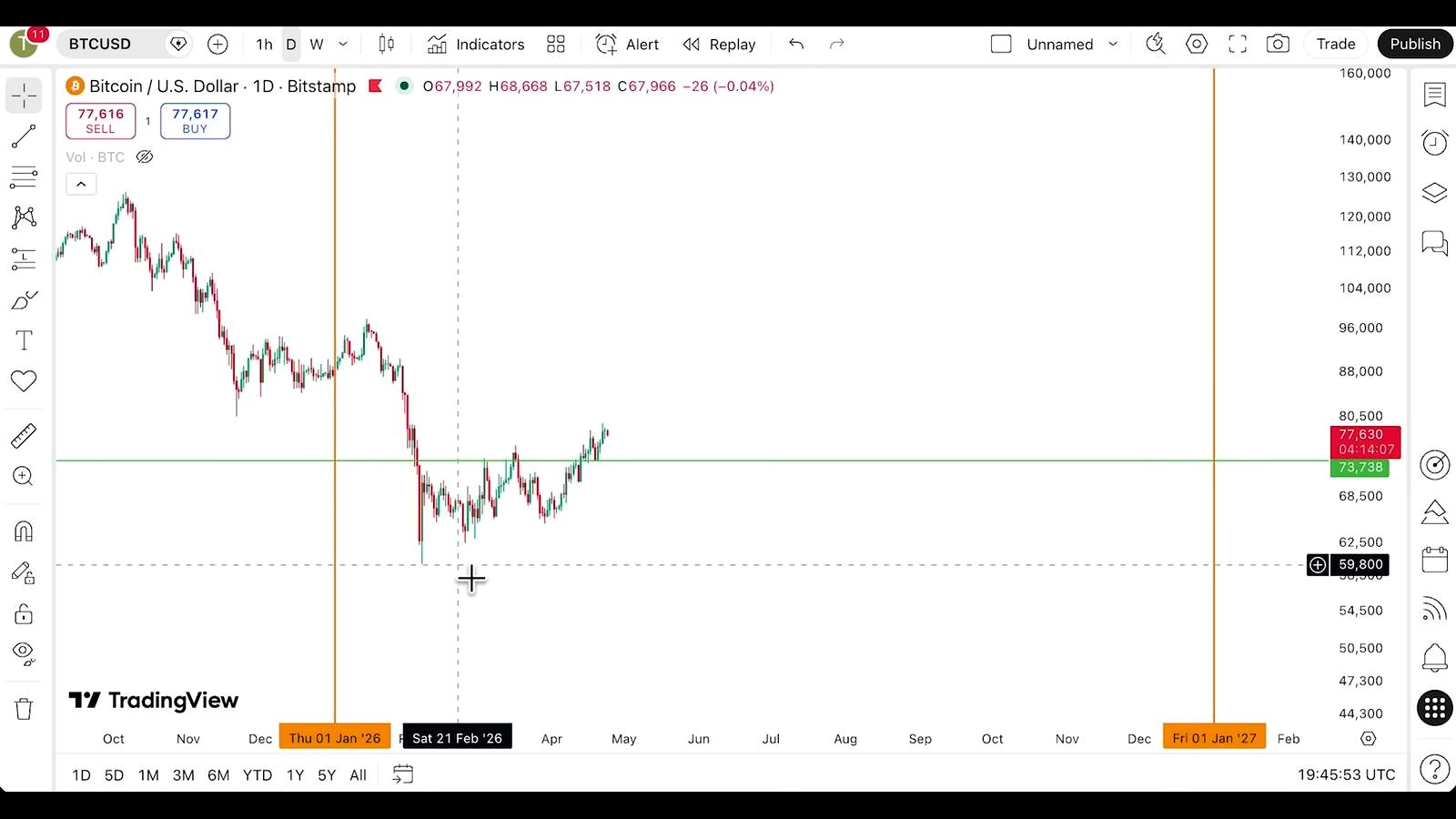
Will Bitcoin reach $430,000 a coin by 2036?
If the answer is yes, then STRC is framed as potentially one of the safest dividend stocks available. If not, the whole balancing act gets much harder.
What this means depending on who you are

If you want income now
STRC is presented as a way to bet on the long-term Bitcoin thesis while getting paid today, with what the speaker calls close to zero volatility.
If you are younger and more aggressive
The material is blunt: just buy Bitcoin. The argument is that even Michael Saylor is buying Bitcoin itself, not the stock wrappers around it.
If you think in decades, not quarters
The closing idea is more philosophical than technical. If the long-term view is that one day things may be measured in Bitcoin rather than dollars, then the choice is not just about yield.
It becomes a deeper question: do you want to lend someone money to buy the river, or do you want your own piece of it?
FAQ
What is STRC?
STRC is a stock designed to hold its share price around $100 while paying an 11.5% annualized dividend monthly. It is described as a smoother way to gain exposure to Strategy’s Bitcoin purchase engine.
Is STRC backed by Bitcoin?
Not directly. The material says STRC is not collateralized by Bitcoin, and holders do not get a claim on a Bitcoin vault.
Is the STRC dividend guaranteed?
No. The board can cut it, skip it, or raise it, and it had already been adjusted seven times since launch.
Why does MSTR’s premium matter to STRC?
The premium allows Strategy to issue new shares at favorable terms. That supports the broader structure behind STRC and helps fund its model.
What is the biggest risk to STRC?
According to the material, the biggest risk is Bitcoin going down and staying down for years, while the cost of maintaining the dividend remains high.
Why is STRC attracting institutional attention?
The source says it now sits in a fixed-income category that matters to large pools of capital, including pension funds, and highlights its strong risk-adjusted return profile.
Why is STRC described as “eating the entire Bitcoin supply”?
Because every dollar flowing into STRC is described as turning into a persistent Bitcoin bid, and the product has already helped accumulate 50,000 Bitcoin.
What is the key long-term bet behind STRC?
The material reduces it to a single question: whether Bitcoin reaches $430,000 per coin by 2036.
Content Source

John Burnell focuses on Bitcoin infrastructure, wallet security and blockchain technology. He writes educational articles explaining how Bitcoin works and how the technology evolves.