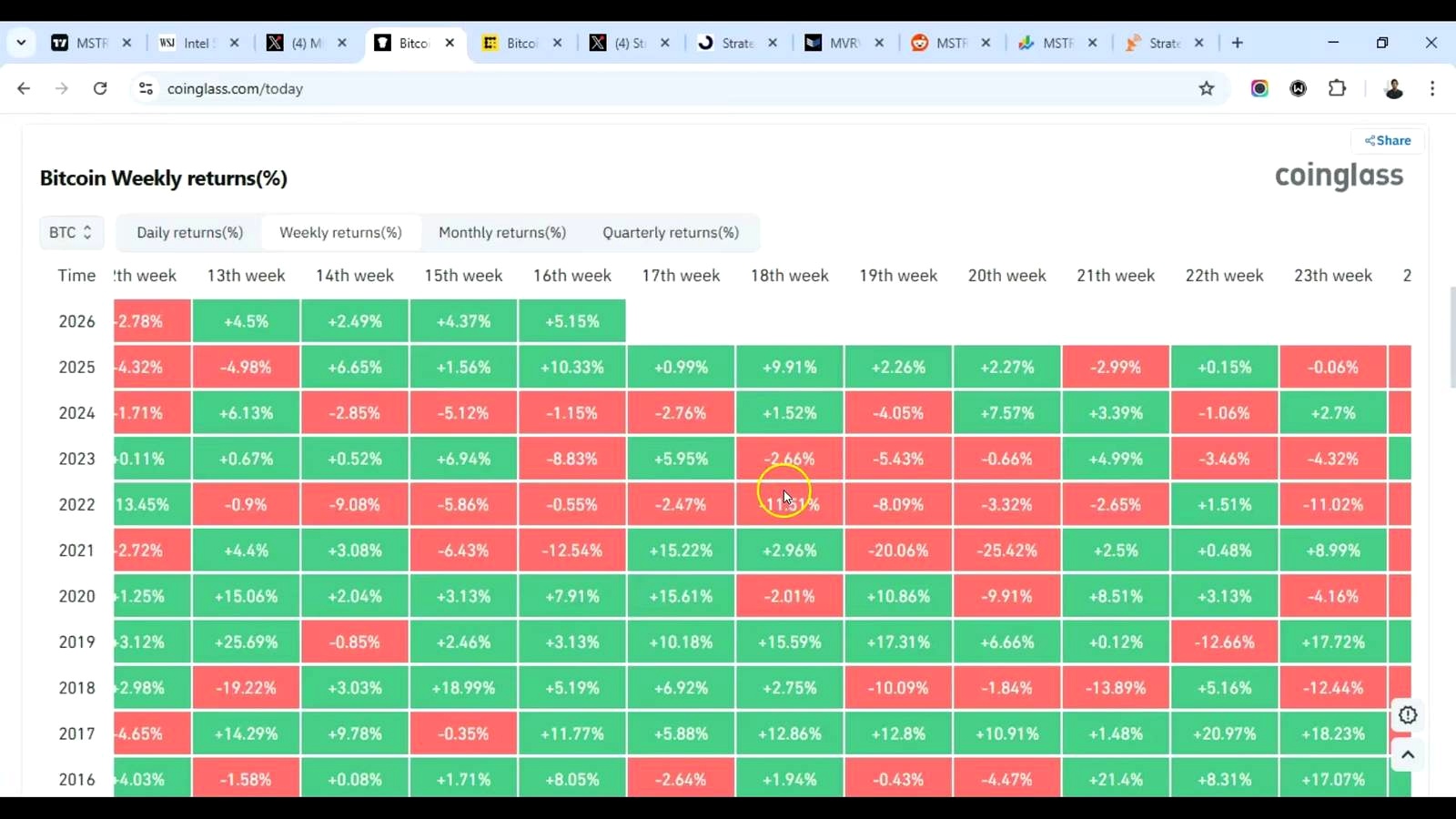
As Bitcoin pushes toward a new psychological battleground near $80,000, the market is facing a familiar question: is institutional demand strong enough to overpower a technical pullback signal? According to CLOCKWISE CRYPTO, the answer is still likely bullish overall, but not without a real risk of a near-term shakeout if key levels fail.
The Core Thesis: Institutional Bitcoin Demand Is Leading This Move
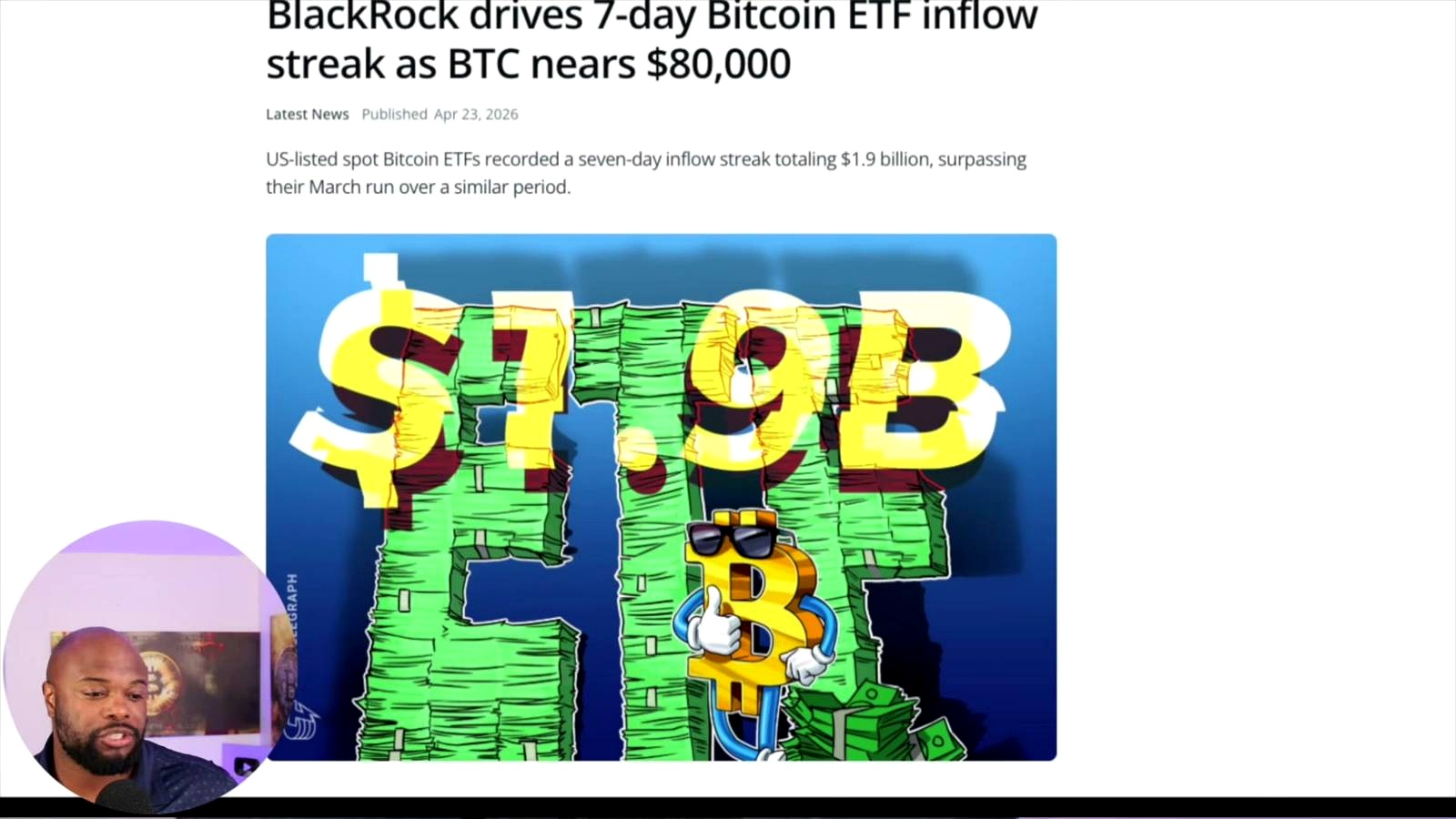
According to CLOCKWISE CRYPTO, the central story in crypto right now is not broad altcoin euphoria but concentrated capital rotation into Bitcoin. The host points to a renewed spot ETF bid, citing a 7-day streak of Bitcoin ETF inflows led by BlackRock and total inflows of about $1.9 billion as BTC trades near the $79,000 to $80,000 range.
That matters because it frames this rally differently from the more retail-driven bursts seen in prior cycles. The analyst argues the current move is “structured, ” driven by strategic positioning rather than emotional chasing. In his telling, Bitcoin is attracting major capital while the rest of the market is not keeping pace, especially XRP on a relative basis.
That interpretation broadly fits the market backdrop. Since the launch of U.S. spot Bitcoin ETFs, BTC has increasingly traded like an institutional macro asset as much as a crypto-native one. When ETF demand accelerates, it can create a persistent bid that is less sensitive to short-term social sentiment than the speculative altcoin rallies of prior years. Traders have also spent much of this cycle watching Bitcoin dominance rise, a sign that capital is concentrating in the most liquid, regulation-cleared asset first.
Still, the thesis is not fully consensus. Bulls agree ETF flows matter, but many technicians remain wary whenever price approaches a round-number resistance after a sharp run-up. In strong uptrends, momentum can stay elevated for longer than expected. But when price stretches into a major resistance band, even healthy markets often retrace before continuing. That tension sits at the heart of the analyst’s view: structurally bullish, tactically cautious.
Why the $79K, $80K Zone Matters
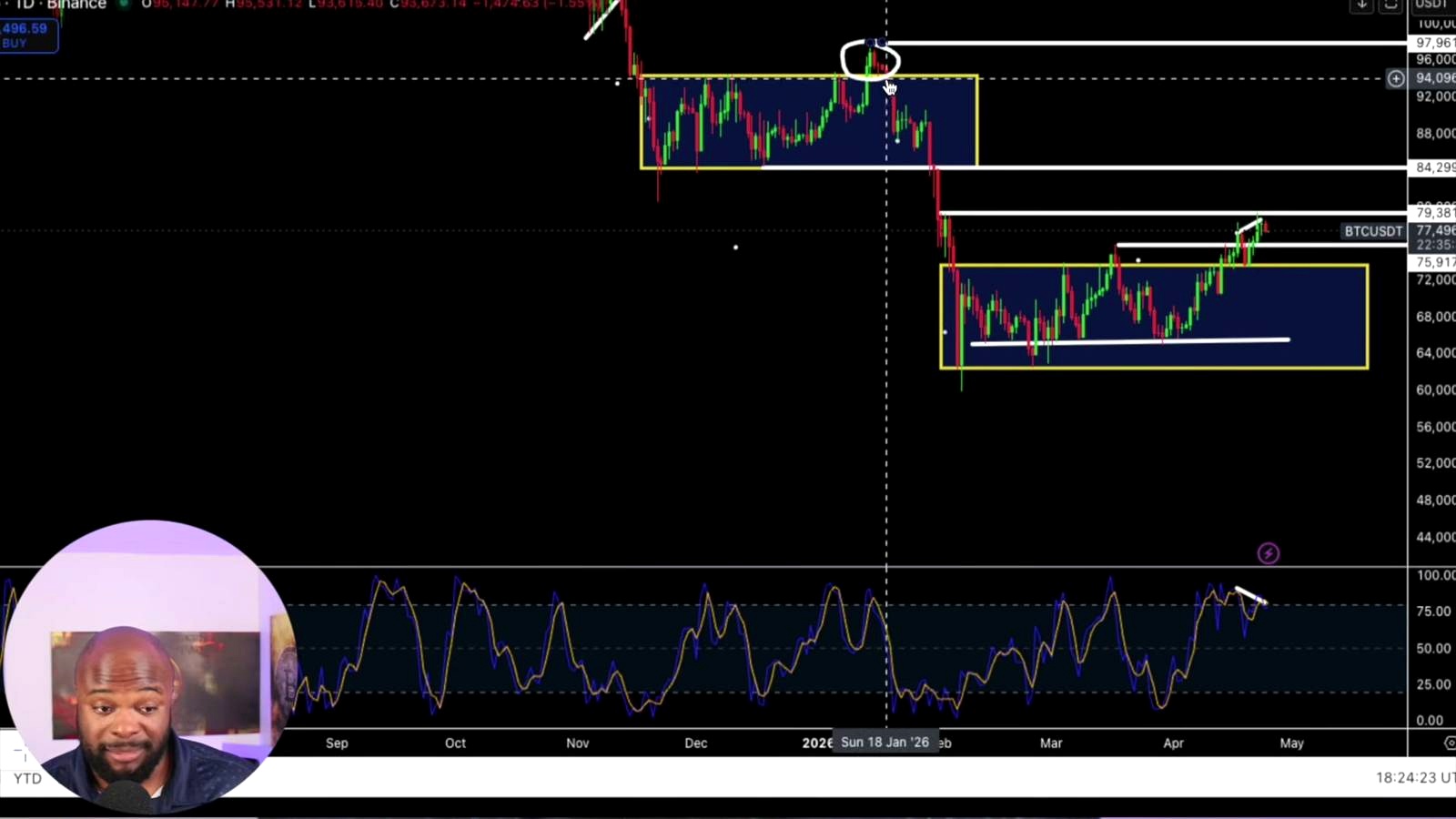
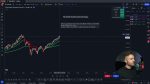
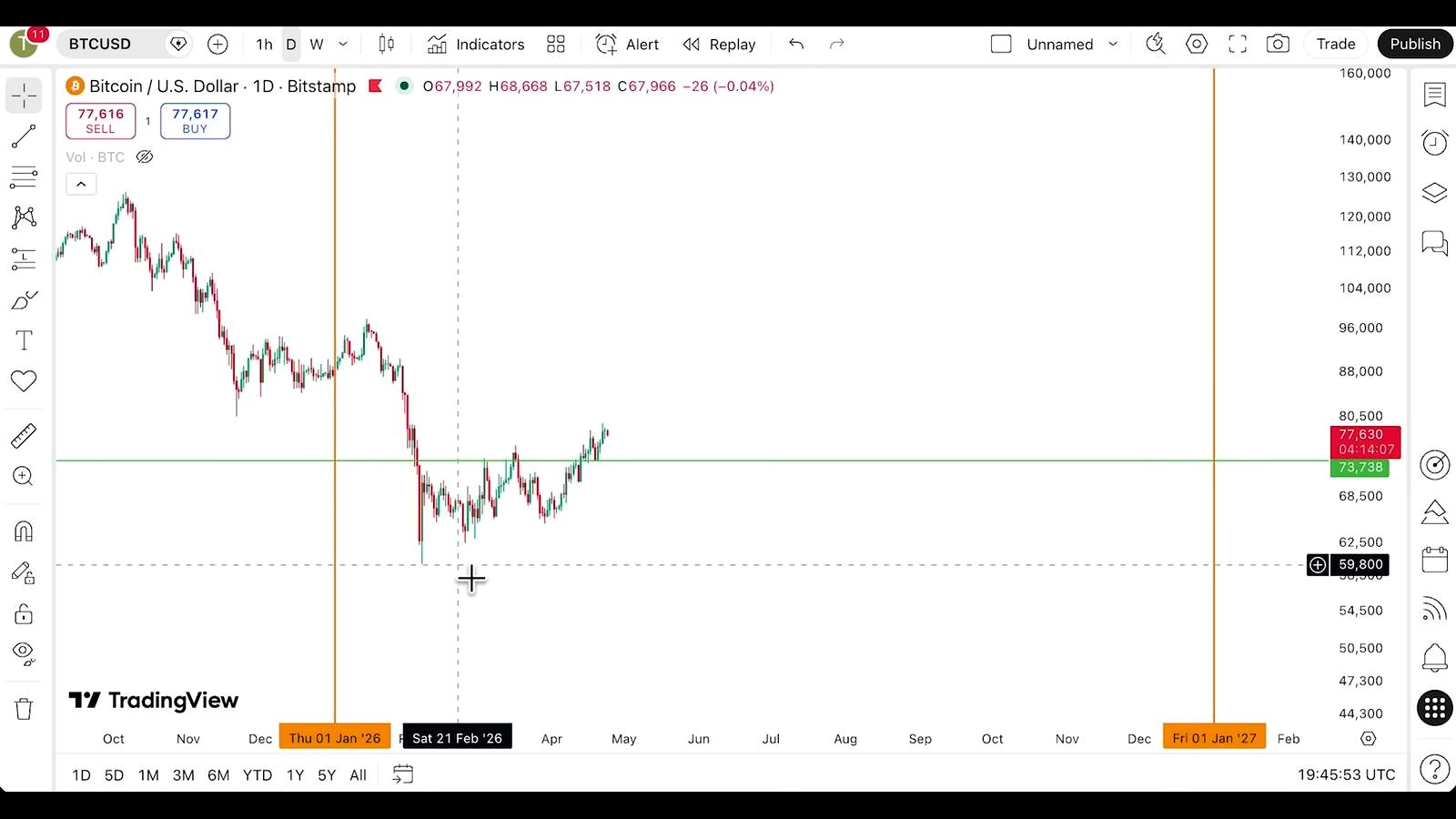
According to CLOCKWISE CRYPTO, the key technical line in the sand is the $80,000 area. The host says he wants to see Bitcoin “break and clear” that range before dropping his caution. Until then, he sees a potential bearish divergence forming and warns that traders should pay attention so they do not get caught off guard by fresh lows.
His downside levels are specific. He says a move back to around $75,000 would be a pullback worth watching, while a return to about $72,000 would become more problematic. The reason is not simply psychological. In his framework, a deeper rejection from current levels would strengthen the case for those calling for a much larger retracement.
The analyst references a prior divergence setup he identified last year and says that, if the market were to repeat a similar “leg down, ” projections could point toward roughly $40,000, with his measured move landing around $42,000 to $42,500. He is explicit that this is not his base case. Levels would need to break first, and he says he does not anticipate that outcome, but he wants traders to understand where those bearish targets come from.
He also highlights momentum conditions, saying that if the stochastic indicator turns lower toward 70, the bearish divergence setup would look more convincing. At the same time, he says his broader chart interpretation remains constructive, describing Bitcoin as an inverted head-and-shoulders pattern with a neckline already broken to the upside.
That split-screen view is common in late-stage breakout attempts. Trend traders may see a bullish continuation pattern, while shorter-term momentum traders see exhaustion risk near resistance. The market often resolves that disagreement with a brief retest, then either a breakout or a deeper unwind.
Bitcoin’s Strength Is Leaving Parts of Crypto Behind
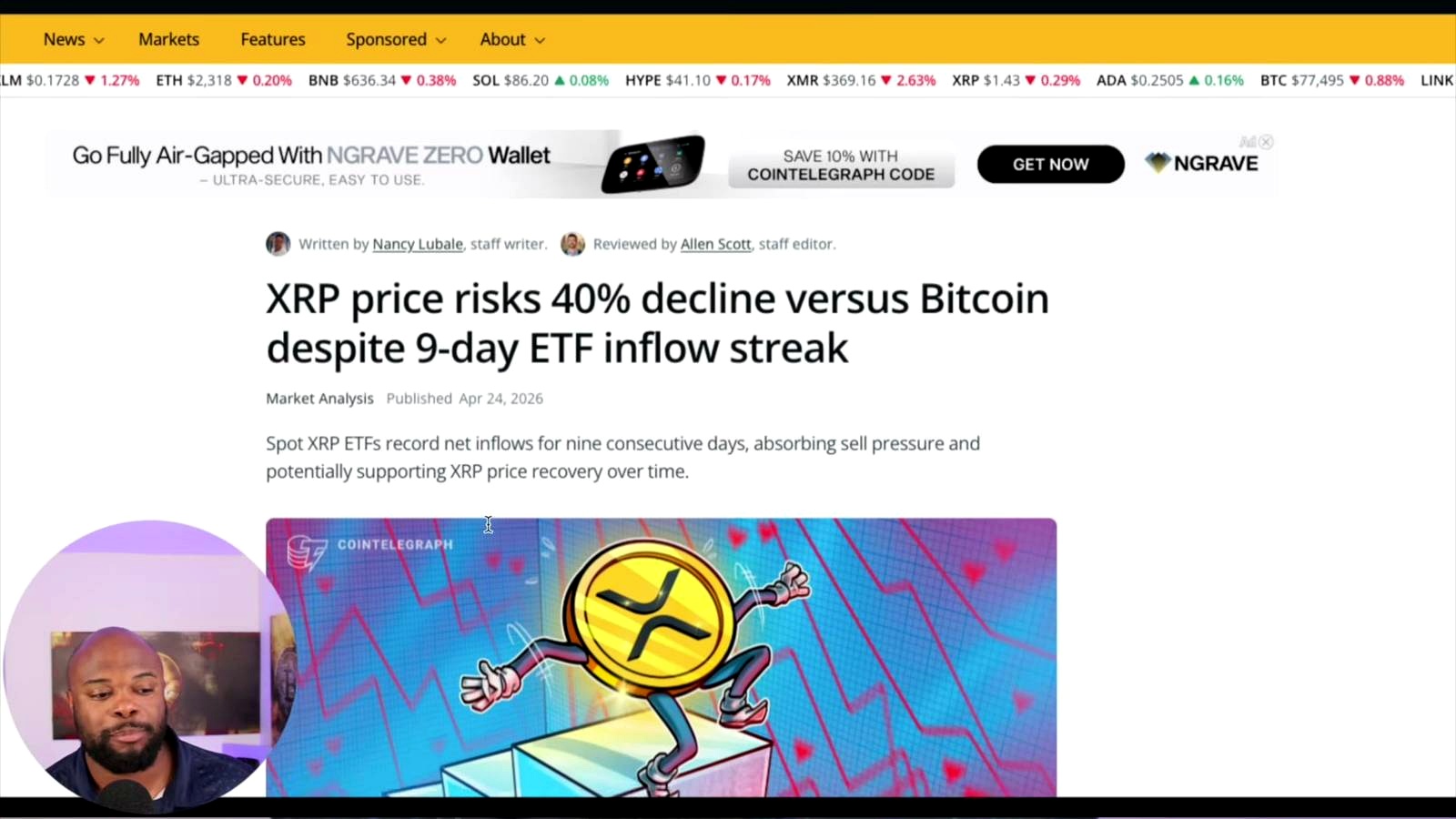
According to CLOCKWISE CRYPTO, one of the most important shifts in this cycle is that “crypto is not moving the same as it used to.” The host argues the market is becoming more selective, with Bitcoin attracting most of the serious capital while some altcoins fail to benefit equally even when they post positive ETF-related headlines of their own.
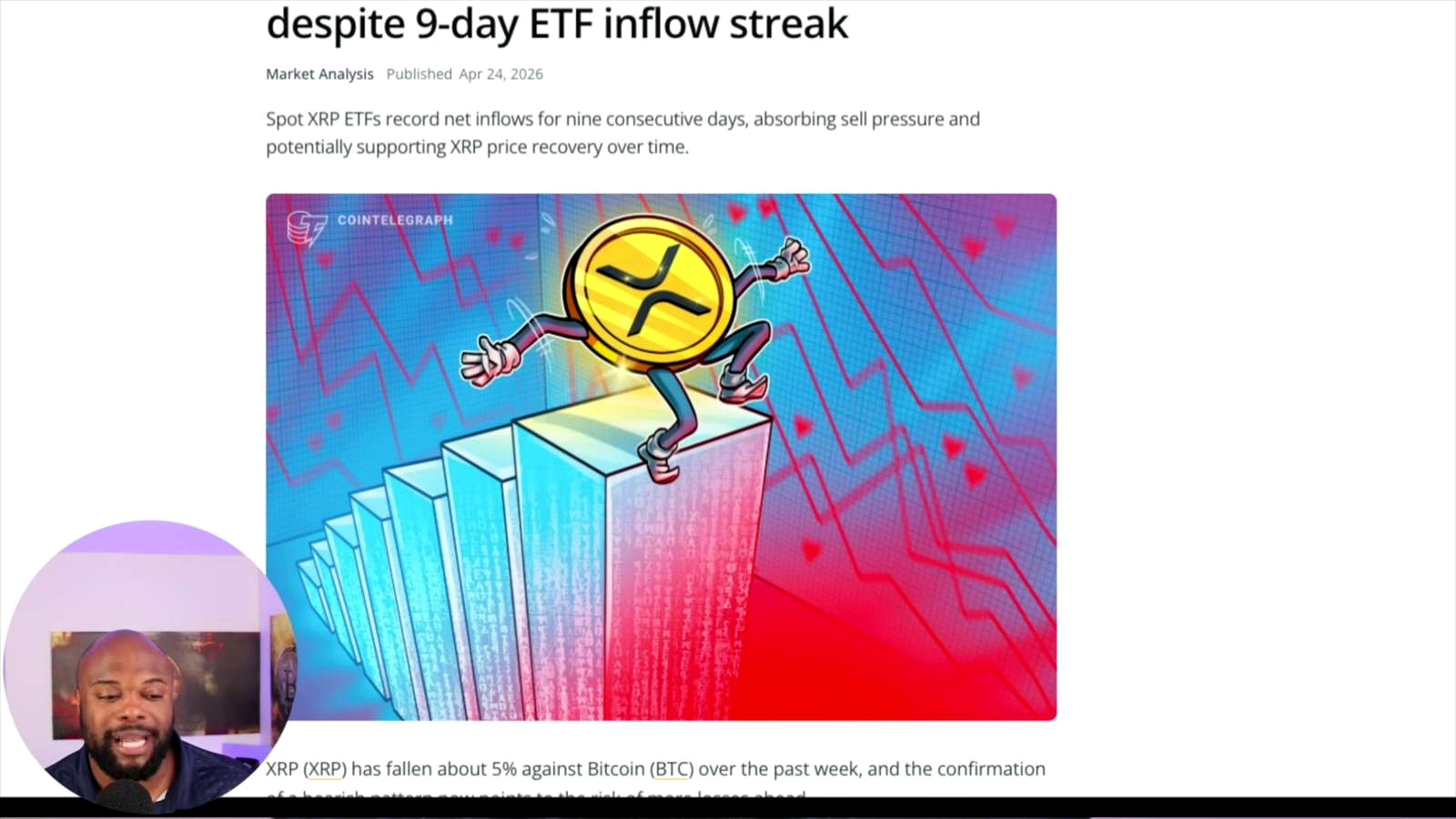
He uses XRP as the clearest example. The analyst notes that XRP has seen a 9-day ETF inflow streak in the coverage he is discussing, yet he says the token is still underperforming Bitcoin and could risk a 40% decline versus BTC on a relative basis. His point is less about XRP’s outright dollar price than about comparative weakness as Bitcoin dominance rises.
That relative-performance lens is crucial. In crypto bull phases, traders often expect liquidity to cascade from Bitcoin into large-cap alts and then into smaller names. But that sequence is not automatic. In more institutionally driven markets, capital can remain concentrated in BTC for longer, especially when regulatory clarity, ETF access, and macro narratives favor the asset. A selective market also tends to punish coins with weaker narratives or less immediate institutional demand.
The host also spends time on comments from Ripple CTO David Schwartz, whose remarks pushed back on conspiracy theories that “something big is about to happen.” The analyst interprets those comments as fear-inducing for XRP holders and disagrees with the implication that there is nothing material beneath the surface. He argues that NDAs around Ripple partners may reflect banks’ historical reluctance to publicly embrace crypto before regulation was clearer. That is the host’s interpretation, not independently verified fact, but it underscores his broader theme: capital is concentrating in confirmed winners while uncertainty persists elsewhere.
What Could Go Wrong
The biggest threat to the analyst’s bullish Bitcoin thesis is simple: the market fails at resistance and the ETF bid proves insufficient to absorb profit-taking near $79,000 to $80,000. If BTC loses $75,000 and then $72,000, the bearish-divergence argument gets much stronger, and traders would start revisiting the more aggressive downside projections around $42,000 to $42,500.
There are other risks the video only touches indirectly. ETF inflows are powerful, but they are not a one-way force. They can slow, reverse, or become less market-moving if broader macro conditions deteriorate. Bitcoin also remains sensitive to Treasury yields, dollar strength, equity volatility, and shifts in Federal Reserve expectations. If Nasdaq weakens sharply, BTC may not “lag a little” on the way up so much as follow risk assets down.
There is also the possibility that concentration in Bitcoin becomes a short-term headwind rather than a tailwind. When one asset carries the market, positioning can get crowded. A crowded long can still be right over time, but it often becomes vulnerable to flushes that shake out late buyers before the trend resumes.
On XRP, the counterargument is more severe. The host reads ambiguity and NDAs as signs that something meaningful may still be developing behind the scenes. Skeptics would argue the opposite: that underperformance versus Bitcoin is the more objective signal, and that markets usually reward confirmed catalysts faster than rumored ones. In a selective market, narratives without visible execution can keep lagging much longer than holders expect.
What to Watch Next
The first trigger is whether Bitcoin can decisively clear $80,000. That is the level the analyst says would reduce his concern about the current divergence setup. If BTC breaks above that zone and holds it, traders will likely start focusing on the next upside area around $85,000, with Michael van de Poppe, cited in the video, looking for that move within 2 to 3 weeks. The host also references $86,000 as part of that upside discussion.
On the downside, watch $75,000 first, then $72,000. A fall into that lower area would suggest this is more than a routine retest. Momentum indicators also matter here; if stochastic momentum rolls down toward 70, the bearish-divergence case gains credibility. More broadly, traders should monitor whether ETF inflows continue at anything close to the recent pace, because that remains the clearest real-time evidence for the institutional-demand thesis.
FAQ
What is bearish divergence in Bitcoin trading?
Bearish divergence happens when price makes a higher high or presses into resistance, but a momentum indicator such as RSI or stochastic fails to make a matching high. Traders read that as a warning that upside momentum is weakening even if price still looks strong.
What is an inverted head-and-shoulders pattern?
It is a bullish chart pattern made up of three troughs, with the middle trough lower than the two on either side. When price breaks above the “neckline, ” traders often treat it as a signal that a downtrend has ended and a new upward move may be underway.
Why do ETF inflows matter so much for Bitcoin price?
Spot ETF inflows represent real demand for Bitcoin exposure through traditional financial channels. When inflows are strong and persistent, they can create steady buy pressure from institutions, advisors, and large allocators who are not trading directly on crypto exchanges.
Why can XRP rise in attention but still fall against Bitcoin?
A token can attract headlines, inflows, or speculative interest and still underperform BTC if Bitcoin is absorbing a larger share of market capital. Relative weakness versus Bitcoin often signals that traders prefer BTC as the cleaner or lower-risk expression of crypto exposure.
What happened the last time Bitcoin stalled near a major round number?
Historically, round numbers like $20,000, $30,000, $50,000, and now $80,000 often act as psychological resistance. Bitcoin can break them decisively, but it frequently retests or briefly rejects there first as traders take profit and wait for confirmation.
Original Source

John Burnell focuses on Bitcoin infrastructure, wallet security and blockchain technology. He writes educational articles explaining how Bitcoin works and how the technology evolves.