It sounded like one of those moments crypto people wait for. A giant mortgage player opening the door to crypto-backed home loans should have felt like a breakthrough. But for XRP holders, the excitement quickly turned into a familiar question: why is it always Bitcoin first?
That tension runs through everything right now. From borrowing against XRP to the fight over what ISO 20022 really means, and from tokenization to the push toward a fully digital economy, the bigger picture feels like it is moving fast — just not evenly for everyone.
Crypto-backed mortgages are here, but XRP is not invited
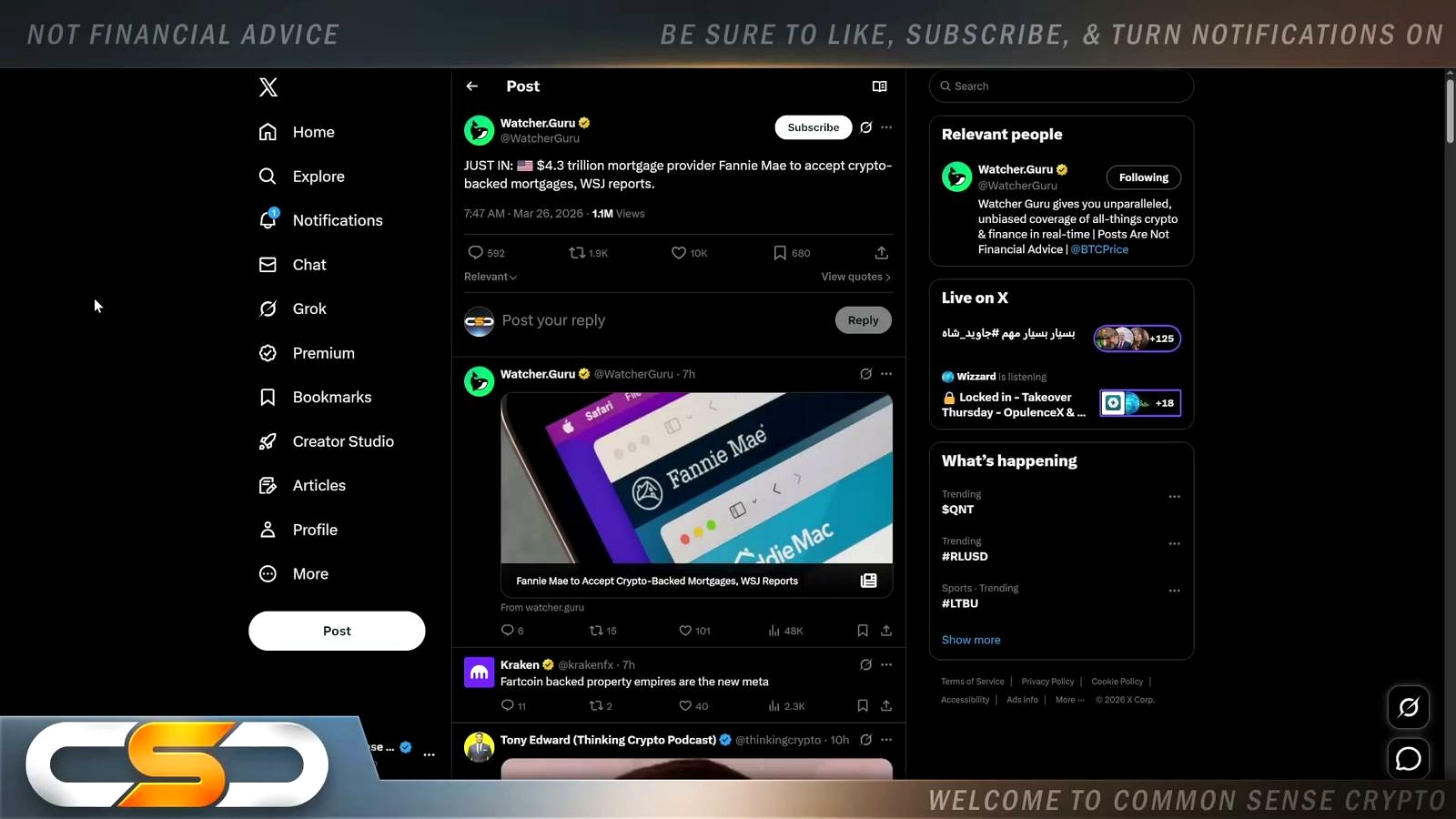
A $4.3 trillion mortgage provider, Fanny Mae, is set to accept crypto-backed mortgages. The idea is simple and powerful: put up crypto, get a mortgage, and avoid selling the asset. That means no taxable event just for accessing liquidity.
There are also protections that make the structure stand out:
- Borrowers can pledge Bitcoin or USDC as down payment collateral
- Assets do not need to be sold
- Loans carry no margin calls
- Bitcoin price drops alone cannot trigger liquidation or force extra collateral
- The loans are conforming mortgages backed by Fanny Mae
- They follow the same standards and protections as traditional home loans
That is the part that catches attention. The frustrating part is what comes next: Bitcoin only.
The real frustration behind the Bitcoin-first model
The complaint is not about the idea itself. The idea is strong. The problem is the repeated first-mover advantage handed to Bitcoin while other assets are left outside the gate.
For XRP holders, the question feels obvious: why can’t XRP be used the same way? Why can’t someone put up XRP and borrow against it for a mortgage?
The argument being made is that technology keeps moving, and assets that solve real-world problems could eventually matter more inside the new financial system. That is why the Bitcoin-first approach feels less like innovation for everyone and more like a narrow lane being opened for one asset first.
Can you borrow against XRP right now?
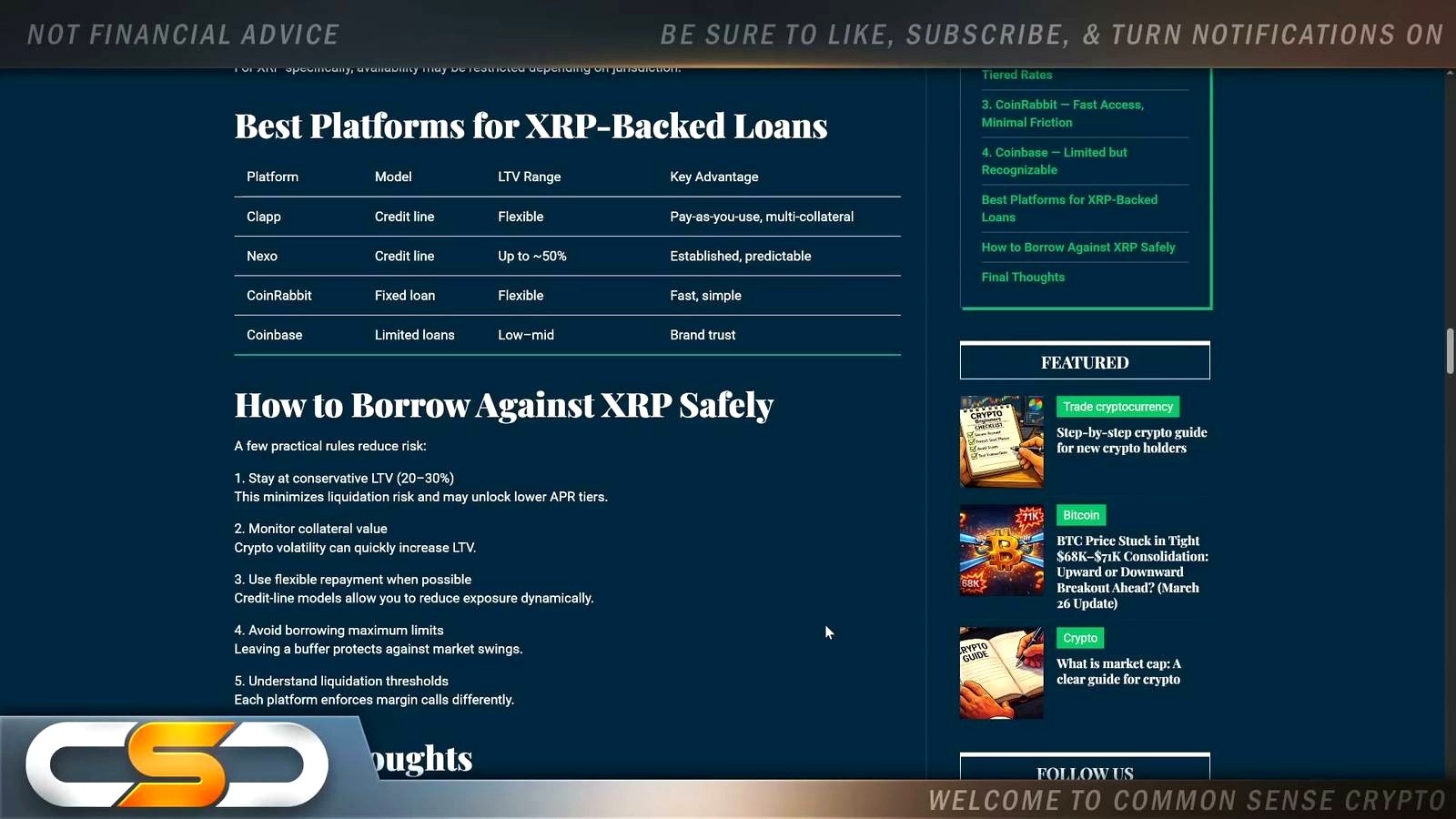
Yes, there are platforms mentioned for XRP-backed loans in 2026:
- Clap
- Nexo
- Coin Rabbit
- Coinbase
The platforms were described as offering different loan-to-value ranges, with some flexibility up to 50%.
Why the current XRP loan options still look risky
Even with those options on the table, the warning is blunt: borrowing against XRP right now is too risky.
The biggest danger is simple. It can lead to full liquidation of XRP. That risk alone changes the whole conversation. Accessing liquidity sounds attractive until the collateral itself is threatened.
There is also a very specific distrust toward Coinbase. The criticism comes from its quick move to delist XRP when the Ripple versus SEC case began. Because of that history, using Coinbase to borrow against XRP is viewed as a hard no.
The broader belief is that better options may appear later, especially once institutional adoption starts opening more mature paths for crypto-backed finance.
ISO 20022: major shift or community psyop?
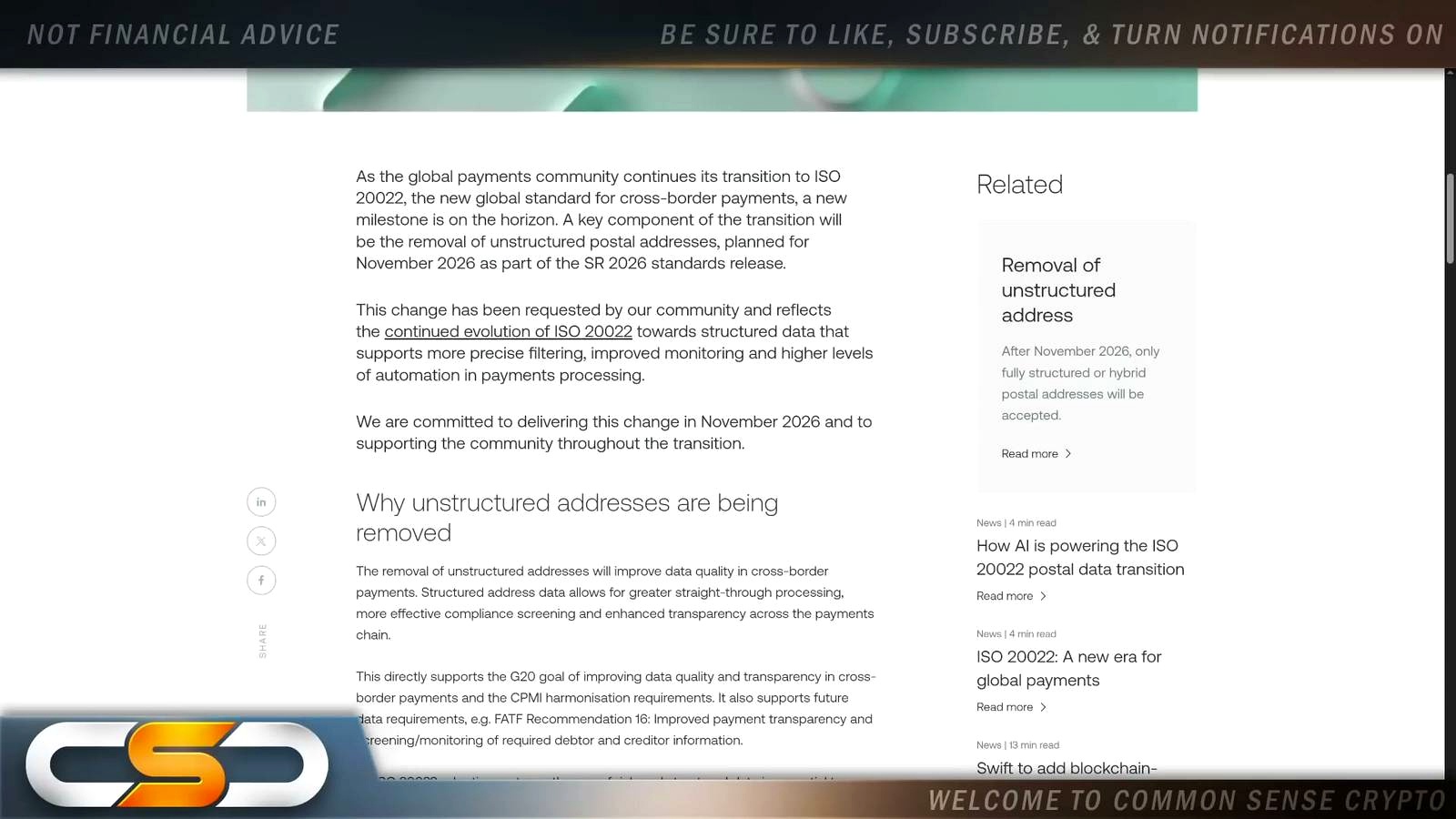
This is where the story gets more complicated. A Swift community note says that as ISO 20022 adoption matures, rich and structured data becomes essential to unlocking the full benefits of the standard. It also points to a November 2026 milestone tied to the removal of unstructured addresses.
That sounds important. But then comes the controversy.
The claim that shook the narrative
One of the strongest comments in the discussion was that the idea of “ISO 20022 cryptocurrencies” was, in effect, a psychological operation. The argument was that a chart pushed through the community was completely fabricated, and that many people unknowingly bought into it.
That admission matters because it pulls emotion out of the slogan and forces a harder look at what ISO 20022 actually is.
What ISO 20022 is — and what it is not
The corrected view is much narrower and more precise.
ISO 20022 is a messaging system. It is a global standard for financial information exchange. It is meant to improve interoperability between systems, support straight-through processing of payments, and allow richer data transfer. It is also described as open and flexible, which could foster more competition.
Ripple, according to comments cited from within the company, has been aligned with ISO 20022 from day one and was an early mover in that direction.
But there is a key distinction:
- XRP is not an ISO 20022 cryptocurrency
- XRP can be utilized within ISO 20022 messages if the network is compliant
- Ripple is aligned with ISO 20022
That difference changes everything. The standard is about messaging, not a magic label attached to a token.
Which cryptocurrencies were named as most impacted?
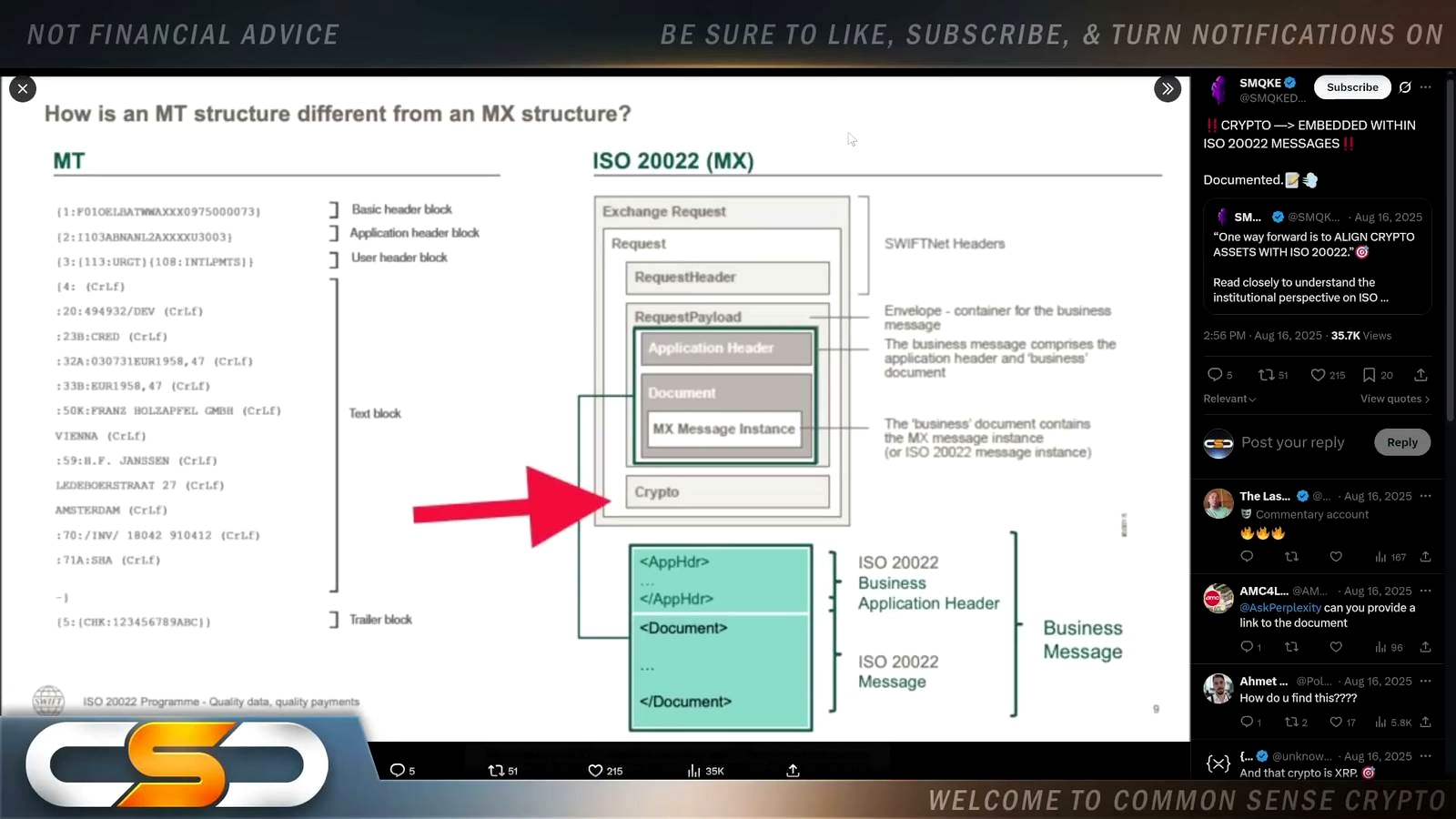
The view presented is that ISO 20022 will still matter for a handful of cryptocurrencies going forward, even after stripping away the hype.
The first group named was:
- XRP
- XLM
- XDC
- HBAR
- IOTA
- ALGO
- QNT
- ADA
Other cryptocurrencies were also mentioned as possible participants within ISO 20022 messages later, including Flare, Nexa, Casper, A0, LCX, and DAG. But the expectation is that the biggest impact lands first on the original eight listed above.
Tokenization could accelerate within weeks
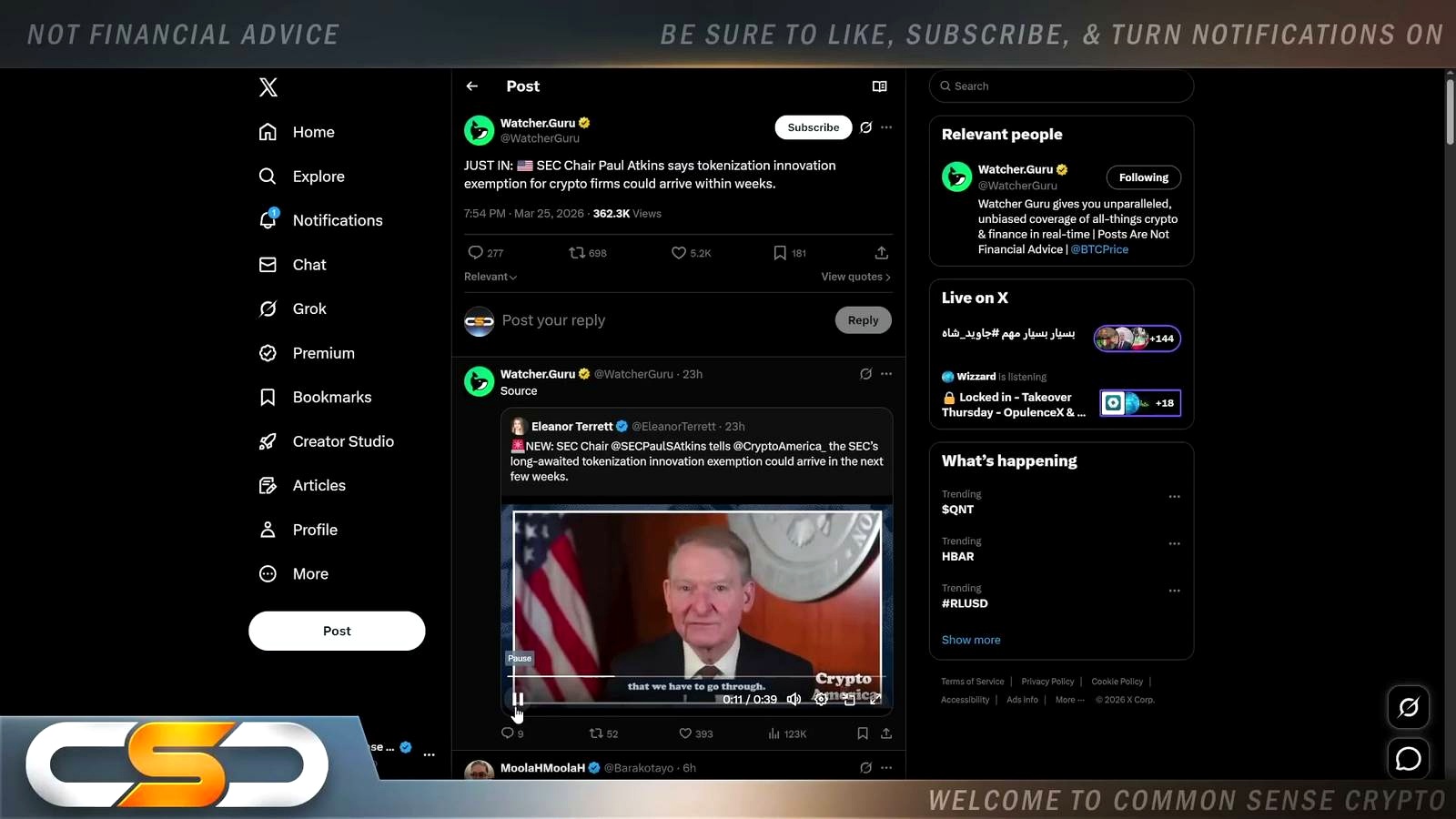
Another major thread in the discussion centers on SEC Chair Paul Atkins and the possibility that a tokenization innovation exemption for crypto firms could arrive within weeks.
The interpretation is clear: barriers are being moved out of the way so tokenization can push forward.
Why this matters so much for XRP watchers
The case being made is not abstract anymore. Real-world assets are already being described as trading on chain:
- Oil
- NASDAQ
- Dow Jones
- Silver
The appeal is obvious:
- 24/7 trading
- Instantaneous settlement
- Weekend price discovery
- Costs that are a fraction of traditional systems
The phrase used was simple: it is happening.
At the same time, the caution was just as strong. This is still “the top of the first inning.” In other words, the shift may be real, but it is early.
The bridge argument behind big XRP expectations
There is also a direct link drawn between tokenization and long-term XRP price speculation. The reasoning is that if real-world assets become tokenized, they will need a bridge.
That is why tokenization is framed as the starting point for the bigger XRP dreams people keep talking about. Not because it guarantees anything, but because it creates the kind of environment where bridge assets matter more.
AI, digital systems, and a world changing all at once
The article’s wider mood is not only about crypto. It is about acceleration everywhere.
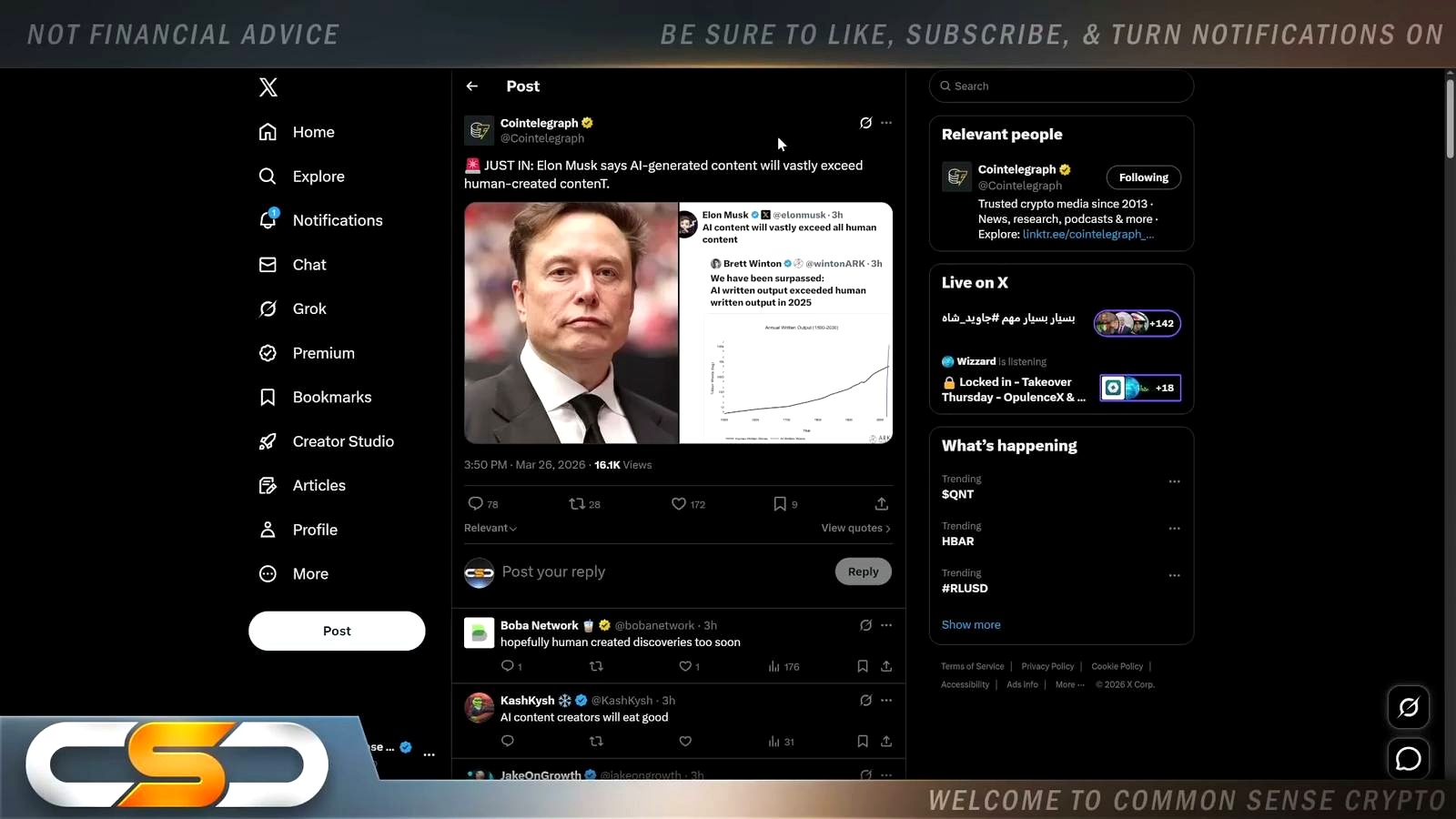
Elon Musk’s view was cited that AI-generated content will vastly exceed human-created content. From there, the implications were pushed far beyond social posts or articles. The suggestion was that even movies could become fully interactive, with people choosing actors, genres, and even multiple outcomes.
The feeling here is less excitement than unease. AI is seen as advancing too quickly, and the call is for safeguards or even a kind of bill of rights before it moves further.
USPS, digital delivery, and the push away from cash
Another warning discussed was that USPS mail delivery could completely stop by 2027 as money runs out. The interpretation was that this points toward a fully digital future, where bills and everyday systems become entirely digital.
That shift was tied to a much larger chain of ideas:
- AI replacing more jobs
- Robots rolling out for retail buying as early as next year
- Universal basic income becoming more likely over time
- Digital ID and central bank digital currency entering the picture
One especially sharp claim was that a stablecoin issued by Ripple could essentially work like a central bank digital currency, with the key difference being who issues it.
The darker side of a digital money system
The concern is not digital money by itself. It is control.
Features like clawback and freeze were highlighted as examples of how digital money could be restricted. In the scenario described, if universal basic income were distributed in digital form, unused funds could expire instead of being saved. Money could be frozen or clawed back. Cash, in that world, would be gone.
The timeline suggested for a cashless society was 2028, likely triggered by some larger crisis rather than a gradual public choice.
Why patience is still the message
Through all of this, one idea stays constant: the system is changing in real time. Crypto-backed mortgages, tokenization, ISO 20022 messaging, AI expansion, digital identity, and cashless payment rails are being treated as connected parts of the same transition.
For XRP holders, the conclusion is not that every headline is a win. It is almost the opposite. Some developments look promising, but the details still matter, and not every door is open yet.
That is why the closing attitude is patience. Hold the right cryptocurrencies, do not get trapped by hype, and do not assume the first version of the future is the final one.
FAQ
Can you get a mortgage using XRP as collateral right now?
No. The mortgage program discussed accepts Bitcoin and USDC as collateral, not XRP.
What are the XRP-backed loan platforms mentioned?
The platforms named were Clap, Nexo, Coin Rabbit, and Coinbase.
Why is borrowing against XRP considered risky?
Because it could lead to full liquidation of your XRP, making it too risky in the current environment.
Why was Coinbase singled out negatively?
Because it was described as being very quick to delist XRP when the Ripple versus SEC case started.
Is XRP an ISO 20022 cryptocurrency?
No. The point made is that XRP is not an ISO 20022 cryptocurrency, but it can be utilized within ISO 20022 messages if the network is compliant.
What does ISO 20022 actually do?
It is a global standard for financial information exchange that enables interoperability, richer data transfer, and more efficient payment processing.
Which cryptocurrencies were named as most impacted by ISO 20022?
XRP, XLM, XDC, HBAR, IOTA, ALGO, QNT, and ADA were identified as the main group.
What was said about tokenization?
That tokenization could gain momentum within weeks, and that real-world assets are already trading on chain with instant settlement and lower costs.
How is tokenization connected to XRP?
The argument is that tokenized real-world assets will need a bridge, which is why tokenization is seen as important for XRP’s future role.
What is the concern about a cashless future?
The concern is that digital money systems could come with freeze, clawback, and expiration features, limiting how people use and save money.
Reference Video

Omar Al-Sharif lives and works in the UAE and is involved in the blockchain technology industry. He writes articles on Bitcoin and digital assets as a personal passion, explaining complex topics in simple and understandable language.