What if the real story is not that markets are wobbling, but that the system beneath them is getting harder to defend? That is the tension at the center of Simply Bitcoin’s latest argument for why BTC still looks undervalued despite broad market stress.
According to Simply Bitcoin, the combination of rising geopolitical risk, energy-driven inflation, bond market strain, and unsustainable sovereign debt makes Bitcoin look less like a speculative trade and more like a long-term monetary hedge. The channel’s case is straightforward: when cash is being structurally weakened and traditional safe havens are also under pressure, BTC’s fixed supply and portability matter more, not less.
The core claim: Bitcoin is holding up while other markets crack
Simply Bitcoin argues that investors are too focused on Bitcoin’s volatility and not focused enough on how much stress is spreading across the rest of the market. The host says BTC is “still cheap” because it has remained relatively resilient while commodities, bonds, currencies, and large-cap equities all face mounting pressure.
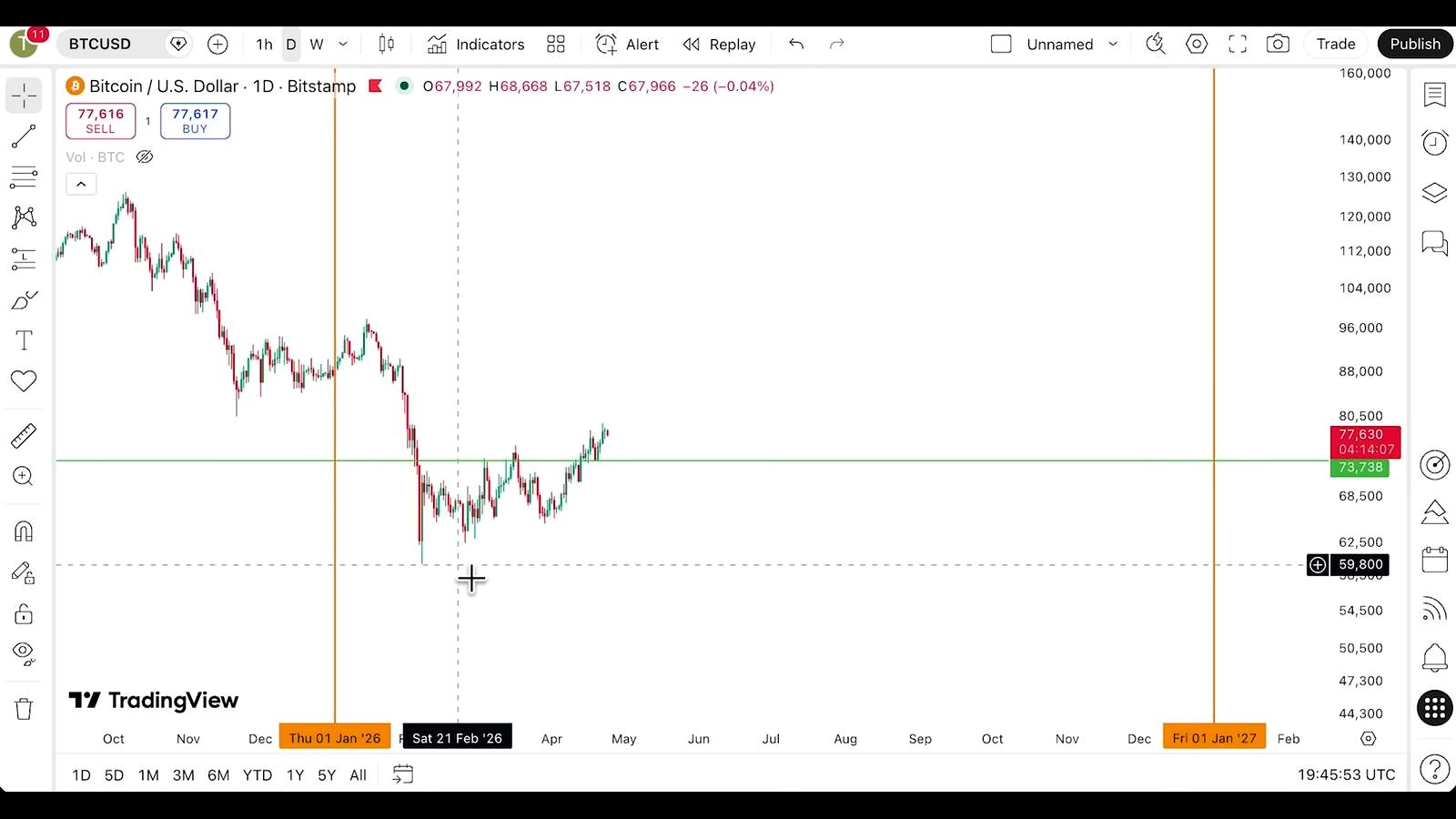
One of the clearest examples in the video is Bitcoin’s recent range. The host says Bitcoin is “bouncing between 60 and 70 right now, ” while former stores of value and major equity leaders are struggling. He specifically says gold has been selling off and that the “Mag 7” is underperforming the S&P 500 this year.
The broader point is not that Bitcoin is immune to risk-off moves. It is that, in Simply Bitcoin’s framing, BTC appears comparatively strong in a market where multiple pillars are weakening at once.
Why the macro backdrop matters
Simply Bitcoin builds its thesis on two linked pressures: war-driven inflation and debt-driven monetary deterioration.
On the debt side, the host highlights comments from Federal Reserve Chair Jerome Powell, who said the US is on a fiscal path that is not sustainable. Powell’s line, as quoted in the video, is that federal debt is growing substantially faster than the economy and that “it will not end well” without action “fairly soon.”
That matters to Simply Bitcoin because the host believes policymakers are more likely to print and extend the current system than accept a painful reset. In his view, that means more currency debasement over time. Bitcoin, by contrast, is presented as an asset designed to resist that outcome.
On the geopolitical side, the channel points to escalating conflict involving Iran and the risk of further disruption around the Strait of Hormuz. The host argues this is not just an oil story. It is an economy-wide inflation story that could hit energy, shipping, manufacturing, and food inputs all at once.
The numbers highlighted in the video
- Iran produces 32 million tons of steel per year
- The two steel factories discussed account for more than 50% of that output
- Brent crude was cited as moving above $115
- Heating oil: +77%
- European natural gas: +71%
- Diesel: +44%
- Sulfur: +43%
- Fertilizer: +29%
Simply Bitcoin’s interpretation is that these moves point to broad supply-chain inflation rather than a one-off commodity spike. That distinction is central to the thesis, because broad inflation would put more pressure on consumers, import-dependent economies, and central banks already dealing with debt problems.
Japan is the stress signal to watch
Simply Bitcoin uses Japan as a real-time example of how external shocks can feed into currency weakness and bond stress. The host says the yen recently hit its lowest level against the dollar in 21 months.
He ties that weakness to energy dependence, noting that Japan imports 87% of its energy and that 70% of that supply flows through the Strait of Hormuz. In that setup, a prolonged disruption is not an abstract geopolitical issue. It becomes imported inflation.
The video then connects Japan’s vulnerability to the bond market. Simply Bitcoin says global bonds have seen $4.7 billion in outflows, which the host describes as the second-largest on record after the pandemic shock in 2020. He warns that if Japan begins selling US Treasuries, the pressure on global markets could intensify further.
This is where the Bitcoin case broadens beyond simple inflation hedging. The host is arguing that sovereign stress, bond instability, and currency weakness are interacting. In that environment, an asset outside the traditional credit system becomes more attractive.
Fear, volatility, and the long-term setup
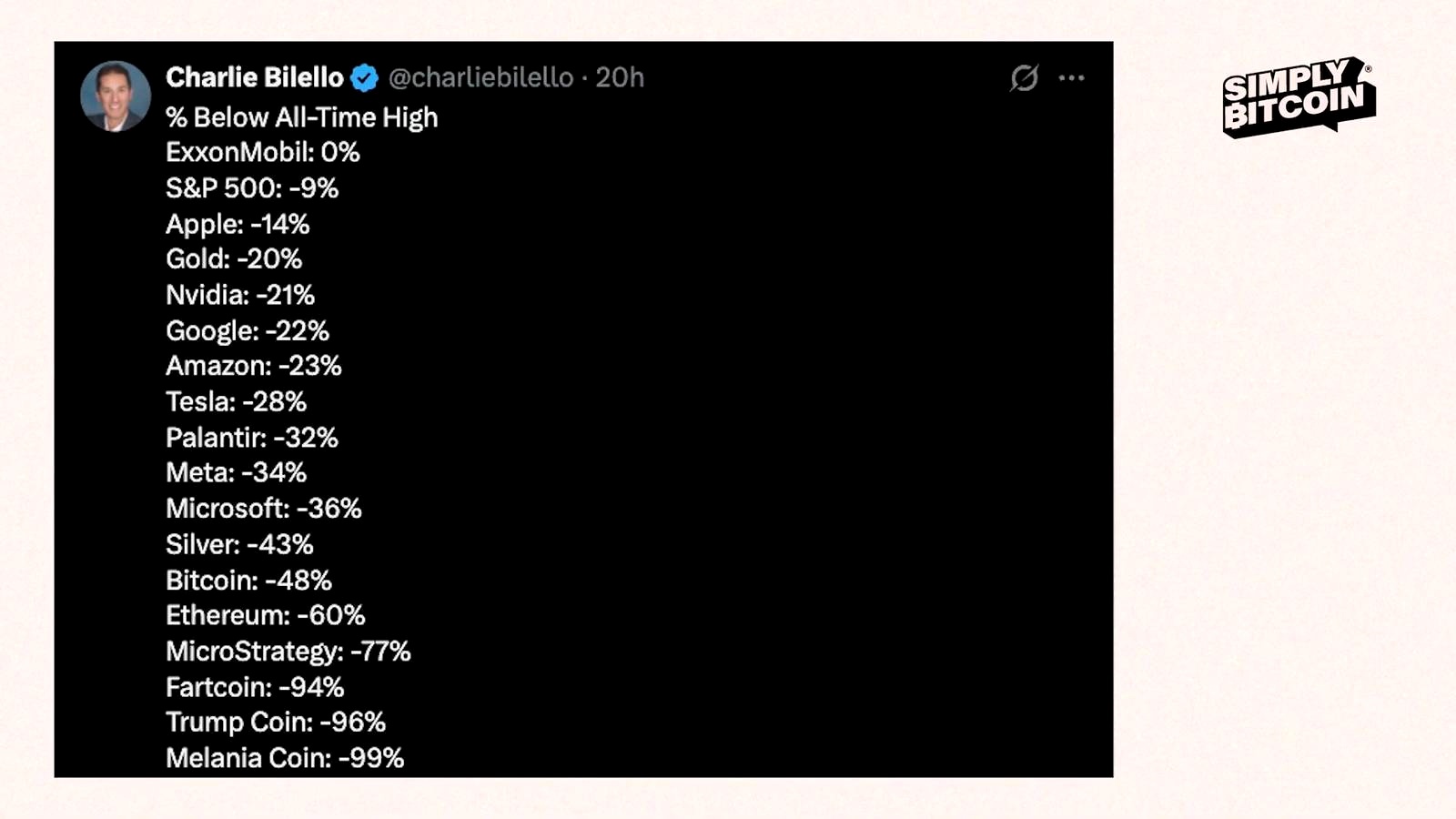
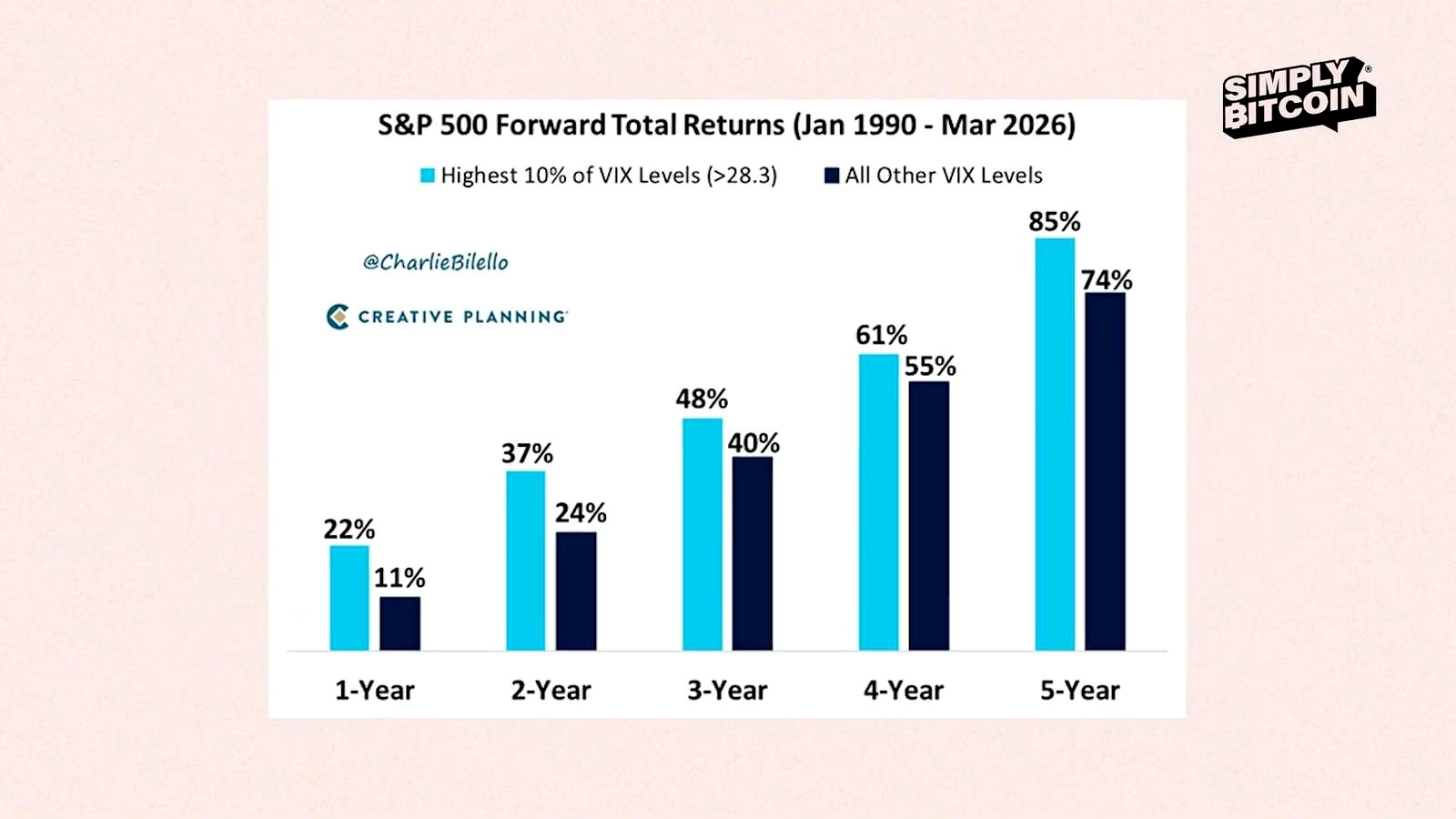
Simply Bitcoin also frames market fear as a potential opportunity rather than a reason to avoid exposure. The host cites a chart from Charlie Bilello showing that when the VIX sits within 10% of its highs, forward 5-year returns have typically been 85% or more.
He applies that logic to Bitcoin by arguing that panic conditions often create the best long-duration entry points. This is not presented as a short-term trading call. It is presented as a valuation argument: if the world is moving toward more debt, more interventions, and more monetary dilution, then Bitcoin’s scarcity is still not fully priced.
The supply argument: Bitcoin versus gold
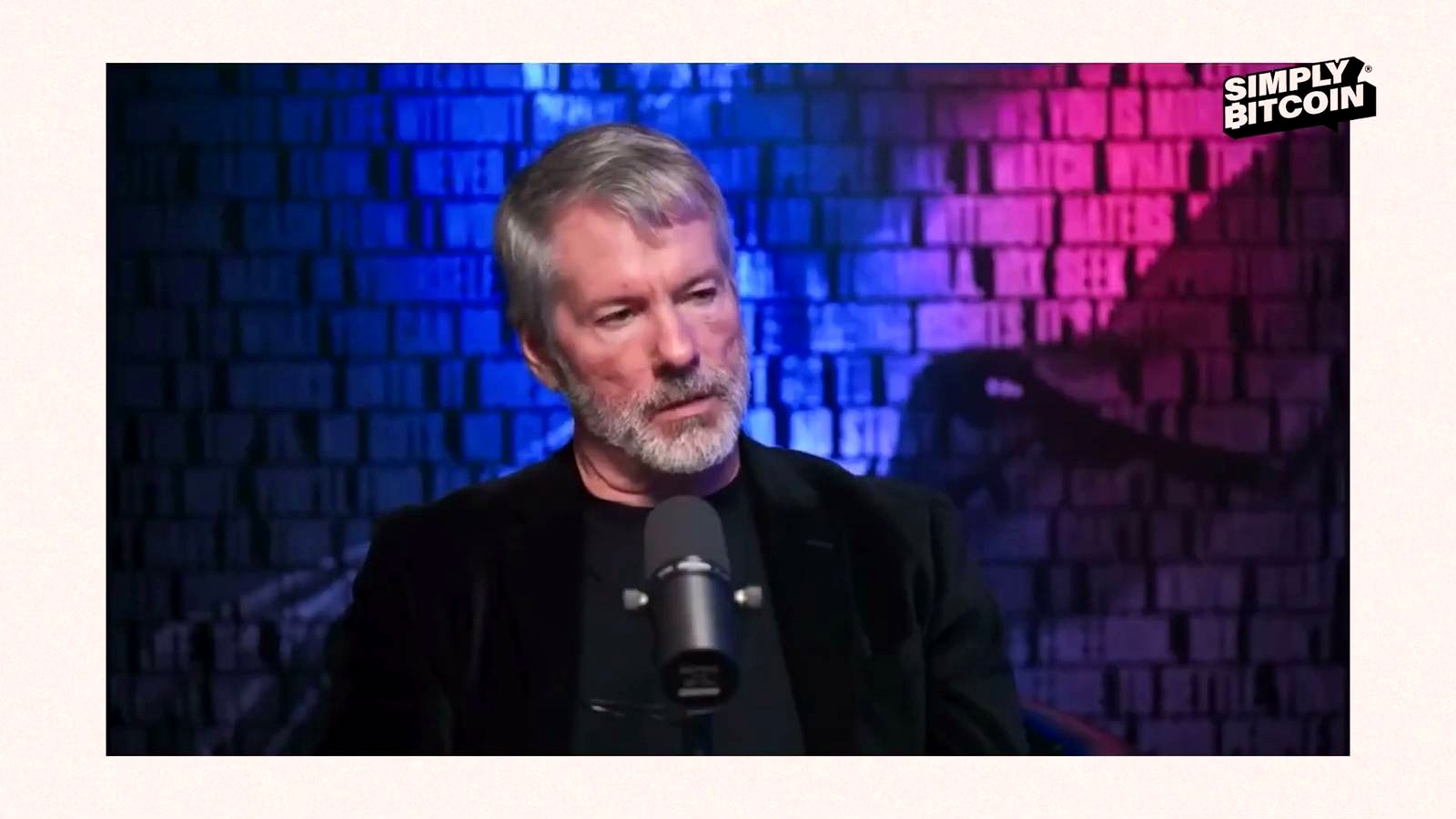
Simply Bitcoin leans heavily on Michael Saylor’s fixed-supply framing. The channel includes his argument that Bitcoin’s fully diluted supply is capped at 21 million, while gold supply grows by roughly 2% per year.
Saylor, as quoted in the segment, argues that a 2% annual increase doubles supply roughly every 36 years, creating what he calls an economic “halflife” of 36 years. He contrasts that with Bitcoin’s effectively fixed terminal supply, which he describes in dramatic terms as economic permanence.
Simply Bitcoin adopts the practical conclusion of that comparison: if the goal is to preserve purchasing power across decades rather than months, the host believes Bitcoin is superior to gold because its scarcity is harder and more transparent.
Why the channel says this is also about freedom
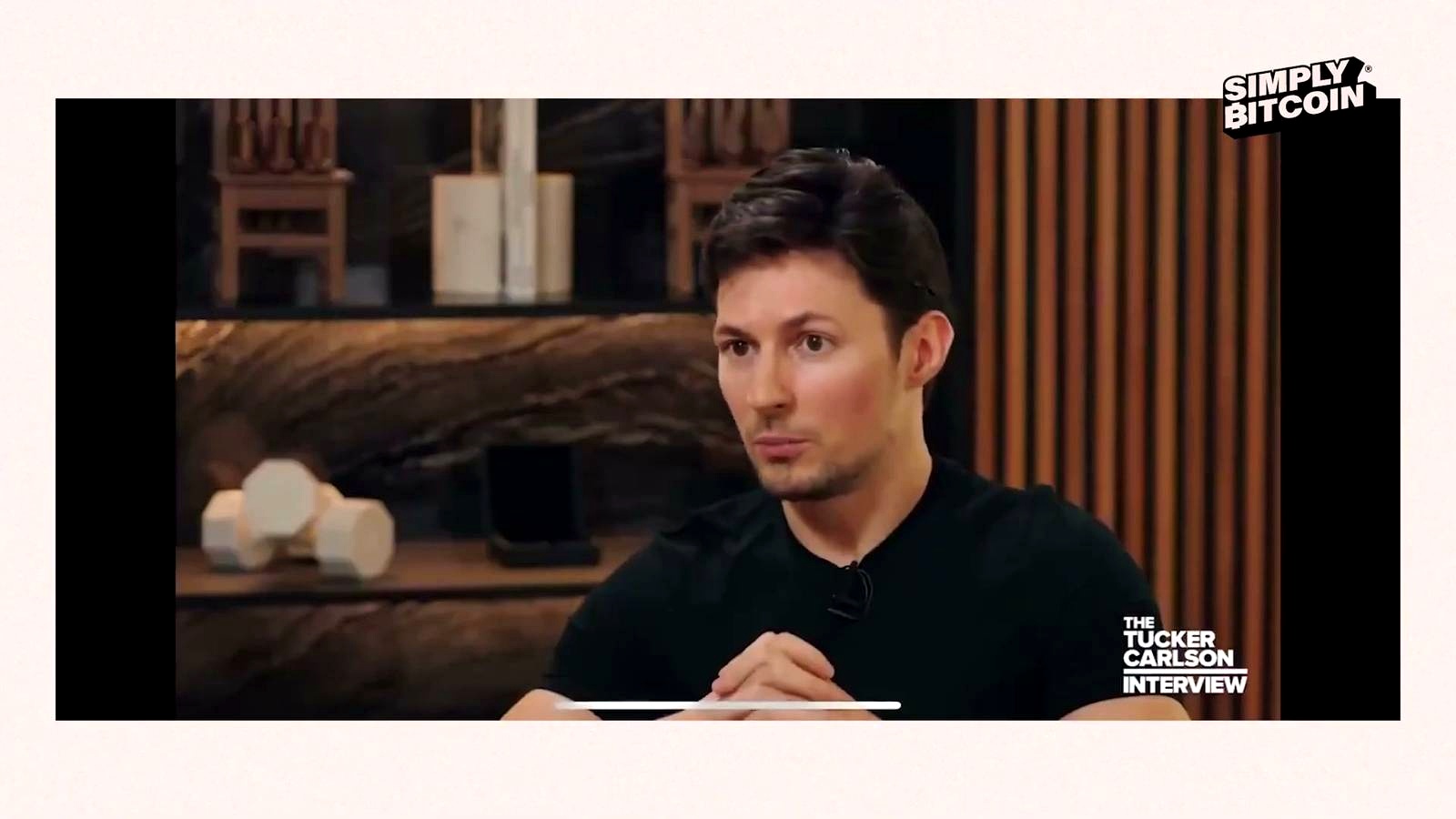
Simply Bitcoin does not limit its thesis to price performance. The host says the more important issue during periods of crisis is survival and freedom. To make that point, he cites Telegram CEO Pavel Durov discussing how his priority is freedom rather than ownership of physical luxury assets.
In the clip, Durov says he has had a few hundred million dollars in bank accounts or Bitcoin for about 10 years, but does not own major real estate or similar assets because freedom is his top priority.
The host uses that idea to extend Bitcoin’s appeal beyond inflation protection. In his framing, Bitcoin is valuable because it can preserve not just purchasing power, but also optionality when traditional systems become more restrictive or unstable.
What to watch next
According to Simply Bitcoin, the next key signals are not limited to Bitcoin charts. The host is watching whether the Strait of Hormuz stays disrupted, whether energy inflation keeps spreading through industrial inputs, whether Japan’s currency and bond stress worsen, and whether policymakers answer debt pressure with more money creation.
If those trends continue, the channel’s view is that Bitcoin’s current valuation may look low in hindsight. The immediate takeaway is less about a precise price target and more about a changing benchmark: BTC should be judged against a world of weakening fiat, fragile supply chains, and unstable sovereign markets.
No specific Bitcoin price target was given in the video.
FAQ
Why does Simply Bitcoin say BTC is “cheap” without naming a target?
The argument is relative, not numerical. The host compares Bitcoin to weakening alternatives such as cash, bonds, and even gold, and says BTC looks undervalued against that macro backdrop rather than against a single short-term price objective.
What is the most important macro risk in the video?
Simply Bitcoin treats energy disruption as the fastest transmission channel. The channel’s view is that war-related pressure around the Strait of Hormuz could spread through fuel, fertilizer, and transport costs, feeding broader inflation and stressing already fragile economies.
How does Japan fit into the Bitcoin thesis?
Japan is presented as an example of what happens when a country is highly dependent on imported energy during a geopolitical shock. In the video, that dependence is linked to yen weakness, inflation pressure, and possible bond-market fallout.
Does the video argue Bitcoin is a better store of value than gold?
Yes. Simply Bitcoin uses Saylor’s supply-based comparison: Bitcoin’s cap is 21 million, while gold supply grows around 2% annually. The channel says that makes Bitcoin the harder asset over long time horizons.
Is this mainly an investment case or a sovereignty case?
Both, but the sovereignty angle is emphasized. The host says Bitcoin is not just “number go up” technology. He presents it as a tool for preserving freedom and purchasing power when monetary and political systems are under strain.
Source

John Burnell focuses on Bitcoin infrastructure, wallet security and blockchain technology. He writes educational articles explaining how Bitcoin works and how the technology evolves.