Something really strange is happening with Bitcoin right now. While the S&P 500 erased $2 trillion in market cap, gold and silver lost $900 billion in just 2 hours, and analysts warned that markets were starting to look like 2008, Bitcoin kept climbing for eight straight days.
That contrast has created a major debate. On one side are bears expecting another sell-off, and on the other are bulls pointing to resilience, liquidity, and a possible shift in market structure.
Bitcoin’s Unusual Strength Against Bearish Macro News

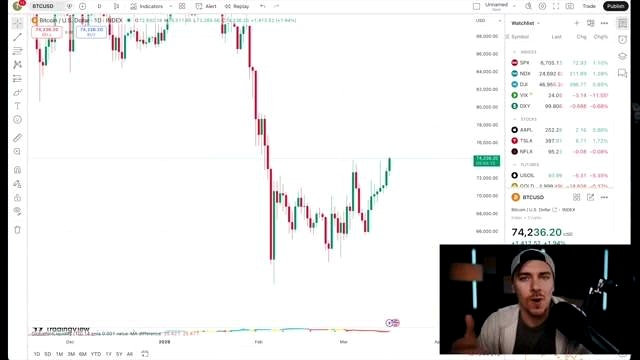
Macro news has been relentlessly bearish. Analysts and experts were claiming this looked like a new 2008 recession, and broad markets were under pressure at the same time. Despite that, Bitcoin posted eight consecutive green candles.
A post from Max Crypto noted that Bitcoin was set to close eight consecutive daily green candles for the first time since December 2020. The last time that happened, Bitcoin rallied 145% in just 2 months.
- The S&P 500 erased $2 trillion in market cap
- Gold and silver lost $900 billion in 2 hours
- Markets were being compared to 2008
- Bitcoin still climbed for eight straight days
That is what makes the current move stand out. Bitcoin has been going against the rest of the market during what was described as the “Super Bowl of bad news.”
Why Bitcoin May Be Rising
Liquidity From Tax Returns
One explanation is that liquidity from tax returns is coming into the market right now. Bitcoin is also described as being a little more sensitive to moves in liquidity, which may explain part of the rise.
At the same time, that does not explain everything. If tax return liquidity were the full reason, then the question remains: why is everything else not going up as well?
The Market May Have Run Out of Sellers
The second major explanation is that the market seems to have run out of sellers. Sellers had been firmly in control for months and pushed price lower, but there comes a point where the equilibrium flips.
Once enough people have exited, the remaining holders are the ones less willing to sell unless something much bigger hits the market. In that state:
- Many of the people who wanted to sell may have already sold
- The current holders may be more likely to keep holding
- Price can stay flat or move higher if new buyers step in
That raises an important question. If the Iran conflict, the oil shock, and all the current fear were not enough to trigger a new wave of sellers, what would it take?
The Bearish Case for Bitcoin

The bears argue that Bitcoin may still be following the same pattern seen in 2022. In that view, the current rise could be just another relief rally before a move lower.
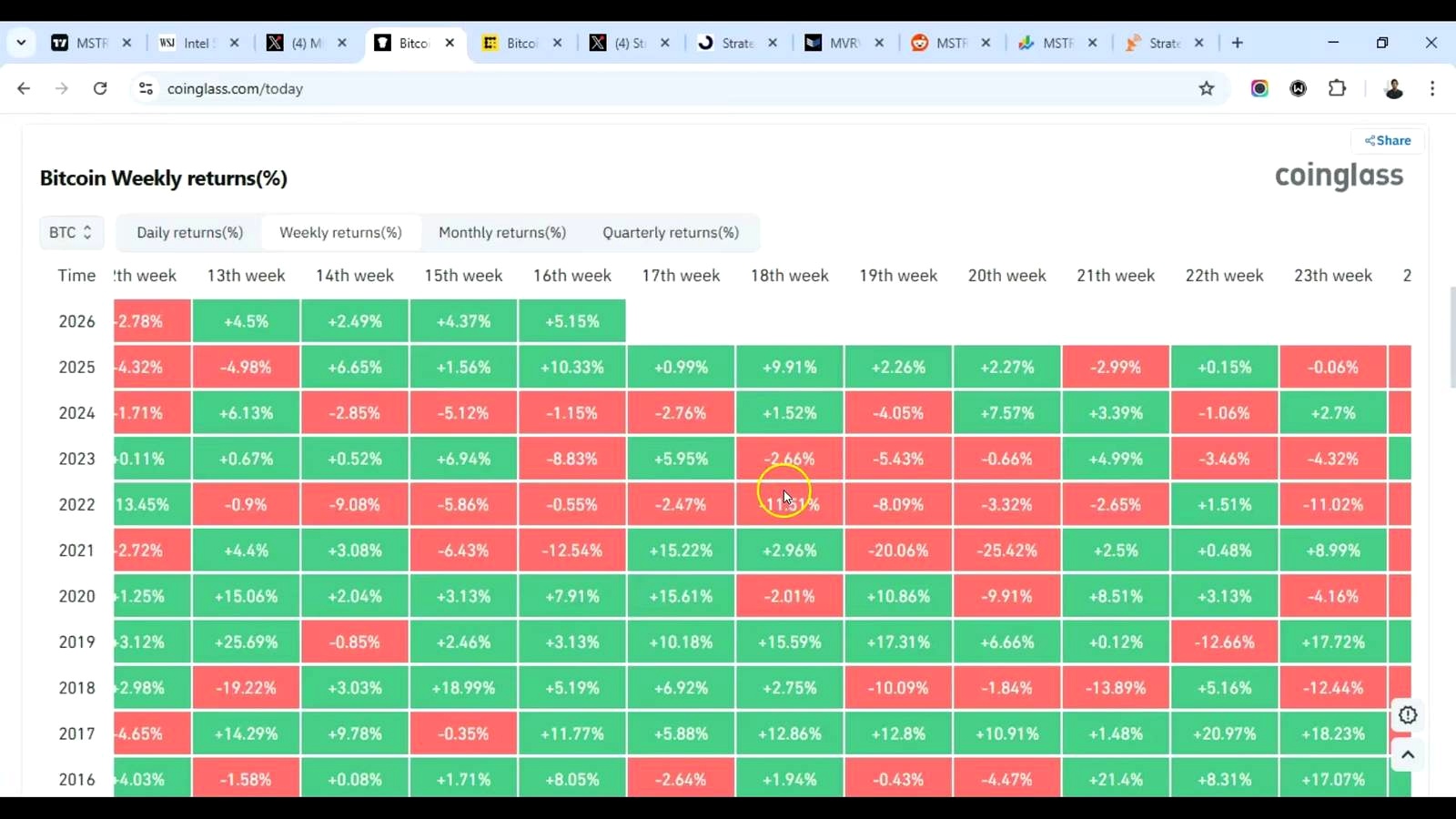
Some bears say Bitcoin is mirroring 2022 move for move and could drop into the 50K or 40K range. Others point to a pattern where Bitcoin runs up in March, possibly helped by tax returns, and then sells off in April when people actually pay their taxes.
One bearish argument highlighted that 2022 had six relief rallies averaging 17 to 46 percent, and every single one failed.
- Bitcoin rallies before selling off lower
- The move resembles previous bear market bounces
- April tax payments could pressure liquidity
- The next major move could be lower if history repeats
The Bullish Case for Bitcoin

The bulls are highlighting several signs of strength. One is that Bitcoin moved back above its 200E moving average, with the claim that every reclaim of that key support has historically led to a violent move higher.
Others are focused on the fact that Bitcoin appears to have detached from the stock market. While stocks were falling, Bitcoin was rising.
Additional bullish points include:
- Bitcoin is pumping on good news, bad news, or no news
- There may be fewer sellers left in the market
- Some traders are looking for a short squeeze
On the short squeeze idea, the argument is that if Bitcoin crosses certain levels such as 75, 76, or 81, it could move much higher and reverse its underperformance relative to other assets.
Why the Current Move May Still Be Too Small

Even with the recent strength, the move is described as too small to be treated as a meaningful trend. Bitcoin has barely moved up, and that makes “I told you so” calls feel premature.
That caution matters because a major liquidity risk remains. Late March to about mid-April is described as a dangerous period where liquidity flips.
During this period:
- Tax returns continue coming in
- Tax payments start ramping up and peak around mid-April
- The Iran conflict could remain escalated
Together, those factors could create a major disruption for markets and upset both bullish and bearish predictions.
The Late March to Mid-April Risk Period

This period is described as a landmine sitting in the middle of the market outlook. If that hurdle causes damage, it could hit both Bitcoin and broader markets.
If, however, the market gets through that period and Bitcoin holds the low, the outlook improves significantly. Post that period, liquidity is expected to continue ramping up into the midterms, with bullish behavior and conditions that prop up markets and the economy continuing into that cycle.
After the midterms, the presidential election cycle is expected to mean even more liquidity ramping up. In that view, macro conditions could become increasingly supportive.
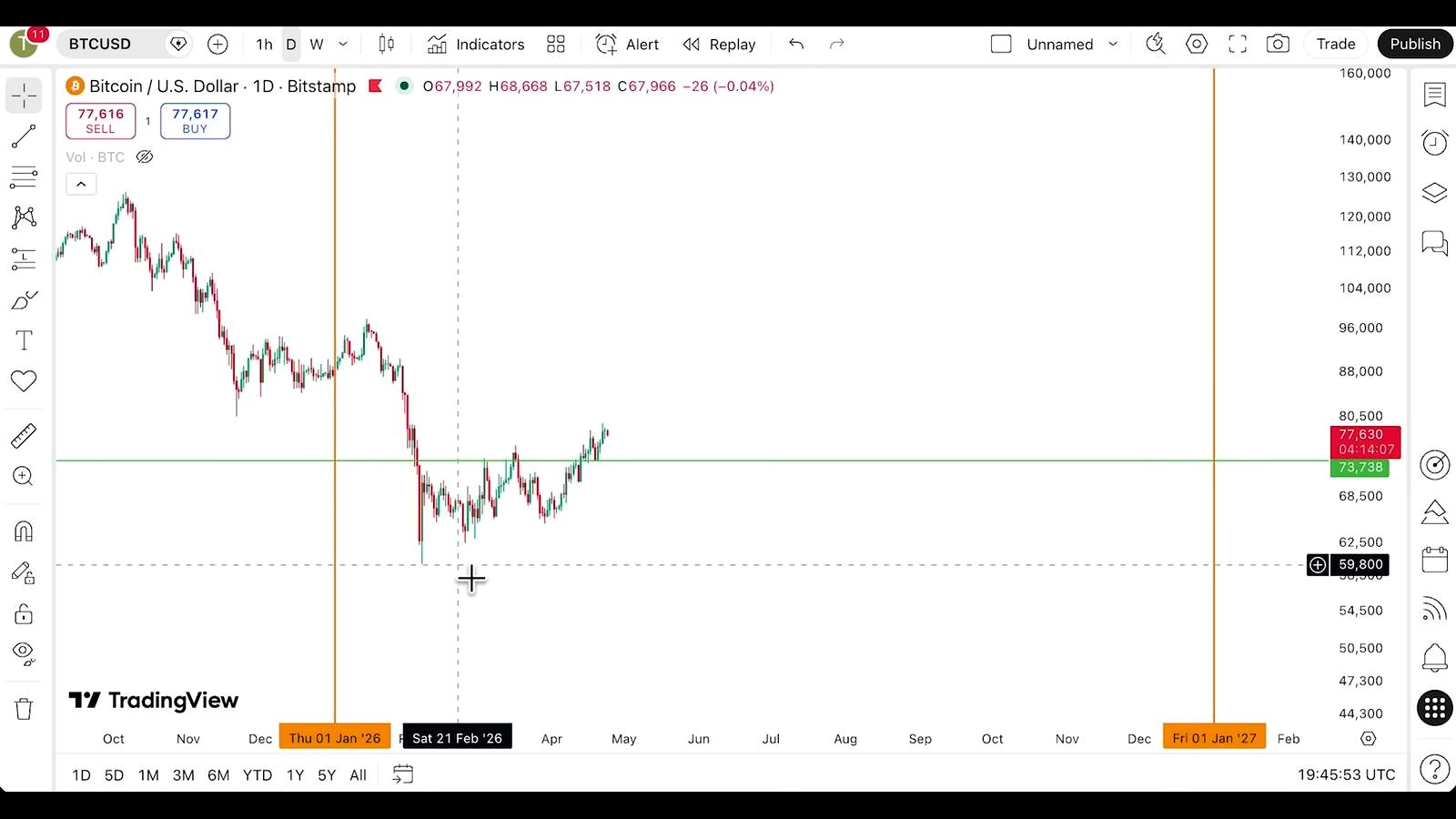
The Importance of the 60K Range

There is optimism that even if the market hits that late March to mid-April landmine, the 60K bottom should hold. Given the current market behavior, that 60K range is seen as solid.
One possible path is:
- Bitcoin runs up into the April period
- It retraces back down toward the bottom
- It tests that bottom
- It then heads higher into the end of the year
Macro Conditions vs the Four-Year Cycle
The bears are described as having been correct for now, but the argument here is that many of them may only be following a simple four-year cycle pattern rather than understanding why price moved the way it did.
In this view, Bitcoin sold off because of weak liquidity conditions in the latter half of 2025, the longest government shutdown in history, the 1010 liquidation day event, and a broader fear narrative that fed into the four-year cycle belief.
That belief may have had peak influence during that period, but now that the fear has already been realized, its power may be fading. The market may increasingly return to macro conditions and liquidity conditions instead.
How the Four-Year Cycle Is Being Framed
The four-year cycle is described as a pattern where Bitcoin typically sells off in the fourth year, usually between October and December, and then buyers return about one year later. That would place a major expected buy-back zone around October 2026.
Many bears appear to be looking toward that future period, expecting Bitcoin to be much lower by then, perhaps in the 30K or 40K range. But that expectation depends on this cycle behaving like previous ones.
Why This Cycle Feels Different
This time is described as fundamentally different from earlier cycles. There was no parabolic run-up, no mania phase, and no bubble-like environment that then deflated over a year.
Instead, the market in 2025 is described as weak for most of the year, with the decline tied to:
- TGA rebuild
- 1010 liquidation day event
- The government shutdown
- Weak liquidity conditions
That is why this cycle is said to have felt alien compared with previous runs. Bitcoin also did not massively outperform gold the way it typically does during bull run years. Instead, it was massively underperforming gold, and when priced in gold, Bitcoin had net negative gains.
Bitcoin Outlook Into the End of the Year
The outlook presented here is that Bitcoin may slowly climb higher into the end of the year. There is still a clear risk window between late March and mid-April, and price could retrace back to the lows during that time.
If that happens and the lows hold, the expectation is for a steady climb higher afterward. In that scenario, bears who are waiting for a much lower late-2026 entry may end up getting priced out as Bitcoin rises toward the October period instead of delivering the legendary bottom they expect.
The core view is that this remains a macro story. It is playing out more slowly than expected, and the timing has been difficult, but the broader argument is that crypto bull runs come from frothy macro conditions and that those conditions are ahead.
FAQ
Why is Bitcoin rising while stocks are falling?
The move is being linked to tax return liquidity, Bitcoin’s sensitivity to liquidity, and the possibility that the market has run out of sellers. Bitcoin also appears to be going against the rest of the market during a period of very bearish macro news.
What is the significance of eight consecutive green candles?
Bitcoin is set to close eight consecutive daily green candles for the first time since December 2020. The last time that happened, Bitcoin rallied 145% in just 2 months.
What are bears saying about Bitcoin now?
Bears argue that Bitcoin may still be following the 2022 pattern, where relief rallies happened before price sold off lower. Some expect a move down into the 50K or 40K range.
What are bulls watching?
Bulls are pointing to Bitcoin reclaiming its 200E moving average, detaching from the stock market, rising regardless of news flow, and the possibility of a short squeeze if key levels are crossed.
Why is late March to mid-April seen as a risk period?
That period combines tax return liquidity with rising tax payments that peak around mid-April. If the Iran conflict remains escalated during the same time, it could create major stress for markets.
What is the key support level discussed?
The 60K range is described as a solid bottom given the circumstances, with the view that it should hold even if the market hits the late March to mid-April landmine.
Why is this Bitcoin cycle considered different from past cycles?
It did not feature a parabolic run-up or mania phase. Instead, the weakness was tied to poor liquidity conditions, the TGA rebuild, the 1010 liquidation day event, and the government shutdown.
What is the broader outlook for Bitcoin?
The outlook is for Bitcoin to potentially retrace during the late March to mid-April risk period, test the lows, and then steadily climb higher into the end of the year as liquidity conditions improve.
Content Source

An Indian crypto journalist covering the developments in the Bitcoin and blockchain industries. Her work helps readers understand key changes in the world of digital assets.