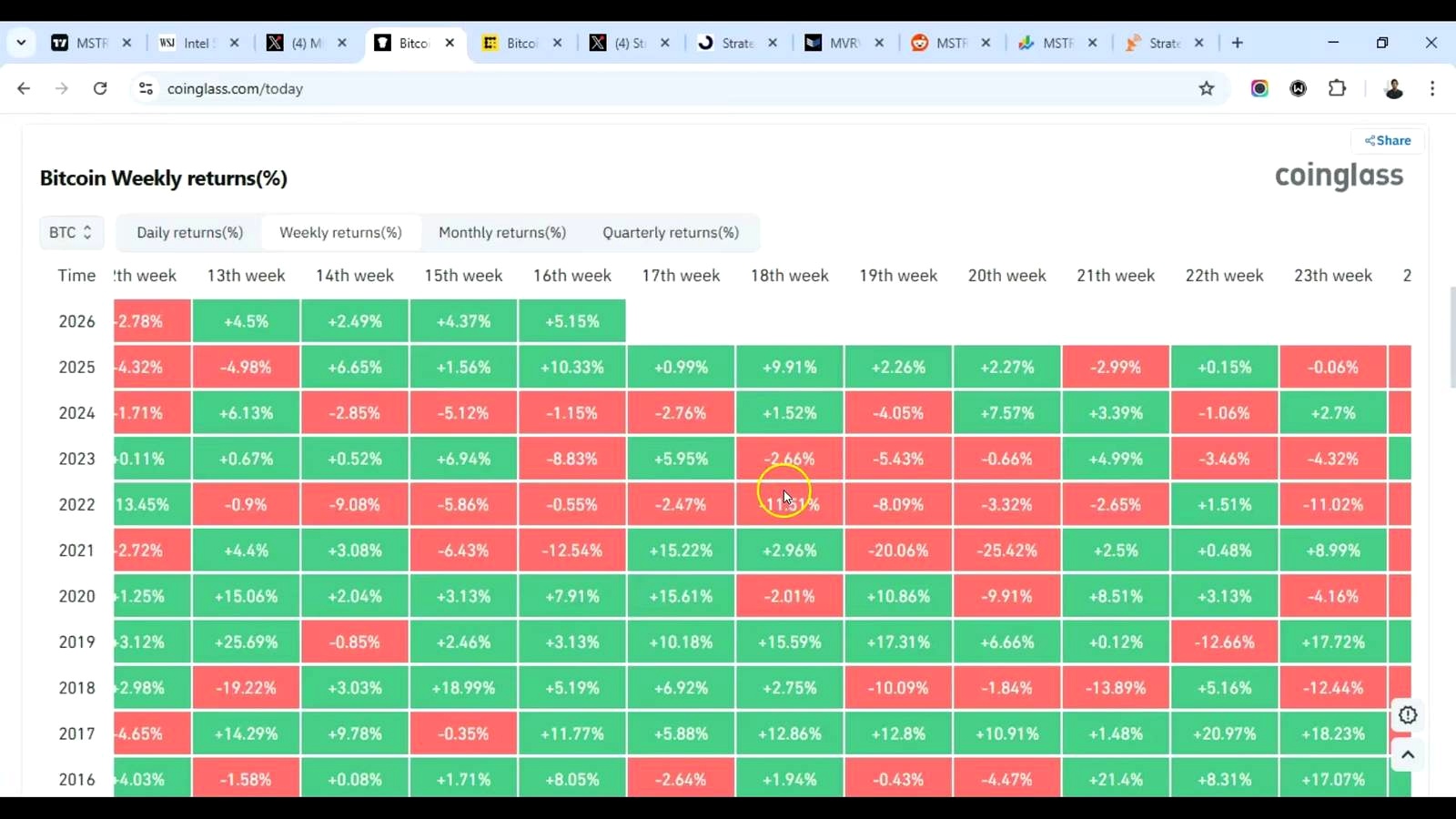
Is BTC rallying because the macro backdrop is improving, or because markets think the Federal Reserve will eventually be forced to turn the printer back on? That tension sits at the center of Taylor Shrum’s latest market outlook, and it helps explain why Bitcoin is acting stronger than the headlines might suggest.
According to Taylor Shrum, Bitcoin is starting to trade as if it “smells the printer” at the Fed. His core argument is that rising oil prices could push inflation higher, increase recession fears, and ultimately create the conditions for rate cuts or renewed liquidity, an environment he sees as more supportive for Bitcoin than for traditional equities.
Why Shrum thinks Bitcoin could benefit from bad macro news
Shrum’s framework is simple: higher oil feeds inflation, and inflation combined with economic weakness can force policymakers into a difficult choice. He argues that if inflation rises modestly, that is not ideal for risk assets. But if it rises enough to seriously threaten growth, markets may begin to price in a recession response from the Fed and Treasury.
That is where Bitcoin enters the story. The host says BTC tends to thrive when inflation is climbing and when investors expect policymakers to lean back toward easier money. In his telling, Bitcoin is not merely reacting to current data; it is trying to front-run a possible policy shift.
He contrasts that with stocks. Shrum says the S&P 500 may struggle to make fresh all-time highs until inflation is clearly seen to have peaked. Bitcoin, by comparison, sits in what he describes as a more favorable middle ground: exposed to macro stress, but also positioned to benefit if markets begin anticipating monetary relief.
The oil market is the key signal
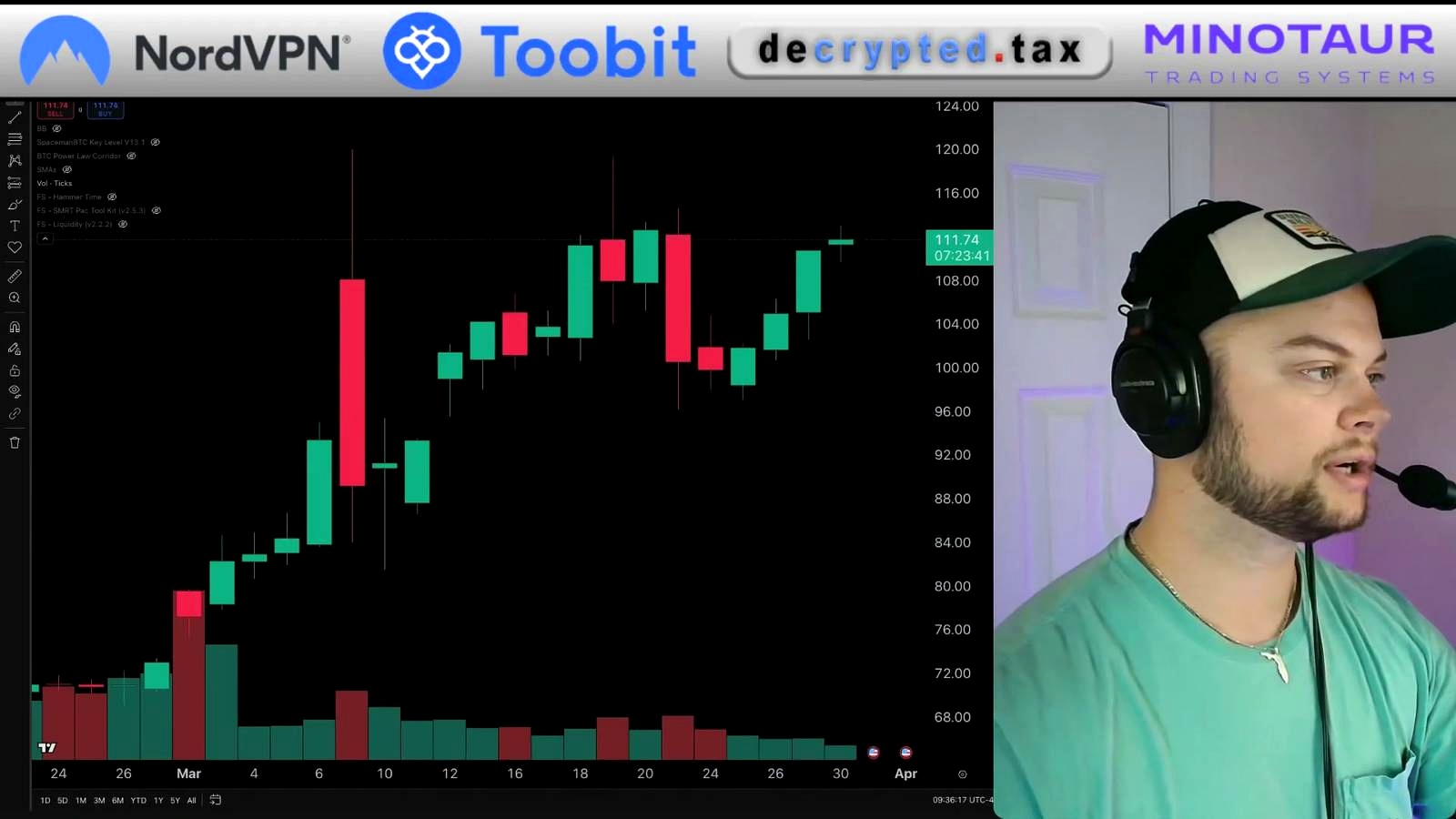
The strongest macro datapoint in the video is crude. Shrum highlights a fresh move higher in oil and treats it as the clearest transmission mechanism into inflation.
- Brent crude: $111 per barrel
- US oil: $102
- UK oil: $108
- Brent is about 7% below a $120 local high from March 9
- Oil has stayed above $75 per barrel for more than 30 days
Shrum argues those elevated energy costs are likely to work their way through the economy globally, even if the geopolitical backdrop cools quickly. He also warns that disrupted infrastructure and refinery damage could prevent an immediate return to normal conditions, even if shipping constraints ease.
Rather than track every geopolitical headline, the analyst says investors should focus on a narrower set of market signals: oil prices, Treasury yields, and whether the Strait of Hormuz is functionally open. For him, those variables tell the real story faster than the headline cycle.
Bitcoin’s chart setup: weak momentum, strong buying below $65K
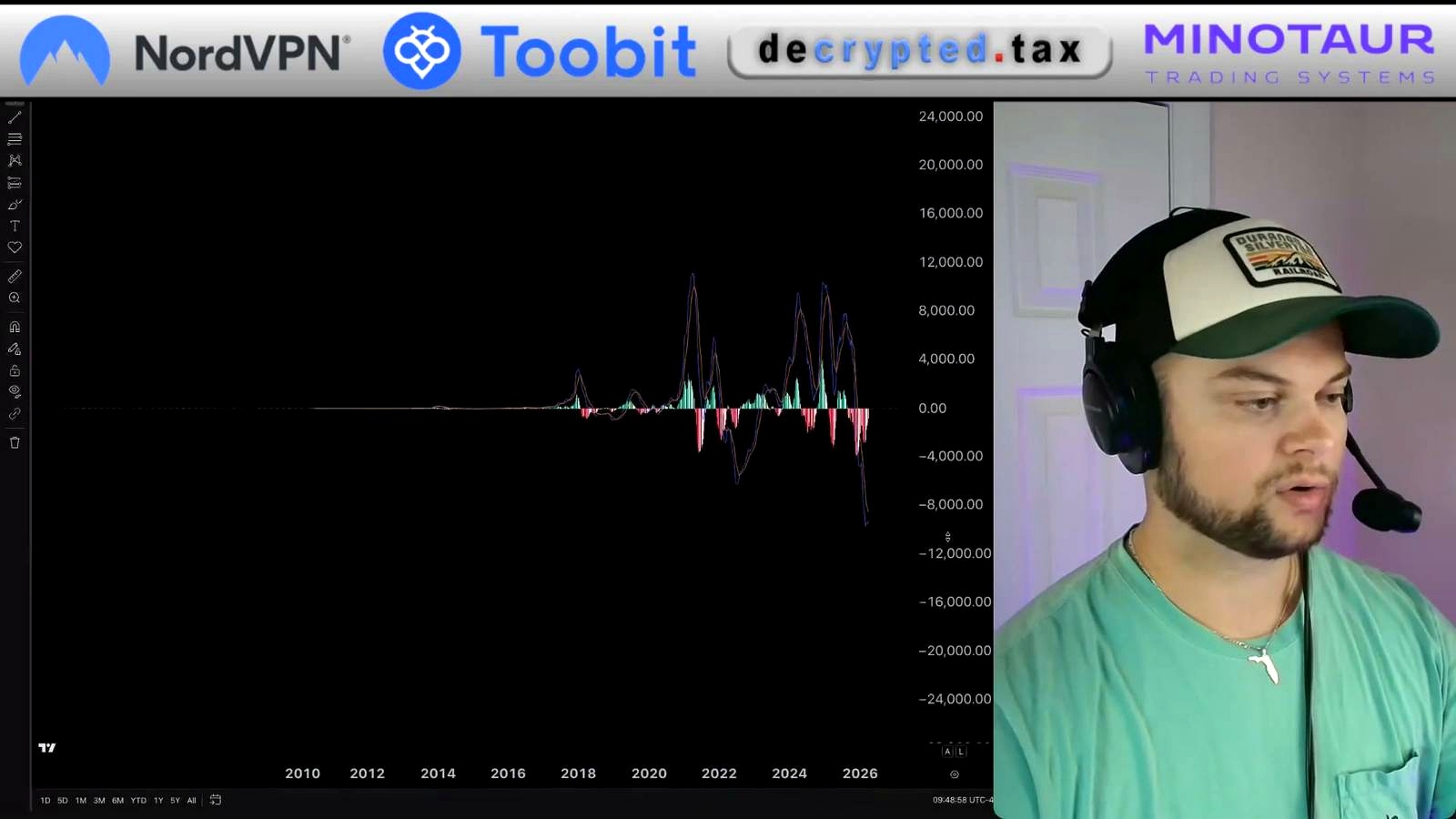
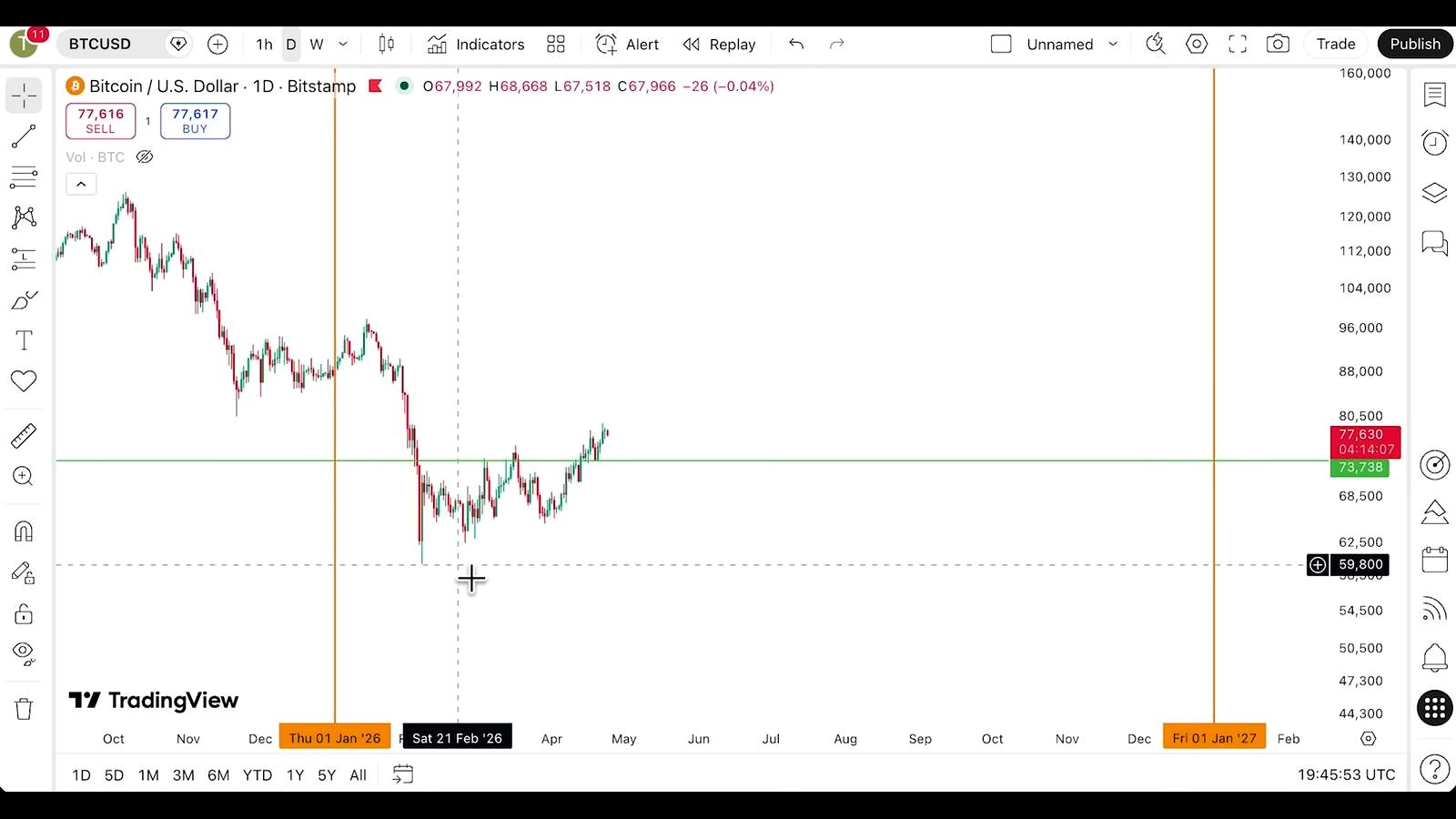
Shrum remains constructive on Bitcoin in the medium term, even while acknowledging near-term uncertainty. On the chart, he points to aggressive buying each time BTC moves below $65,000.
He notes that Bitcoin briefly broke below an uptrend support line on March 27, but by March 30 had moved back above it. More important to him, daily candles failed to close below $65,000, which he reads as evidence of strong buyer interest in that zone.
His bigger technical point comes from the MACD. Shrum says bearish momentum is at the most extreme level he has seen in Bitcoin’s history, framing the market as deeply oversold rather than structurally broken. He compares the current reading with the 2022 low:
- Prior comparable MACD extreme in 2022: about 6,200
- Current MACD extreme cited by Shrum: about 9,800
That does not mean he expects an immediate breakout. In fact, he explicitly says Bitcoin could still go lower. But he sees the rubber band as stretched enough that he is reluctant to lean too hard into bearish narratives, especially with spot demand appearing below $65,000.
Fear is extreme, but Shrum doubts an April cut
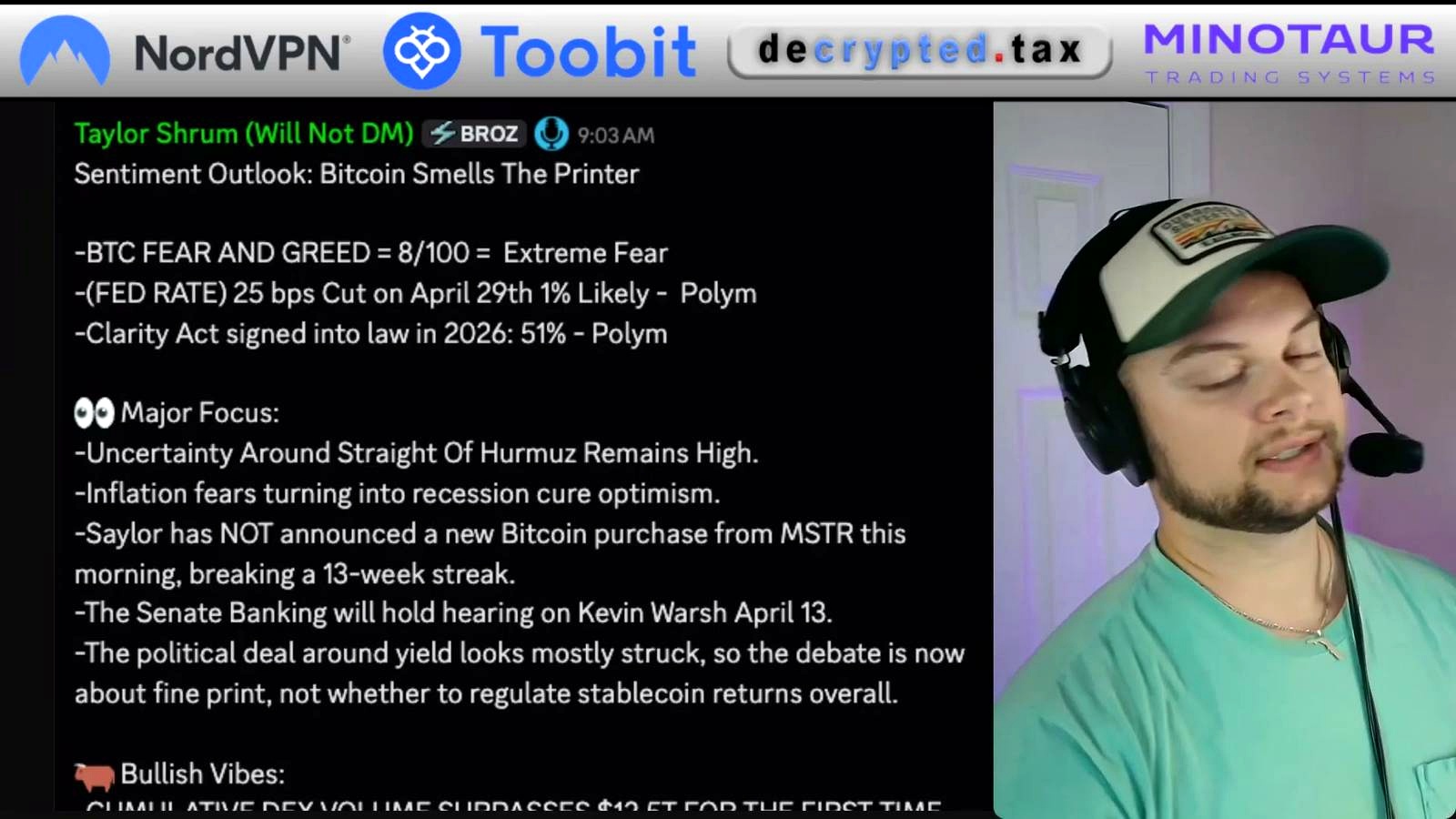
Sentiment data in the video shows a market that is still uneasy.
- Bitcoin Fear & Greed Index: 8
- Implied Fed move discussed: 25 basis points
- Next Fed decision date cited: April 19
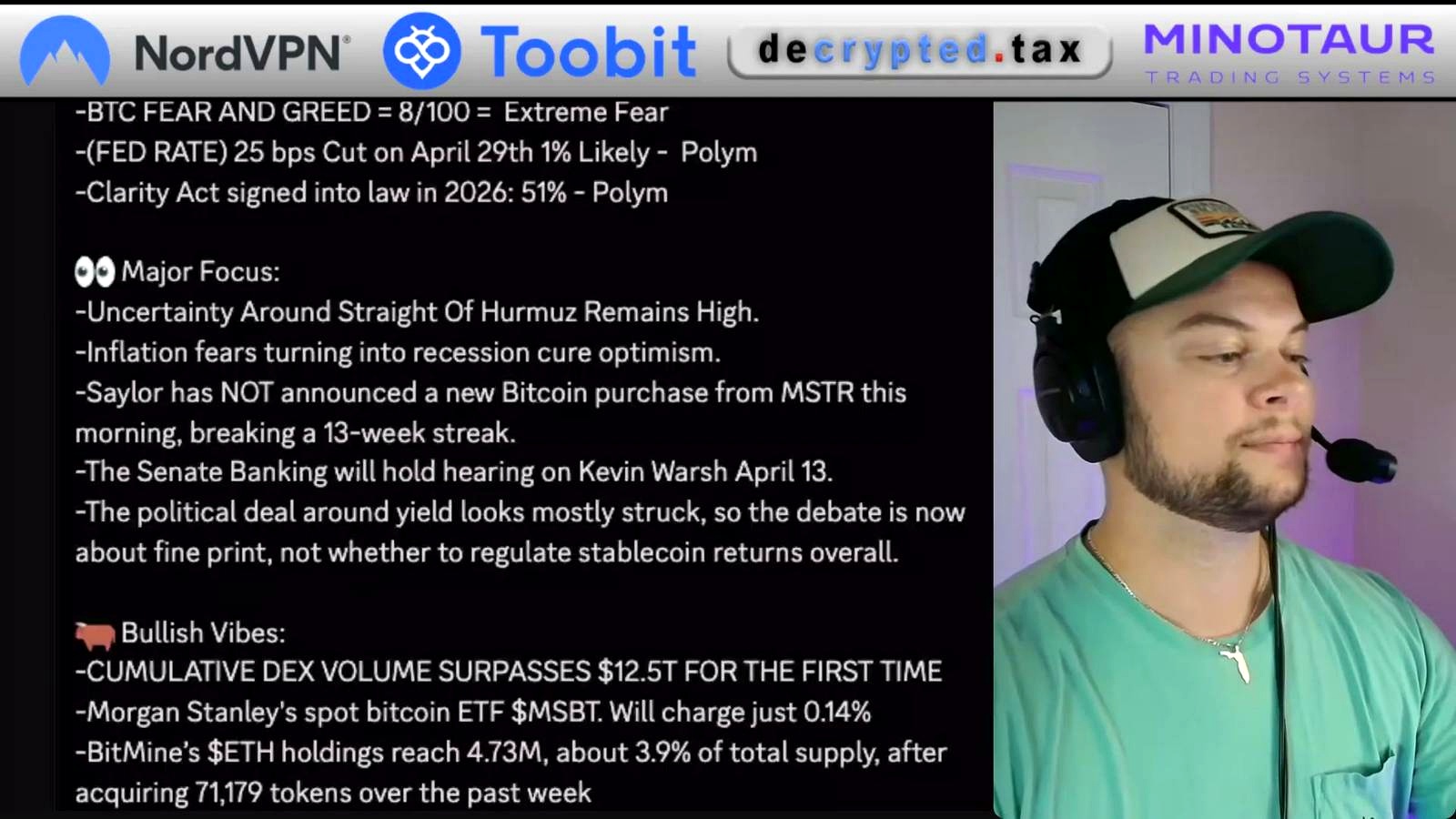
Shrum describes the Fear & Greed reading of 8 as extreme fear. At the same time, he dismisses the idea of a 25-basis-point cut at the April 19 meeting, saying it is not happening. That matters because his bullish view is not based on an imminent dovish pivot. It is based on the possibility that worsening macro conditions eventually leave policymakers with fewer options.
Michael Saylor’s pause breaks a long streak
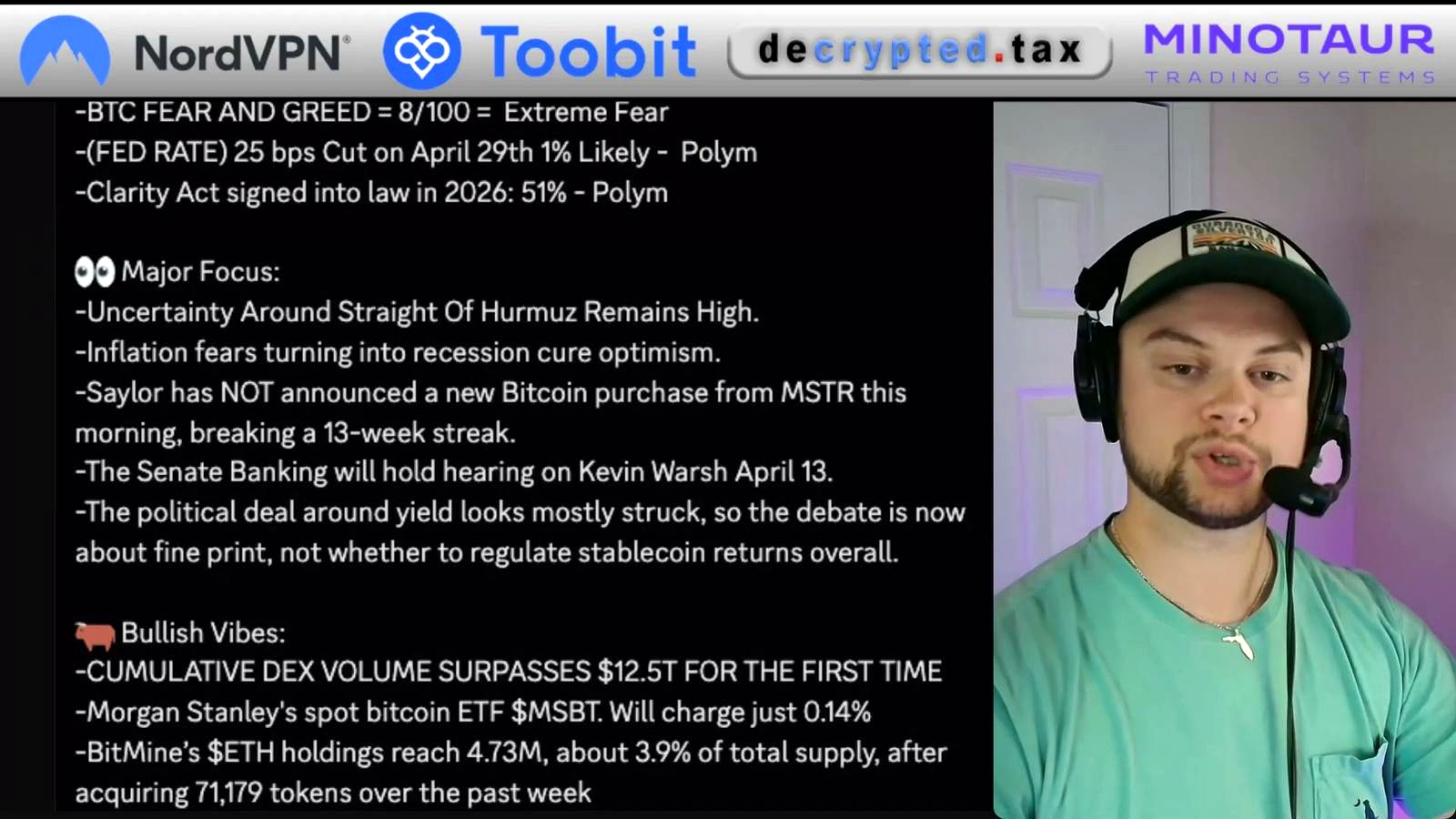
Another notable point in the video is corporate demand. Shrum flags that Michael Saylor did not announce a new Bitcoin purchase for Strategy on Monday, ending a 13-week streak.
He does not treat that as outright bearish. Instead, he suggests the missing announcement may simply be delayed, noting that 14 weeks ago there was also no Monday purchase update. He says there is not enough evidence yet to draw a firm conclusion, though he floats one possible explanation: Strategy may prefer to wait if it expects a lower entry price.
Still, the host stops short of making that his base case and says a different explanation may emerge if Saylor comments publicly.
Two policy dates now matter more than the rest
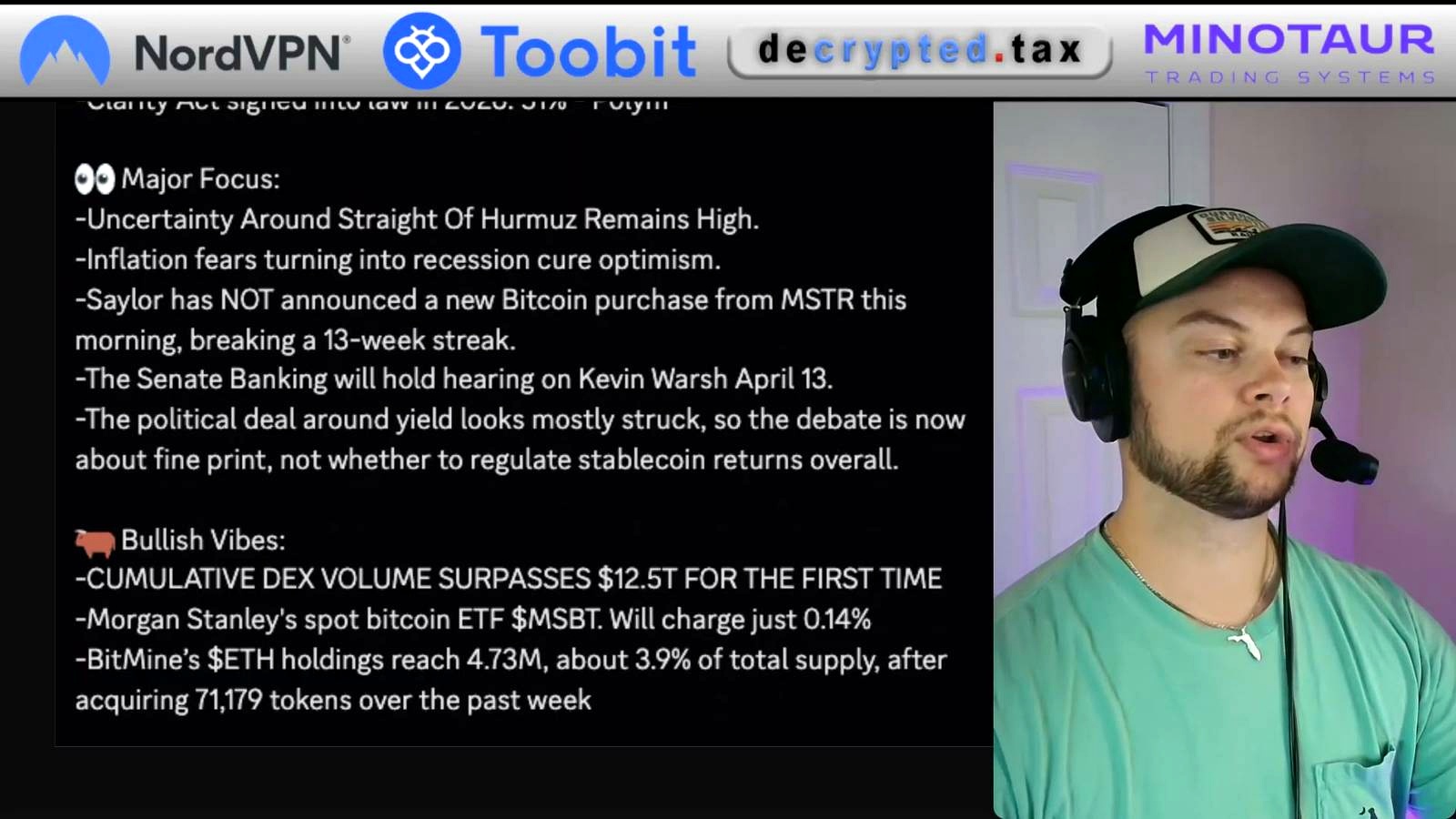
Shrum also spotlights Washington, where both monetary leadership and crypto legislation are back in focus.
First, he says the Senate Banking Committee will hold a hearing on Kevin Warsh on April 13. Shrum expects that date to trigger a broader debate over Warsh’s record and whether he would support rate cuts and easier policy if given a larger role in shaping the Fed’s future.
Second, he says the Clarity Act’s odds of being signed into law fell to 51% on Polymarket. He does not like the move, but treats it as a single data point rather than a trend.
On stablecoin policy, Shrum argues the political deal around yields appears mostly settled. In his reading, the debate has shifted from whether stablecoin returns will be regulated to the fine print of how that regulation is implemented. He also suggests the language taking shape appears unfavorable to Coinbase.
Bullish side notes: ETF fees and DEX growth
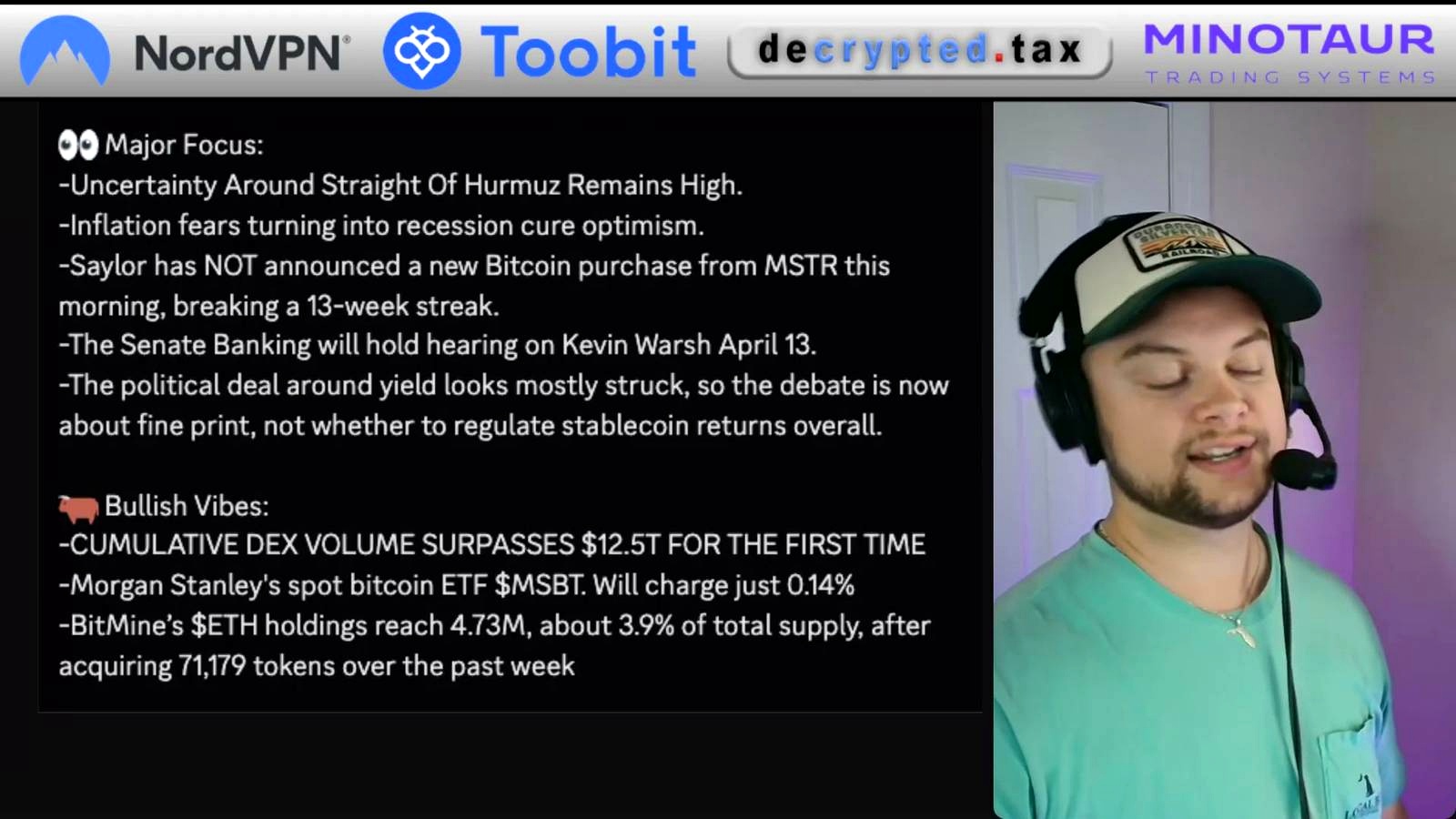
Beyond Bitcoin’s macro case, Shrum points to two developments he sees as broadly constructive for crypto.
The first is exchange activity. He notes that cumulative decentralized exchange volume has surpassed $12.5 trillion for the first time, a milestone he says should support the broader DEX segment.
The second is institutional competition in spot Bitcoin ETFs. Shrum says Morgan Stanley’s spot Bitcoin ETF, ticker MSBT, is expected to charge a fee of just 0.14%. He calls that highly competitive and says it undercuts BlackRock’s pricing, which he reads as a sign Morgan Stanley intends to be aggressive in the category. For Bitcoin, he sees that as a meaningful positive.
What to watch next
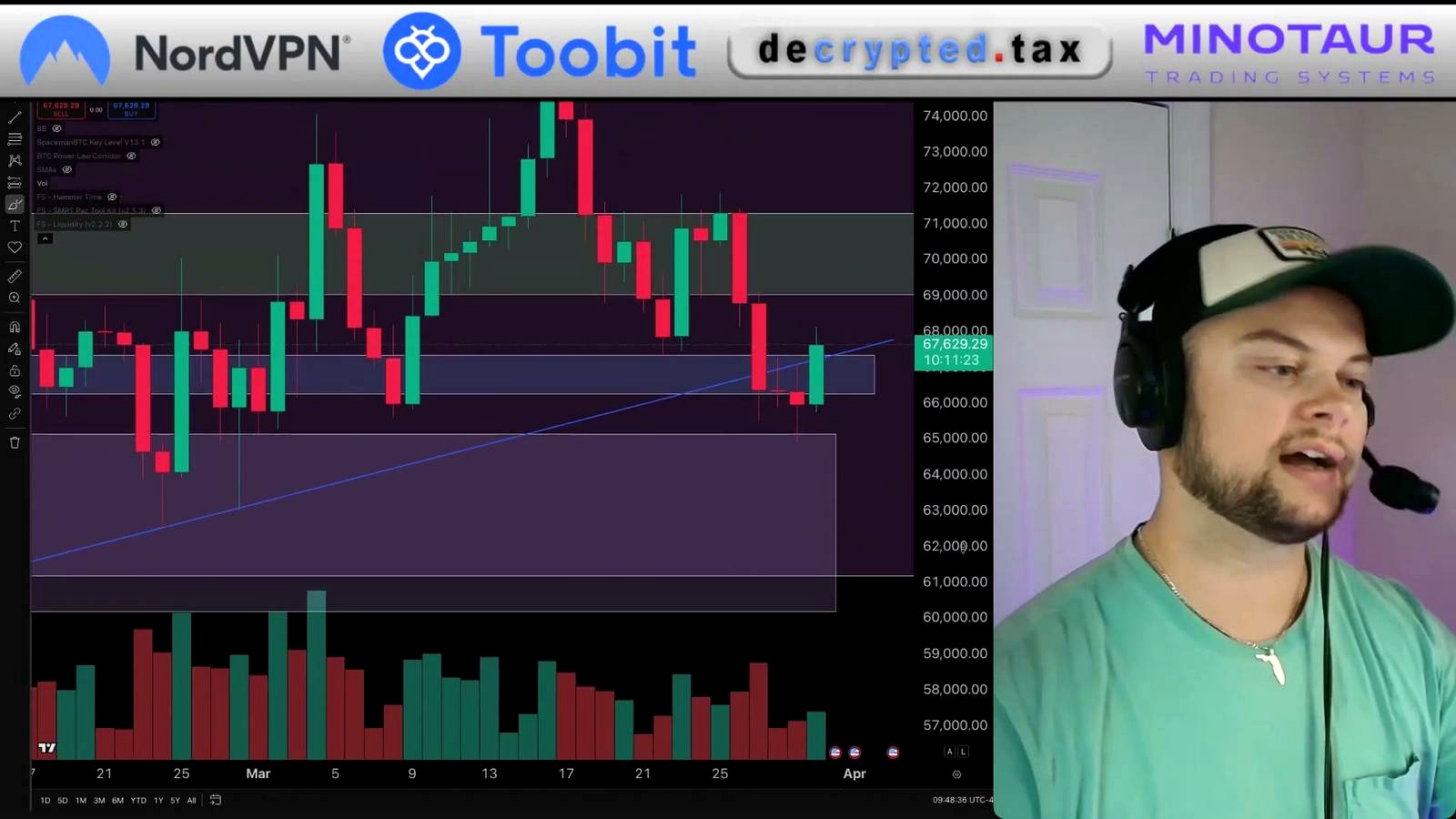
Shrum’s thesis now hinges on a short list of signals. If oil keeps climbing, inflation pressure likely builds. If inflation pressure begins feeding recession fears, markets may start pricing a stronger policy response. And if Bitcoin continues holding buyer interest below $65,000, that macro narrative could gain more traction on the chart.
In the near term, the dates to watch are April 13 for the Kevin Warsh hearing and April 19 for the Fed decision Shrum says will not deliver a cut. Add in Strategy’s next Bitcoin purchase update, and traders will have a clearer read on whether BTC’s resilience is the start of a bigger macro repricing, or just a temporary bid in a nervous market.
FAQ
Why does higher oil matter for Bitcoin in Shrum’s view?
He treats oil as the main inflation input. If energy prices stay elevated, inflation can spread through the economy and raise the odds of a later policy response. That potential return of easier money is the part he believes Bitcoin is starting to price in.
Did Shrum give a specific Bitcoin price target?
No specific upside target was given. The clearest BTC level discussed was $65,000, which he described as an area where buyers have stepped in aggressively.
Was Michael Saylor’s missing purchase update presented as bearish?
Not definitively. Shrum called it a surprise because it broke a 13-week streak, but he also said a delayed announcement is possible and that there is not enough information yet to read too much into it.
What policy developments did Shrum say crypto traders should follow?
His two main policy markers were the April 13 Kevin Warsh hearing and the Clarity Act’s 51% odds on Polymarket. He also said stablecoin yield regulation now looks more like a question of legislative details than a fight over the broad direction.
What non-Bitcoin bullish signals did he mention?
He pointed to cumulative DEX volume topping $12.5 trillion and Morgan Stanley’s planned spot Bitcoin ETF fee of 0.14%. One suggests growing on-chain activity; the other suggests intensifying institutional competition for BTC exposure.
Original Source

John Burnell focuses on Bitcoin infrastructure, wallet security and blockchain technology. He writes educational articles explaining how Bitcoin works and how the technology evolves.