News out of DC has put the revised draft of the Clarity Act at the center of the crypto market conversation. The biggest issue is the apparent push against yield on stablecoin balances, a move that has raised questions about whether banks benefit while DeFi, self-custody, and activity-based rewards become more important.
At the same time, broader market stress, energy volatility, and falling stocks are shaping the backdrop for how investors are reacting. Crypto-related names such as Circle and Coinbase also saw pressure as traders tried to understand what the new draft could mean.
Why the Clarity Act Leak Matters
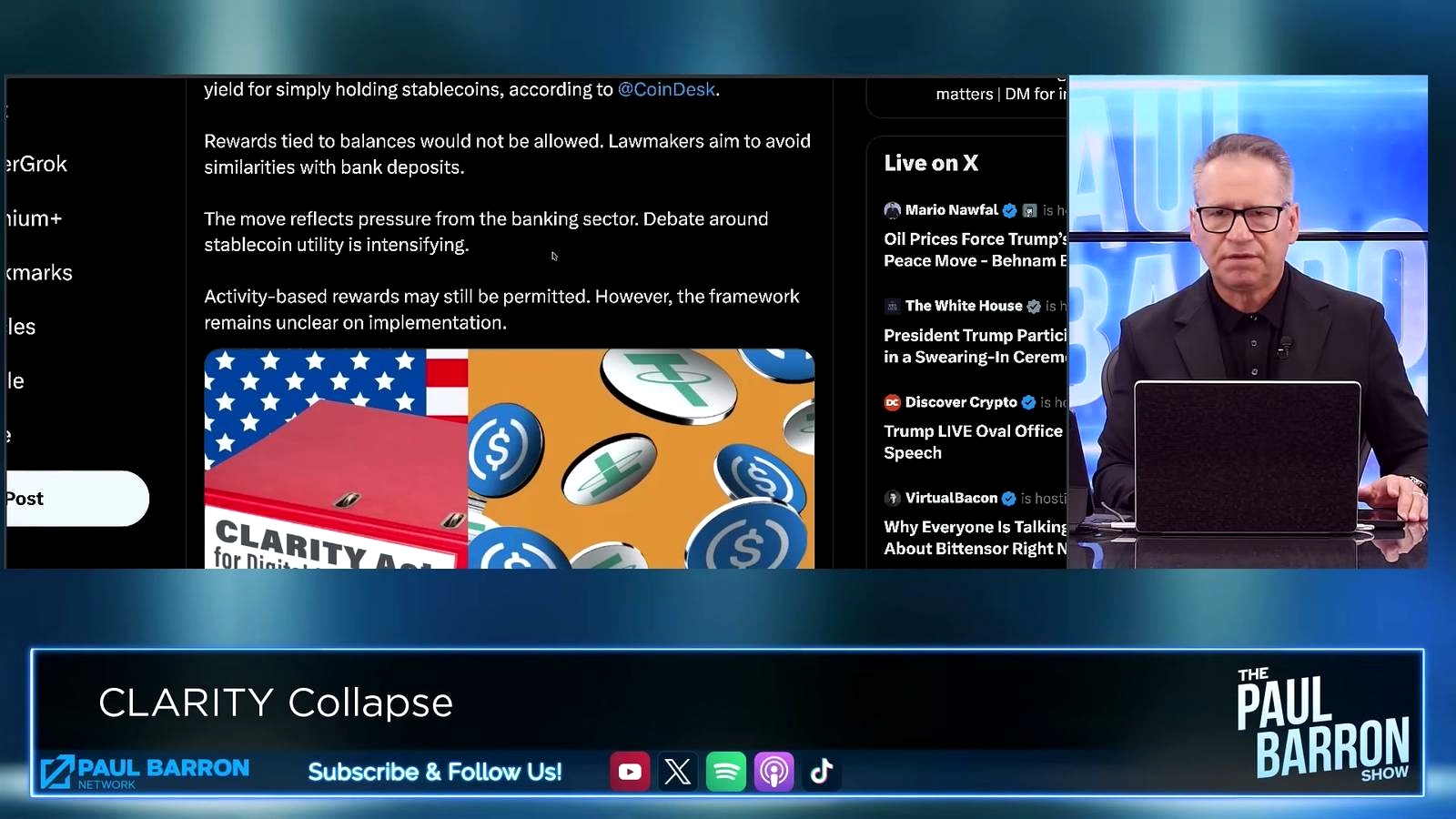
A revised draft of the Clarity Act has now been revealed, and the key concern centers on stablecoin yield payments. The issue is that rewards tied to balances would no longer be allowed, with lawmakers aiming to avoid similarities with bank deposits.
For stablecoin users, the basic idea is simple: a person holds a stablecoin such as USDC and in some cases receives yield, sometimes up to 4%. Banks do not pay anywhere near that, which is why this has been seen as a threat to them.
- Rewards tied to balances would no longer be allowed
- Lawmakers aim to avoid similarities with bank deposits
- Debate around stablecoin utility is intensifying
- The move appears to reflect pressure coming from the sector
Stablecoin Yield Companies Face Immediate Pressure
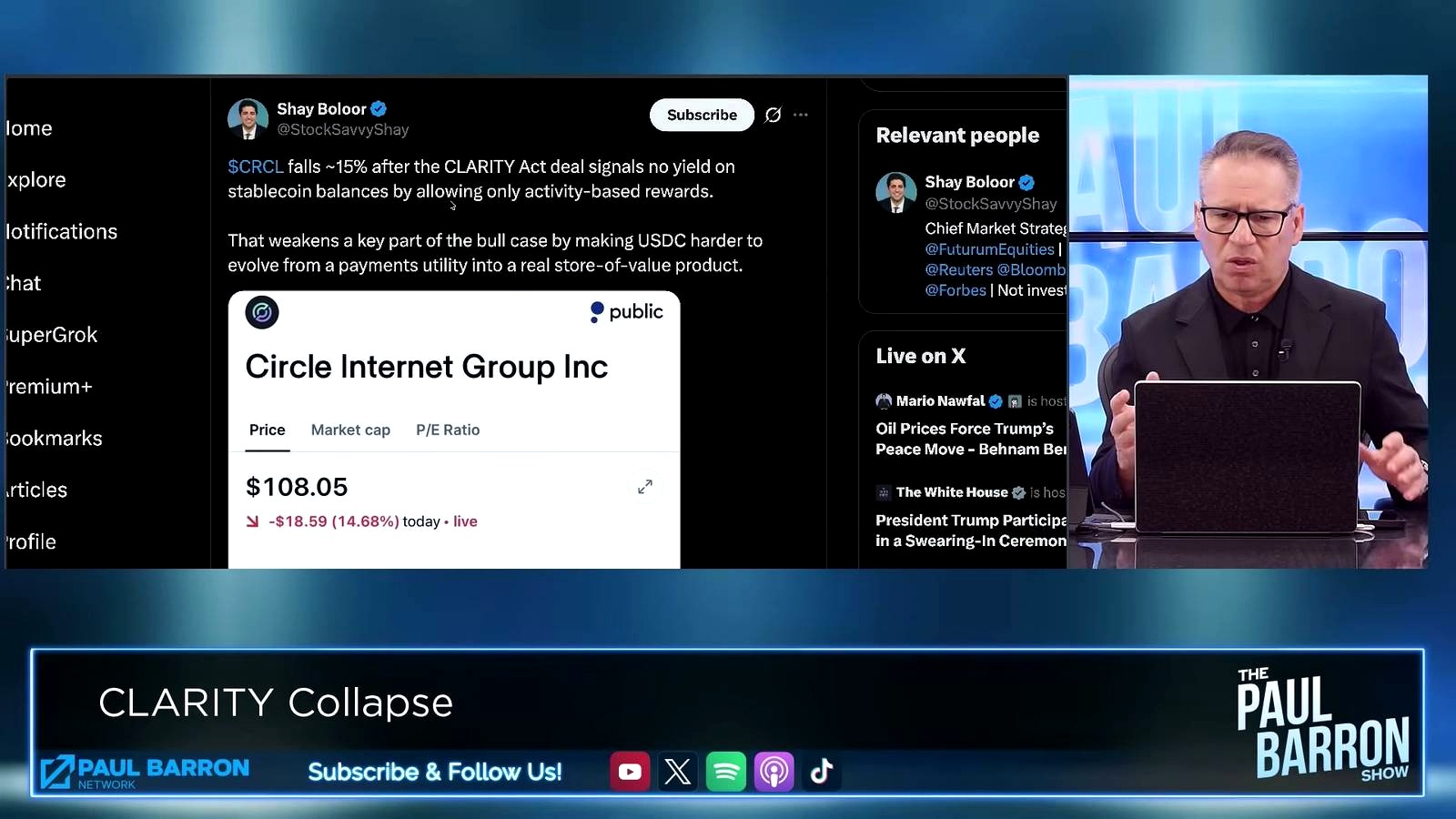
The market reaction was swift. Circle dropped sharply, falling more than 15% and at one point showing a 19% candle on the day. Coinbase also saw a setback, while Hood stepped down as well.
There was a view that the market may have treated the news as automatically bad for Circle, but another interpretation emerged. If Circle no longer has to pay yield out to Coinbase, and Coinbase may not have to pay yield out to users depending on qualification, the effect may not be as simple as the initial selloff suggested.
Why the selloff may be seen as overblown
One argument is that the reaction may have moved too far too quickly. The draft is not final, the process is not complete, and there may still be more fighting in DC as the details continue to emerge.
Kathy Wood also sold $5.9 million worth of Circle four days before the stock crashed 16%, adding another point of interest to the timing of market moves.
Do Banks Win From the Clarity Leak?

The main argument for the banks winning is straightforward: stablecoin yield looked like a direct threat because banks do not offer comparable returns. If balance-based rewards are blocked, then one of the most attractive centralized stablecoin features becomes weaker.
Still, the conclusion is not settled. Another view is that banks did not fully win because the draft is not yet final and because the pushback appears to be growing. The fact that the issue has become so visible may force more concessions as the debate continues.
Why the answer may still be no
- The bill is not done yet
- There may still be more political fighting in DC
- Pushback could force further concessions
- The issue has highlighted how competitive stablecoin yield had become
Activity-Based Rewards Could Change the Outcome
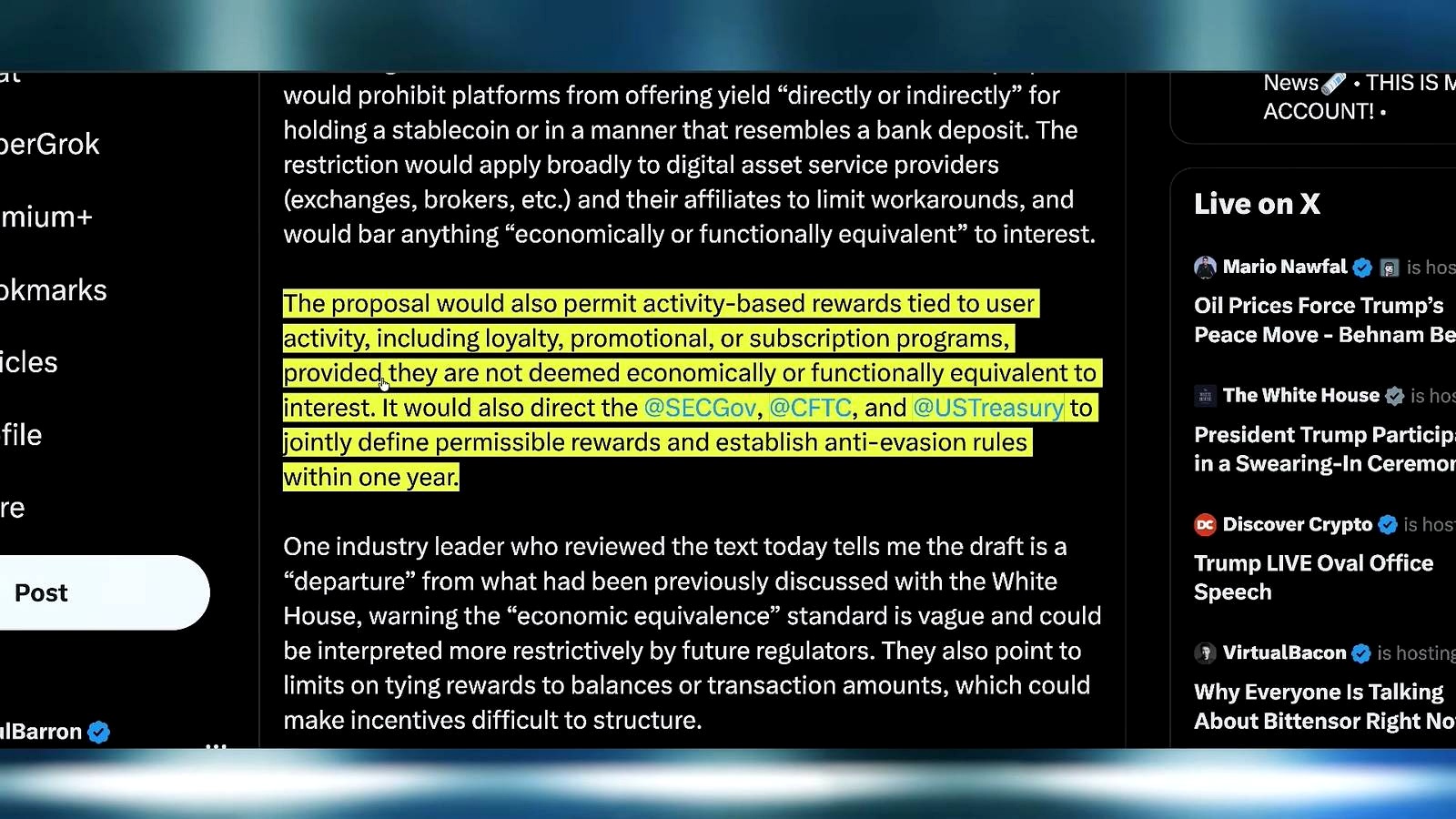
While balance-based rewards are under pressure, another part of the proposal appears more open. The draft would also permit activity-based rewards tied to user activity, loyalty, promotion, and subscription programs.
That creates an important distinction. If a user actively initializes a yield activity within a wallet, that may differ from simply parking dollars and passively earning. Subscription programs were also specifically mentioned, raising questions around products such as Coinbase One and Kraken Plus.
Possible permitted reward structures mentioned
- User activity rewards
- Loyalty programs
- Promotion programs
- Subscription programs
This makes the final interpretation especially important. The line between passive balance rewards and user-enacted activity could become one of the most important issues in how the market adapts.
DeFi May Benefit From the Clarity Shift
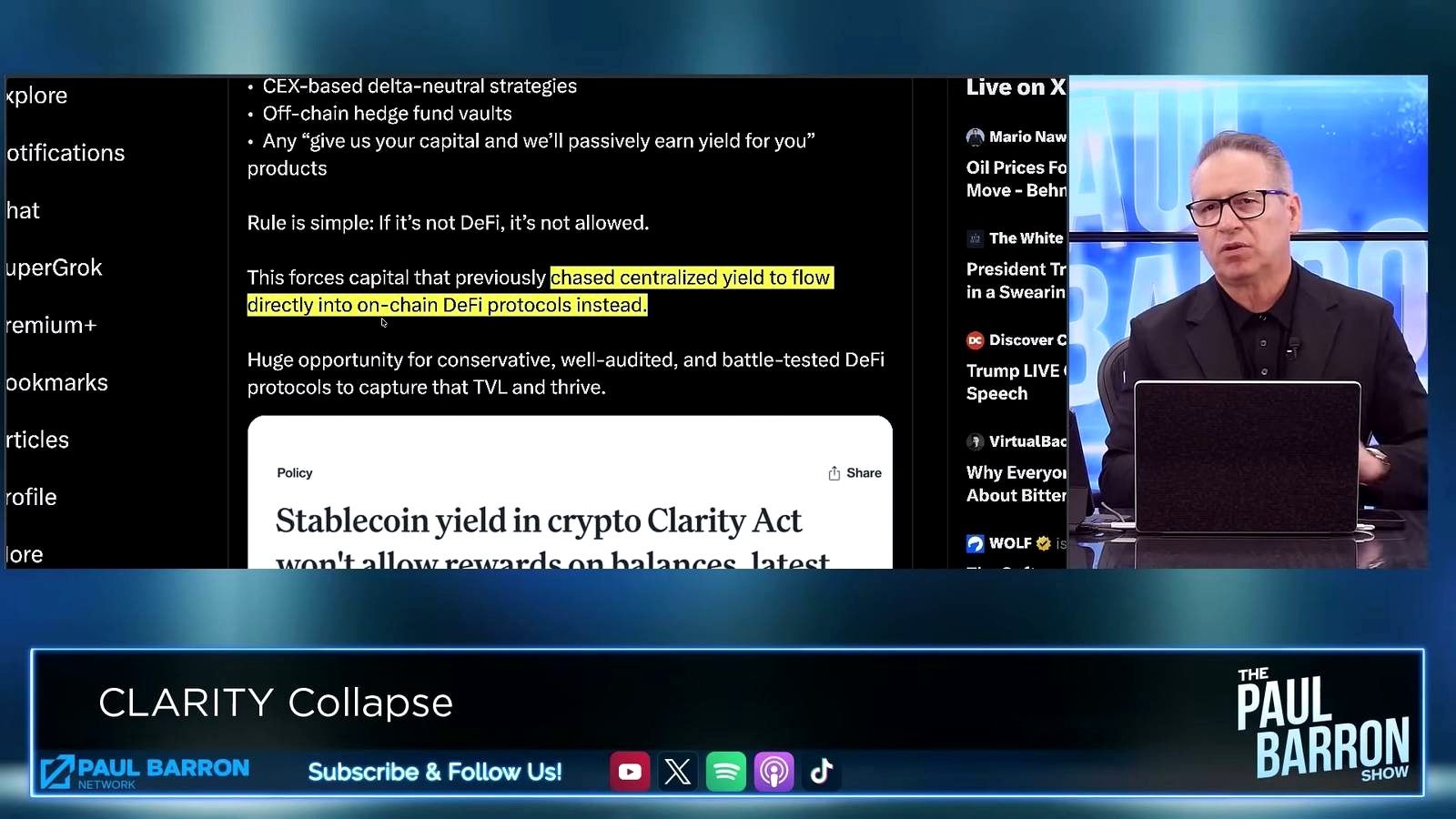
One of the strongest reactions to the draft is the idea that DeFi could be a major winner. If centralized yield becomes less available, capital that once chased yield on centralized platforms may start moving into DeFi protocols instead.
That possibility has become a major talking point. Many users who moved stablecoins into centralized exchanges to earn yield may reconsider that strategy if those yields are restricted.
Why DeFi is being watched closely
- Centralized stablecoin yield may become less available
- Users may seek alternative yield opportunities
- Rewards programs in DeFi may be better positioned
- Some observers see this as a direct DeFi win
There was also mention of rewards activity available in Flare, including governance that allows users to earn on XRP. That reinforces the broader point that activity-based and protocol-based reward systems may remain protected more than passive centralized yield structures.
Self-Custody Gains More Relevance

With uncertainty around centralized platforms, self-custody is drawing more attention. The idea behind self-custody is true ownership in digital assets, giving users full control of their own assets.
There is also a view that self-custody wallets could become home to a wider range of tokenized assets, including tokenized stocks and tokenized gold. In that environment, DeFi and self-custody are increasingly being seen as possible winners from regulatory pressure on centralized yield products.
Why self-custody stands out in this environment
- Full control over digital assets
- Closer alignment with true ownership
- Potential access to tokenized assets
- Stronger relevance if centralized yield is limited
Broader Market Stress Adds to the Reaction
The Clarity leak did not happen in isolation. Investors are already dealing with a difficult macro environment marked by geopolitical tension, rising energy concerns, and weakness across markets.
There was discussion around outreach between the US and Iran, with Iran reportedly willing to listen. At the same time, major demands from both sides were described as potentially part of negotiation tactics, leaving investors focused on whether the situation is still in a de-escalation phase.
Market concerns highlighted
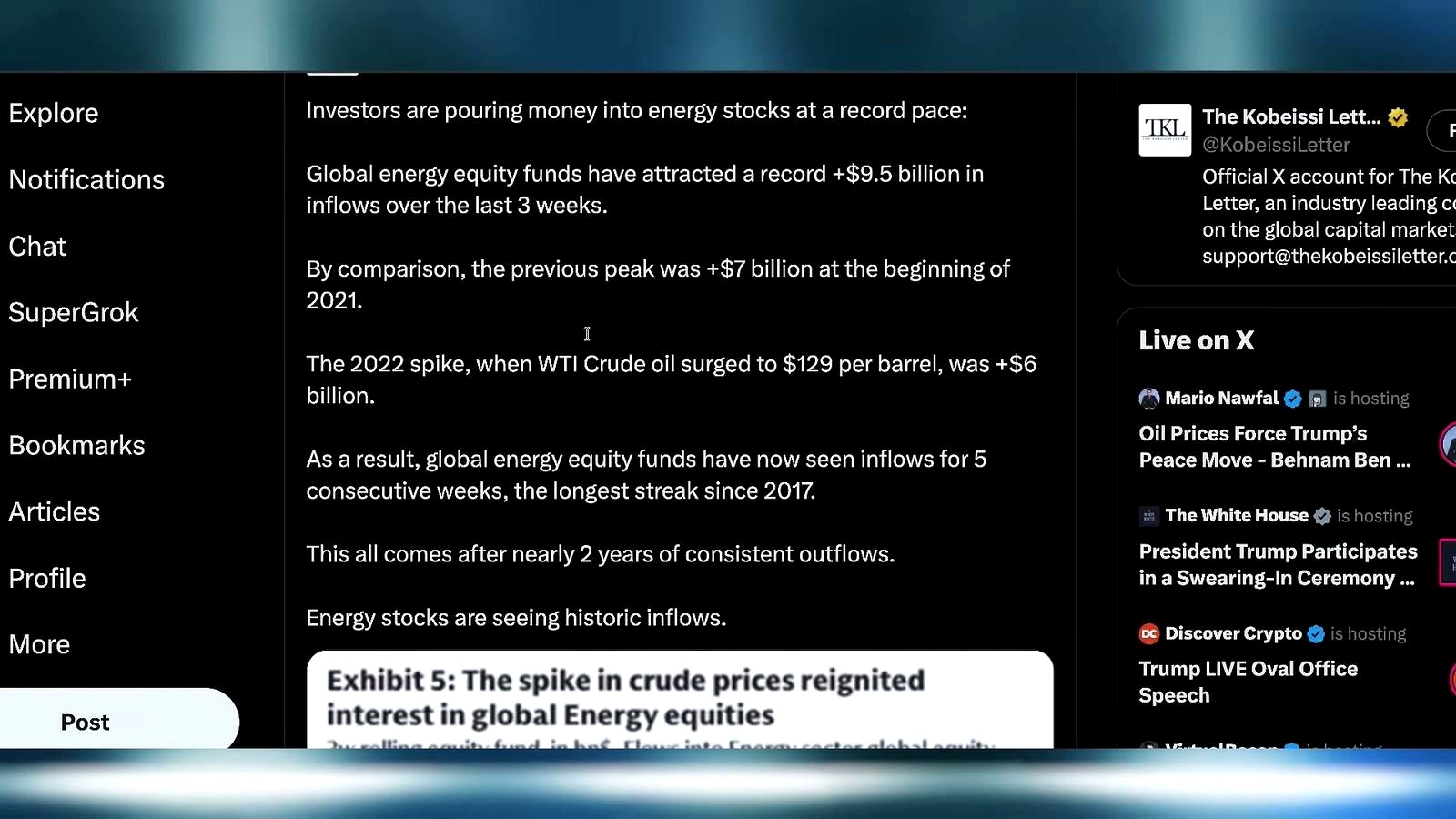
- Investors pouring money into energy stocks at a record pace
- West Texas crude surging to 129 a barrel before pulling back
- Nearly two years of consistent outflows before the recent energy move
- The US canceling investment into offshore wind farms
There was also concern that investors remain complacent even as the overall trend worsens. Global stocks were described as having their worst month in three and a half years, while the S&P continued to pull down. Gold also fell dramatically, with focus on whether even lower levels could come next.
Private Credit and Redemption Limits Add Another Layer
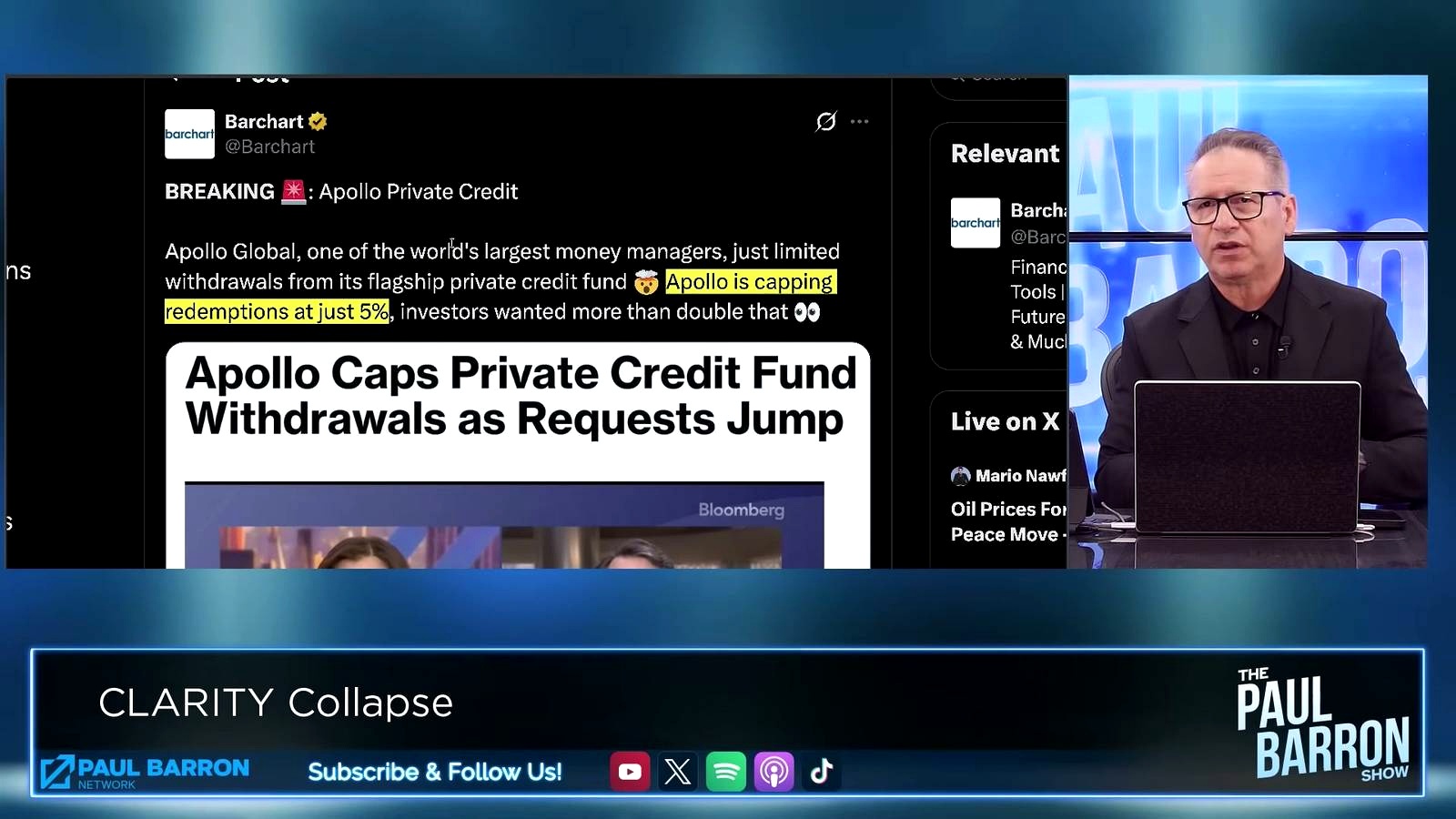
Outside of crypto, redemption restrictions in private markets are also drawing attention. Apollo was said to be capping redemptions at 5%, while another private equity fund was limiting redemptions at $10.7 billion.
These developments were presented as signs of pressure in the broader financial system. Against that backdrop, digital assets, tokenized securities, and tokenized treasuries were framed as part of a larger shift that may help open new paths for the United States, even if they do not solve the underlying debt problem.
Political Questions Still Hover Over the Bill

Another source of uncertainty is whether the bill contains anything related to Trump’s crypto activities. There was mention that this may connect to activity involving World Liberty Fi, along with the resignation of an SEC enforcement chief.
If that kind of language remains in the bill, it raises fresh doubts about whether it could move forward cleanly. That makes the legislative outcome even less certain and adds to the sense that the current market reaction may be based on incomplete information.
What the Market Is Watching Next
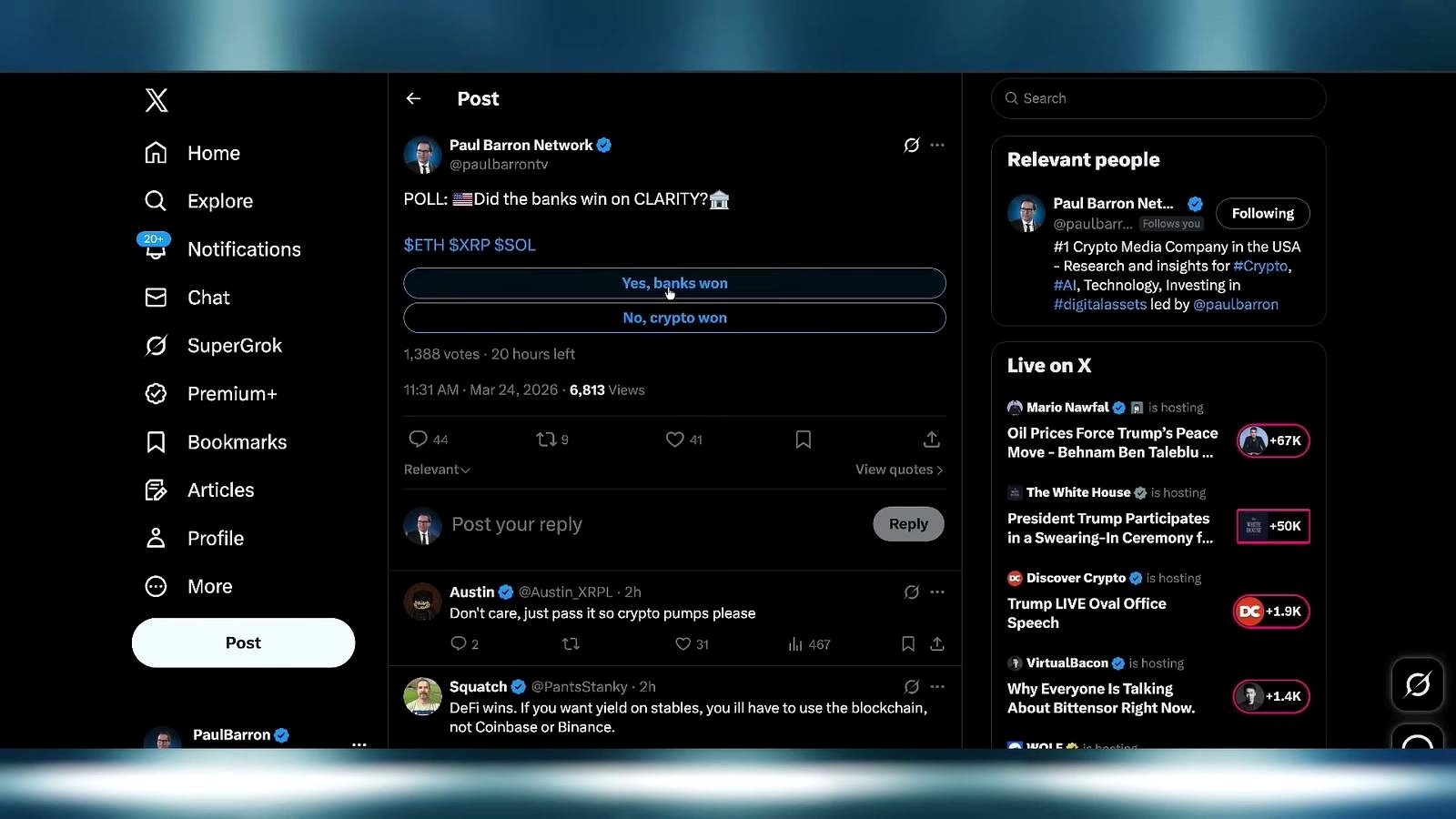
For now, the main questions are whether balance-based stablecoin rewards are truly on the way out, whether activity-based rewards can remain viable, and whether capital starts flowing from centralized exchanges toward DeFi.
The market is also watching how far the pushback in DC goes. The draft is still not finished, and any additional language or concessions could materially change the outcome for stablecoin yield companies, exchanges, DeFi protocols, and self-custody adoption.
FAQ
What is the main issue in the Clarity Act leak?
The main issue is that rewards tied to stablecoin balances would no longer be allowed, with lawmakers aiming to avoid similarities with bank deposits.
Why are stablecoin yields considered important?
Stablecoin yields matter because holders of coins such as USDC could receive yield, in some cases up to 4%, which is much higher than what banks pay.
Did banks win from the Clarity leak?
That remains debated. One side says banks benefit because stablecoin yield was a threat to them. Another side says the bill is not final and continued pushback could still change the result.
Could activity-based rewards still be allowed?
Yes, the proposal would also permit activity-based rewards tied to user activity, loyalty, promotion, and subscription programs.
Why is DeFi being seen as a potential winner?
If centralized stablecoin yield becomes less available, capital that once sought yield on centralized platforms may move into DeFi protocols instead.
Why is self-custody getting more attention?
Self-custody is gaining attention because it gives users full control of their digital assets and is being viewed as increasingly important if centralized offerings face more restrictions.
Why did Circle and Coinbase fall?
The market appeared to react to the possibility that the revised draft could hurt stablecoin yield-related business models. Circle fell sharply, and Coinbase also saw pressure as investors tried to understand the implications.
Is the Clarity Act final?
No. The draft is still not complete, and more details, political fighting, and possible concessions may still emerge from DC.
Content Source

John Burnell focuses on Bitcoin infrastructure, wallet security and blockchain technology. He writes educational articles explaining how Bitcoin works and how the technology evolves.