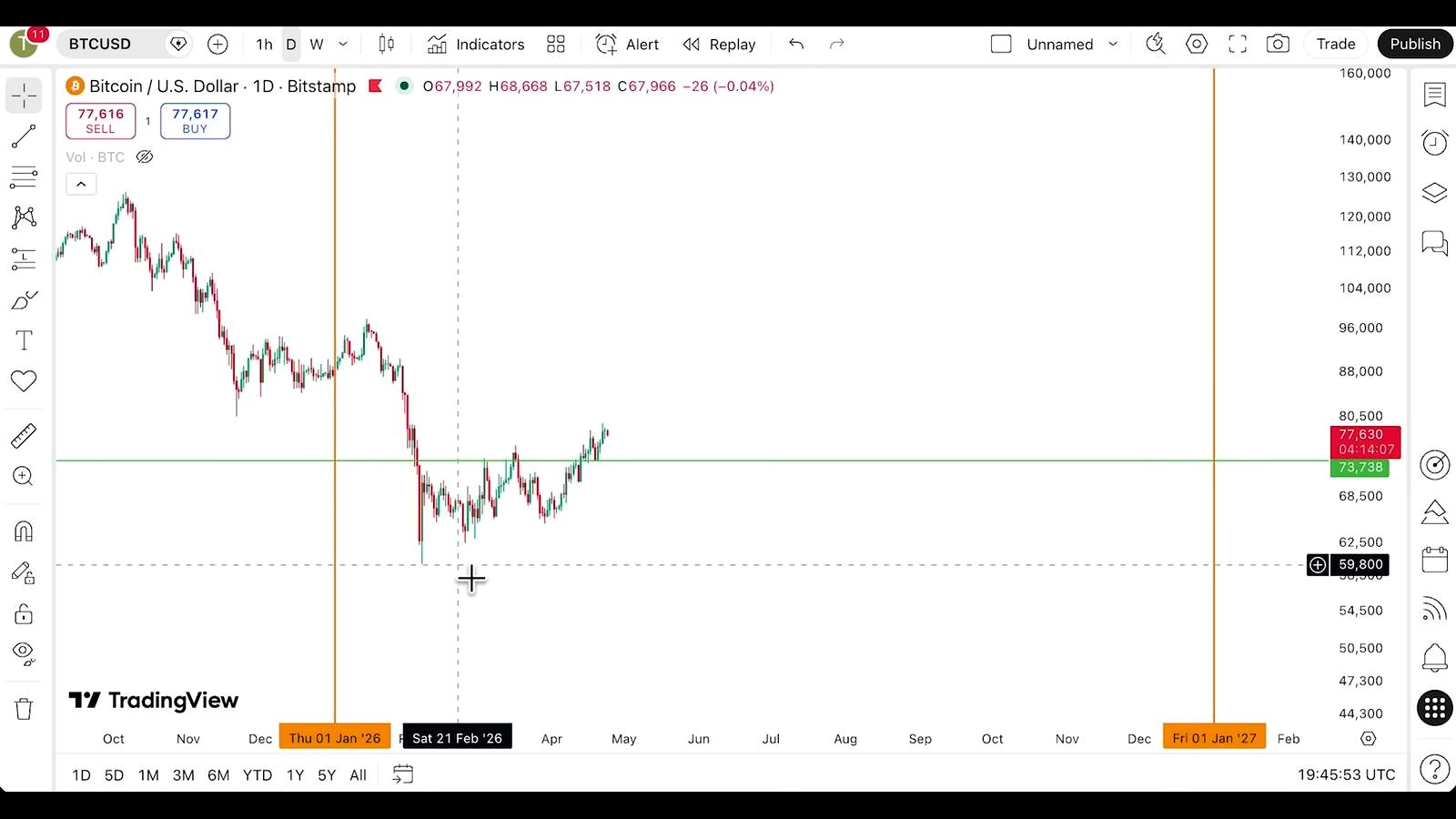
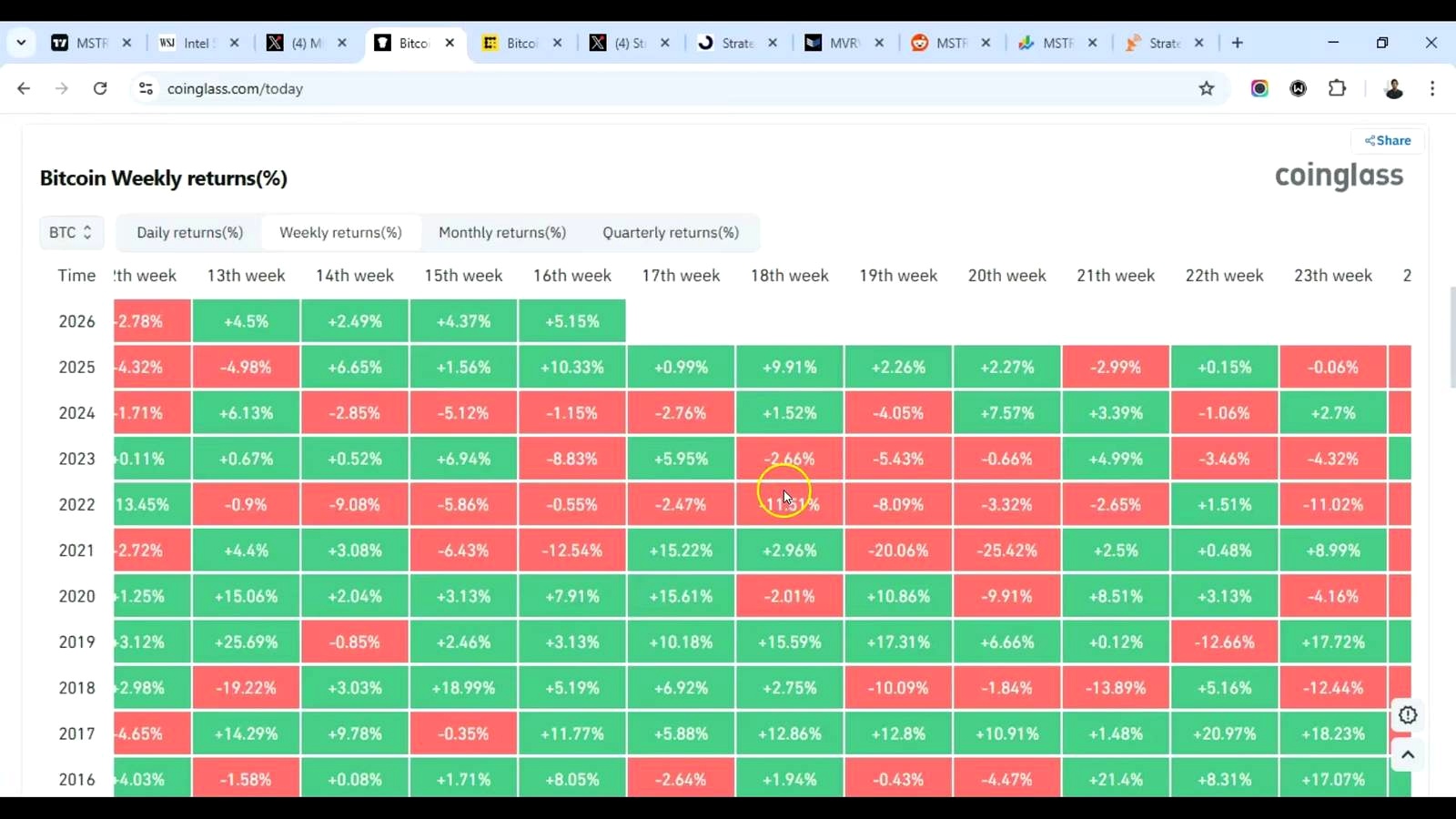
After a bruising cycle of drawdowns, the market’s central question is whether Bitcoin has finally reached a level where large buyers step in before panic takes over. According to Schwab Network, that level may be around $65,000, with institutional demand, easier liquidity expectations and a shifting regulatory backdrop combining to support the case.
The Core Thesis: Why Schwab Network Sees $65K as Support
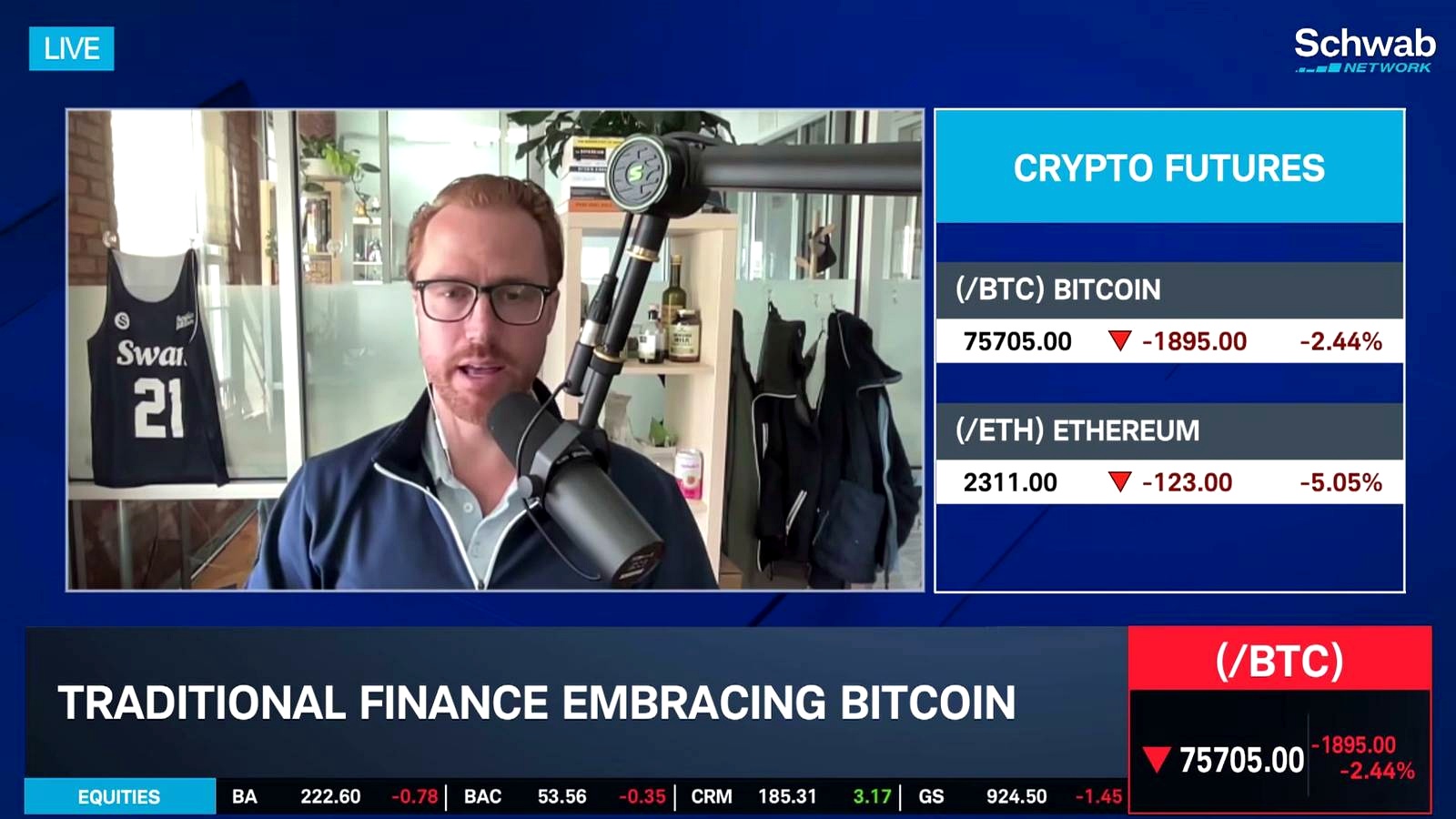
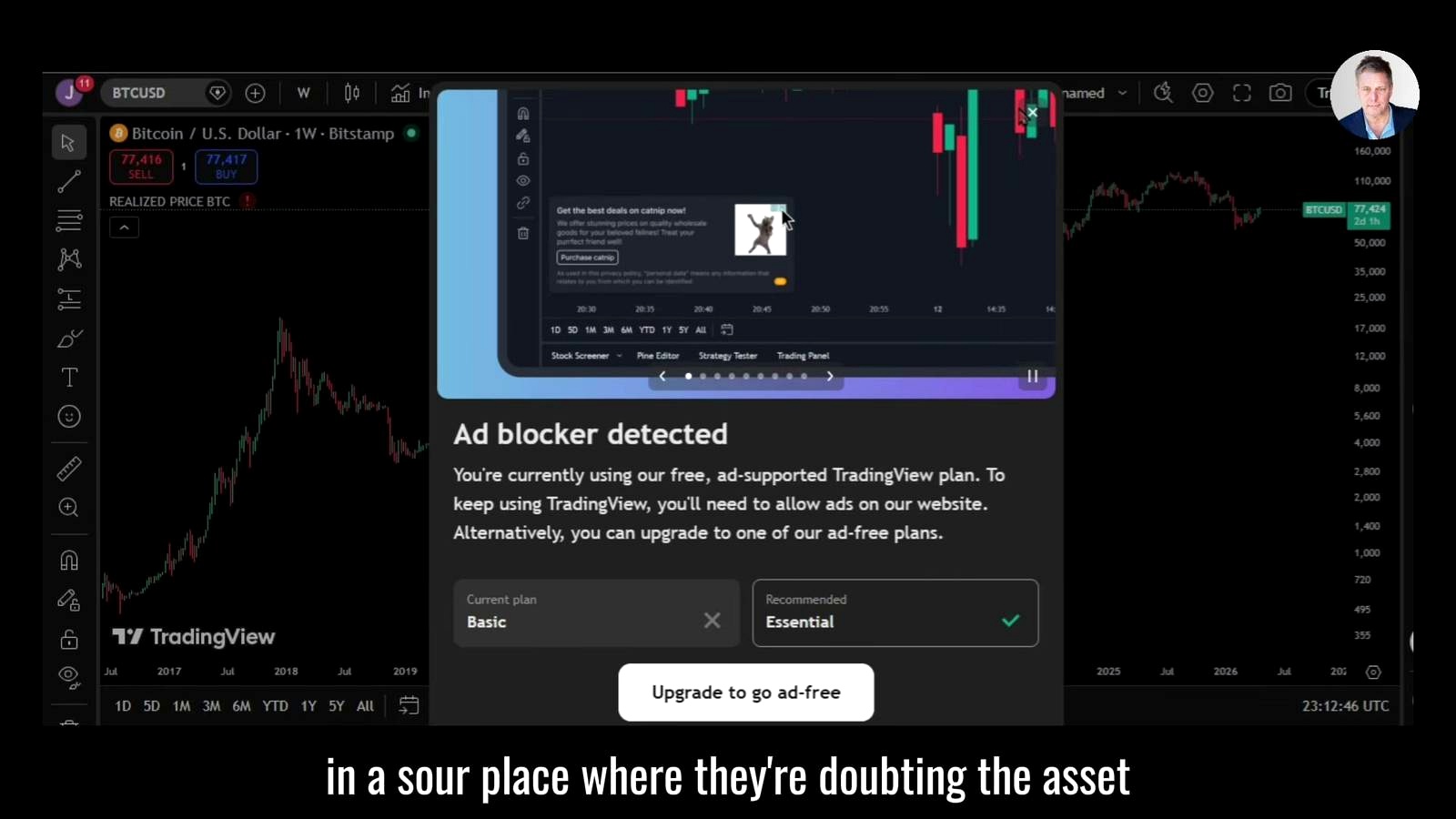
According to Schwab Network, Swan Bitcoin managing director John Haar argues that Bitcoin likely bottomed near $60,000, and that the $65,000 range could now act as a floor. His comparison is straightforward: in 2022, Bitcoin suffered a roughly 70% peak-to-trough drawdown during a period defined by surging inflation, rising interest rates, Fed balance-sheet tightening, stress in money supply, and crypto-specific contagion that culminated in the FTX collapse. By contrast, he said the more recent decline from late 2025 to 2026 was closer to 50% peak to trough, and he suggested that may prove to be the cycle’s largest drawdown.
That is a constructive view, but not an outlandish one. In broader market terms, the bullish case for Bitcoin still rests on a familiar trio: liquidity, institutional access and post-halving supply tightness. When traders believe rates are headed lower and financial conditions are easing, Bitcoin tends to be treated less like an isolated speculative asset and more like a high-beta expression of global liquidity. That makes Aaron Freeze’s point on Schwab Network important too: lower rates and higher liquidity have historically pushed capital away from lower-yielding defensive assets and toward alternatives, including crypto.
The supportive context is easy to see. Spot Bitcoin ETFs have structurally changed access for wealth managers and large allocators. Treasury-heavy corporate buyers have also become a more visible source of demand. At the same time, Bitcoin is no longer trading in a market defined by the forced deleveraging and trust collapse that marked 2022. Still, calling $65,000 a floor is more ambitious than saying the long-term trend remains intact. Floors are tested, and in Bitcoin they are often tested violently.
Institutional Adoption and Policy Tailwinds Are Doing More of the Work
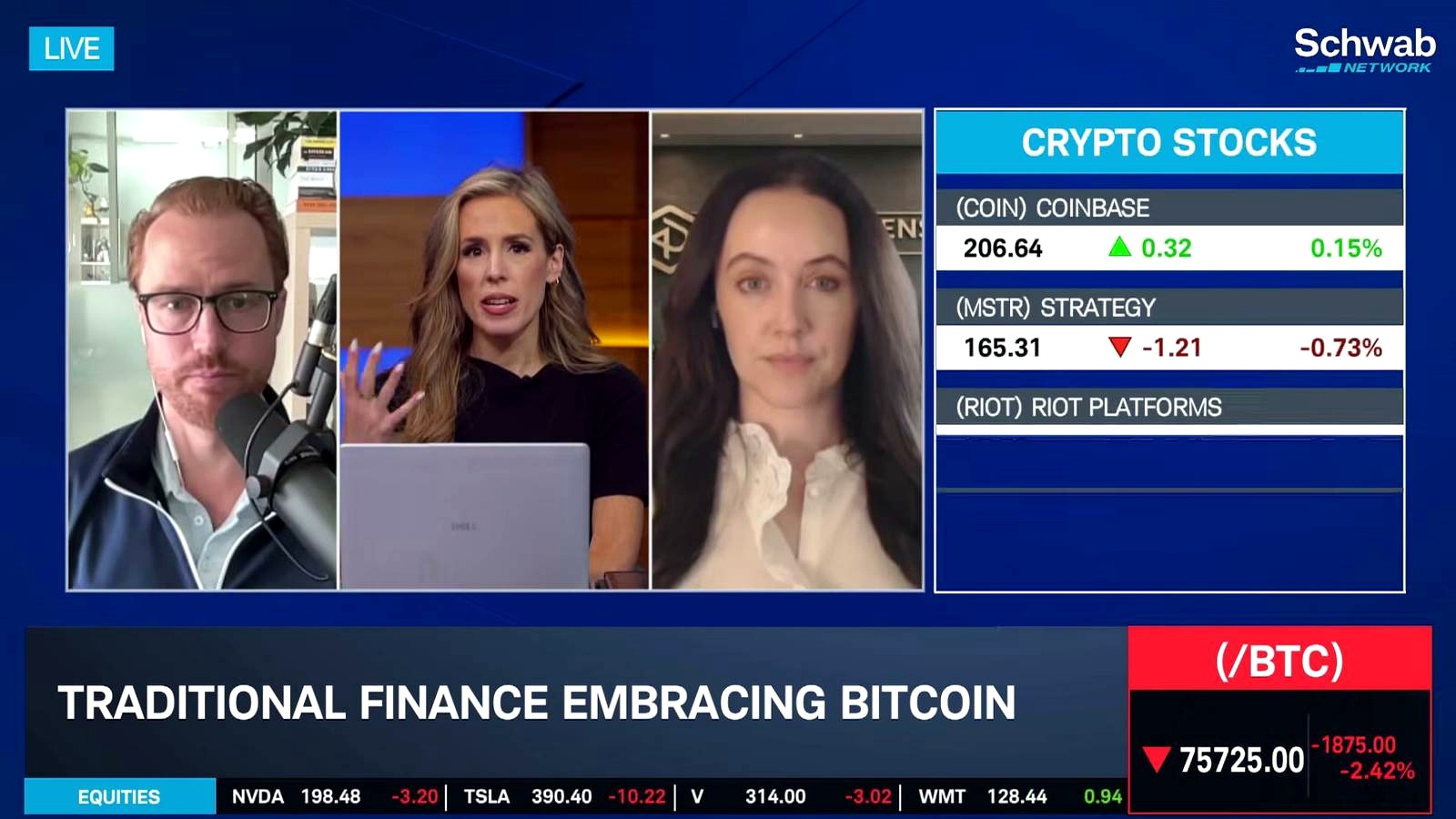
Schwab Network argues that institutional participation is a major reason the $65,000 zone could hold. Haar pointed to Morgan Stanley and Goldman Sachs stepping more directly into Bitcoin products as evidence that large financial firms now see persistent client demand. He stressed that Morgan Stanley does not have a long history of internally launching ETFs, noting that it acquired Eaton Vance for much of its ETF platform. In his telling, the decision to create and launch a Bitcoin ETF signals confidence that a large asset base will allocate to BTC on an ongoing basis.
That matters because Bitcoin’s market structure is different when weakness is met by regulated demand rather than mostly by crypto-native traders. ETF wrappers can turn what used to be a technical washout into a reallocation opportunity for RIAs, private banks and discretionary portfolios. That does not eliminate volatility, but it can compress the depth of drawdowns over time.
Haar also highlighted Michael Saylor’s Strategy as another sign of a changed demand regime. On Schwab Network, he said the company’s most recent buy totaled 34,000 BTC. For perspective, he noted that in 2022 the company bought just 8,000 BTC across the full year, while in 2026 it is averaging more than 8,000 BTC per week. His point was not simply that Strategy is buying a lot. It was that institutional-style accumulation today is operating at an “orders of magnitude” different scale from prior downcycles.
Freeze added a policy layer to the bullish setup. He said the industry is closer than it has been to real market-structure clarity, citing support around the Clarity Act and a compromise framework on stablecoin yields. He did not call it a perfect outcome. In fact, he explicitly said the current compromise appears to allow yield when stablecoins are used in transactions, but not when they are merely held in an account. He argued that this is still not the best consumer outcome and that more work remains. Even so, he said passing the Clarity Act would reduce ambiguity and make it easier for institutions to enter the market under clearer guardrails.
For Bitcoin specifically, the key takeaway is that regulatory clarity does not need to be perfect to be market-positive. It just needs to be clear enough for larger players to scale exposure without fearing abrupt rule changes.
What Could Go Wrong

The cleanest rebuttal to the $65,000-as-floor thesis is that macro can still overwhelm adoption narratives. If inflation reaccelerates, bond yields rise and the market is forced to price fewer rate cuts or tighter liquidity, Bitcoin could trade less like digital gold and more like a risk asset under pressure. The Schwab Network discussion leaned heavily on easier-money expectations tied to Kevin Warsh’s nomination, but monetary policy expectations can reverse quickly if economic data run hot.
There is also a market-structure risk. Institutional demand is real, but it can be more price-sensitive than Bitcoin bulls assume. ETF inflows can stall. Corporate treasury buying can slow if capital markets conditions tighten. And while Strategy’s pace of accumulation is bullish on the way up, it also concentrates market psychology around a handful of visible buyers. If those flows pause, traders may discover that a presumed floor was partly narrative-driven.
Regulation is another source of uncertainty. Freeze said himself that the stablecoin yield compromise is not a “perfect solution, ” and the language had not yet been seen. That leaves room for disappointment. If legislation lands in a form the market views as restrictive, or if implementation is delayed, the optimism around structural clarity could fade.
Finally, Bitcoin floors are rarely confirmed by argument alone. They are confirmed by surviving retests. A decisive move back below $65,000, especially if it loses $60,000 after that, would weaken the case that the worst drawdown is already behind the market.
What to Watch Next

The first trigger is simple: whether Bitcoin can keep defending the $65,000 area on high-volume pullbacks. Below that, traders will focus on the prior low near $60,000, which Schwab Network identified as the likely bottom.
Beyond price, watch three things. First, whether expectations for lower rates and higher liquidity actually firm up in macro markets. Second, whether large institutions continue rolling out Bitcoin products and gathering assets instead of merely announcing plans. Third, monitor progress on the Clarity Act and any final language on stablecoin yield treatment. If policy clarity improves while ETF and treasury-style demand stays strong, the bullish floor thesis gets stronger. If one or more of those pillars slips, support may prove less durable than advertised.
FAQ
What does it mean when traders call a price level a “floor”?
A floor is a support zone where buyers are expected to step in consistently enough to prevent deeper declines. In Bitcoin, it is rarely an exact number. It is usually a range that holds across multiple tests.
How is this Bitcoin drawdown different from 2022?
The Schwab Network guests contrasted today’s market with 2022, when Bitcoin fell roughly 70% amid tightening monetary conditions and crypto contagion. Their view is that the recent decline, around 50%, occurred in a much healthier backdrop with stronger institutional demand.
Why do lower interest rates tend to help BTC?
Lower rates generally improve liquidity and reduce the appeal of safer yield-bearing assets relative to riskier ones. Bitcoin often benefits when investors become more willing to move out on the risk curve in search of higher returns.
What is the Clarity Act, and why would Bitcoin traders care?
The Clarity Act is discussed as a framework for reducing regulatory ambiguity in crypto markets. Bitcoin traders care because clearer rules can make it easier for banks, wealth platforms and institutional investors to offer or hold crypto products at scale.
What would invalidate the idea that $65,000 is Bitcoin’s new floor?
A sustained break below $65,000, followed by a loss of the prior low around $60,000, would be the clearest technical challenge to that thesis. Weak ETF demand, a worsening macro backdrop or disappointing regulation could all contribute to that outcome.
Source

Omar Al-Sharif lives and works in the UAE and is involved in the blockchain technology industry. He writes articles on Bitcoin and digital assets as a personal passion, explaining complex topics in simple and understandable language.