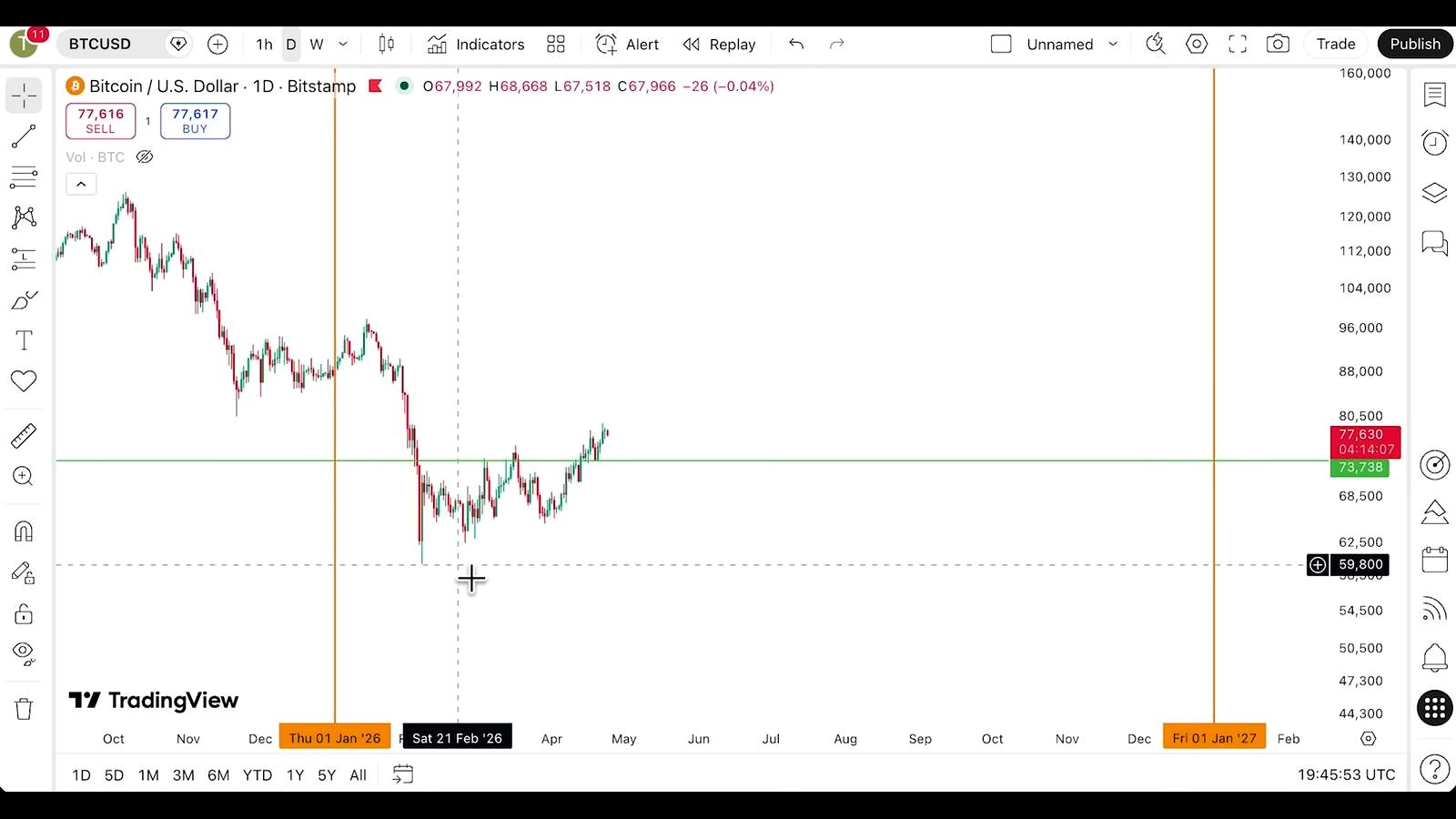
After a bruising pullback, the key question for Bitcoin traders is whether the market just reset leverage or quietly ended the cycle. According to Savvy Minds Connect, the answer is emphatically bullish: the recent decline looks more like a standard bull-market correction than a structural top, with a power-law floor near $60,000 and upside that may not stop at $200,000 if a true mania phase takes hold.
The Core Thesis: A Mid-Cycle Reset, Not a Blow-Off Top
According to Savvy Minds Connect, the central argument is that Bitcoin’s recent weakness should be read in the context of prior cycle drawdowns, not as proof that the bull market is over. The host cites past corrections in the 50%+ range, including the China-ban selloff in 2021 at roughly 57%, alongside prior declines of 70%+. In that framing, the latest move can still fit the pattern of a harsh but normal bull-market correction.
The analyst’s bullishness goes well beyond a simple rebound call. He says Bitcoin is “headed much higher” and argues there could be catalysts that push the market into a “fullblown” speculative phase similar to 2017. If that happens, he suggests the usual ceiling assumptions may be too conservative, saying he does not think “math” necessarily says Bitcoin would stop at $200,000.
Savvy Minds Connect also contrasts that view with a more measured scenario attributed in the discussion to Plan C: roughly $130,000 by year-end, followed by something in the $250,000 to $300,000 range next year. The host says he is “more constructive” than that baseline.
That puts the video on the bullish end of current market opinion, though not entirely outside crypto-native consensus. A large portion of the market already expects post-halving strength, ETF-driven demand, and looser global liquidity to support higher prices over time. Where this view becomes more aggressive is in the idea that sentiment is depressed enough to fuel a sharp upside repricing, rather than just a slow grind upward. Historically, Bitcoin has often advanced hardest when positioning turns skeptical after a correction, but those moves usually require both improving liquidity and a visible catalyst.
Power Law, RSI, and the Case for a Higher Range
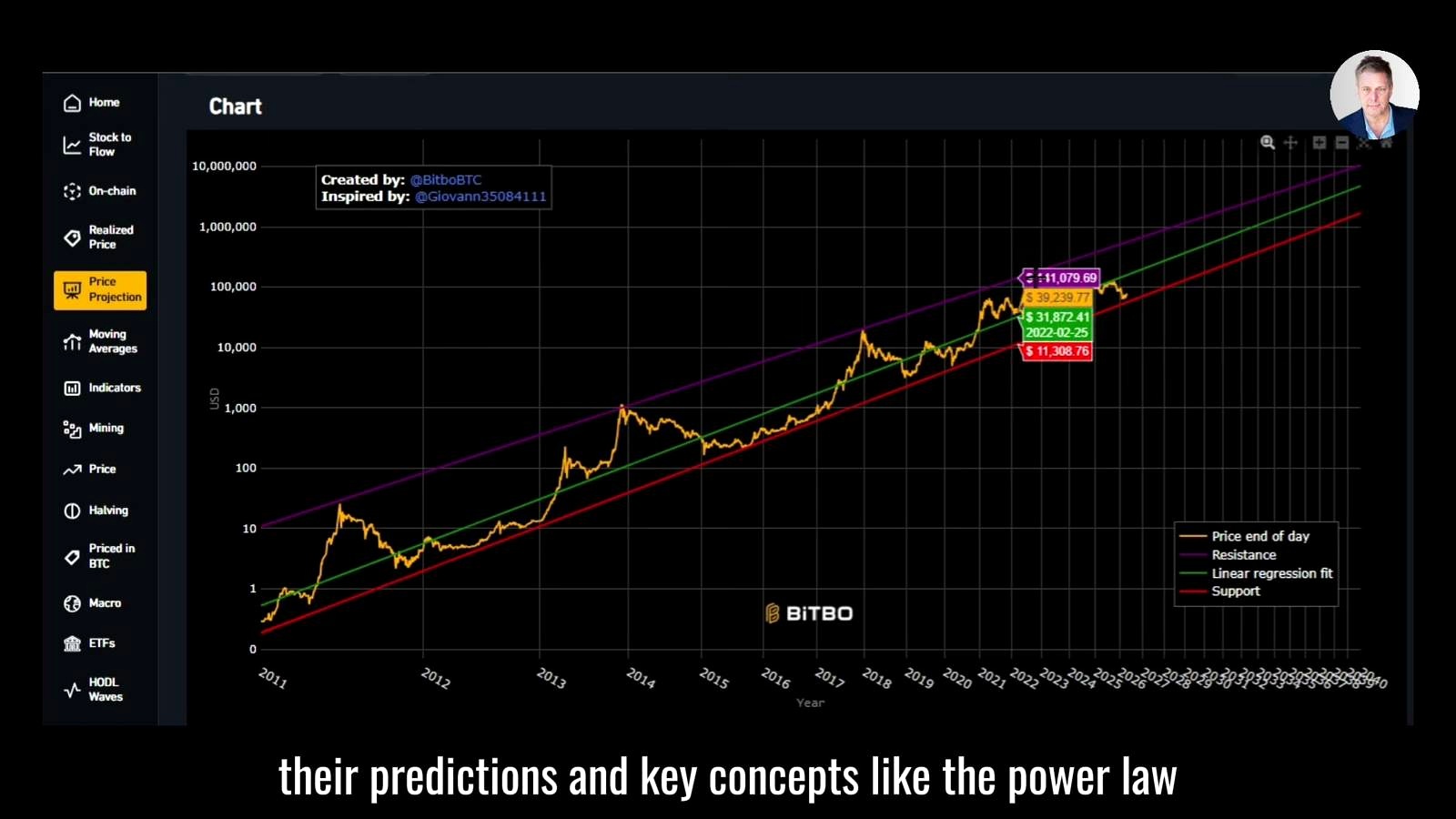
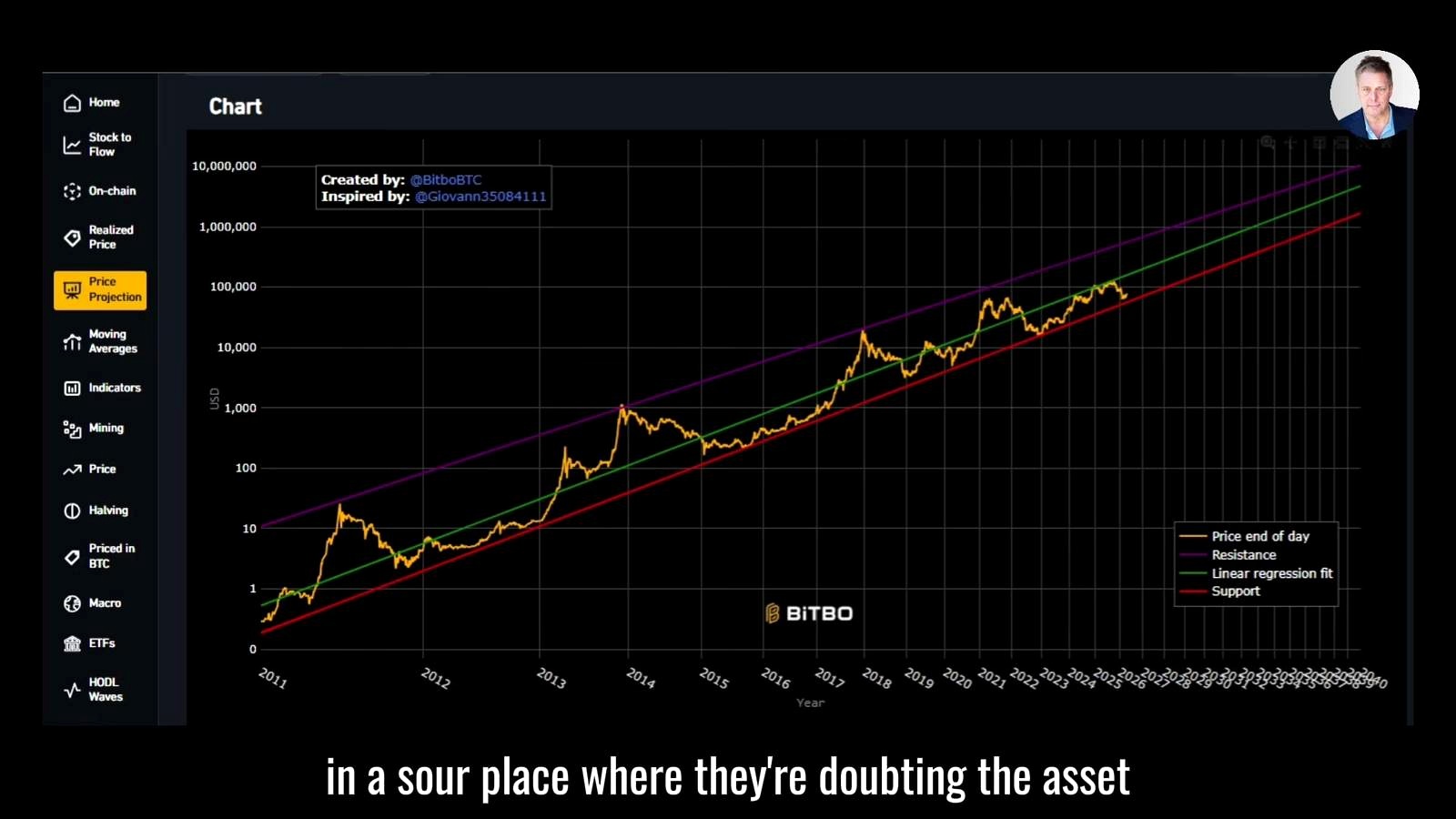
According to Savvy Minds Connect, one of the most important technical anchors is the Bitcoin power law. In the discussion, Fred Krueger places the bottom trend line at about $60,000. Asked whether price effectively “tagged” that area, he says “more or less, ” implying the market reached the lower bound closely enough to satisfy the model without decisively breaking it.
The host also argues that, within this bull cycle, Bitcoin never truly broke the midpoint of the power-law structure. The transcript here is messy, but the point is clear: he sees price as having remained above the model’s central tendency even during the pullback. That matters because power-law adherents treat those bands as a rough map for whether Bitcoin is stretched, fairly valued, or deeply discounted relative to long-term trend.
A second pillar of the thesis is momentum. Savvy Minds Connect points to the monthly RSI, saying it has not yet returned to the kind of overheated conditions seen in 2021 or 2017. He says the indicator had been “suppressed under 70” and expects that over the next 5 years it will extend above that threshold into what he calls the “party zone.” In practical terms, that’s a way of saying the cycle may not have reached its most euphoric phase yet.
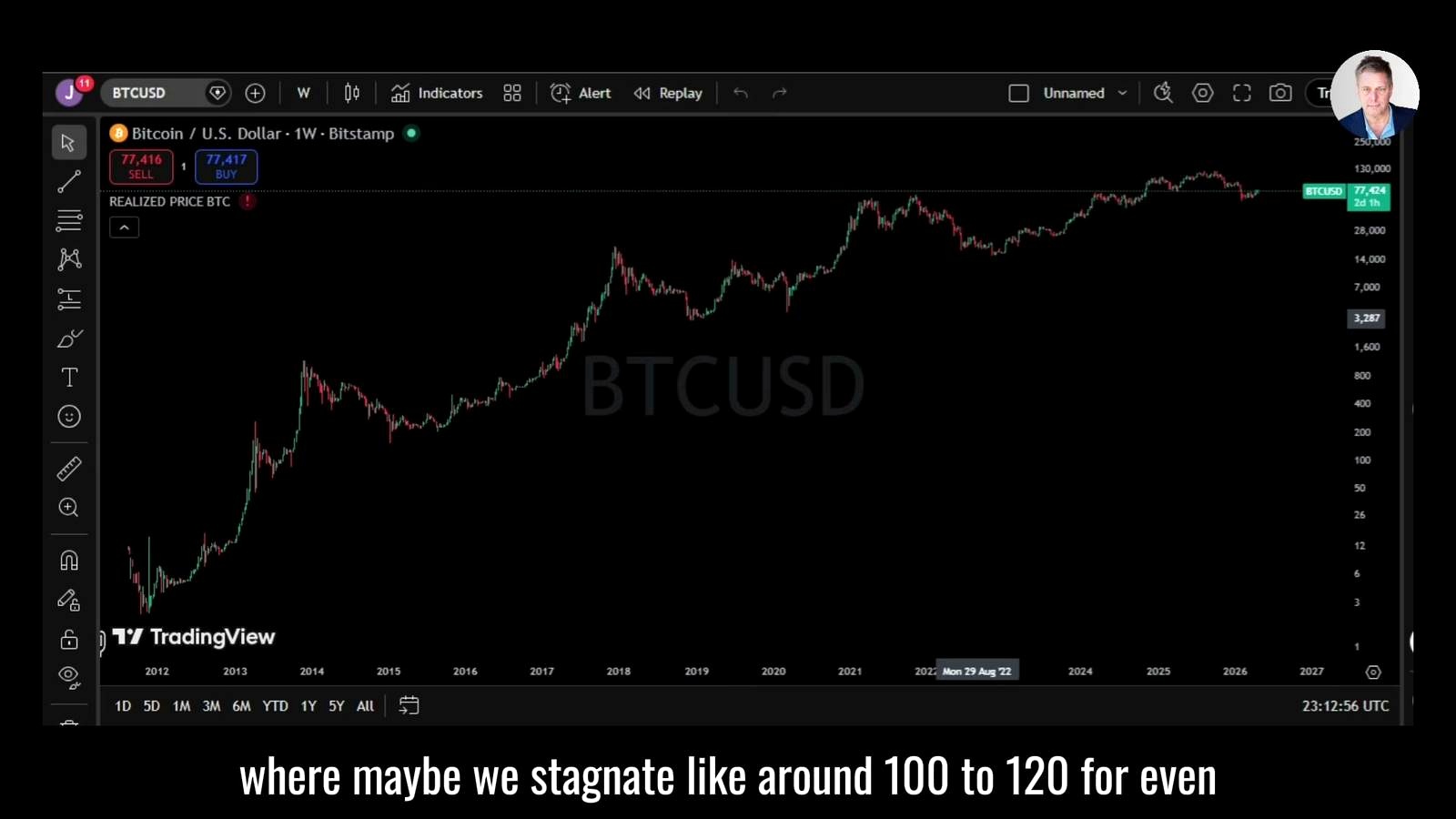
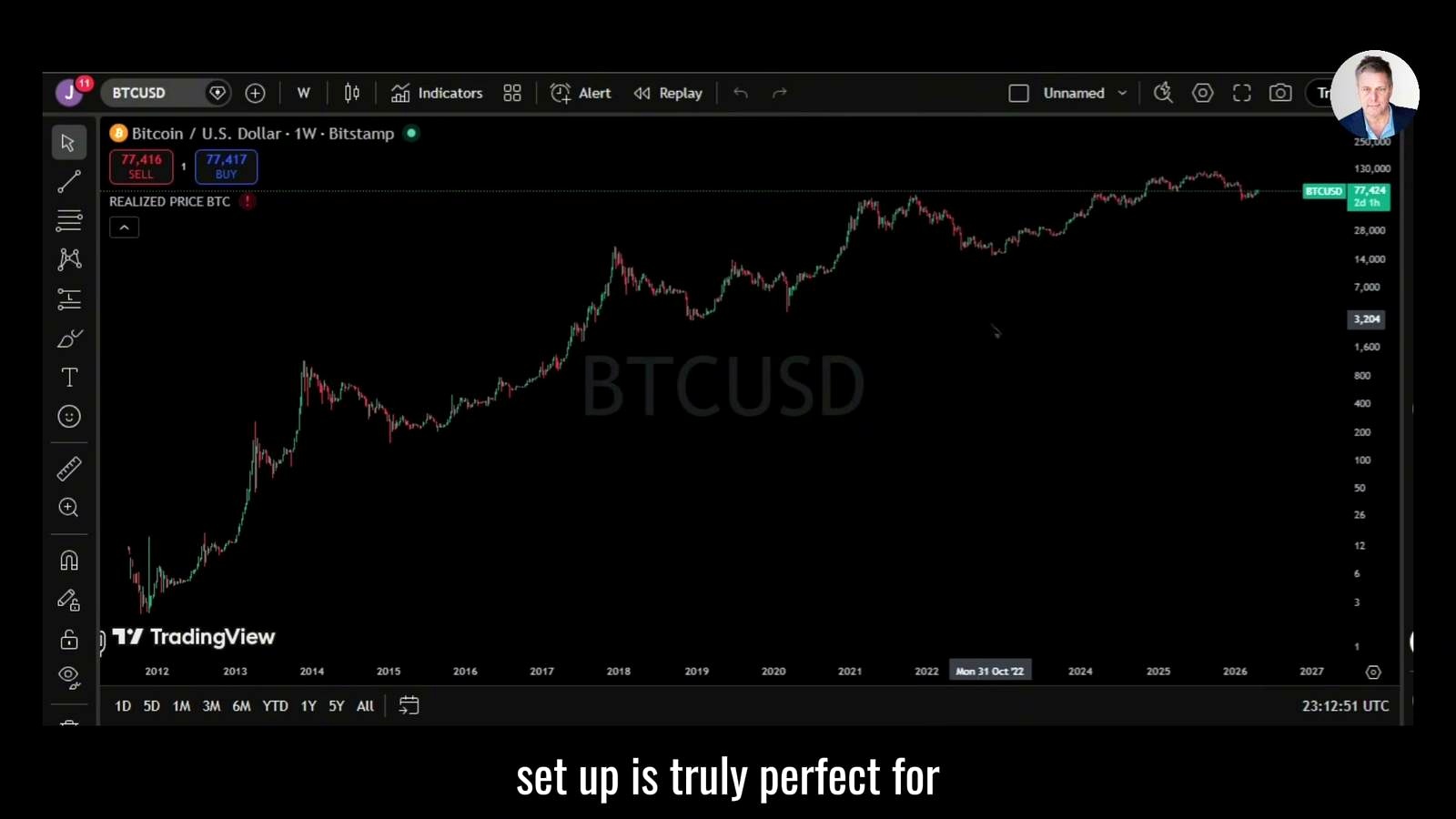
The analyst also says sentiment has turned too sour, describing the market setup as “perfect” for a stronger move higher. He floats the possibility of Bitcoin stagnating around roughly 100 to 12, likely an incomplete reference in the transcript, but seemingly a range around $100,000 to the low-$120,000s, before another leg up. The broader idea is familiar: prolonged consolidation under big round-number resistance can become a launchpad if supply keeps tightening.
That part of the thesis does line up with how Bitcoin has behaved in prior cycles. Long pauses near prior highs often shake out weak hands, let funding normalize, and create room for trend continuation. But unlike earlier cycles, this one is unfolding in a market increasingly shaped by ETF flows, macro rate expectations, and institutional rebalancing rather than only retail momentum.
Politics, Altcoins, and Why the Host Still Favors Bitcoin
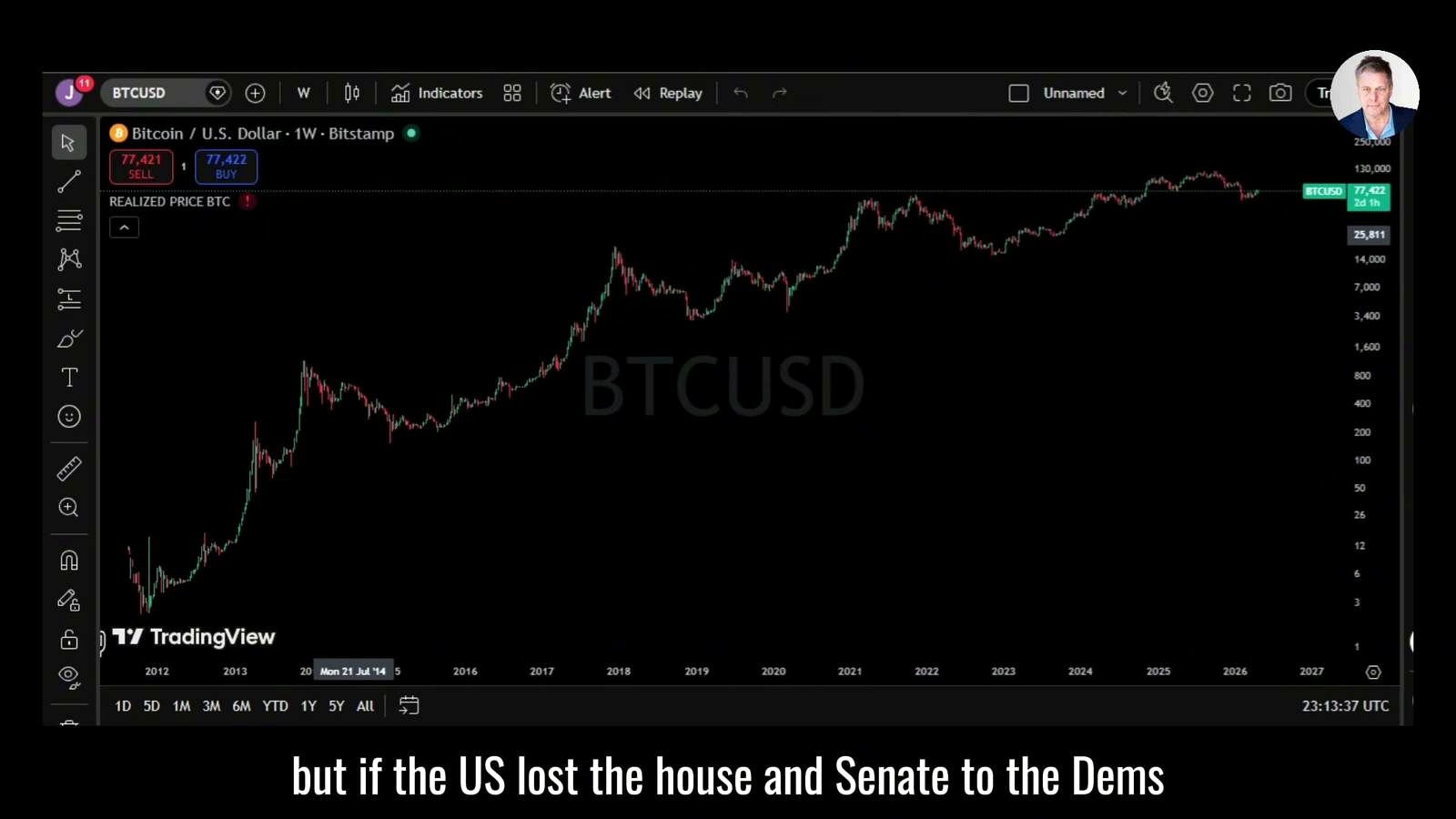
According to Savvy Minds Connect, U.S. politics could affect the speed of crypto-friendly regulation, especially if control of the House and Senate shifts. The discussion raises whether a loss of both chambers could delay favorable policy or push back legislation such as the Clarity Act. But the more notable conclusion is that the analyst does not think investors need to overcomplicate the trade.
His advice is blunt: “if you just put all your money in Bitcoin, that’s fine.” He says investors do not need to chase meme coins, Solana, Sui, or other tokens to make the broader thesis work. That is a notable distinction because he is not denying the market may move into what he calls “hypertokenization, ” a multi-token world where many crypto assets continue to exist. He simply argues Bitcoin can still “win on its own merits” without needing regulators to suppress competitors.
That stance is somewhat contrarian inside Bitcoin circles. Some maximalists treat rival token ecosystems as an existential threat or advocate tougher enforcement against them. Here, the host takes a more market-driven view: many of those assets may be bad investments, but Bitcoin does not need protectionist policy to outperform.
For readers, the practical takeaway is that this is not just a price target story. It is also a portfolio-construction argument. Savvy Minds Connect leans toward simplicity, long-term conviction, and dollar-cost averaging rather than rotating aggressively across the altcoin curve.
What Could Go Wrong
The cleanest way to break this thesis is straightforward: Bitcoin loses the $60,000 area decisively and fails to reclaim it. If that level is truly the bottom of the power-law trend line, a sustained move below it would weaken one of the video’s core analytical supports and raise the odds that the correction is not just a reset but a transition into a longer distribution phase.
There are also risks the discussion only touches lightly or not at all. One is macro. Bitcoin’s strongest advances usually coincide with improving liquidity, easier financial conditions, or some combination of falling real yields and renewed risk appetite. If inflation re-accelerates, the Federal Reserve stays restrictive longer, or global growth weakens sharply, speculative demand could dry up even if the long-term Bitcoin story remains intact.
Another risk is structural. ETF inflows have changed the market, but they can cut both ways. A cycle driven heavily by institutional demand may be steadier than prior retail-led manias, but it may also be less explosive. The assumption that Bitcoin must replay something like 2017 could prove wrong simply because the buyer base is different now.
There is also the obvious countertrade: if Bitcoin stalls around the low-$100,000s and momentum fades instead of expanding, the market could settle into a broad range rather than accelerating toward $200,000 and beyond. In other words, the bullish case does not require a bear market to fail; it only requires a more muted cycle.
What to Watch Next
The first trigger is whether Bitcoin continues to hold the zone around $60,000. If buyers keep defending that area, the power-law argument remains intact. The next signal is momentum: traders will watch whether monthly RSI can push back toward and above 70, which would support the claim that the market has not yet reached its true euphoric phase.
Beyond charts, investors should track ETF flow persistence, U.S. regulatory developments including any progress or delays around crypto legislation, and whether Bitcoin can establish acceptance above $100,000. A clean break and hold above that psychological level would make the jump to the low-$100,000s less speculative and put higher-cycle targets back into serious discussion.
FAQ
What is Bitcoin’s power law?
Bitcoin’s power law is a long-term pricing model that plots price growth on a logarithmic scale against time. Supporters use it to estimate trend bands, including potential floors, midpoints, and upper-cycle ranges. Critics argue it can describe past behavior without guaranteeing future outcomes.
Why does monthly RSI matter for Bitcoin?
The Relative Strength Index measures momentum. On a monthly chart, readings above 70 are often associated with stronger speculative phases. In Bitcoin, those conditions have historically appeared late in major rallies, though they are not precise timing tools for tops or bottoms.
How does this compare with Bitcoin’s 2017 cycle?
The 2017 cycle was much more retail-driven and featured faster reflexive price moves. Today’s market includes spot ETFs, more institutional participation, and deeper derivatives infrastructure. That could support higher prices over time, but it may also change the shape and speed of the rally.
What would invalidate a bullish setup near $60,000?
Traders would generally look for a clear break below that zone followed by failed attempts to reclaim it. One wick below support is less important than sustained acceptance under it, especially if accompanied by weak spot demand and deteriorating macro conditions.
What is dollar-cost averaging in Bitcoin?
Dollar-cost averaging means buying a fixed amount of Bitcoin on a regular schedule instead of trying to time entries perfectly. The approach is popular with long-term investors because it reduces the impact of short-term volatility and removes some of the emotional pressure around market swings.
Video Reference

Omar Al-Sharif lives and works in the UAE and is involved in the blockchain technology industry. He writes articles on Bitcoin and digital assets as a personal passion, explaining complex topics in simple and understandable language.