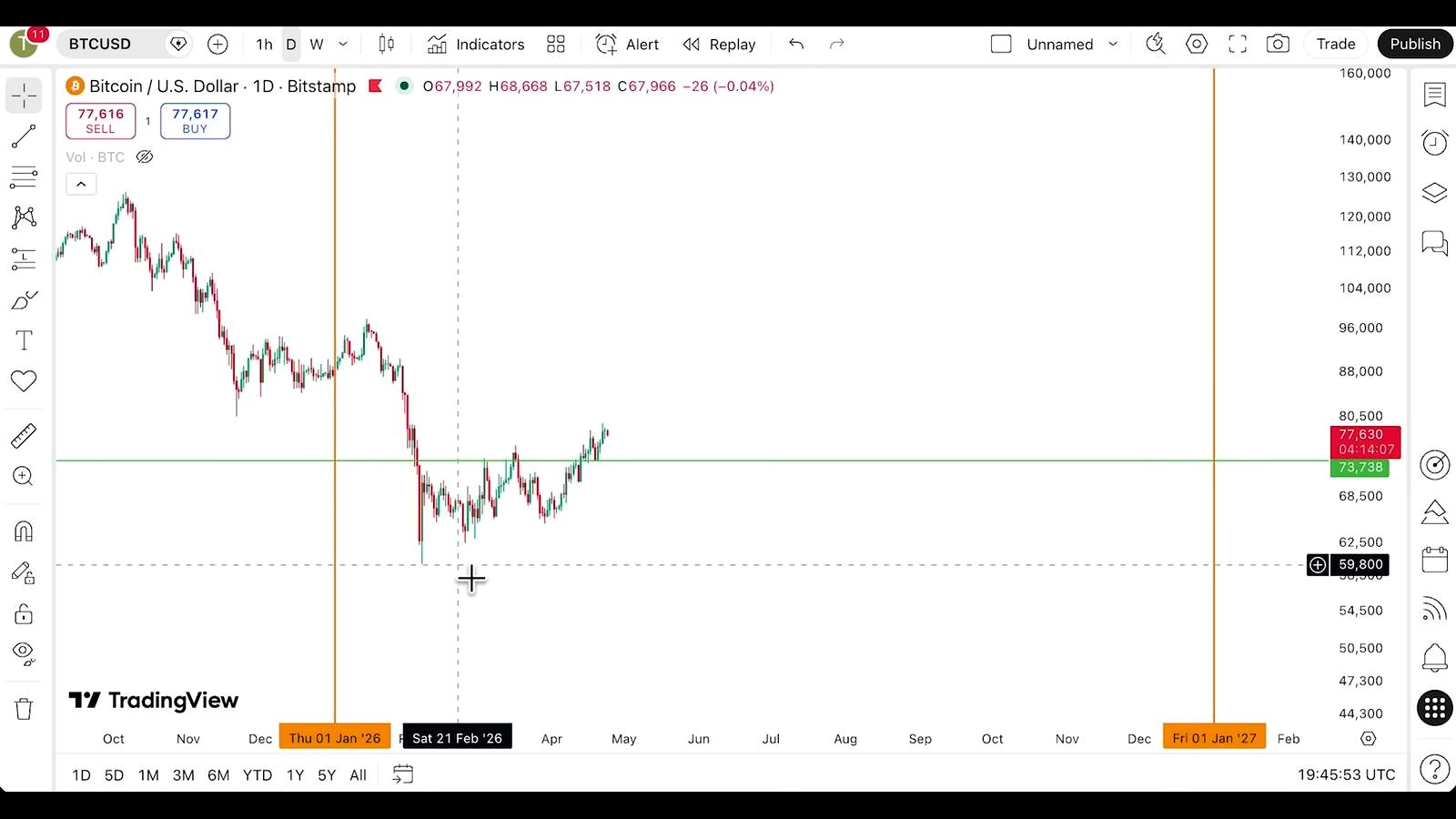
Crypto markets have spent weeks asking the same question: is this a bottoming range, or just a pause before another leg lower? With BTC pinned between **$65,000** and **$70,000** for roughly **two months**, the tension is no longer about trend strength alone but about whether capitulation has already happened.
According to Blockchain Backer, the higher-time-frame evidence says the worst of the bear phase is likely behind the market, even if Bitcoin still has room for a final dip toward **$53,000** before a cleaner recovery begins.
The Core Thesis: Capitulation May Be In, Even if the Range Isn’t Over
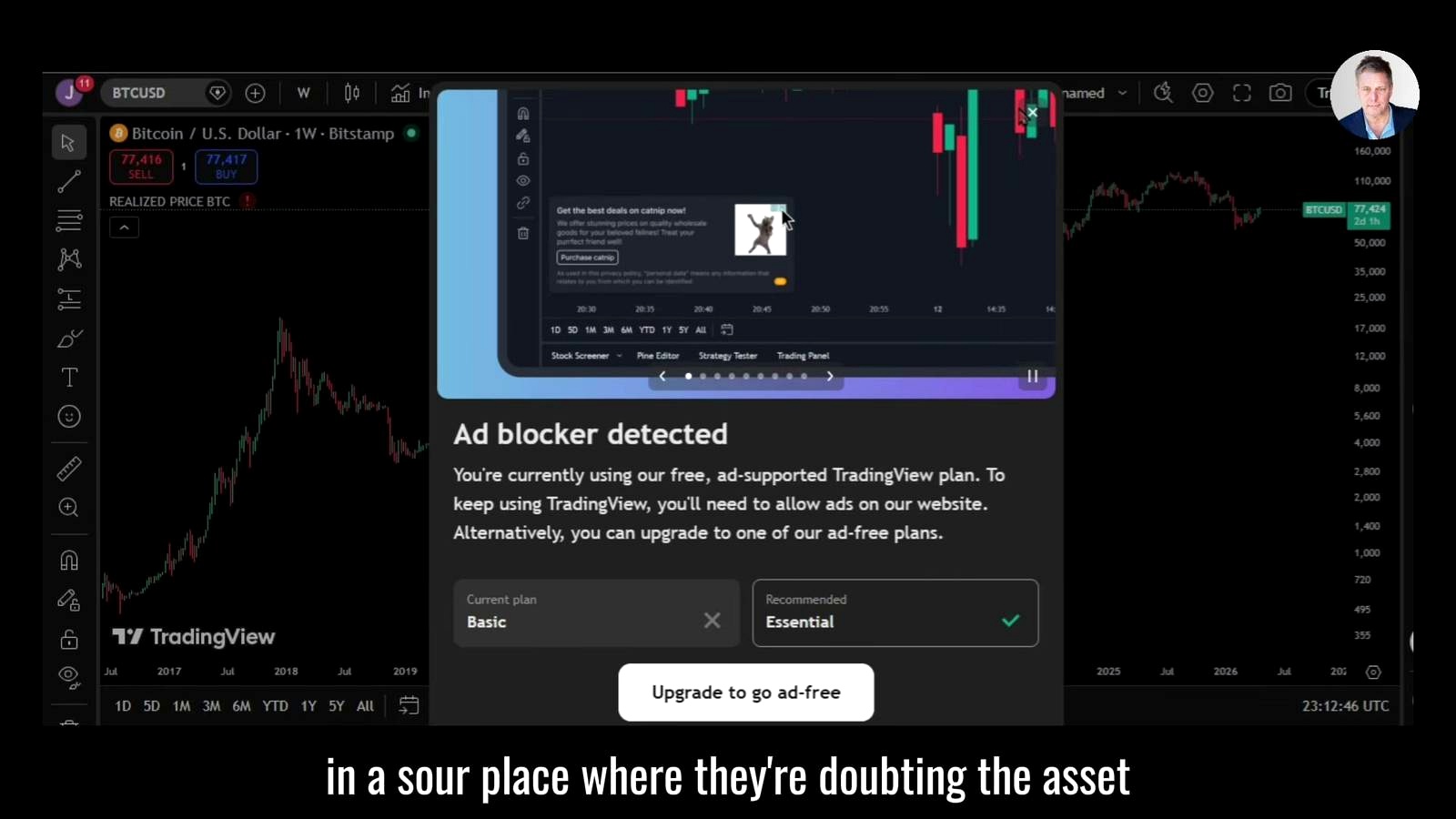
According to Blockchain Backer, Bitcoin is now trading in what he calls a post-capitulation “desert crossing” zone: a period where price damage has largely been done, sentiment is broken, and the market grinds sideways before a more durable recovery emerges. His central argument is that multiple higher-time-frame signals now resemble prior bear-market endings, with the key evidence coming from the **2-week** and **3-week** charts.
The analyst said Bitcoin has been stuck for more than **two months** between **$65,000** and **$70,000**, while traders debate whether price must still briefly break below **$60,000**. He argued that the MACD behavior on the **2-week** chart now matches the kind of capitulation structure seen in **2014-15**, **2018-19**, **2022**, and now **2026** in his framework. He paired that with RSI returning to what he described as typical bear-market support levels. In his telling, these signals imply the market has already completed “the worst parts” of the decline from a price-destruction standpoint.
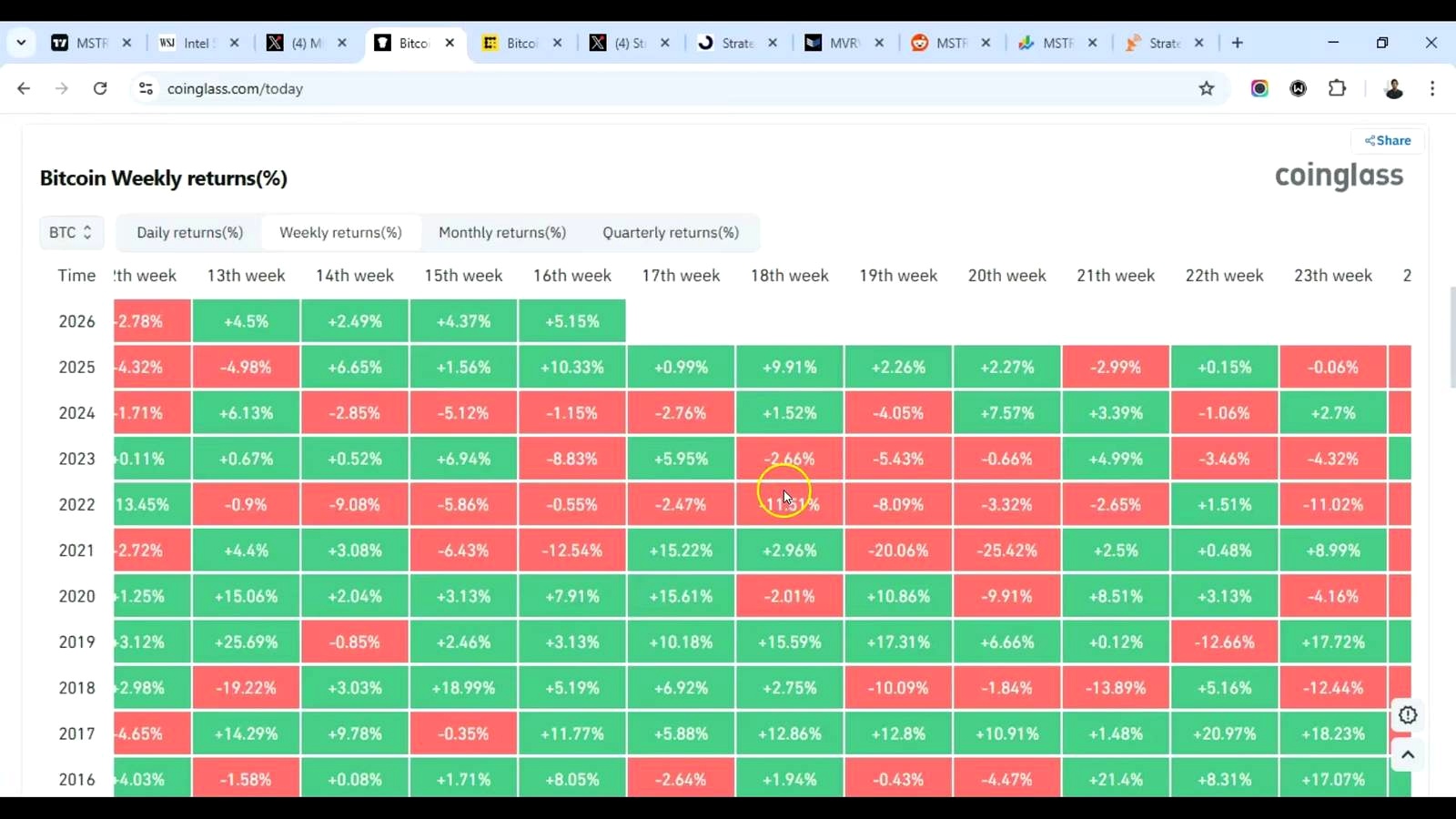
That is a moderately contrarian stance in a market environment where traders often treat prolonged sideways action as proof that another breakdown is still pending. The broader context cuts both ways. Historically, Bitcoin does often form violent lows first and only later produce a convincing base, so the idea of a delayed recovery after technical capitulation is not unusual. At the same time, crypto bottoms rarely become obvious in real time. Sideways ranges can be accumulation, but they can also be bear-market pauses that eventually resolve lower, especially when liquidity is weak and macro sentiment remains fragile.
The host’s framing also taps into a common behavioral pattern in crypto cycles: after euphoria fades, participation drops, narratives go stale, and conviction weakens right around the zone where long-term buyers begin to reappear. That psychological read is plausible. But price still has to prove it.
Supporting Analysis: Why a Dip to $53K Could Be the Bullish Outcome
According to Blockchain Backer, the most bullish near-term outcome may not be an immediate breakout at all. Instead, he said a fast flush lower, potentially toward **$53,000**, could clear liquidity, attract sidelined buyers, and allow Bitcoin to rebound more quickly than a drawn-out multi-month range.
He said he has already redeployed **50%** of the cash he intends to put back into the market and would begin bringing in the other **50%** if Bitcoin drops into that lower zone. That matters because it turns his thesis from abstract chart commentary into a conditional trading stance: partial exposure now, more aggressive buying on a deeper washout.
The analyst also emphasized that bottoming structures are messy and inconsistent. In his review of prior cases, he noted that after similar higher-time-frame capitulation signals flashed, Bitcoin did not always make a fresh low. In his telling, **two out of three** prior cases did not set a new low, while **one** did. That is an important nuance. He is not making a hard call that **$53,000** must print; he is arguing that such a move would fit the structure and could even accelerate the recovery.
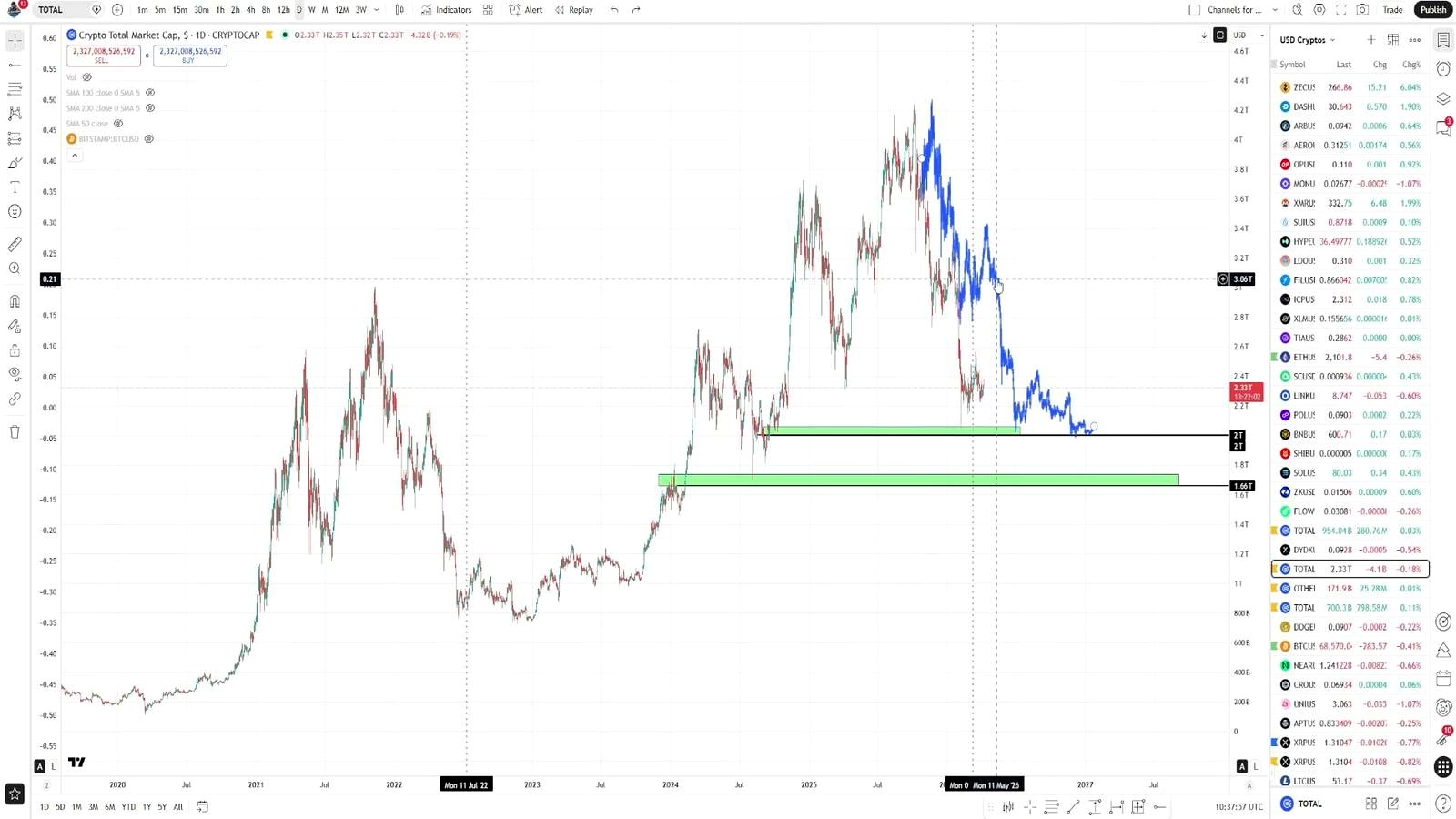
He extended that lens beyond Bitcoin to the broader crypto complex, discussing total market cap and XRP as markets that may be tracing similar bottom-building behavior. He referenced possible ABC-style price action and C-wave completion as part of that process, though he repeatedly stressed that the exact path is noisy and difficult to predict. His time estimate was similarly broad: the range could resolve in **one month**, **four months**, or **nine months**. He also suggested the market is already more than **two months** into that waiting period, leaving room for a quicker-than-feared resolution if a final downside sweep arrives soon.
One notable sentiment signal he cited was waning audience and participation. He pointed to concurrent viewership around **1,400**, versus what he described as more active conditions around **3,000** to **4,000**. That is anecdotal rather than market-wide data, but the larger point is familiar: bull-market highs are loud, while bottoms are typically formed in boredom.
What Could Go Wrong
The main risk to this thesis is straightforward: Bitcoin may not be in a true post-capitulation accumulation range at all. If macro conditions deteriorate, equities roll over, or crypto-specific demand fails to return, the current consolidation could prove to be distribution rather than base-building. In that scenario, a move below **$60,000** would not be a quick liquidity grab on the way to recovery, but the start of a deeper trend lower.
There is also a technical objection. Higher-time-frame MACD and RSI signals can identify exhaustion, but they are not precise timing tools. Markets can remain oversold or structurally weak far longer than traders expect. The analyst acknowledges that only **one** of his referenced prior cases made a new low after similar signals, but that still means the pattern is not decisive. In crypto, the outlier case can be the one that matters most.
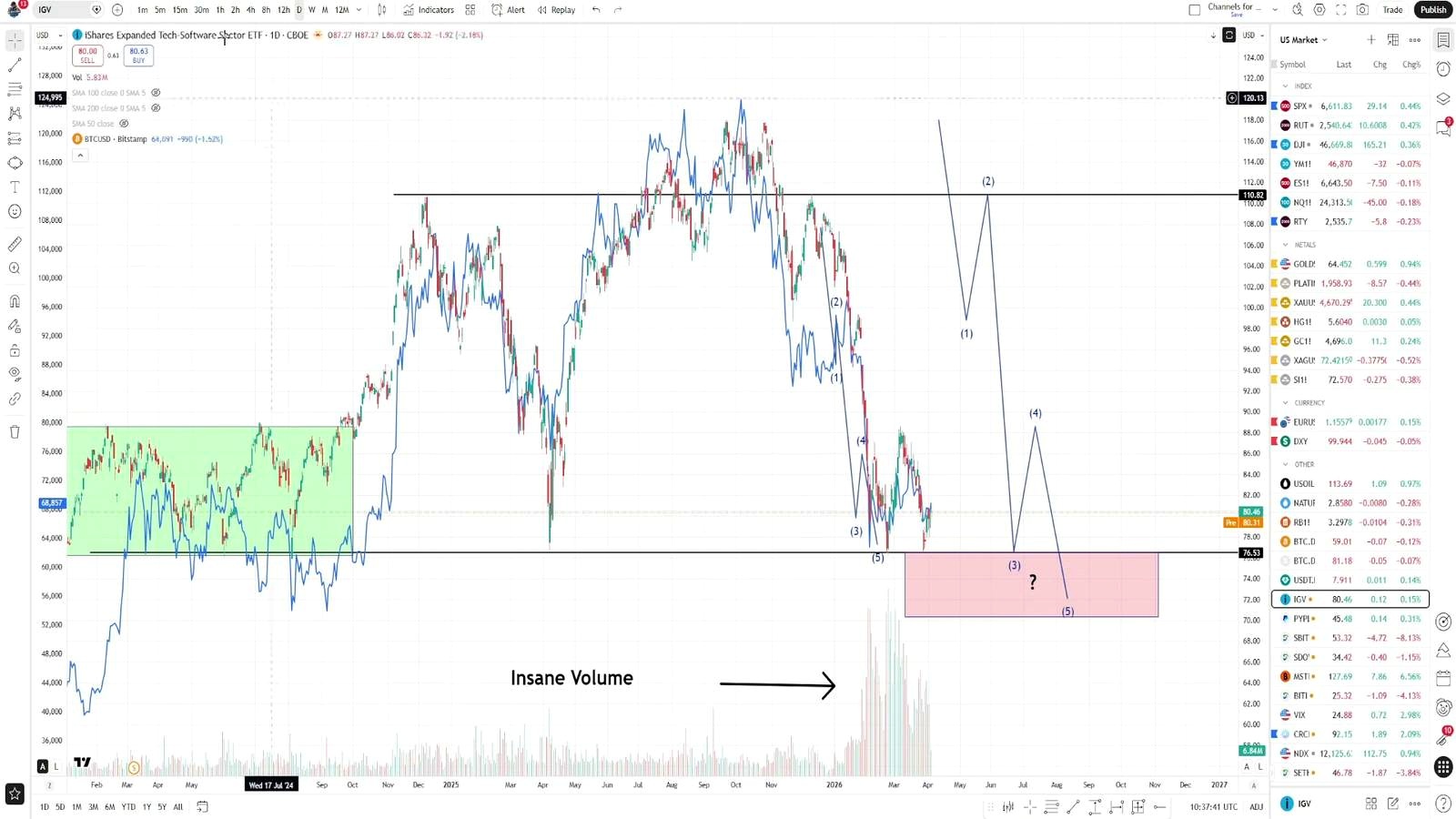
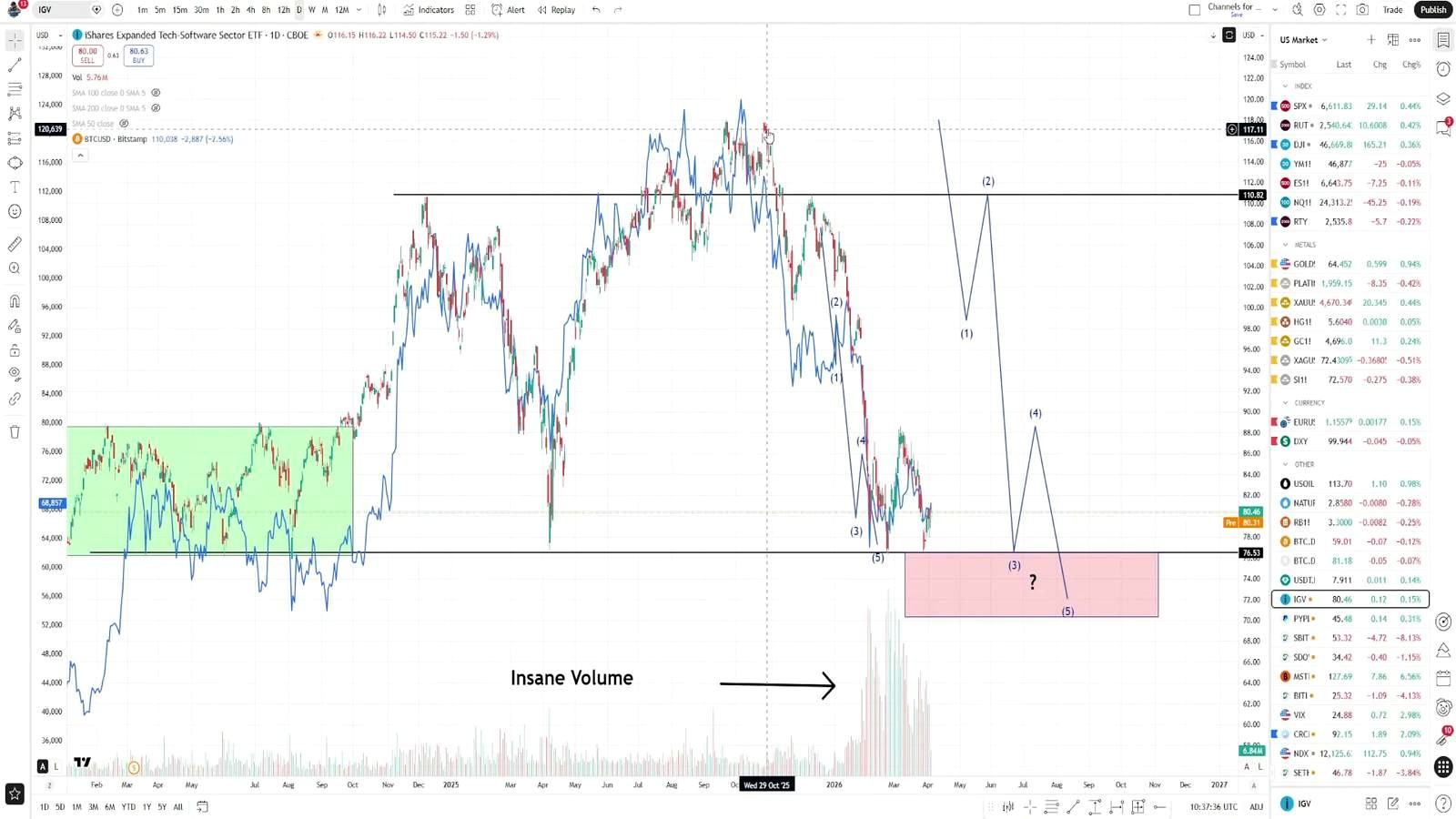
Another issue is that the thesis leans heavily on historical analogs from prior bear cycles. That approach works best when market structure is broadly similar. It works less well when external conditions change, whether through regulation, institutional positioning, ETF-related flows, global liquidity shifts, or a sharp repricing in tech stocks. The transcript mentions software-sector context, but it does not deeply explore the downside risk of cross-market contagion if crypto remains tightly linked to broader risk assets.
The other side of the trade is simple: momentum traders will argue that range-bound markets deserve skepticism until they reclaim clear trend levels on volume. For them, calling a value zone before a breakout is early by definition.
What to Watch Next
The clearest trigger is whether Bitcoin can hold the current **$65,000** to **$70,000** band or finally breaks below **$60,000**. If price flushes toward the analyst’s **$53,000** scenario and snaps back quickly, that would strengthen the idea that the market is completing a final liquidity sweep rather than beginning a fresh leg down.
Traders should also watch whether weekly and multi-week momentum improves after this range resolves. A sustained reclaim of lost levels after a downside probe would fit the bottom-building thesis. A slow bleed with no forceful rebound would do the opposite. Beyond price, the broader clues are sentiment, participation, and whether crypto can decouple from weakness in stocks enough to support a genuine recovery.
FAQ
What does “capitulation” mean in Bitcoin markets?
Capitulation refers to a phase where sellers finally give up, often after steep losses and heavy volume. In Bitcoin, traders typically look for sharp price declines, oversold readings, and widespread bearish sentiment as signs that capitulation may be occurring or already complete.
What is a “desert crossing” in technical analysis?
It is an informal term used by some market analysts to describe the boring stretch after a major selloff, when price moves sideways, sentiment collapses, and interest fades before a more sustained recovery starts. It is less a formal indicator than a way to describe post-crash market psychology.
Why would a drop to $53,000 be considered bullish?
In this framework, a fast move lower could flush out remaining weak hands, sweep liquidity, and attract sidelined buyers waiting for a final discount. Traders sometimes view that kind of sharp final dip as healthier than months of stagnant sideways action, provided the bounce is strong and sustained.
How is this different from a normal dead-cat bounce?
A dead-cat bounce is usually a short-lived rebound inside a broader downtrend. A bottom-building process, by contrast, tends to involve repeated tests, base formation, and improving momentum on higher time frames. The difference becomes clearer only after the market either reclaims key levels or breaks down again.
What happened in previous Bitcoin bear-market bottoms?
Previous bear-market endings often included a violent selloff, then a frustrating stretch of sideways trading before the next uptrend became obvious. The exact shape varied cycle to cycle. Some bottoms formed without a fresh low after capitulation signals appeared, while others produced one last breakdown before recovering.
Original Source

Omar Al-Sharif lives and works in the UAE and is involved in the blockchain technology industry. He writes articles on Bitcoin and digital assets as a personal passion, explaining complex topics in simple and understandable language.