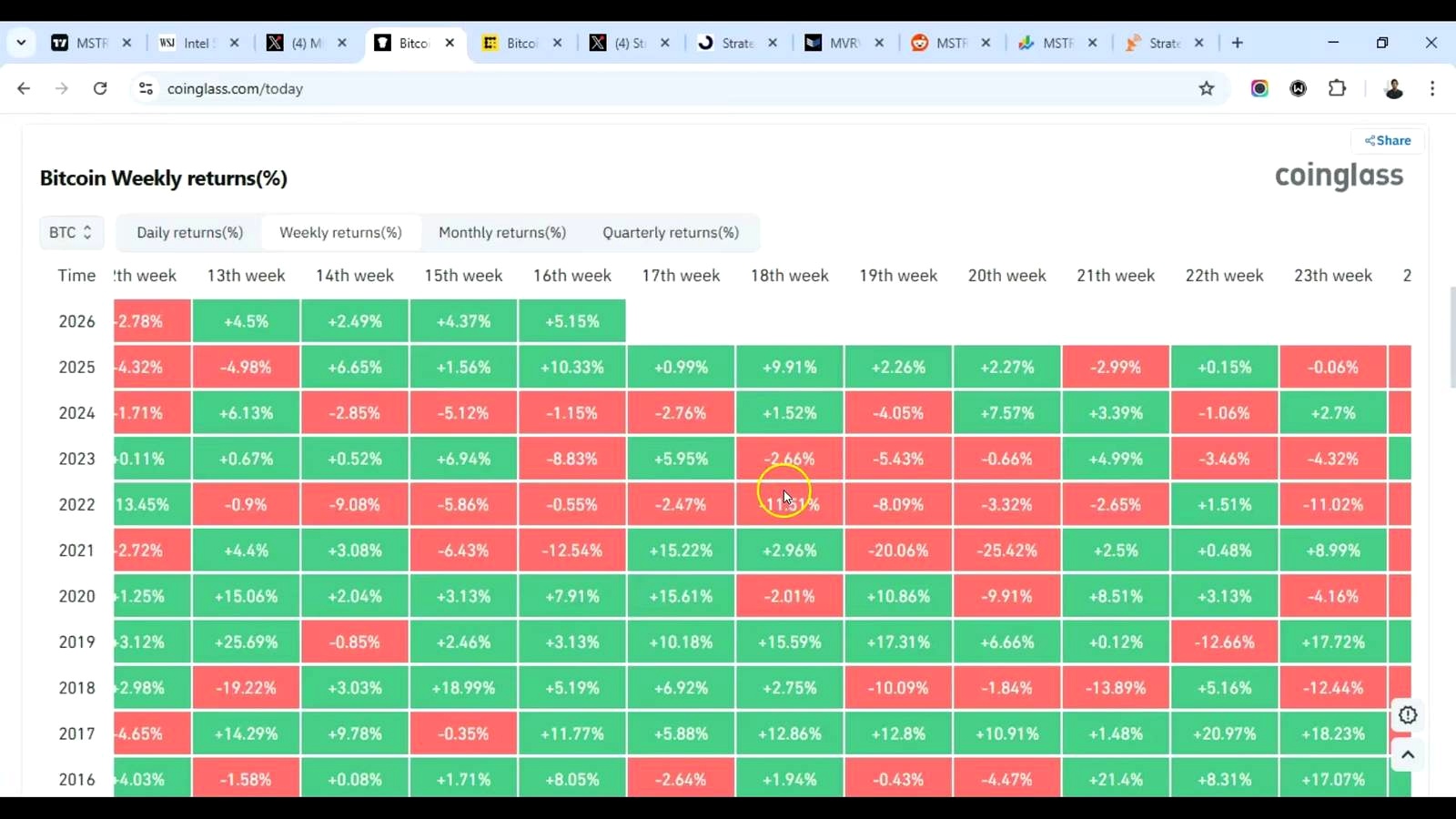
After another stretch of crypto-market weakness, the key question for Bitcoin investors is familiar: when does a bear market become an accumulation phase, and which risk assets are worth adding beyond BTC and ETH? According to Altcoin Daily, this is the kind of environment where institutions build positions quietly, and where a small-cap altcoin basket could offer outsized upside if the cycle turns.
The Core Thesis: Keep Bitcoin, Then Build Around a Few High-Conviction Altcoins
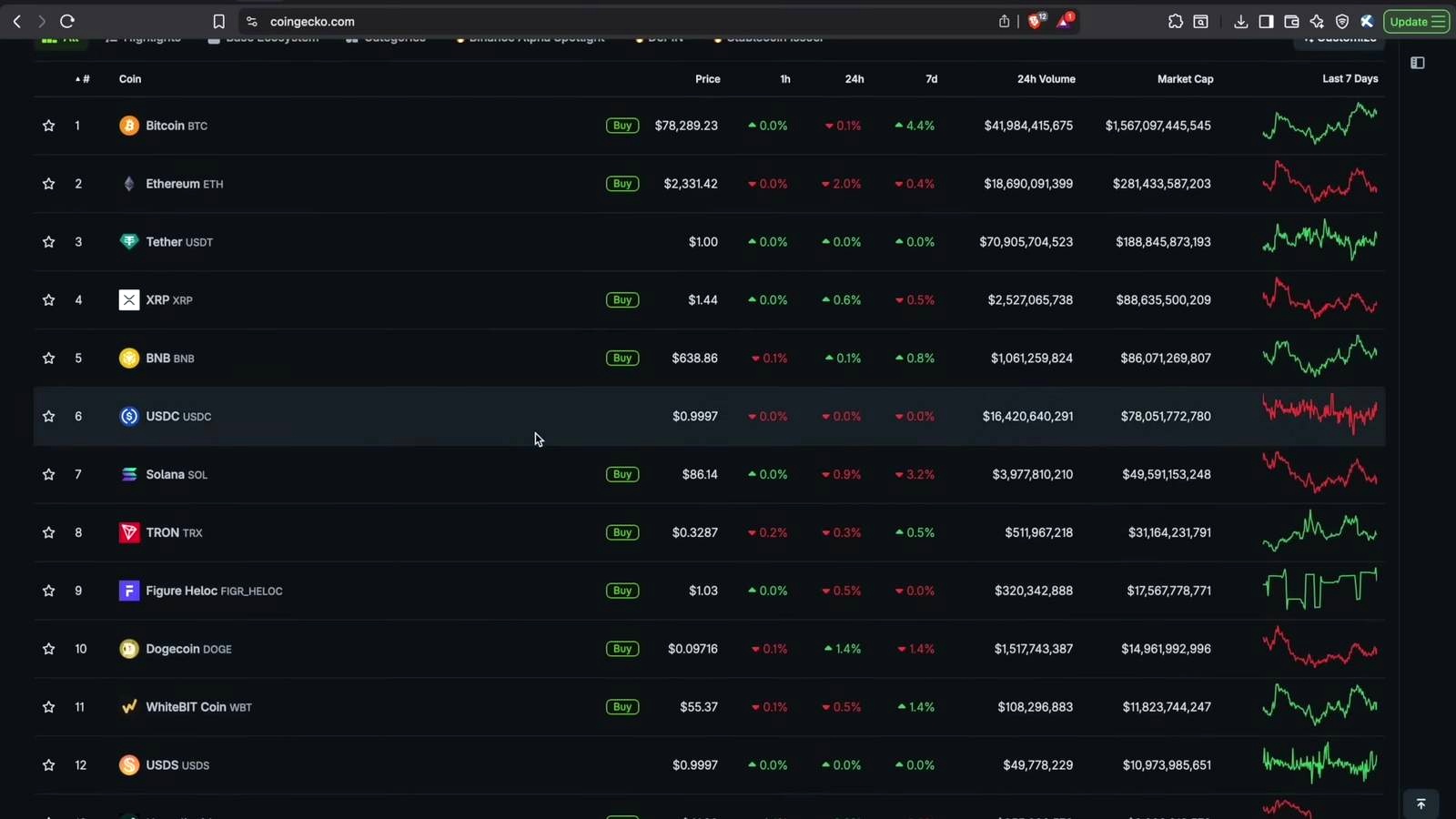
According to Altcoin Daily, the starting assumption is that an investor already holds Bitcoin and Ethereum, and is now deciding how to deploy an additional $1,000 into crypto “in 2026.” The host frames the current period as a crypto bear market and “crypto winter, ” but argues these have historically doubled as accumulation years. His central allocation is straightforward: $300 into Hyperliquid, $300 into Bittensor, $100 into Solana, $100 held in cash for future opportunities, and a final $200 spread across smaller conviction bets including Chainlink, Sui, Uniswap, Ondo, and Propy.
That thesis sits somewhere between mainstream and aggressive. The broad market already accepts Bitcoin as the anchor asset and, increasingly, Ethereum as the default second allocation. But stepping out the risk curve into Hyperliquid and Bittensor is more speculative. Both have strong narratives: Hyperliquid is tied to on-chain derivatives and trading infrastructure, while Bittensor is tied to decentralized AI. Those are among the market’s most crowded themes when risk appetite returns.
The bullish case is easy to understand. In crypto, sectors that show real usage during weak markets often outperform once liquidity improves. Traders also tend to reward projects with fee generation, active users, and simple narratives that can survive outside crypto-native circles. The challenge is that bear-market accumulation stories often get ahead of actual token value capture. A protocol can post strong activity and still see its token lag if competition rises, emissions increase, or the market reprices risk across the board.
For Bitcoin-focused readers, the relevance is clear: this is essentially a barbell strategy built around a BTC core. Altcoin Daily is not arguing to replace Bitcoin. He is arguing that if Bitcoin and Ethereum are already in place, selective altcoin exposure could be the higher-beta expression of the next cycle.
Why Hyperliquid, Bittensor, and Solana Made the Cut
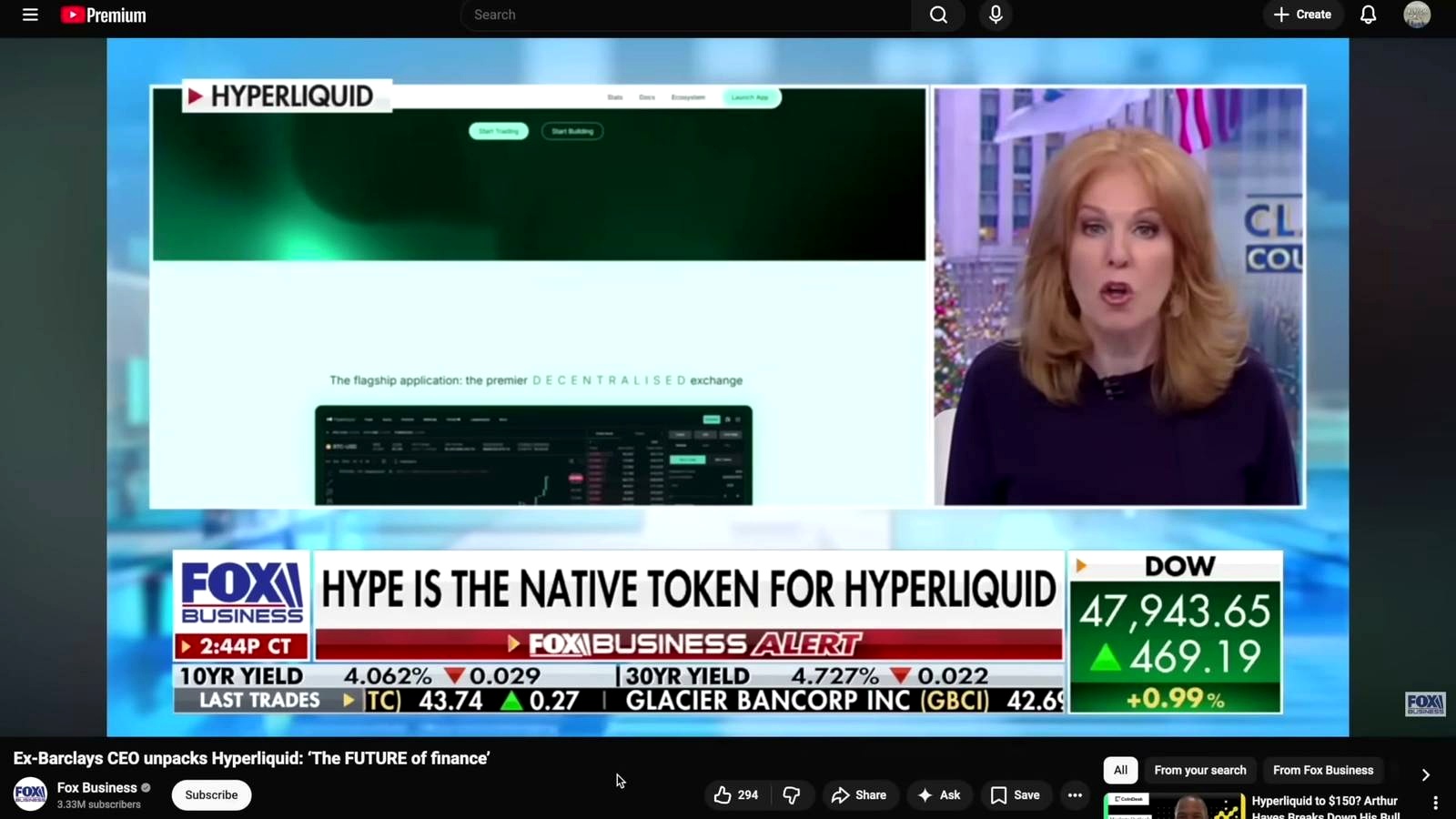
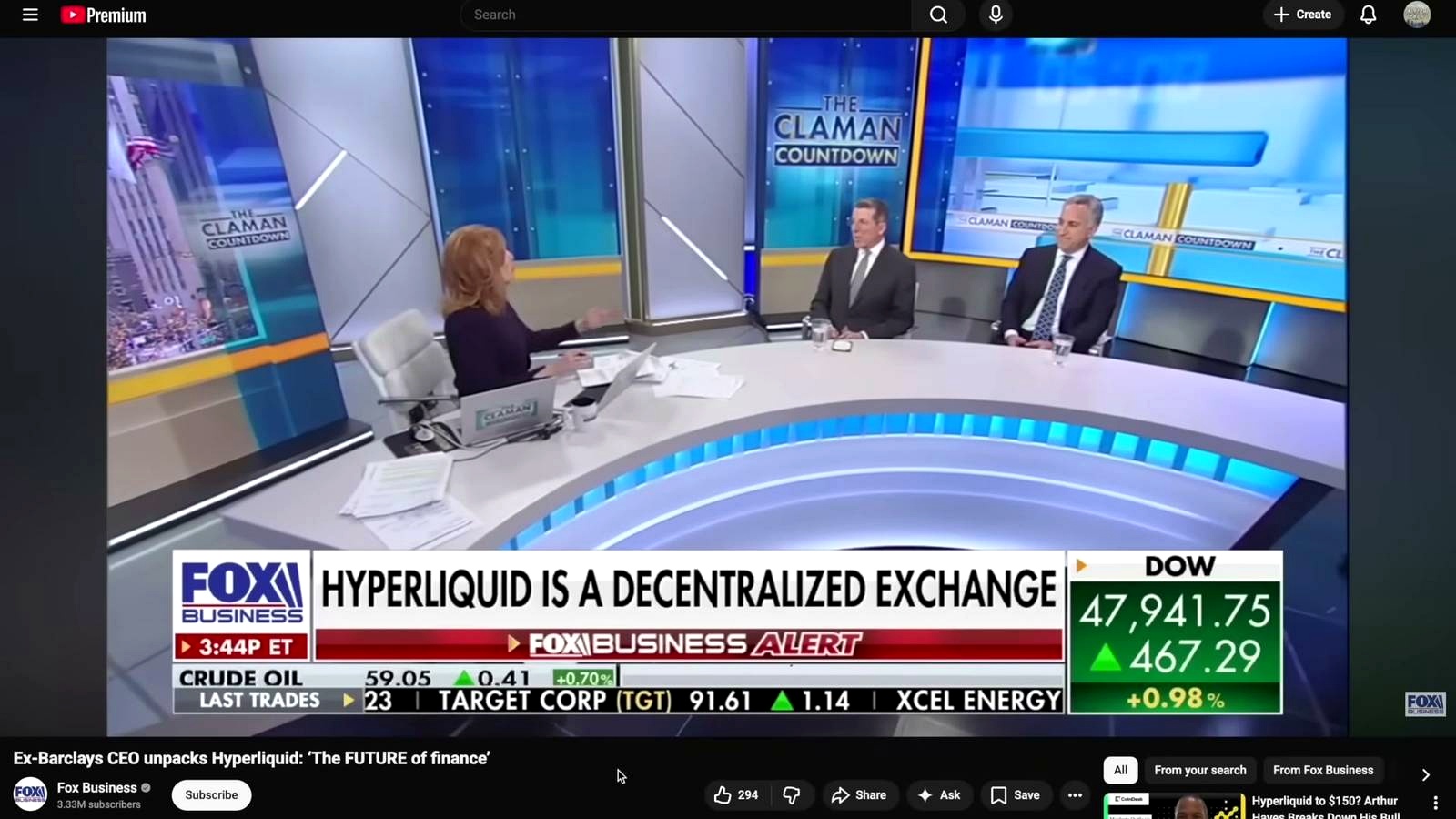
According to Altcoin Daily, Hyperliquid gets the first $300 because it combines product-market fit with visible trading demand. The host describes it as a decentralized exchange and blockchain for perpetual futures, then points to usage metrics that he says place it among the top two chains by revenue last year. He also highlights its expansion beyond crypto into synthetic access to assets like Nvidia, Amazon, gold, silver, and oil, especially during after-hours and weekend trading.
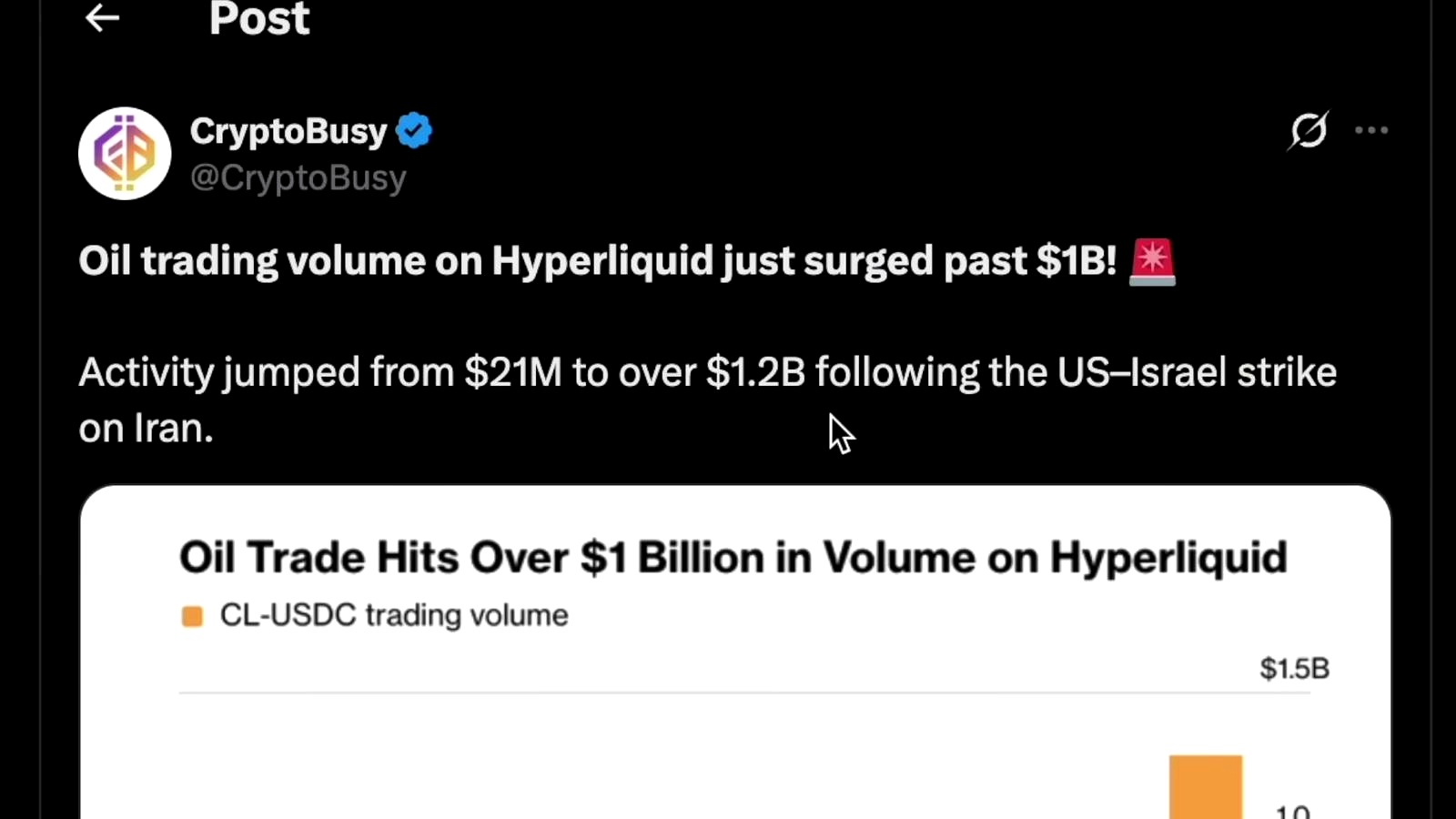
The most concrete figure he cites is oil trading volume surging past $1 billion, with activity jumping from $21 million to more than $1.2 billion following the U.S.-Israel strike on Iran. That matters because crypto markets increasingly reward venues that become useful during macro stress. If traders use a platform when traditional markets are closed, that strengthens the case that the platform is solving a real problem rather than riding a narrative alone.
The second $300 goes to Bittensor. According to Altcoin Daily, the attraction is asymmetric upside, to the point that he says Bittensor “can go 500x.” He ties that view to institutional interest, referencing Barry Silbert’s backing and the creation of products to help onboard traditional finance into the ecosystem. He also stresses Bittensor’s finite supply, saying there will only ever be 21 million coins, echoing a Bitcoin-style scarcity frame.
The deeper pitch is that Bittensor could become infrastructure for decentralized AI. Altcoin Daily leans on the idea that Bitcoin monetized stranded energy, while Bittensor could monetize “stranded talent.” In practice, that means open competition among subnets and builders. The host points to “hundreds” of companies building in AI and robotics, a 5-year window for decentralized AI to expand, and one example where $85,000 was paid out over the past 21 days, with $5,000 daily rewards for top-performing submissions evaluated each day at noon Pacific.
Solana receives a smaller $100 allocation, but the rationale is still notable. Altcoin Daily argues that growth metrics remain strong even at what he calls a market bottom. He cites stablecoin transfer volume of $1 trillion last year and says last month was “almost” $1 trillion by itself. He also points to $3 trillion in decentralized exchange volume last year and argues that these metrics continue moving “up and to the right, ” even as price remains cyclical on roughly three– or four-year cycles.
That is broadly consistent with how many investors now look at alt-L1s: not just through token price, but through transaction and settlement demand. Solana’s supporters see a chain that kept attracting stablecoin and trading activity even after prior blowups. Critics, however, would say high throughput and heavy stablecoin usage do not automatically translate into durable token performance.
What Could Go Wrong
The clearest risk to this thesis is that the market never rotates meaningfully out the risk curve. In a prolonged high-rate or risk-off environment, Bitcoin can keep absorbing institutional demand while altcoins underperform badly. That is the historical pattern in many late-cycle and post-hype periods: BTC holds up relatively well, while smaller tokens lose liquidity and narrative support.
Hyperliquid faces a category risk as much as a project risk. Derivatives exchanges can post huge volume during volatile events, but that activity can be episodic. If fee generation falls when volatility normalizes, the market may reassess how much value should accrue to the token. Competition is another issue. “Only game in town” narratives rarely stay true for long in crypto.
Bittensor’s risk is even sharper. Decentralized AI is one of the market’s most ambitious narratives, but it is still early and difficult to value. Open-source experimentation, enterprise pilots, and ecosystem grants do not guarantee sustainable demand for the token itself. A 500x target is not a forecast most institutional investors would treat as a base case; it is a moonshot framing.
The host does acknowledge one important risk that many altcoin bulls ignore: today’s winners may not be tomorrow’s winners. That is why he keeps $100 in cash. But there are other risks left unsaid, including regulation around synthetic trading products, token-unlock pressure, smart-contract exploits, and the possibility that AI and tokenization become strong business themes without producing standout token returns.
What to Watch Next
If this thesis is going to work, the confirmation signals will likely come from usage before price. For Hyperliquid, traders should watch whether elevated volume persists beyond isolated geopolitical spikes and whether revenue remains strong over multiple months. For Bittensor, the key question is whether subnet activity, builder incentives, and traditional-finance onboarding turn into measurable network demand rather than just ecosystem storytelling.
For Solana, the important trigger is whether stablecoin transfer volume and decentralized exchange activity continue growing through the next market lull. More broadly, the thesis strengthens if Bitcoin remains firm while altcoin market breadth starts to improve. It weakens if BTC dominance rises further and capital keeps refusing to rotate into higher-beta names.
FAQ
What is a perpetual futures exchange in crypto?
A perpetual futures exchange lets traders speculate on an asset’s price without owning the asset directly and without a contract expiry date. Funding payments between longs and shorts help keep the contract price near the spot market.
What is Bittensor trying to do in decentralized AI?
Bittensor is designed as a network where builders, models, and subnets compete and are rewarded for useful contributions. The pitch is that it creates an open marketplace for AI infrastructure rather than relying only on centralized providers.
Why do crypto investors care about stablecoin transfer volume?
Stablecoin transfer volume is often used as a proxy for real economic activity on a blockchain. High transfer volume can suggest active payments, trading, settlement, or capital movement even when token prices are weak.
How is this kind of altcoin allocation different from a Bitcoin-only strategy?
A Bitcoin-only strategy prioritizes scarcity, liquidity, and relative safety within crypto. The altcoin basket described here adds higher-risk positions that could outperform in a strong market but are also more likely to underperform if conditions stay defensive.
What happened historically when crypto markets entered “accumulation” periods?
In past cycles, accumulation phases often featured low enthusiasm, weak prices, and quiet builder activity before broader momentum returned. The difficulty is timing: some projects emerging from those periods became cycle leaders, while many others never recovered.
Source

John Burnell focuses on Bitcoin infrastructure, wallet security and blockchain technology. He writes educational articles explaining how Bitcoin works and how the technology evolves.