Markets are caught between geopolitical stress and a surprisingly resilient macro backdrop. The immediate question for Bitcoin traders is whether risk assets are about to roll over on headline fear, or whether liquidity and growth signals are setting up a sharper rebound than most expect.
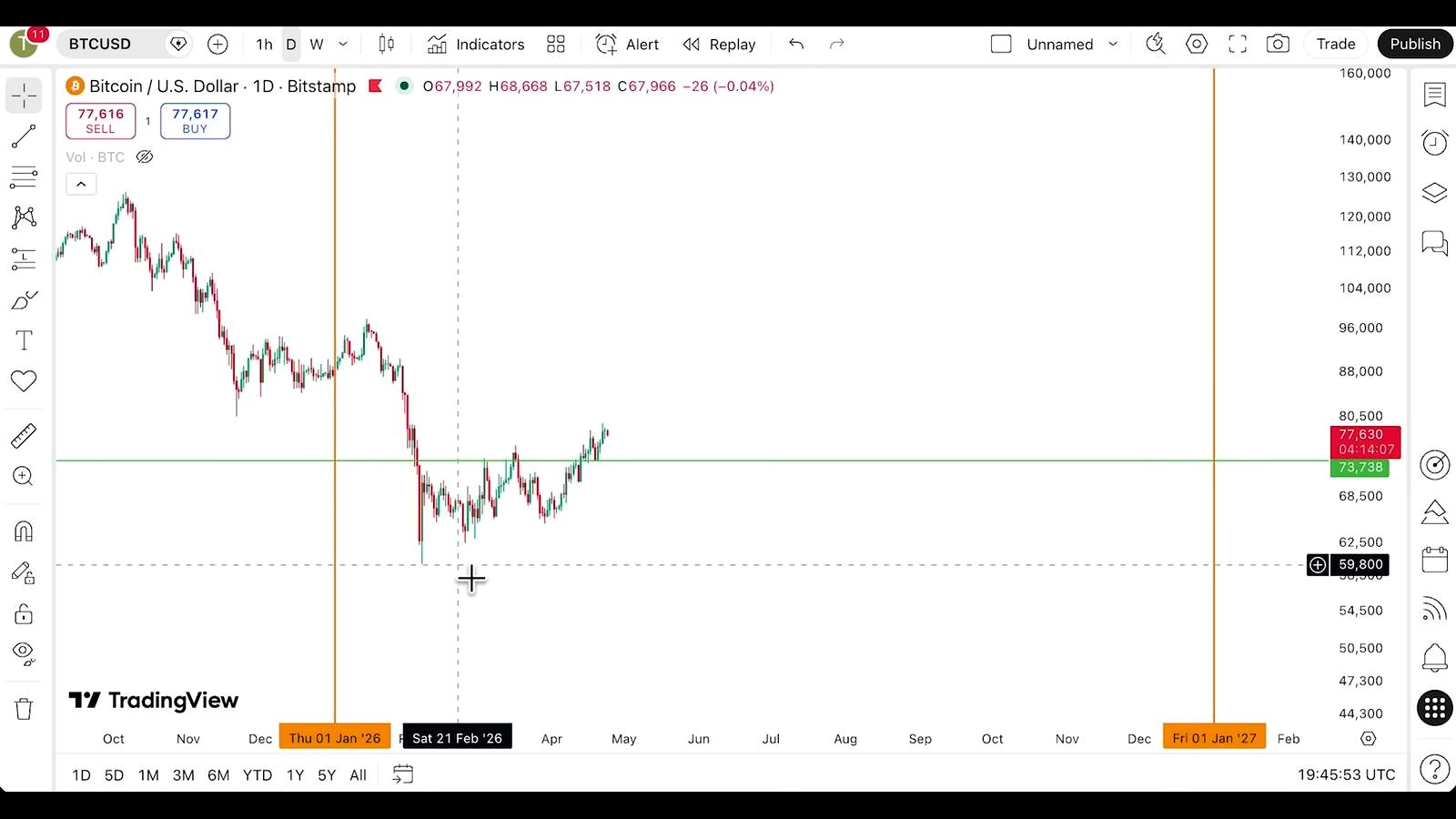
According to 🌟yourfriendsommi, the latter case is still alive: despite attention on U.S.-Iran tensions and broader market anxiety, he argues Bitcoin could reclaim roughly $90,000 on a 50% retrace if supportive macro conditions hold.
The Core Thesis: Macro May Matter More Than the Panic
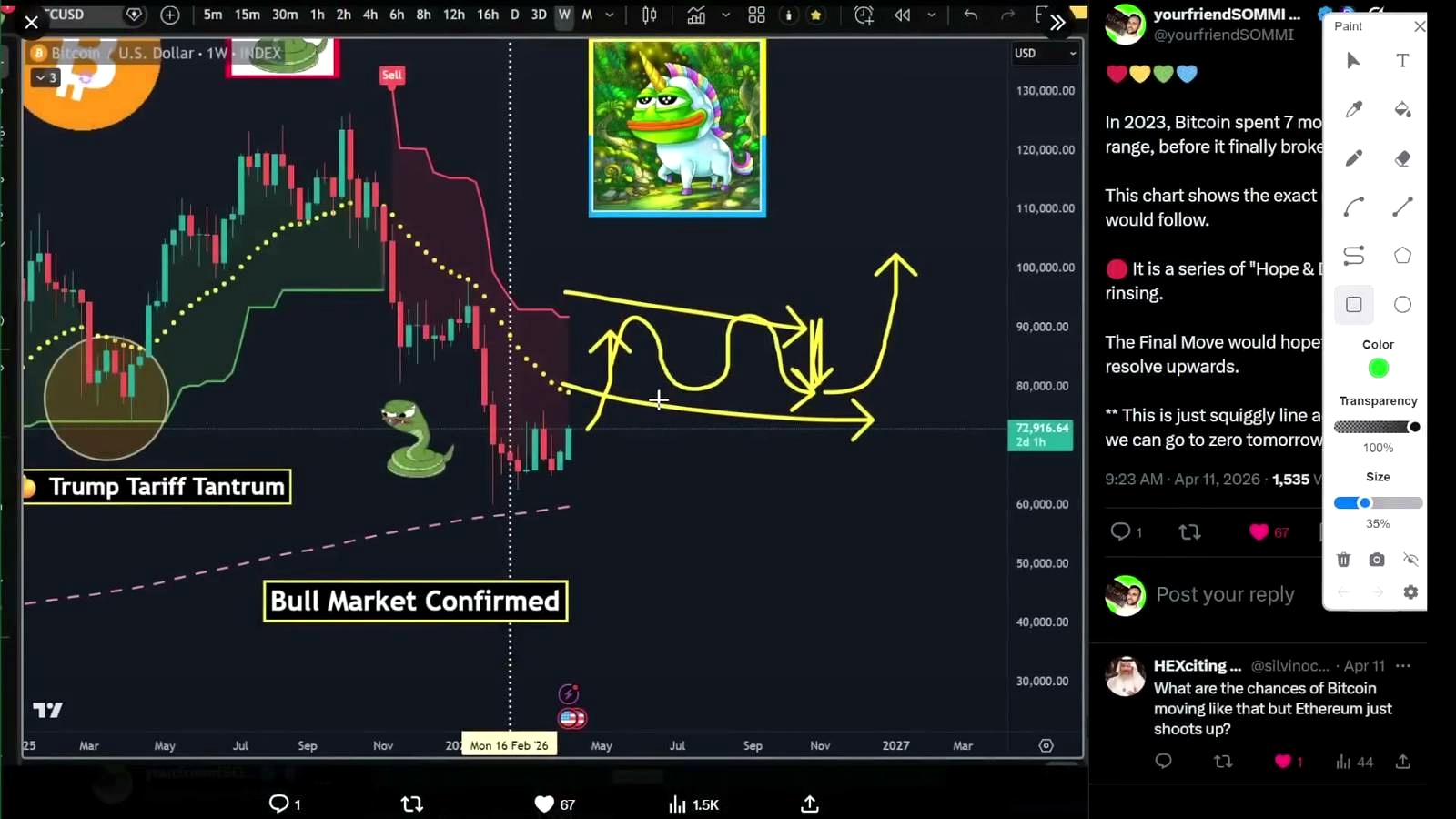
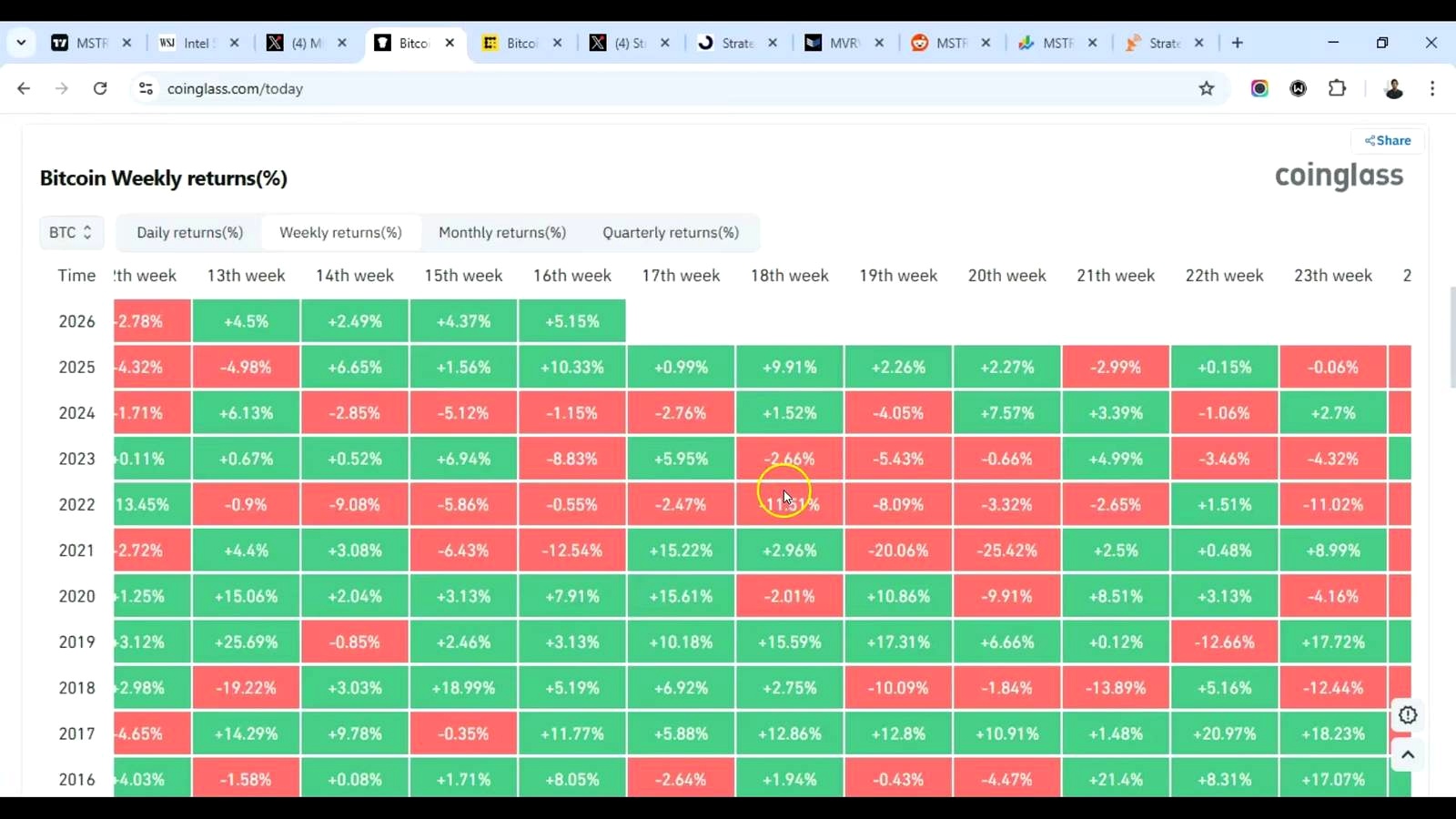
According to 🌟yourfriendsommi, one of the more underappreciated bullish setups for crypto this year is a repeat of a choppy consolidation phase similar to 2023, but with better underlying macro conditions. His framework is straightforward: in 2023, crypto spent about 7 months moving sideways, including a sharp September drawdown that fully retraced the move tied to BlackRock’s spot ETF application. Yet even then, the backdrop was weaker because PMI was lower and the Federal Reserve was still shrinking its balance sheet.
This time, he argues, the setup is more constructive. He points to U.S. PMI above 52 and says a rising Fed balance sheet has historically correlated with stronger crypto and altcoin performance. On that basis, he says that if there is ever a case for an unexpectedly strong rebound, this could be it. In his telling, a 50% retrace of the current move would place Bitcoin around $90,000.
That view sits somewhere between opportunistic and mildly contrarian. Broader market sentiment tends to become defensive when geopolitical headlines intensify and volatility indices threaten a breakout. In those moments, traders often treat Bitcoin as a high-beta risk asset first and a macro hedge second. But the counterweight is real: crypto has repeatedly responded well when growth expectations stabilize, liquidity stops tightening, and recession fears fade. PMI readings above the expansion line are not a guarantee of upside, but they do weaken the cleanest bear case.
The analyst’s thesis also reflects a pattern common in bull markets: deep, sentiment-damaging pauses that feel like trend failure in real time, but later resolve as continuation structures. The market context supporting that idea is familiar. When liquidity improves, Bitcoin often recovers before consensus becomes comfortable with the move.
Why the Stablecoin Argument Matters for Bitcoin Too

Much of the video focused not on Bitcoin directly, but on censorship risk in crypto plumbing. According to 🌟yourfriendsommi, a user reported having $1.6 million frozen and inaccessible on Justin Sun’s chain, which he contrasted with Justin Sun’s own complaints around World Liberty Finance. The host also claimed that more than 3 billion USDT has been disabled and argued this strengthens the case for a stablecoin without a blacklist function.
His preferred line of thought centers on “pDAI, ” which he described as a possible censorship-resistant alternative, though he repeatedly stopped short of certainty and said it could also be a “psyop.” He also argued that legacy DAI is being phased out in favor of USDS, which he said includes a blacklist function, while existing DAI still has USDC in its collateral stack and therefore inherits some disablement risk.
For Bitcoin readers, this matters because stablecoins are the settlement layer for much of crypto trading. If traders begin repricing blacklist risk, that affects where capital parks between trades, how exchange liquidity behaves, and which chains or assets are seen as politically exposed. The host framed that risk in stark terms, asking whether users really want to hold money on a chain where a founder’s political conflict could create downstream consequences.
He extended that concern to Justin Sun’s position more broadly, referencing his purchase of World Liberty Finance tokens at figures ranging from $20 million to $40 million, and elsewhere describing it as $100 million. He alleged Sun used exchange incentives and yield on HTX to distribute or sell into demand. Those are the host’s characterizations, not independently established facts in the transcript, but they underscore his broader point: centralized crypto rails can import the same political and counterparty risks that decentralization was supposed to avoid.
There is a second-order Bitcoin implication here. When trust in centralized stablecoin rails weakens, the long-term relative case for Bitcoin as the least discretionary major crypto asset often improves, even if the short-term result is market stress.
What Could Go Wrong

The cleanest way to break this bullish setup is simple: macro conditions deteriorate before liquidity can translate into sustained risk appetite. The analyst highlighted PMI above 52 and a rising Fed balance sheet, but those indicators can reverse, and they do not operate in a vacuum. If geopolitical stress pushes oil higher, financial conditions tighten, or inflation expectations reaccelerate, the market may quickly abandon hopes for easier policy.
There is also a weakness in using balance-sheet expansion as a direct crypto signal. Not all liquidity is equal. Treasury issuance, reverse repo dynamics, dollar strength, and real yields can all offset the headline effect. Bitcoin can rally alongside liquidity expansion, but it can also stall if positioning is overcrowded or if macro fear dominates.
On the stablecoin side, the host’s censorship-risk argument is intuitively powerful, but it has an obvious tradeoff: the more censorship-resistant a stablecoin is, the harder it may be to scale within current regulatory frameworks. That means “better” decentralization does not automatically mean broader market adoption. Traders may still prefer centralized stablecoins if they offer deeper liquidity, easier redemption, and lower friction.
And for Bitcoin specifically, a failure to reclaim major retracement levels after a risk-off shock would change the tone fast. In that case, what looks like a healthy consolidation could start resembling a distribution range instead.
What to Watch Next

The analyst said the near-term read hinges on volatility, specifically how the VIX behaves over the next 24 hours. If panic fails to build despite geopolitical noise, that would support his argument that the market is more resilient than headlines suggest.
Beyond that, traders should watch three things. First, whether U.S. PMI can hold above 52. Second, whether Fed liquidity conditions continue to ease rather than tighten. Third, whether Bitcoin can start reclaiming retracement levels consistent with the analyst’s $90,000 scenario. If those inputs stay supportive while volatility cools, the rebound case gets stronger. If volatility expands and growth data softens, the market may default back to defense.
FAQ
What is PMI, and why do crypto traders care?
PMI, or Purchasing Managers’ Index, is a survey-based measure of business activity. Readings above 50 generally indicate expansion. Crypto traders watch it because stronger growth can support risk appetite, while weak PMI data can reinforce recession fears and pressure speculative assets.
What does a 50% retrace mean in Bitcoin trading?
A 50% retrace refers to price recovering half of a prior decline or move. It is not a Fibonacci ratio in the strictest sense traders emphasize most, but it is still widely used as a practical marker for whether a rebound is gaining credibility.
Why do blacklist functions in stablecoins matter?
A blacklist function allows an issuer to freeze or disable tokens at specific addresses. Supporters say that helps with compliance and crime prevention. Critics argue it creates censorship and counterparty risk, especially for users who want crypto rails to remain neutral.
How does this compare with Bitcoin’s sideways action in 2023?
In 2023, Bitcoin spent about 7 months chopping sideways before breaking higher later in the cycle. Analysts who see a similar pattern today argue that frustrating, range-bound periods can happen even in broader uptrends, especially when macro signals are mixed.
What would invalidate the case for BTC returning to $90,000?
A sustained rise in volatility, weaker growth data, tighter liquidity, or a failure to reclaim key retracement levels would all weaken that thesis. In practical terms, if Bitcoin keeps rejecting rebounds while macro conditions worsen, the market may stop treating the current range as consolidation and start treating it as a top-building structure.
Original Video

John Burnell focuses on Bitcoin infrastructure, wallet security and blockchain technology. He writes educational articles explaining how Bitcoin works and how the technology evolves.