What happens when crypto speculation gives way to infrastructure? According to علي بشير Ali Bashir, one of the clearest emerging trends is not another price chase but a growing focus on running network nodes for recurring distributions and long-term positioning inside a blockchain’s core plumbing.
A shift from tokens to infrastructure
According to علي بشير Ali Bashir, the notable development is a rising interest in network infrastructure, particularly around XRP nodes. For Bitcoin readers, that matters less as an XRP-specific tutorial and more as a sign of where part of the broader crypto market may be heading: away from pure trading narratives and toward participation in the systems that keep networks operating.
The host frames node running as a lower-friction alternative to mining. In his description, a node is simply a computer that helps validate transactions and keeps the network running smoothly. He says this model differs from mining because there is no competition for rewards and no need for expensive hardware. Instead, users can run nodes on regular computers, contribute to decentralization, and receive distributions tied to transaction fees.
That distinction is the key takeaway. In Ali Bashir’s telling, this is not about hardware races or power-intensive operations. It is about uptime, stability, and operational consistency.
The core pitch: recurring payouts with relatively simple setup
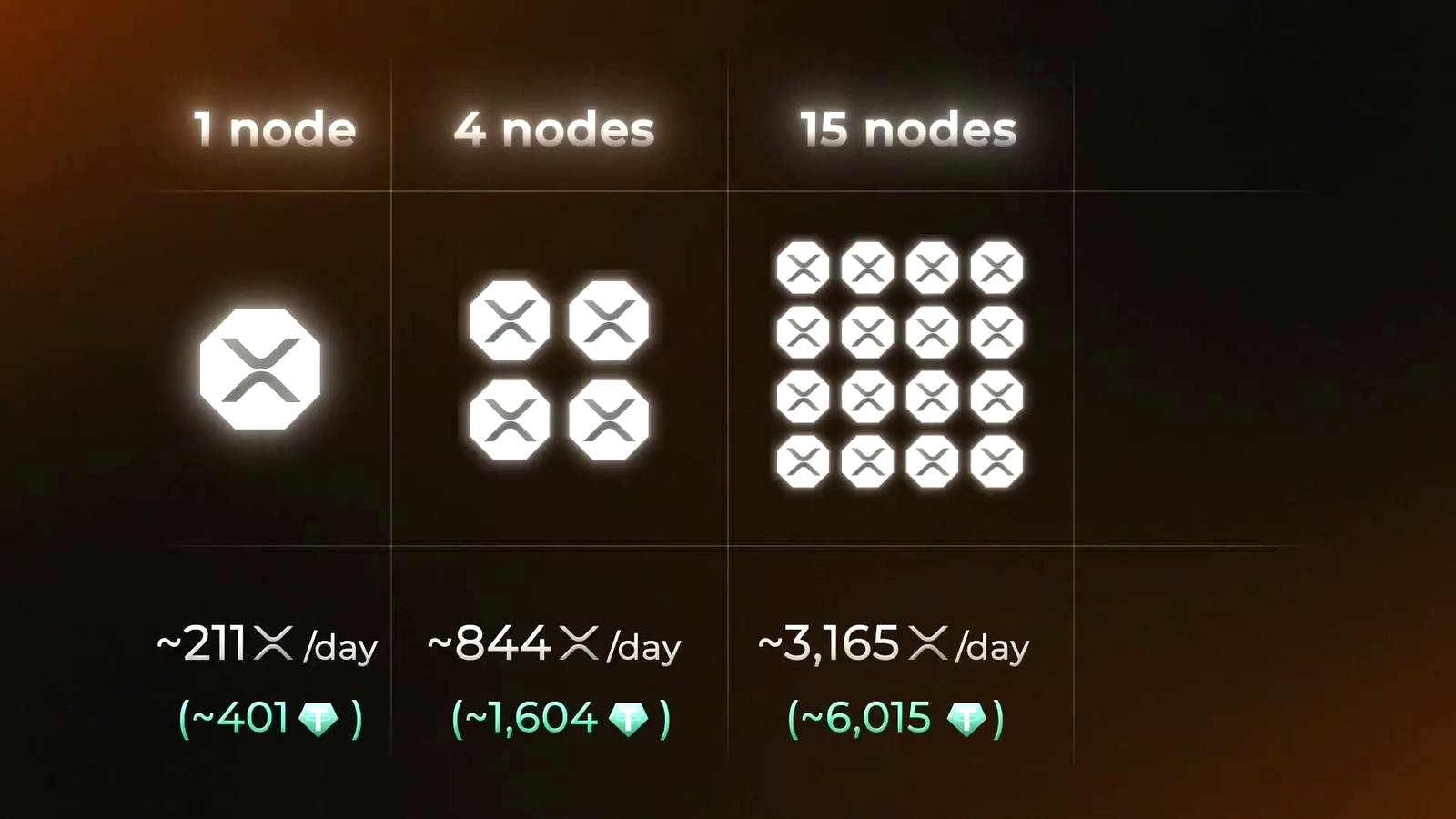
علي بشير Ali Bashir argues that the appeal of node running starts with repeatability. He says his own results from a single node were consistent, arriving in the same amount at the same time every day. He does not disclose the actual payout figure in the transcript, but he does give one concrete cost metric: operating costs in his case are around 25%, including VPS rental and taxes.
That number shapes the economic argument. If costs are roughly a quarter of revenue, then the model becomes more compelling as operators scale from one node to several. The host explicitly points to running 3, 5, or more nodes as the stage where the opportunity becomes more interesting.
He also presents node operation as flexible. Some users, he says, treat it as passive infrastructure: set it up once, check it weekly, and let it run. Others outsource the technical side and monitor the results instead. Either approach, in his view, can work.
Why the timing matters
According to علي بشير Ali Bashir, the best argument for starting now is not immediate distributions but early positioning. He says the XRP Ledger is entering a new phase of real-world use, making reliable infrastructure more valuable as the network scales.
The host’s most important claim is that long-term upside may come from reputation rather than just short-term rewards. He says that if an operator launches a validator node and keeps it stable over time, that creates a track record that can get noticed and potentially lead to whitelisting or inclusion on trusted or recommended validator lists.
That matters because he believes entry could become more selective over time. In that framework, starting early gives operators a chance to build the kind of uptime history that may help them remain active even if new applications are later paused. For Ali Bashir, the strategic value lies in becoming part of the infrastructure that others rely on, not just collecting distributions.
How the node setup works
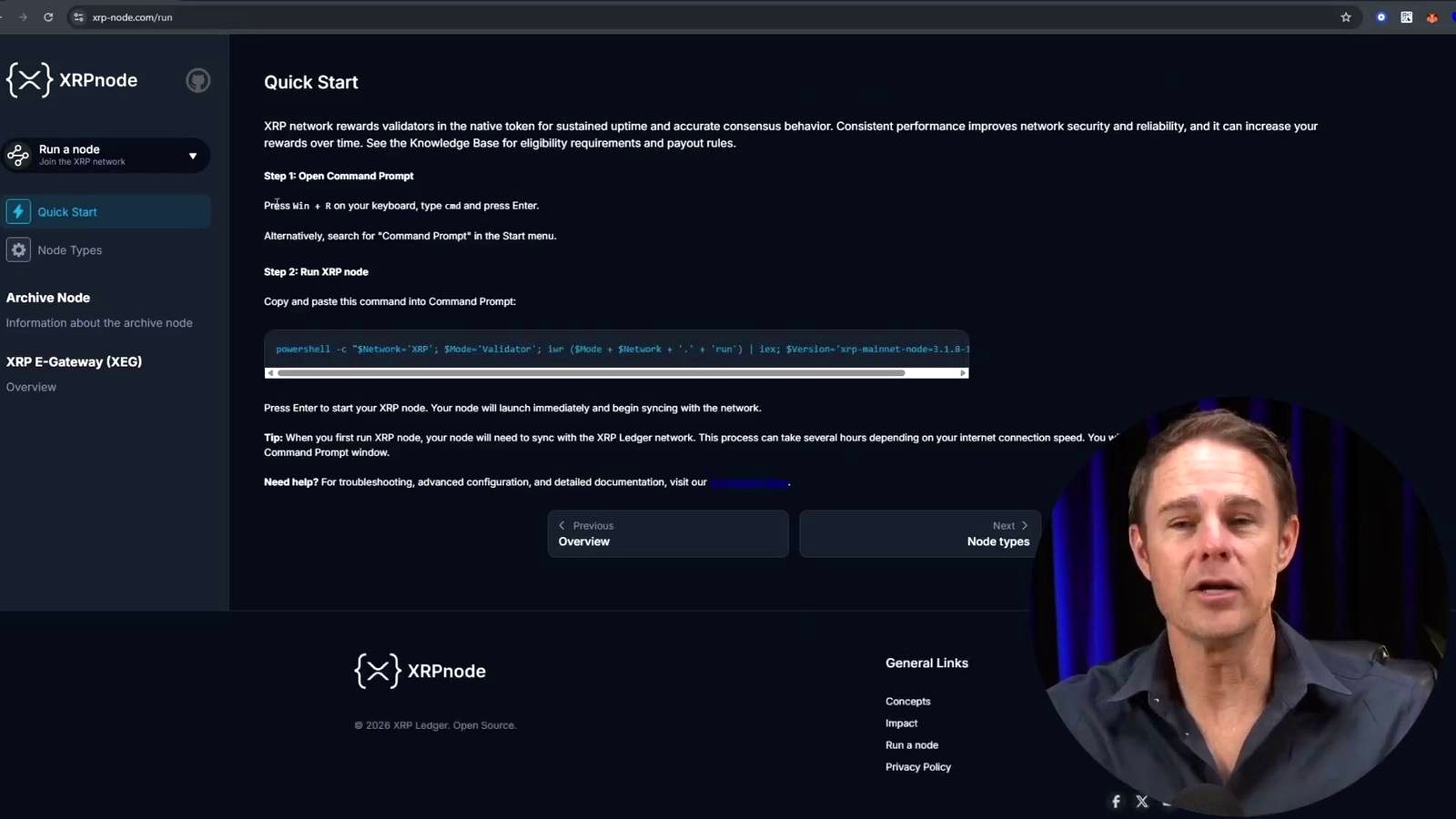
Ali Bashir outlines a straightforward deployment process for XRP nodes. He directs viewers to the official XRP Ledger node site at xpnode.com, where users can follow the instructions and copy the launch command shown under “run a node.”
From there, the process he describes is basic Windows administration:
- Open Command Prompt using Win + R
- Type cmd and press Enter
- Paste the node launch command and run it
- Wait for the sync progress bar, which indicates the node is connecting
- Provide an XRP address to receive network distributions
He adds one operational detail that matters for exchange users: if the exchange requires a destination tag, that must be included as well.
Once configured, he says the command window can simply be minimized and left running in the background while the computer is used normally.
Running multiple nodes
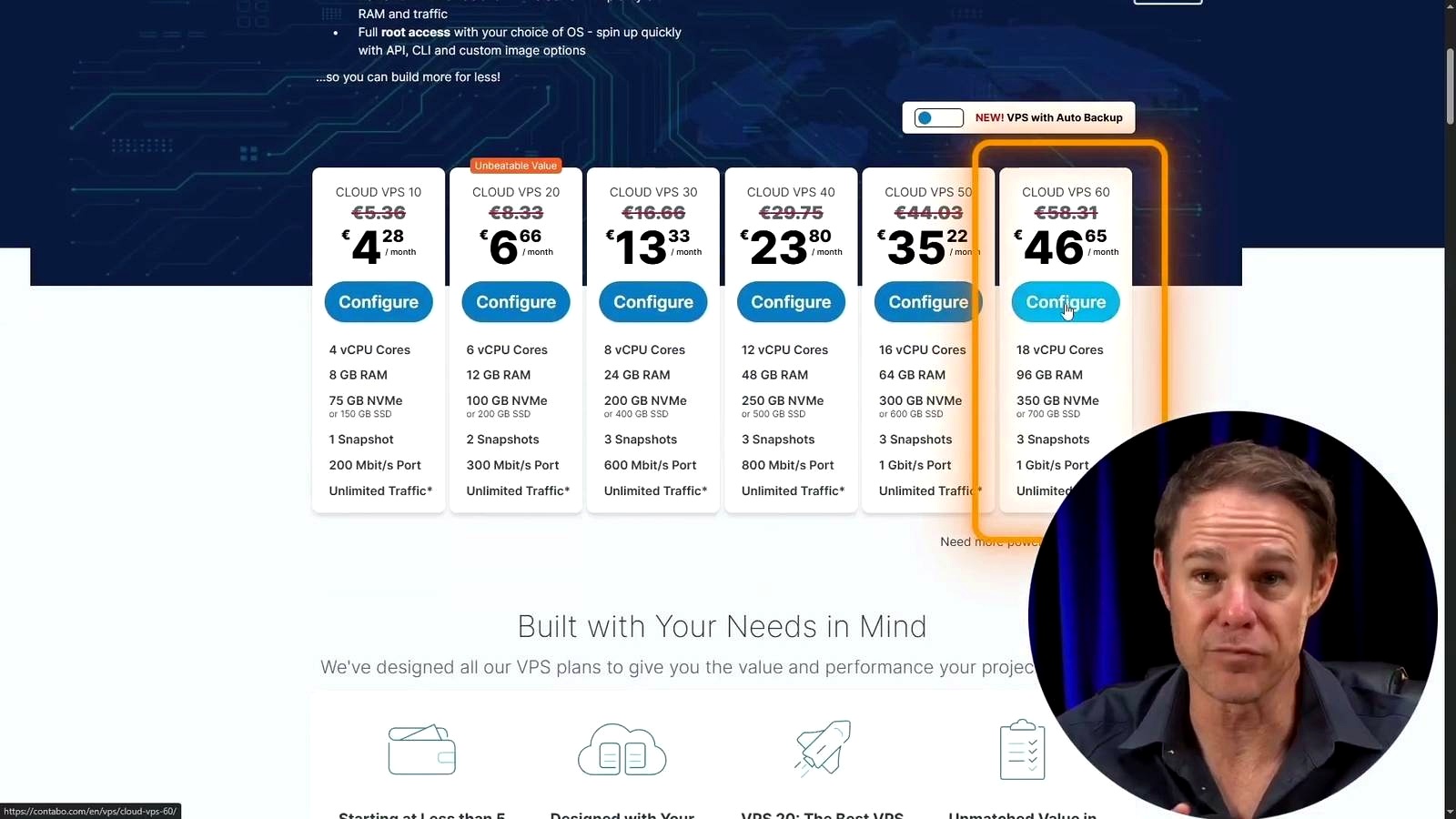
For operators who want to scale, علي بشير Ali Bashir says the process is simpler than many assume. Additional nodes can run either on spare home computers or on rented VPS instances from a hosting provider with strong uptime.
His technical recommendation is to choose a high-performance VPS with sufficient RAM and use Windows Server 2019 as the operating system. Operators then connect through Remote Desktop and repeat the same setup process.
One practical rule stands out: each node should use a different XRP address. The host says that helps keep operations organized and avoids mix-ups when managing multiple deployments.
What this means beyond XRP
For a Bitcoin audience, the immediate subject here is XRP infrastructure, but the broader message is about market evolution. Ali Bashir’s thesis is that a slice of crypto participation is shifting toward service-layer roles: validating, hosting, maintaining uptime, and building reputation inside networks rather than simply betting on token price.
That does not make node running risk-free or universal, and the transcript does not provide enough data to compare it directly with Bitcoin mining, staking, or other yield-like models. But it does reveal a clear trend in how some market participants are thinking. Instead of asking which coin could rally next, they are asking which parts of crypto infrastructure can be operated consistently and potentially scaled.
In other words, the opportunity he describes is operational first, speculative second.
The concrete numbers from the video
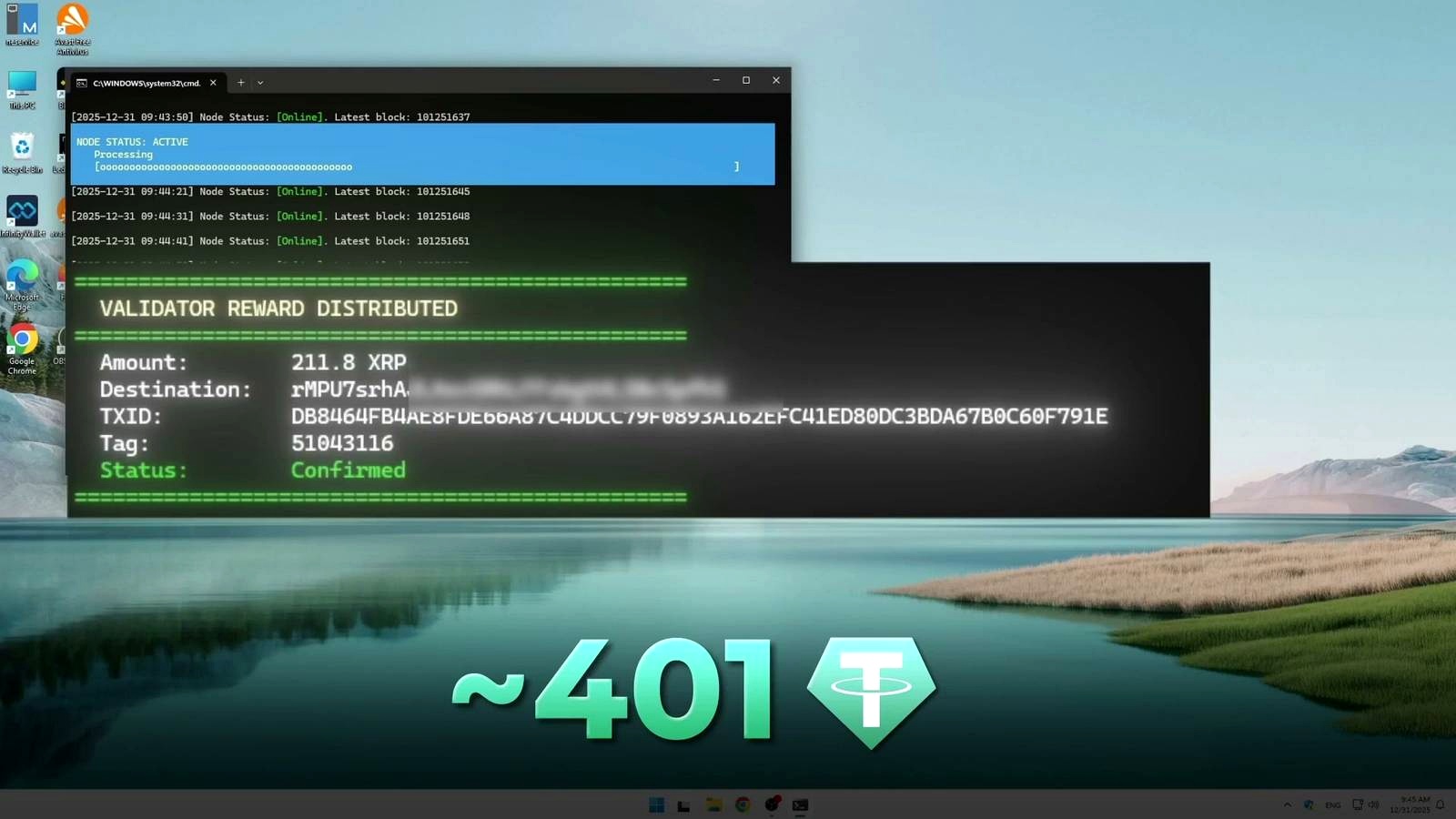
The transcript includes only a handful of specific figures, but they are central to the host’s argument:
- Operating costs: 25%
- Example scale targets: 3 or 5 nodes
- Recommended server OS: Windows Server 2019
- Command Prompt shortcut: Win + R
No specific daily payout amount, XRP distribution total, price target, or return percentage was given beyond the 25% operating cost estimate.
What to watch next
The next thing to watch is whether this infrastructure-first mindset spreads more widely across crypto. Ali Bashir’s case for node operation rests on three pillars: consistent uptime, scalable deployment, and the possibility that reputation inside a network becomes more valuable as access tightens.
If that dynamic grows, then the market conversation may continue shifting from short-term token moves toward the economics of running dependable infrastructure. For Bitcoin observers, that is the signal worth tracking. Even when the asset changes, the strategic question stays the same: who captures value when blockchain networks mature and reliability starts to matter more than hype?
FAQ
Is this video about Bitcoin nodes?
No. The transcript focuses on XRP nodes. The relevance for Bitcoin readers is thematic: it highlights a broader crypto trend toward infrastructure participation rather than pure trading.
Did Ali Bashir give a specific earnings number per node?
No. He said his single-node results were consistent each day, but the transcript does not include the exact amount received.
What is the biggest operational point in the video?
Uptime. The host repeatedly ties stable performance to reputation, regular distributions, and the chance of being considered for trusted or recommended validator lists.
What does he recommend for people who want more than one node?
Use spare computers or rent VPS instances, choose a reliable provider, run Windows Server 2019, and assign a different XRP address to each node.
What is the main risk or uncertainty left unanswered?
The transcript does not provide enough hard data on payout size, duration, or long-term economics to fully evaluate returns. The most concrete figure is the host’s 25% operating cost estimate.
Video Reference

John Burnell focuses on Bitcoin infrastructure, wallet security and blockchain technology. He writes educational articles explaining how Bitcoin works and how the technology evolves.