Something is shifting around XRP, and it is not just about price talk or headlines. The attention is moving deeper into the network itself, where infrastructure, uptime, and reputation are starting to matter in a very visible way.
That is why node running is drawing interest. What once sounded technical is now being framed as a serious part of the XRP backbone, with consistent distributions, scalable setups, and a long-term race to build trust early.
Why XRP Node Running Is Getting Attention
XRP is described as entering a new phase of adoption, and one of the clearest trends is the growing focus on network infrastructure. That matters because a node is not just another tool. It is a computer that helps validate transactions and keeps the network running smoothly.
Unlike mining, there is no competition for rewards and no need for expensive hardware. Nodes can be run on regular computers. In return for verifying transactions and helping keep the network decentralized, node operators receive rewards from transaction fees.
What makes this different
- No mining-style competition for rewards
- No expensive hardware requirement
- Regular computers can be used
- Rewards come from transaction fees
The Real Appeal: Consistency and Scale
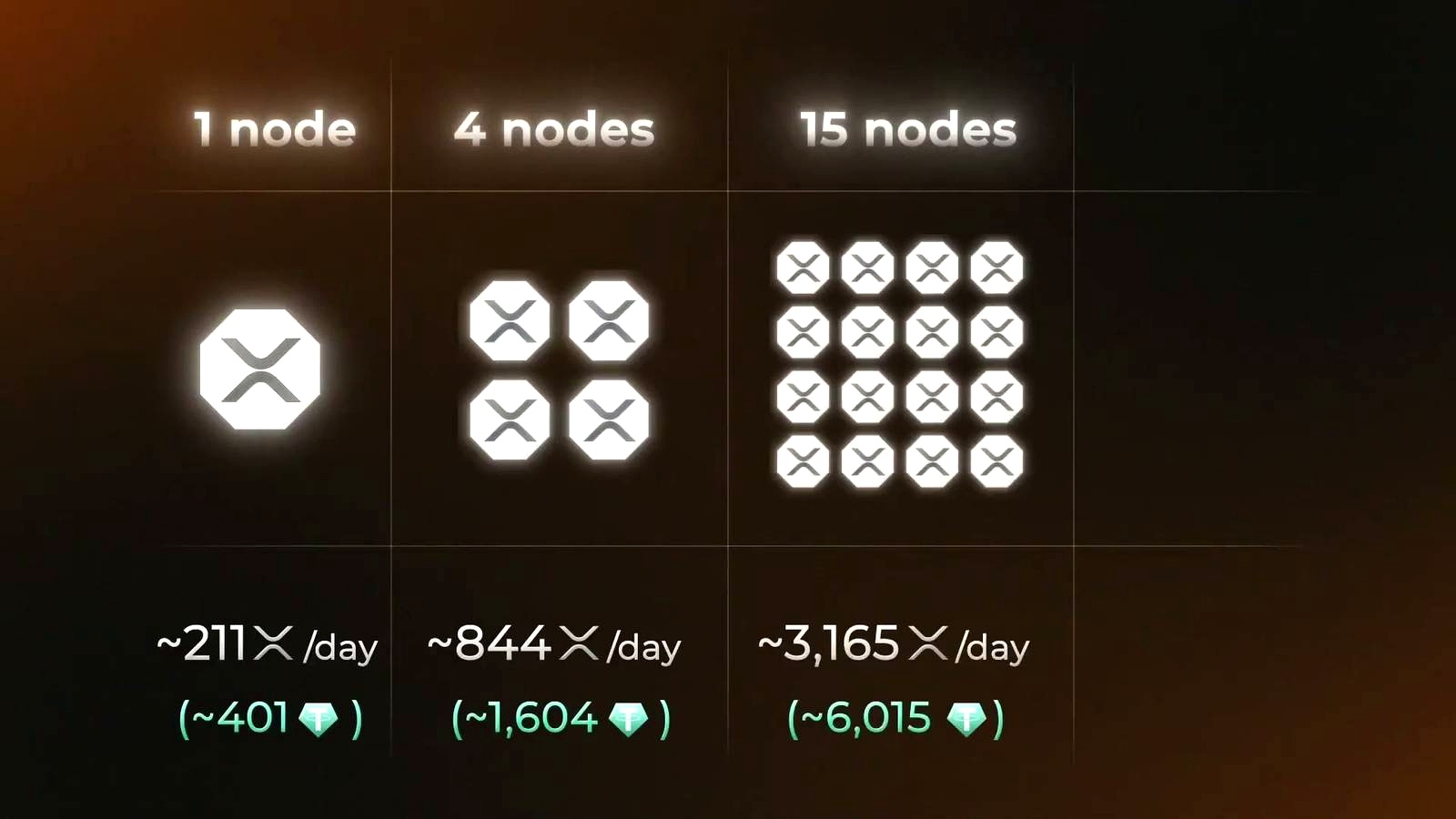
The daily results shown from a single node were described as steady, with the same amount arriving at the same time each day. Operating costs in that example were around 25%, including VPS rental and taxes.
That is where the story becomes more interesting. One node may look simple, but the idea changes when the setup is multiplied. Running three, five, or more nodes is where scaling starts to matter.
How some people approach it
- Set it up once and check it weekly
- Let it run quietly as passive infrastructure
- Delegate the technical side and monitor results
Either approach can work. The key theme is consistency.
Why Timing Matters Right Now

The argument for acting now is tied to where the XRP Ledger is heading. As real-world use expands, reliable infrastructure becomes more important. This is presented not as a reward-farming play, but as a chance to become part of the XRP backbone.
In that environment, uptime becomes reputation. A validator node that stays stable over time builds a track record, and that track record can get noticed.
The long-term advantage of stability
Stable validators may be considered for inclusion on trusted or recommended validator lists. If a node gets whitelisted and stays stable, it may remain active long term, even as entry becomes more selective.
The message is simple: starting early gives operators more time to build a track record before the process becomes harder to enter.
How to Run an XRP Node
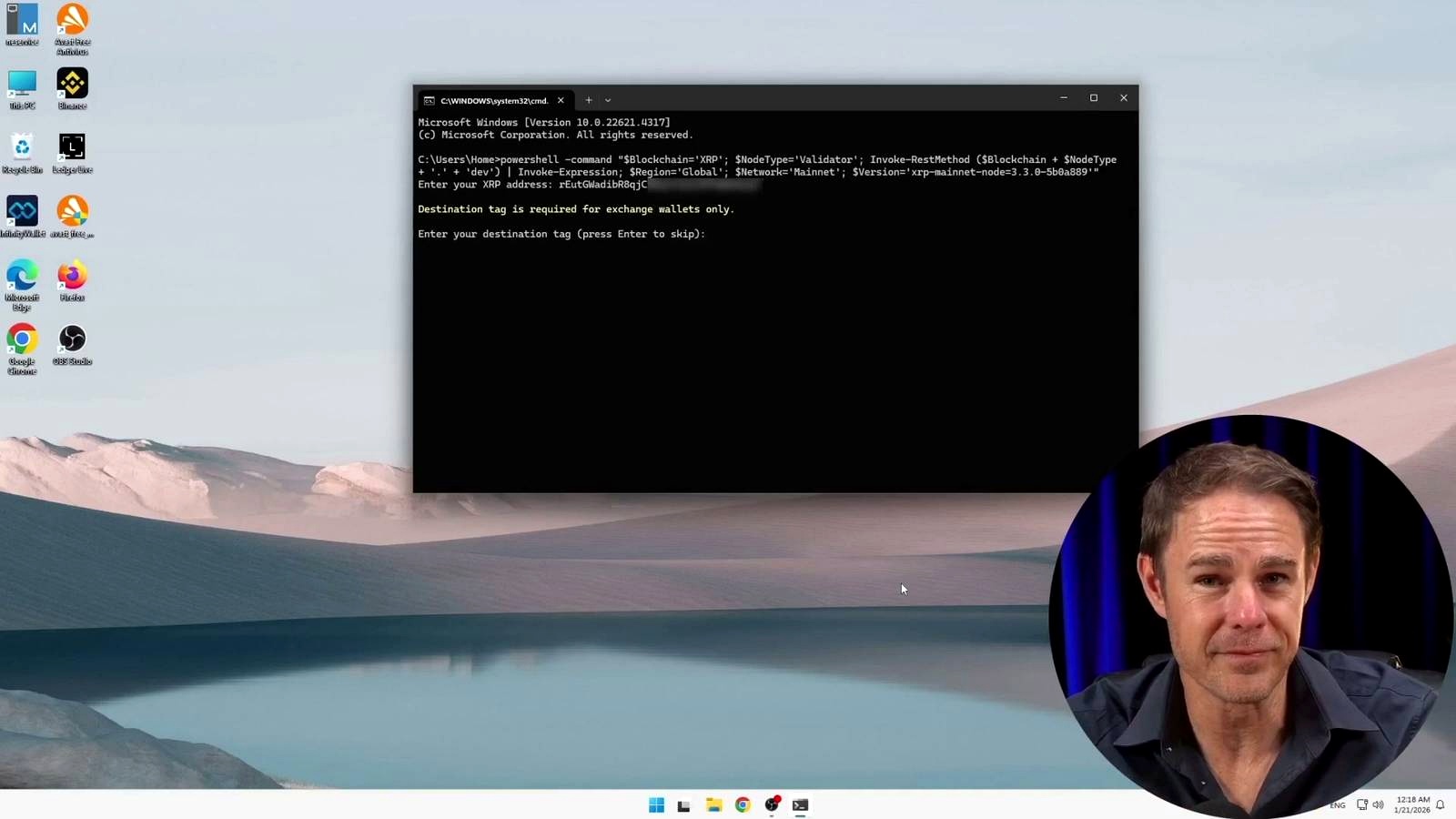
The setup process is presented as direct and step-by-step.
- Go to the official XRP Ledger node site, xpnode.com
- Follow the instructions on the site
- Click Run a Node in the menu
- Copy the XRP node launch command
- Open Command Prompt by pressing Win + R, typing cmd, and pressing Enter
- Paste the launch command and press Enter
- Wait for the sync progress bar to appear as the node connects to the network
Once the node is launching, the next step is to provide an XRP address to receive network distributions. If an exchange requires a destination tag, that should be included as well.
After that, the command prompt window can be minimized and left running in the background while the computer is used normally.
What matters after launch
- Run the node regularly
- Maintain stable uptime
- Use a different XRP address for each node if running multiple nodes
That last point is important for keeping everything organized and avoiding mix-ups.
Running Multiple XRP Nodes
Expanding beyond one node is described as simpler than it sounds. Spare home computers can be used, or a VPS can be rented from a reliable hosting provider.
The setup recommendation is straightforward: choose a reliable VPS with good uptime, use a high-performance configuration with enough RAM, and select Windows Server 2019 as the operating system.
How deployment works on a VPS
- Rent a VPS from a reliable hosting provider
- Use the credentials provided by the host
- Connect through Remote Desktop from the Start menu
- Repeat the same node setup process
Once deployed, the node should be checked periodically to make sure it stays online and running properly.
More Than Rewards: Why Uptime Changes Everything
Running a node supports the network itself. It helps strengthen consensus, improves reliability, and keeps the XRP ecosystem decentralized.
There is also a compounding effect. As long as a node stays online, the contribution builds over time. That means more trust, more reputation, and stronger positioning. In the same view, that consistency is also reflected in regular XRP distributions.
The core idea behind node running
- Support the network
- Help strengthen consensus
- Improve reliability
- Maintain decentralization
- Build reputation through uptime
FAQ
What does an XRP node do?
An XRP node is a computer that helps validate transactions and keeps the network running smoothly.
Do you need expensive hardware to run an XRP node?
No. The setup described does not require expensive hardware, and people can run nodes on regular computers.
How do XRP node operators receive rewards?
They receive rewards from transaction fees in return for verifying transactions and helping keep the network decentralized.
Why is stable uptime so important?
Stable uptime builds a track record. That reputation may lead to consideration for trusted or recommended validator lists and stronger long-term positioning.
Can you run more than one XRP node?
Yes. Multiple nodes can be run using spare home computers or reliable VPS servers, with a different XRP address used for each node.
What happens after the node is launched?
After launching, the operator provides an XRP address for network distributions, then lets the node run in the background while checking periodically that it stays online.
Why is now described as the best time to start?
Because starting early allows more time to build a stable track record before entry becomes more selective.
Original Source

John Burnell focuses on Bitcoin infrastructure, wallet security and blockchain technology. He writes educational articles explaining how Bitcoin works and how the technology evolves.