Bitcoin is trading sideways near $71,023, sitting in a tight range as the market waits for a bigger move. At the same time, debate around the Clarity Act and stablecoin yield is raising new questions about whether crypto regulation is being built for the industry or for banks.
While Bitcoin stays relatively calm, major moves in tokenization, 24/7 trading, and blockchain rails continue to accelerate across exchanges and financial infrastructure. The growing tension is no longer just about price direction, but about who will benefit as crypto and traditional finance become increasingly intertwined.
Bitcoin Holds Steady on the Edge of a Big Move

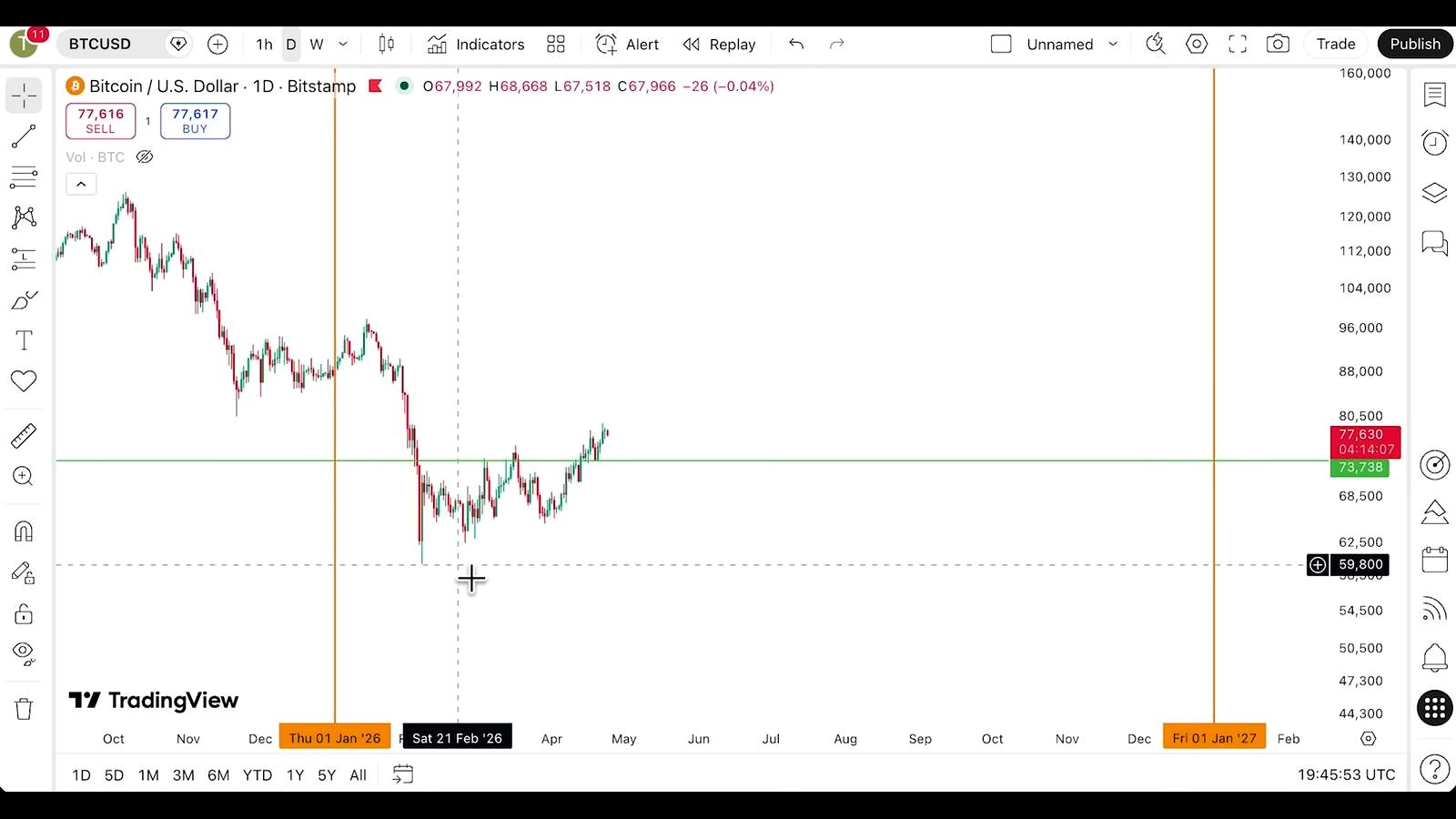
Bitcoin has remained unusually calm despite negative macro headlines and geopolitical risk. According to the market discussion, volatility in Bitcoin itself has been limited, with price pinned around the $70,000 to $71,000 area as a large options expiry approaches.
The market view presented was that much of the forced selling has likely already happened. Liquidations took place weeks earlier, and over the last two to three weeks, activity has slowed considerably.
Why the Market Feels Stuck
- Volumes are very low
- Futures positioning is very low
- Bitcoin has been pinned around $70,000 to $71,000
- A large options expiry on Friday is acting as a near-term anchor
Even with low positioning, volatility has still surged on headline-driven moves, reaching roughly 60% to 65% last week, compared with a more typical 50% level mentioned in the discussion. The result is a market that feels quiet until sudden bursts of movement arrive.
What Could Happen After Options Expiry
The expectation discussed was that Bitcoin may see more volatility after Friday’s expiry. However, the downside case was framed as more gradual rather than a violent collapse. The argument was that because positioning is light and outflows have slowed, it may be difficult to push Bitcoin sharply lower.
The view shared was that if Bitcoin moves down, it may happen gradually, potentially retesting $60,000, but without the kind of sudden 10% drop seen in prior periods.
Outflows Slow as Sellers Lose Interest
One of the more important signals discussed was the sharp slowdown in outflows. February reportedly saw around $26 billion of outflows, while the current month was said to be closer to $4 billion. That shift was described as a reason the downside now appears more limited.
Another supportive point raised was that USDC had seen about $8 billion of inflows over the last month. Combined with weaker selling pressure, that suggests the market may only need a spark of demand rather than a major flood of fresh capital.
Key Market Takeaways
- Massive sellers appear to have left the market
- Bad news has not triggered the same heavy declines seen in prior months
- Bitcoin is reacting with smaller 1% to 2% down days rather than deeper drops
- Only a small amount of demand may be needed to move the market higher
The discussion also pointed to previous cycles, where Bitcoin did not necessarily bottom on huge volume. Instead, the market often slowed, then turned higher once selling faded and even a small amount of capital was enough to reignite momentum.
The Clarity Act Is Raising More Questions Than Confidence

The Clarity Act was described as appearing closer to passage, but the central criticism was clear: it may offer clarity for banks more than for crypto itself. The concern raised repeatedly was that the final product could be something banks want, while the crypto industry wants little to do with it.
The most controversial part of the current discussion centers on stablecoin yield. The interpretation presented was that the framework points toward no yield on passive stablecoin products for users, while banks preserve broader freedom to operate.
Why Stablecoin Yield Is at the Center of the Fight
The issue is not simply whether stablecoin yield is allowed, but who gets to offer it and under what label. The market conversation suggested that anything resembling passive interest could be blocked, while incentives or rewards might emerge under different structures.
That raised concern that exchanges and retail users could lose access to products already available, while banks gain the regulatory path they need to adopt the same technology for themselves.
Main Concerns Raised About the Clarity Act
- It appears narrower and more restrictive than expected
- It may help banks adopt crypto without letting crypto remain crypto
- It could remove or weaken existing reward structures
- It reflects a bank-first approach rather than a retail-first approach
It was also noted that there is no broad agreement yet. The White House may have outlined what it thinks an agreement could look like, but crypto participants have not broadly weighed in, and the matter remains unsettled.
Banks Need Clarity, but Crypto Keeps Moving Anyway
A major point raised in the discussion was that banks may need this clarity more than the crypto industry does. The reason is simple: banks want to adopt faster, cheaper technology with wider margins, but they need legal certainty before moving forward.
At the same time, the broader market may not wait. The argument made was that blockchain rails are already spreading globally, and the technology is not going back in the bag. Whether adoption happens through banks, exchanges, stablecoins, or tokenized bank products, the direction appears unchanged.
The Core Tension
Financial institutions want to slow things down enough to catch up, protect customer relationships, and keep assets inside their systems. Crypto platforms, meanwhile, already offer speed, flexibility, and in some cases yield opportunities that traditional banking struggles to match.
That is why the battle over stablecoin yield matters so much. Once money leaves a traditional bank platform and lands on a crypto platform, the claim made in the discussion was that it often stays there rather than returning.
Why Banks Are Fighting Hard
- They risk losing customer assets to crypto platforms
- They risk losing long-term customer value
- Users can move within crypto platforms instead of moving money back to banks
- Younger users may prefer Coinbase, Robinhood, or similar apps over traditional banks
The discussion described customer lifetime value at commercial banks as significant, which helps explain why banks are pushing so hard. If users migrate toward crypto-native or hybrid financial apps, the banking landscape in 10 to 20 years could look very different.
Everything Is Being Tokenized Faster Than Many Expected

Alongside the regulation debate, tokenization was presented as an unstoppable trend. Major players including Intercontinental Exchange, NASDAQ, and the New York Stock Exchange were described as moving toward faster, cheaper systems built on blockchain rails.
Several examples were highlighted as signs that tokenized markets are rapidly becoming part of mainstream financial infrastructure rather than a side experiment.
Major Tokenization Signals Mentioned
- Intercontinental Exchange making major moves in blockchain integration
- NASDAQ moving toward faster and cheaper infrastructure
- New York Stock Exchange linked to efforts around blockchain-based stock trading
- Securitize and NYSE discussed as building a platform for stocks to trade as blockchain tokens around the clock
- DTCC already signaling tokenization plans
The broader takeaway was that tokenization is no longer theoretical. It is becoming a structural direction across global markets, with 24/7 trading and interconnected markets increasingly part of the conversation.
Crypto and Traditional Finance Are Becoming the Same System
The discussion framed this as a moment where crypto and traditional finance are rapidly merging. Traditional finance is adopting the parts of crypto it likes, especially tokenization and around-the-clock market access.
Not everyone in crypto welcomes that reality, but the view expressed was that this is simply the new environment. The choice is whether to understand it and adapt, or reject it and miss what comes next.
Prediction Markets, Agentic Wallets, and the New Trading Landscape
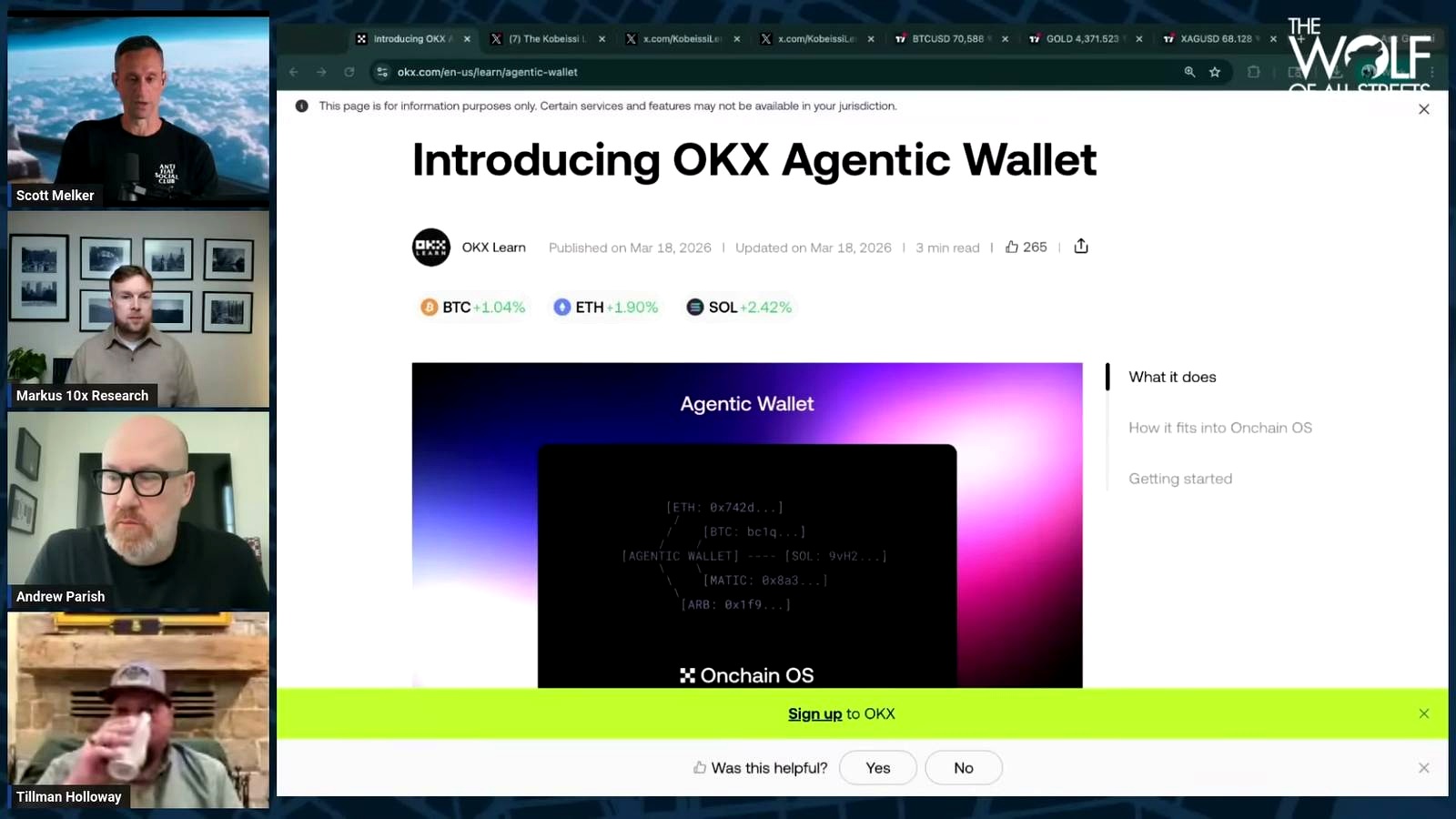
Another major theme was how quickly new infrastructure is appearing around prediction markets and agent-driven financial tools. OKX was cited as launching an agentic wallet, and the broader point was that tools are already being built for agents to transact on blockchain rails.
This shift was presented not just as a future concept, but as something happening now. Prediction markets, tokenized oil trading, and new forms of market access were all described as part of the current transformation.
Why Prediction Markets Are Drawing So Much Attention
- They have become a major headline in crypto
- They fit into the broader “everything exchange” model
- They allow for new strategies and new forms of speculation
- They connect naturally with tokenized and 24/7 infrastructure
Still, the discussion also stressed the risks. Markets are a zero-sum game, and if one participant wins, another loses. Giving a black-box system control over funds was described as difficult for many people to justify, especially when strategies can quickly become targets once noticed by others.
Why Human Judgment Still Matters
A recurring point was that people still want someone to talk to when money is involved. AI may help with information, education, and analysis, but handing capital to a black box remains uncomfortable for many users.
The distinction made was between receiving information and trusting execution. AI may increasingly guide users, but fully agentic financial control was described as a very different threshold that many are not yet ready to cross.
Every Bitcoin Bull Market Looks Different

The discussion emphasized that there is no single playbook for Bitcoin. Each cycle has been different, with different narratives, different participants, and different market leaders.
That matters now because tokenization, prediction markets, stablecoin regulation, and the merging of crypto with traditional finance may define this phase in ways that do not look like DeFi summer, NFTs, ICOs, or earlier market cycles.
Why Adaptation Matters More Than Nostalgia
The clearest lesson offered was that staying in the game requires adjustment. Markets evolve quickly, and the people who remain active are the ones willing to adapt rather than insist the next cycle must look exactly like the last one.
The discussion also suggested that people with conviction about the industry’s long-term trajectory are still here. The bigger question is not whether the industry continues, but how investors can actually benefit from the way it is changing.
Who Really Benefits From What Comes Next?

That may be the biggest unresolved issue. If banks and Wall Street are successfully adopting the best parts of crypto, while regulation blocks retail-friendly features like stablecoin yield, then tokenization alone does not guarantee equal opportunity.
At the same time, the market view was that all of this activity happening during a weak period should eventually bear fruit. Over the next 18 to 36 months, the claim was that this ongoing infrastructure buildout could support a major move higher in crypto-related assets.
The open question is whether investors stay patient enough to be there for it.
FAQ
Why is Bitcoin trading sideways right now?
Bitcoin is trading in a tight range around $70,000 to $71,000 with low volumes, light futures positioning, and a large options expiry helping pin the market. Despite macro headlines, price action has remained relatively calm.
What is the main concern about the Clarity Act?
The concern raised is that it may provide clarity mainly for banks, not for crypto users or the broader crypto industry. It was described as a restrictive approach that helps banks adopt crypto infrastructure without allowing crypto to operate in its original form.
What is happening with stablecoin yield?
The discussion suggested that the proposed direction is toward no passive yield on stablecoins for users, while banks may still preserve wider flexibility. Rewards or incentives may still appear under different labels, but passive yield is the central point of conflict.
Why are banks pushing so hard on this issue?
Banks are fighting to retain customer assets and long-term customer value. Once money moves to crypto platforms, the view shared was that it often stays there rather than returning to traditional banking channels.
Is tokenization really becoming mainstream?
The discussion presented tokenization as a major ongoing shift, with moves from Intercontinental Exchange, NASDAQ, the New York Stock Exchange, Securitize, and DTCC all pointing toward faster, cheaper, blockchain-based market infrastructure.
What role do prediction markets and agentic wallets play in this trend?
They were described as part of a broader move toward interconnected, always-on financial markets. Agentic wallets and prediction market tools show that platforms are already preparing for a world where blockchain rails support more than simple trading.
Is there a clear catalyst for Bitcoin right now?
No strong immediate catalyst was identified outside of macro-driven headlines and the impact of options expiry. The more constructive view was that sellers appear exhausted, meaning only a small demand spark may be needed to push Bitcoin higher.
What is the broader outlook from this discussion?
The broader outlook is that crypto, tokenization, and blockchain rails continue to expand, even as regulation may favor banks in the near term. Bitcoin remains on the brink of a bigger move, but the bigger long-term battle is over who captures the value from what is being built.
Reference Video

John Burnell focuses on Bitcoin infrastructure, wallet security and blockchain technology. He writes educational articles explaining how Bitcoin works and how the technology evolves.