Donald Trump’s latest announcements have added fresh tension to the markets, with ground troops now in the game and fears of further escalation weighing on sentiment. Traditional markets have sold off, Bitcoin is slightly lower, oil is rising again, and the next 24 hours are being watched extremely closely.
With the US market close approaching, there is growing concern that another major announcement could arrive after trading hours. That pattern has appeared repeatedly in recent weeks, creating the risk of sharp overnight volatility, especially for Bitcoin, which continues trading while stock markets are closed.
Why the Next 24 Hours Matter

Friday before the US market close is seen as a particularly sensitive moment. In recent weeks, whenever there was talk of further escalation, major announcements often came after the US markets had already closed.
This creates a familiar pattern:
- Markets close in the USA
- A bombshell announcement appears afterward
- Volatility increases overnight
- Bitcoin reacts directly because it continues trading
There is also the view that some de-escalation could return by Sunday, but for now the known playbook points to heightened risk in the hours ahead.
How Markets Reacted
Traditional Markets Under Pressure
The overall markets have sold off heavily, with a reported 600 billion wiped from major markets such as the S&P 500 and others after Trump’s comments. The mood in traditional assets has clearly turned negative as investors react to the possibility of a longer conflict.
Bitcoin Slightly Down but Holding Better
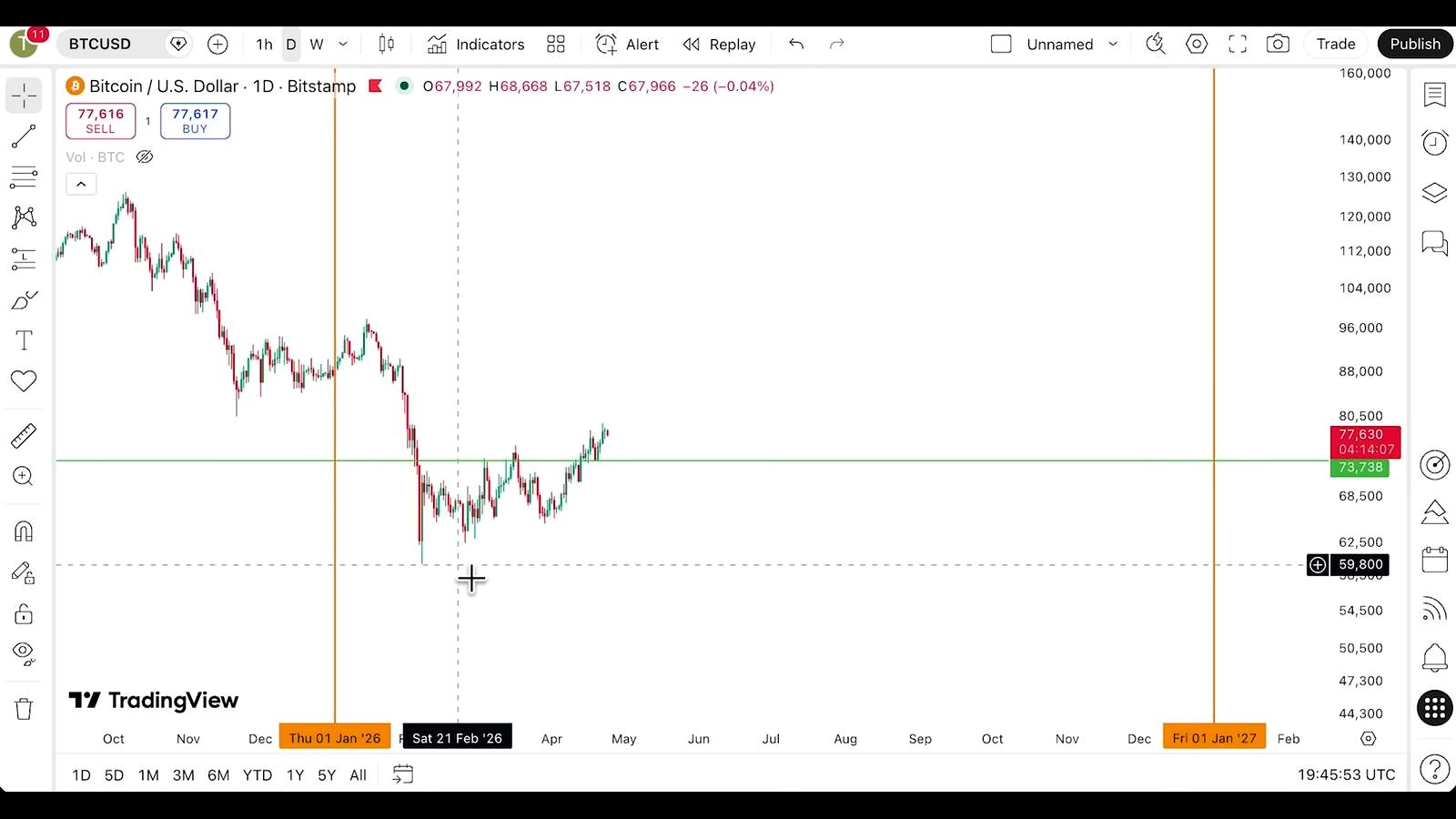
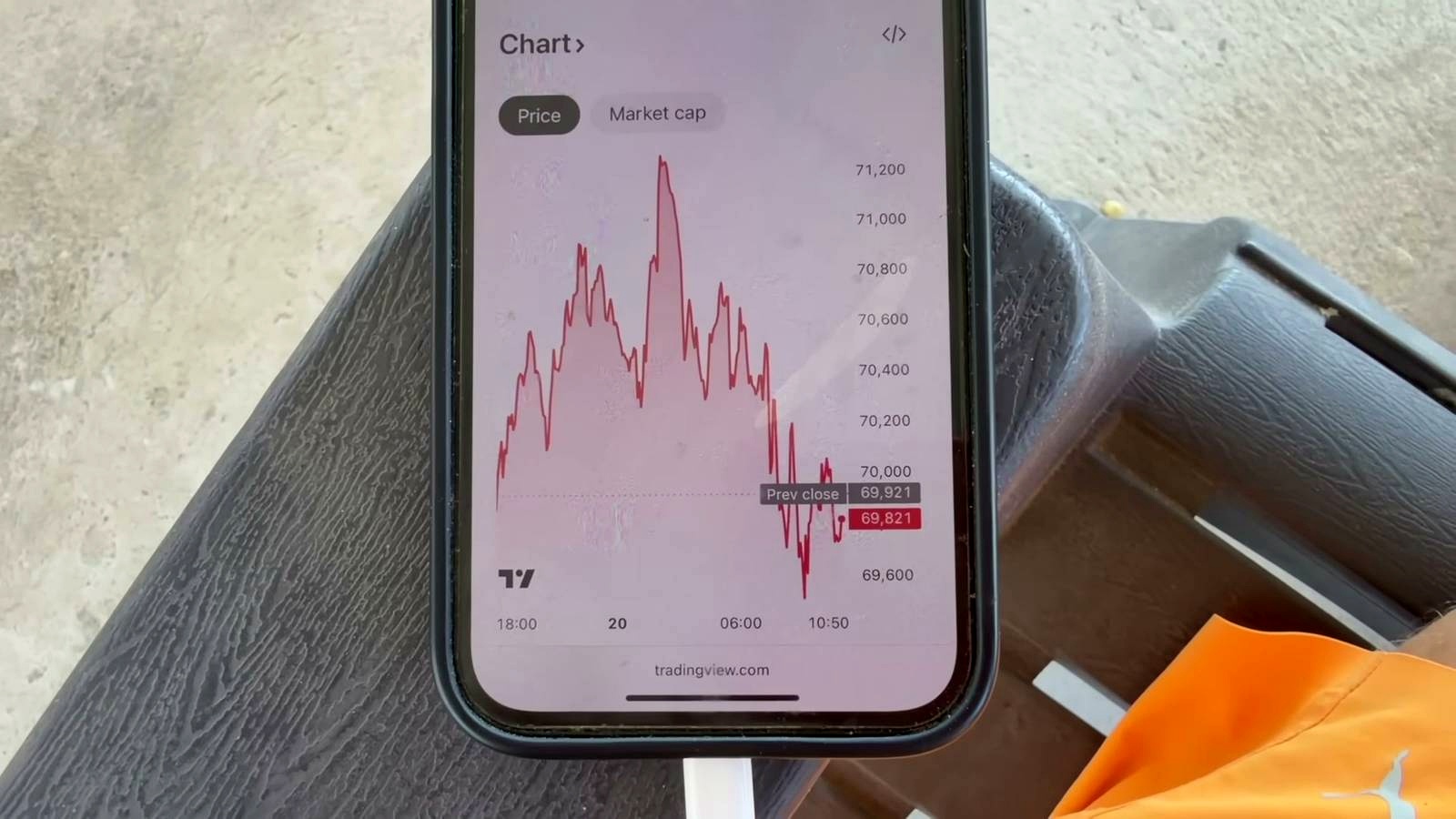
Bitcoin fell slightly below the $70,000 mark and was trading around $69,800. Although it was lower earlier in the day, Bitcoin has, according to the analysis, come through this situation relatively well compared with other assets.
There is still a sell-off in Bitcoin, but in relation to gold, silver, and stock markets, it appears to be weathering the situation almost best.
Oil Rises Again
Oil has moved higher again, which is seen as a natural response to the escalation. The longer the war and conflict continue, and the more chaos develops, the higher the oil price will likely rise.
Troops, War Fears, and Market Uncertainty

The Pentagon is reportedly preparing to send thousands of additional troops to the Middle East. That development is increasing fears of a longer war, which in turn is driving panic and uncertainty.
This uncertainty is leading investors to sell risky assets. At the same time, it is creating wider concern about how long the conflict may continue and how deeply it may affect financial markets.
Bitcoin Versus Gold, Silver, and Stocks

One of the more striking observations is that gold and silver were also negative despite the rising geopolitical risks. Normally, chaotic situations were associated with stronger performance in gold and silver, but that is not what is being seen now.
Instead, Bitcoin appears to be holding up relatively well. The current picture suggests:
- Bitcoin is slightly down
- Gold and silver are also negative
- Stock markets are under pressure
- Oil is rising
This has led to the view that Bitcoin is weathering the current market stress better than many expected.
Bond Yields and Rising Debt Add More Tension
Ten-Year Yields Reach 4.32%
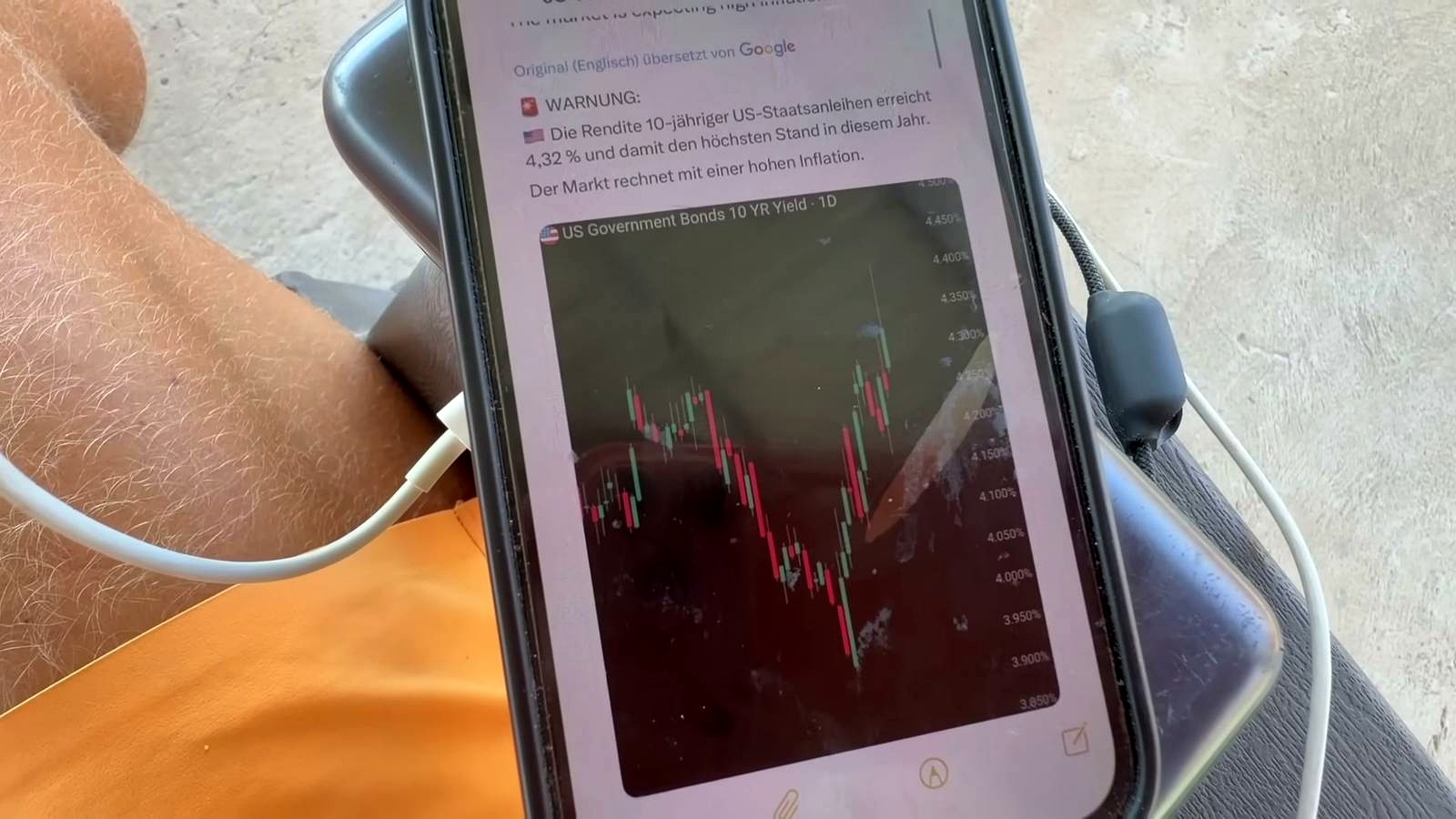
A major warning sign is the sharp rise in ten-year yields. Government bond yields reached 4.32%, their highest level this year. This is described as the exact opposite of what Trump wants, since lower yields would make financing easier.
Instead, yields are rising sharply, and some participants are even rejecting US government bonds.
War Spending and Debt Growth
Debt is also accelerating. The US side alone has reportedly spent 25 billion within 19 days, which is more than one billion per day. On top of that, there is an effort to get another 200 billion approved by the Pentagon to continue war spending.
This combination of rising debt, additional expenditures, and market stress is seen as a central reason for current tension.
Why Bitcoin Could Benefit in the Long Term

Despite the short-term pressure, there is also a long-term bullish argument for Bitcoin. The reasoning is based on expanding spending, debt, and instability in fiat systems.
The core points are:
- Bitcoin is apolitical
- Bitcoin is fixed at 21 million
- Bitcoin is viewed as a stabilizing force
- Fiat money is viewed as destabilizing
From this perspective, the current environment of debt growth and monetary tension could ultimately support Bitcoin over time.
BlackRock Selling and ETF Flow Pressure

Another negative factor is selling pressure linked to ETF flows. Nearly 500 Bitcoins were reportedly sold, and this is important because ETF flows are said to correlate strongly with the Bitcoin price.
The point being made is not that BlackRock itself is directly the buyer or seller in the simple sense, but that BlackRock customer flows matter. Right now, outflows are returning, and Bitcoin is also weakening at the same time.
For stronger upside, positive inflows would likely be needed again.
Analyst Forecasts: How Low Could Bitcoin Go?
Correction to the Lower Range
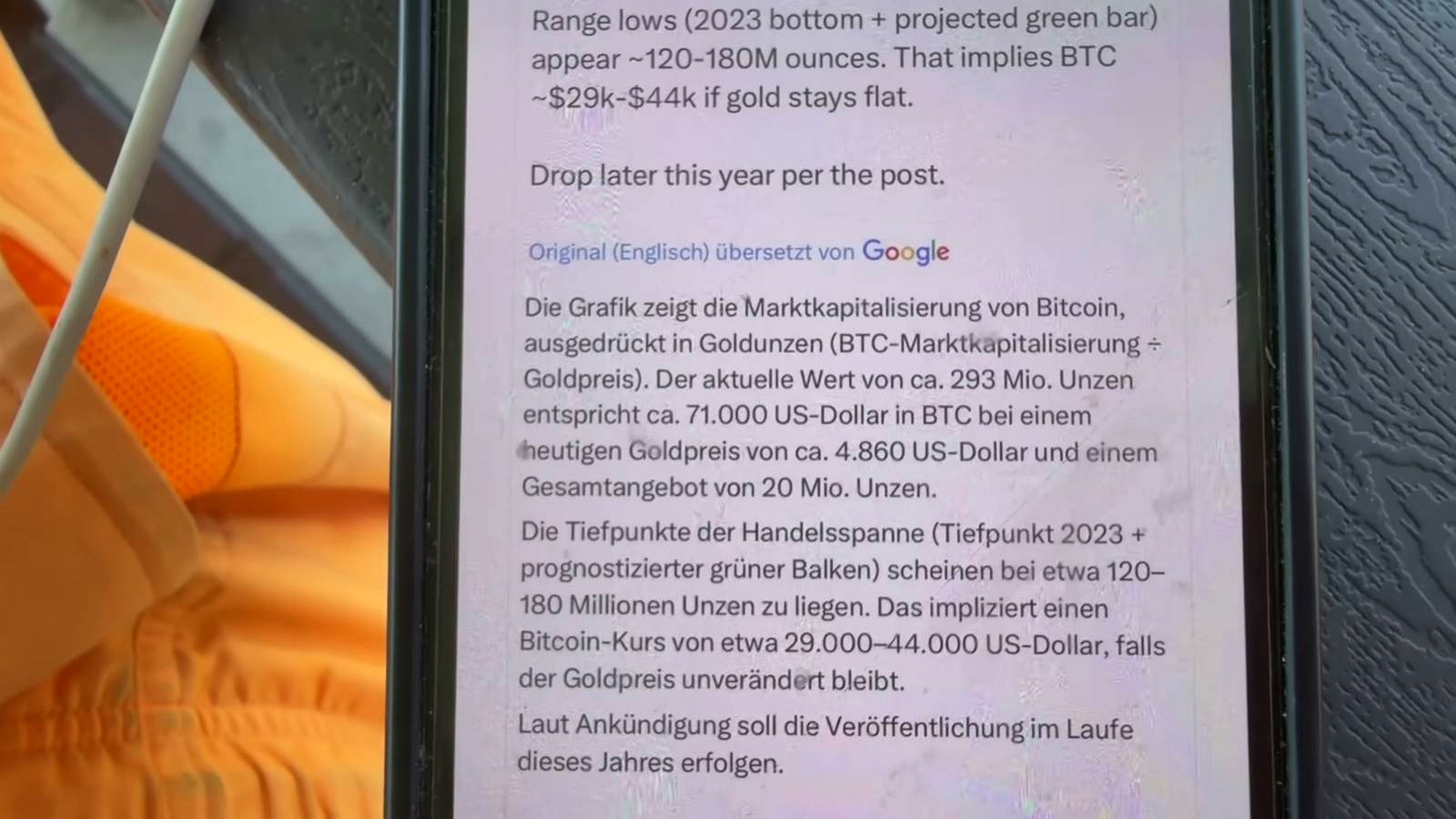
One of the most well-known bearish views comes from Benjamin Cohen. The argument is that Bitcoin, when priced in gold, could fall back to its range lows.
That does not point to $25,000, but rather to a range of roughly:
- $29,000
- $44,000
This estimate assumes the gold price remains unchanged.
Worst-Case Scenario Only
That lower range is described as an absolute worst-case scenario and a very wild theory. There is also criticism of this bearish interpretation.
Another view argues that:
- Most sellers have already sold Bitcoin
- A rotation from gold to Bitcoin is already starting
- In conflict zones, gold is not very useful
- Bitcoin is increasingly seen as the safe-haven currency
Even so, the possibility of lower prices is not ruled out, and $29,000 is described as not impossible.
Interest Rates, Oil Shocks, and Central Bank Reactions

Christopher Waller of the Federal Reserve is now described as no longer wanting to lower interest rates. He had been determined to cut rates until the oil shock and escalation changed the picture.
According to the same view, central banks more broadly have changed course because of oil-related inflation risks. Even the ECB is now seen as saying that rates may need to rise instead of fall.
The concern is simple: oil escalations and oil shocks could cause inflation to spiral out of control.
Possible Positive News for Crypto Markets
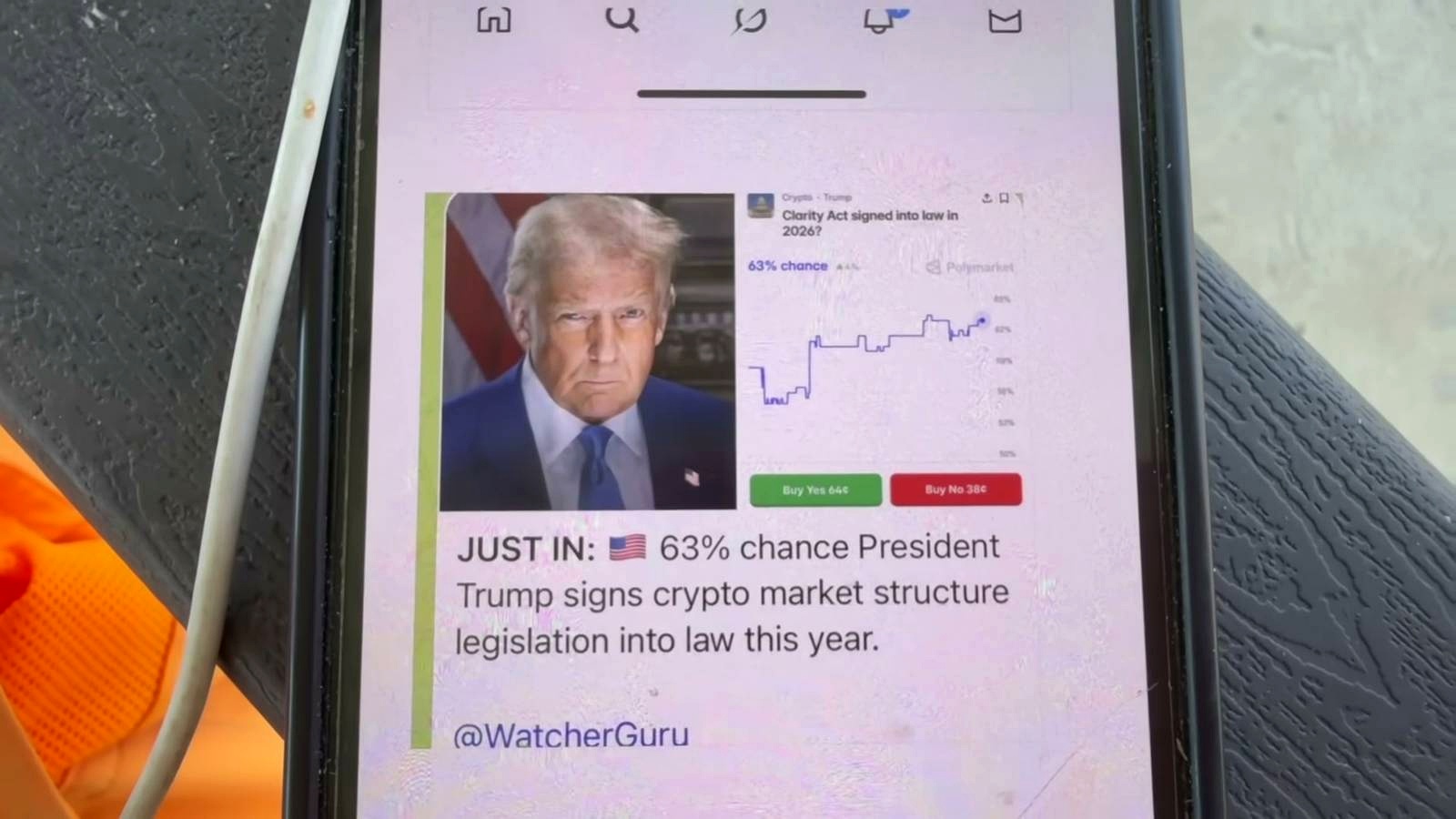
Clarity Structure and Market Structure Progress
There is also some positive news in the background. The chance that the Clarity Structure or Market Structure in the USA will be completed this year and signed by Donald Trump is now said to have risen to 63%.
If that happens, it would be viewed as a very good sign for the markets and could be received positively.
Support for the Clarity Act
Paul Edkin is cited as saying that the crypto markets and the millions of Americans participating deserve to have the long wait rewarded with the Clarity Act. The goal would be to stabilize the market further and possibly give it a boost.
A New Crypto Market Announcement Could Arrive Today

Alongside the geopolitical risks, there is also the possibility of a major announcement related to Bitcoin and the crypto markets.
The issue centers on disagreement between banks and financial institutions in the crypto sector over whether interest payments can be made. Banks do not want this, while crypto institutions do.
A compromise proposal involving the Senate Banking Committee could reportedly be announced today. If a meaningful compromise is reached, the market could react very positively.
Two Main Scenarios
- Trump makes another aggressive escalation announcement and markets move lower.
- A crypto-related compromise is announced and the market reacts positively.
The Yield Question Remains Important
The best-case outcome would be that interest is paid out and people receive yield on stablecoins. If, instead, banks keep the profits for themselves, the market may not react well.
There is also uncertainty about whether the compromise expected today only covers an initial commitment, while the question of yields is delayed to a later compromise. That leaves several possible outcomes still open.
Current Market Takeaway

The market is caught between escalation fears and potential crypto-specific optimism. On one side are rising oil prices, troop deployments, bond market stress, debt expansion, and the risk of another after-hours Trump announcement. On the other side are possible regulatory progress and a compromise that could support crypto sentiment.
Bitcoin is under pressure, but compared with other assets, it is still holding up reasonably well. The next few hours are therefore especially important for short-term direction.
FAQ
Why are the next 24 hours considered so important?
Because major escalation-related announcements have often come after the US market closes on Friday, creating the risk of strong overnight volatility while Bitcoin continues to trade.
How did Bitcoin react to the latest developments?
Bitcoin was slightly below $70,000 and around $69,800. It was down, but it was also described as holding up better than gold, silver, and stock markets.
Why is oil rising?
Oil is rising because the escalation and the possibility of a longer conflict are increasing fears of supply and inflation-related shocks.
What is the bearish Bitcoin target mentioned by analysts?
A worst-case scenario mentioned in the discussion points to a range of about $29,000 to $44,000, assuming the gold price remains unchanged.
What role does BlackRock play in the Bitcoin price?
The focus is on ETF flows linked to BlackRock customers. These flows are said to correlate strongly with the Bitcoin price, and recent outflows have coincided with price weakness.
What positive crypto news could support the market?
Possible support could come from progress on the Clarity Structure or Market Structure in the USA, as well as a compromise involving the Senate Banking Committee on crypto-related financial issues.
What is the main dispute in the crypto-related announcement?
The disagreement is about whether interest payments can be made. Banks do not want this, while crypto institutions do.
Why could Bitcoin benefit in the long term despite current pressure?
Because rising debt, spending, and fiat instability are seen as conditions that support Bitcoin’s long-term role as an apolitical asset fixed at 21 million.
Source Video

Omar Al-Sharif lives and works in the UAE and is involved in the blockchain technology industry. He writes articles on Bitcoin and digital assets as a personal passion, explaining complex topics in simple and understandable language.