Markets were already trying to price a geopolitical off-ramp when a familiar crypto debate resurfaced: should traders wait for a deep Bitcoin pullback, or is that hesitation the real risk? According to CryptosRus Extra, the bigger mistake is anchoring to a bearish $54,000 target while institutions continue accumulating around current levels and macro headline risk may be close to easing.
Bitcoin’s core setup: headline risk outside, accumulation debate inside
According to CryptosRus Extra, the near-term market hinge was not crypto-native at all, but an expected statement from Trump on Iran due in “a few hours.” The host argued equities had been green for two sessions because Wall Street and many analysts believed the conflict was moving toward an end, and said any language pointing to a deal, a pullback, or a path for both sides to exit without further escalation could “send markets flying.”
That matters for Bitcoin because the asset is still trading as a hybrid: part macro risk asset, part long-duration hedge against fiat and political instability. In short bursts, geopolitical de-escalation can lift broad risk appetite and support BTC alongside equities. The opposite is also true. A hawkish surprise, renewed conflict, or uncertainty around energy markets can trigger the kind of reflexive derisking that hits crypto first.
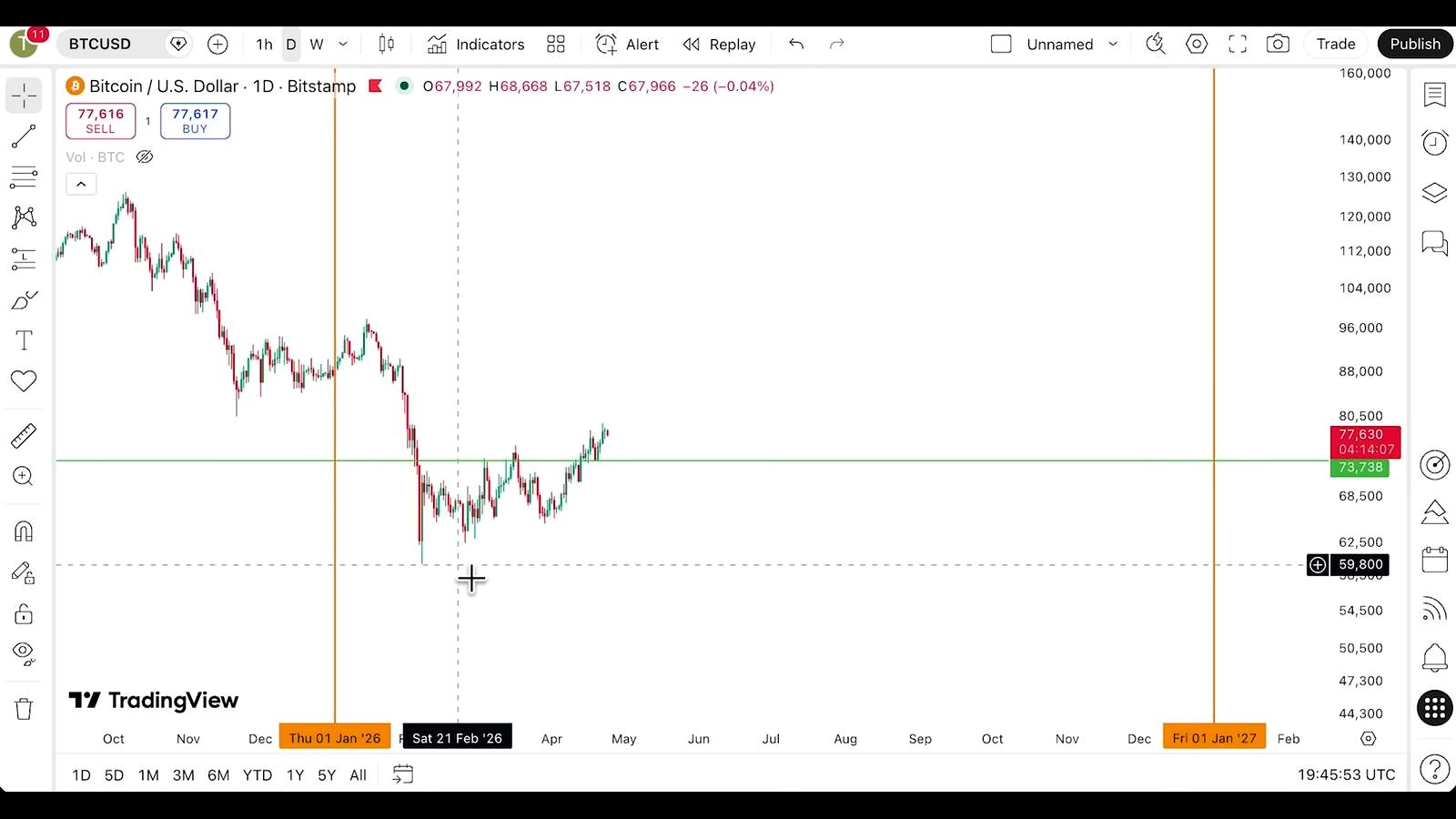
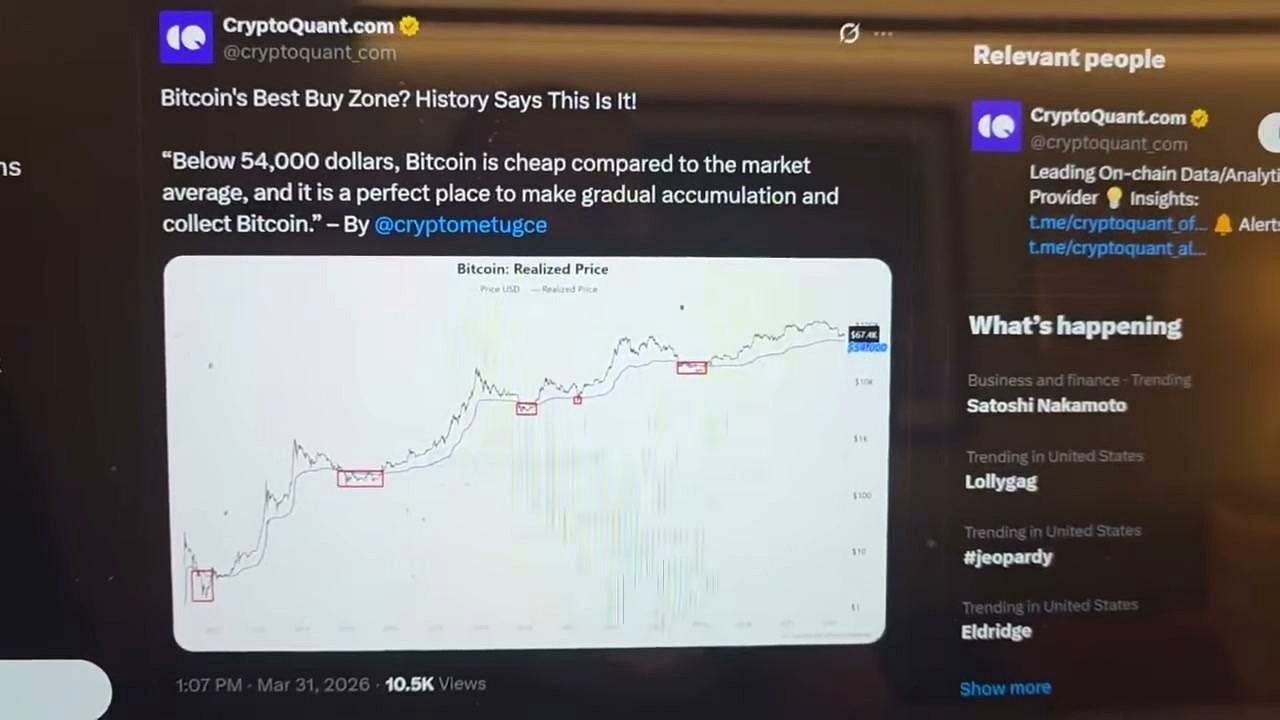
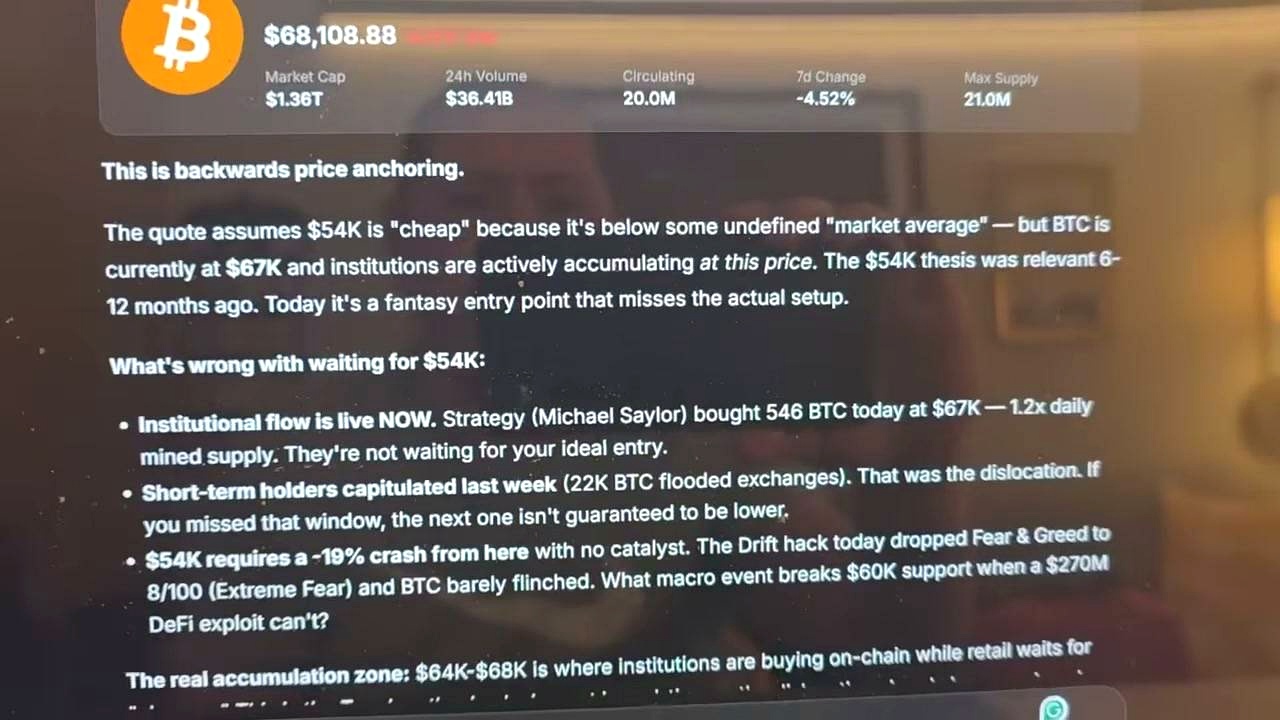
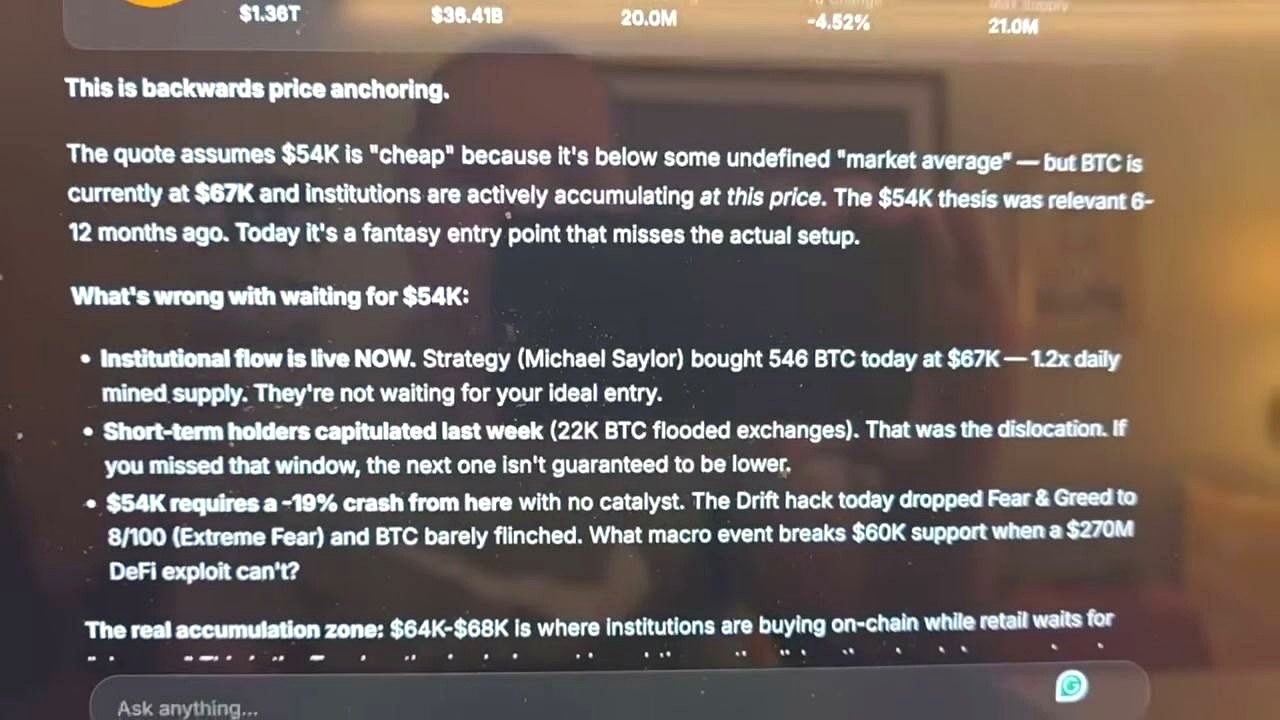
On the crypto side, CryptosRus Extra’s main thesis was blunt: treating $54,000 as the obvious buy zone is backward-looking and detached from present market structure. The host cited a view that Bitcoin below $54,000 would be “cheap” and good for gradual accumulation, then rejected it as fear-driven price anchoring. He also relayed commentary from “S Clash” saying the $54,000 thesis may have been relevant 6 to 12 months ago but is now a “fantasy entry point, ” with Bitcoin holding around $67,000 to $68,000 while institutions are still accumulating.
That framing is moderately bullish, but not especially fringe. A large share of the current market also believes spot demand, institutional participation, and tighter available supply have changed what counts as a realistic retracement target this cycle. Still, there is no consensus that deep pullbacks are off the table. Bitcoin has repeatedly delivered sharp corrections even inside strong bull trends, especially when macro volatility spikes.
Why the analyst thinks waiting for lower prices could backfire
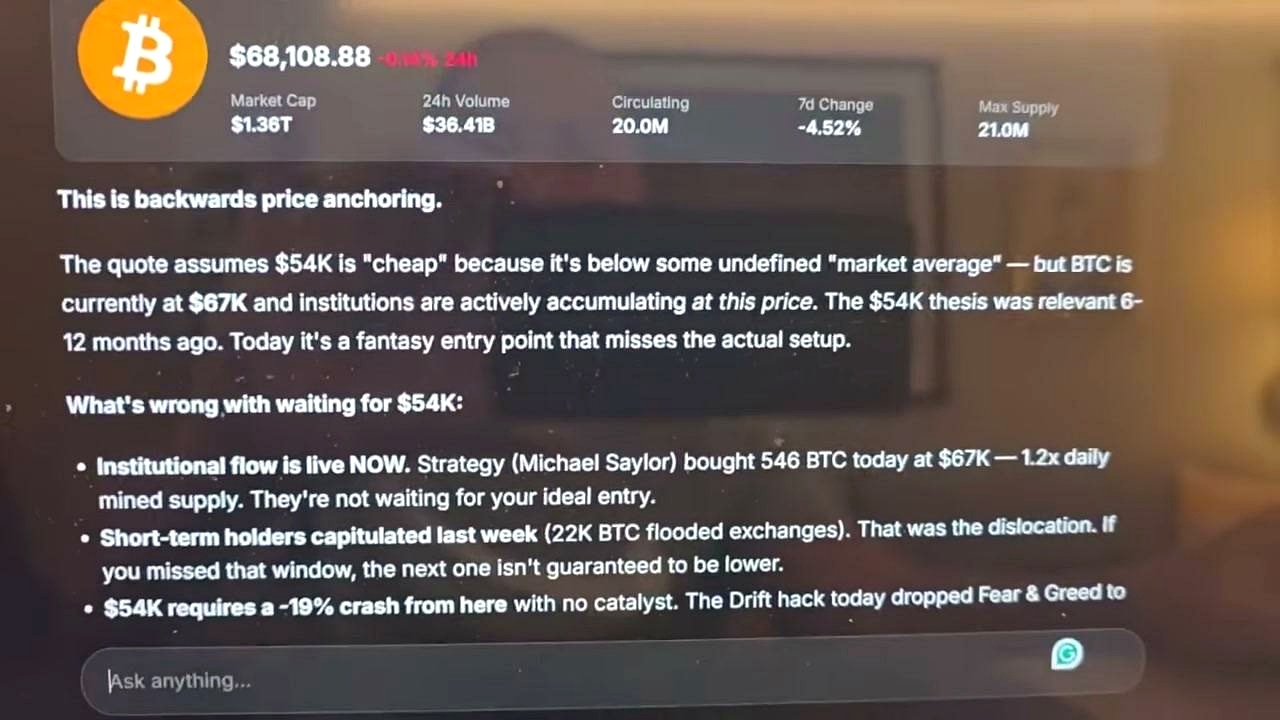
According to CryptosRus Extra, the practical danger is not merely being too bearish, but building an entire strategy around a level the market may never revisit. The host argued that retail traders are staying sidelined for lower prices while institutions buy “onchain” at current levels, echoing what he called the Tom Lee thesis in real time: larger players accumulate while smaller investors wait for a cheaper entry that never arrives.
The analyst’s historical comparison was straightforward. In the previous cycle, when Bitcoin fell to around $15,000, many expected a move below $10,000. In the cycle before that, after a drop to roughly $3,000, some were waiting for a breakdown below $1,000. In both cases, he said, the market moved on without them. His point was not that $54,000 or even $40,000 is impossible, but that probability and portfolio construction are different questions. A low-probability wick is not a good base case.
That argument lines up with a common late-cycle behavior in crypto: after a major breakout, sidelined capital keeps searching for the “perfect” pullback. Meanwhile, dips get absorbed earlier than expected because structurally stronger buyers are less price sensitive. In broader market context, that kind of behavior can persist if ETF inflows are healthy, long-term holders are not distributing aggressively, and macro liquidity is stable. But if one of those pillars weakens, the “fantasy entry” can become a real chart level very quickly.
The transcript did not give a precise upside BTC target, leverage setup, or exact invalidation level beyond dismissing the obsession with $54,000. That absence is notable. The bullish argument here is more about market behavior and positioning than about a hard technical trade.
A Solana exploit adds another layer of crypto-specific risk
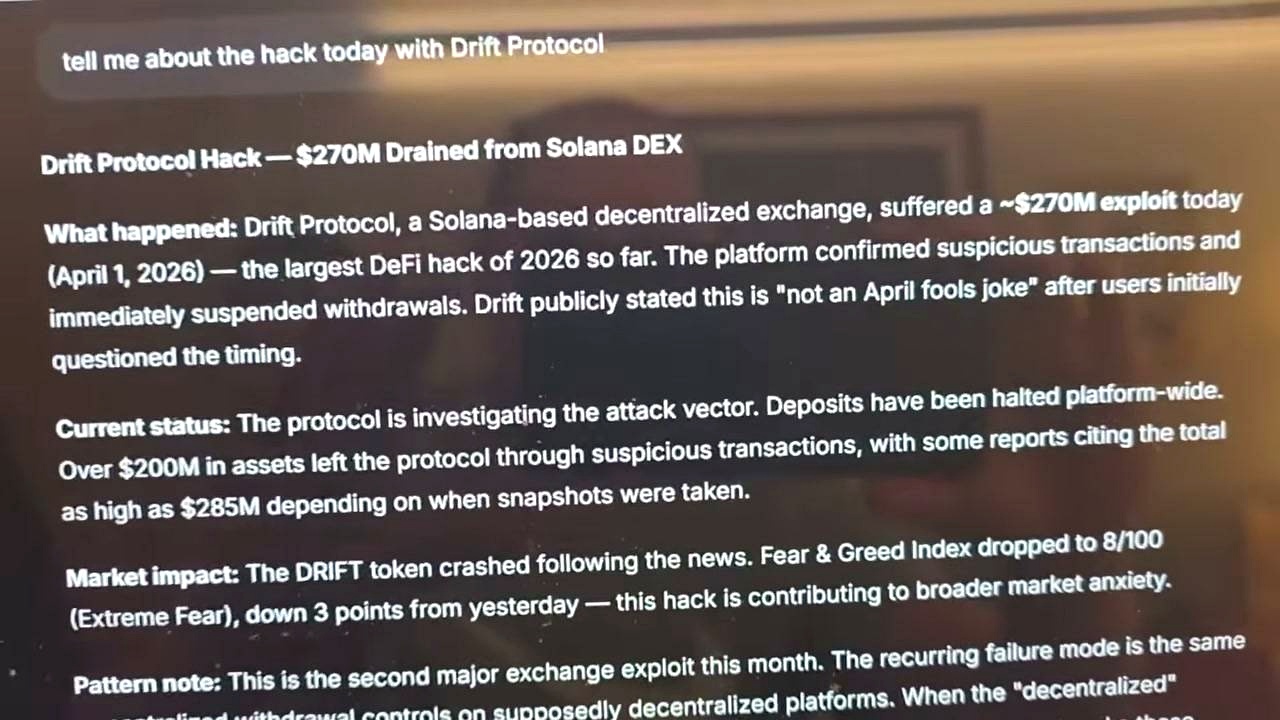
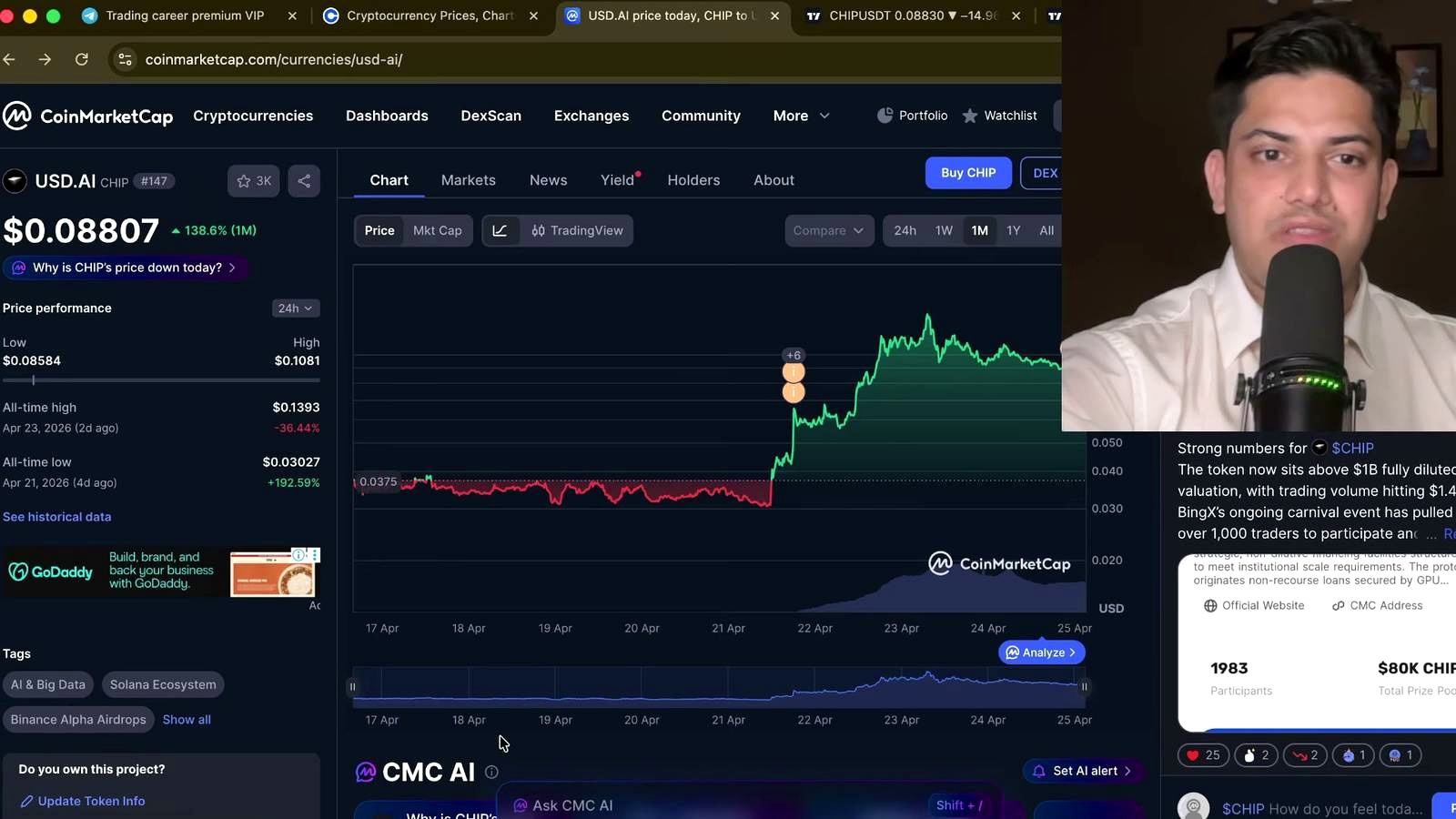
The video also flagged a major security incident outside Bitcoin itself. According to CryptosRus Extra, Drift Protocol on Solana suffered one of the largest hacks in recent memory, with an initial figure of $270 million. The host then cited reports that more than $200 million in assets had left the protocol through suspicious transactions, with some estimates as high as $285 million depending on when the snapshots were taken. He said deposits were halted platform-wide while the protocol investigated the attack vector.
Even though the exploit is not a Bitcoin event, it matters for sentiment. Large DeFi breaches tend to revive familiar concerns around smart-contract risk, platform custody, and contagion inside altcoin ecosystems. The host described it as the second major exchange exploit “this month, ” and argued that even mature-seeming projects can fail after a single exploit.
For Bitcoin, the read-through is indirect but real. When confidence in DeFi weakens, capital often rotates toward more conservative parts of the crypto stack, including BTC. But in the immediate aftermath of a large hack, broad crypto sentiment can also sour, dragging majors and alts together. Much depends on whether the losses appear containable and whether funds can be frozen, recovered, or otherwise prevented from being dumped on the market.
What could go wrong with the bullish Bitcoin thesis
The cleanest way to break this thesis would be a macro shock that overwhelms the accumulation story. If the expected geopolitical de-escalation fails to materialize and markets instead get escalation, sanctions fallout, or a broader risk-off move, Bitcoin could easily revisit much lower support levels. In that case, the host’s criticism of $54,000 anchoring would look early rather than wrong.
There are also crypto-specific risks the video only touched indirectly. Institutional accumulation is powerful, but it can slow. ETF flows can reverse. Derivatives positioning can become crowded. And if Bitcoin is already heavily owned by stronger hands, marginal demand has to keep arriving to maintain momentum. Without that, a drift from $68,000 toward lower liquidity pockets is not hard to imagine.
Another issue is that “institutions are buying” is not a timing tool. Institutions can accumulate through volatility and tolerate drawdowns that many retail traders cannot. A retail buyer who copies that behavior without time horizon discipline may still get shaken out. The other side of this trade is simple: bears are not necessarily calling for $54,000 because they are irrational. They may be looking at historical volatility, macro fragility, or the fact that Bitcoin often overshoots both up and down.
Finally, spillover from large altcoin or DeFi incidents can become more than a sentiment event if liquidity conditions deteriorate. A hack in one corner of the market does not stay isolated if forced selling spreads.
What to watch next
The first trigger is the geopolitical one: whether Trump’s statement delivers de-escalatory language or reintroduces uncertainty. That is the nearest-term catalyst the host believes could move all risk assets quickly.
For Bitcoin itself, traders will be watching whether price continues to hold around $67,000 to $68,000 rather than slipping into a deeper correction narrative. If BTC keeps absorbing downside and institutions continue buying dips, the “wait for $54,000” crowd may remain sidelined. If price loses momentum and macro headlines worsen, that lower zone will return to the conversation fast.
On the altcoin side, the Drift fallout matters. Whether losses settle closer to $200 million, $270 million, or $285 million, and whether any funds are frozen or recovered, will shape broader crypto sentiment in the days ahead.
FAQ
What does “price anchoring” mean in crypto trading?
Price anchoring is when traders fixate on a specific level, such as $54,000 for Bitcoin, and build their entire plan around it, even if market structure changes. It can cause investors to miss moves because they keep waiting for a number the market never revisits.
Why would geopolitical news affect Bitcoin so quickly?
Bitcoin often trades with broader risk sentiment in the short term. If geopolitical tensions ease, traders may rotate back into equities and crypto. If tensions worsen, investors often cut exposure to volatile assets first, and BTC can sell off alongside stocks.
How is institutional accumulation different from retail buying?
Institutions usually deploy capital over time, can tolerate larger drawdowns, and often follow allocation mandates rather than emotional reactions. Retail traders are more likely to wait for exact entry prices, chase momentum, or sell on fear during volatility.
What is Drift Protocol?
Drift Protocol is a Solana-based DeFi trading platform. In the transcript, CryptosRus Extra said it was hit by a major exploit, with loss estimates ranging from more than $200 million to as high as $285 million.
What happened the last times traders waited for much lower Bitcoin prices?
According to the host, similar behavior showed up near prior cycle lows. After Bitcoin fell to about $15,000, some traders waited for sub-$10,000. After the earlier drop to around $3,000, others waited for under $1,000. The market recovered without giving many of those buyers their ideal entry.
Source

Omar Al-Sharif lives and works in the UAE and is involved in the blockchain technology industry. He writes articles on Bitcoin and digital assets as a personal passion, explaining complex topics in simple and understandable language.