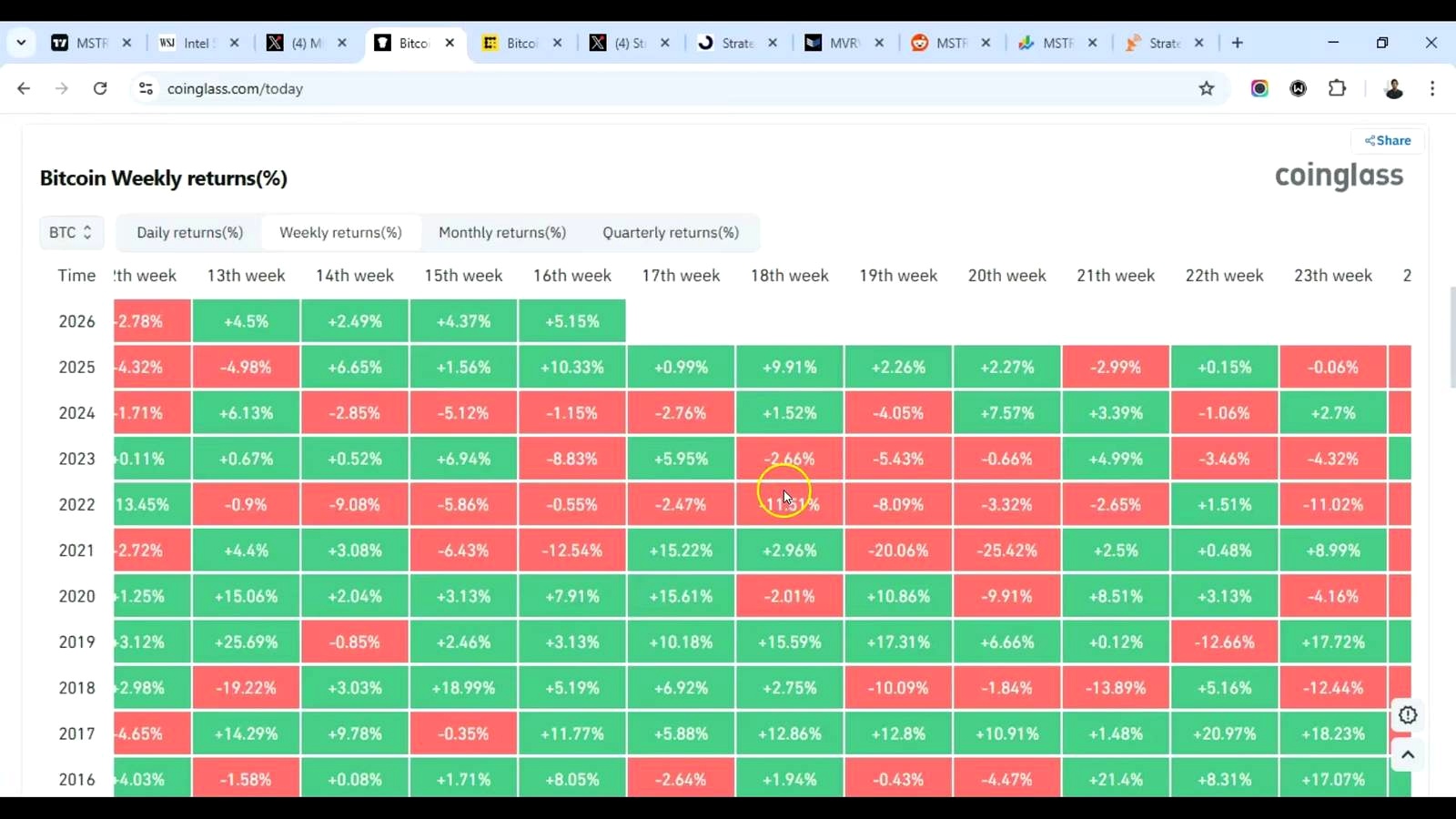
Bitcoin recently hit a new all-time high, and if history is any indication, its price could soon go parabolic. This article presents a step-by-step guide on how to trade BTC, including when to buy the dip and how to spot the top, using only the material provided.
Nothing here is financial advice. It is purely educational content meant to help you become a better BTC trader.
Before You Start

Before you trade BTC, you need to create an account on a cryptocurrency exchange that is right for you. The material mentions the Coin Bureau deals page, which has trading fee discounts of up to 60% and sign-up bonuses of up to $50,000 on several crypto exchanges. It also states that the preferred exchange these days is Bybit.
The first practical decision is how often you plan on trading BTC:
- If you plan on trading every day, you may need to buy a stablecoin such as USDT or USDC, depending on the exchange you use. Most BTC trading happens against stablecoins because they are the most liquid pairs.
- If your exchange supports your fiat currency or US dollars, you may not need to do this.
- If you plan on trading BTC once every week or month, you are going to need a crypto wallet to keep your BTC safe between trades.
As a rule of thumb, you should never keep any BTC you are not actively trading on an exchange, as you could run the risk of losing your funds.
Step 1: Decide Your Trading Frequency
Your trading frequency affects how you set up your trading process. Daily traders may rely more on exchange liquidity and stablecoin pairs. Weekly or monthly traders need to think more about storage and keeping BTC safe in a wallet between trades.
Step 2: Assess the Long-Term Trend
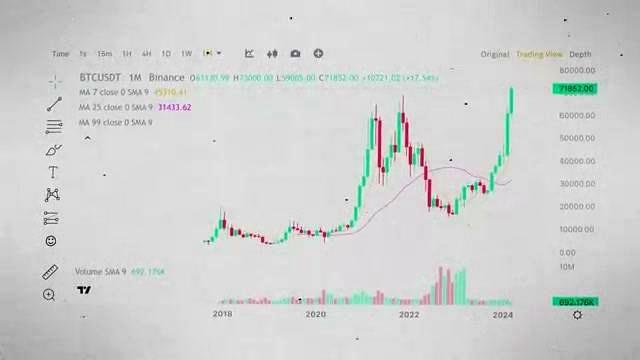
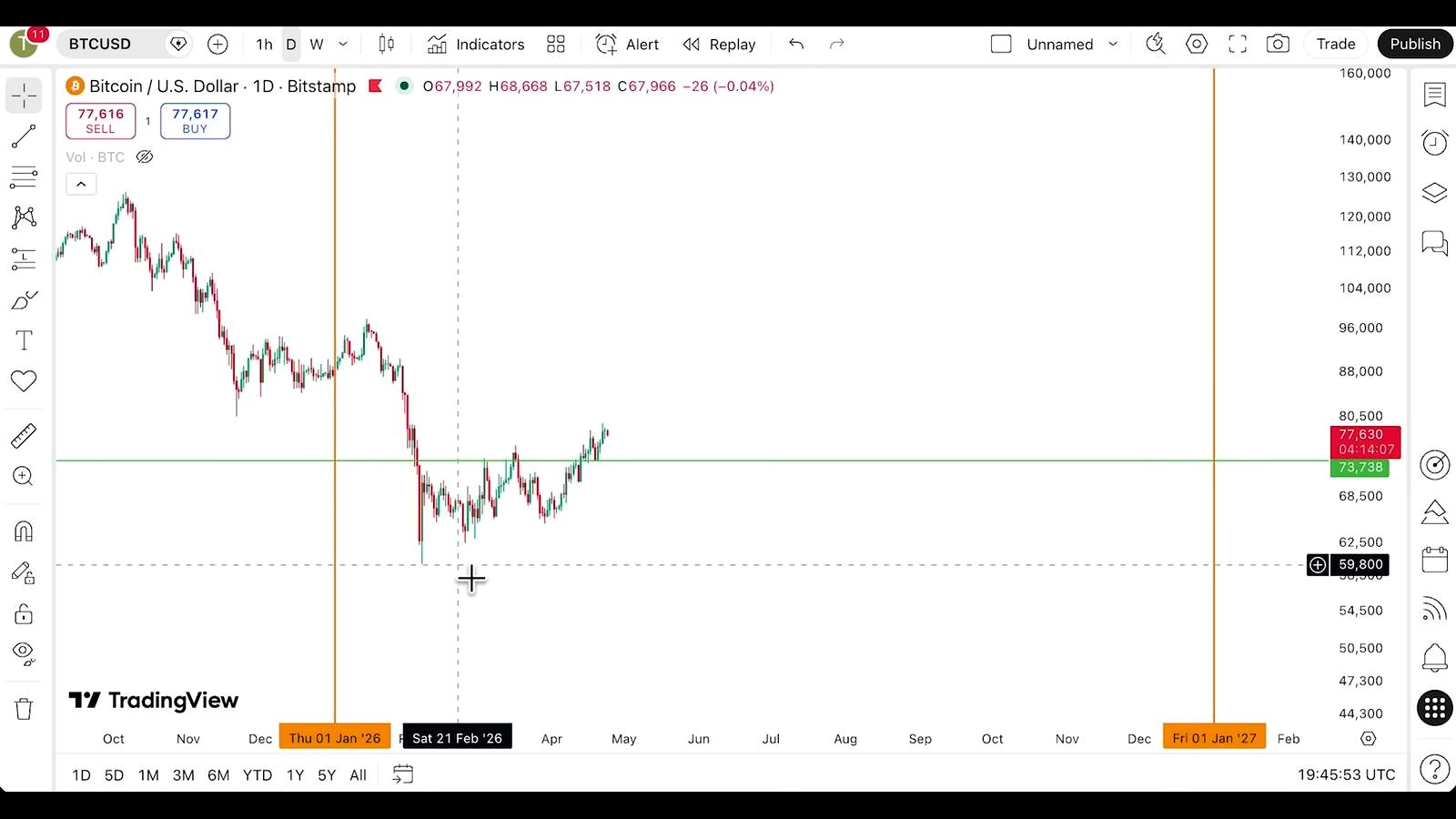
The second step is to assess whether BTC is in a long-term uptrend or a long-term downtrend. An easy way to do this is to adjust the charts to the weekly and then the monthly time frames.
At the time of shooting, BTC is in a very obvious uptrend. This matters because it gives you a sense of how other traders are positioned in the market:
- During a long-term uptrend, most traders tend to be long, meaning they are betting BTC’s price will go higher.
- During a long-term downtrend, traders are betting BTC’s price will go lower.
The practical effect is volatility:
- During long-term uptrends, BTC can suddenly fall by 10% or more before quickly recovering.
- During long-term downtrends, BTC can spike by 10% or more before quickly crashing again.
You need to be prepared for BTC to swing by 10% or more in a very short period of time. This can temporarily invalidate your analysis and cause you to buy or sell at the worst possible time.
One idea mentioned is a quote attributed to Richard Wyckoff about studying fluctuations as if they were the result of one man’s operations, the “composite man,” who manipulates the market to your disadvantage if you do not understand the game and to your profit if you do.
Step 3: Identify Support and Resistance
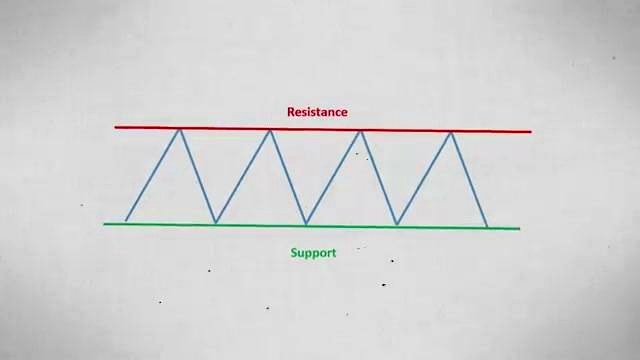
The third step is to identify zones of support and resistance on shorter time frames such as the daily and 4-hour charts. This gives you a sense of how high or low BTC could go in the short term, while keeping in mind that market leverage could cause a temporary break above or below.
What Support and Resistance Mean
- Support is the lower range where BTC clustered in the past.
- Resistance is the upper range where BTC clustered.
If BTC is trading between support and resistance:
- If it rallies, the rally may be rejected at resistance.
- If it crashes, it may bounce at support.
If the longer-term trend is up, there is a good chance BTC will break above its closest resistance and rally to the next resistance zone. If the long-term trend is down, there is a good chance BTC will break below support and fall to the next support zone.
When BTC falls below a zone of support, that zone becomes resistance. When BTC breaks above a zone of resistance, that zone becomes support. Also, zones of support and resistance on longer time frames are stronger than on shorter ones.
Two Caveats
Trading between these zones can be enough to make big bucks with enough practice, but there are two caveats:
- Other traders can see the same zones. This can cause premature bounces or rejections. For example, if resistance is near 100K, traders may sell just under 100K to front-run others. They could also push the price above 100K to cause liquidations. One simple way to mitigate this is to sell just before resistance is reached or buy just before support is reached. Put differently, be less greedy than other traders.
- Sometimes there is no clear resistance zone, especially when BTC is hitting new all-time highs.
How to Estimate Price at New All-Time Highs
When BTC is hitting new all-time highs, two methods are mentioned:
- Pay attention to key psychological levels such as visually appealing prices like 70K, 71K, 75K, 70.5K, or 70.1K depending on the time frame.
- Look at BTC’s market cap.
The material notes that BTC’s previous top around 69K put its market cap at one-tenth of gold’s market cap. It also says many investors see BTC as digital gold. This time around, BTC’s price stalled when it reclaimed the $1 trillion market cap, and it is possible that it could see similar resistance around $1.5 trillion and $2 trillion.
It also notes that market cap ultimately determines how much a crypto can rally, not its price.
Step 4: Use Indicators and Patterns

The fourth step is to use indicators and patterns that could signal a change in the short-term trend.
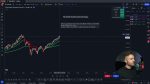
Bollinger Bands
One indicator mentioned is the Bollinger Bands. They show when BTC is overbought or oversold:
- If BTC’s price is above the upper band, it is overbought and could see a short-term crash.
- If it is below the lower band, it is oversold and could see a short-term rally.
In the middle is the Bollinger Band moving average, which serves as a surprisingly accurate zone of support and resistance for BTC across almost every time frame. On the monthly chart, this moving average effectively showed when BTC entered a new long-term uptrend.
The Bollinger Bands also give a rough range within which BTC could trade:
- The more volatile BTC has been, the wider the bands.
- When volatility is low, the bands are narrower.
- When volatility has been low for a long time relative to the time frame, the bands become very narrow around BTC’s price.
This is called a Bollinger Band squeeze, and it foreshadows a big move to the upside or downside. The likely direction depends on the trend.
Common Patterns
The most common patterns mentioned for BTC are:
- Bull flags
- Bear flags
- Double tops
- Double bottoms
Bull Flags
A bull flag consists of BTC rallying, falling for a little bit, and then rallying again. It is stated that longer-term uptrends are made up of multiple massive bull flags.
To estimate how much BTC could pump, take the distance of the initial pump and multiply it by two when BTC breaks out. The example given is:
- If BTC rallied from 42K to 52K, the difference is 10K.
- If BTC pulls back and then rallies above 52K, chances are it will hit close to 62K.
Since other traders can see these patterns too, it is prudent to take profits slightly before the targets identified.
Bear Flags
Bear flags are bull flags in reverse. They consist of BTC crashing, rallying a bit, and then crashing again. To assess how much BTC could crash, take the difference of the initial crash and multiply it by two once prices fall back below the initial level they fell to before the temporary rally.
Double Tops and Double Bottoms
A double top consists of BTC rallying, crashing, and then rallying back to the price in the first rally. A double bottom consists of BTC crashing, rallying, and then crashing back to the price of the first crash.
- A double top is a bearish reversal pattern and suggests BTC’s price is about to crash.
- A double bottom is a bullish reversal pattern and suggests BTC’s price is about to rally.
To estimate the move:
- For a double top, take the distance of the rallies and subtract it from BTC’s price once it breaks below the price at which the rallies began.
- For a double bottom, take the distance of the crashes and add it to BTC’s price once it breaks above the price at which prices crashed.
Double tops often occur near local tops, and double bottoms often occur near local bottoms.
Step 5: Learn to Spot the Top and Buy the Dip
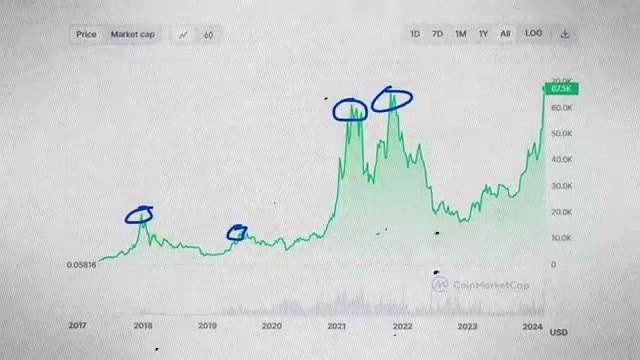
The fifth step is to learn how to spot the top and buy the dip. The material says the trick is to use different types of analysis, namely cycle analysis and sentiment analysis.
The tops referred to are local tops and cycle tops. The dips referred to are local bottoms and cycle bottoms. In plain English, these are the highest and lowest levels BTC will go in the medium term and long term, meaning months and years rather than days and weeks.
The Four-Year Cycle
BTC has historically followed a four-year cycle consisting of:
- One to two years of bull market, meaning a long-term uptrend
- Two to three years of bear market, meaning a long-term downtrend
At the time of shooting, BTC had already begun the one- to two-year bull market phase. This means the expectation is another 12 to 18 months of uptrend at the very most. Between now and then, there are likely to be multiple local tops, multiple local bottoms, and a cycle top somewhere in between.
Cycle Top Expectations
The cycle top is the highest price BTC will hit during the four-year cycle. The material says BTC’s cycle top could be around $180,000 or slightly higher. This is based on a combination of BTC’s diminishing returns over time and the possibility that the cumulative 40% inflation seen during the pandemic means adding 40% to BTC’s non-inflation-adjusted price.
Its non-inflation-adjusted cycle top would be around 120K.
As for timing, previous cycles suggest the cycle top should occur somewhere between April and October next year. However, the introduction of spot Bitcoin ETFs could have brought this cycle top forward to as soon as later this year.
Sentiment and Catalysts
This is where sentiment analysis becomes important. The cycle top will likely happen around an event that is so bullish it causes everyone to buy BTC. The material suspects this catalyst could be a major central bank buying BTC, something central banks will be allowed to do starting in 2025.
Local tops are also likely to be marked by bullish events that cause people to buy BTC, but these are unlikely to create widespread FOMO among both institutional and retail investors. Widespread awareness is needed for a cycle top.
On the other hand:
- Local bottoms will likely be marked by bearish events that cause people to sell BTC.
- Cycle bottoms will be marked by a catalyst so bearish that it causes people to panic-sell BTC.
The material makes clear that technical analysis often goes out of the window during local and cycle tops and bottoms. These moments bring enormous amounts of leverage and even more volatility. Unless you are incredibly experienced, it is better to avoid trading around these catalysts.
Cycle Bottoms
The cycle bottom is the lowest price BTC will go during the bear market phase of the four-year cycle. Historically, cycle bottoms have occurred around one year after BTC’s cycle top.
The material says it is impossible to predict exactly how low BTC will go during the next cycle bottom or when it will happen. However, it suggests that potential buying by large investors such as central banks could limit how much BTC crashes during the next cycle bottom.
Final Tips for Trading BTC
- Your returns are likely to be close to the same as if you had just held BTC instead, statistically speaking. This depends on how much time you are willing to dedicate to trading. The more you practice, the better you will get.
- The returns you get with BTC will not be nearly as large as the returns you could get trading altcoins. BTC has the largest market cap of any crypto, which makes it harder for its price to move in percentage terms.
- BTC is described as the best performing asset of the last century and is likely to continue to appreciate in price in the long term. This means you might be better off stacking sats and gradually allocating to BTC over the years as a de facto savings account.
- Even if you do not plan on actively trading BTC, you should still learn, because it helps you understand what is going on in the markets and may help you know when the best time is to sell the BTC you have been stacking.
- BTC does not exist in a bubble. It continues to be correlated to other assets, namely tech stocks. You should consider checking charts for the S&P 500, the NASDAQ, and the US dollar. BTC tends to be inversely correlated to the DXY: when the DXY goes down, BTC tends to go up.
FAQ
Is this financial advice?
No. The material explicitly says that nothing in the video is financial advice and that it is purely educational content.
What is the first step to trading BTC?
The first step is to decide how often you plan on trading it. That choice affects whether you may need stablecoins for frequent trading or a crypto wallet for longer gaps between trades.
Why are support and resistance important?
They help estimate how high or low BTC could go in the short term. Support is the lower range where BTC clustered in the past, and resistance is the upper range where it clustered.
What are Bollinger Bands used for?
They are used to identify when BTC may be overbought or oversold and to estimate a rough trading range. A Bollinger Band squeeze foreshadows a big move up or down.
What patterns are commonly used for BTC?
The material mentions bull flags, bear flags, double tops, and double bottoms as common and useful patterns.
How does the material describe BTC’s long-term cycle?
It says BTC has historically followed a four-year cycle with one to two years of bull market and two to three years of bear market.
What cycle top level is mentioned?
The material says BTC’s cycle top could be around $180,000 or slightly higher, while its non-inflation-adjusted cycle top would be around 120K.
Should traders watch other markets too?
Yes. The material says BTC does not exist in a bubble and remains correlated to tech stocks, while also tending to be inversely correlated to the US dollar index.
With all of this information in mind, the material says you should have everything you need to succeed when trading BTC.
Source Video

John Burnell focuses on Bitcoin infrastructure, wallet security and blockchain technology. He writes educational articles explaining how Bitcoin works and how the technology evolves.