Crypto markets are still wrestling with the same question: is this just another policy-friendly headline cycle, or the start of a deeper reordering of how Washington treats Bitcoin and digital assets? According to Thinking Crypto, a string of fresh comments from U.S. officials suggests the latter, with implications that go well beyond short-term price action.
The Core Thesis
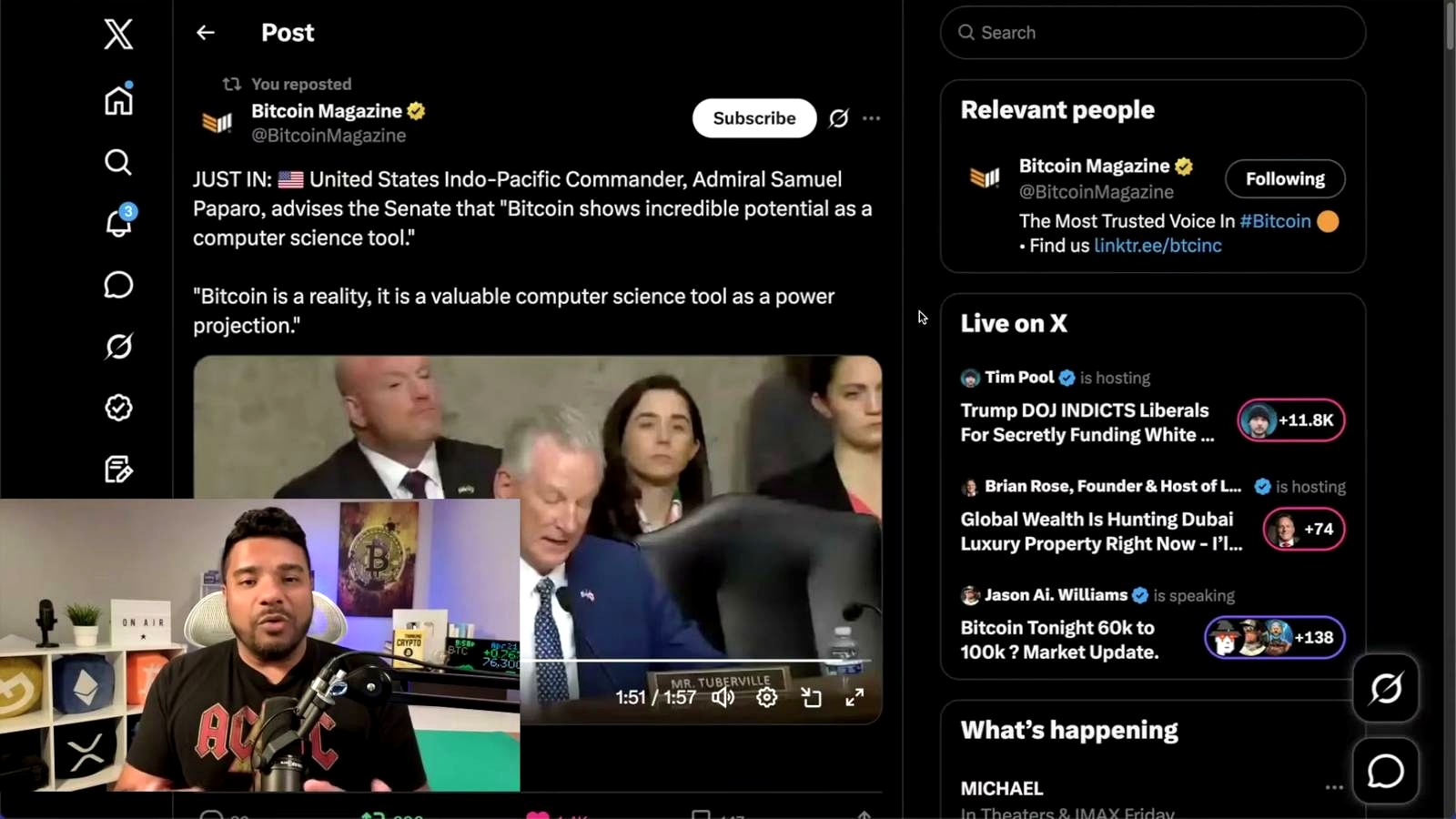
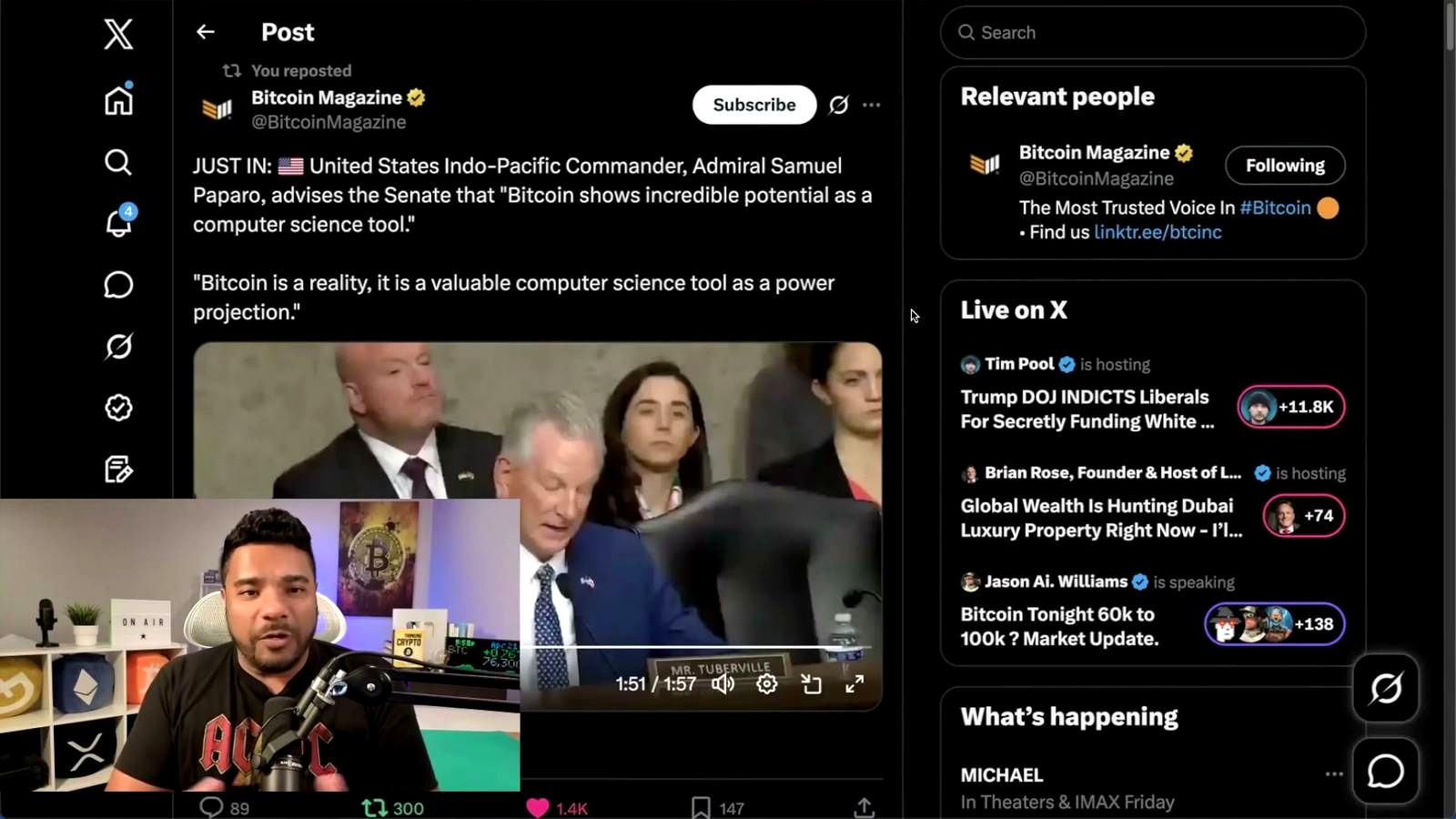
According to Thinking Crypto, the most important development is not a single token listing or company partnership, but a broader change in U.S. political and institutional rhetoric around Bitcoin and crypto. The host points to remarks from U.S. Indo-Pacific commander Admiral Samuel Paparro, who told the Senate that “Bitcoin is a reality” and described it as a “valuable computer science tool” with cybersecurity and “power projection” applications. Thinking Crypto argues those comments matter because they frame Bitcoin not merely as a speculative asset, but as strategically relevant technology in U.S. competition with China.
The host ties that to a second signal: comments from Kevin Warsh, described in the video as President Trump’s Fed chair nominee. Thinking Crypto says Warsh stated that digital assets are already “part of the fabric” of the U.S. financial services industry and supported incorporating digital assets into the financial industry to give Americans new investment opportunities and consumer protections. The host also highlights Warsh’s stated opposition to a central bank digital currency, while cautioning that promises are not the same as legislation.
That thesis broadly aligns with a market narrative that has gained strength since spot Bitcoin ETF adoption pushed Bitcoin deeper into mainstream portfolios: the U.S. is moving from reluctant tolerance toward competitive integration. That is no longer a fringe view. What remains less settled is the speed and durability of that shift. Bitcoin bulls see strategic reserve discussions, more permissive regulation, and stablecoin legislation as signs of accelerating institutional acceptance. Skeptics counter that policy progress is still uneven, election-sensitive, and vulnerable to bureaucratic delay. In other words, the direction may be improving, but the path is not linear.
Supporting Analysis
Thinking Crypto’s supporting case rests on several adoption and infrastructure stories that, taken together, paint a picture of crypto moving further into regulated finance.
First, the host says White House crypto adviser Patrick Witt recently indicated the market is “weeks away” from a major update on a strategic Bitcoin reserve. That is not confirmation of a new reserve-buying program, but it reinforces the idea that the reserve conversation has moved from campaign rhetoric into policy-watch territory. If the U.S. were to formalize a reserve framework that goes beyond seized assets and allows purchases over time in a “revenue neutral” way, as the host speculates, that would be a meaningful shift in sovereign treatment of Bitcoin.
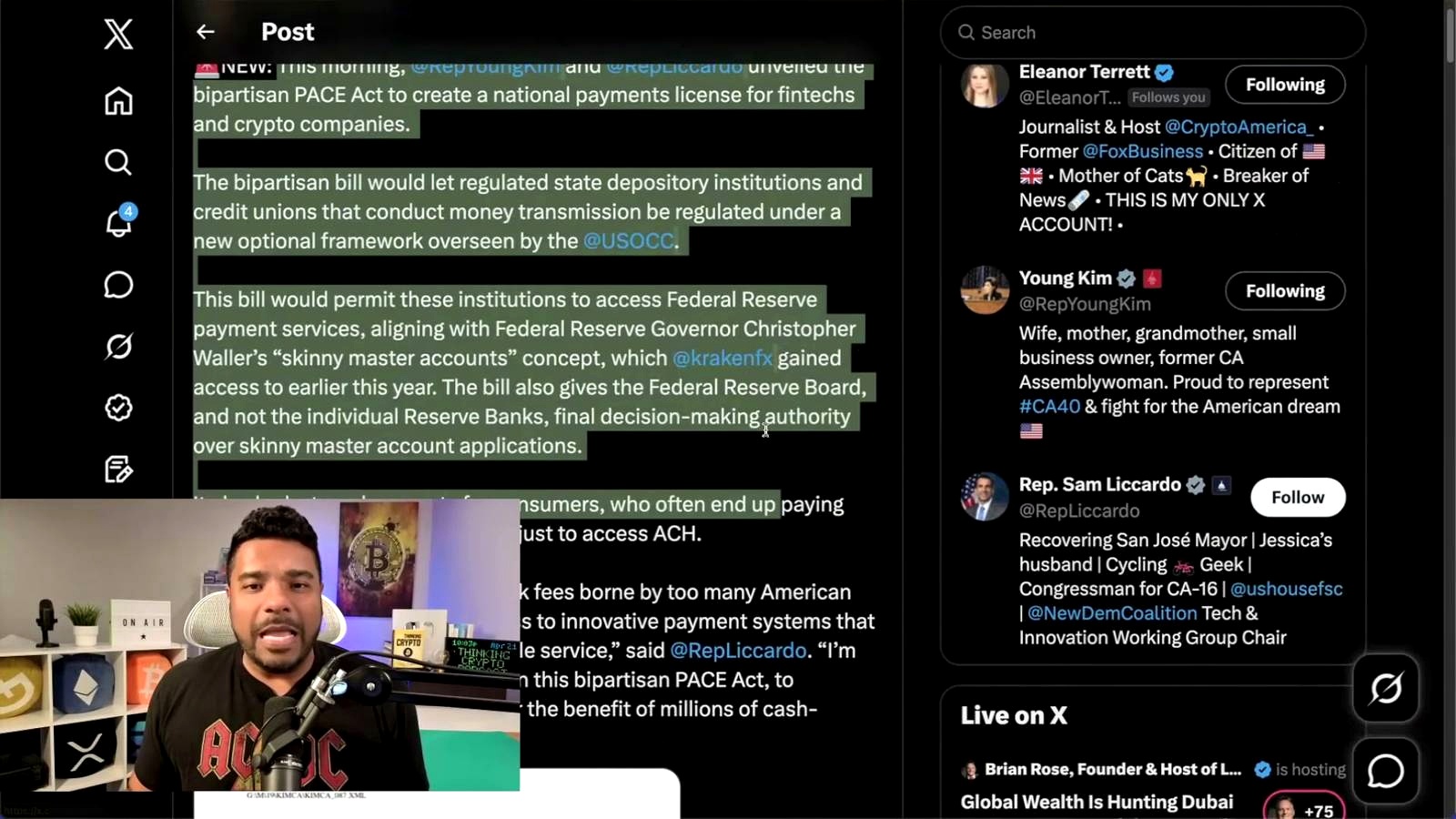
Second, the host highlights the bipartisan PACE Act, introduced by Representatives Young Kim and Sam Liccardo, which would create a national payments license for fintechs and crypto companies. Thinking Crypto emphasizes that the bill would create an optional framework overseen by the OCC and allow eligible institutions to access Federal Reserve payment services. In practice, proposals like this matter because one of crypto’s biggest bottlenecks in the U.S. has been access to banking rails and payment infrastructure. Lower that friction, and the sector becomes easier to integrate into everyday financial services.
Third, the host points to SoFi Bank adding support for XRP after earlier listings of Bitcoin, ETH, and Solana. On its own, one additional listing is not market-defining. But in aggregate, it fits a pattern: banks, fintechs, and brokerages continue to widen crypto access once they establish a core offering. The same logic appears in the Coinbase-related developments cited in the video. Thinking Crypto notes that Singapore fintech NIUM is using Coinbase infrastructure to integrate USDC payments across more than 190 countries, while Coinbase’s advisory board published a 50-page paper arguing that quantum-computing preparation should begin now, even if current blockchains remain secure today.
The host also notes Ripple’s roadmap to make the XRP Ledger quantum resistant by 2028, calling it part of an industry-wide preparation cycle rather than evidence of an immediate existential threat. That framing is sensible. Quantum risk is real in the long term, but today it functions more as a technology planning issue than a near-term market breaker.
What Could Go Wrong
The biggest risk to this thesis is that investors confuse better rhetoric with completed policy. Senate testimony and nominee comments can shift expectations, but they do not automatically create law, market structure, or durable access. Thinking Crypto acknowledges part of this risk on CBDCs, arguing that an anti-CBDC law still matters more than verbal opposition. The same standard applies more broadly: until legislation, agency rules, and implementation details are in place, optimism can outrun reality.
There is also a market risk the host largely leaves implicit. Even if the long-term infrastructure story is improving, crypto still trades within a macro regime shaped by liquidity, rates, and risk appetite. A hawkish turn from the Fed, recession fears, geopolitical stress, or equity-market weakness could pressure Bitcoin and altcoins regardless of how constructive the policy headlines look. Crypto adoption progress does not immunize the asset class from broader risk-off moves.
Another counterpoint is that strategic framing can cut both ways. If Bitcoin becomes more tightly associated with national competition and financial infrastructure, it may gain legitimacy, but also attract more oversight, surveillance demands, and political contestation. Meanwhile, for altcoins, increased bank and fintech integration does not guarantee equal upside. Institutional access often narrows attention to a handful of assets while leaving the long tail behind.
What to Watch Next
The next key trigger is whether the reported “weeks away” strategic Bitcoin reserve update actually produces a concrete framework rather than another discussion cycle. Beyond that, traders should watch whether the PACE Act gains traction, whether anti-CBDC legislation advances this year, and whether more banks follow SoFi in expanding token support beyond Bitcoin and Ether.
On the infrastructure side, stablecoin payment integrations will be a useful signal. If more firms follow NIUM’s model and begin using USDC rails for cross-border settlement, that would strengthen the case that crypto’s utility layer is maturing even when speculative price action is choppy. And on the technology front, expect more chains, custodians, and exchanges to publish quantum-readiness plans ahead of 2028.
FAQ
What is a strategic Bitcoin reserve?
A strategic Bitcoin reserve would be a government-held pool of Bitcoin, similar in concept to other strategic reserves held for national interest reasons. In the current U.S. debate, one open question is whether such a reserve would consist only of seized BTC or eventually include active purchases.
Why does Fed access matter for crypto and fintech firms?
Access to Federal Reserve payment services can reduce reliance on intermediary banks and improve payment settlement efficiency. For crypto firms, that could mean better connectivity to dollar payment rails, lower operational friction, and potentially more competitive financial products.
What is a CBDC, and why do crypto investors oppose it?
A CBDC is a central bank digital currency, a digital form of sovereign money issued by a central bank. Critics in crypto worry that a retail CBDC could increase state visibility into transactions and give governments more direct control over how money moves.
How serious is the quantum threat to Bitcoin and other blockchains?
It is generally viewed as a long-term cryptographic challenge, not an immediate crisis. The main concern is that a future fault-tolerant quantum computer could break widely used encryption methods, which is why exchanges, custodians, and blockchain developers are already discussing migration paths to quantum-resistant systems.
How does this compare with earlier crypto policy cycles in the U.S.?
Earlier cycles were dominated by enforcement, skepticism, and basic questions over whether crypto should fit inside existing financial rules. The current phase looks different because the discussion is increasingly about integration: reserve policy, payments access, stablecoin infrastructure, and how crypto fits into the national financial system.
Video Source

Omar Al-Sharif lives and works in the UAE and is involved in the blockchain technology industry. He writes articles on Bitcoin and digital assets as a personal passion, explaining complex topics in simple and understandable language.