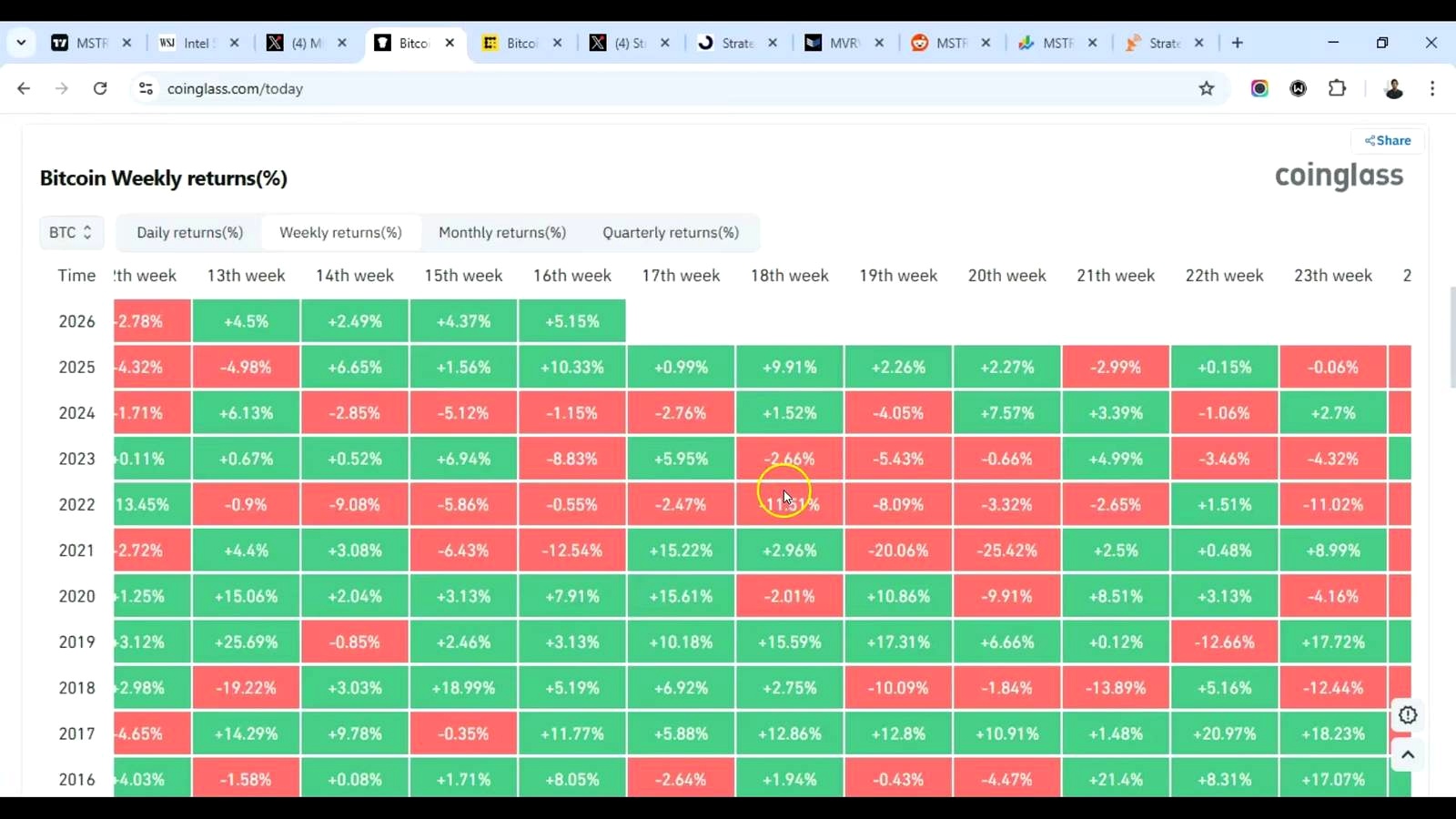
Traders are again facing the same question near local highs: is Bitcoin setting up for continuation, or is this another sweep before a deeper pullback? According to AB krypto, the answer for now leans bearish, with BTC showing breakdown-and-retest behavior across lower timeframes and no convincing long setup unless price can reclaim $74,800.
AB krypto’s core thesis: Bitcoin still favors shorts below $74,800
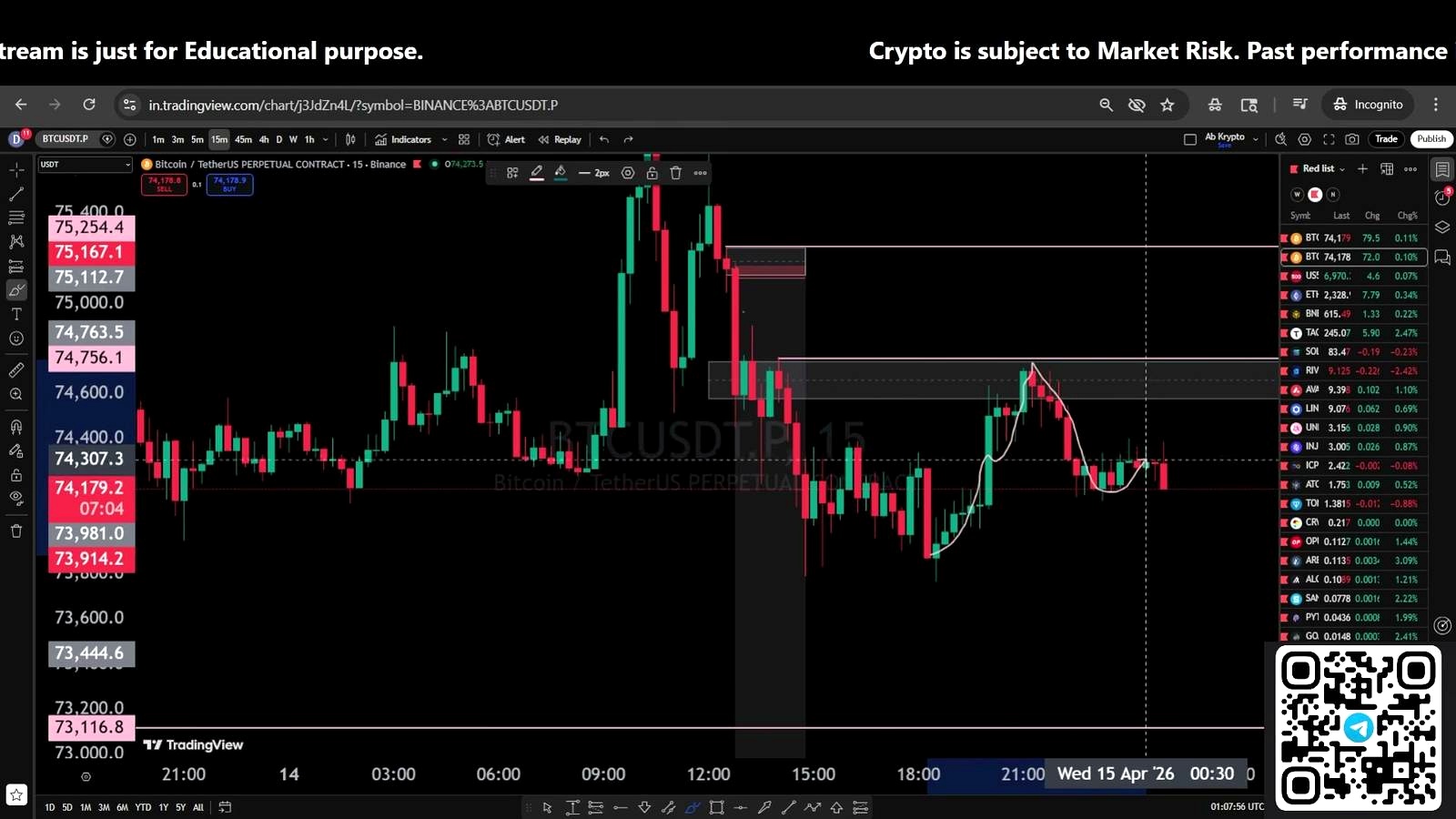
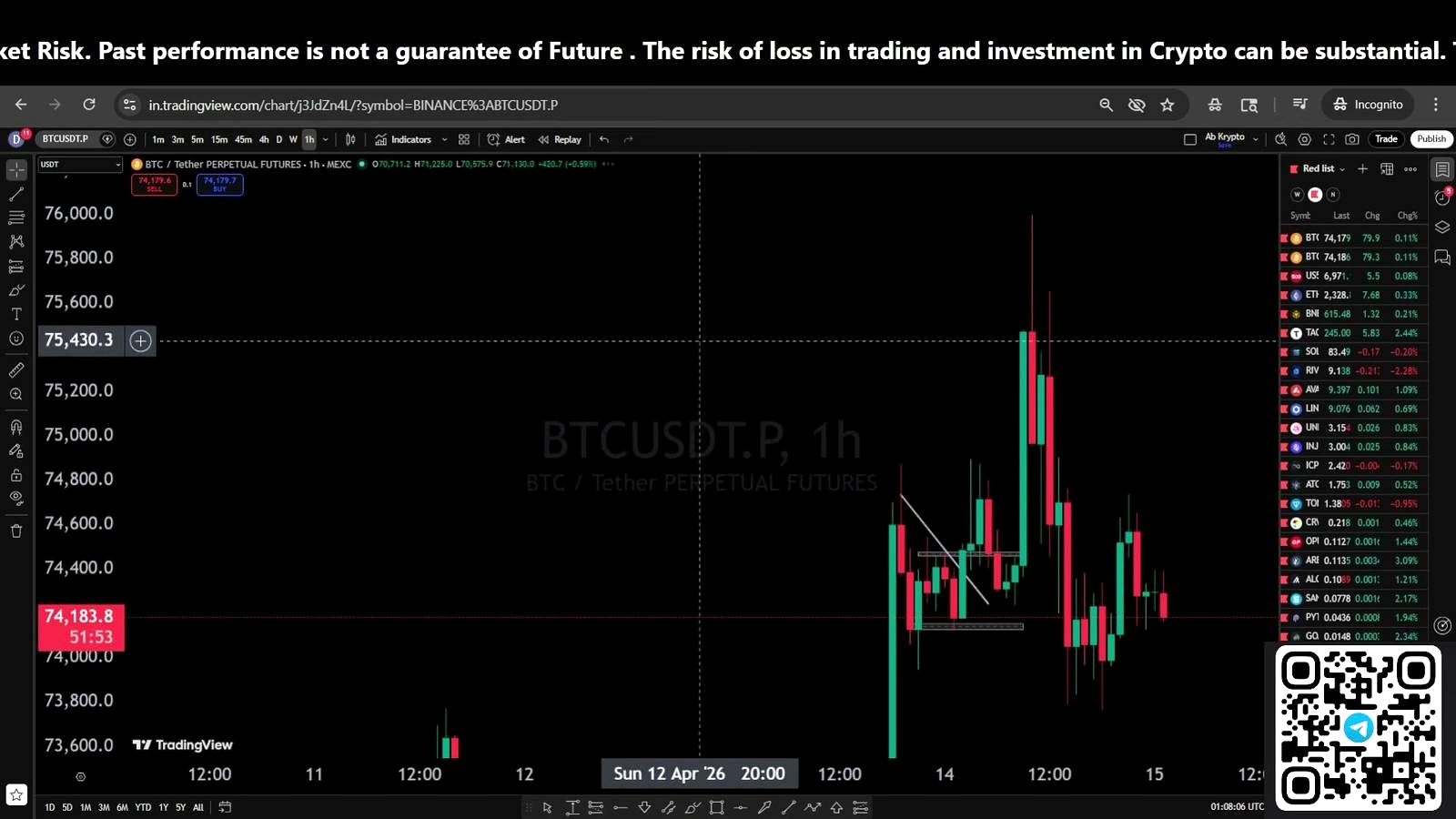
According to AB krypto, Bitcoin’s near-term structure has already turned weak on the intraday chart stack. The host said the market had previously pushed into the $74,700 area, a zone he had identified as a likely place for downside to begin, and now argues that BTC is showing a classic breakdown, retracement, and rejection sequence on the 1-hour timeframe.
His framework is straightforward. On the 15-minute chart, he sees a continuing downtrend. On the 1-hour chart, he says the market has already broken lower, retraced into supply, and taken rejection. On the 4-hour and daily view, he argues the market is forming what he described as “dumping” conditions after a daily liquidity sweep. In that setup, he says the higher-probability trade is to wait for another breakdown, then a small retracement, and use that retest for a short entry rather than trying to catch a bottom.
The key invalidation level in his analysis is clear: AB krypto argues that traders should not consider longs before a break of $74,800. Even then, he says the move would need a retracement after the breakout before offering a cleaner long setup.
That view sits in a familiar place in current crypto market psychology. Short-term traders often turn defensive after a failed push near local highs, especially when price appears to run above liquidity and then reverse. More broadly, this is a tactical bearish call, not necessarily a full macro reversal thesis. In general market terms, Bitcoin has repeatedly shown that intraday breakdowns can accelerate quickly when momentum traders pile in, but it has also punished late shorts during strong uptrends. That makes the $74,800 threshold especially important: it is less about one exact number and more about whether buyers can regain control after an apparent liquidity sweep.
How the setup works: breakdown, retracement, then continuation lower
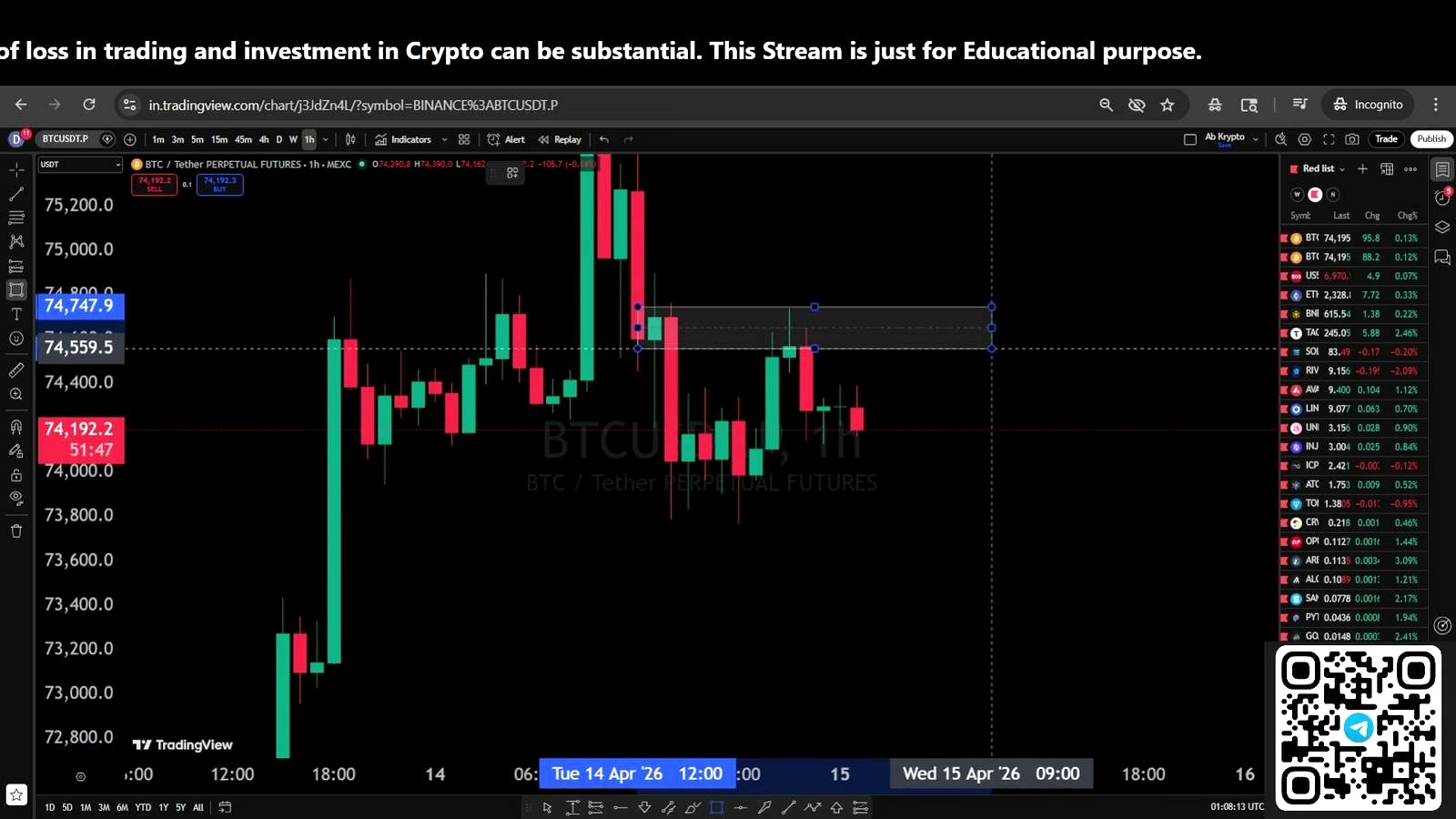
AB krypto’s supporting case is built around execution rather than grand narrative. He said he had already taken a short after an exact 15-minute breakdown, though he also noted that the stop loss was hunted. He still treated the broader idea as active, pointing to the market’s rejection after retracing into supply.
For Bitcoin, the analyst repeatedly emphasized patience. Rather than shorting impulsively into weakness, he expects the market may first “trap” traders. In practical terms, that means BTC could break lower, bounce modestly to retest the breakdown area, and only then resume falling. That kind of move is common in leveraged markets because it flushes both early shorts and eager dip buyers before choosing direction.
His bias remains short unless the market proves otherwise. The setup he prefers is:
- a confirmed downside break on lower timeframes,
- a retracement back into the broken area or supply zone,
- and then a fresh short entry on renewed weakness.
He applies the same playbook to Ethereum. According to AB krypto, ETH is being rejected from a supply area and has what he described as a higher-high structure that is vulnerable to a break. He pointed to a 1-hour breakdown area around 2432, and on the 15-minute chart flagged 2319 as the level whose breakdown could create a short opportunity targeting 2248.
That cross-asset framing matters because BTC rarely trades in isolation. If Ethereum also starts losing lower-timeframe structure, it would strengthen the case that the broader crypto complex is entering a short-term de-risking phase rather than seeing only isolated Bitcoin weakness.
What could go wrong with the bearish thesis
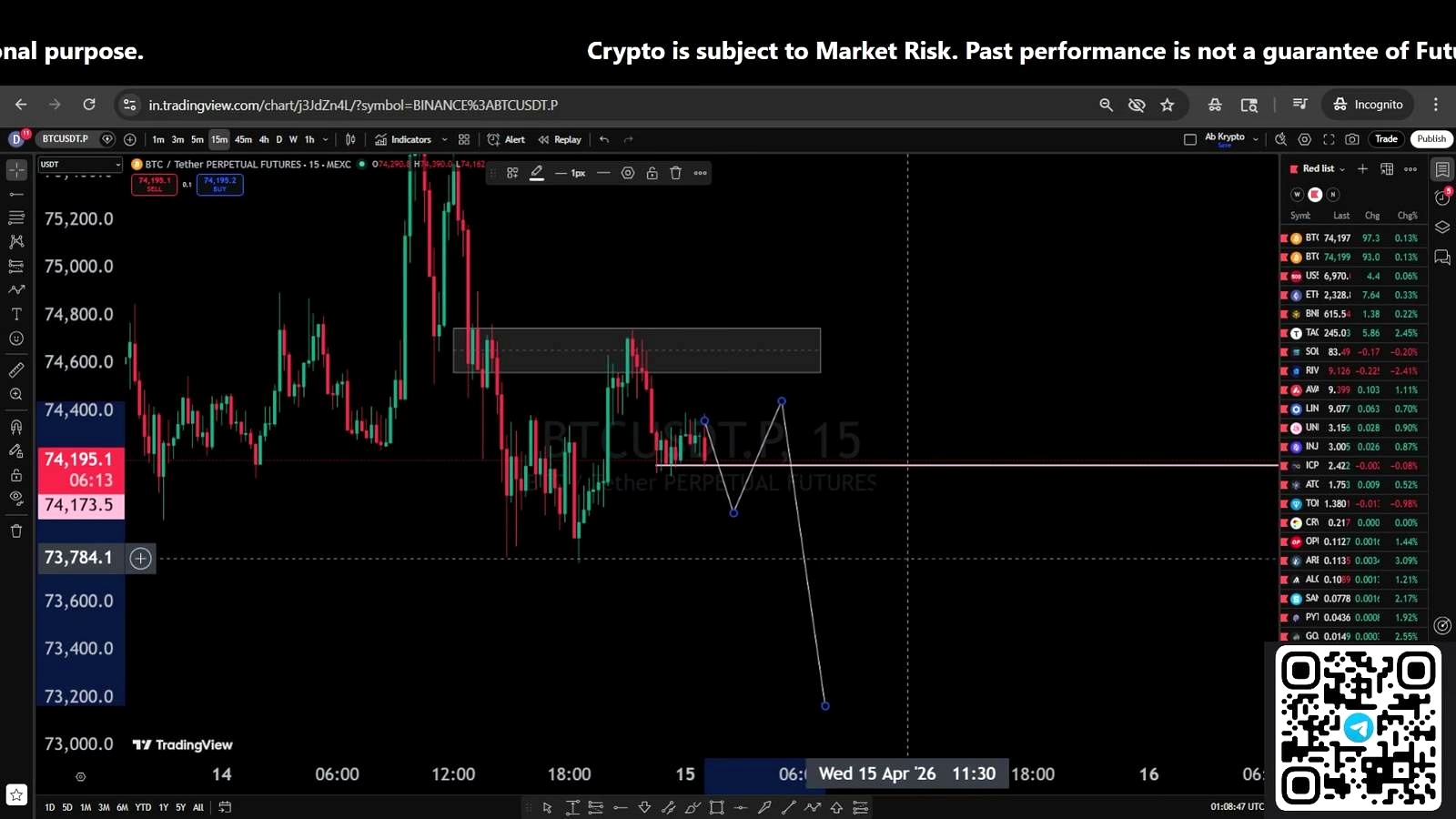
The most obvious risk to AB krypto’s view is that the market has already completed the liquidity sweep he referenced and is preparing for a trend continuation higher, not a breakdown cascade. In crypto, failed bearish retests can reverse violently, especially if short interest builds too quickly below obvious resistance.
The clearest technical break of his thesis is a clean reclaim of $74,800, followed by acceptance above that level rather than another rejection. If buyers can push above that area, absorb supply, and hold the retest, the entire “breakdown and continuation lower” structure becomes less compelling.
There are also risks the analyst did not develop in detail. One is macro sensitivity. Bitcoin can abruptly decouple from neat intraday setups if a broader risk-on move hits equities, if bond yields ease, or if ETF-related flows turn supportive. Another is simple trend context: in strong bull phases, lower-timeframe breakdowns often resolve into short squeezes rather than sustained downtrends. Traders leaning too heavily on the 15-minute and 1-hour charts can get trapped when the higher timeframe remains bullish.
The other side of this trade is straightforward: bulls can argue that until major higher-timeframe support is lost, every sweep lower is still a candidate for accumulation. That does not invalidate AB krypto’s intraday caution, but it does limit how far traders should extrapolate a short-term bearish structure into a bigger-cycle conclusion.
What to watch next
The first trigger is Bitcoin’s behavior around $74,800. If BTC breaks and retests that level successfully, AB krypto’s no-longs stance weakens fast. If it fails below that area and starts printing another lower high on the intraday chart, his short-bias setup stays intact.
Traders should also watch whether BTC delivers the sequence he described: breakdown, small retracement, then renewed selling. If the retracement instead turns into a full reclaim of lost structure, bears lose control.
On the alt side, Ethereum levels around 2432 and 2319 are worth monitoring. A break of 2319 with weak follow-through toward 2248 would reinforce the risk-off case across majors. If ETH holds up while BTC stabilizes, the broader bearish thesis becomes less convincing.
FAQ
What is a liquidity sweep in Bitcoin trading?
A liquidity sweep usually refers to price moving above a prior high or below a prior low to trigger clustered stop orders before reversing. Traders watch these moves because they can signal exhaustion or manipulation around obvious levels.
Why do traders wait for a retracement after a breakdown?
A retracement after a breakdown can offer a cleaner entry and tighter risk than chasing price lower. If the market returns to the broken level and rejects it, traders take that as evidence the breakdown is being accepted.
What does “supply area” mean on a chart?
A supply area is a zone where selling previously overwhelmed buying, leading to a move lower. Traders often expect price to react there again, at least on the first revisit.
How is this Bitcoin setup different from a full bear market call?
This is an intraday to short-term tactical view based on lower-timeframe structure. A full bear market call would usually require broader evidence such as major weekly breakdowns, weakening long-term demand, and sustained failure across multiple timeframes.
What happened the last time Bitcoin failed near a local high?
Historically, failed breakouts near local highs can lead either to sharp pullbacks or to short squeezes if buyers quickly reclaim the level. The difference usually comes down to whether price holds below resistance after the first rejection or snaps back above it.
Content Source

John Burnell focuses on Bitcoin infrastructure, wallet security and blockchain technology. He writes educational articles explaining how Bitcoin works and how the technology evolves.