A Bitcoin demand can quickly shape a case around money, anonymity and cross-border flight. But when the details stop fitting a genuine extortion playbook, the crypto element starts to look less like motive and more like staging.
According to Crime Hotspot Global, that is the central tension in the disappearance of Nancy Guthrie: a case framed in part by Bitcoin ransom messages, yet filled with details the host says undermine the idea of a real-for-profit kidnapping. That matters because Bitcoin often becomes shorthand for criminal sophistication, even when the surrounding facts may point somewhere else.
The core thesis: the Bitcoin ransom may have been narrative, not motive

According to Crime Hotspot Global, the strongest argument against a genuine ransom plot is simple: Nancy Guthrie’s heart medication was allegedly left untouched on the kitchen counter even though it was due at 10:00 p.m. and she was brought home at 9:50 p.m.. The host says the sheriff indicated she would likely not survive more than 24 hours without it. If a kidnapper intended to extract money, he argues, preserving the hostage’s condition would have been essential.
The transcript lays out the ransom timeline in concrete terms. Messages sent on February 2nd and 3rd demanded $4 million in Bitcoin by 5:00 p.m. on February 5th, rising to $6 million by February 9th. Crime Hotspot Global says the messages included a real, active Bitcoin wallet address on-chain, but also lacked what most extortion cases need most: proof of life. No images, audio, or video were cited to show Nancy was alive after the disappearance.
That reading is somewhat at odds with how Bitcoin-related crime is often discussed in public. In real-world ransom and extortion cases, Bitcoin is used because settlement is fast, global and hard to reverse. But the payment rail alone does not validate the underlying kidnapping theory. Investigators and market observers alike know that a wallet address can be generated in minutes. The harder question is whether the behavior around the demand matches a credible coercive strategy. Here, based on the transcript, the host argues it does not.
The broader context matters. Bitcoin is still common in cyber extortion, but in physical kidnappings criminals often make operational mistakes, especially when attempting to imitate a more sophisticated ransom model. That leaves room for two competing interpretations: either the perpetrators were disorganized, or the Bitcoin trail was never the true center of the case.
Why the secondary details matter

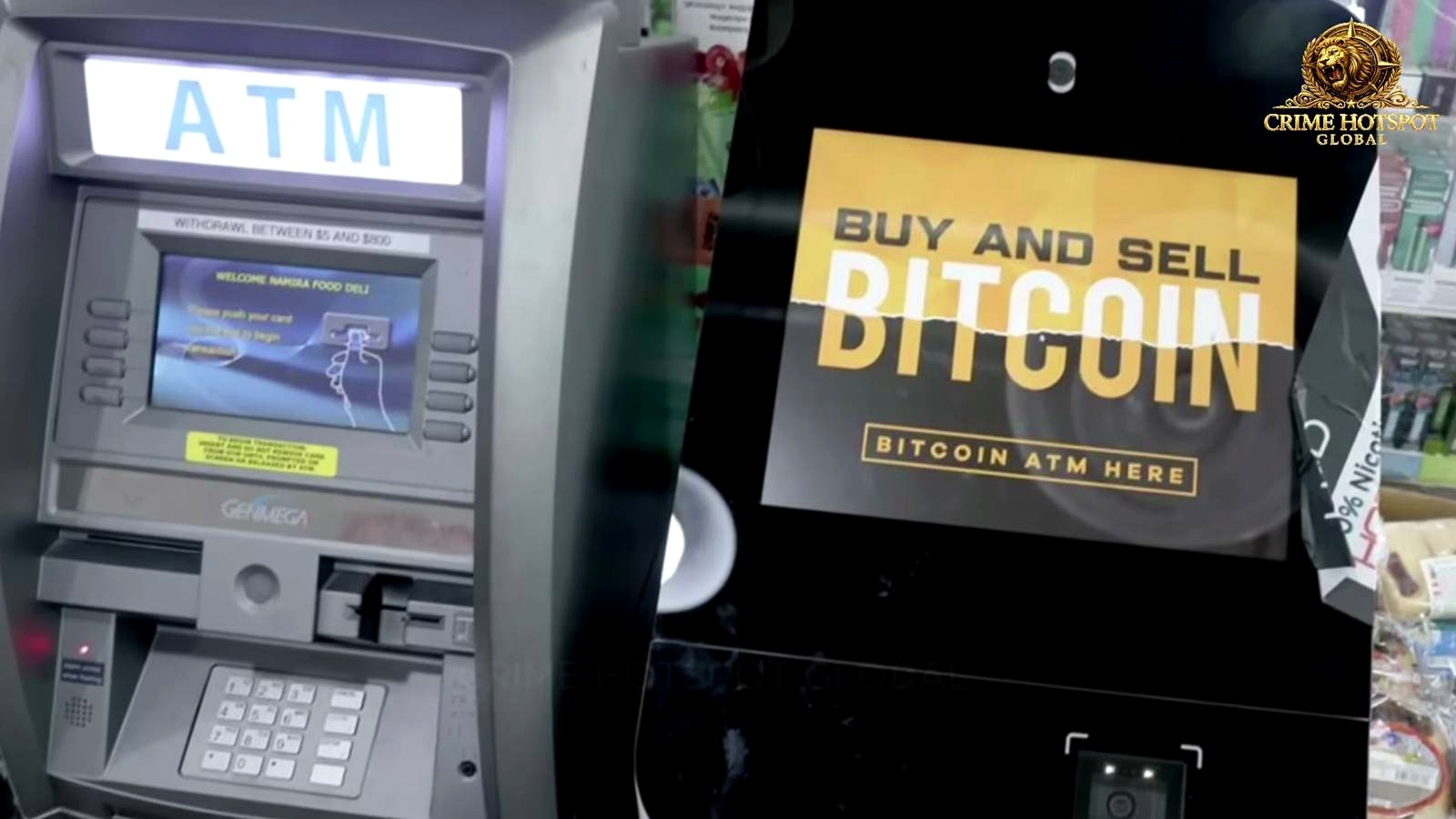
Crime Hotspot Global builds that thesis through a series of inconsistencies. One is geographic. The host says a gas station near Annie and Tomaso’s home had a Bitcoin ATM and that the FBI investigated that location after Nancy’s disappearance. He also says a search for Nancy’s address originated in Tucson, the same city where Annie and Tomaso lived, and just a few miles away. He further notes that the ransom message was sent to Tomaso’s phone, not to Savannah in New York.
On their own, none of those facts prove anything about the Bitcoin ATM or who sent the messages. Bitcoin ATMs are common enough that proximity alone is not incriminating. But the host’s point is cumulative: the information flow, surveillance claims and message routing all appear, in his telling, to tighten around Tucson rather than an unknown outside actor.
Crime Hotspot Global also highlights the structure and tone of the messages. One note sent to TMZ was described by Harvey Levin, according to the transcript, as coherent and refined. Yet doorbell footage allegedly showed a masked man with an Ozark Trail backpack, a gun holster worn over a jacket, and behavior the host characterizes as inexperienced, including using a potted plant to block the camera. The host says those pictures do not match. Either there were multiple participants, with different roles and capabilities, or the messages were created later to support a story that did not reflect the original incident.
Another message on February 11th allegedly came from a supposed third party asking for 1 Bitcoin, described in the transcript as approximately $66,000 to $77,000 at the time, in exchange for identifying the person involved. Then on February 18th, another message appeared using a different cryptocurrency. After that, the transcript says there were seven weeks of silence.
That pattern matters. Genuine ransom attempts usually intensify pressure around deadlines, not abandon it. The host argues the shift from cold, structured demands to apologetic language, including the line that “we didn’t realize Nancy was so fragile”, sounds less like an active negotiation and more like an attempt to close the narrative loop.
What could go wrong with this thesis
The biggest weakness in the host’s argument is that inconsistency does not necessarily mean fabrication. Criminals make mistakes. A poorly planned abduction can still include a real Bitcoin demand. Leaving medication behind may show ignorance, panic or overconfidence rather than proof that ransom was never the goal.
There is also a risk of over-reading the Bitcoin ATM detail. A nearby ATM does not establish use, and many ransom demands never rely on ATMs anyway. Large-value transfers such as $4 million or $6 million would be impractical through a retail Bitcoin kiosk, which typically carries tight limits, heavy fees and surveillance obligations. If anything, that undercuts any simplistic suggestion that the nearby machine was a realistic settlement venue for the main demand.
The other side of the trade, so to speak, is that the ransom messages could have been genuine but improvised. Multiple actors could explain the polished writing, chaotic execution, tonal shifts and later silence. A failed kidnapping, medical emergency or fear of law enforcement contact, the transcript references the FBI contacting the Mexican side, could all have caused the communication to stop without proving the original extortion theory false.
And one more caution: the transcript leans heavily on inference from behavior and timing. Without independently verified forensic, telecom or blockchain tracing data, those inferences remain hypotheses, not settled facts.
What to watch next
The clearest next trigger is whether investigators ever tie the wallet activity, if any, to a real person or service provider. A second is whether authorities publicly clarify the origin and metadata of the messages sent on February 2nd, 3rd, 11th and 18th. Readers should also watch for confirmation of the Tucson address-search detail, any surveillance evidence around the Bitcoin ATM location, and whether investigators treat the apology-style messages as authentic communications from the same sender or as a separate line of inquiry.
If future evidence shows serious effort to keep Nancy alive, establish proof of life or negotiate around the February 5th and February 9th deadlines, the host’s thesis weakens. If instead the digital and physical evidence keeps pointing toward local knowledge and message staging, the Bitcoin demand may look increasingly like a prop rather than a motive.
FAQ
What is a Bitcoin wallet address in a ransom demand?
A Bitcoin wallet address is a destination for receiving BTC on the blockchain. In extortion cases, it functions like a payment endpoint. Its existence alone does not prove a kidnapping is genuine, because anyone can create an address quickly without receiving funds.
Could a Bitcoin ATM realistically be used for a multi-million-dollar ransom?
Not easily. Bitcoin ATMs are generally designed for smaller retail transactions and often have limits, fees and compliance checks. A demand for $4 million or $6 million would more likely be settled through direct wallet-to-wallet transfer or an exchange, not a kiosk.
Why would kidnappers ask for Bitcoin instead of cash?
Bitcoin can move globally at any hour and does not require in-person pickup. That can reduce some physical risks for criminals. But it also leaves a permanent on-chain record, which investigators can sometimes analyze with exchange and custody data.
What is proof of life in a kidnapping case?
Proof of life is evidence showing the missing person is alive after the abduction. It usually includes a recent photo, video, audio clip, or answers to questions only the victim would know. Without it, ransom demands are often viewed with more skepticism.
How do investigators trace Bitcoin in criminal cases?
They typically start with the wallet address and follow transaction flows on the blockchain. The most useful breakthroughs usually come when funds hit a regulated exchange, payment processor or other identifiable service that can be linked to a customer through legal process.
Original Source

John Burnell focuses on Bitcoin infrastructure, wallet security and blockchain technology. He writes educational articles explaining how Bitcoin works and how the technology evolves.