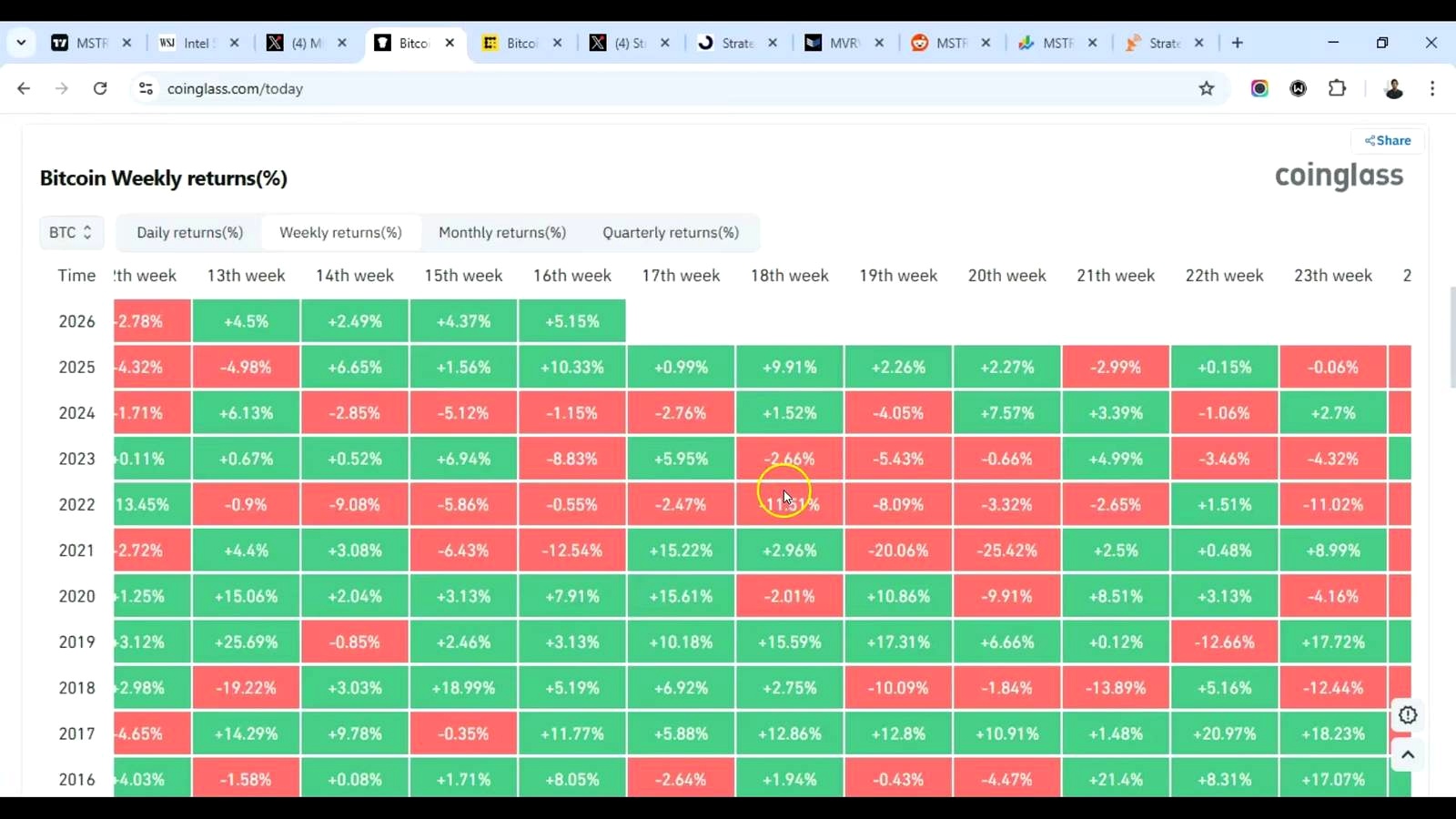
Risk assets are wobbling again, and the key question for crypto traders is whether recent weakness is just another pause in a broader uptrend or the start of a deeper reset. According to The Crypto Report, the answer leans bearish: the host argues Bitcoin and altcoins still have another leg lower ahead, with CRO already breaking a level he sees as critical.
Core thesis: The Crypto Report sees a broader bear-market continuation

According to The Crypto Report, the main setup is straightforward: CRO has broken below a key daily support at $0.0689, and unless it can quickly reclaim that level, the path of least resistance is toward a retest of roughly $0.055, or 5.5 cents. The host tied that token-specific view to a broader macro call on crypto, saying he still considers the market to be in a bear phase and expects more downside before a durable bottom forms.
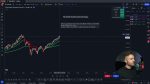
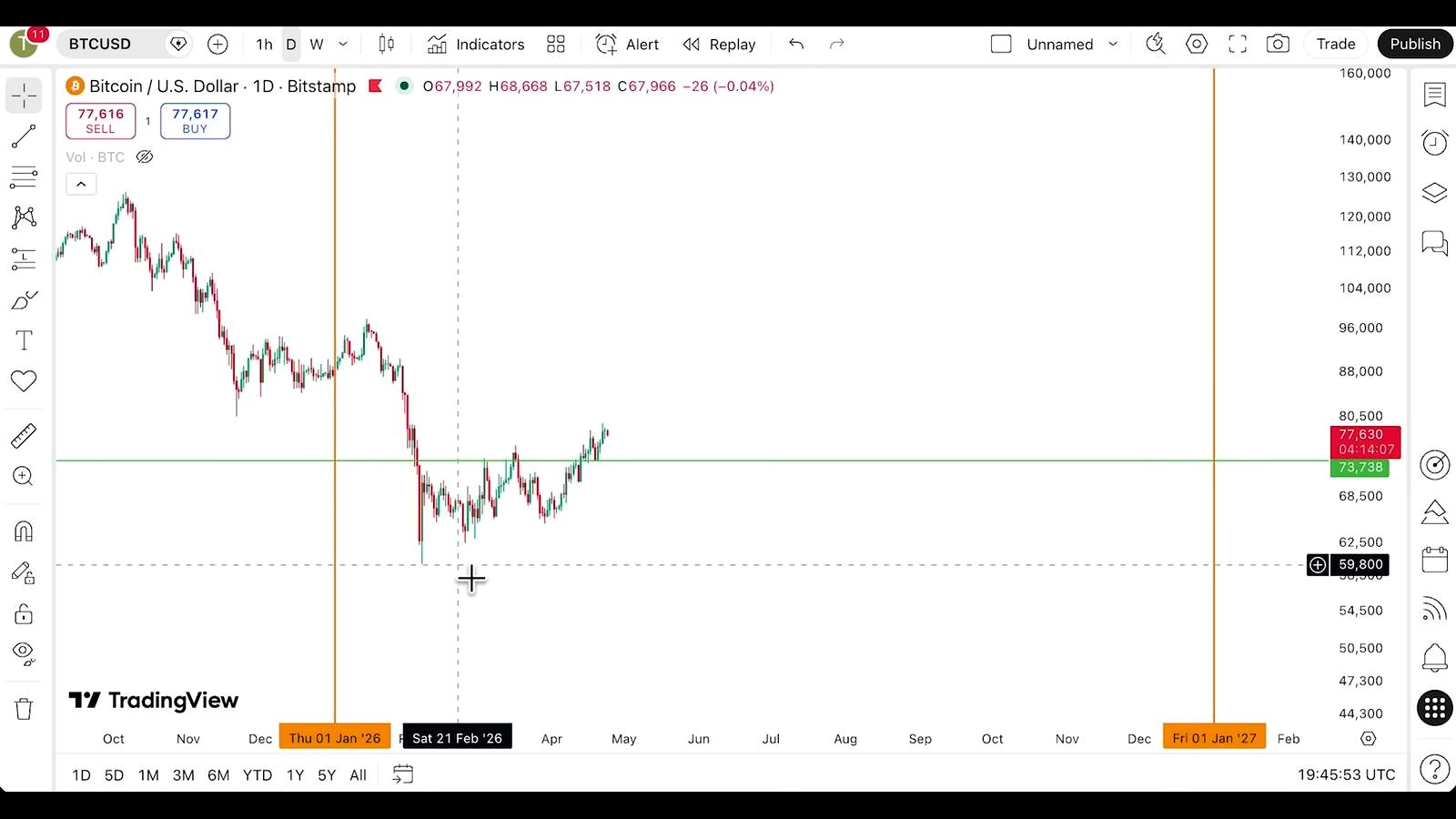
He extends that thesis to Bitcoin. In the video, the analyst says BTC was trading near $71,000 after being rejected at $73,500, and he argues the market is showing more pain ahead while price remains under the 200-day simple moving average. His year-end target for Bitcoin sits in a broad range between $51,000 and $45,000. He also said he expects a larger bottoming process to develop around the end of 2026, while adding that even September could become a period to watch for a potential bottom if another leg down arrives first.
That outlook is notably bearish relative to mainstream Bitcoin sentiment, which often treats pullbacks above major cycle lows as consolidation rather than a fresh bear market. In broader market context, though, the thesis is not without support. When Bitcoin trades below long-term trend gauges like the 200-day moving average, traders often become more defensive, and altcoins typically underperform BTC during those periods. At the same time, the counterpoint is obvious: Bitcoin has repeatedly recovered from breaks below long-term averages in post-halving environments, especially when institutional flows, easing financial conditions, or ETF demand improve. So while the host’s view is directionally coherent, it is still more aggressive on downside than consensus bullish cycle models usually imply.
Supporting analysis: Why CRO is central to the trade, and what would change the picture

The Crypto Report’s trade setup is centered on CRO’s inability to hold $0.0689 on the daily chart. The host says the coin does not need to collapse immediately, but the longer it trades and “chops” below that level, the greater the odds of a breakdown toward $0.055. In his framework, the market’s message is less about one dramatic candle and more about failed reclaim attempts over time.
He does leave room for invalidation. The analyst says a close back above $0.0689, followed by a retest and bounce, would at least weaken the immediate bearish setup. Even then, he does not expect a high-momentum move unless Bitcoin and the S&P 500 both stage what he describes as a “massive run up.” That linkage matters because CRO, like many exchange-linked and mid-cap altcoins, tends to depend on broader risk appetite rather than purely token-specific catalysts.
The host also disclosed his positioning. He said he remains short CRO and is up about 920%, or roughly $2,900, on that position. He added that he is short around 15 to 17 altcoins in total, saying trades that began as shorter-term setups became swing shorts because the market never produced the dead-cat bounce he was waiting for in order to add size.
That detail is useful because it clarifies the lens through which the market is being interpreted. This is not a neutral market read; it is a bearish portfolio view looking for trend continuation. That does not make it wrong, but it does mean readers should understand the analysis is being made by someone already positioned for further downside.
What could go wrong with this bearish thesis
The clearest way this setup fails is if Bitcoin regains trend strength faster than expected. The host himself points to the need for a stronger BTC move and a rebound in equities to support altcoin bounces. If that happens, CRO reclaiming $0.0689 would no longer look like a weak oversold bounce; it could become the start of a broader short-covering rally. In crypto, failed breakdowns often reverse sharply because crowded shorts get trapped.
There is also a timing risk in applying a prolonged bear-market framework too rigidly. Bitcoin and altcoins do not move in straight lines, and even in weak regimes, they can rally hard on macro relief, dovish central-bank repricing, ETF inflows, or idiosyncratic token news. Exchange-linked assets can also react to business updates, listings, burns, incentive programs, or regulatory developments that are not visible on a chart alone.
Another challenge is that the host’s longer-term timeline appears internally stretched. He speaks about Bitcoin reaching $45,000 to $51,000 by year-end while also discussing bottoming around late 2026. That leaves open a wide range of possible paths and makes the forecast harder to trade precisely. Bears may be right on direction but wrong on speed, and in leveraged markets, timing errors matter as much as price targets.
What to watch next
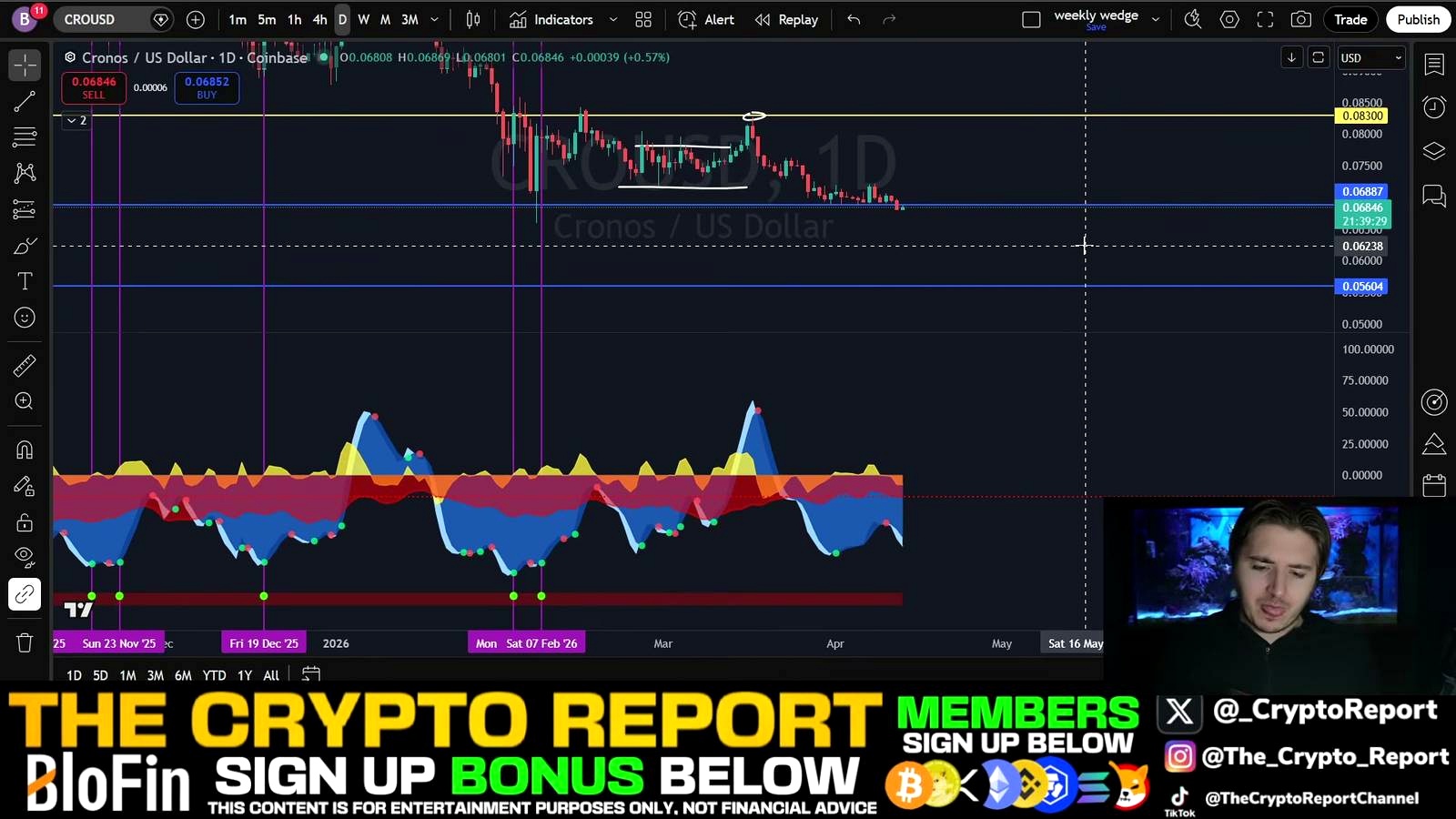
For CRO, the immediate trigger is simple: can price reclaim $0.0689 on a daily closing basis and hold it on a retest? If not, traders will keep watching for a drift toward $0.055. For Bitcoin, the host’s framework suggests monitoring whether BTC can recover from the rejection at $73,500 and reclaim the 200-day simple moving average. If Bitcoin stays heavy around $71,000 and equities remain under pressure, the bearish altcoin case strengthens. If BTC pushes back above long-term trend resistance and risk markets stabilize, the downside thesis weakens quickly.
FAQ
What is the 200-day simple moving average in crypto trading?
The 200-day simple moving average, or 200-day SMA, is a long-term trend indicator that averages an asset’s closing price over the last 200 days. Traders often treat price above the 200-day SMA as a sign of stronger long-term momentum and price below it as a weaker or more defensive market regime.
What does a support reclaim mean after a breakdown?
A support reclaim happens when price falls below an important level, then moves back above it and holds. Traders often look for a retest after the reclaim. If price holds that former support, it can suggest the breakdown was false and that sellers are losing control.
Why do altcoins like CRO often fall harder than Bitcoin?
Altcoins usually carry lower liquidity, higher volatility, and more speculative positioning than Bitcoin. When market sentiment turns risk-off, traders often rotate capital out of altcoins first. That is why BTC dominance can rise during stress while many altcoins underperform sharply.
What is a dead-cat bounce?
A dead-cat bounce is a short-lived recovery during a broader downtrend. Traders use the term for rallies that look strong briefly but fail to change the larger bearish structure. In practice, some short sellers wait for those bounces to enter or add to positions at higher prices.
How does this compare with previous Bitcoin corrections below long-term averages?
Historically, Bitcoin trading below major long-term averages has often coincided with deeper corrections or prolonged consolidation. But not every break leads to a full cycle low. In several periods, Bitcoin has dipped below long-term trend lines, shaken out leverage, and then recovered once liquidity and sentiment improved.
Source Video

John Burnell focuses on Bitcoin infrastructure, wallet security and blockchain technology. He writes educational articles explaining how Bitcoin works and how the technology evolves.