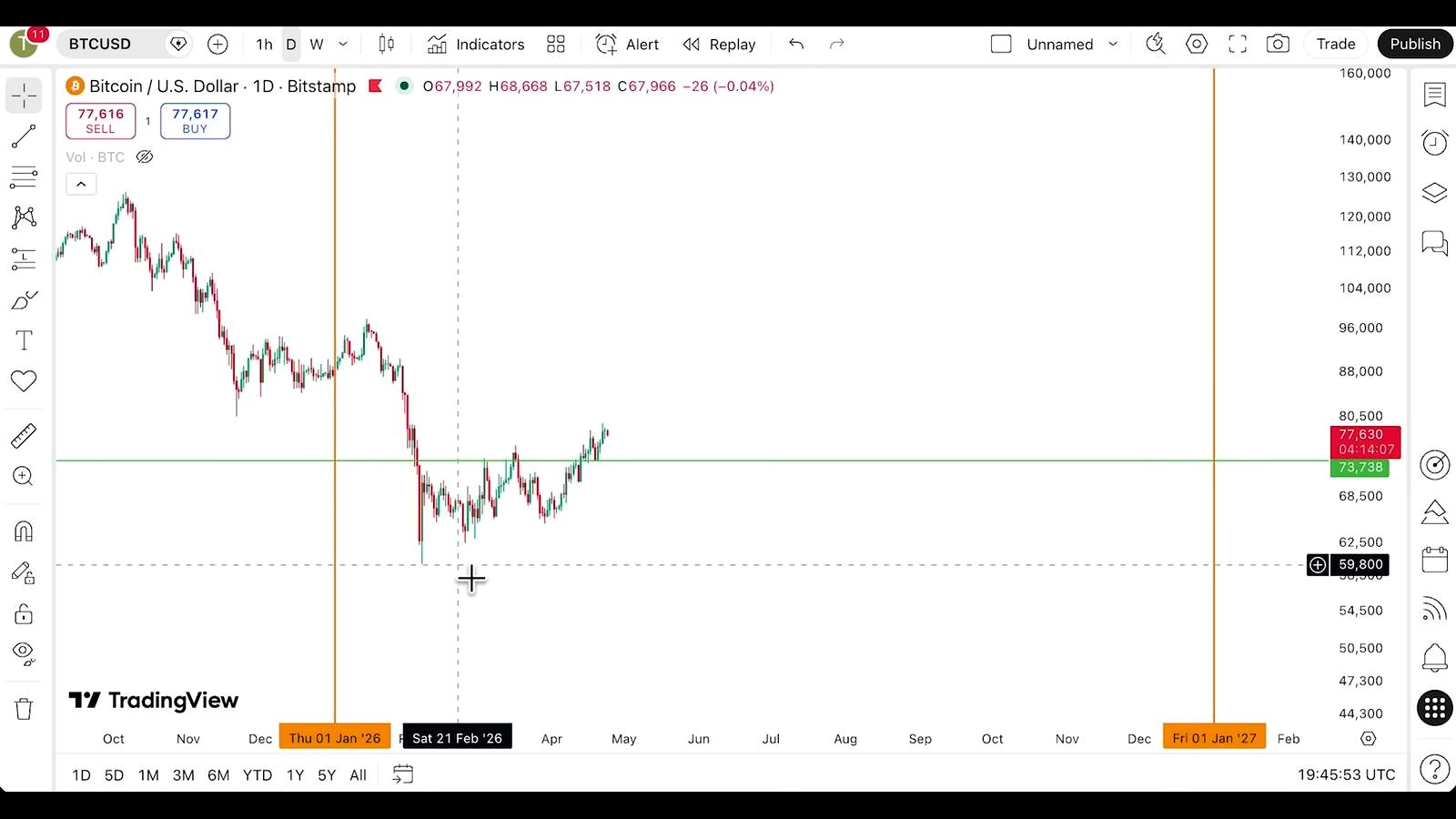
Bitcoin is sitting in an uncomfortable spot: too high for capitulation calls, too low for clean breakout confidence. The immediate question for traders is whether this is a pause before the next leg up or the start of a deeper unwind. According to CryptosRus Extra, the answer is still bullish, with the analyst arguing that Bitcoin likely bottomed near $60,000 and is now waiting for a catalyst to resolve a tightly wound market structure.
Core Thesis: The Bull Case Says the Bottom Is Already In
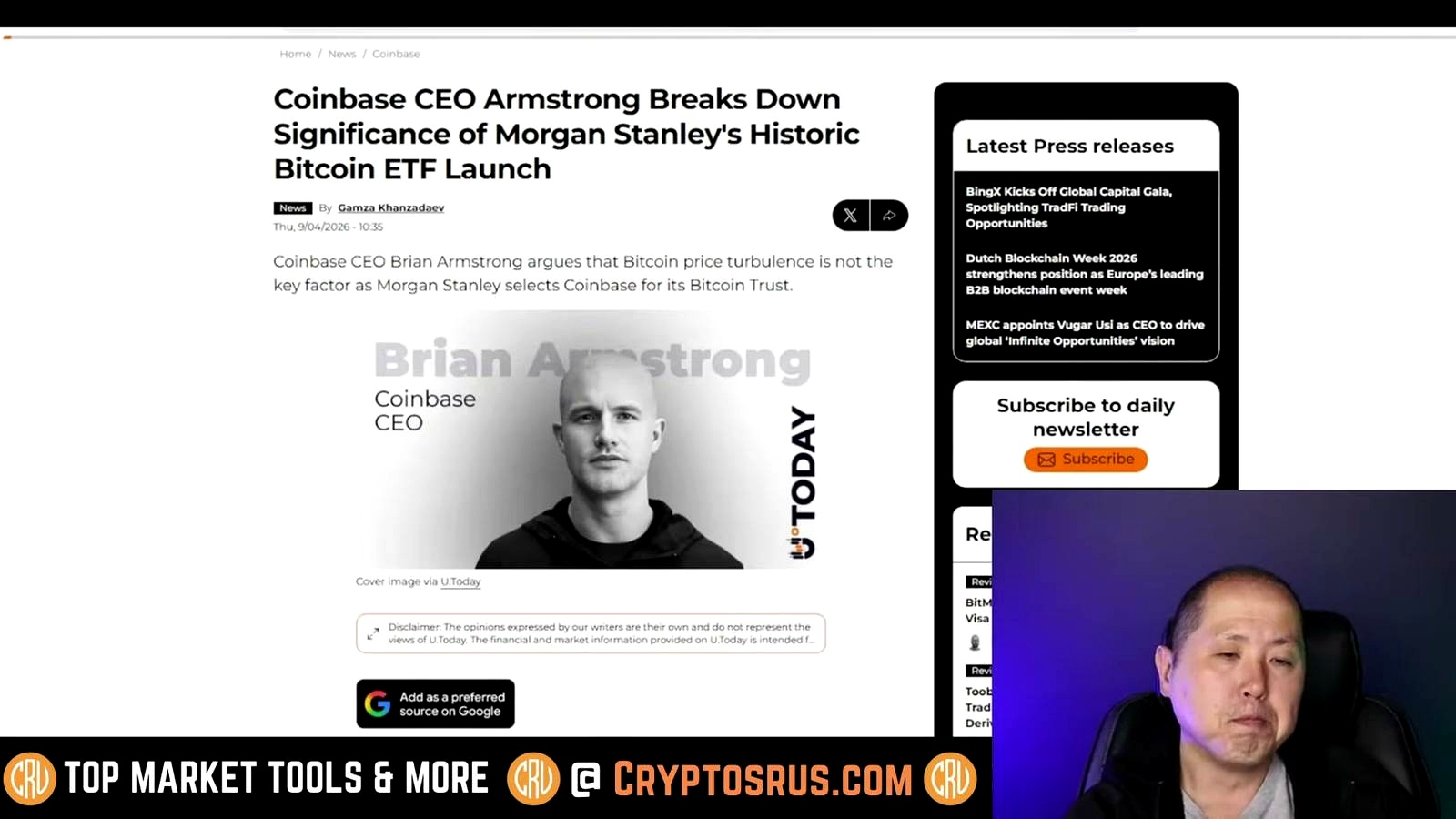
According to CryptosRus Extra, the main bullish argument rests on a simple combination: institutional demand is still arriving, major Bitcoin buyers have not stopped accumulating, and price likely found a cycle floor near $60,000. The host pointed to Morgan Stanley’s Bitcoin ETF drawing $31 million on its first day and said the product undercut a competitor’s 0.14 fee ratio, framing that launch as evidence that large financial firms still want exposure even during what he described as a weak period for the market.
He tied that to a broader accumulation narrative. The analyst cited Michael Saylor’s view that Bitcoin likely bottomed near $60K, while also noting that Saylor controls close to 800,000 BTC and is still expected to buy more. He also referenced Tom Lee as another voice calling $60,000 the bottom. In the host’s framing, that matters because these are not tourists making tactical calls; they are public bulls still deploying capital while sentiment remains mixed.
That puts CryptosRus Extra broadly in line with the medium-term crypto bull consensus, though not with the more cautious short-term trading crowd. The broader market context supports parts of the thesis: institutional Bitcoin access has expanded materially since the U.S. spot ETF era began, and pullbacks during structurally bullish cycles have often looked severe in real time before proving temporary. But the challenge is equally obvious. Macro liquidity, real rates, and ETF flow momentum still matter more to near-term price than conviction statements from corporate Bitcoin buyers. A defended $60,000 level is meaningful only if spot demand keeps absorbing leverage-driven volatility.
Supporting Analysis: Why This Range Matters Now
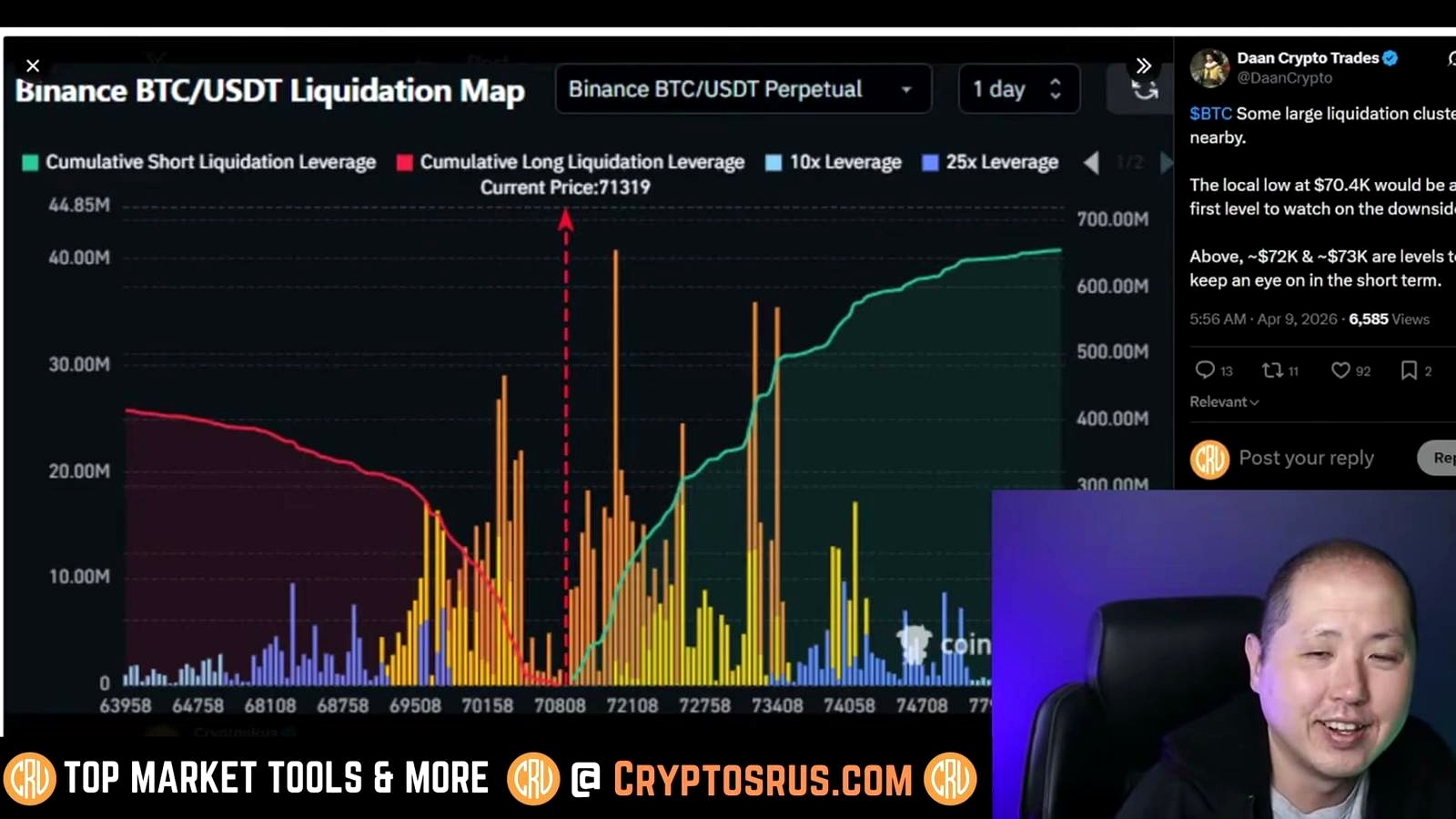
The most actionable part of the video was the host’s focus on Bitcoin’s current positioning around $70,800. According to CryptosRus Extra, that level sits near a kind of equilibrium zone between large liquidation clusters. If price moves higher, he said, a significant number of short positions could be forced out; if price drops, long positions become the liquidation fuel instead. In other words, Bitcoin is parked at a pressure point where either side could trigger a squeeze.
The host specifically highlighted the amount of leverage still active in the system, mentioning traders using 10x and 25x leverage. That matters because leveraged markets tend to move farther and faster once one side starts getting cleared out. His preference was clear: he wants the next squeeze to come from shorts getting liquidated, not longs.
CryptosRus Extra also argued that the market does not need a new structural bull case so much as it needs “resolution.” In his telling, the pieces are already there: institutions are still in the game, buying continues, and the technical picture “looks decent.” What is missing is the move that breaks the stalemate.
He also spent time dismissing the idea that quantum-computing fears should push investors out of Bitcoin today. The analyst said the threat should not be ignored, but called the fear overblown in the near term and noted that developers are already working on quantum defenses for wallets and, eventually, broader infrastructure. That argument will resonate with long-term holders who see existential-tech fears as too distant to dominate a current market cycle. It is less useful for short-term trading, but it does address one of the recurring headline risks around Bitcoin’s long-duration investment case.
What Could Go Wrong
The clearest risk to this thesis is straightforward: $60,000 fails to hold on a retest. If that level breaks decisively, the “bottom is in” narrative becomes much harder to defend, and the current setup starts looking less like consolidation and more like distribution. A loss of that zone would also likely trigger the kind of long liquidations the host warned about, especially in a market still carrying visible leverage.
There are other vulnerabilities the video touched only lightly, or not at all. Institutional interest does not guarantee immediate upside; ETF launches and custody announcements are long-term adoption signals, not always short-term price catalysts. Markets can absorb bullish news and still trade lower if broader liquidity conditions deteriorate. If risk assets come under pressure from stronger dollar conditions, rising yields, or a shift in central-bank expectations, Bitcoin can get dragged down regardless of the long-term story.
There is also a positioning risk embedded in the bullish consensus itself. When too many market participants agree that a local bottom is already set, the trade can become crowded. That raises the odds of one more flush lower to shake out premature longs before a sustainable rally begins. The host emphasized institutional buying and high-profile accumulation, but those factors do not eliminate the possibility of a sharp downside sweep first.
What to Watch Next
The first trigger is whether Bitcoin can move cleanly away from the $70,800 equilibrium area. A breakout higher that starts liquidating shorts would strengthen the analyst’s thesis that the market simply needed resolution, not rescue. The second is any revisit of $60,000. Bulls need that zone to behave like a durable floor, not a temporary bounce point.
Beyond price, traders should watch whether institutional inflow narratives remain backed by actual demand and whether leverage begins clearing from the market. If open interest stays elevated while price stalls, the risk of a violent move in either direction remains high.
FAQ
What is a liquidation cluster in Bitcoin trading?
A liquidation cluster is a price area where many leveraged positions would be forcibly closed by exchanges. If Bitcoin reaches that zone, the automatic buying or selling tied to liquidations can accelerate the move.
Why does leverage like 10x or 25x matter so much for BTC price?
High leverage means traders are using borrowed money and can be wiped out by relatively small price moves. That makes the market more fragile and can create fast squeezes when one side is trapped.
Why is $60,000 such an important Bitcoin level?
Psychologically, round numbers matter, but this one also functions as a recent cycle support area in the bullish case laid out here. If BTC keeps holding above it, bulls can argue the pullback was corrective. If it breaks, that argument weakens quickly.
How does institutional ETF demand affect Bitcoin’s price?
ETF demand can matter because it opens Bitcoin exposure to a much larger pool of capital, including advisers, wealth platforms, and traditional investors. But ETF interest tends to influence medium-term structure more reliably than day-to-day price action.
Is quantum computing a real risk to Bitcoin?
Yes, in theory. Advanced quantum systems could eventually threaten current cryptographic standards. But the practical debate is about timing and adaptation: developers across crypto and traditional computing are already working on quantum-resistant approaches well before the threat becomes immediate.
Source

An Indian crypto journalist covering the developments in the Bitcoin and blockchain industries. Her work helps readers understand key changes in the world of digital assets.