When war risk rises, traders usually look for the classic playbook: buy oil, buy gold, trim risk. This time, the more interesting question is why BTC has not cracked alongside other assets. According to CNBC Television, Anthony Pompliano argues Bitcoin has been the “shining light” during the Iran conflict, staying flat to slightly higher while stocks, bonds and gold fell.
Bitcoin’s core test is no longer hype, it’s behavior under stress
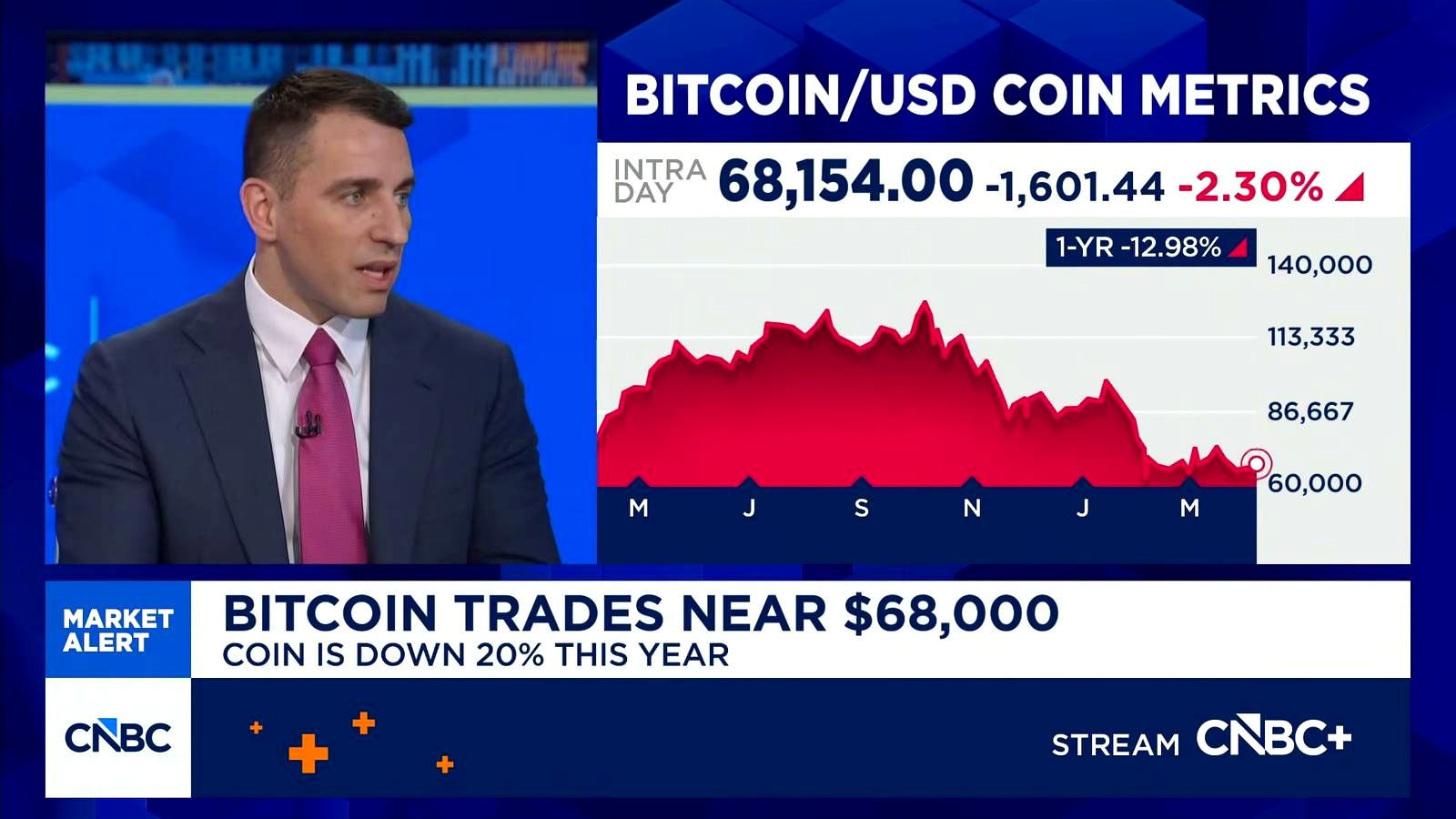
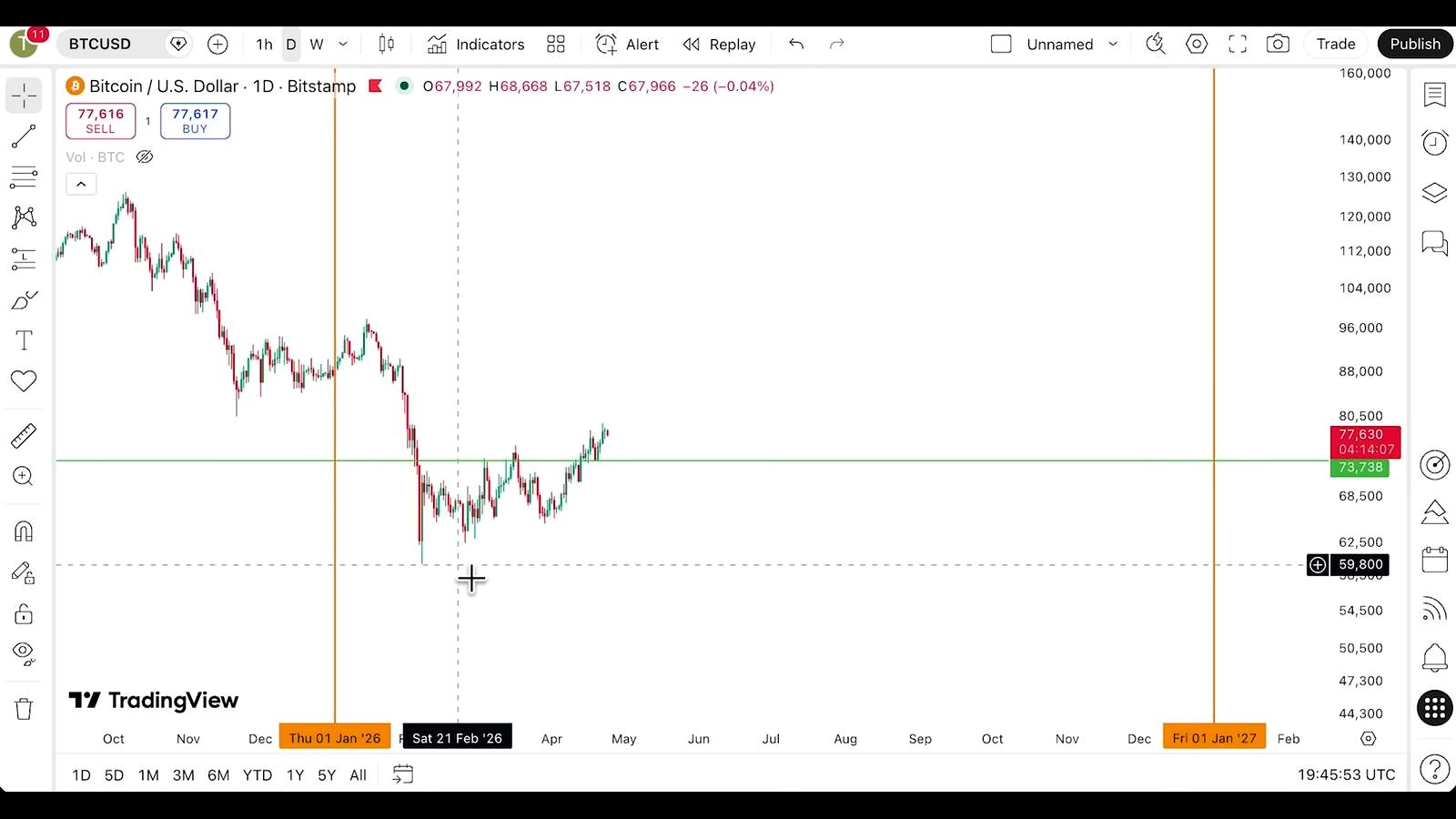
According to CNBC Television, Pompliano’s main claim is straightforward: with Bitcoin trading a little above $68,000, the asset is showing unusual resilience in a geopolitical shock that has pressured traditional markets. He said stocks were down, bonds were down and gold was down, while Bitcoin was “flat to slightly up.” For a market that has often traded as a high-beta version of tech, that relative stability is the real story.
He tied that shift to a broader maturation in Bitcoin’s market structure. In his telling, volatility has “significantly compressed.” What he described as an 80,90 vol asset is now closer to a 40 vol asset, and a 50% drawdown is now more in line with what traders should expect from that kind of volatility regime. He also said many holders are comfortable owning Bitcoin at $60,000-plus, especially when geopolitical uncertainty rises, because the asset is “neutral” and not tied to any one country.
That framing matters because it cuts against one of the market’s most persistent critiques of Bitcoin: that it only works in liquidity-fueled risk-on conditions. Broader sentiment has been mixed on that point. Spot ETF adoption, corporate treasury accumulation and tighter circulating supply have helped give Bitcoin a stronger institutional bid than in prior cycles. At the same time, BTC still tends to correlate with equities during panic deleveraging, especially when dollar liquidity tightens or real yields rise.
So Pompliano’s view is moderately contrarian in timing, but not outlandish in structure. The bullish case is that Bitcoin is slowly evolving from a speculative asset into a hybrid instrument: still risky, but increasingly treated by some investors as a politically neutral reserve asset. The challenge is that one episode of resilience does not settle that debate. Bitcoin has periodically looked like digital gold before reverting to risk-asset behavior in the next macro shock.
Why the institutional angle still matters
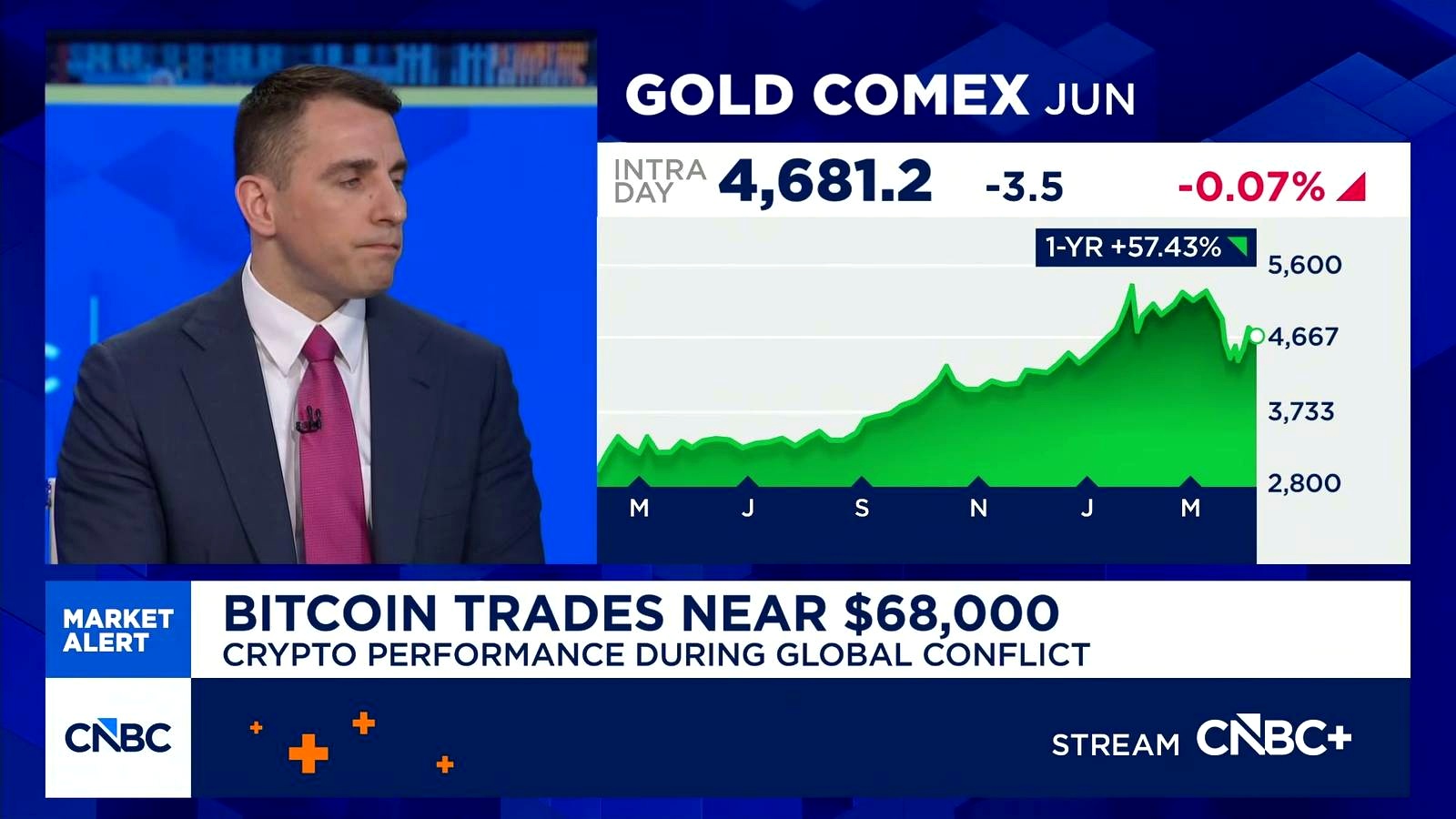
CNBC Television also pressed on whether this kind of price action implies Bitcoin is becoming more stable but less explosive. The host noted the market has spent years hearing long-range forecasts from bulls, including references to $500,000 and $1 million Bitcoin. Pompliano did not reject those targets, but he did shift the emphasis away from immediate moonshot timing and toward long-term compounding.
He compared Bitcoin with gold, noting that investors once talked about $5,000 gold when it was around $1,800, and that such targets sounded implausible before becoming more accepted. For Bitcoin, he argued the issue is not whether it can appreciate materially over time, but how quickly. He added that if the stock market compounds at roughly 8% to 10% a year, Bitcoin should do “multiples” of that.
That is less a short-term price call than a framework for thinking about adoption. Pompliano said demand is now coming from “a little bit of everything”, individuals, companies and ETFs, and described that as what mass adoption actually looks like. He also pushed back on the idea that sovereign or institutional participation has failed to appear. Instead of central banks buying spot Bitcoin in size, he pointed to more indirect forms of exposure: mining-related activity, especially in Gulf countries, and sovereign wealth fund disclosures showing positions in Bitcoin ETFs.
The distinction is important. Markets often overestimate how dramatic institutional adoption will look in real time. It rarely arrives as one giant announcement. More often it starts with small allocations, proxy exposure and structures that fit existing mandates. That supports Pompliano’s “slowly and then all at once” framing. Still, it also means the near-term price impact can disappoint traders who expected a straight line higher after ETF approval.
In practical terms, Bitcoin’s ability to hold around the high-$60,000s during a geopolitical scare suggests the buyer base may be deeper than in previous cycles. But the absence of a sharp breakdown is not the same thing as a confirmed safe-haven re-rating. For that, investors would likely want to see repeated outperformance across multiple macro stress events, not just one conflict-driven window.
What could go wrong
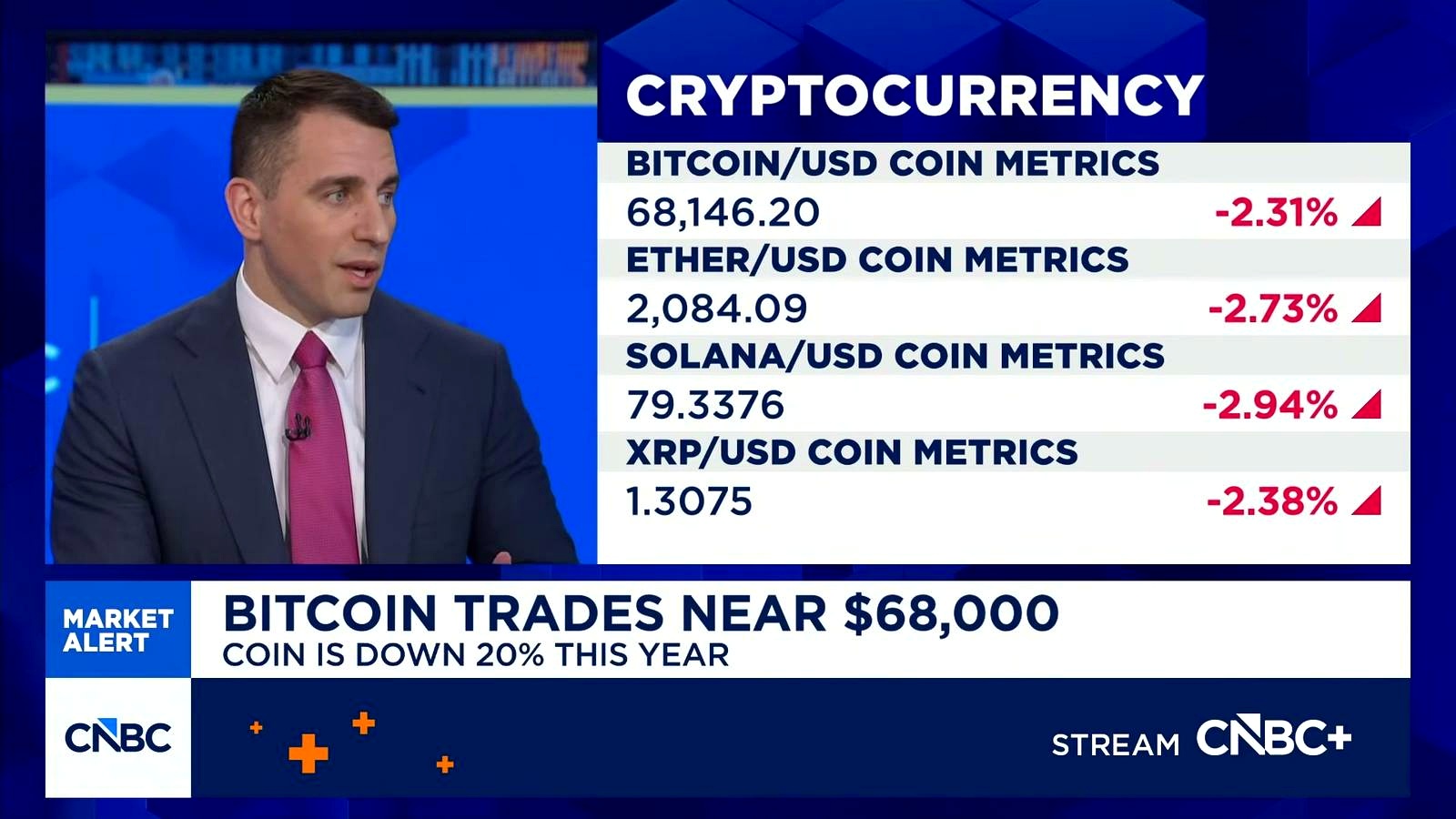
The clearest risk to this thesis is that Bitcoin’s recent resilience proves temporary and correlation snaps back the moment global markets move from orderly stress to forced liquidation. In a true dash-for-cash environment, traders often sell what they can, not just what they dislike. Bitcoin’s liquidity can make it a source of funds during broader de-risking, which would undermine the idea that neutrality alone makes it defensive.
Another problem is that Pompliano’s argument leans heavily on relative performance over a short period. Gold and Treasuries do not lose their haven status because they underperform for a few sessions, and Bitcoin does not earn that status permanently from one episode of stability. The stronger counterargument is that BTC is still an emerging macro asset whose investor base includes leverage-sensitive participants, ETF flow chasers and momentum funds. That mix can turn quickly.
There are also risks he did not dwell on. Sticky inflation, a hawkish Federal Reserve, stronger real yields or renewed dollar strength could pressure Bitcoin even if the geopolitical narrative stays favorable. Regulatory surprises, ETF outflow streaks or a sharp slowdown in crypto-native activity would also challenge the idea that adoption alone can absorb all selling pressure.
The other side of the trade is simple: if war risk eases and macro liquidity tightens at the same time, Bitcoin could lose both the crisis bid and the risk-on bid. In that scenario, the market may conclude BTC is neither a full hedge nor a straightforward growth asset at current valuations.
What to watch next
The first trigger is whether Bitcoin can continue defending the $60,000-plus zone Pompliano highlighted as a level where holders still want to add. A clean break below that area would weaken the argument that geopolitical stress is creating durable demand.
Beyond price, traders should watch spot ETF flow trends, sovereign wealth fund disclosures and any evidence of additional corporate or state-linked treasury exposure. On the macro side, keep an eye on oil, the U.S. dollar and real yields. If Bitcoin stays firm while oil rises and traditional havens wobble, the safe-haven debate gets more credible. If it rolls over when liquidity conditions tighten, the old beta narrative is still in charge.
FAQ
What does “vol” mean when discussing Bitcoin?
“Vol” is short for volatility, usually annualized implied or realized volatility. When an analyst says Bitcoin was an 80,90 vol asset and is now closer to 40 vol, the point is that its price swings have become less extreme than in earlier cycles.
How is Bitcoin different from gold in a geopolitical crisis?
Gold is a long-established safe-haven asset with central-bank demand and centuries of history. Bitcoin is newer, more volatile and still partly treated as a speculative asset. The bull case is that Bitcoin’s fixed supply and political neutrality make it attractive in crises; the bear case is that it still behaves like a risk asset when liquidity dries up.
What are Bitcoin ETFs and why do they matter for price?
Spot Bitcoin ETFs let investors gain exposure to BTC through traditional brokerage accounts without holding the coins directly. They matter because they can broaden access to pension funds, advisors, sovereign pools and retail investors who prefer regulated wrappers, potentially deepening demand.
What would invalidate the idea that Bitcoin is acting as a hedge?
If BTC falls sharply alongside equities during the next round of macro stress, especially while the dollar rises and traders de-risk broadly, that would challenge the hedge thesis. Repeated failure to outperform during crises would suggest the recent resilience was situational rather than structural.
Has Bitcoin behaved like this before?
Yes, in parts of past cycles Bitcoin has briefly decoupled from equities or outperformed during localized stress. The difficulty is that those periods have not always lasted. That is why traders are watching for repeated confirmation rather than assuming one resilient stretch marks a permanent regime change.
Video Reference

An Indian crypto journalist covering the developments in the Bitcoin and blockchain industries. Her work helps readers understand key changes in the world of digital assets.