The mood flipped fast. One sharp move down, a flood of fear, and suddenly it felt like the market had already decided the story was over.
But beneath the panic, another story was taking shape. While headlines screamed collapse, some of the biggest players were doing the exact opposite of what the crowd was doing.
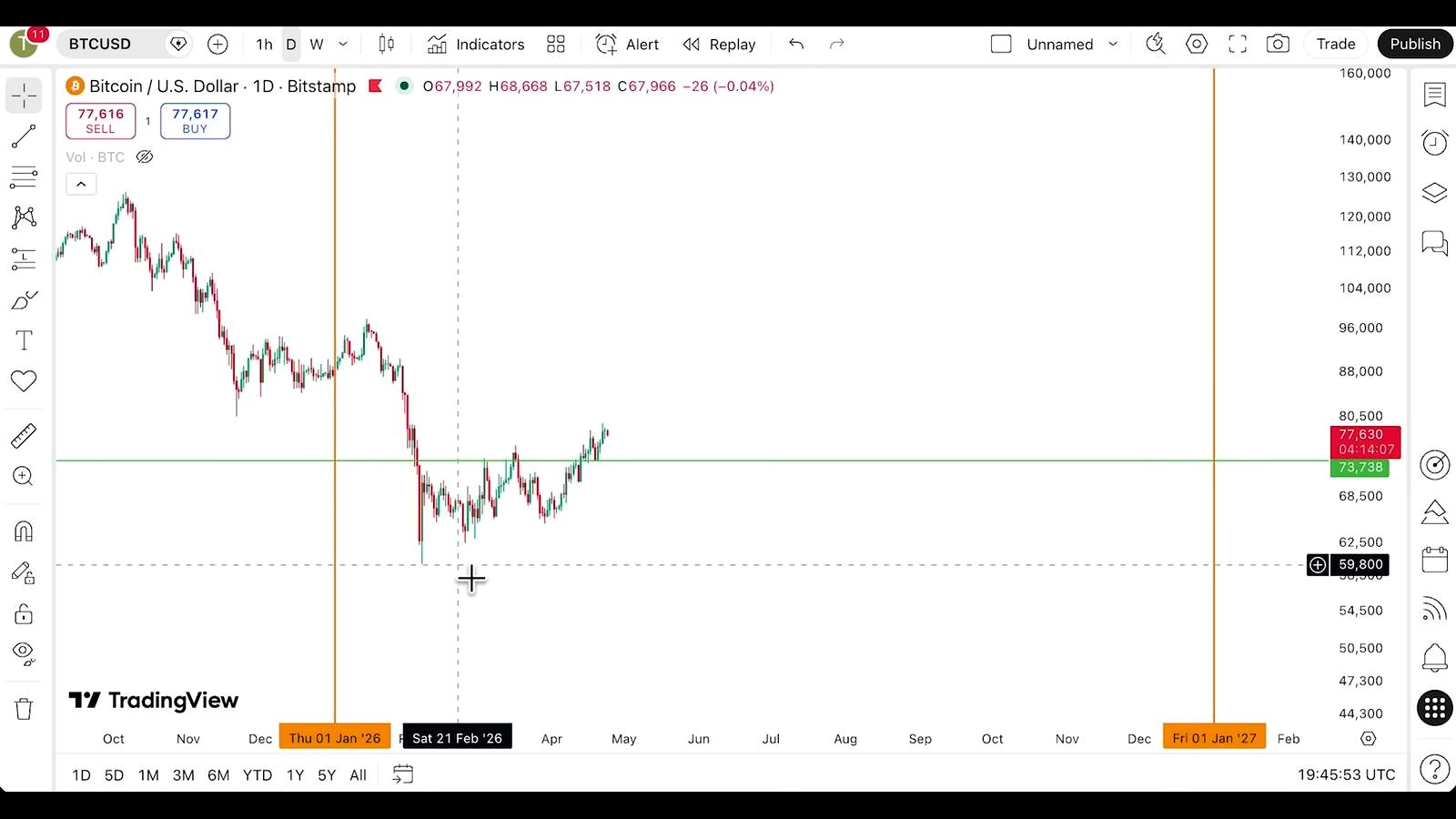
Bitcoin Drops to $66,484 as Fear Hits the Market

On March 27, 2026, Bitcoin fell to $66,484, its lowest level in two weeks. In just 24 hours, the price dropped nearly 5%, and more than $200 million in long positions were liquidated across crypto exchanges.
The pressure did not stop there. Spot Bitcoin ETFs in the United States recorded their largest single-day outflow in three weeks, with $171 million leaving the funds.
- BlackRock’s IBIT: $41.9 million in outflows
- Fidelity’s FBTC: $32 million in outflows
- ARK 21Shares: $30.5 million in outflows
That combination sent a clear signal to the market: fear had taken control. Retail investors were selling, ETF holders were rushing out, and the idea that Bitcoin had been “killed” at $66,000 spread quickly.
Why Bitcoin Crashed Today
Iran tensions changed the tone
The selloff was tied to a wider risk-off move driven by geopolitical stress. Ongoing conflict with Iran, a stronger US dollar, rising Treasury yields, and oil prices above $100 per barrel created a market environment where investors pulled away from risk.
President Donald Trump announced he would extend the pause on US attacks against Iran’s energy infrastructure by another 10 days, until April 6. That gave markets a brief moment of relief, but uncertainty stayed high.
Bitcoin acted like a risk asset
In the short term, Bitcoin often moves with risk assets during geopolitical shocks. When fear spikes, investors tend to sell everything that is not cash or government bonds. That is what played out here.
The concern is especially sharp because of the threat to global energy supplies. Any escalation involving the Strait of Hormuz, where nearly 20% of the world’s oil passes, could send oil prices even higher and deepen the panic.
While Everyone Sold, MicroStrategy Bought More
This is where the day stopped looking like a simple crash.
Even as Bitcoin slid toward $66,000, MicroStrategy continued buying. In its most recent reported week, the company purchased another 1,031 Bitcoin for about $76.6 million, at an average price of $74,326 per coin.
Its total holdings now stand at 762,099 Bitcoin.
That is not a quick trade. It is presented as a long-term corporate treasury strategy, and the company’s goal is to reach 1 million Bitcoin by the end of 2026.
In the middle of fear, that kind of buying sends a message. MicroStrategy is not reacting to the same noise that is driving retail exits.
Whales Are Accumulating During the Panic
MicroStrategy was not alone.
According to Santiment and Glassnode, wallets holding between 10 and 10,000 Bitcoin accumulated 61,568 Bitcoin in the past 30 days alone. At current prices, that is roughly $4.22 billion worth.
This stands out because it happened while ETF investors were pulling money out and retail sentiment was breaking down.
What the on-chain data suggests
- Large holders are accumulating
- Bitcoin is moving from exchanges into cold storage
- Exchange reserves are declining
- Long-term holder supply is increasing
That is the divergence shaping this moment. Weak hands appear to be selling into fear, while stronger hands are positioning for what comes after it.
This Looks Like a Classic Divergence
The split is hard to ignore.
On one side, there are headlines about war, ETF outflows, and liquidation pain. On the other, there is steady accumulation from whales and the largest corporate Bitcoin holder in the world.
The argument being made by the data is simple: this may not be a collapse, but a shakeout.
That idea gains weight because the same pattern has appeared before. During the March 2020 COVID panic, smart money accumulated at the bottom. After Russia invaded Ukraine in February 2022, retail selling was followed by quiet accumulation from institutions and whales.
In both cases, fear came first. Positioning came next.
Why War Can Hurt Bitcoin First — and Help It Later
The short-term effect is usually bearish
War drives investors toward cash and government bonds. That pressure hits crypto, stocks, and other risk assets. Rising oil prices, a stronger dollar, and higher Treasury yields only make that move harsher.
That is the short-term playbook, and it is exactly what the market is living through now.
The medium-term argument is very different
The bigger case for Bitcoin rests on what often follows geopolitical stress.
- Wars are expensive and can increase government spending
- More spending can lead to more monetary expansion
- Energy disruptions can add inflation pressure
- Bitcoin’s fixed supply of 21 million coins becomes more attractive in that environment
This is the paradox. The same conflict pushing Bitcoin lower today could help build the conditions that support it later.
What Could Happen in the Next 30 Days
Three scenarios stand out based on the current market and geopolitical backdrop.
1. Escalation
If the conflict with Iran intensifies, especially with any disruption in the Strait of Hormuz, Bitcoin could see another leg down. Oil could move well above $120, and risk assets would likely remain under pressure.
In that case, Bitcoin could retest the low $60,000s or even move toward the mid-$50,000 range in a worst-case panic.
But even this scenario is framed as a potential accumulation window, based on how previous geopolitical selloffs have behaved.
2. De-escalation or pause
If the pause holds and tensions cool, a relief rally could follow. Bitcoin is described as having strong technical support around $64,000 to $65,000.
Under that setup, price could rebound toward $72,000 to $78,000.
3. A Federal Reserve pivot signal
The most bullish short-term scenario would be a clear signal from the Federal Reserve that it is ready to cut rates or increase liquidity due to economic stress from higher oil prices.
That kind of backdrop has historically been favorable for Bitcoin. Analyst firm Bernstein is still maintaining a year-end target of $150,000, citing institutional adoption and corporate treasury demand.
The Data Under the Surface Still Looks Strong
Despite the volatility, the on-chain picture is described as constructive.
- The MVRV ratio is at levels that have historically marked good accumulation zones
- Long-term holders continue to hold tightly
- Exchange outflows remain elevated
- Conviction among strong hands does not appear to be breaking
That matters because short-term price action is being driven by geopolitics and ETF flows. The medium-term direction, according to this view, will depend more on liquidity, institutional demand, and Bitcoin’s role as a hedge against monetary expansion.
The Real Tension in This Market
This is not just about a red candle on the chart. It is about who is reacting and who is positioning.
Retail investors and ETF holders are selling into fear. MicroStrategy keeps adding. On-chain whales keep accumulating. Exchange reserves keep falling.
That is why this moment feels so charged. One side sees a breakdown. The other appears to see opportunity.
The question hanging over the market is not whether fear is real. It clearly is. The deeper question is whether this fear is the event — or the setup.
FAQ
Why did Bitcoin fall to $66,484?
Bitcoin dropped as markets reacted to Iran war tensions, a stronger US dollar, rising Treasury yields, and oil prices above $100 per barrel. The result was a classic risk-off move.
How much money left Bitcoin ETFs?
US spot Bitcoin ETFs saw $171 million in single-day outflows, the largest outflow in three weeks.
Which Bitcoin ETFs saw the biggest outflows?
BlackRock’s IBIT lost $41.9 million, Fidelity’s FBTC lost $32 million, and ARK 21Shares lost $30.5 million.
Is MicroStrategy still buying Bitcoin?
Yes. In the most recent reported week, MicroStrategy bought 1,031 Bitcoin for approximately $76.6 million at an average price of $74,326 per coin.
How much Bitcoin does MicroStrategy hold now?
MicroStrategy’s total holdings are reported at 762,099 Bitcoin.
What are whales doing during this dip?
Wallets holding between 10 and 10,000 Bitcoin accumulated 61,568 Bitcoin over the past 30 days, showing strong buying during the selloff.
Why do some investors think this is a shakeout, not a collapse?
Because while retail investors and ETF holders are selling, large holders are accumulating, exchange reserves are falling, and long-term holder supply is increasing.
What could happen next for Bitcoin?
The next 30 days could bring further downside if Iran tensions escalate, a relief rally if tensions cool, or a stronger bullish move if the Federal Reserve signals easier liquidity conditions.
Source

Omar Al-Sharif lives and works in the UAE and is involved in the blockchain technology industry. He writes articles on Bitcoin and digital assets as a personal passion, explaining complex topics in simple and understandable language.