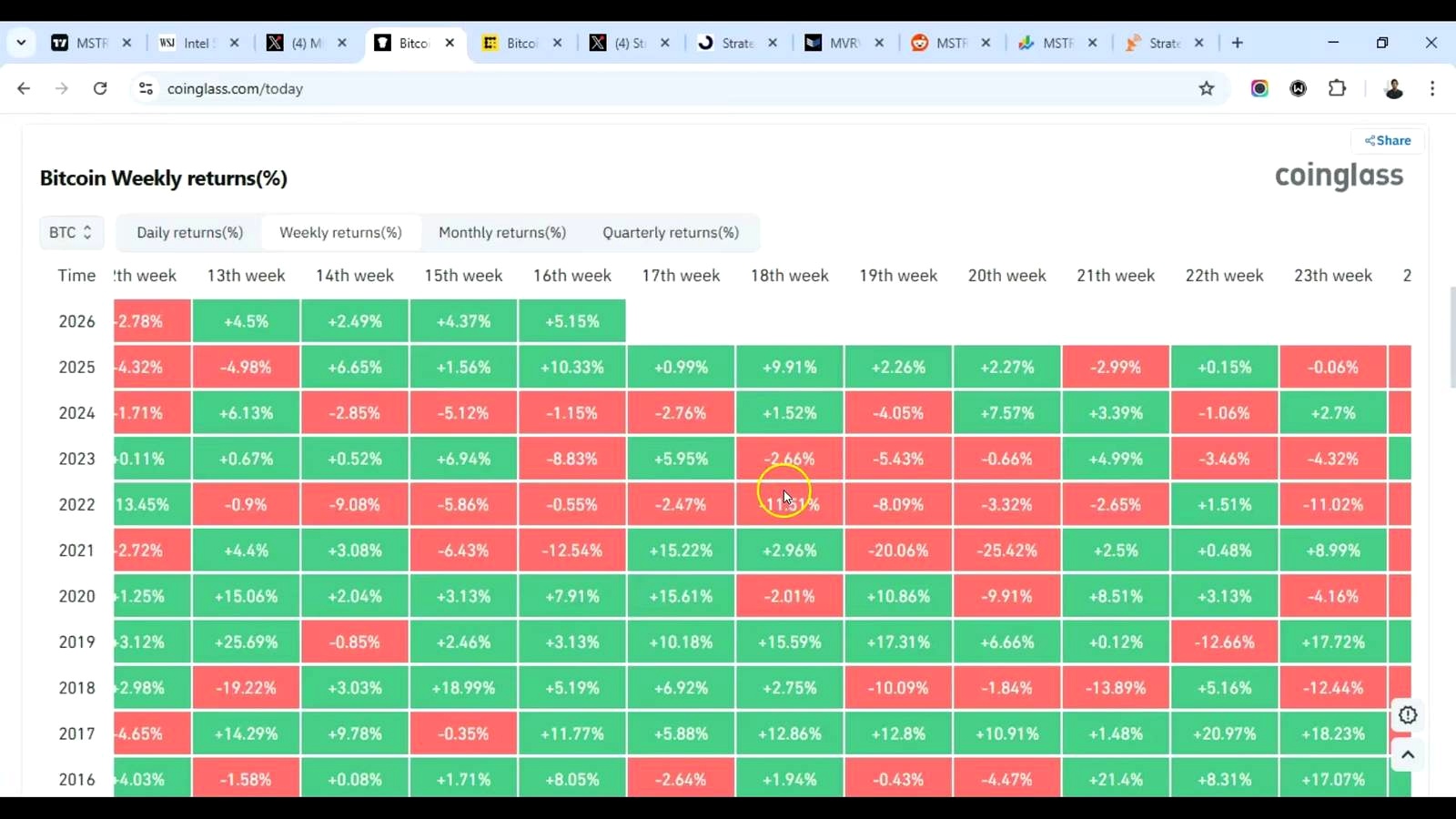
Something unusual is unfolding in crypto right now. Even with conflict, uncertainty, and sharp political tension hanging over markets, Bitcoin is showing a kind of steadiness that many investors are still trying to make sense of.
That tension is at the center of the latest market story: hopes for U.S.-Iran talks helped push oil prices lower, while digital assets tried to find their footing. At the same time, Capitol Hill is showing fresh signs of movement on crypto legislation, adding another layer to a market that suddenly feels like it is bracing for change.
A market under pressure, but not breaking
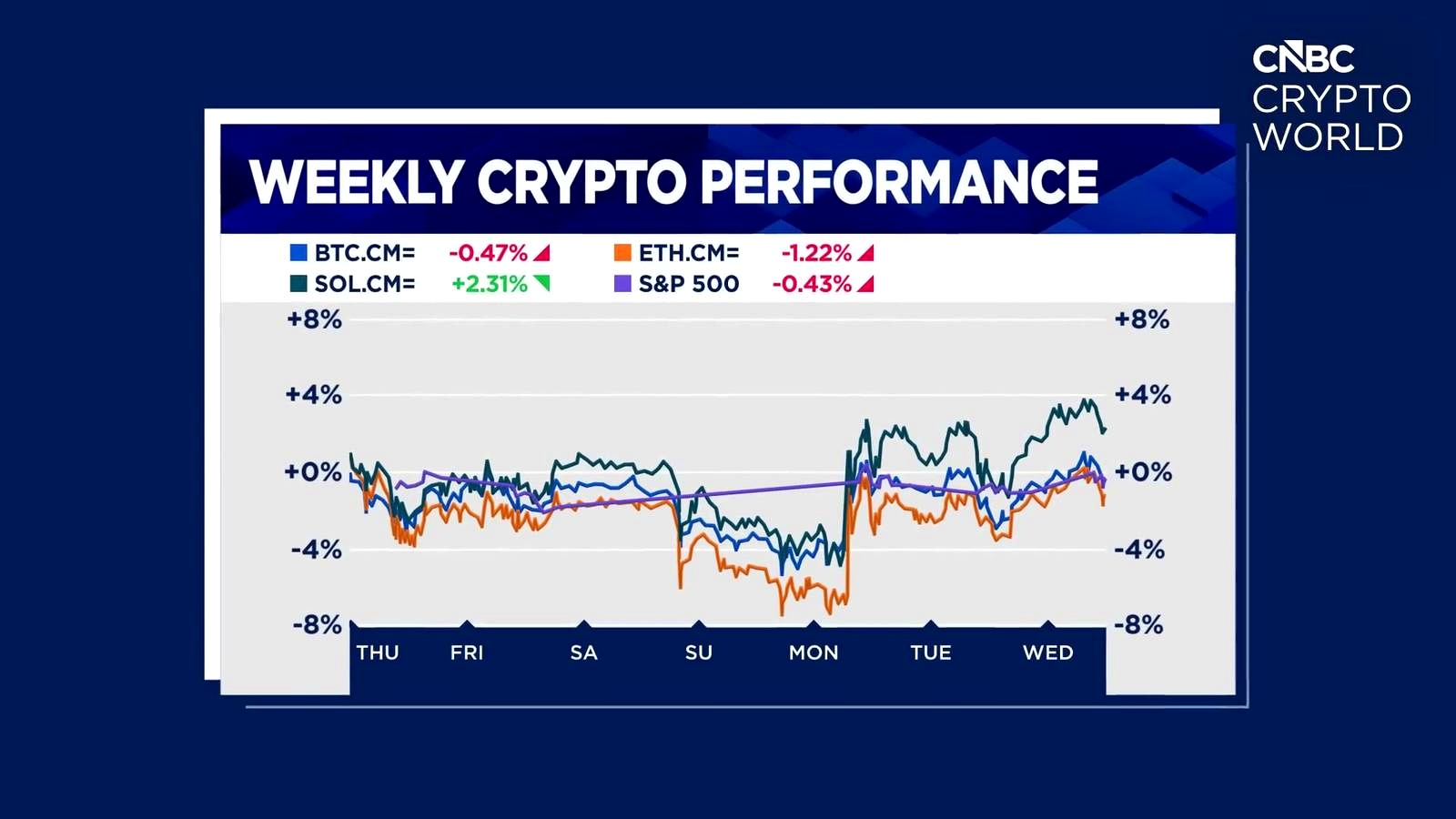
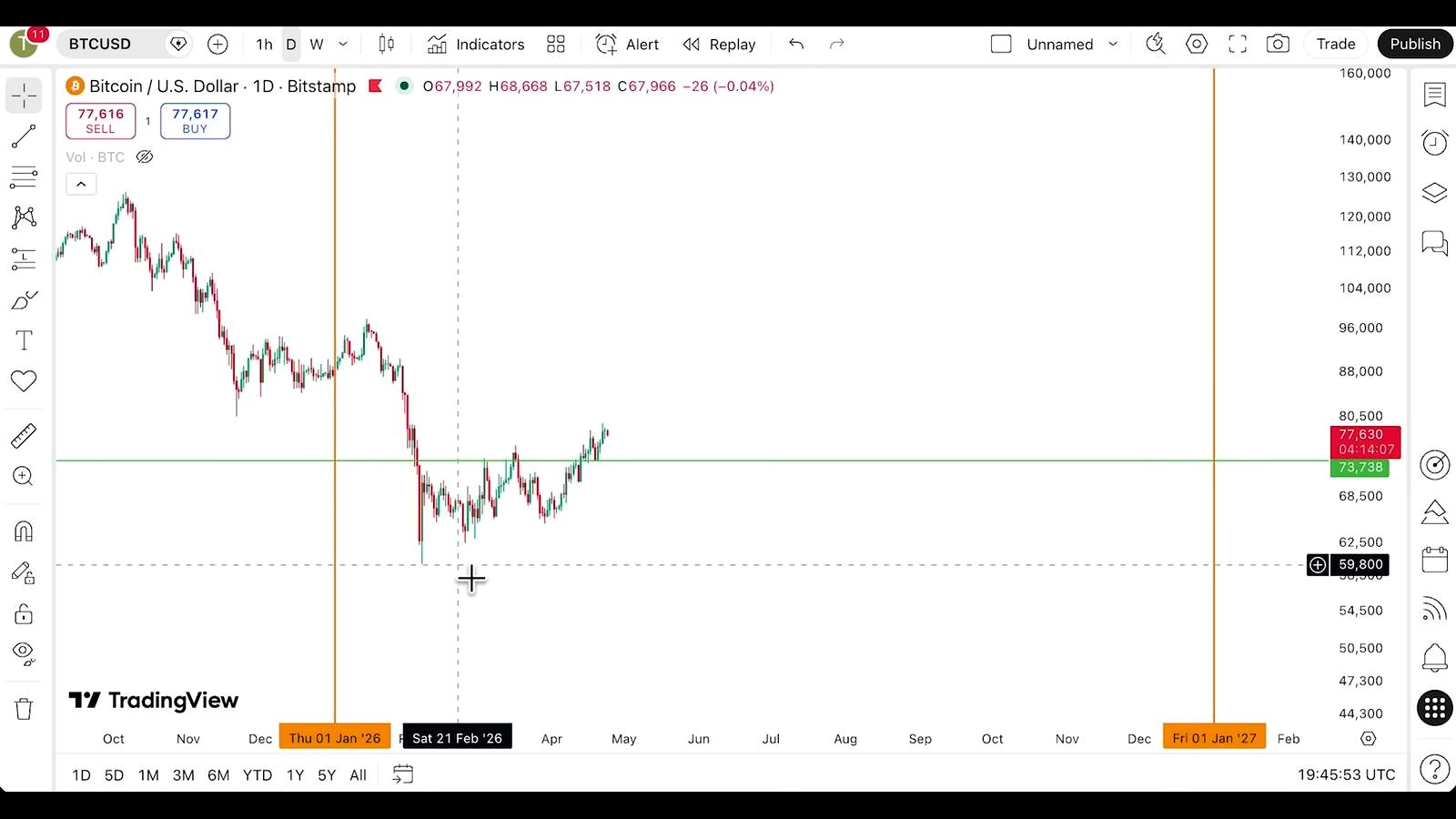
Crypto markets were largely in the red over the past week. By noon Eastern, Bitcoin was down half a percent from a week earlier, while ETH fell more than 1%. Solana stood out from the group, rising more than 2%.
Bitcoin also performed in line with the S&P 500 index over the past week. That alone says a lot about the moment: crypto is still being pulled by the broader risk mood, even as some of its old relationships appear to be shifting.
The move that changed the tone
One of the biggest cross-market moves came on Monday, when President Trump said the U.S. was engaging with Iran to wind down the war. But that optimism ran into resistance when Iran rejected the U.S. offer for a ceasefire, saying it needs sovereignty over the Strait of Hormuz.
That back-and-forth matters because geopolitical headlines have been driving reactions far beyond energy markets. Oil moved lower on hopes for talks, and crypto kept getting tested by each new turn.
Why Bitcoin’s behavior is drawing attention

Max Gawkman, deputy chief investment officer for Franklin Templeton Investment Solutions, said one of the most interesting developments is that digital asset prices, and Bitcoin in particular, have held up relatively well during the conflict.
That stands out because investors often talk about Bitcoin as “digital gold,” yet its correlation with physical gold is at the lowest level seen since 2022. In other words, the label may still be there, but the trading behavior looks different.
Not moving like gold, not moving like the old Bitcoin either
According to Gawkman, Bitcoin has not been reacting to each new headline the way equities, 10-year U.S. yields, crude, and precious metals have. He suggested crypto may now be providing something like a ballast that has not been seen before.
His explanation points to one theme: institutional adoption. As more institutions enter the asset class, crypto may be maturing, and that can begin to alter the relationships investors had come to expect from earlier phases of the market.
Is Bitcoin a safe haven? Not exactly, but the answer is getting more complicated
Gawkman said “digital gold” is still an apt term in one sense because Bitcoin is a network asset. Its value depends on what people collectively assign to it, which he compared to the way humans assign value to physical gold.
But he was also careful on the bigger claim. With Bitcoin’s volatility, he said, it is hard to call it a true safe haven.
A safe haven basket, not a single escape route
What may be changing is the idea that investors can rely on one single safe haven at all. Gawkman argued that digital assets should now be considered part of a broader safe haven basket, with diversification still the central rule.
- Bitcoin still carries volatility
- Gold is also selling off alongside the broader market
- Digital assets are increasingly being viewed as one part of a diversified defensive mix
That is a subtle but important shift. The question is no longer just whether Bitcoin replaces gold. It is whether crypto has earned a place beside other traditional hedges.
Middle East conflict could pressure crypto — and strengthen its case
The conflict is not just a distant macro factor for crypto. Bombings and drone strikes in Dubai and nearby areas are hitting regions widely seen as crypto hubs.
Gawkman said that could affect development in the industry, but he also pointed to a different effect: it may strengthen the case for individuals in the region, especially wealthy individuals, to move into crypto if they have not already.
Why regional instability may push more wealth on-chain
His view was that people may want to sit outside traditional financial channels if those channels risk disruption. He contrasted that with DeFi, where there is generally free passage.
That idea adds another layer to the market story. The same event that creates uncertainty can also make crypto more appealing to people looking for flexibility and access.
The market may already have absorbed some of the shock
Crypto investors are also still dealing with what Gawkman described as the aftershocks of last October. He said some of the major price pain may already have been paid during last year’s deleveraging, risk-cutting across derivatives, and the rise and fall of digital asset trends that shook out excesses.
That may be one reason volatility has not exploded in the current environment. In his view, crypto is now operating in a more balanced market, with liquidity also returning.
Why that matters now
From a macro perspective, an asset class that already went through major shocks may be in a stronger position to absorb fresh uncertainty. Instead of reacting as if every headline is a first-time shock, crypto may now be dealing with a different kind of market structure — one that is bruised, but less fragile.
Capitol Hill shows signs of life on crypto market structure
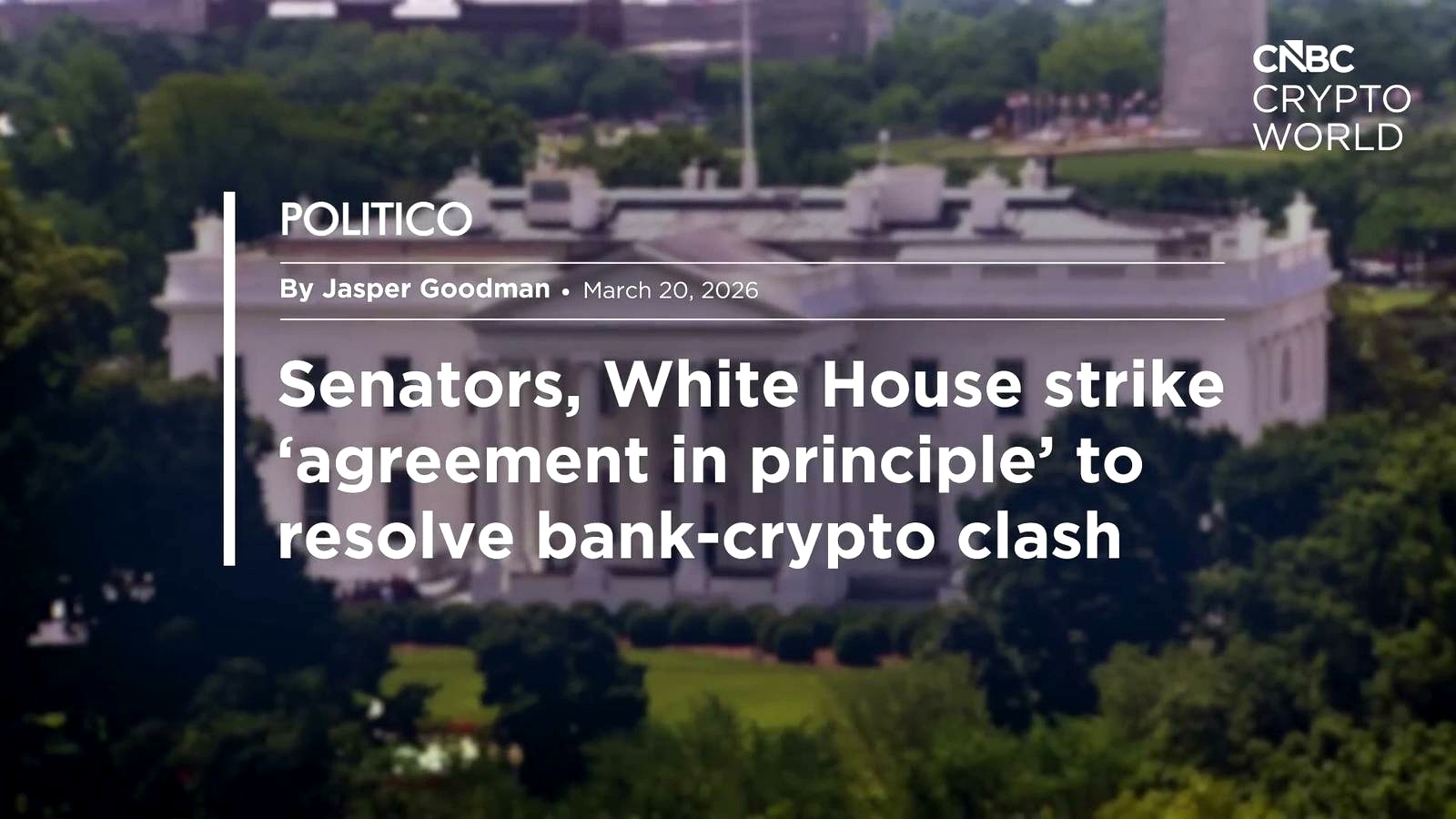
While markets wrestle with geopolitics, Washington is stirring too. There are signs that crypto market structure legislation could move forward.
Politico reported that key senators reached a tentative agreement with the White House on language that could resolve a dispute between the banking and crypto sectors. The central issue is whether businesses could offer yield on stablecoins.
The exact language remains unclear, but White House crypto policy adviser Patrick Wit credited Senators Tom Tillis and Angela Alsobrooks for helping bridge the bipartisan divide.
Why the stablecoin yield fight matters
Gawkman said the outcome depends on how the issue is solved. In his personal view, denying investors yield would be a mistake. He argued that yield is crucial and tied the issue to the underbanking crisis, particularly outside the U.S.
He also said the U.S. will help shape how other nations respond. If the issue is resolved in an equitable way, he believes it could be a major positive for the market. If it goes the other way, that could become one of the biggest risks.
Tether’s audit move shakes the stablecoin space
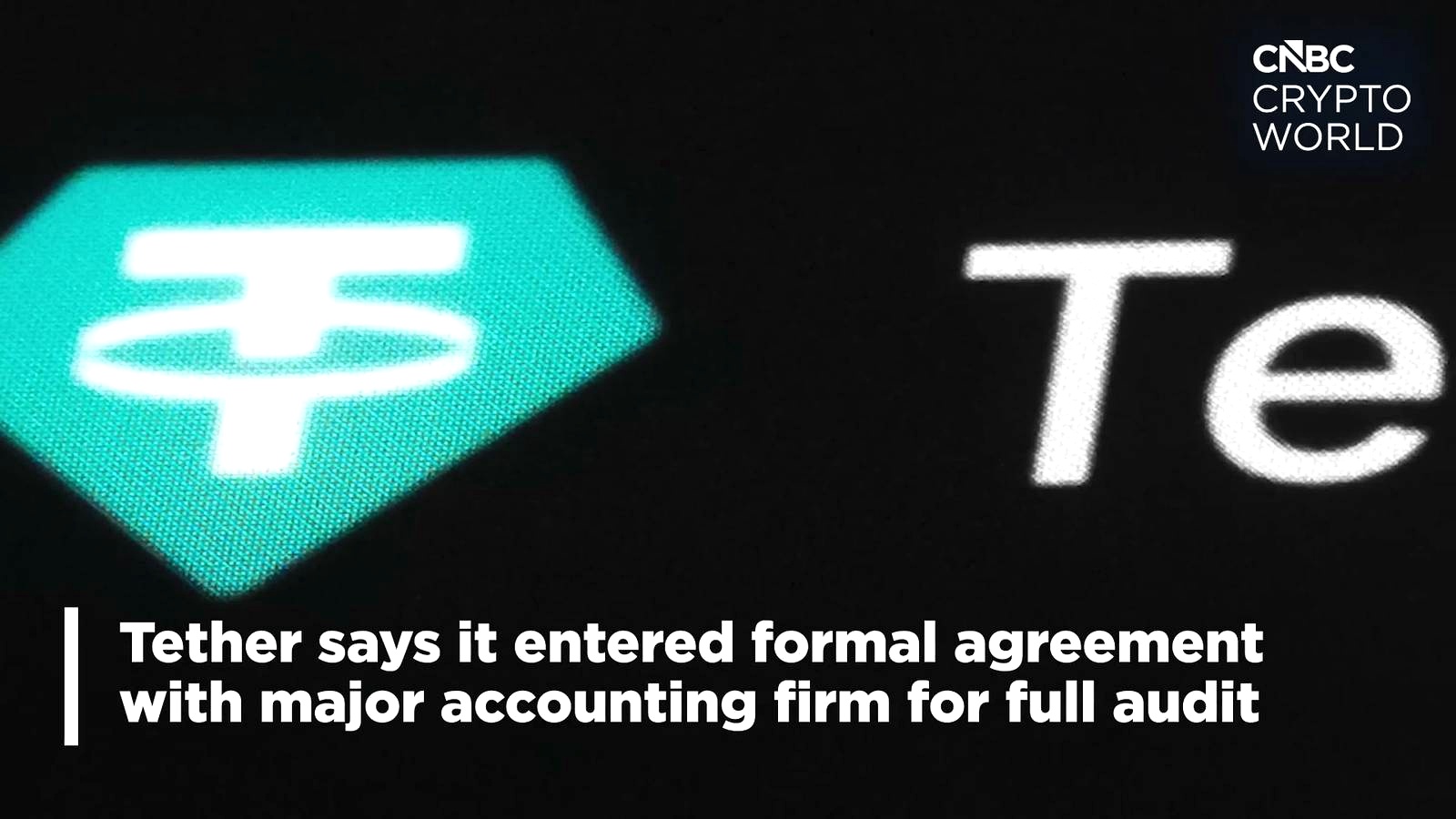
Another major story came from Tether, which said it has hired an unnamed Big Four firm to complete its first audit. The USDT issuer said it entered a formal agreement for a full independent financial statement audit.
Tether described it as potentially the biggest inaugural audit in the history of financial markets. The company issues the world’s largest stablecoin, with a $184 billion market cap according to CoinGecko.
Why this landed so hard
Tether has faced transparency concerns in the past for reporting quarterly attestations instead of a formal audit. So this announcement landed with real force across the market.
Shares of rival stablecoin issuer Circle dropped sharply after the news. By noon, Circle shares were down more than 18% week to date.
That reaction underlined how sensitive this space remains. In stablecoins, credibility, transparency, and regulation are all colliding at once.
FAQ
Why did Bitcoin move toward $71,000?
The market was reacting to hopes for U.S.-Iran talks, which helped push oil prices lower. At the same time, Bitcoin showed relative resilience even as broader uncertainty remained high.
How did major cryptocurrencies perform this week?
By noon Eastern, Bitcoin was down 0.5% from a week earlier, ETH was down more than 1%, and Solana rose more than 2%.
Is Bitcoin acting like digital gold right now?
Not in a simple way. Max Gawkman said Bitcoin’s correlation with physical gold is at its lowest level since 2022, even though the “digital gold” label still fits in terms of how people assign value to it.
Is Bitcoin being seen as a safe haven?
Gawkman said it is hard to call Bitcoin a pure safe haven because of its volatility. But he also said digital assets are increasingly being considered part of a diversified safe haven basket.
What is happening with crypto legislation in Washington?
There are signs that crypto market structure legislation may move forward. Senators reportedly reached a tentative agreement with the White House on language tied to a dispute over whether businesses can offer yield on stablecoins.
Why is the stablecoin yield debate important?
Because it could shape investor access to yield and influence how the U.S. sets the tone for other countries. Gawkman said the market impact depends heavily on how the issue is resolved.
What did Tether announce?
Tether said it hired an unnamed Big Four firm to conduct its first full independent financial statement audit.
Why did Circle shares fall?
Circle shares dropped sharply after Tether’s audit announcement. By noon, they were down more than 18% week to date.
Original Source

Omar Al-Sharif lives and works in the UAE and is involved in the blockchain technology industry. He writes articles on Bitcoin and digital assets as a personal passion, explaining complex topics in simple and understandable language.