The latest Voscoin mining farm update is rooted in the bills and the reality of running a large Bitcoin solo mining operation. The focus is simple: what is being done, how it is working out, and why the operation is moving forward for better and worse.
After launching solou.com last year, Voscoin embarked on a real Bitcoin solo mining journey, and a big one for this year. With $11,368 in electricity bills and ongoing questions about viability, the mining farm is being evaluated from the ground up.
Voscoin Mining Farm Layout
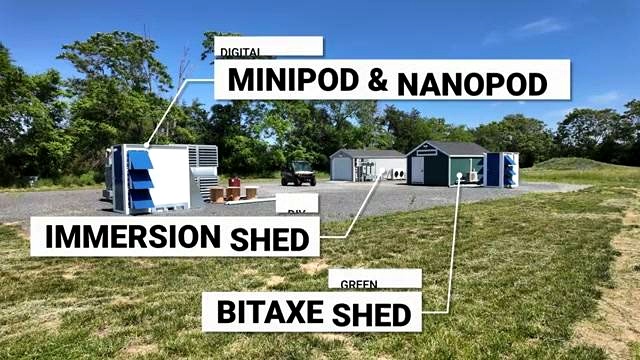
The Voscoin mining farm is spread across several different buildings and several different electrical services. Everything runs on single-phase 240 voltage US electric, which creates limitations in some capacities, but that is the current setup.
HQ
HQ is a two-story garage built out more like a warehouse, studio, and office. It has largely ended up as a big building with mining equipment inside and has a 400 amp service.
600CT Service
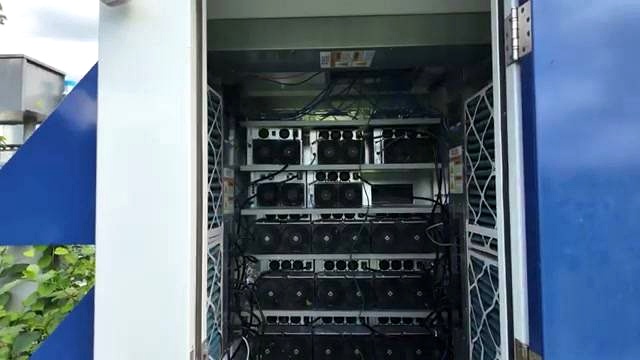
The 600CT is basically a 600 amp service and the most recent addition to the farm. That power is used to run more miners in the mini pod and also a nano pod, which is a pre-made mining container by Digital Shovel.
Gray Immersion Mining Shed
The original gray mining shed, also referred to as 2.0 or 3.0 depending on how it is viewed, is the immersion mining shed. It has its own 400 amp service.
Green Mining Shed
The green mining shed originally served as a DIY hard drive data center mining shed, but that plan imploded. It now functions more like a BitAx shed in an HVAC environment, which adds cost but also provides a realistic test bench for mini solo miners such as BitAxes, Canon Nanos, and similar units that are likely to run in air-conditioned environments.
The green shed has its own 400 amp service.
Mini Pod and Nano Pod
The mini pod also has its own 400 amp service. The 600CT expansion supports both the mini pod and the nano pod.
Electricity Usage and Monthly Power Bills
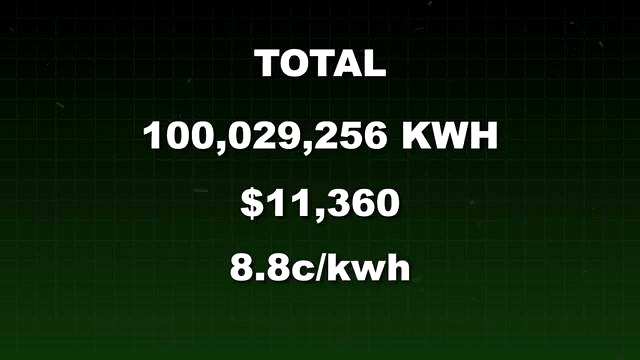
The farm’s electricity consumption is spread across five different services. The latest monthly totals show how much power each area used and how that translated into cost.
- Mini pod: 38,844 kilowatt hours, resulting in a $3,444 electricity bill
- 600CT service: 52,782 kilowatt hours, resulting in a $4,575 electricity bill
- Green mining shed: 27,828 kilowatt hours, resulting in a $2,41 electricity bill
- Gray immersion mining shed: 27 kilowatt hours, resulting in a $38 electricity bill
- Voscoin HQ: 9,785 kilowatt hours, resulting in a $910 electricity bill
Across these five services, the total electricity bill reached $11,368. The effective cost came out to 8.8 cents per kilowatt hour.
Projected vs Actual Power Cost
The projections had put the operation at 7 to 12 cents per kilowatt hour, and scaling even further with three-phase service was expected to reach seven cents. However, that would require a huge upfront cost in the current scenario, and the utility will not pay for it.
How This Month Compares
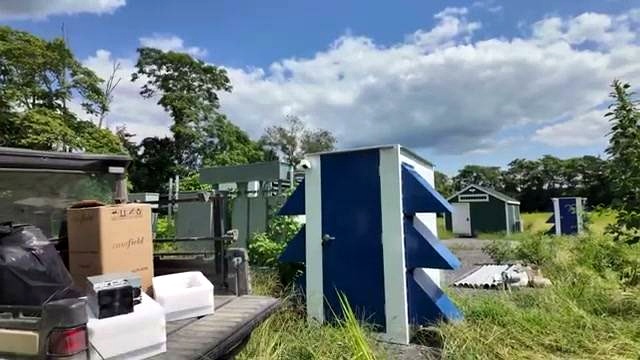
The latest bill is down significantly compared to a couple of months ago, when the total reached $17,000 and miners had to be shut off quickly. At the same time, this month’s bill is up over last month’s bill.
A couple of machines came back from repair, which increased electricity use by about 2,000 to 3,000 more kilowatt hours on the pod, 600CT, and green mining shed services. HQ stayed nearly the same, while the immersion shed was turned off for basically the entire previous month, reducing that service from 165 to 27 kilowatt hours.
The effective cost per kilowatt hour remained the same at 8.8 cents. More electricity was simply used this month, making the situation both good and bad.
Bitcoin Solo Mining Strategy
Launching solou.com marked the beginning of a serious Bitcoin solo mining journey. The operation includes both full-size Bitcoin miners and a large number of mini miners.
Public CK Pool Address
On the public CK pool address, 98 workers are visible, though the real number online is closer to 73 workers. Together, the setup reaches nearly two petahash per second.
Mini Miners and Full-Size Miners
The mini miners are mostly in the green mining shed, though some also run in the house. The house has a solar array, and the excess generation is enough to power one full-size Bitcoin miner 24/7/365 or some mini miners and smaller miners.
The green shed’s cost is elevated not only because of the mini miners, but also because six full-size miners are running on that green electric service. That is the vast majority of the electrical consumption there.
No Block Yet
Another month passed without hitting a block. There was not even a new best share last month. The best shares ever hit were 517 and 259, and both came from full-size miners. By comparison, best shares from mini miners included 220G, 97G, 77G, and 75G.
If the difficulty is not high enough, the next block is not solved. Being close is still not enough.
Why Self-Hosted Solo Mining Matters
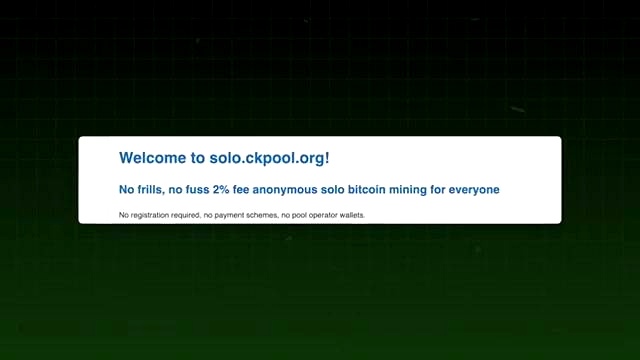
The self-hosted solo mining setup exists for a practical reason. If a block is hit on CK Pool, about $6,000 would go to the pool fee. If a block is hit on the self-hosted Bitcoin mining node and self-hosted Bitcoin mining pool, that fee is avoided.
Node Setup
The self-hosted setup runs on an Umbrel home or a BitAx gamma node running Umbrel OS. This is positioned as a way to do the same thing while keeping more of the block reward compared to paying CK Pool fees.
Full-Size Bitcoin Miner Fleet
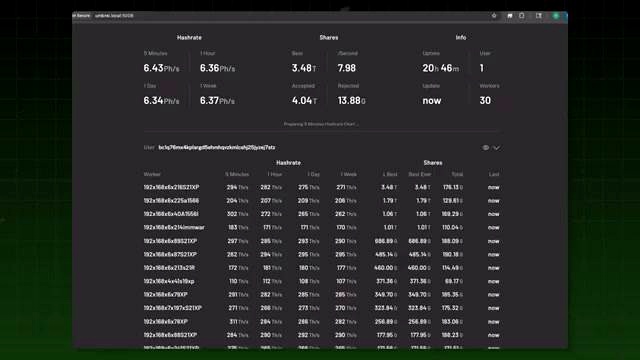
The operation is running 30 full-size Bitcoin miners, though only 29 are effectively working because one miner is offline.
Hashrate Range
The highest-performing overclocked S21 XP is hitting about 295 terahash per second on a one-week hash rate. In stock form, those miners are doing more like 270. The best miner on stock OS is at 271 terahash per second.
Older Models Still Running
Most of the full-size miners are S21 and better, but there are also older S19K Pros, S19 XPs, and one S19J Pro still in operation.
Warranty Frustration
A Bitmain S21 Plus broke and was sent in under warranty. The outcome was that too many hashboards had failed and the machine was declared scrapped. The result was the loss of a machine that had cost around $3,500 at the time of acquisition, roughly six or seven months earlier.
That experience led to a decision not to buy more Bitmain miners.
The Cost of Solo Mining Right Now
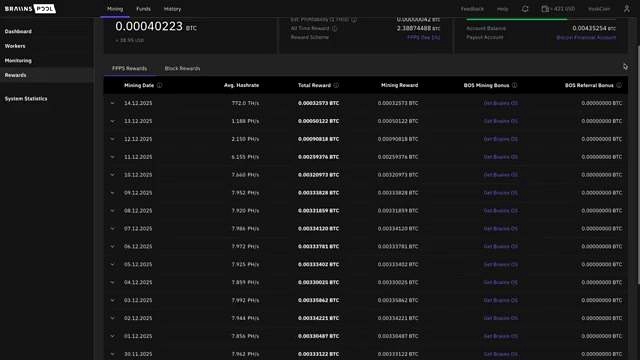
The current solo mining setup mined all month without hitting a block. Based on the amount of hash rate and market conditions described, the setup would probably be worth around $300 or so dollars of Bitcoin every day.
Using that lower number over 30 days results in about $9,000. Instead of mining that amount, the operation paid more than $11,000 in electricity and made nothing from the solo Bitcoin miners because no block was found.
Other Miners Still Generating Revenue
The Bitcoin miners are not the only machines running. The farm also runs about 15 or a little less Dogecoin miners, a few Ethereum Classic miners, and some older altcoin miners that still earn more than they burn.
Those additional miners are generating about $100 a day or so right now, which works out to about $3,000 over the last month.
Even so, the result is still that around $8,000 to $9,000 per month is being spent on solo mining without earning anything unless a block is hit.
Solo Mining Odds and Time Pressure
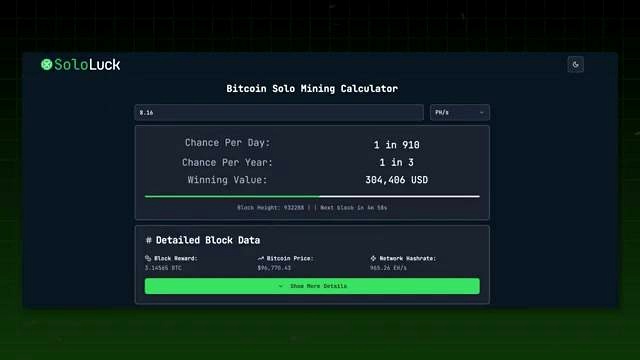
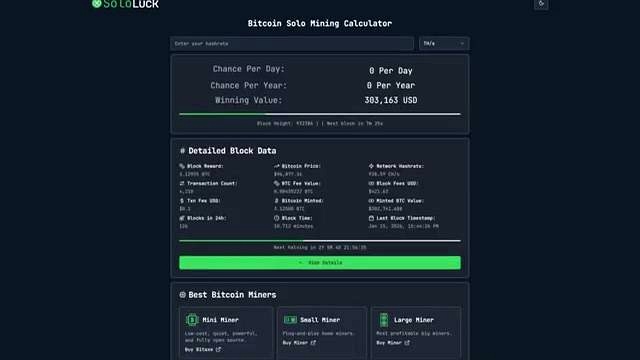
With all self-hosted hash rate, the operation has about a one in four chance to solo mine. When adding the hash rate on CK Pool, the odds become about one in three chance per year according to Solo Luck.
Those are considered pretty good odds, but they are still only odds. If there were three identical operations, only one of them would hit a block over the next year.
Block Goal Before the Halving
There are less than 70,000 more blocks until block 1 million, and the goal is to get a sub-1 million block. Hitting a block before the halving is a major objective.
Three-Year Framing
Looking at the math another way, if about $400 worth of Bitcoin could be mined per day, that would mean roughly $150,000 over time, though the amount of Bitcoin mined keeps going down as mining becomes more difficult. In that framing, it would take more than two to three years to mine the dollarized quantity associated with hitting a block.
That creates a rough three-year window to hit a block, but the current countdown on Solo Luck is closer to 26 months. Going beyond that timeframe becomes increasingly difficult unless Bitcoin is trading very high.
Reducing Costs and Shifting Toward Solar
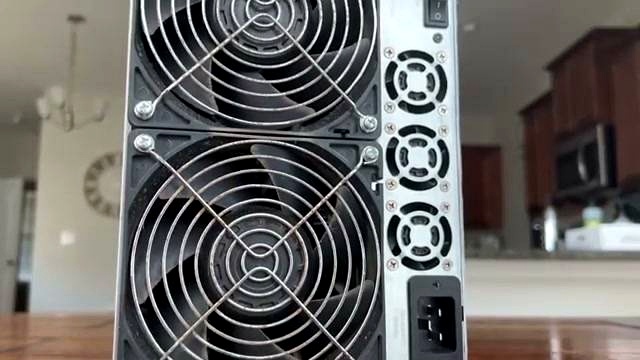
To lower electrical costs, an old Goldshell miner that burns more than it earns, the DG Max, is being turned off. That should reduce the monthly bill by about $200.
That is not enough on its own, which is why the focus is shifting toward solar and creating energy generation on-site. The long-term direction is to build out solar, mine with self-produced energy, and potentially sell off some gear or shut down other equipment.
Additional Hosted Hash Rate and Revenue Comparison
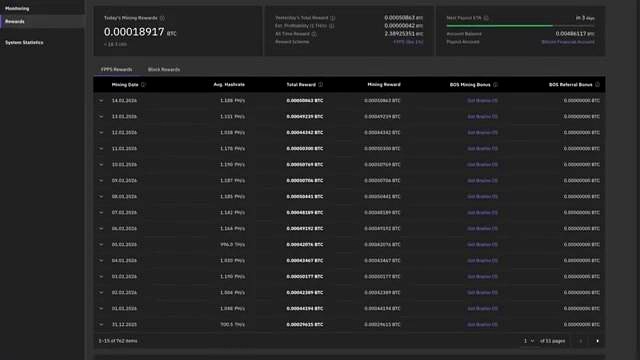
There is also about 1.2 petahash on an additional mining pool at a hosting facility, and that hash rate is not included in the on-site farm bill totals.
- Hosted mining rigs: about 0.005 BTC a day, around $46 worth of Bitcoin
- Solo mining hash rate estimate: about $314 per day
- 30-day solo mining equivalent: about $9,430
After adding additional altcoin mining hash rate, the operation is earning more than it is burning overall. Even so, after all the risk and scale involved, the result may only be around $1,000 a month, which is not coming together in a great way.
Current Outlook for Voscoin
The operation started with excitement and momentum, but the ongoing bills and repeated months without a block have made the situation tougher. The current reality is spending a lot for nothing from the solo mining side unless a block is found.
The central question remains the same: will Voscoin mine a block and make it, or is the operation being run straight into the ground? For now, the strategy continues, but with growing attention on cost control, solar, and the need to hit a block before it is too late.
FAQ
What is the latest Voscoin mining farm electricity bill?
The latest total electricity bill is $11,368 across five different services.
What is the farm’s effective electricity cost per kilowatt hour?
The effective electricity cost is 8.8 cents per kilowatt hour.
How many full-size Bitcoin miners are running?
There are 30 full-size Bitcoin miners in the fleet, but only 29 are effectively working because one is offline.
How much hash rate does the solo mining setup have?
The public setup reaches nearly two petahash per second.
Why is Voscoin interested in self-hosted solo mining?
If a block is hit on CK Pool, about $6,000 would go to pool fees. A self-hosted node and pool can avoid that cost.
Did the solo mining operation hit a block this month?
No, another month went by without hitting a block.
Why is the green mining shed power usage so high?
It includes almost all of the mini miners and also six full-size miners, which heavily increases electrical consumption.
What changes are being made to reduce costs?
An old Goldshell DG Max is being turned off to reduce the bill by about $200 per month, and the focus is shifting toward solar energy generation.
How much do the non-Bitcoin miners generate?
The Dogecoin miners, Ethereum Classic miners, and other older miners generate about $100 a day or around $3,000 over the last month.
What is the long-term direction for the farm?
The direction is increasingly focused on building out solar, mining with self-produced energy, and potentially selling off or shutting down some gear.
Video Reference

An Indian crypto journalist covering the developments in the Bitcoin and blockchain industries. Her work helps readers understand key changes in the world of digital assets.