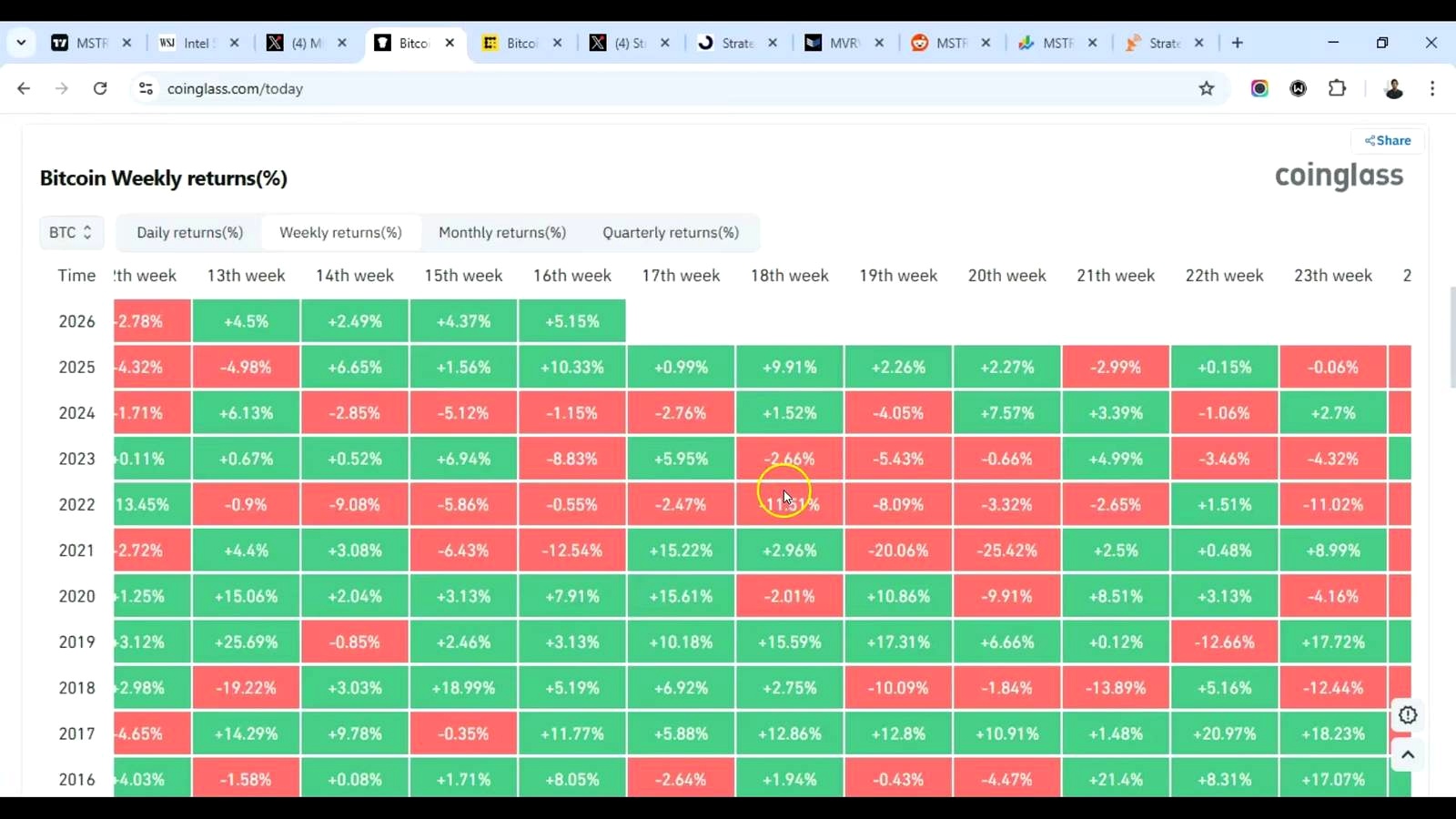
That shift is what makes this story hard to ignore. The crowd that usually treats altcoins like a red flag is now showing up around one name: BitTensor TAO.
And it is not happening quietly. In a market where many altcoins get hit harder than Bitcoin during pullbacks, TAO has been holding up with unusual strength, drawing attention from early Bitcoin investors, builders, and funds that rarely move without a reason.
TAO is moving differently when the market gets shaky
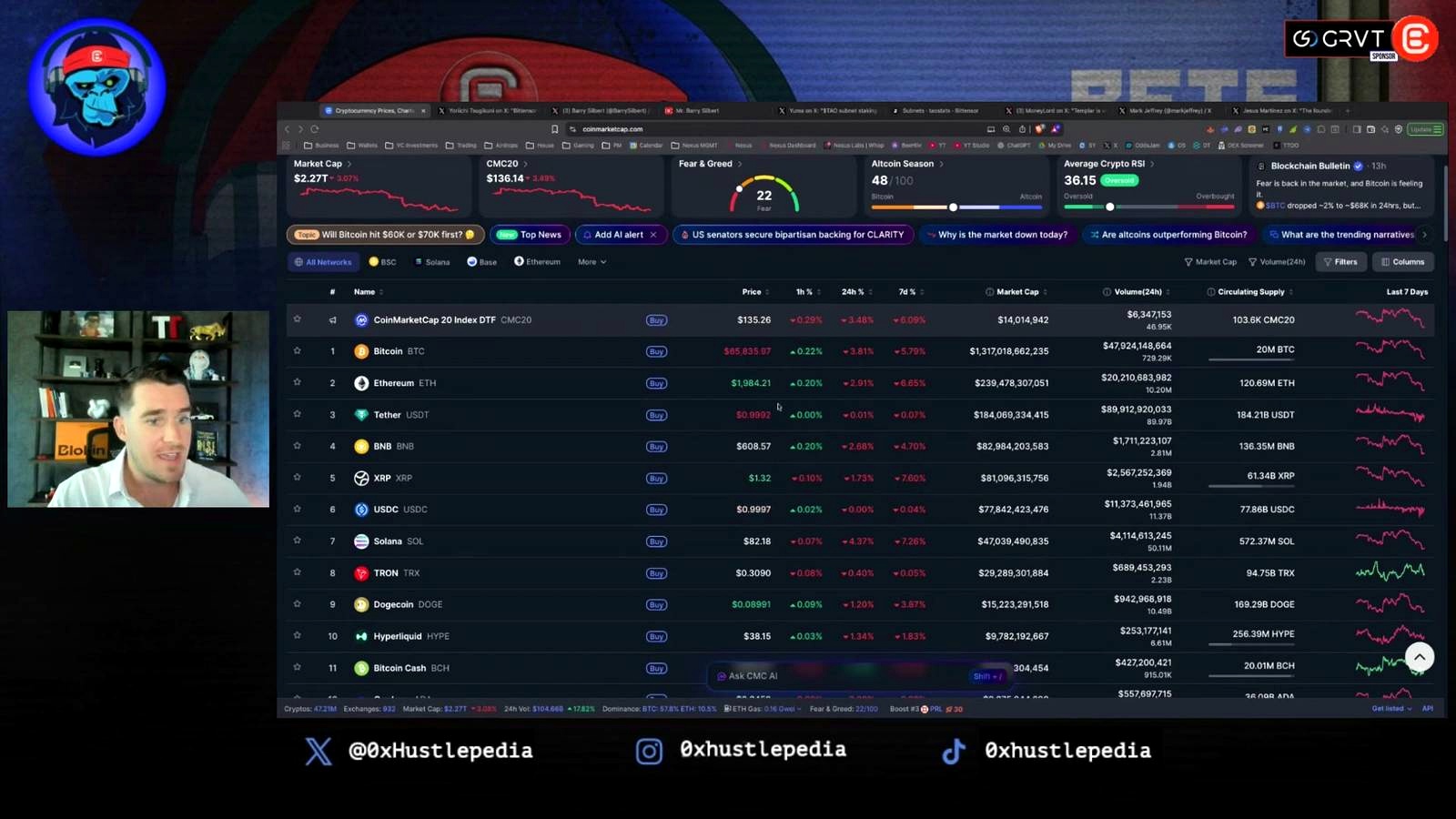
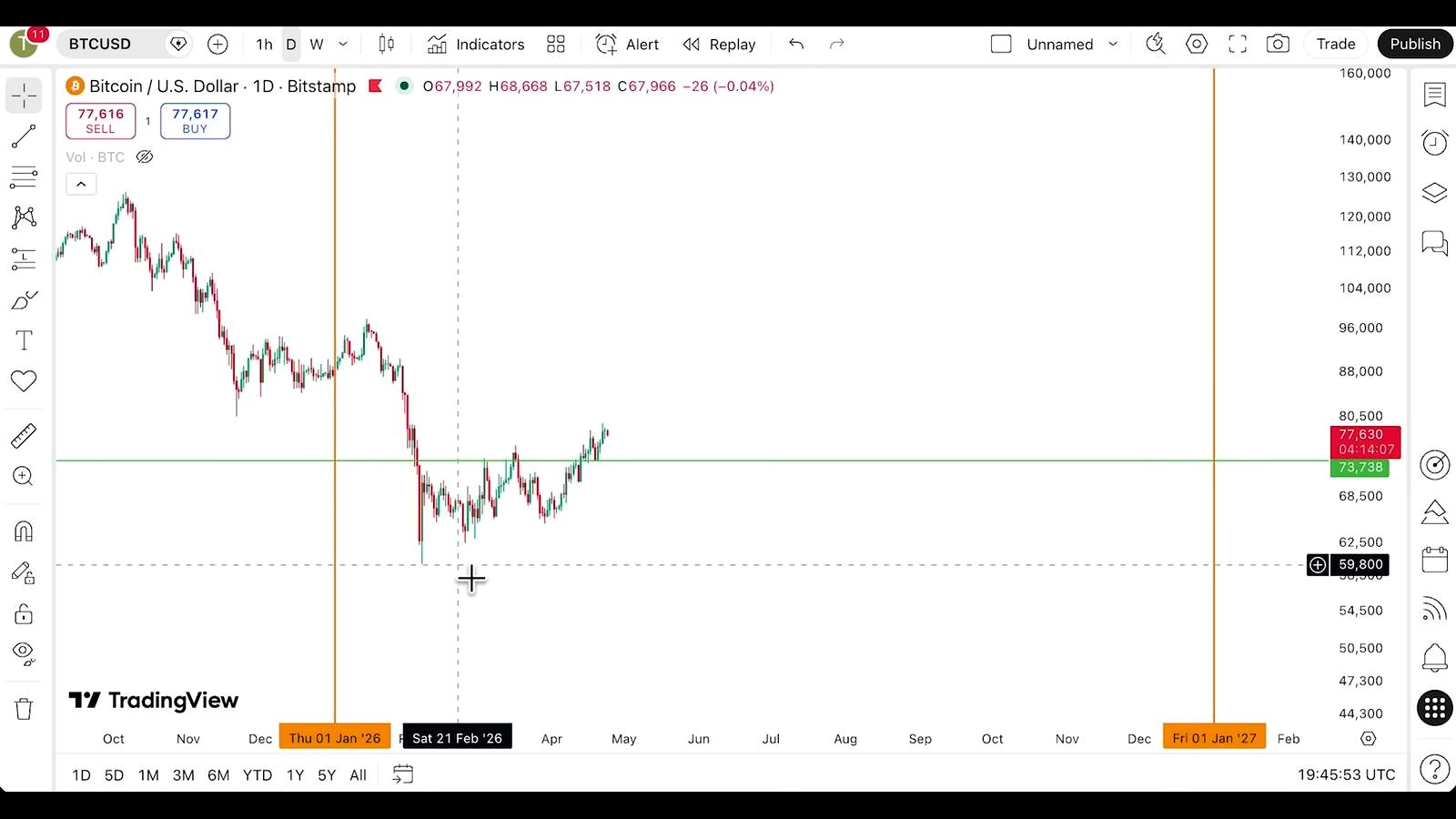
Recent market action has made the contrast sharper. After Bitcoin ran from the 60s into the mid-70s and then pulled back, many altcoins took the usual heavy hit. TAO did not stand out by exploding higher. It stood out by refusing to break the same way.
That matters because resilience is often where conviction starts. When traders expect weakness across altcoins and one token behaves more like Bitcoin than the rest of the field, people notice.
- Bitcoin was down around 4% on the daily during the move discussed
- Many altcoins were getting hit harder
- BitTensor TAO was only down roughly in line with Bitcoin
- Over 30 days, TAO was up 77%
Why TAO keeps getting compared to Bitcoin
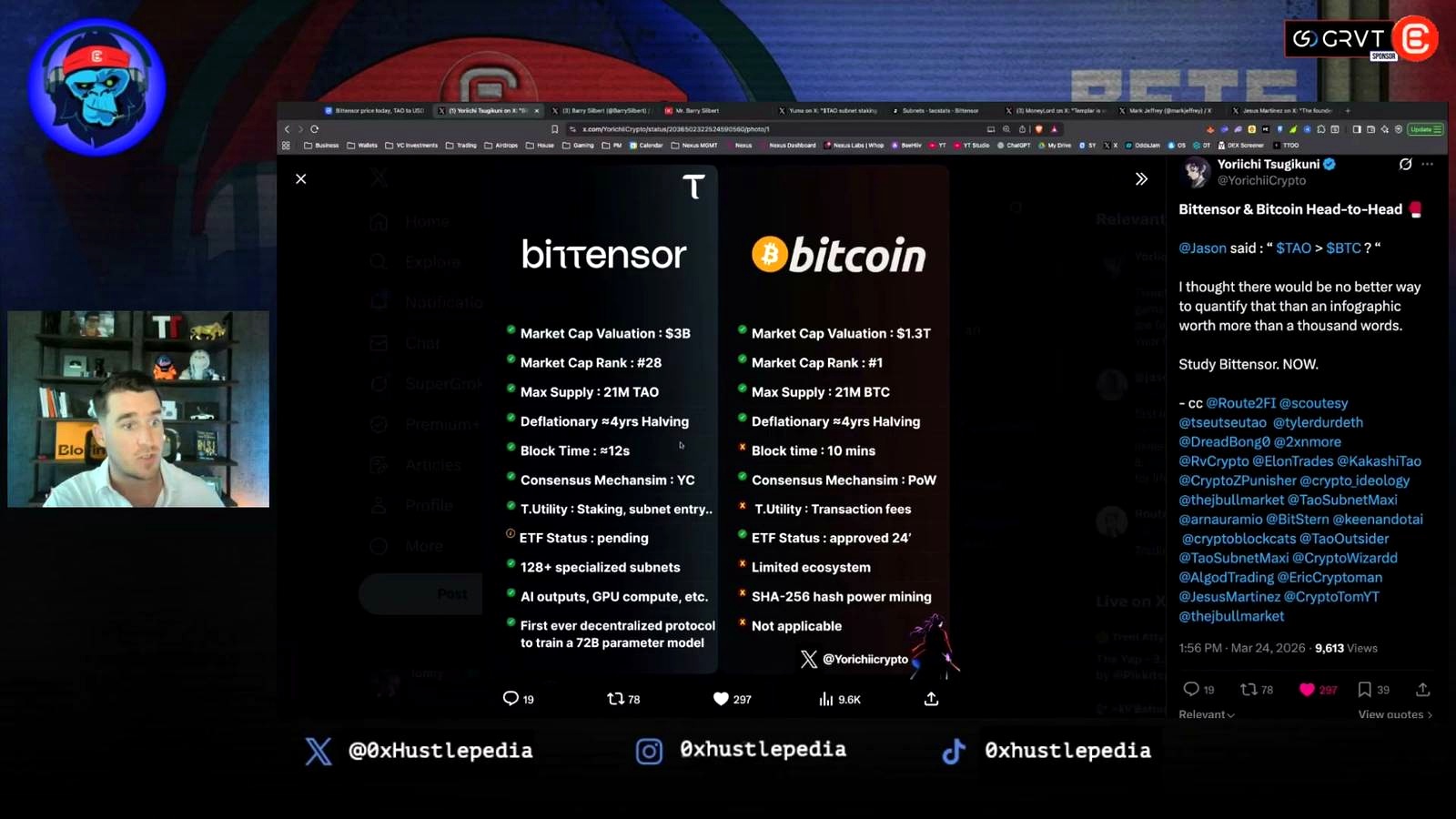
The comparison is not just hype. A big part of the argument around BitTensor comes from how closely its token structure resembles Bitcoin.
The supply structure feels familiar
BitTensor TAO has a maximum supply of 21 million tokens, matching Bitcoin’s 21 million cap. It is also described as deflationary, with a halving cycle every four years.
For investors who built their worldview around Bitcoin, that similarity is not a small detail. It creates a bridge. It makes TAO feel less like a random altcoin and more like something built with discipline.
- Maximum supply: 21 million TAO
- Bitcoin maximum supply: 21 million BTC
- Both feature a four-year halving cycle
- Both are framed as deflationary
But TAO is not trying to be Bitcoin
This is where the story gets more interesting. The structure may echo Bitcoin, but the use case goes in another direction.
Bitcoin’s utility is centered on transaction fees, with a more limited application ecosystem. BitTensor, by contrast, is positioned around AI outputs, GPU compute, staking, and subnets. It is trying to create a decentralized crypto AI platform where builders launch directly on the network.
That blend is exactly what is turning heads: Bitcoin-like tokenomics, but with a faster network and a builder-focused AI ecosystem.
The real signal: early Bitcoin money is building here
The strongest part of the TAO case is not just price action. It is who is showing up.
Early Bitcoin investors are often known for rejecting altcoins outright. So when one of the most recognizable names from that world starts backing and building around TAO, it changes the tone.
Barry Silbert is a major part of the story
Barry Silbert, one of the early major Bitcoin bulls, is highlighted as a central figure in the BitTensor ecosystem. He is chairman of Grayscale, which offers the BitTensor TAO trust for institutional accredited investors.
His background matters. He became one of the earliest and most active investors in Bitcoin in 2012 and provided seed funding to companies including Coinbase, Ripple, and BitPay. Through Digital Currency Group, he helped build a network that includes Grayscale, Genesis Trading, CoinDesk, and more than 90 investments across 27 countries.
Now, that attention is pointed at BitTensor.
Yuma Group signals conviction, not curiosity
Silbert is also described as the founder and CEO of Yuma Group, an all-in-one fund built on top of BitTensor TAO. Its role is simple in concept but powerful in implication: it gives exposure to the subnet ecosystem inside BitTensor.
The numbers attached to that growth are striking.
- Subnet staking reportedly grew from 0 to $691 million in 13 months
- Only 19% of total TAO was said to be in subnets
- Yuma positions itself as a gateway to broad subnet exposure
That does not look like a casual bet. It looks like an infrastructure move.
What makes the subnet model so important
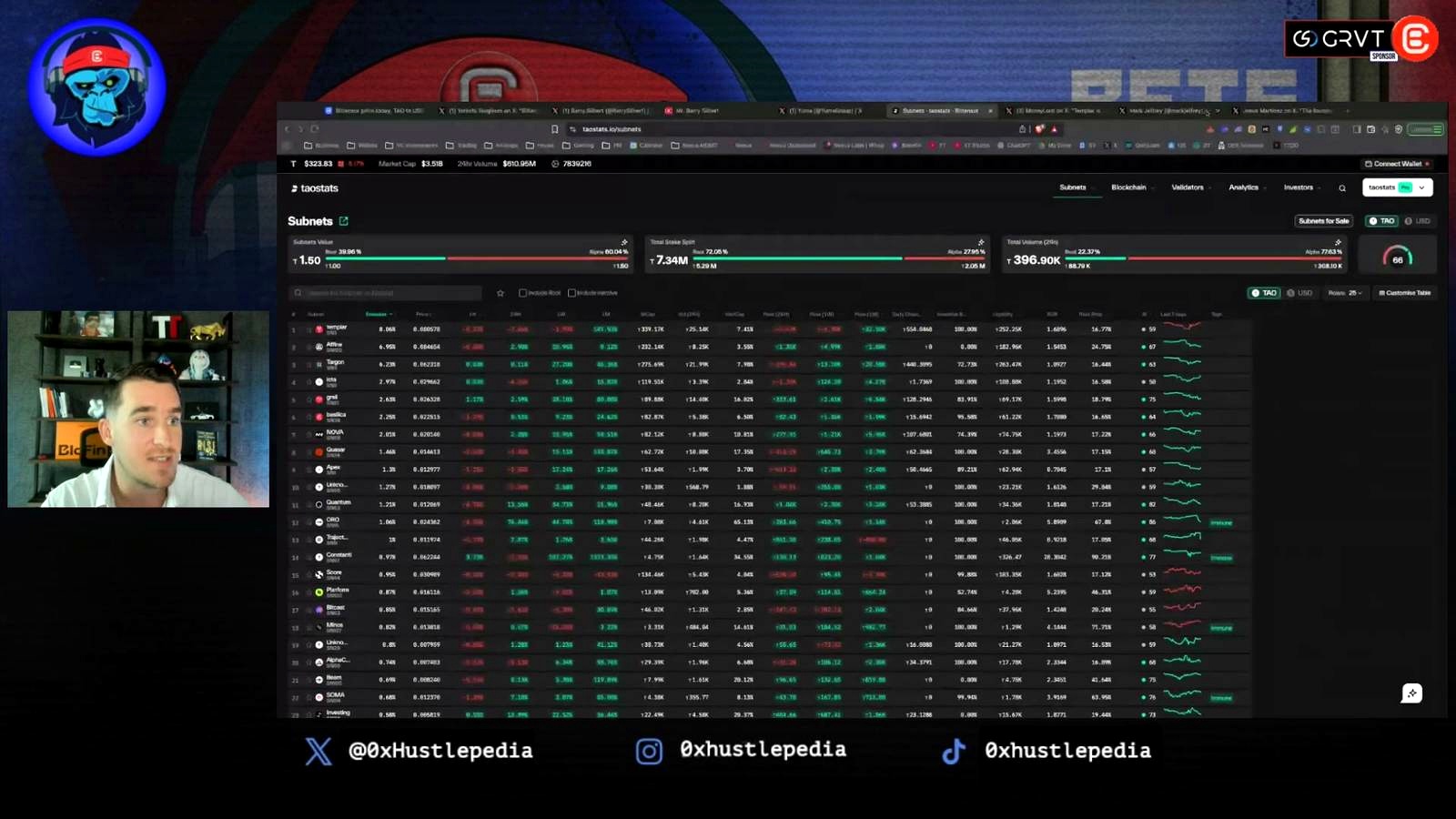
To understand why TAO is getting so much attention, you have to understand the subnets. They are described as startup layers built on top of the BitTensor network.
Instead of treating the token as a standalone asset, this model frames BitTensor as a decentralized AI platform where teams build infrastructure and startups directly on-chain. The comparison used is Y Combinator, but inside crypto and powered by token emissions rather than traditional venture funding.
A competitive builder economy
Subnets compete for emissions from the BitTensor Foundation. According to the material, they receive emissions daily. That turns the network into a live contest for relevance, performance, and growth.
Only a few subnets were said to have negative monthly flow, suggesting broad momentum across the ecosystem.
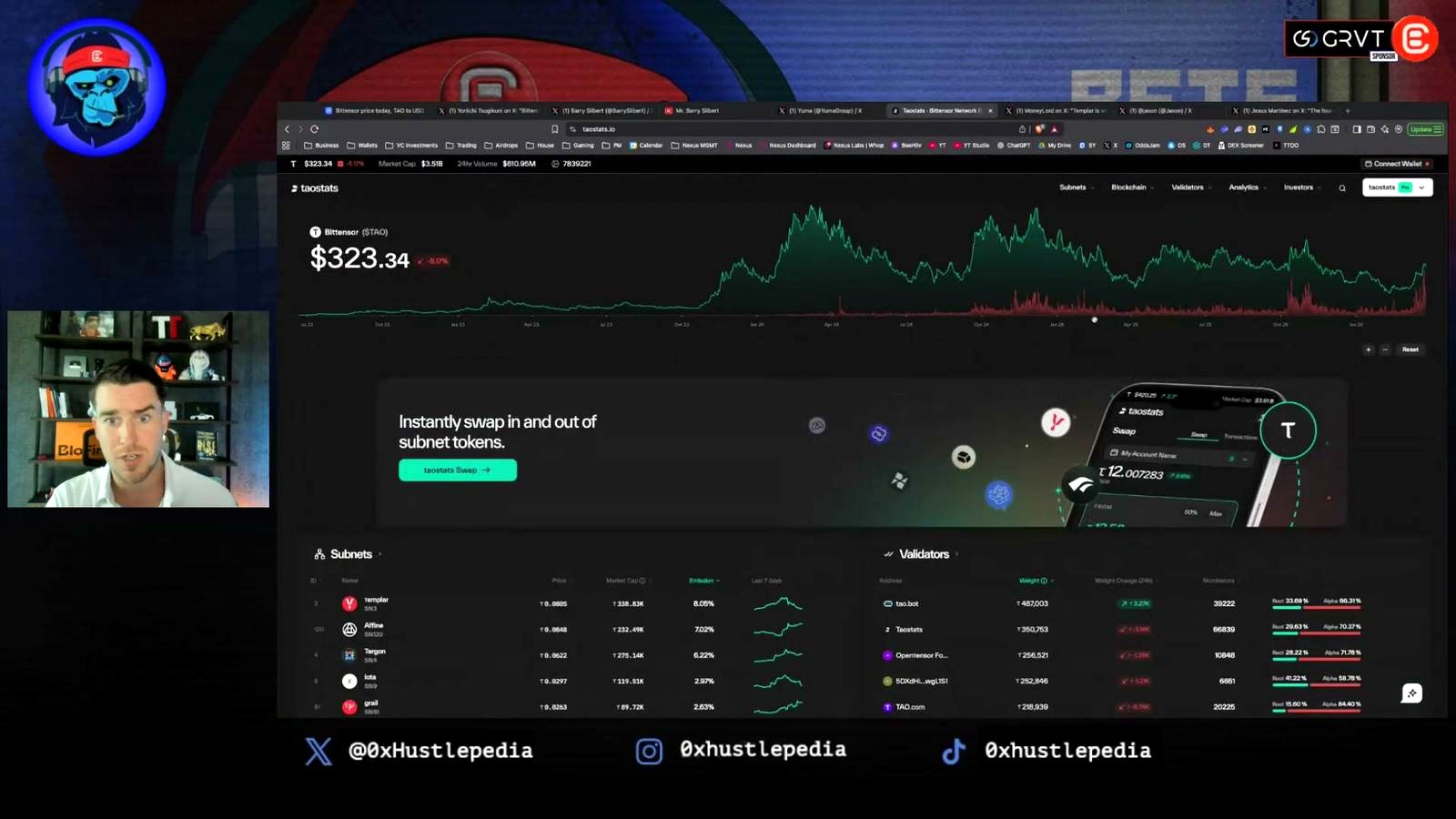
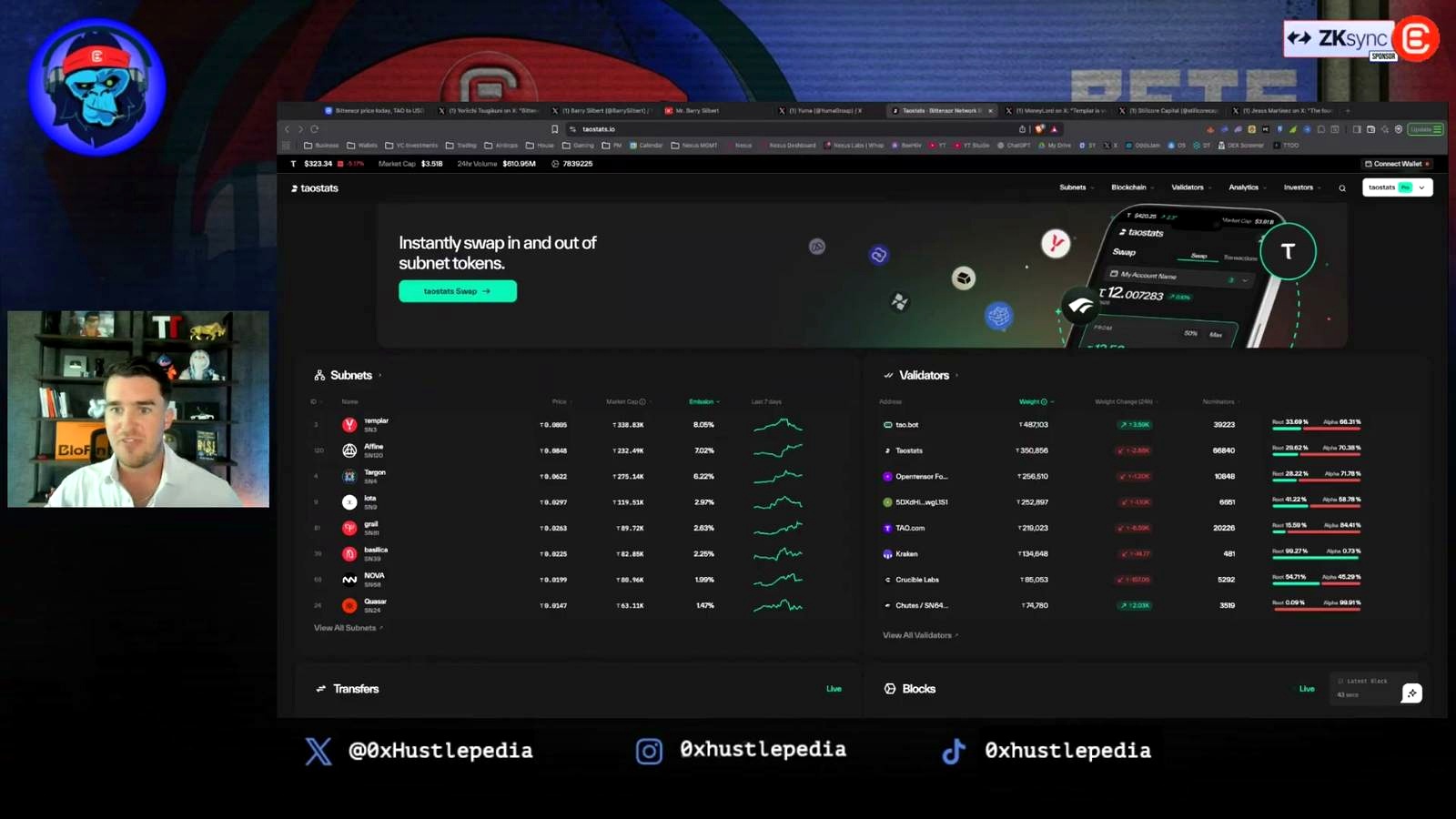
One example mentioned is Templar, which was described as receiving about 8% daily emissions and being viewed by some as a potential first subnet to eventually trade at a billion-dollar valuation, while currently around $100 million.
More names are circling the ecosystem
The Barry Silbert angle may be the headline, but it is not the only sign that TAO is attracting serious attention.
Mark Jeffrey and Stillcore Capital
Mark Jeffrey, a partner at the BitTensor fund Stillcore Capital, is described as highly bullish on BitTensor TAO. The material says he wants to own 1% of the total supply of BitTensor.
That kind of ambition sends a message on its own. It suggests long-term positioning rather than short-term speculation.
Builders are not just talking — they are shipping
The TAO Stats platform is presented as a key tool for tracking the ecosystem. It shows price, validators, network transfers, blocks, and subnet data in a more advanced explorer-style interface.
Its founder is credited with founding six subnets, building the wallet, the explorer, the mobile app, and running one of the largest validators on BitTensor. According to the material, that validator ranks second on the network.
This matters because ecosystems do not grow on narrative alone. They grow when people build the rails.
Why TAO stands out in the AI token race
The case being made is blunt: BitTensor is described as the king of AI tokens and the best AI token in crypto. That confidence is based on a mix of tokenomics, network structure, and the pace of builder activity.
The underlying idea is that AI today resembles the early internet. If that framing is right, then getting close to where AI infrastructure is being built could offer a major edge. In this narrative, BitTensor is not just another AI-branded token. It is the platform where decentralized AI startups are trying to win.
Even outside crypto, people are noticing
The material points to broader technology interest as well. Nvidia is said to be paying attention, with Jensen Huang discussing what Templar is doing as a breakthrough in decentralized AI. Taran is also described as working alongside Intel with its technology.
That expands the conversation beyond Crypto Twitter and YouTube. It suggests that what is happening on BitTensor is being noticed by builders and major technology circles too.
The bull case comes with a warning

None of this is presented as a straight line upward. The long-term outlook described is extremely bullish, including a price target above $1,000 and the idea that TAO could move from around a $3 billion market cap to $15 billion.
But the warning is just as clear: volatility remains part of the story.
If Bitcoin drops hard, TAO can drop too. A move to $45,000 on Bitcoin over the next few months was described as possible, and that could bring cheaper TAO prices with it. The view here is not “up only.” It is that short-term pain would not change the long-term belief in the ecosystem.
- Long-term target discussed: $1,000+
- Possible market cap path mentioned: from $3 billion to $15 billion
- Main risk highlighted: a broader Bitcoin downturn could pressure TAO
- Long-term strategy mentioned: continuing to accumulate through volatility
Why this feels bigger than a normal altcoin story
That is really the core tension around TAO. It is being framed as an altcoin, but it is attracting people who usually do not touch altcoins. It has Bitcoin-like tokenomics, but it is pushing into decentralized AI. It has a startup economy inside it, but one driven by emissions and network incentives rather than the usual venture model.
For believers, that combination is the entire point. BitTensor is not trying to copy what already exists. It is trying to merge scarcity, incentives, and AI infrastructure into one network. And the fact that early Bitcoin whales are not just buying it, but building on it, is what gives the story weight.
FAQ
Why are Bitcoin whales interested in BitTensor TAO?
The material argues that TAO appeals to early Bitcoin investors because its tokenomics resemble Bitcoin, with a 21 million supply and four-year halving cycle, while also offering exposure to a decentralized AI ecosystem.
How is TAO similar to Bitcoin?
TAO is described as having a 21 million maximum supply, deflationary design, and a halving every four years, which closely mirrors Bitcoin’s structure.
What makes TAO different from Bitcoin?
BitTensor focuses on AI outputs, GPU compute, staking, and subnets, while Bitcoin is described as having a more limited application ecosystem centered on transaction fees and payment rails.
Who is Barry Silbert in the TAO story?
Barry Silbert is presented as an early Bitcoin bull, chairman of Grayscale, and founder of Yuma Group, which is built on top of BitTensor TAO and offers access to the subnet ecosystem.
What are BitTensor subnets?
Subnets are described as startup layers built on top of the BitTensor network. They compete for daily emissions and form the builder economy inside the ecosystem.
Is TAO presented as risk-free?
No. The material explicitly says TAO can be volatile and could fall if Bitcoin sees a major downturn, even while maintaining a strong long-term bullish outlook.
Original Source

John Burnell focuses on Bitcoin infrastructure, wallet security and blockchain technology. He writes educational articles explaining how Bitcoin works and how the technology evolves.