Bitcoin remains one of the enduring mysteries of modern times. Although the cryptocurrency was released in 2009 and is now used by millions, the identity of its creator is still unknown. The story begins with the name Satoshi Nakamoto, but many experts believe that name does not belong to the real person, or perhaps people, behind Bitcoin.
What makes the mystery so compelling is that Bitcoin went from being barely noticed to becoming hugely valuable. The famous example is Laszlo Hanyecz, who bought two large Papa John’s pizzas for 10,000 bitcoins in 2010, then worth about $30. At one point, those bitcoins could have been worth as much as $100,000,000, though Hanyecz later said he did not regret it and was glad to be part of Bitcoin’s early history.
The Beginning of the Mystery
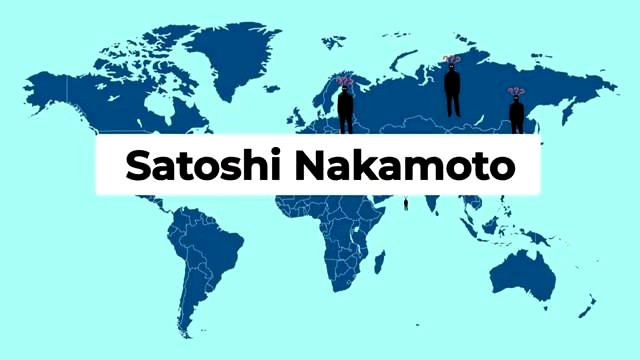
The story starts with Satoshi Nakamoto, the name attached to the domain bitcoin.org on 18 August 2008. Soon after, this figure wrote the paper titled Bitcoin: A Peer-to-Peer Electronic Cash System. Nakamoto stayed around for a couple more years and then disappeared.
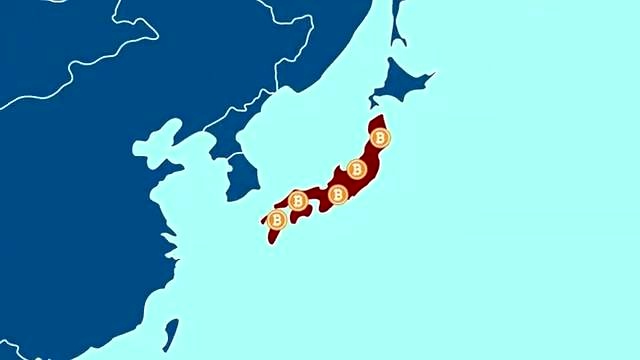
In 2012, someone claiming to be Nakamoto said he was a 37-year-old man from Japan. Few believed that then, and few believe it now. Early observers noted that Nakamoto wrote in impeccable English and often used British spelling and British phrases, which made the Japanese identity claim seem doubtful.
John McAfee said he knew who the creator was, but he did not reveal the name. Still, the account notes that McAfee was also known to say outlandish things.
What Kind of Person Was Nakamoto?
Internet-security researcher Dan Kaminsky was one of the first people to investigate Nakamoto. In 2011, he told the New Yorker that he knew one thing for sure: Nakamoto was a world-class programmer with a deep understanding of C++, economics, cryptography, and peer-to-peer networking.
Kaminsky also said that if Nakamoto was not actually a team, then he was an absolute genius. Many others have argued that Bitcoin seems too advanced to have been created by one person alone, unless that person was extraordinarily intelligent.
Early Suspects

Vili Lehdonvirta
The Finnish tech researcher and programmer Vili Lehdonvirta was one of the names suggested early on. However, this was considered highly unlikely because he did not know cryptography that well, and there was little reason to think he was behind Bitcoin.
Gavin Andresen
Gavin Andresen took over Bitcoin after Nakamoto disappeared, but few people believe he was Nakamoto himself. What made things more interesting was that Andresen once said he thought the creator was Craig Wright, though that was based on Wright’s own claim.
Craig Wright and the Team Theory

Craig Wright, an Australian computer scientist, has long claimed to be Satoshi Nakamoto. Investigations into his life, work, and activity led some to say that he either created Bitcoin or was very good at lying. It was also said that he wrote messages using cryptographic keys linked to Bitcoin blocks created by Nakamoto.
In April 2019, Wright registered a US copyright for Bitcoin 0.1. However, the US Copyright Office said it does not investigate whether there is a provable connection between the claimant and a pseudonymous author, so the copyright did not prove much.
Wired once wrote that Wright “either invented bitcoin or is a brilliant hoaxer who very badly wants us to believe he did.” Wright has also threatened to sue people for libel when they say he is not Nakamoto.
In 2019, Wright made an even bigger claim. He said Nakamoto was not just him, but a team of people, with Wright as the principal actor. He named Dave Kleiman and Hal Finney as the others involved.
Dave Kleiman

Dave Kleiman, described as an avid cryptographer, died in 2013. He was on Nakamoto’s mailing list and had skills in building encryption-focused software. According to the material, the main evidence tying him to Wright’s supposed team is Wright’s word, and some investigators have accused Wright of making things up.
After Kleiman died, a disturbing description of his death was reported: his body was found decomposing and surrounded by empty alcohol bottles and a loaded handgun, and there was a bullet hole in his mattress though no spent shell casings were found at the scene.
The story becomes stranger because Kleiman allegedly died with a massive stack of Bitcoin. Some people have even argued that Kleiman alone was Nakamoto. It is also said that his brother has not released his hard drives, which may contain valuable information.
Wright’s claims are further complicated by mixed evidence. Bitcoin.com described Wright harshly, calling him “Faketoshi” and saying he built a career by riding in the slipstream of brighter stars. On the other hand, Wright’s wife said he had been working on something he called “digital money” long ago, and that he worked on it with his friend Dave Kleiman.
There was also mention of a hacked PDF of a legal contract between Wright and Kleiman for a trust in the Seychelles that would supposedly hold a Bitcoin fortune similar to Nakamoto’s. Even so, investigators said this was bogus, and Dan Kaminsky concluded the claim was “intentional scammery.”
Hal Finney

Hal Finney is one of the strongest suspects. He was described as a pre-Bitcoin cryptographic pioneer and a genius. Bitcoin.com wrote that “Hal Finney epitomizes Bitcoin more than any other known person.”
Writing analysis experts have said Finney and Nakamoto had very similar handwriting, though similar claims were also made about Andresen. Some people have suggested Finney may have been a ghostwriter for Nakamoto rather than Nakamoto himself.
Finney denied being Nakamoto and allowed investigators into his house. Those investigators concluded he was telling the truth. Still, there is no doubt that Finney and Nakamoto were in frequent email contact. The material points out that if Nakamoto had been trying to hide, openly emailing himself would have made little sense, unless it was some kind of double bluff.
Finney was also the first person ever to receive a bitcoin transaction from Nakamoto. He later developed ALS, became paralyzed, and died in 2014.
Dorian Nakamoto
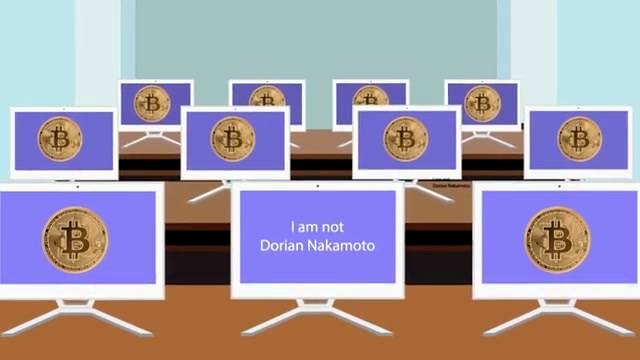
The story grows stranger with Dorian Nakamoto, a man who lived down the street from Hal Finney. He was also a computer expert and a libertarian. In 2014, a Newsweek journalist investigated him, and he said, “I am no longer involved in that and I cannot discuss it. It’s been turned over to other people. They are in charge of it now. I no longer have any connection.”
That sounded like confirmation, but Dorian later said he had misunderstood the question and thought the journalist was asking about his classified military work. Then Nakamoto’s P2P Foundation account suddenly became active for the first time in five years and posted the message, “I am not Dorian Nakamoto.” Some people think that account may have been hacked.
Others argued that although Dorian had worked as a systems engineer on classified government defense projects and as a computer engineer for technology and financial information services companies, he probably did not have the intellectual ability to be the real Nakamoto, unless he had hidden it very well.
Nick Szabo
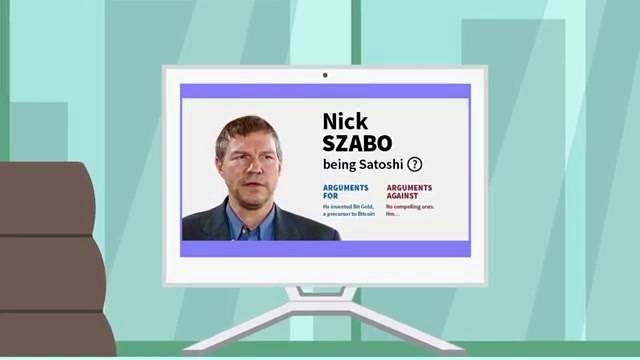
Nick Szabo is another major suspect. He had the intellectual background to create something like Bitcoin and had earlier published a paper about “bit gold,” a theoretical decentralized digital currency. Although bit gold never truly got off the ground, it is presented as a precursor to Bitcoin.
Szabo had already laid out a plan resembling Bitcoin before Bitcoin appeared. One investigator said there was only one person in the world with the right breadth and specificity of knowledge, and that person was Szabo. There is also evidence from one of his blogs that he intended to invent a real-life version of bit gold.
Despite all that, Szabo strongly denies being Nakamoto. He has said that if anyone he knew of could have created Bitcoin and wanted to create it, it would have been him, Hal Finney, or Wei Dai. He also said of bit gold, “Satoshi came along and improved a number of aspects of it, made it even more trust-minimized, and actually wrote software, so that brings the story to where we are today.” He claims he has no idea who Satoshi is.
Other Theories

Other names have been suggested, including Elon Musk, Japanese mathematician Shinichi Mochizuki, and Ross Ulbricht, the creator of Silk Road. The material says Ulbricht is highly unlikely, while Musk and Mochizuki have denied being Nakamoto. There is no convincing evidence for any of them.
There are also conspiracy theories claiming the US government created Bitcoin as a black-ops tool, perhaps to move untraceable funds. However, the material states that there is no proof of that either.
The Mystery Remains

For now, Satoshi Nakamoto remains missing, described here as the Keyser Söze of cryptocurrency. All the suspects have been examined, yet none has been definitively identified as the creator of Bitcoin.
It may be that Nakamoto was a team. It may be that one of the well-known suspects was responsible. Or it may be that there really was another Satoshi Nakamoto, a single genius who managed to keep his identity hidden completely.
Bitcoin, Crime, and Online Security

Regardless of who created Bitcoin, the material notes that it has been used for nefarious purposes, including ransomware payments after hacks. These attacks do not only target governments and businesses, but also ordinary people.
The episode was sponsored by Dashlane. It was presented as a tool to help people avoid forgetting passwords, keep online accounts secure, and monitor the dark web for personal information being sold online. The offer mentioned was Dashlane Premium free for 30 days at www.dashlane.com/infographics, along with a coupon code “infographics” for 10% off a premium subscription.
FAQ
Who is Satoshi Nakamoto?
Satoshi Nakamoto is the name used by the person or people who registered bitcoin.org and wrote the paper Bitcoin: A Peer-to-Peer Electronic Cash System. The true identity remains unknown.
Did Satoshi Nakamoto say he was Japanese?
Yes. In 2012, someone claiming to be Nakamoto said he was a 37-year-old man from Japan, but this was widely doubted.
Why do people think Nakamoto may not be one person?
Dan Kaminsky and others believed Bitcoin required world-class skill in programming, economics, cryptography, and peer-to-peer networking. Some have said one person could not have done it alone unless he was a genius.
Was Craig Wright really Bitcoin’s creator?
Craig Wright claimed he was Nakamoto and later said Nakamoto was a team led by him. However, his claims have been heavily disputed, and some investigators called them bogus or “intentional scammery.”
Why is Hal Finney a major suspect?
Hal Finney was a pre-Bitcoin cryptographic pioneer, a genius, and the first person to receive a bitcoin transaction from Nakamoto. Still, he denied being Nakamoto, and investigators concluded he was telling the truth.
Why is Nick Szabo often mentioned?
Nick Szabo created the concept of bit gold, a theoretical decentralized digital currency seen as a precursor to Bitcoin. Even so, he has strongly denied being Nakamoto.
Was Dorian Nakamoto the creator of Bitcoin?
Dorian Nakamoto was investigated because of his name, location, and technical background. He made a statement that seemed suggestive, then said he had misunderstood the question, and a later message from Nakamoto’s account said, “I am not Dorian Nakamoto.”
Has the mystery been solved?
No. According to the material, the identity of Satoshi Nakamoto remains one of the great unresolved mysteries of the digital age.
Video Source

Omar Al-Sharif lives and works in the UAE and is involved in the blockchain technology industry. He writes articles on Bitcoin and digital assets as a personal passion, explaining complex topics in simple and understandable language.