Bitcoin and Ethereum are the two largest cryptocurrencies, but they are built for different purposes. Bitcoin focuses on digital money and security, while Ethereum was designed to make digital money programmable and support a wider range of applications.
Although both run without banks or governments, they differ in design, supply, security models, and scaling approaches. Understanding these differences makes it easier to see why neither is necessarily better, but rather suited to different needs.
Bitcoin and Ethereum at a Glance

Bitcoin launched in 2009, right after the global financial crisis. Created by a mysterious figure called Satoshi Nakamoto, it was designed to be a payment network and form of digital money that works without banks or governments.
Over time, Bitcoin evolved more into a store of value. Its core idea remains simple: just you, the internet, and your coins. It is built to be simple, secure, and not try to do too much.
Ethereum arrived later in 2015 and took the idea of digital money further by making it programmable. Its native currency, Ether or ETH, works as money, but the network also supports smart contracts and applications.
Core Purpose: What Each Network Is Designed to Do

Bitcoin as Digital Money and Store of Value
Bitcoin was created as a payment network and digital money system without central control. As it matured, it became more widely viewed as a store of value. Its design stays focused and conservative.
Ethereum as a Programmable Network
Ethereum was designed from the start to support broader functionality. Smart contracts on Ethereum power applications such as decentralized finance, NFTs, and more.
A simple way to compare them is this:
- Bitcoin is like a public record of transactions.
- Ethereum is like a public cloud computer anyone can build on.
How Bitcoin and Ethereum Stay Secure
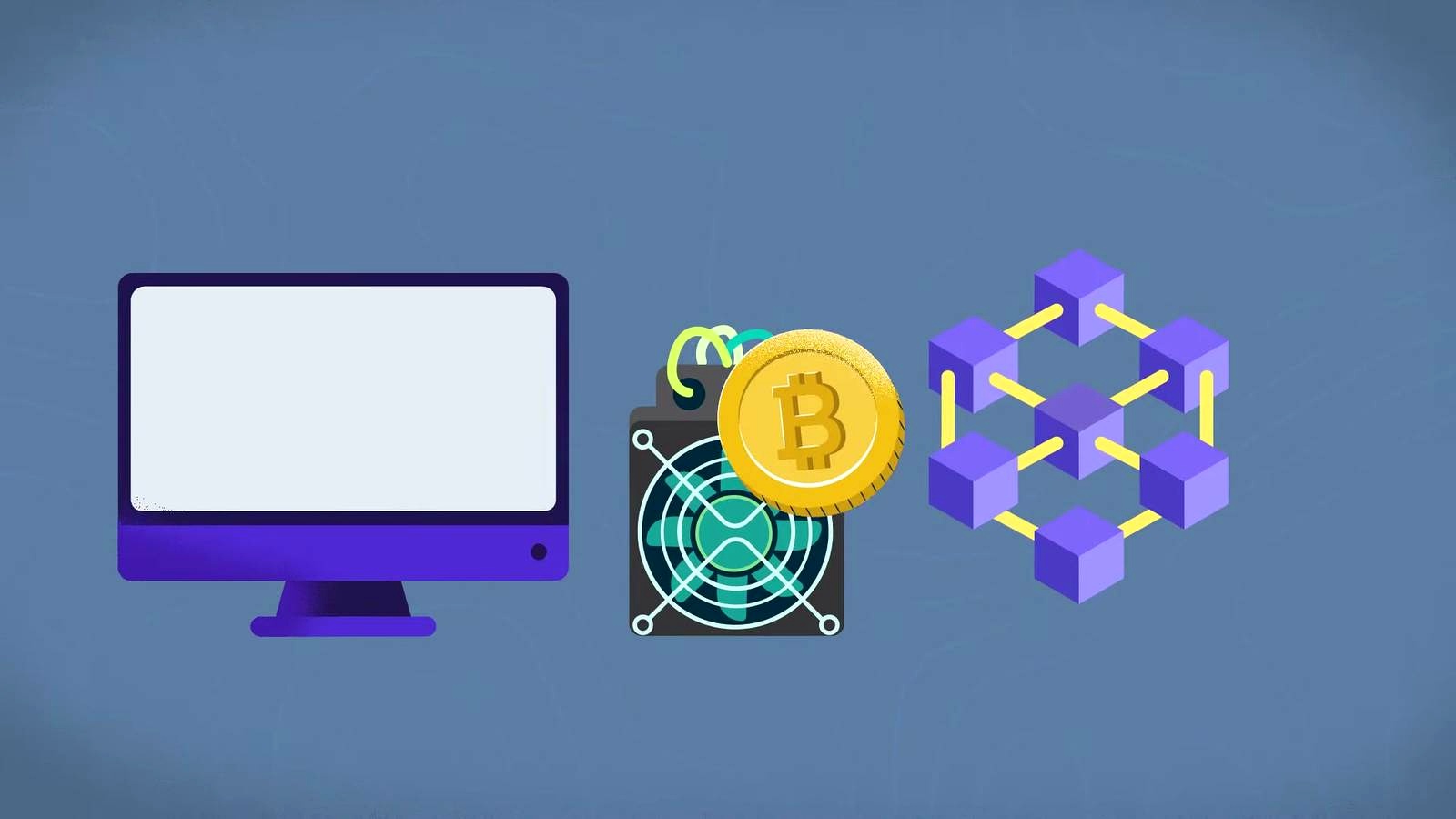
Bitcoin and Proof-of-Work
Bitcoin uses proof-of-work. Miners running bitcoin software on powerful computers compete to solve cryptographic puzzles.
The winner gets to add new transactions to the blockchain and earn new bitcoin. This process takes a huge amount of energy, computing power, and luck, but the solution is easy for others on the network to verify. That makes cheating hard and verification easy.
Ethereum and Proof-of-Stake
Ethereum used to use the same approach, but in 2022 it switched to proof-of-stake. In this system, people can stake, or lock up, ETH to secure the network and earn more ETH in return.
If they behave dishonestly, such as approving invalid or fraudulent transactions, they risk losing their stake. This setup rewards honest behavior and punishes bad behavior.
Supply Differences Between Bitcoin and Ethereum

Bitcoin’s Fixed Supply
Bitcoin has a hard cap of 21 million coins, and no more will ever exist. This scarcity is one reason people compare bitcoin to gold.
New bitcoin is created as a reward for miners, but that reward halves roughly every four years. This makes Bitcoin less inflationary over time.
Ethereum’s Flexible Supply
Ethereum does not have a fixed supply. However, a portion of ETH is burnt with every transaction.
When the network is busy, more ETH can be destroyed than created. During those periods, Ethereum can become deflationary.
Transaction Speed and Scaling

Bitcoin processes about 7 transactions per second, while Ethereum handles around 15 to 30. Neither is especially fast when network activity rises, so both use scaling solutions.
Bitcoin Scaling with the Lightning Network
Bitcoin uses the Lightning Network to help scale. It allows users to send bitcoin almost instantly and with lower fees.
Ethereum Scaling with Layer 2s
Ethereum uses separate blockchains called Layer 2s, including Arbitrum and Optimism. These can process thousands of transactions per second before bundling and settling them back on Ethereum for security.
Flexibility, Stability, and Risk
Bitcoin’s Conservative Design
Bitcoin’s simplicity and massive amount of mining power make it extremely secure. It is also very conservative, and changes to the protocol do not happen often.
Ethereum’s Broader Functionality
Ethereum is more flexible and moves faster. That allows for more features, but it also creates more room for bugs or smart contract risks.
Bitcoin vs Ethereum: Key Differences

- Launch year: Bitcoin launched in 2009, Ethereum in 2015.
- Main purpose: Bitcoin focuses on digital money and store of value, while Ethereum supports programmable applications.
- Security model: Bitcoin uses proof-of-work, Ethereum uses proof-of-stake.
- Supply: Bitcoin has a fixed cap of 21 million coins, while Ethereum has no fixed supply.
- Scaling: Bitcoin uses the Lightning Network, while Ethereum uses Layer 2s such as Arbitrum and Optimism.
- Approach: Bitcoin is simple and conservative, while Ethereum is flexible and feature-rich.
Which One Is Better?

Neither Bitcoin nor Ethereum is necessarily better than the other. They do different things, and the better choice depends on what you are looking for.
FAQ
What is the main difference between Bitcoin and Ethereum?
Bitcoin was designed as a payment network and form of digital money, while Ethereum was designed to make digital money programmable and support smart contracts and applications.
Is Bitcoin more focused than Ethereum?
Yes. Bitcoin is simple, secure, and does not try to do too much. Ethereum is broader in scope and supports more features.
Does Bitcoin have a supply limit?
Yes. Bitcoin has a hard cap of 21 million coins, and no more will ever exist.
Does Ethereum have a fixed supply?
No. Ethereum does not have a fixed supply, but a portion of ETH is burnt with every transaction.
How do Bitcoin and Ethereum secure their networks?
Bitcoin uses proof-of-work, where miners solve cryptographic puzzles. Ethereum uses proof-of-stake, where users stake ETH and can lose it if they act dishonestly.
Which network is faster?
Bitcoin processes about 7 transactions per second, while Ethereum processes around 15 to 30.
How does Bitcoin scale?
Bitcoin scales with the Lightning Network, which allows almost instant transactions with lower fees.
How does Ethereum scale?
Ethereum scales through Layer 2 blockchains such as Arbitrum and Optimism, which handle thousands of transactions per second before settling back on Ethereum.
Is Bitcoin or Ethereum more secure?
Bitcoin’s simplicity and massive amount of mining power make it extremely secure. Ethereum is more flexible, but that also means more room for bugs or smart contract risks.
Content Source

Omar Al-Sharif lives and works in the UAE and is involved in the blockchain technology industry. He writes articles on Bitcoin and digital assets as a personal passion, explaining complex topics in simple and understandable language.