Bitcoin has shown notable resilience during a period of geopolitical instability. Since the war started on February 28, it has risen 7% and outperformed the S&P 500, NASDAQ, gold, and silver.
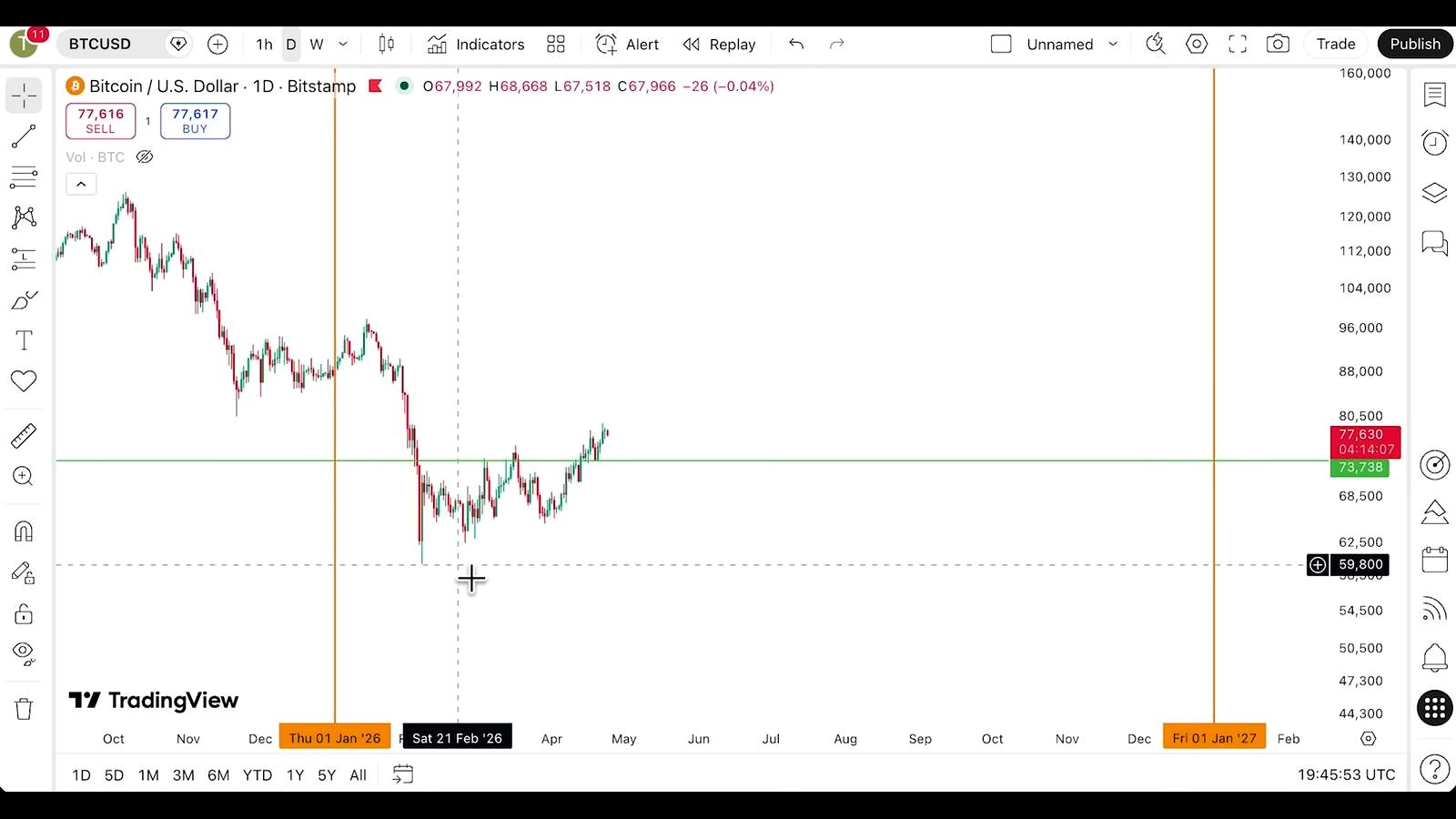
After dipping to 63K on the initial strikes, Bitcoin recovered to about 70K by Monday, reached 73K in the morning, and traded around 71K later. That performance has made it one of the best performing assets during the past week.
Bitcoin Price Performance Since the War Began
Bitcoin’s recent price action has stood out. It fell to 63K during the initial shock, then rebounded quickly.
- Up 7% since February 28
- Outperformed the S&P 500
- Outperformed the NASDAQ
- Outperformed gold
- Outperformed silver
- Recovered from 63K to around 70K by Monday
- Hit 73K before moving to about 71K
During the announcement and commencement of the war, Bitcoin held up well and performed strongly relative to other major assets.
Why Bitcoin May Be Showing Strength
Bitcoin Often Moves First
One view is that Bitcoin may have bottomed first while other markets are still catching up. In periods of financial stress, Bitcoin has often moved first.
This idea was compared to March 2020, when Bitcoin reacted quickly during market stress. From that perspective, the recent strength may be a timing issue rather than a completely new pattern.
Safe Haven Asset and Risk Asset at Different Times
Bitcoin has traded in two different ways throughout its history. At times it behaves like a safe haven asset, and at other times it trades more like a risk asset that follows the S&P.
During this recent stretch of global geopolitical instability, Bitcoin has behaved more like a resilient asset and has held up well.
Capital Flight Into Bitcoin
Another explanation discussed is capital flight into Bitcoin, particularly from the Middle East. If people are fleeing and want to move assets out of places like Dubai as quickly as possible, converting assets to Bitcoin may be seen as the best way to do that.
There has been mention of some evidence for this based on chain analysis. If the local situation is under stress, the street is closed, or the banking system is strained, Bitcoin could act as an exit.
This was described as one of Bitcoin’s unique value propositions that no other asset can touch, especially for people trying to protect their wealth.
Support From Ongoing Bitcoin Purchases
Momentum may also be coming from STRC and from Sailor defending the floor with Bitcoin purchases. On the margin, that could be enough to help keep Bitcoin moving.
Bear Case vs Bullish Counterarguments

The Bear Case
Luke Groman’s bear case is that the chart was technically busted. The view included the following points:
- Bitcoin was below the 200 day simple moving average
- Bitcoin was lagging gold
- A possible slide to 40K was warned
- Gold and equities were seen as expressing the debasement trade better
Luke Groman also sold Bitcoin in the upper 90K range near the end of last year, shifted to gold, and said he is waiting to buy back Bitcoin when the money printer is warming up again.
The Counterargument
The counterargument is that ETF inflows are turning positive and Bitcoin has moved back above the 200 day simple moving average, even though it dipped below it.
There were about $3 billion in outflows in March after outflows from November through February. If ETF demand is the marginal buyer, the trend appears to be improving.
In that view, Bitcoin seems to be climbing a wall of worry.
Arthur Hayes View
Another bullish framing is simple: war equals money printing equals Bitcoin wins. That view reflects the idea that expanding money creation ultimately benefits Bitcoin.
Money Printing as a Major Bitcoin Catalyst
Several catalysts were discussed as forces that could lead to more money printing. War is one of them, but it is not the only one.
Key Macro Forces Mentioned
- War and rising war costs
- Energy market disruption
- Disruptions in fertilizer and downstream petroleum product supply chains
- AI job loss
- Consumer credit risk
- Private credit risk
- General economic malaise
- Japan trading like an emerging market
- Midterms coming up
The argument is that these pressures all point in the same direction: more money printing.
The Big Print and the Gradual Print
There was discussion around whether a “big print” is coming. One perspective referenced Lyn Alden’s idea of a gradual print rather than being forced into a large single event.
Another view was that even if no single catalyst causes a major print, repeated gradual printing over five or ten years could still add up to a very large print overall.
Either way, the conclusion was similar: any money printing means the currency gets sacrificed, while fixed or limited supply assets and hard assets benefit the most.
Additional Pressure Points Behind the Printing Thesis
The broader macro setup includes multiple areas of instability that may require intervention or backstops.
War Costs and Credit Stress
War costs were described as already being estimated in the hundreds of billions, with uncertainty around how long they may last. Consumer credit stress tied to AI job displacement was also mentioned as a source of economic strain.
Private Credit Contagion and Backstops
Private credit contagion was another concern. There are risks that may require backstops, and there is precedent for intervention, as noted with the federal government backing the big banks in 2008.
Japan Bond Market Volatility
Japan’s bond market was described as behaving like an emerging market. The 40-year yields on JGB hit a record above 4% in January, and City Bank warned of $130 billion in potential Treasury selling from a risk parity unwind.
From this perspective, each of these threads ends in the same place: the Fed and the Treasury having to print.
Bitcoin Allocation and Market Timing
Even with concerns about more months of crab market, timing these shifts was described as extremely difficult. Many have tried and few have succeeded.
Why Missing a Few Days Matters
With Bitcoin, roughly 10 trading days per year make up the majority of the gains. Missing those top days can crush expected returns.
That is why being out of the market can be costly if Bitcoin turns around quickly.
A More Defensive Approach Without Selling Everything
One approach discussed was not to sell Bitcoin entirely, but possibly to shift allocation to be more defensive. The key point was not to become underallocated to Bitcoin when it turns around.
Trying to time the exact bottom was discouraged.
DCA and Staying in the Market
A recurring buy strategy was presented as the preferred approach. DCA helps smooth out cost basis and keeps investors in the market for the days that matter most.
- Buy on a recurring basis
- Smooth out your cost basis
- Stay in the market for the strongest trading days
- Avoid the difficulty of getting out and back in on the right days
It was also noted that staying in the market avoids triggering capital gains taxes, which means any active strategy must also outperform those tax costs.
Swan Services for Bitcoin Investors

Swan was described as offering support beyond a standard Bitcoin exchange. The focus is on helping clients plan for the future and build generational wealth.
Swan Private
Swan Private offers a higher level of availability, including a dedicated client representative accessible by text and phone. The client success team helps answer questions, solve problems, and support clients directly.
Business Services
Swan also serves businesses and has experience helping put Bitcoin on business balance sheets.
Swan IRA
The IRA product was described as a popular option that is fast to set up. It is designed to make it simple to transfer or roll over fiat retirement accounts into a Swan IRA where clients can hold real Bitcoin.
Swan Vault
Swan Vault is a two-of-three multi-signature self-custody solution. It was presented as advanced Bitcoin cold storage made simple, allowing clients to hold their own keys without having to do it alone.
It was described as a strong self-custody product for pretty much everyone.
FAQ
How has Bitcoin performed since the war started on February 28?
Bitcoin is up 7% since the war started on February 28. It also outperformed the S&P 500, NASDAQ, gold, and silver during that period.
What price levels were mentioned for Bitcoin?
Bitcoin dipped to 63K on the initial strikes, recovered to about 70K by Monday, reached 73K in the morning, and then traded at about 71K.
Why might Bitcoin be showing resilience?
Several reasons were discussed, including Bitcoin moving first in stressed markets, capital flight into Bitcoin from the Middle East, positive ETF flow trends, and support from ongoing Bitcoin purchases.
What is the bear case for Bitcoin price?
The bear case included Bitcoin falling below the 200 day simple moving average, lagging gold, and the possibility of a slide to 40K.
What are the bullish counterarguments?
The counterarguments include improving ETF inflows, Bitcoin moving back above the 200 day simple moving average, and the broader view that money printing benefits Bitcoin.
What macro forces were linked to more money printing?
The discussion mentioned war costs, energy and supply chain disruption, AI job loss, consumer credit risk, private credit risk, Japan market volatility, and political pressures.
What approach to Bitcoin buying was favored?
A recurring buy strategy, or DCA, was favored because it smooths cost basis and helps avoid missing the relatively small number of trading days that produce most of Bitcoin’s gains.
What services were highlighted from Swan?
The services highlighted were Swan Private, business balance sheet support, Swan IRA, and Swan Vault, a two-of-three multi-signature self-custody solution.
Video Source

An Indian crypto journalist covering the developments in the Bitcoin and blockchain industries. Her work helps readers understand key changes in the world of digital assets.