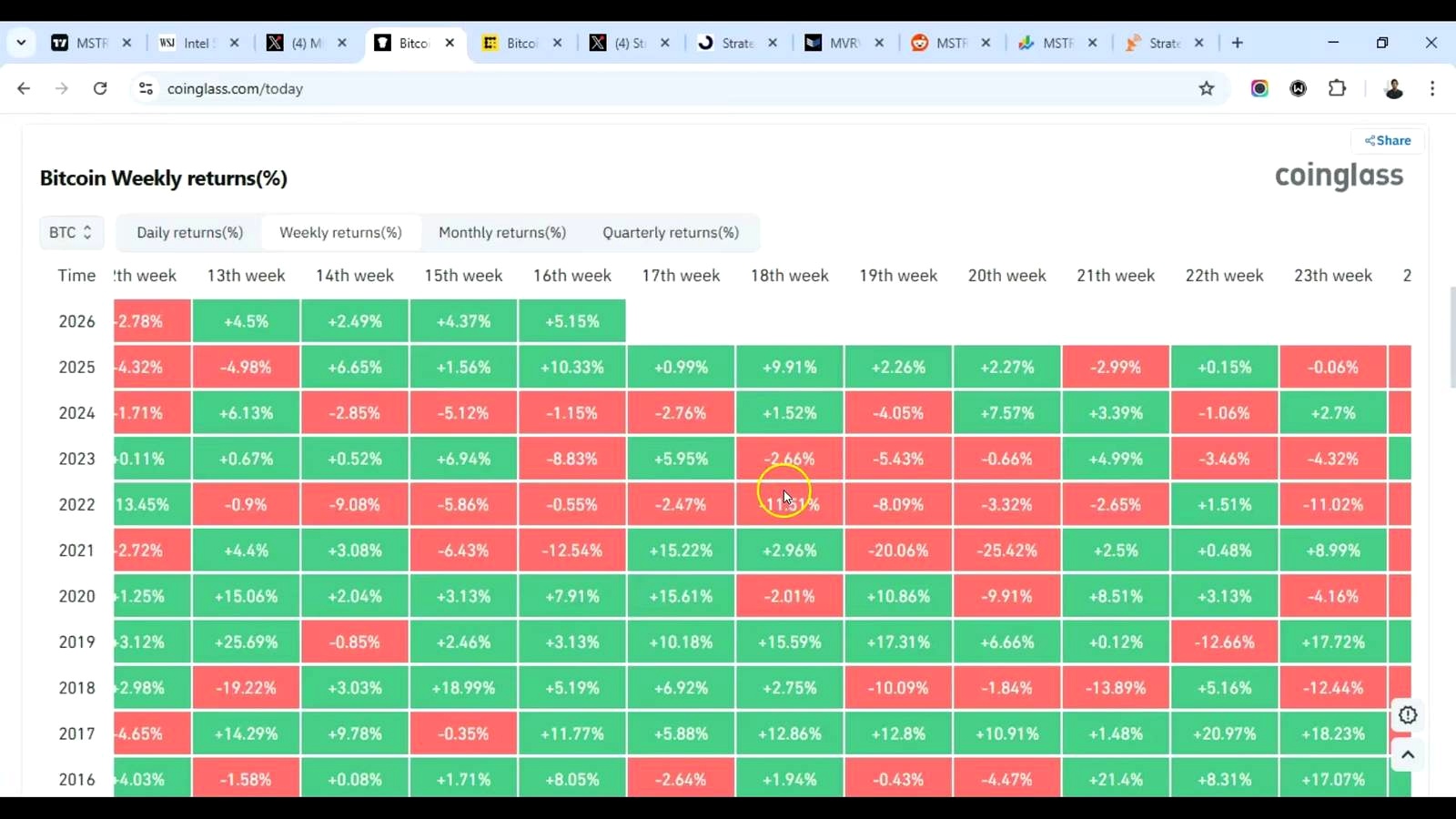
Traders are stuck between two competing signals: a market that looks ripe for a short squeeze and a broader structure that still appears unfinished on the downside. That tension is exactly where Crypto Rover places Bitcoin right now, arguing that BTC may push higher first before revisiting much lower levels in what he sees as a not-yet-complete bottoming process.
Core thesis: near-term upside, broader bearish setup
According to Crypto Rover, the immediate setup has shifted enough for him to close a Bitcoin short he says was opened at the local top, locking in about $25,000 in profit. The reason, he argues, is not that the broader bearish thesis has changed, but that market positioning now points to a squeeze higher before another leg down.
The analyst’s central claim is straightforward. In the short term, he expects Bitcoin to rally higher due to what he describes as “extreme negative funding” during an upward move, a condition he says leads to an upside squeeze “like 99% of the times.” But on the bigger picture, he still sees a more attractive short zone higher up, specifically between $76,000 and $79,000. Beyond that, he argues the ultimate bear-market-style bottom is more likely to form later, in a wide time window between April 2026 and October 2026, with his preferred accumulation zone for larger long positions between $45,000 and $60,000.
That view is more cautious than the broader crypto market’s default bullish bias, especially in post-halving environments where many traders expect weakness to be shallow and temporary. In general market context, negative funding while price rises can indeed indicate traders are leaning too hard short, creating fuel for a squeeze. But the longer-dated call for a move into the $45,000 to $60,000 area is far less consensus. A lot of market participants still treat pullbacks into the $60,000s as cyclical corrections rather than evidence of an unfinished macro bottom.
That makes Rover’s thesis a split one: tactically bullish for the next move, structurally bearish afterward. It matters because this kind of setup often punishes traders who overcommit to one direction too early.
Supporting analysis: funding, resistance, and the lower bids
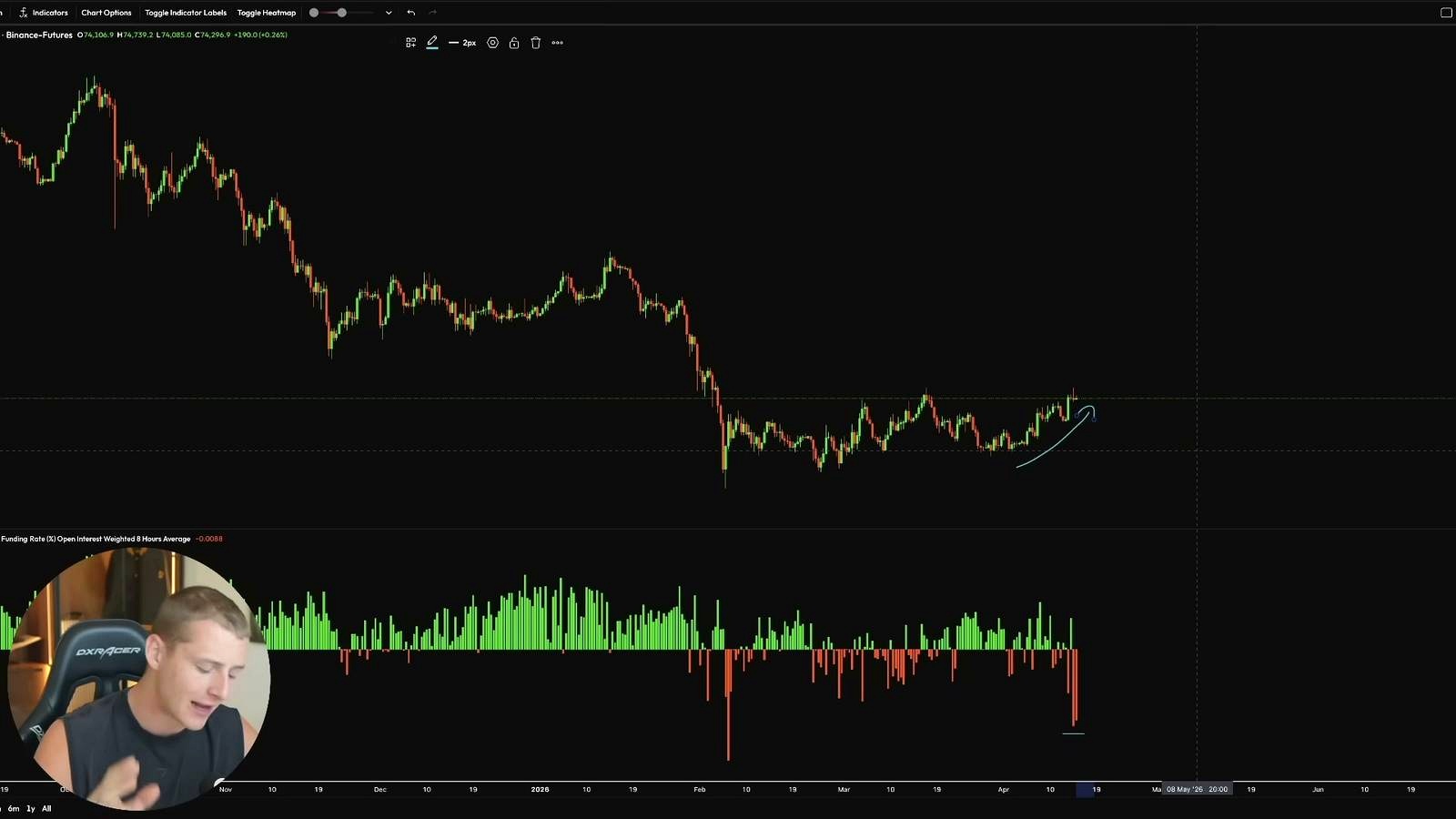
Crypto Rover’s short-term argument rests mainly on derivatives positioning. He says Bitcoin funding rates have turned deeply negative even as price has pushed higher, which he interprets as a classic setup for shorts to get squeezed. That is why, despite still favoring a later downside move, he says he no longer wants to remain in a short position right now.
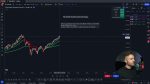
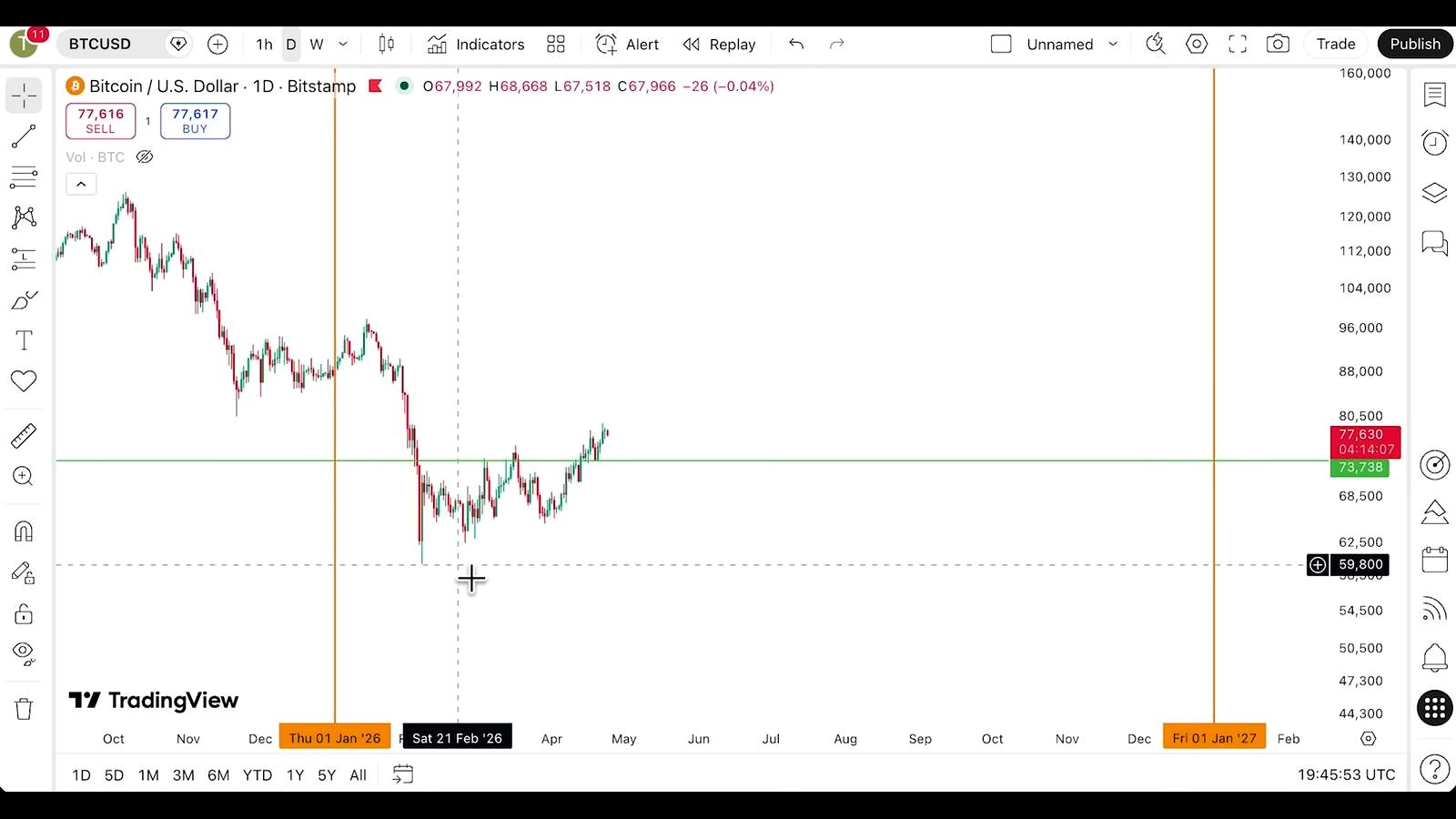
He also points to a recent break above a downward-sloping resistance line and says Bitcoin is now retesting a prior high while remaining inside a broader range. In his framing, that leaves room for one more move higher into resistance rather than an immediate collapse. He repeatedly identifies the main resistance cluster as $76,000 to $79,000, though earlier in the video he also referred to a high zone around $76,000 to $77,000 as an appealing short area.
On the downside, the analyst says he still has orders sitting lower, including in the $56,000 to about $61,000 region. He also mentions visible liquidity around the $70,000 area, suggesting BTC could move there as part of a squeeze. Later, he expands the broader likely bottom zone to $45,000 through $60,000, with a specific scenario where Bitcoin bounces after becoming oversold on the weekly RSI, then revisits roughly $60,000, maybe $50,000, or even $45,000, before forming a more durable bottom.
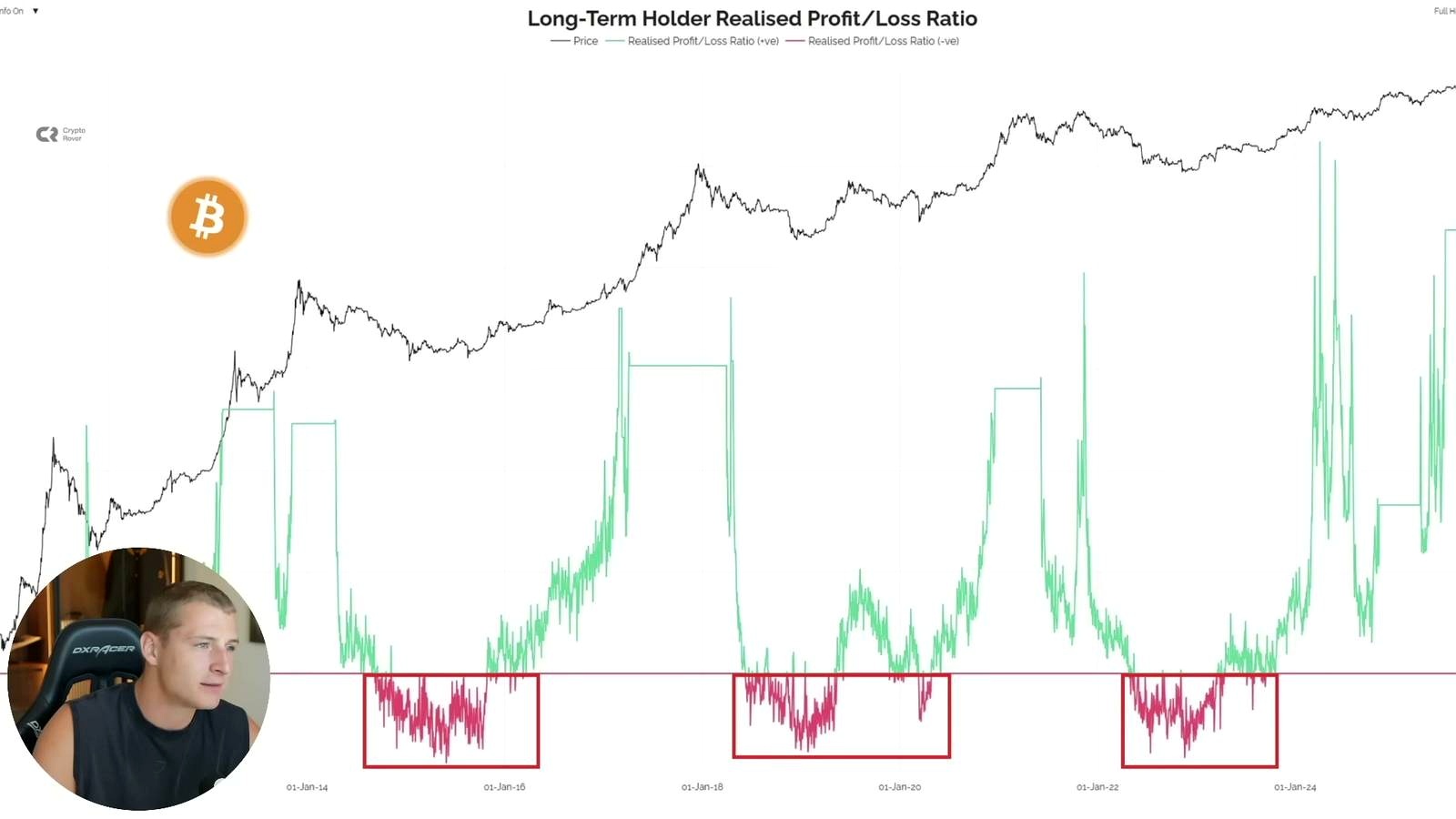
His cycle comparison adds a time element to that price map. He says prior-cycle timing implies at least another 50 days before a Bitcoin bottom should occur. He links that to weekly RSI behavior, arguing that the first oversold reading often marks only a local bottom, not the final one. In traditional technical analysis terms, that is a recognizable pattern: an initial momentum washout, a reflex rally, then a retest or lower low accompanied by improving momentum.
Where his analysis is strongest is in the short-term derivatives read. Where it is weakest is the confidence implied by long-range timing. Bitcoin cycle analogs can be useful, but they are rarely precise enough to forecast a bottom window many months ahead without substantial macro confirmation.
What could go wrong
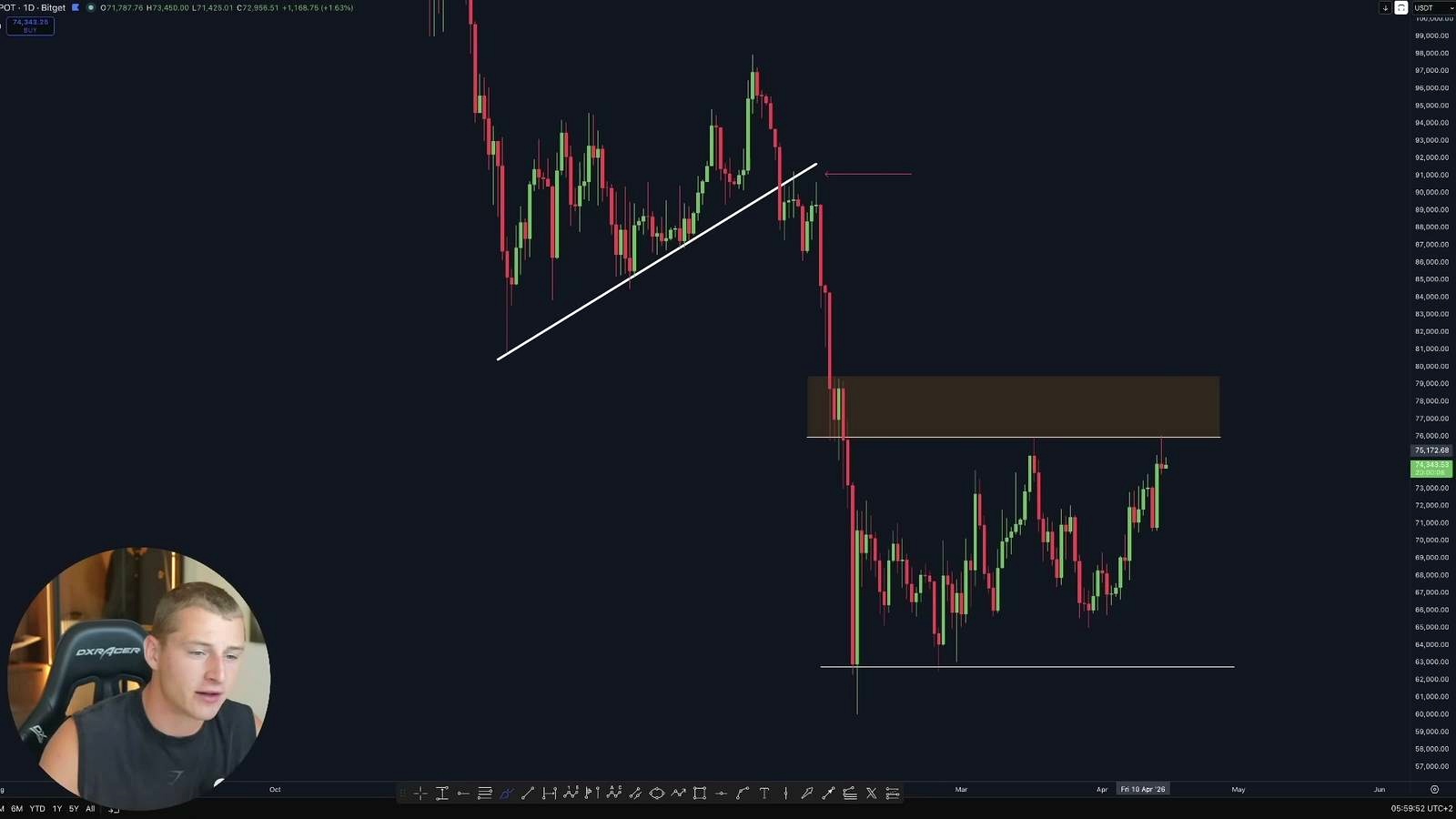
The clearest way this thesis breaks is if Bitcoin never delivers the squeeze into $76,000 to $79,000 and instead loses range support quickly. Rover acknowledges a breakdown remains possible, but his tactical move assumes negative funding will matter more than weak structure in the immediate term. If spot demand is thin and sellers reclaim control, funding alone may not be enough to force a meaningful upside extension.
The opposite risk is also important. If Bitcoin does push into that resistance zone and then holds above it, the bearish medium-term thesis becomes much harder to defend. A clean breakout above the upper range with strong spot-led volume would suggest the market is not distributing before a deeper move lower, but repricing into a stronger uptrend.
There are also macro risks the video does not really address. Bitcoin does not trade in isolation from liquidity conditions, Treasury yields, dollar strength, ETF flows, or sudden policy-driven risk-off moves. A supportive macro backdrop could prevent the deep retracement toward $45,000 to $60,000. On the other hand, a sharp macro shock could send BTC down faster than his staged “squeeze then drop” path implies.
Another issue is time horizon mismatch. A trader can be right about a long-term bottom range and still lose money if positioned too early or too aggressively in the wrong short-term leg. That is especially true in Bitcoin, where squeezes through crowded positioning can be violent.
What to watch next
The immediate trigger is whether Bitcoin can extend toward the liquidity and resistance zones the analyst flagged. Traders will be watching the $70,000 area first, then the heavier resistance band between $76,000 and $79,000. If funding remains negative while price climbs, that would fit the squeeze thesis.
On the downside, a failure to hold the range and a move toward $61,000 to $56,000 would suggest the market skipped the bigger squeeze or completed only a weak one. Beyond price, the bigger signal is whether weekly momentum forms the kind of bullish divergence Rover expects on a later retest, potentially in the $45,000 to $60,000 zone. His timing model also implies that the next 50 days are critical for confirming whether a final bottom is still ahead rather than already in.
FAQ
What does negative funding mean in Bitcoin futures?
Negative funding usually means short traders are paying long traders in perpetual futures markets. When price rises while funding stays negative, it can signal that too many traders are positioned for downside, creating conditions for a short squeeze.
What is a short squeeze in BTC trading?
A short squeeze happens when Bitcoin rises quickly enough to force short sellers to close positions, often by buying back BTC or BTC-linked contracts. That forced buying can accelerate the move higher.
Why do traders watch the weekly RSI for Bitcoin bottoms?
The weekly Relative Strength Index is a longer-term momentum indicator. Traders use it to spot oversold conditions and bullish divergences, which can sometimes appear near major cycle lows, though not always at the exact bottom.
How is a local bottom different from a cycle bottom?
A local bottom is a short-term low that can lead to a bounce, while a cycle bottom marks the end of a broader downtrend. Bitcoin often forms a local bottom first, rallies, and then retests or undercuts that area before a more durable recovery.
What would invalidate a bearish Bitcoin thesis at these levels?
A sustained breakout above a major resistance zone such as $76,000 to $79,000, especially if backed by strong spot buying and improving market breadth, would weaken the case for a deeper retracement into the $45,000 to $60,000 region.
Content Source

John Burnell focuses on Bitcoin infrastructure, wallet security and blockchain technology. He writes educational articles explaining how Bitcoin works and how the technology evolves.