AI agents are moving from simple chat interactions to systems that can use tools, access data, retain memory, and carry out tasks across workflows. As adoption grows, businesses are weighing productivity gains, accountability, security, and the practical risks of deploying these systems at scale.
The discussion around AI agents is no longer only technical. It now includes business uptake, human responsibility, industry use cases, and the question of how organizations can integrate agentic systems while managing risk.
What AI Agents Are and How They Differ From Tools

Many people confuse AI agents with common chat tools. The distinction starts with the components that define an agent.
Core components of an AI agent
- An API call to a large language model
- Memory
- Tools to communicate with the external environment
Early chat systems did not have these capabilities in a complete form. Early chat interactions were mainly conversational and did not include memory. Over time, the line has started to blur as chat systems gained tools that can connect with Gmail, Google Drive, and databases.
From chat to partially agentic systems
Single chat interfaces are increasingly becoming partially agentic. As they gain memory and external tools, the difference between a chatbot and a single agent becomes smaller. This is why many businesses now evaluate not only chat systems, but also broader agentic workflows.
The Shift From Workflows to Agentic Systems

Businesses traditionally begin with workflows. These are often linear, rule-based processes built around “if this happens, then do that.” AI introduced another step, where a workflow could call a language model and receive a response.
How agentic workflows differ
An agentic workflow adds a sense of agency. Instead of only following fixed instructions, the system can be given a task and then work through multiple actions. In multi-agentic systems, multiple agents can be layered together, each handling parts of a broader process.
Why businesses are interested
There is strong demand for agentic AI because the return on investment is clear. These systems can work 24/7 and support scaling. For many businesses, that makes agents attractive for functions such as finance, sales, customer service, and internal operations.
Risk, Accuracy, and Human Involvement

Adoption depends heavily on risk tolerance. Businesses are not all moving at the same speed because the acceptable margin for error differs by industry and use case.
High-risk versus low-risk environments
In high-risk environments where systems should not fail and 100% accuracy is required, uptake is slower. In lower-risk settings, businesses may accept 97% or 98% accuracy through evaluations and structured controls.
The role of guardrails
As organizations provide more context, add guardrails, and use agents to check other agents, performance improves. Even then, the level of autonomy should still match the level of risk.
- High-risk tasks require human involvement
- Lower-risk tasks can allow more autonomy
- Context and evaluation improve outcomes
- Agent-checking-agent patterns can strengthen reliability
What AI Agents Can Do Better Than Humans

One of the main advantages of AI agents is their ability to store information, learn over time, and work continuously without interruption. Humans have limited memory and cannot operate around the clock in the same way.
Key advantages of agents
- Continuous operation for 24 hours
- Stored memory
- Learning through machine learning
- Semi-autonomous and fully autonomous operation depending on risk
- Higher productivity in suitable tasks
Over time, agents can use what they learn to support better decision-making in some areas. That does not remove the need for oversight in sensitive contexts, but it does explain why they are being introduced into compliance, portfolio management, health-related environments, and other sectors.
Healthcare Use Cases for Digital Workers

Healthcare is a high-cognitive environment, but it still includes a large amount of manual work. Doctors spend significant time on data entry and clerical tasks, especially early in their careers.
Clerical work in healthcare
A junior doctor may spend 40% to 50% of time on clerical tasks such as filling in information and taking medical histories. This creates a strong opportunity for digital workers that can handle repetitive but important processes.
AI scribing and medical history intake
One practical use case is transcribing patient sessions accurately. This saves time and reduces manual note-taking. More advanced agents can also take a patient’s full medical history through voice and then produce a summarized version for the doctor to review.
- The agent collects the patient’s history through voice
- The information is summarized
- The doctor receives the summary before the consultation
- The doctor can focus on higher cognitive work
This allows digital workers to handle mundane manual tasks while doctors focus on more demanding efforts.
Privacy and local deployment
Privacy concerns are important in healthcare. Smaller models are making local deployment more practical. When a model can run locally, the organization owns the data and it does not need to go elsewhere. That creates a stronger path for private and compliant deployments in environments with high security requirements.
Who Is Responsible for AI Decisions?

AI itself cannot take responsibility. Accountability currently remains with the humans who create, implement, and oversee these systems.
Human accountability remains central
The people who build or implement the algorithm should take responsibility, not the algorithm itself. In practice, this means human accountability is still necessary, especially in high-risk processes such as finance or healthcare.
Why human-in-the-loop matters
At this point, AI cannot really be held legally accountable. That is why a human in the loop is essential in many settings. The deeper question of who ultimately takes accountability for large models and their outcomes remains unresolved and requires more thought.
Are AI Agents Replacing Humans or Augmenting Them?

The intended goal behind some multi-agentic platforms is to augment human capability, especially for small and medium-sized businesses that struggle with scaling. Agents can help these businesses grow more efficiently by taking on operational tasks.
Where the tension appears
There is still a real short- and medium-term issue. Some business owners may see that an agent is highly productive and decide they no longer need a person for that role. Some jobs will be lost.
New roles are also emerging
At the same time, new work is appearing around AI adoption and scale. These include roles related to operating, scaling, and questioning AI systems.
- MLOps engineers
- Roles focused on scaling AI
- Work related to ethical questions
- New operational functions around AI systems
The longer-term expectation is that while automation may replace some tasks, new opportunities and functions will also emerge. Training inside organizations is likely to become important as these changes continue.
Common Misconceptions About AI Agents

“AI can replace humans completely”
This is one of the biggest beliefs challenged in the discussion. AI can improve productivity and scale, but it cannot replace every human function. Humans still program the algorithms, and many systems remain difficult to fully explain.
“AI is easy because demos are easy”
Simple demonstrations create a misleading impression. A chatbot with a tool call may work in a demo, but deploying generative AI and agents at scale is extremely difficult to engineer. Error rates can compound across multiple nodes, and that can cause major failures in real workflows.
“AI sales agents can fully replace human sales”
One strong view is that humans still buy from humans, especially in B2B settings. AI may help with connecting the human to another human, but not fully replace the relationship behind a sale.
The Black Box Problem and Explainability
A major issue in accountability is that many AI systems still operate like a black box. They can produce answers, but the internal decision process remains difficult to inspect clearly.
Why explainability is harder in large models
With simpler systems, some level of explainable AI is possible. With large language models, understanding exactly how the layers interact becomes much more difficult. That makes accountability and trust harder in sensitive domains.
Progress, but not a full solution
Some tools allow a partial look into this black box, but there is still no tool that fully reveals what layers were activated in a realistic and complete way. This remains an active area of work, especially because regulators want to understand how decisions are made before approving certain uses.
Main Risks of Deploying AI Agents at Scale

Deploying agentic systems at scale introduces several operational and business risks.
Security risks
When agents connect to external systems and databases, security becomes a major concern. If those connections are not secure, malicious actors may hijack the system and extract sensitive information.
Cost risks
Agent systems can also create unexpected infrastructure costs. If a multi-agent system breaks or behaves incorrectly, costs can rise very quickly, especially at scale.
Predictability risks
Because these are probabilistic machines, output predictability can degrade as systems become more complex. As scale increases, this becomes a major risk to businesses.
- Security vulnerabilities through connected tools and databases
- Exposure of sensitive information
- Rapid cost escalation during failures
- Reduced predictability in complex systems
- Compounding error rates across multiple agents or nodes
How SMEs Can Integrate AI Agents Without Deep AI Expertise
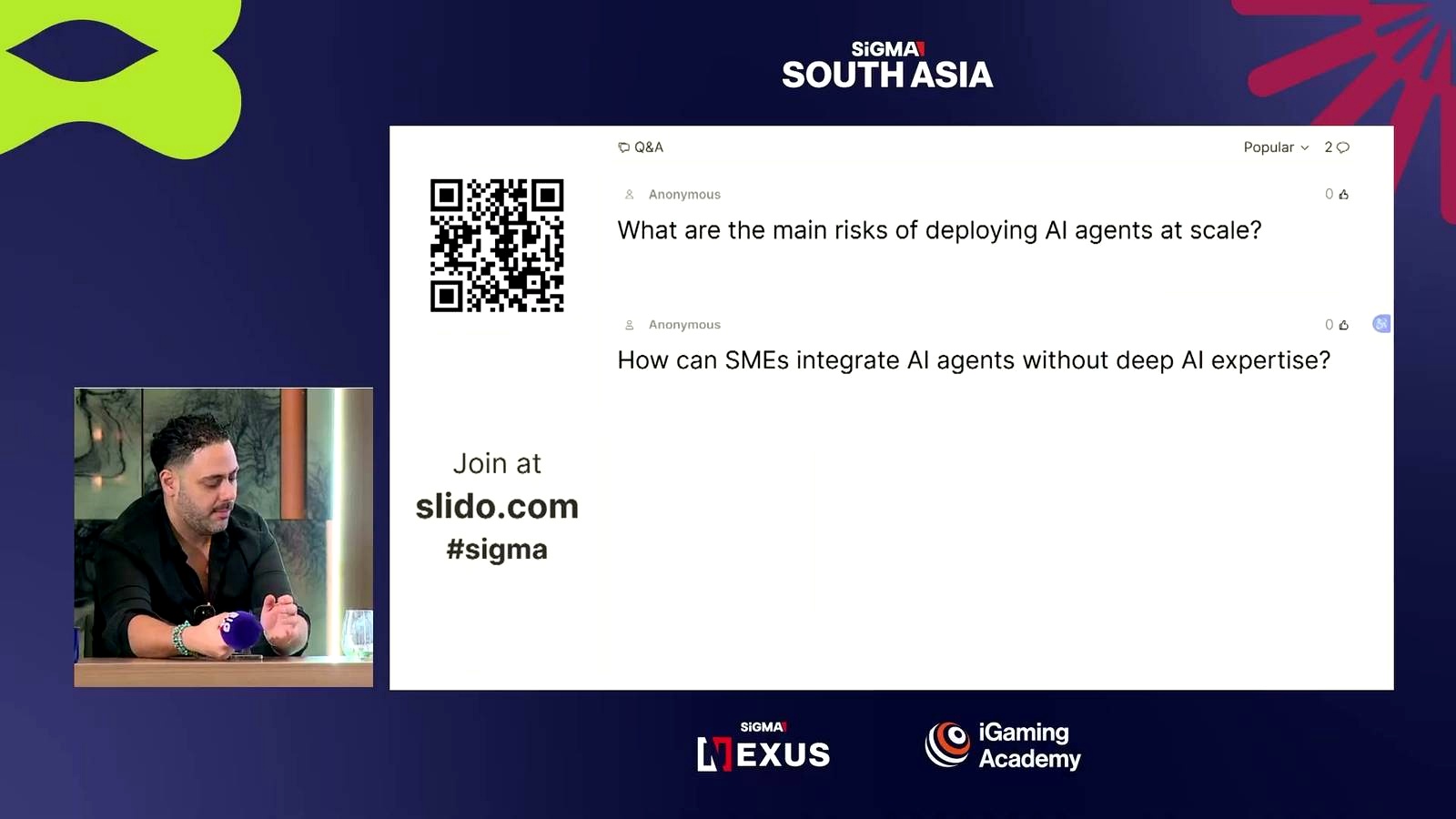
AI agents are becoming more affordable and more accessible for small and medium-sized businesses. Instead of building everything internally, businesses can now use platforms that make onboarding much easier.
Platform-based adoption
Businesses can log into a platform, connect their credentials, and quickly activate functions such as customer service or sales agents. This lowers the technical barrier significantly.
Natural language configuration
Many platforms now allow configuration through natural language. A business owner can define tone, knowledge base behavior, and workflow instructions in plain English. This makes adoption easier for people with basic computer literacy.
Why access is improving
- Costs per token are going down
- The application layer is becoming more developed
- UI and UX are increasingly centralized around prompts or voice
- Usage-based pricing is clearer for businesses
- Knowledge about AI is widely available through online resources and courses
These changes are helping level the playing field for small and medium-sized businesses by giving them access to tools that support scaling across customer support, sales, and other functions.
FAQ
What makes an AI system an agent?
An AI agent needs an API call to a large language model, memory, and tools to communicate with the external environment.
How are AI agents different from chat tools?
Early chat tools were mainly conversational and did not have memory or external tool access. Agents add memory and the ability to interact with outside systems.
Why are businesses interested in agentic AI?
Businesses see clear ROI because agents can work 24/7, support scaling, and handle multiple tasks across workflows.
Should AI agents be fully autonomous?
It depends on risk. In high-risk settings, human involvement should remain. In lower-risk settings, businesses may allow more autonomy.
Who is accountable for AI decisions?
Accountability remains with the humans who create, implement, and oversee the system, not with the algorithm itself.
Can AI agents replace human workers completely?
No. AI can improve productivity and scale, but it cannot replace every human function. It may replace some jobs while also creating new ones.
What are common risks when deploying AI agents?
The main risks include security issues, sensitive data exposure, rising costs, reduced predictability, and compounded errors in complex systems.
How can SMEs start using AI agents?
They can use accessible platforms, connect existing systems, configure agents in natural language, and benefit from lower costs and simpler onboarding.
Why is explainability still a challenge?
Large language models are much more complicated than simpler systems, and current tools still do not fully reveal how every decision is made.
What is a practical healthcare use case for AI agents?
AI agents can transcribe patient sessions, take full medical histories through voice, summarize them, and reduce the clerical workload for doctors.
Video Reference

Omar Al-Sharif lives and works in the UAE and is involved in the blockchain technology industry. He writes articles on Bitcoin and digital assets as a personal passion, explaining complex topics in simple and understandable language.