Home mining keeps circling back whenever retail traders start looking for ways to gain coin exposure without buying spot outright. The latest twist is a machine that looks less like industrial hardware and more like a Bluetooth speaker, raising a simple question: are these hybrid “lifestyle” miners just gimmicks, or a workable entry point for small operators?
The Core Thesis
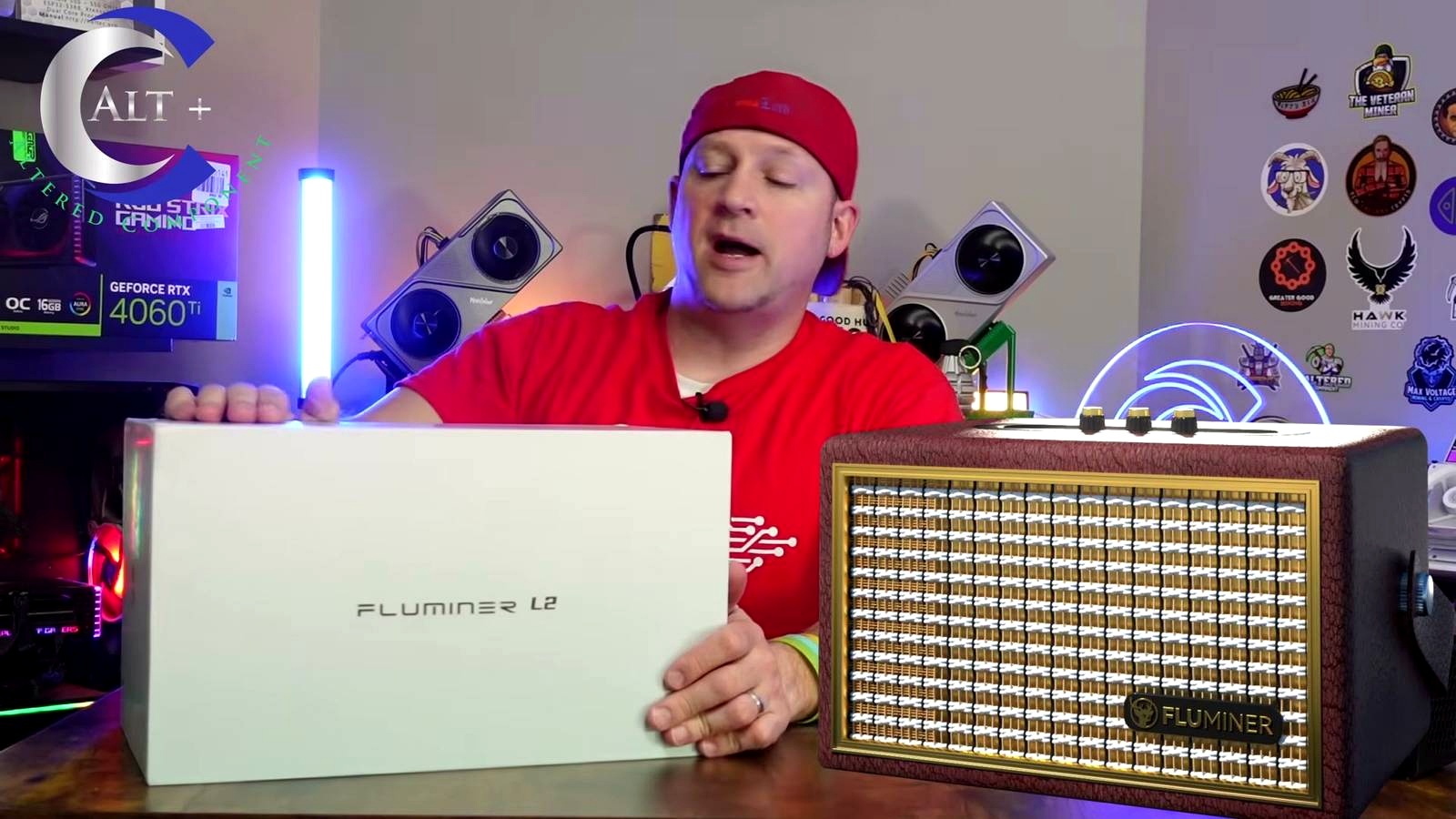
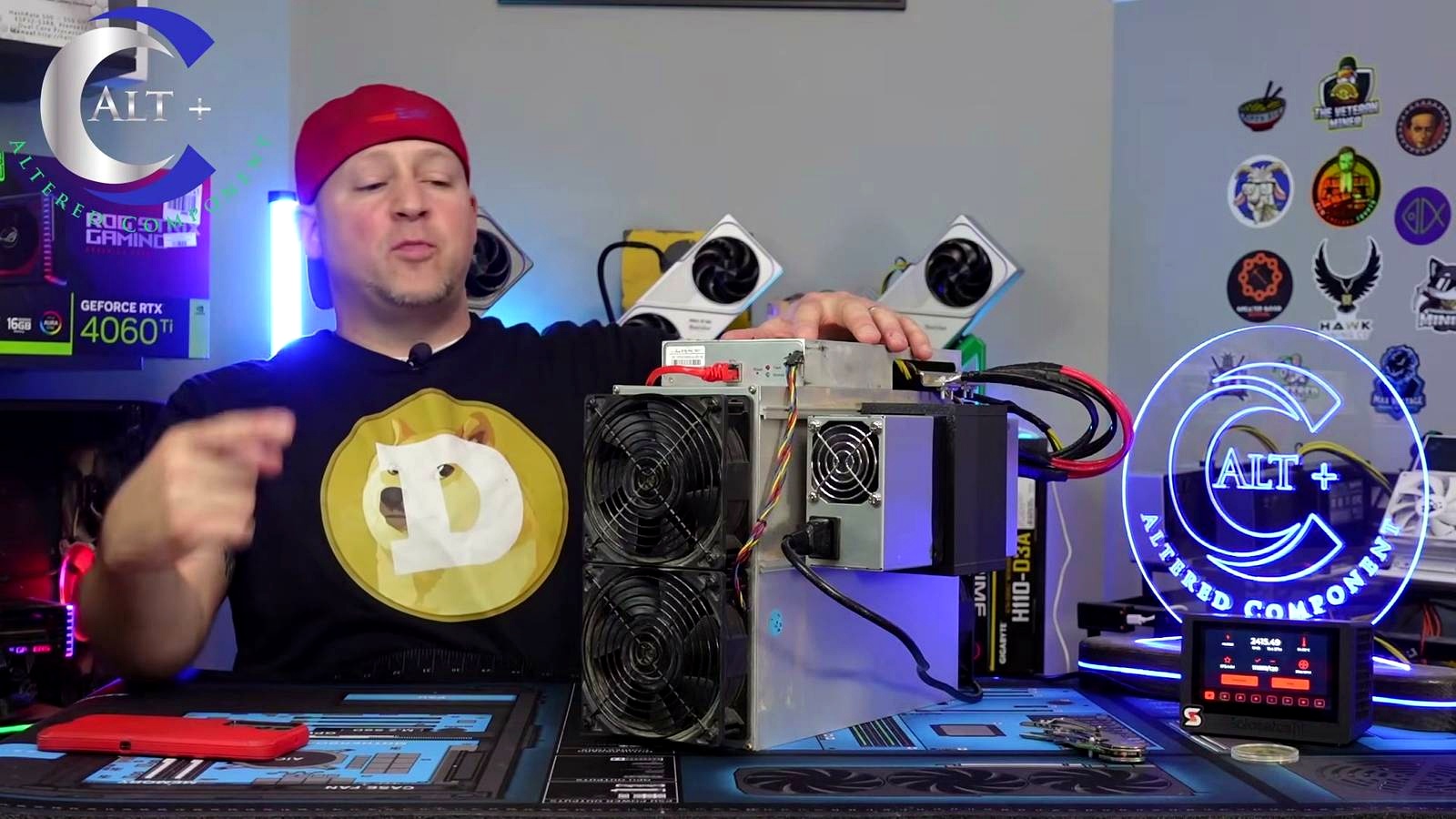
According to Altered Component, the FluMiner L2 is a surprisingly functional home Scrypt miner wrapped in consumer-friendly industrial design. In the video, the host said he bought a used unit on eBay for a total of $491.64, or about $492 delivered, versus what he described as a typical eBay price of $600+. He also said buying a new unit from a U.S. reseller would likely have been only about $100 more than his used purchase once shipping, import duties, and checkout costs are considered.
The main performance claim is straightforward: the FluMiner L2 is advertised to produce around 1.2 GH/s on the Litecoin/Dogecoin Scrypt algorithm, and in his test the machine was averaging roughly 1.22 GH/s, with a momentary reading near 1.45 GH/s. Power draw came in at around 342 W to 343 W at the wall. The host also cited operating temperatures of 45 C and 64 C from the dashboard.
That makes the thesis less about outsized profitability and more about usability. This is not a large-scale Bitcoin ASIC story. It is a retail-mining story: hardware that is easy to deploy, compact enough for a home setup, and capable of mining Dogecoin and Litecoin without the industrial footprint that usually scares off newcomers.
In broader market context, that view fits a recurring retail pattern. When crypto prices rise, smaller miners and “plug-and-play” rigs tend to regain attention because buyers become more willing to tolerate thinner margins in exchange for accumulating coins directly. The challenge is that home mining economics are highly sensitive to electricity rates, network difficulty, and resale value. A machine can be “solid” operationally without being especially compelling financially.
Supporting Analysis
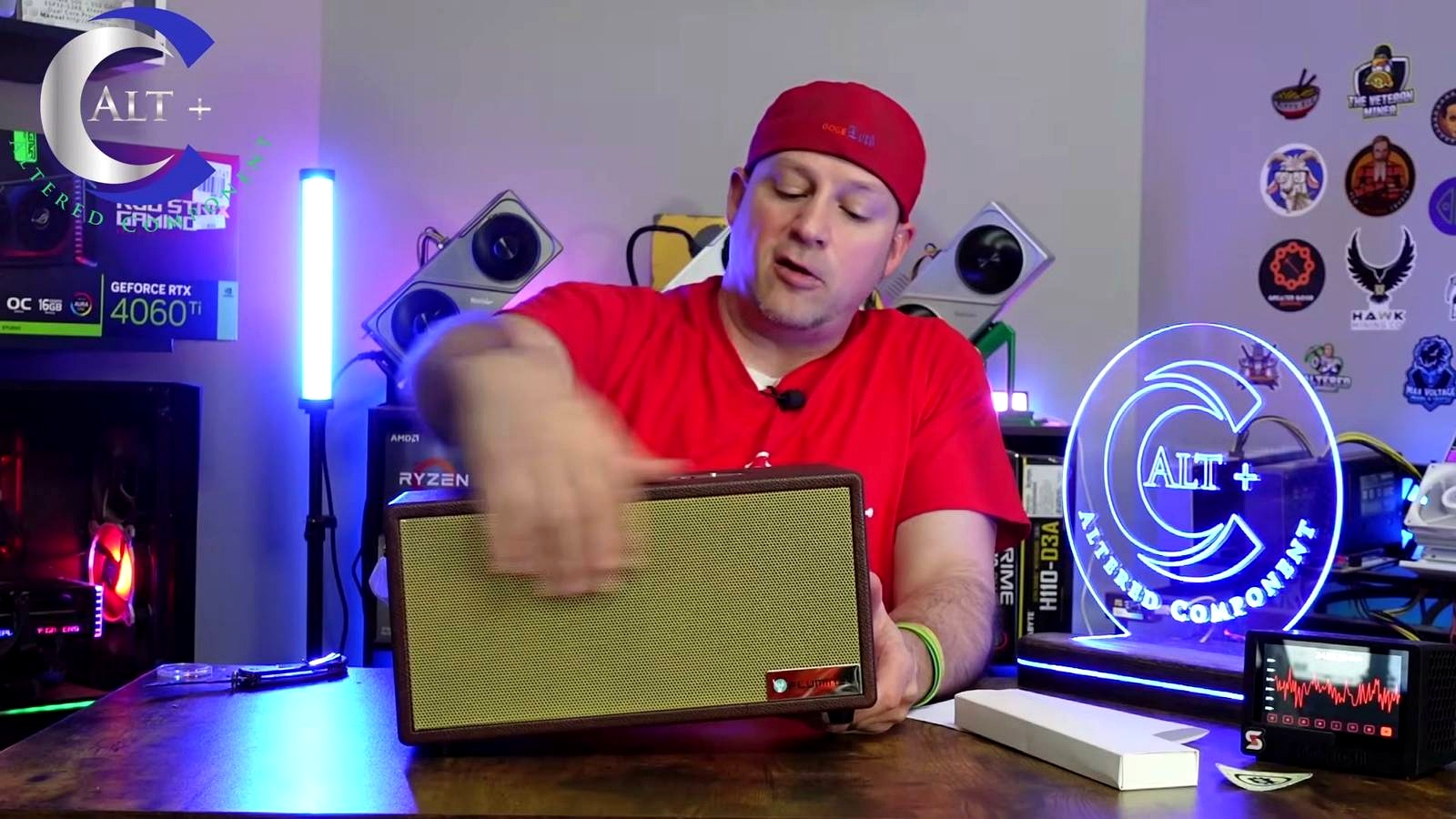
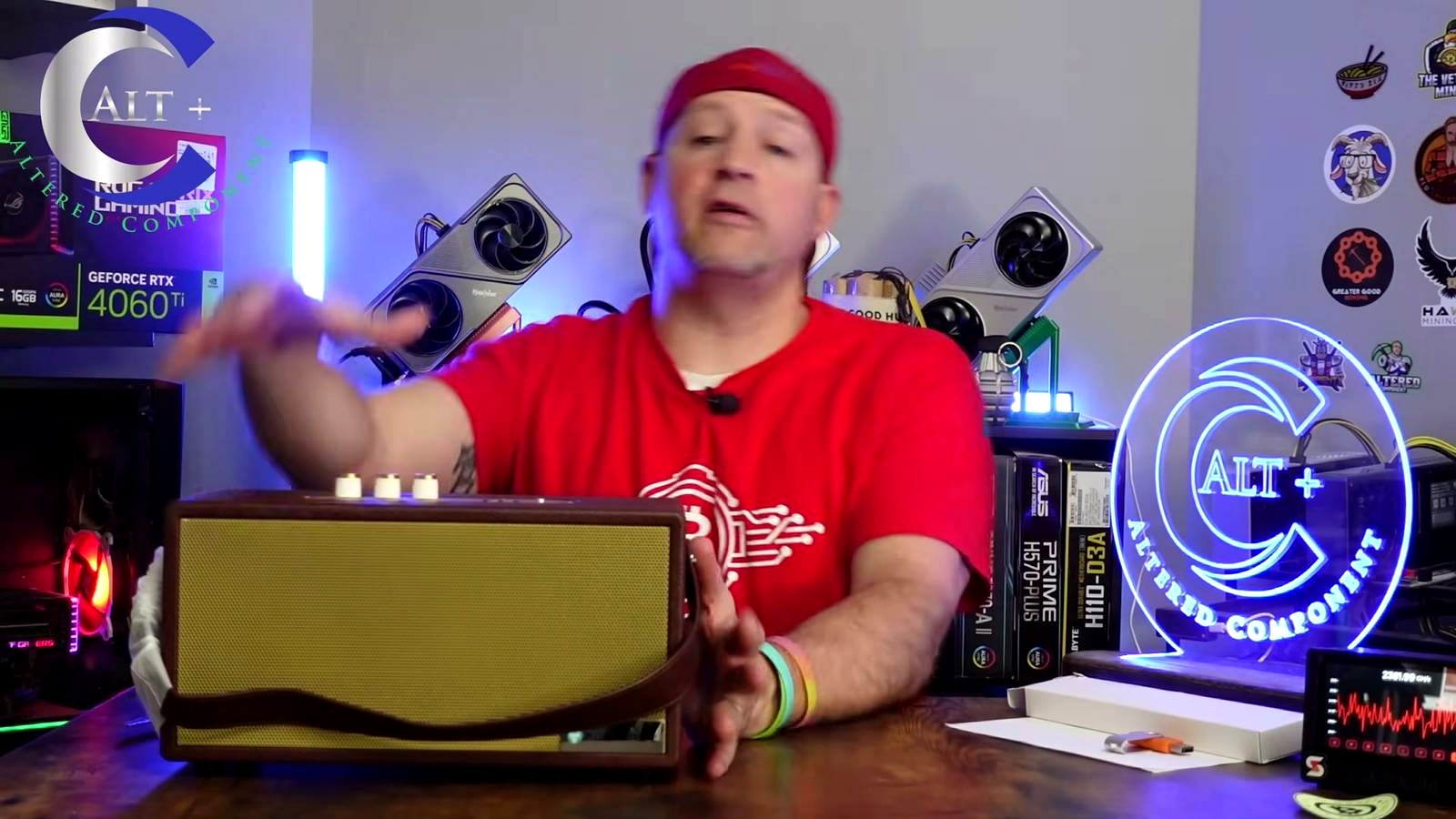
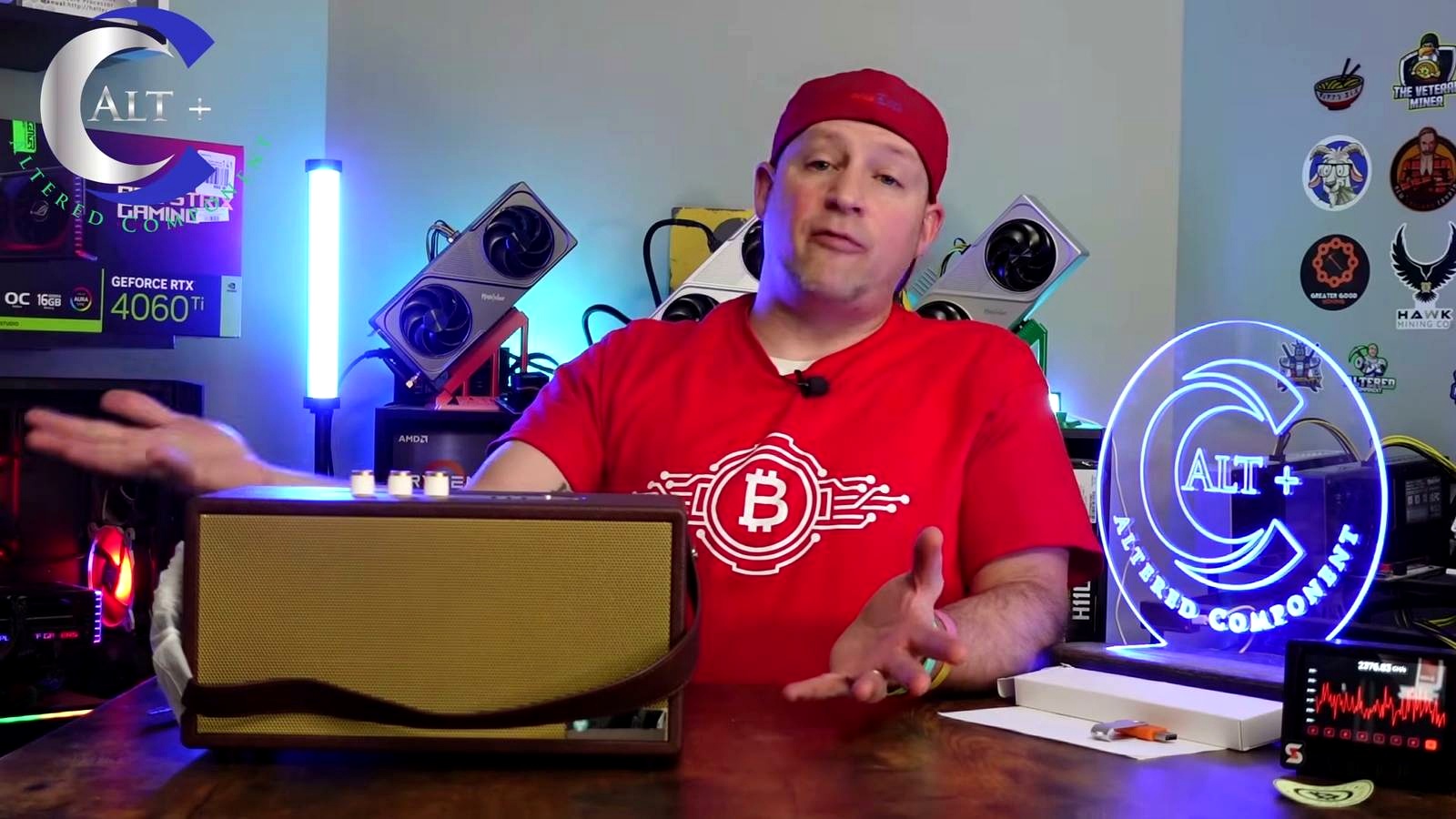
According to Altered Component, the attraction here was not just hashrate but form factor. He described the FluMiner L2 as a Dogecoin/Litecoin miner that also looks like a “sick little speaker, ” with Bluetooth audio, a retro-style leather wrap, a carrying handle, Wi-Fi antenna, ethernet port, standard power input, and on-device controls for volume, treble, and bass.
That consumer styling matters more than it might seem. Most miners are purchased on efficiency first, but home users also care about where a machine will sit, how much heat it throws off, and whether it can double as something less intrusive than a bare metal box. In the demo, the speaker paired over Bluetooth as device FL88, and the host said audio quality sounded “pretty decent, ” though he noted performance dropped when turned up all the way.
The setup process also appears relatively approachable. The host initially connected via ethernet, located the miner on his network, and accessed the dashboard through a local IP of 192.168.4.25. He said the default login was root for the username and root for the password. He found the machine had already begun hashing to ViaBTC using a default worker configuration, then changed the worker details to his own pool account. He also enabled Wi-Fi by entering the SSID and password in the dashboard and said the unit would reconnect and resume hashing wirelessly after reboot.
One practical takeaway from the video is that resale-market execution can matter almost as much as the hardware itself. The host repeatedly emphasized that this was a used eBay purchase, shipped professionally, with a flash drive containing both firmware updates. For buyers of secondhand mining gear, that is not trivial. Firmware access, proper packing, and the ability to test within a return window can be the difference between a bargain and a dead-on-arrival headache.
He also made a relative comparison to other small Scrypt miners he owns. He said his Alphapax and Volc-style miner setups had been “great, ” while a couple of Goldshell Mini Doge 3s were merely “meh, ” and that he intended to replace those with the FluMiner L2. That is a subjective ranking, but it hints at the current small-miner buyer mindset: users are increasingly willing to pay for simplicity and design if performance lands roughly in line with peers.
What Could Go Wrong
The biggest risk to the thesis is simple: a machine can meet spec and still fail the economics test. Altered Component focused on setup, design, and basic operation, but did not provide a break-even model based on electricity costs. At 342 W to 343 W, profitability will vary sharply depending on local power prices. For miners paying high residential rates, even a stable 1.2 GH/s may not justify a purchase price near $492, especially after accounting for rising Scrypt difficulty.
There is also asset risk. This is a Dogecoin/Litecoin miner, not a Bitcoin miner, so buyers are taking direct exposure to Scrypt-mined coins and the merged-mining economics around them. If DOGE or LTC underperform, revenue can compress quickly. If network difficulty rises faster than coin prices, returns deteriorate further.
Another underappreciated issue is thermal and acoustic practicality over time. The host said the unit throws off “quite a bit of heat” from the rear. In a home setup, heat management is not just about comfort; it can limit placement, especially if the design encourages buyers to treat the unit like a decorative speaker. He also pointed out that the carrying strap placement is awkward because it either affects the look or interferes with exhaust.
Finally, used hardware always carries hidden risk. Even with a seemingly reputable seller, fan wear, degraded components, prior overclocking, and firmware inconsistencies may not show up on day one. A machine that boots, hashes, and sounds good for a short test is not necessarily a machine that will remain stable for months.
What to Watch Next
The most important confirmation point is not cosmetic; it is sustained operation. Buyers considering a FluMiner L2 should watch whether the unit can hold around 1.2 GH/s over multiple days while staying in a reasonable temperature range near the 45 C and 64 C figures shown in the video. They should also verify wall power remains close to 342 W to 343 W rather than drifting higher under real conditions.
Beyond hardware stability, monitor three variables: residential electricity price, DOGE/LTC mining payouts on pools such as ViaBTC, and secondhand resale pricing. If used units keep clearing far below the $600+ range the host mentioned, that improves the entry case. If resale prices rise while coin payouts flatten, the value proposition gets weaker fast.
FAQ
What is a Scrypt miner?
A Scrypt miner is specialized hardware designed to mine cryptocurrencies that use the Scrypt algorithm, most notably Litecoin. Because Dogecoin is typically merge-mined with Litecoin, many Scrypt miners effectively earn exposure to both networks through pool payouts.
How does GH/s differ from TH/s in mining?
GH/s means gigahashes per second, while TH/s means terahashes per second. One terahash equals 1,000 gigahashes. Bitcoin ASICs are usually measured in TH/s because the network is much larger, while small Scrypt miners are often discussed in MH/s or GH/s depending on performance.
Why do mining buyers care about “at-the-wall” power usage?
At-the-wall power measures what the device actually draws from the outlet, including conversion losses. That is more useful than chip-level estimates because electricity bills are based on real wall consumption, not idealized internal figures.
What is ViaBTC, and why was it used here?
ViaBTC is a mining pool that lets miners combine hashrate and receive proportional rewards. In the video, the unit appeared to be preconfigured to mine to ViaBTC by default, which made it easy for the host to swap in his own worker name and begin mining on his account.
What should a used miner buyer check first after delivery?
Start with physical inspection, fan condition, network connectivity, dashboard access, firmware version, temperature readings, stable hashrate, and actual wall power draw. On secondhand gear, testing within the seller’s return window is critical because intermittent faults often show up only after several hours of operation.
Content Source

Omar Al-Sharif lives and works in the UAE and is involved in the blockchain technology industry. He writes articles on Bitcoin and digital assets as a personal passion, explaining complex topics in simple and understandable language.