Crypto markets may be driven by price, but bull cycles are often constrained by something more basic: how easily new users can actually buy Bitcoin. As exchanges compete on fees, rewards, and security, Prime Citycrypto GameFi & Blockchain 🎮 argues that Crypto.com is positioning itself as a broad retail gateway for BTC and hundreds of other assets, and that matters in a market still obsessed with onboarding the next wave of users.
Core Thesis
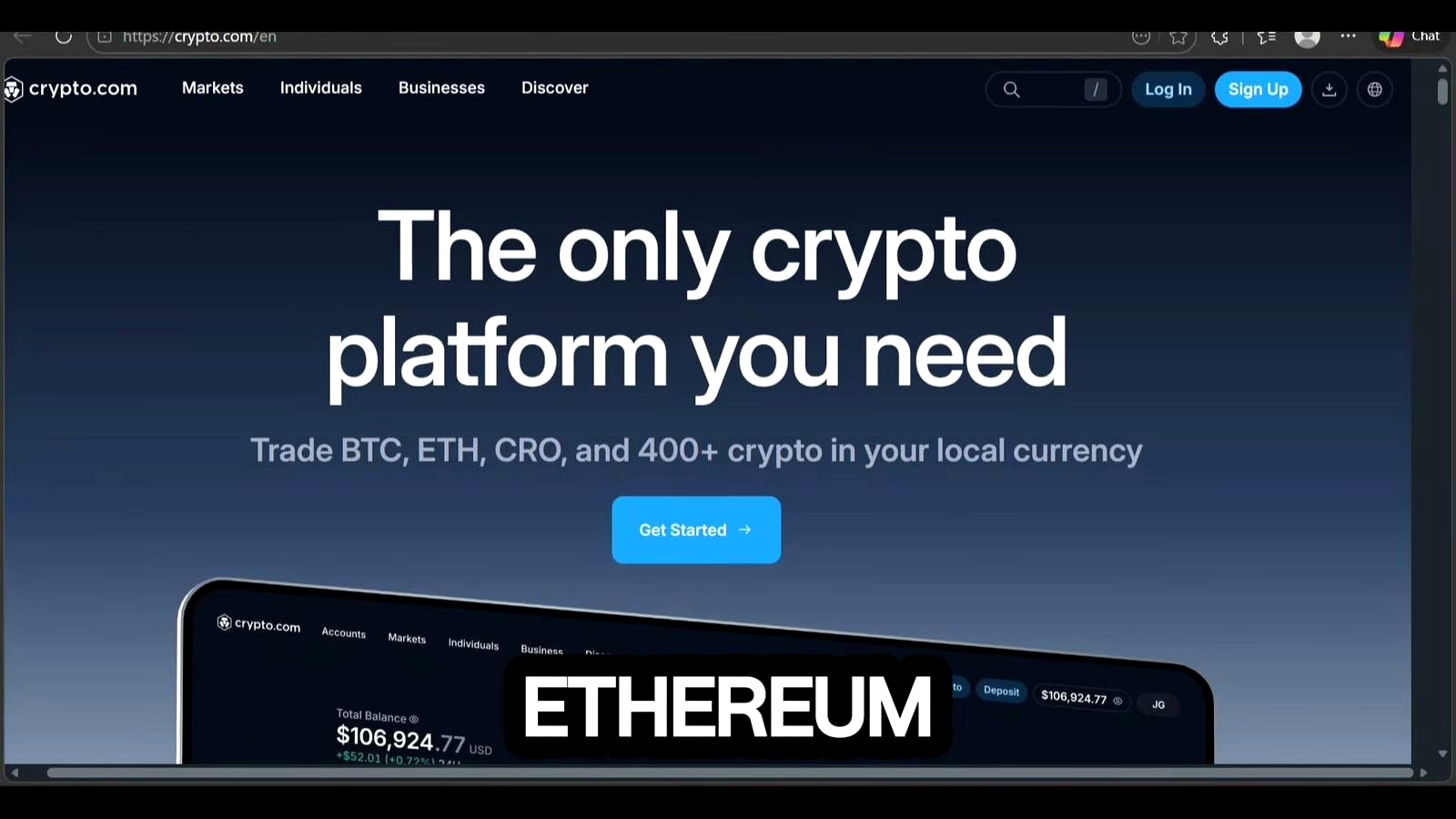
According to Prime Citycrypto GameFi & Blockchain 🎮, Crypto.com’s pitch is simple: be the “only crypto platform” a user needs to access Bitcoin, Ethereum, CRO, and more than 400 cryptocurrencies in local currency. The host frames the app as a beginner-friendly, all-in-one venue for trading, deposits, staking, rewards, education, and wallet access, while highlighting scale metrics including 150 million+ global users, operations dating back to 2016, and mobile app ratings of more than 4.6 on the App Store and about 4.5 on Google Play.
That thesis fits a broader industry trend. Retail platforms are trying to collapse multiple crypto functions into one stack: fiat on-ramp, spot trading, passive yield products where permitted, self-custody wallet integration, and loyalty programs. In that context, Crypto.com’s value proposition is less about novel infrastructure than about convenience and user retention. For Bitcoin specifically, that matters because user growth often follows the path of least friction. If newcomers can move from bank transfer to BTC purchase to wallet management inside one ecosystem, exchanges improve the odds that market interest turns into actual capital inflows.
Still, the market backdrop complicates the bullish framing around consumer crypto apps. Regulatory pressure has pushed some platforms to trim features by jurisdiction, and users have become more sensitive to custody risk since the exchange failures of the last cycle. That means platform scale is a positive signal, but not a guarantee of trust. In crypto, user count and app-store ratings can support a growth narrative; they do not replace proof of reserves, strong compliance, or resilience during periods of heavy volatility.
Supporting Analysis
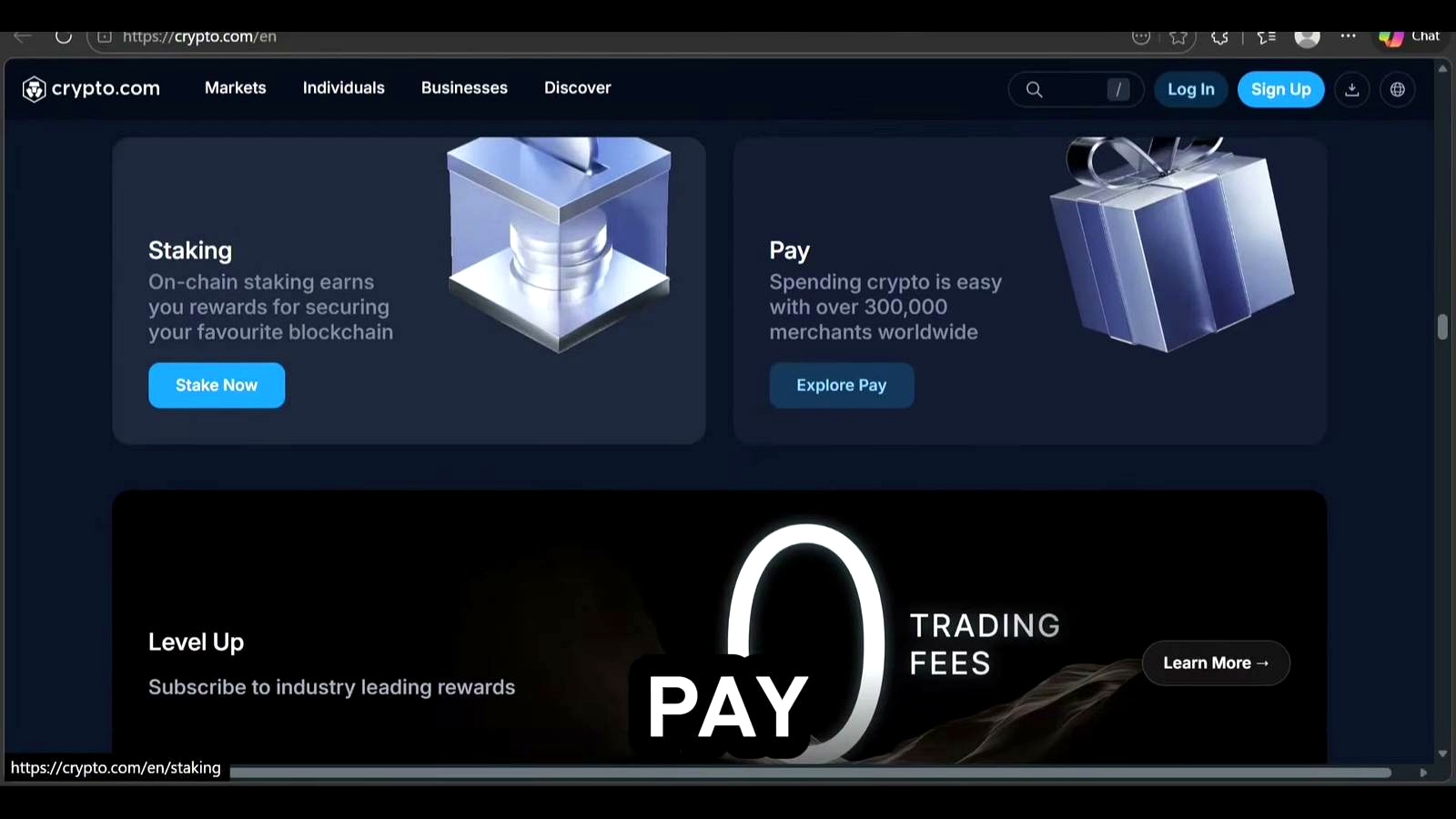
The host’s secondary argument is that Crypto.com is trying to serve both casual users and more advanced traders. On the retail side, Prime Citycrypto GameFi & Blockchain 🎮 points to zero-fee wallet funding, no added cost with major fiat currencies, live crypto prices, market-cap tracking, trending tokens, and access to Bitcoin, Ethereum, and CRO. He also highlights what he describes as an account protection program covering up to $250,000 against unauthorized transactions, near-zero trading fees for some purchases, and rewards of up to 5% in CRO on purchases.
For more active traders, the host emphasizes the exchange’s advanced trading infrastructure. He cites maker and taker fees as low as 0.08% and 0.18%, respectively, alongside “ultra low latency, ” deeper liquidity, multiple order types, API access, and 99.99% uptime worldwide. He also mentions a “Supercharger” product that lets users deposit CRO to earn rewards, plus a wallet offering self-custody and multi-chain access.
That combination is strategically important in the current exchange landscape. The biggest crypto platforms increasingly want users to stay inside one branded environment rather than use separate apps for fiat purchases, spot trading, DeFi access, and self-custody. The trade-off is familiar. A unified platform reduces friction, but it also concentrates user activity with a single provider. For Bitcoin buyers, the convenience is obvious: easier local-currency access and lower explicit fees can make small recurring purchases more attractive. For sophisticated traders, though, headline fee rates are only part of the equation. Spread quality, slippage, liquidity depth, withdrawal reliability, and regional product availability often matter just as much as the listed fee schedule.
What Could Go Wrong
The bullish case for a consumer crypto super-app breaks if convenience stops outweighing trust concerns. If users become more cautious about centralized custody, Crypto.com’s all-in-one model may face the same skepticism that has hovered over much of the exchange sector since 2022. Bitcoin buyers may still use centralized platforms as on-ramps, but immediately withdraw to self-custody, limiting the value of broader ecosystem features like rewards or in-app retention.
There is also execution risk. The host lists a wide menu of products, trading, staking, rewards, advanced tools, wallet functions, and educational resources, but broad product coverage can become a weakness if regulatory changes force platforms to disable features in key markets. Loyalty programs tied to exchange tokens such as CRO can also lose appeal if token performance weakens or reward economics are reduced.
Another counterpoint is competitive pressure. Crypto.com is not the only venue offering local-currency BTC purchases, mobile-first design, or low trading fees. In a market where Coinbase, Binance, Kraken, Robinhood, and region-specific exchanges all compete for retail flows, scale alone does not guarantee user growth. And while app ratings and large user counts are useful signals, they do not answer the deeper questions institutional and increasingly retail users ask: how are assets custodied, how transparent is risk management, and how does the platform behave under stress?
What to Watch Next
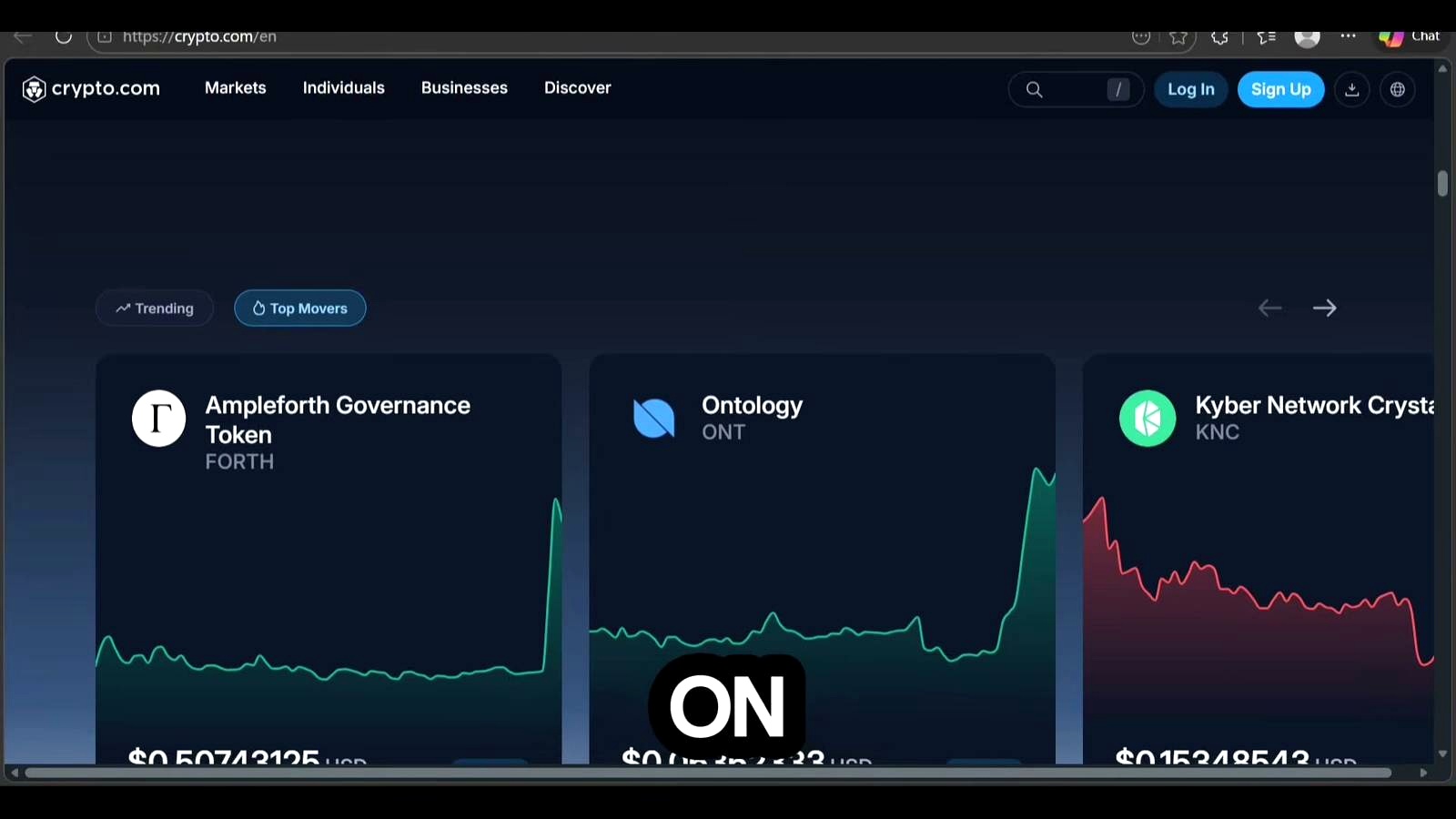
The clearest signal for whether this thesis holds is user activity, not marketing language. Watch whether Crypto.com continues to expand access to Bitcoin and other major assets across local-currency markets while maintaining competitive fees around the stated 0.08% maker and 0.18% taker levels. Product durability also matters: if the platform keeps rewards, wallet integrations, and advanced trading tools available without major regional cutbacks, the all-in-one strategy looks stronger.
More broadly, the next BTC uptrend will test which exchanges can convert attention into funded accounts. Platforms that combine easy fiat onboarding, dependable uptime near 99.99%, and credible security protections are best positioned to capture that flow.
FAQ
What is a fiat on-ramp for Bitcoin?
A fiat on-ramp is a service that lets users buy crypto like BTC using traditional money such as dollars, euros, or other local currencies. Exchanges and apps typically offer this through bank transfers, cards, or other payment methods.
What do maker and taker fees mean in crypto trading?
Maker fees apply when you place an order that adds liquidity to the order book, such as a limit order that does not fill immediately. Taker fees apply when your order removes liquidity, such as a market order or a limit order that fills instantly against an existing order.
How does self-custody differ from keeping Bitcoin on an exchange?
Self-custody means you control the private keys to your Bitcoin through a wallet you manage yourself. Keeping BTC on an exchange means the platform controls the keys and holds the assets on your behalf, which is more convenient but introduces counterparty risk.
Why do exchange uptime numbers matter during a Bitcoin rally?
When BTC volatility spikes, exchanges often see surges in traffic and order volume. High uptime matters because traders need to access markets, place orders, and withdraw funds during fast-moving conditions. An outage during peak volatility can materially affect execution and risk.
Why do platforms offer rewards in native tokens like CRO?
Native-token rewards are designed to increase user loyalty and keep activity inside the platform ecosystem. They can reduce effective costs for active users, but their real value depends on token liquidity, price stability, and whether the reward program remains unchanged over time.
Video Source

John Burnell focuses on Bitcoin infrastructure, wallet security and blockchain technology. He writes educational articles explaining how Bitcoin works and how the technology evolves.