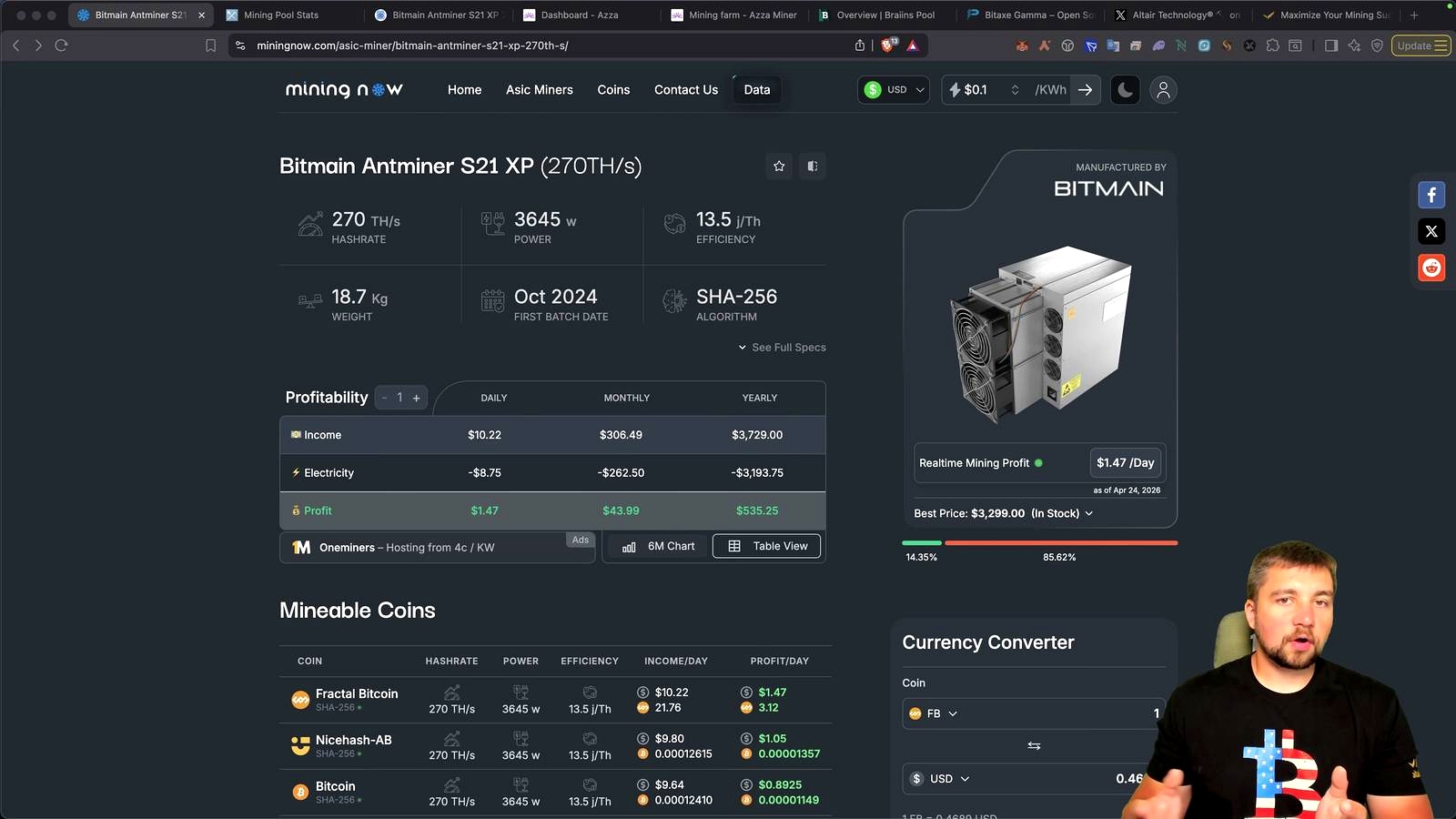
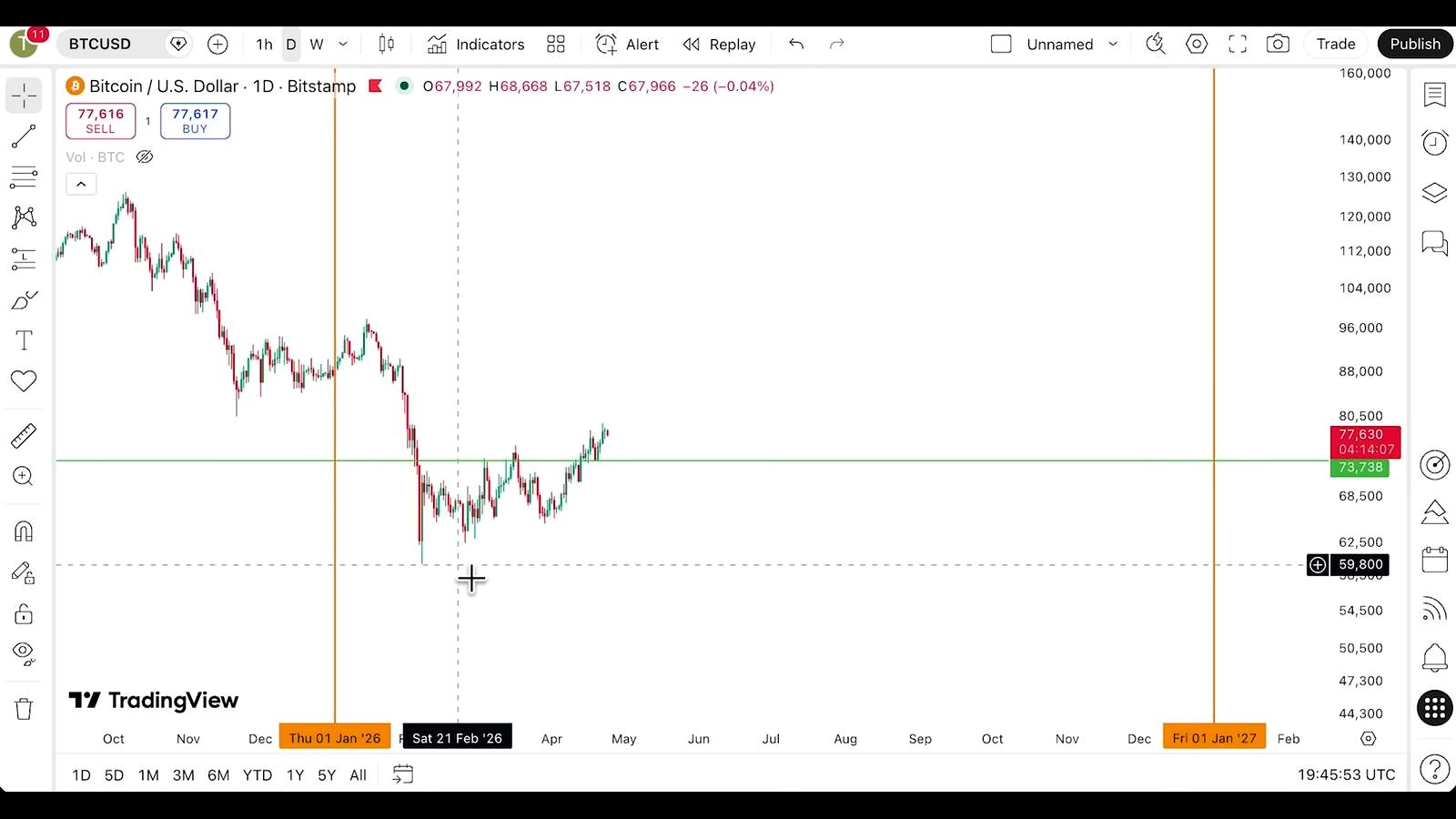
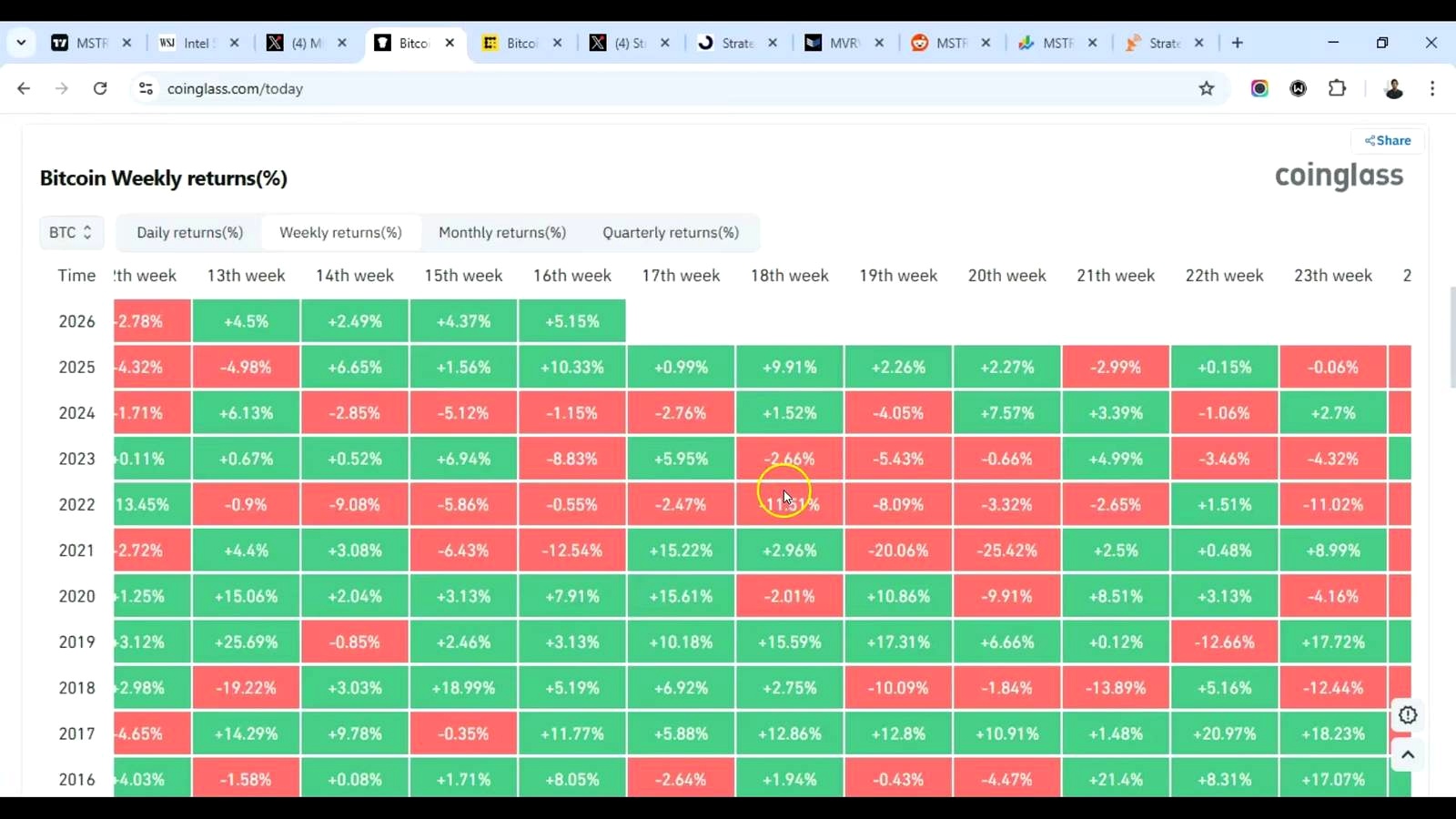
As Bitcoin miners look for their next durable source of demand beyond speculation and meme-driven blockspace spikes, a bigger question is emerging: what kind of data actually belongs on Bitcoin? According to Hashpower Academy, one answer is far more consequential than tokens or images: energy transaction data, settled directly on Bitcoin’s blockchain.
The Core Thesis
According to Hashpower Academy, energy transaction data should be stored on Bitcoin because the network already sits at the intersection of digital security, economic coordination and physical energy consumption. The host’s argument starts with Bitcoin’s existing monetary design: the network’s difficulty adjustment aims to preserve roughly 10-minute block intervals, which he says helps maintain issuance discipline and a viable fee market. He also cites Bitcoin’s inflation rate at roughly 0.8%, arguing that faster block production would distort both issuance and fees.
From there, the analyst makes a broader leap: if financial transaction data belongs on Bitcoin because it needs secure settlement, then energy trade data may be at least as important because grid failures can have immediate real-world consequences. His framing is that energy infrastructure is a primary target in both warfare and cyberattacks, making secure, tamper-resistant transaction records more than a bookkeeping issue.
That is a more ambitious claim than the market’s mainstream “Bitcoin stabilizes grids by buying excess power” narrative. The consensus case today is narrower. Many miners already market themselves as flexible load that can shut down during peak demand and consume stranded or curtailed energy when supply is abundant. But using Bitcoin not just as a buyer of last resort, but as the settlement rail for energy transactions, pushes the thesis from operational hedging into market infrastructure.
The idea has some intuitive appeal. Bitcoin mining is unusually responsive demand: ASIC fleets can power up or down faster than many industrial loads, and that makes miners useful for demand response. But there is a major practical distinction between miners helping balance grids and Bitcoin becoming the base ledger for energy markets. Energy markets are heavily regulated, fragmented by jurisdiction and often require high-throughput, low-latency systems that Bitcoin base layer was not designed to handle at consumer or wholesale scale.
How the Mechanism Would Work
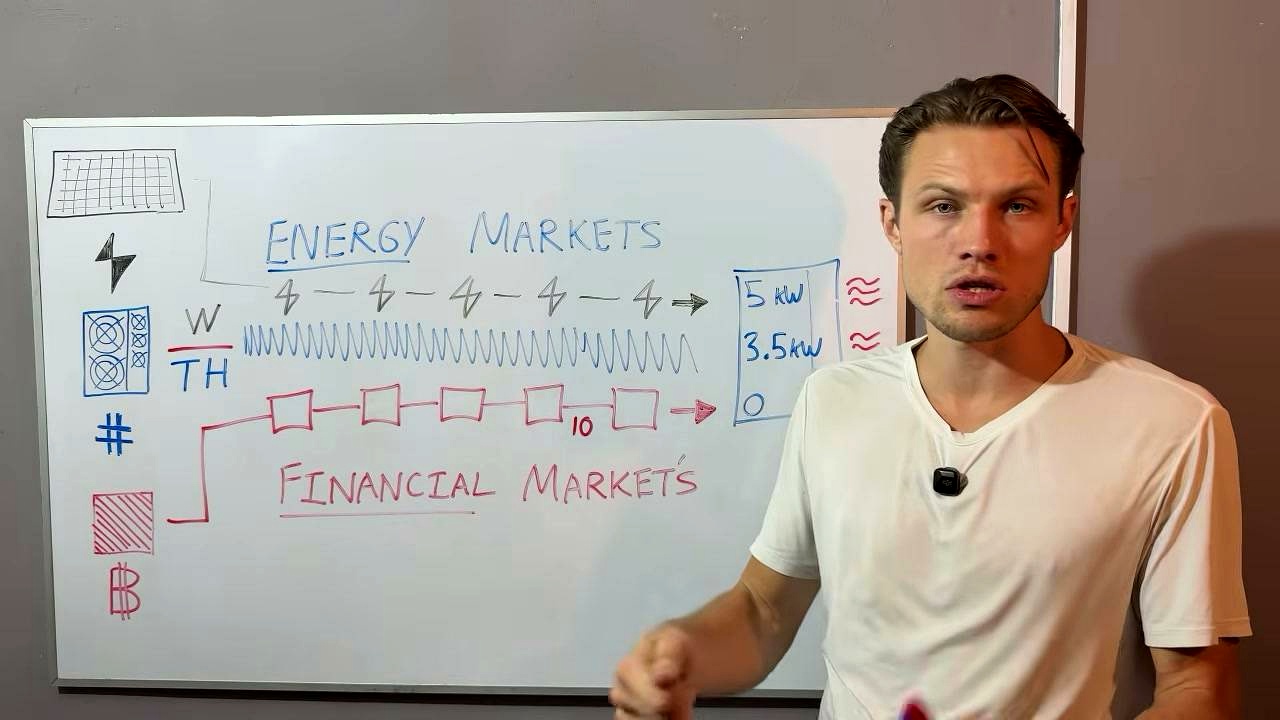
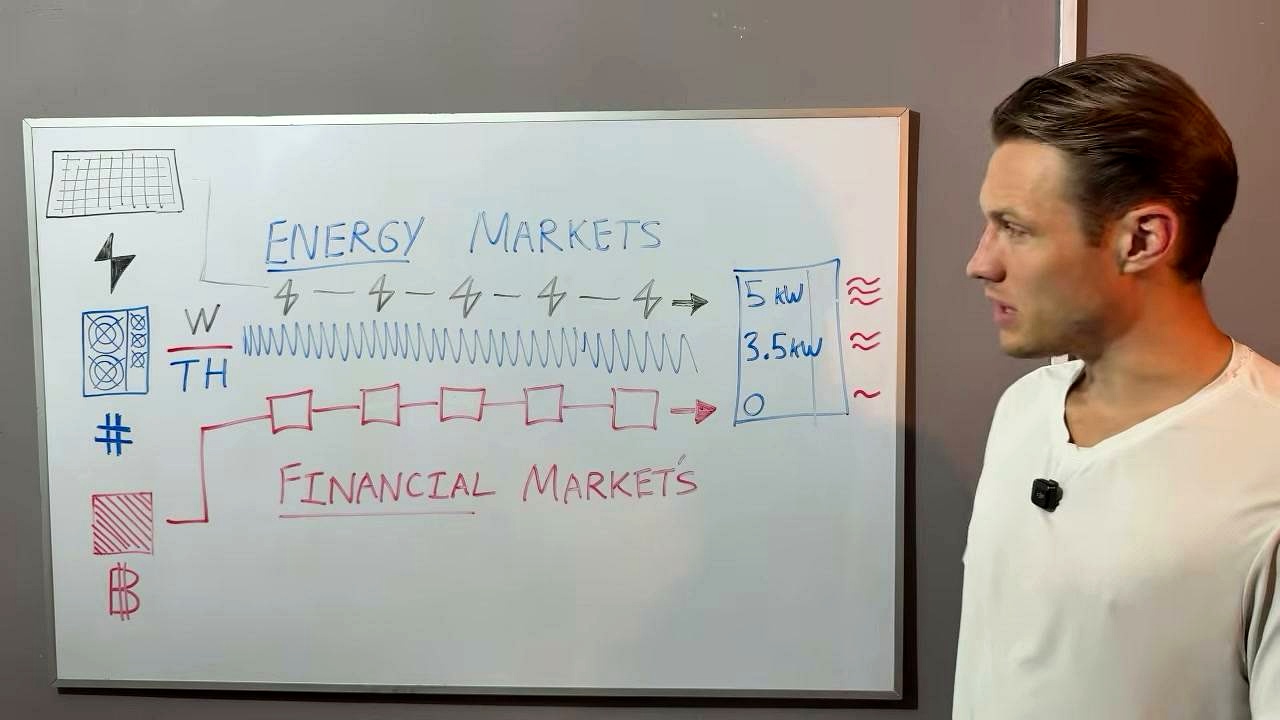
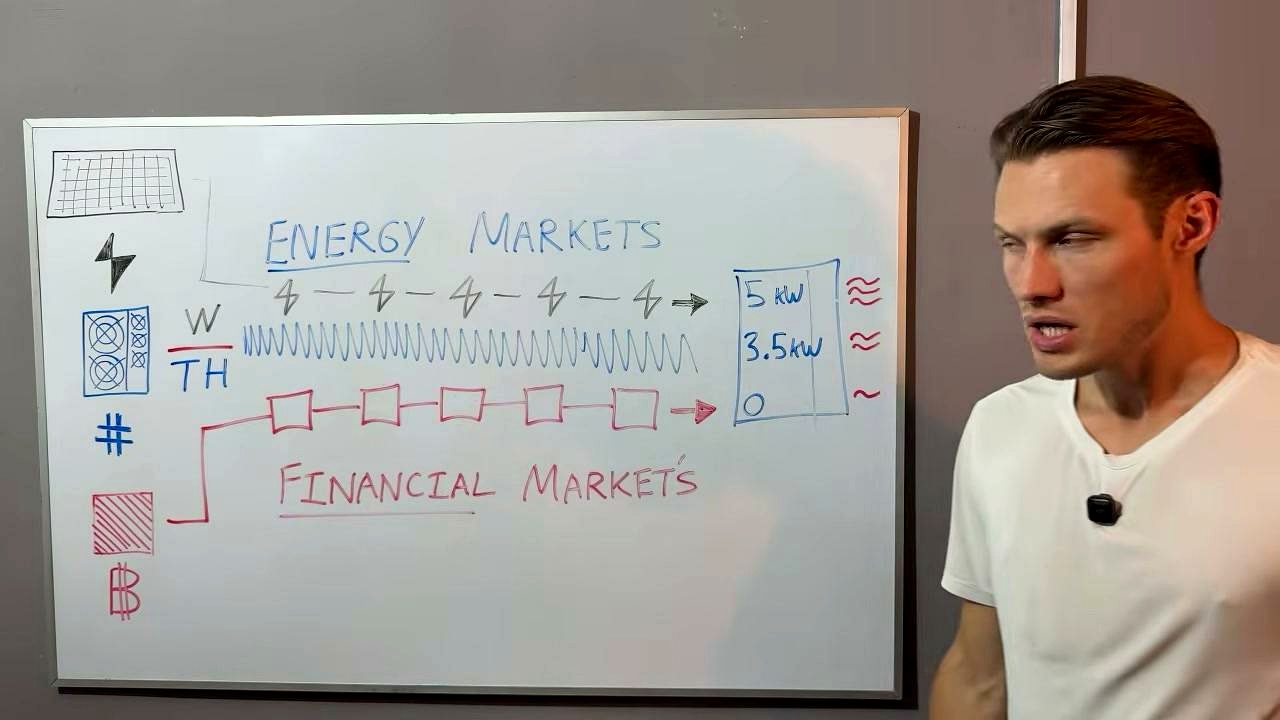
Hashpower Academy argues that Bitcoin miners are the ideal bridge because they are already connected to both markets: electricity and Bitcoin. In the host’s example, if Bitcoin mining offers a value of X for energy but the grid price rises to 2X, a rational operator should switch off mining and sell that contracted energy back into the grid. That sale, he argues, would help push energy prices lower and restore stability. In the opposite scenario, when there is excess generation, miners would buy more electricity and ramp consumption higher, supporting prices and absorbing oversupply.
This is essentially the flexible-load thesis that has become central to Bitcoin mining’s energy pitch. In places like Texas, that argument has already moved from theory to practice, with miners participating in demand response and curtailment programs. The host extends it further by saying the “future of Bitcoin” is the bridging of energy and financial markets, with energy eventually trading in Bitcoin per kilowatt-hour.
He also ties the proposal to Bitcoin’s long-running fee market debate. According to Hashpower Academy, recording energy trade directly on-chain could stimulate a fee market that is “currently dead, ” replacing what he dismisses as “pictures and tokens and coins” as a driver of blockspace demand. That point lands in an ongoing Bitcoin policy fight. One camp sees non-monetary data use as spam unless it supports durable security budgets. Another argues that if users pay market fees, blockspace should remain credibly neutral. The analyst is effectively carving out a third position: some non-payment data may be more socially valuable than others, and energy settlement should rank near the top.
The practical implementation remains undefined in the transcript. The host does not specify whether he means direct settlement on Bitcoin’s base layer, batched commitments, sidechains, Lightning-based coordination or periodic anchoring of external market data. That omission matters. Recording every energy trade on-chain would likely be unrealistic at scale, but anchoring high-value settlement data or audit trails to Bitcoin may be easier to imagine.
What Could Go Wrong
The biggest challenge to the thesis is not philosophical but architectural. Bitcoin’s base layer has scarce blockspace by design. If energy markets generated transaction volumes anywhere close to real-world commercial activity, pushing that data directly onto the chain could intensify fee pressure rather than cleanly solve the fee-market problem. In that sense, the proposal may conflict with one of Bitcoin’s core tradeoffs: security and decentralization over throughput.
There is also a governance and compliance problem. Electricity markets are local, regional and national systems with strict rules around metering, balancing, settlement finality and participant identity. Utilities, grid operators and regulators may have little appetite for moving critical infrastructure records onto an open, censorship-resistant blockchain, even if the security properties are attractive. Many would likely prefer permissioned systems with clear legal control.
The analyst also does not address privacy. Energy transaction data can reveal commercially sensitive information about industrial activity, production schedules and local demand patterns. Even if the records were pseudonymous, putting too much settlement metadata onto a public chain could create new risks.
Finally, the other side of the trade is simpler than Bitcoin advocates sometimes admit: miners can stabilize some grids under some market structures, but they are not automatically beneficial everywhere. In constrained regions, miners can also become large new loads that intensify political backlash, especially during periods of high retail prices or grid stress. If that perception hardens, the path from “flexible demand” to “energy market settlement rail” becomes much harder.
What to Watch Next

If this thesis is going to move beyond rhetoric, the next signals will not come from price charts but from infrastructure pilots. Watch for mining firms, grid operators or energy traders experimenting with Bitcoin-anchored settlement records rather than just curtailment agreements. Also watch the fee-market debate inside Bitcoin: if blockspace demand weakens outside episodic token and inscription bursts, pressure will grow for more durable, economically meaningful uses.
The concrete test is simple. Are miners merely balancing loads at the edge of the grid, or are energy counterparties starting to use Bitcoin as a final settlement or audit layer? The former is already happening. The latter would mark a much bigger shift.
FAQ
What is Bitcoin’s difficulty adjustment?
Bitcoin’s difficulty adjustment is the mechanism that changes how hard it is to mine a block so the network continues producing blocks roughly every 10 minutes. It is one of the system’s core stabilizers because it helps keep issuance predictable despite changes in total mining power.
Why do Bitcoin miners matter to electricity grids?
Miners can act as flexible electricity demand. Unlike many industrial users, they can often reduce or increase consumption quickly. That makes them useful in markets where grid operators need loads that can curtail during shortages and absorb excess generation when supply is high.
What does “Bitcoin per kilowatt-hour” mean?
It means pricing electricity directly in Bitcoin terms rather than in local fiat currency. In theory, that would link the value of energy and the value of mined Bitcoin more directly, though today most power contracts and wholesale markets still settle in fiat.
Would all energy transactions fit on Bitcoin’s blockchain?
Probably not on the base layer in raw form. Bitcoin has limited throughput, so large-scale energy settlement would more likely require batching, secondary layers or periodic anchoring of records to the main chain rather than every trade being written directly on-chain.
How is this different from the usual “Bitcoin mining helps renewables” argument?
The standard argument is operational: miners monetize excess or stranded energy and can improve project economics. Hashpower Academy’s thesis goes further by proposing that Bitcoin should also secure and settle the data behind energy trades, making it part of market infrastructure rather than just a power buyer.
Video Source

John Burnell focuses on Bitcoin infrastructure, wallet security and blockchain technology. He writes educational articles explaining how Bitcoin works and how the technology evolves.