Could Bitcoin be far below its long-term trajectory even after recovering recent losses? That is the tension at the center of a new discussion from Savvy Minds Connect, which highlights mathematician Fred Krueger’s view that BTC may still have room for a sharp move higher before settling back toward trend.
According to Savvy Minds Connect, Fred Krueger’s core call is straightforward: $500,000 for Bitcoin is possible next year, and if that does not happen then the year after is his fallback window. The argument is not built on short-term trading signals or market narratives. It is built on a long-term power law model that Krueger says continues to describe Bitcoin’s path with unusual consistency.
The headline forecast: $500,000 is possible before the model catches up
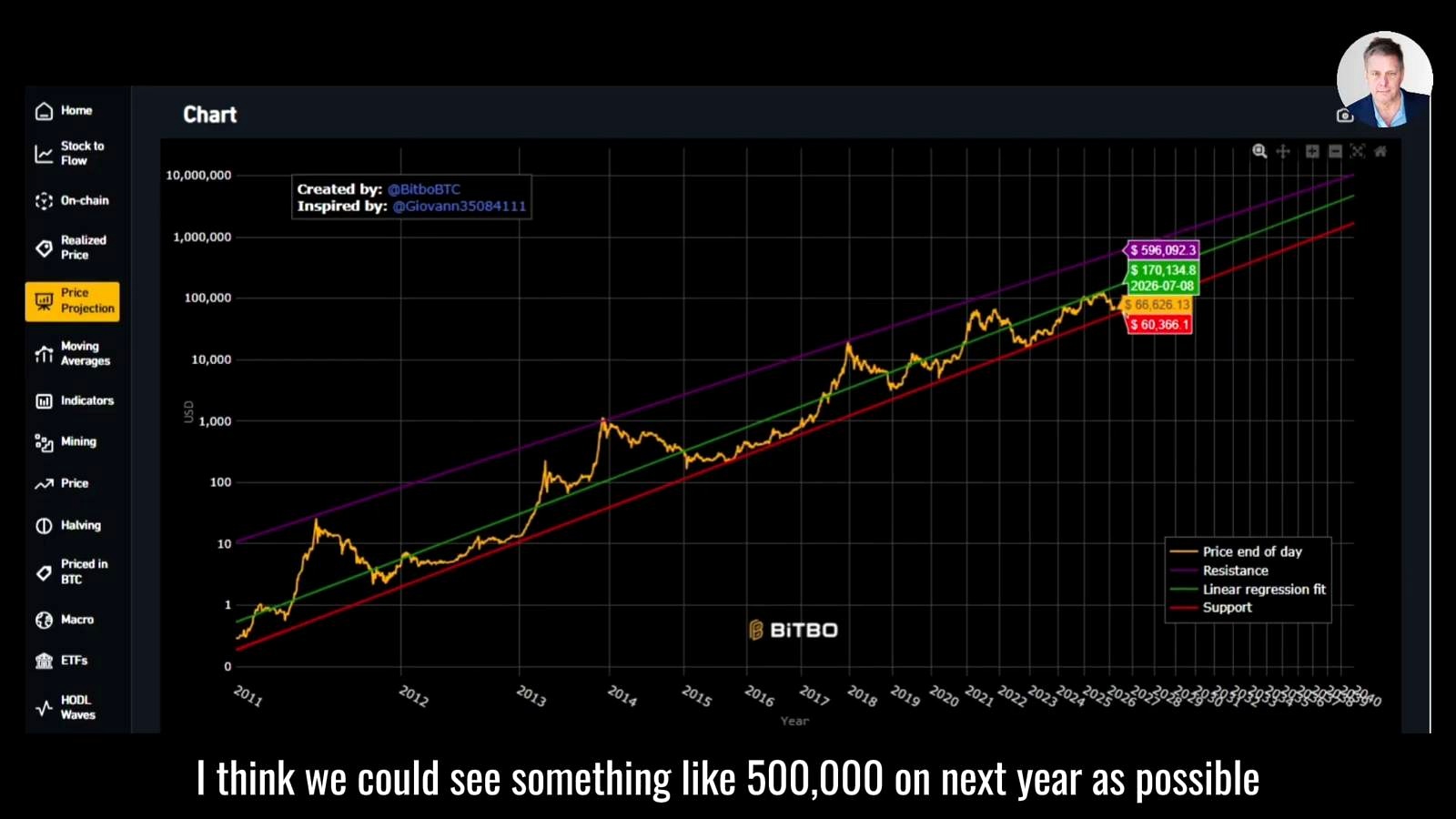
Savvy Minds Connect argues that Krueger sees Bitcoin as likely to “revert back” to its power law trend line over time, but not necessarily in a smooth way. In his framing, BTC can still overshoot meaningfully during a bull phase. That is where the $500,000 scenario comes in.
The host presents Krueger’s thinking as a two-part setup. First, Bitcoin’s long-term path remains intact. Second, bull markets can carry price well above the central trend line before any later normalization. Krueger therefore treats a move to $500,000 as plausible in the near-medium term even though the model’s baseline progression is slower.
That distinction matters. He is not saying the trend line itself reaches $500,000 next year. He is saying the market could swing above fair value during a strong cycle, then eventually return toward that line.
Why the power law model is central to the thesis
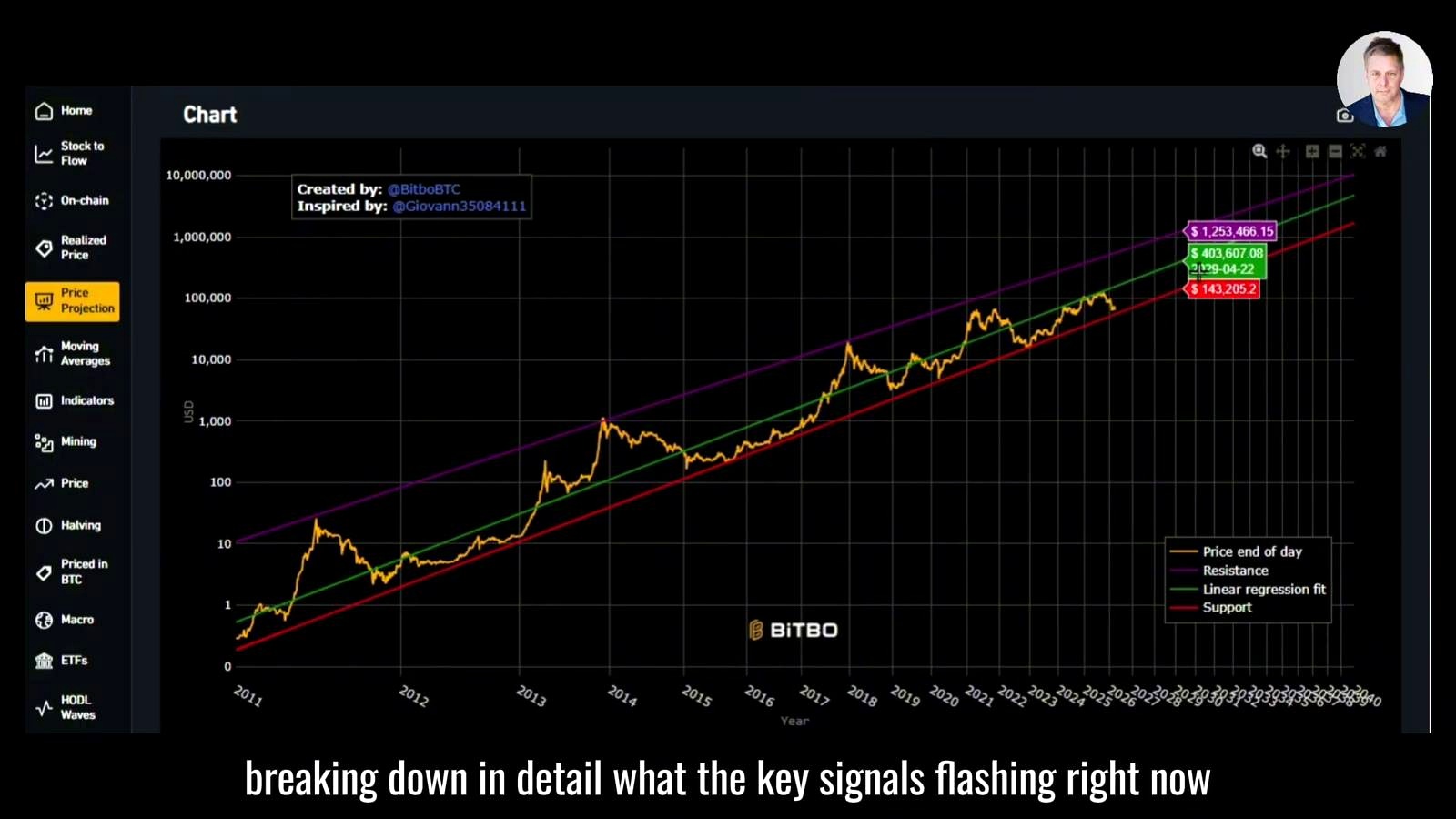
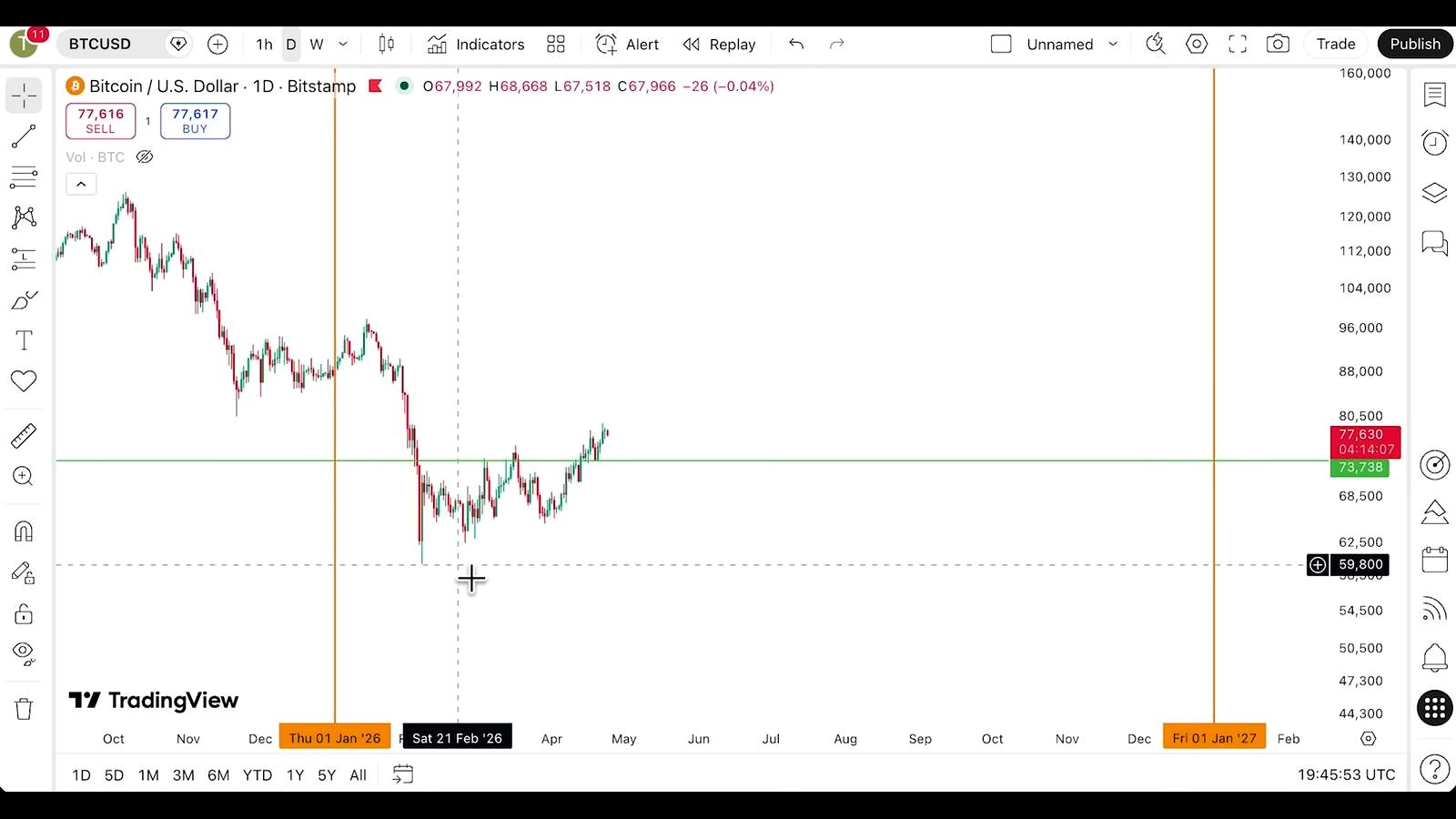
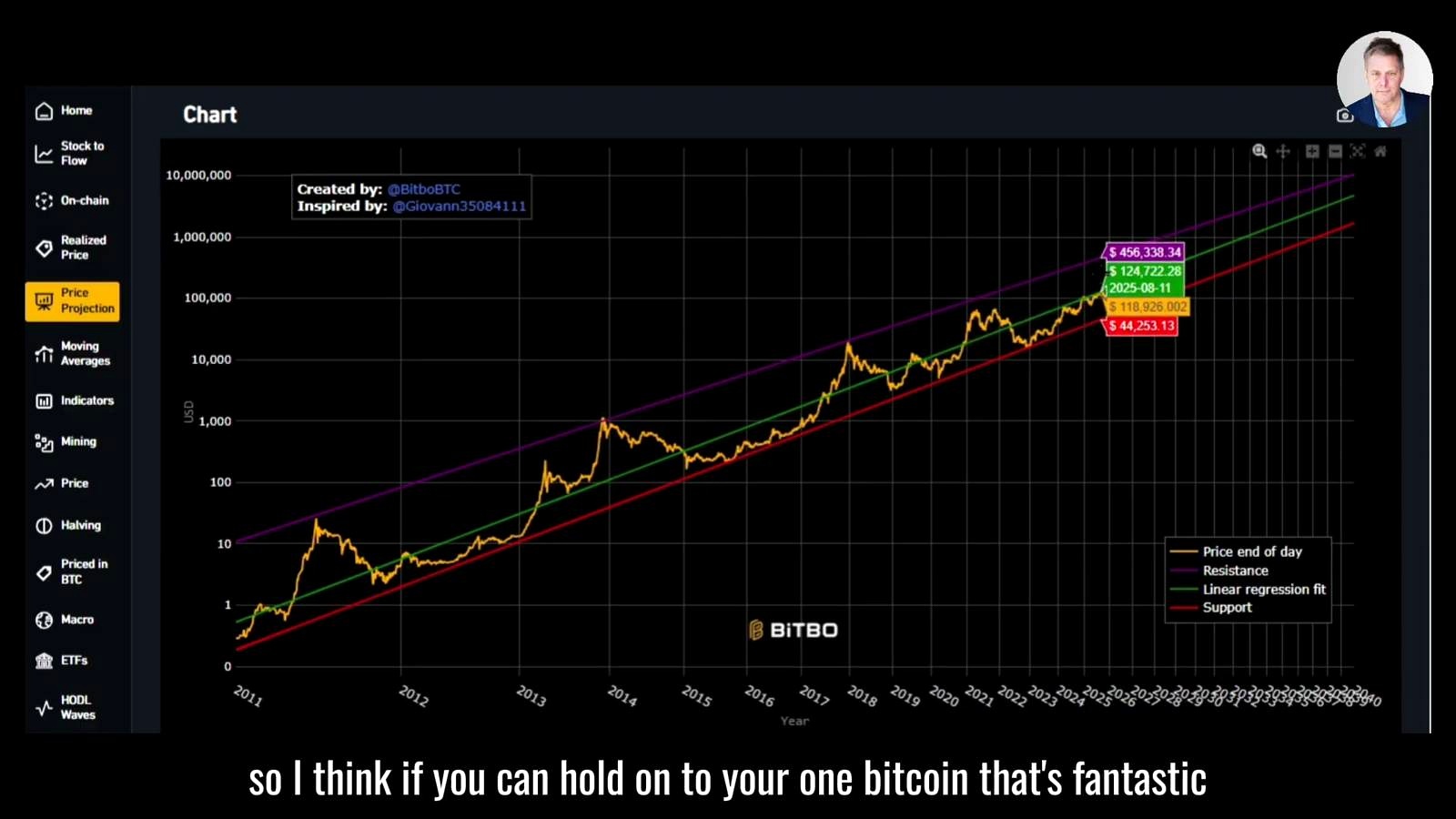
The analyst’s main evidence is the power law framework, especially when Bitcoin’s price is viewed on a logarithmic scale and averaged over four years. Krueger describes that smoothed chart as close to deterministic. He says he does not know what Bitcoin will do next week, next month, or even next year, but he expresses strong confidence in the longer-term log-price trend.
In this telling, the model is not meant to be bullish or bearish. Krueger insists it is simply a read of the data. That is a key part of the presentation on Savvy Minds Connect: the case is framed less as a discretionary opinion than as a mathematical structure that, in his view, has not broken.
His confidence rests on the idea that nothing in the chart suggests the long-duration pattern has materially changed. That is why he treats deviations from trend as temporary, while the trend itself remains the anchor.
Where the model places bigger milestones
One of the more striking parts of the discussion is how Krueger separates baseline model values from upside deviations during euphoric phases.
- $250,000: the model reaches this level in June 2028
- $1 million: the “absolute earliest” path is 4 years from today
- $1 million: a more likely case is around 7 years from today at 1 standard deviation
- $1 million: the “realistic model” is the trend line in 10 years
- 2 standard deviations: from a $250,000 baseline, that could imply $1 million
Those numbers show the tension inside the thesis. Krueger’s base model is slower and steadier, but he also allows for major upside departures from trend during bull markets. That is how a near-term $500,000 possibility can coexist with a trend-line estimate of $250,000 in June 2028.
The return assumptions behind the accumulation argument
Savvy Minds Connect says Krueger views Bitcoin less as a quick trade and more as a long-duration compounding asset. He cites a model-based opportunity for investments made over the next 10 years to increase by roughly 15x.
Krueger gives a simple example: $100,000 invested could become $1.5 million. He does not portray that as instant wealth. Instead, he frames it as a substantial increase driven by long-term appreciation.
He also says that if someone has steady cash flow and continuously converts part of it into Bitcoin, the relevant growth assumption is around 35% to 40% compounded annual return. On that basis, his preferred behavior is accumulation and holding rather than active selling.
He makes one exception. If Bitcoin were to reach roughly 2x the trend line, he says trimming “some little bit” would make sense. Outside of that, his bias is firmly toward staying invested.
Why one Bitcoin matters in this framework
Another notable part of the interview is Krueger’s answer to a common question: how much Bitcoin is “enough”?
The host says Krueger’s benchmark answer is 1 BTC. His reasoning starts with Bitcoin’s hard cap of 21 million. In theory, only 21 million people could ever own one full coin. In practice, he argues the number is closer to 10 million once institutionally held coins and lost coins are factored in.
That scarcity argument leads to a longer time horizon. Krueger says one Bitcoin could make someone “completely rich” only if they wait around 20 years. That is consistent with the broader message of the interview: the biggest gains come from patience, not from trying to time every move.
What this model does not claim to predict
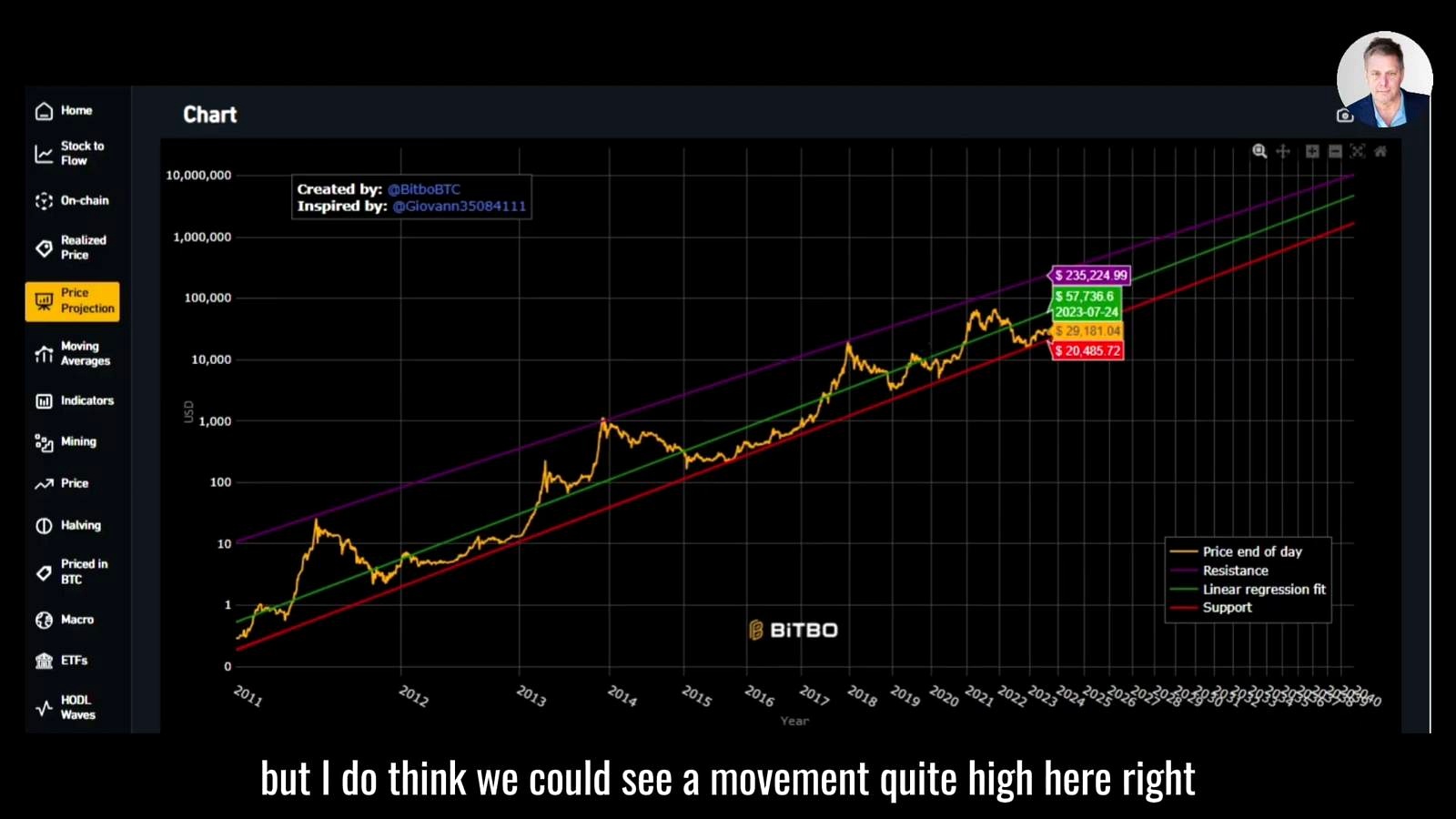
For all of the bullish price talk, Savvy Minds Connect also highlights an important limitation. Krueger says the power law does not explain every short-term force in the market. He specifically says it does not tell investors anything about a gamma squeeze or other near-term catalysts. It speaks to the trend, not every burst of volatility around it.
That is why his framework leaves room for uncertainty in timing while still claiming confidence in direction. In his words, bear markets can come and go, but the longer-term path remains the point of conviction.
What to watch next
The next key issue is whether Bitcoin begins to trade materially above its central power law path during the next bull phase. In Krueger’s framework, that would be the setup that makes a $500,000 run conceivable before the market returns toward trend.
Three markers stand out from the discussion:
- Whether BTC continues to hold the territory it has recovered over the last 4 years
- Whether price starts moving toward a major premium over the trend line
- Whether the market starts behaving like a classic overshoot cycle rather than a simple grind toward the model’s baseline targets of $250,000 and eventually $1 million
For now, Savvy Minds Connect presents Krueger’s thesis as a high-conviction long-term bet with a potentially explosive upside window layered on top. The bold part is the $500,000 timing. The foundation is the same throughout: Bitcoin’s power law trend, in his view, is still intact.
FAQ
What exact Bitcoin price targets were mentioned?
The transcript gave several specific figures: $250,000, $500,000, and $1 million. It also included a model-based return estimate of 15x, an annualized growth range of 35%,40%, and an example of $100,000 growing to $1.5 million.
Did Krueger say $1 million is imminent?
No. The earliest timeline he gave for $1 million was 4 years from today. He then said 7 years was more likely at 1 standard deviation, while the trend-line version of that target was about 10 years out.
Why does he think one full Bitcoin is meaningful?
His point is about scarcity. Bitcoin’s supply is capped at 21 million, but he says the effective number of people who could realistically own 1 BTC is closer to 10 million after accounting for lost coins and institutional holdings.
What is the difference between the trend line and the bull-market target?
The trend line is Krueger’s estimate of fair-value progression over time. The bull-market target reflects a possible overshoot above that baseline. In other words, $250,000 by June 2028 is a model waypoint, while $500,000 next year is a cyclical upside possibility.
Does this framework cover short-term trading moves?
Not really. Krueger explicitly says he cannot predict next week or next month, and that the power law does not account for short-term mechanics like a gamma squeeze. His framework is aimed at multi-year direction, not day-to-day setups.
Video Reference

John Burnell focuses on Bitcoin infrastructure, wallet security and blockchain technology. He writes educational articles explaining how Bitcoin works and how the technology evolves.