A new report points to a major shift in Bitcoin’s institutional story. After months of drawdown and market volatility, large institutions appear to be moving toward broader digital asset adoption, with growing interest in Bitcoin exposure through regulated products.
The findings center on a survey from EY Parthenon and Coinbase that highlights accelerating institutional interest, a stronger focus on spot cryptocurrency exposure, and the growing importance of regulatory clarity. With institutions managing about $70 trillion of assets, the trend is drawing increasing attention.
Institutional Bitcoin Adoption Is Picking Up

According to a CNBC segment featuring reporter Mackenzie Sigalos, institutional crypto adoption may continue gaining momentum despite a lull in markets. The report was released by EY Parthenon and Coinbase and surveyed 351 institutional decision makers.
The survey was conducted in January and showed that institutions remained disciplined during a volatile period for digital assets. That disciplined approach included careful attention to risk, governance, and how exposure is obtained.
What Institutions Are Looking For
EY Parthenon managing director Pashant K said institutions were focused in their investment approach in 2025, and that as they move into 2026, interest in spot cryptocurrency exposure becomes very clear.
The preferred access routes are familiar, regulated structures.
- ETFs
- Exchange traded products
- Regulated vehicles
These structures are seen as more familiar to institutional investors, especially as they continue to emphasize risk management and governance across the asset class.
The Survey Highlights a Stronger Allocation Trend

One of the most notable findings in the survey is the expected rise in firms allocating more than 5% of assets under management to digital assets. That figure is projected to increase from 18% to 29% by the end of 2026.
This points to a meaningful shift from small exploratory allocations toward more significant positioning.
Breakdown of Expected Allocations
Among respondents who are not currently invested in digital assets, future allocations are expected to fall into the following ranges:
- Less than 1%: 38% of respondents
- 1% to 5%: 47% of respondents
- 6% to 10%: 9% of respondents
The broader takeaway is that institutions appear to be moving off zero. The report suggests that 2025 was largely a period of evaluation and research, while 2026 looks more like the year when institutions begin putting meaningful portions of portfolios into Bitcoin and digital assets.
Why Regulatory Clarity Matters So Much

The survey points to regulatory clarity as the biggest factor behind larger institutional allocations toward digital assets. Specifically, the key areas are market structure and tax treatment.
As investors see more focus and clarity in those areas, that is expected to act as a signal to allocate more capital.
What Is Driving Adoption
- Clearer regulation
- Better defined market structure
- More clarity around tax treatment
- Growing confidence in long-term adoption
- Access through regulated investment vehicles
The report’s highlights state that institutional interest in digital assets is accelerating as markets mature and confidence in long-term adoption grows. It also says regulatory progress and regulated vehicles are unlocking broader participation and bringing digital assets further into the financial mainstream.
From Access to Application

Another theme in the report is that attention is shifting from access to application. The focus is moving toward infrastructure, tokenization, and practical use cases.
That suggests institutions are no longer only asking whether they should enter the space. They are increasingly focused on how to build products, how to implement exposure safely, and how to participate without damaging customer trust or internal governance standards.
What This Shift Looks Like
- Study and evaluate Bitcoin and digital assets
- Choose familiar regulated vehicles for exposure
- Build internal governance and risk frameworks
- Expand toward infrastructure and tokenization
- Develop practical products and use cases
The Scale Behind the $70 Trillion Figure

The survey polled more than 350 institutional investors globally, including asset managers, asset owners, family offices, private banks, hedge funds, and VC firms. While it is not fully all-encompassing, it covers a broad spectrum of institutional capital.
That is where the $70 trillion number comes into focus. Institutions are described as managing about $70 trillion in assets, which underscores how much capital is potentially watching Bitcoin and preparing to increase exposure.
The report does not say that all of that capital will move into Bitcoin. But it does show that large institutions are taking the asset class more seriously and that planned allocations are increasing.
How Institutions Prefer to Get Exposure
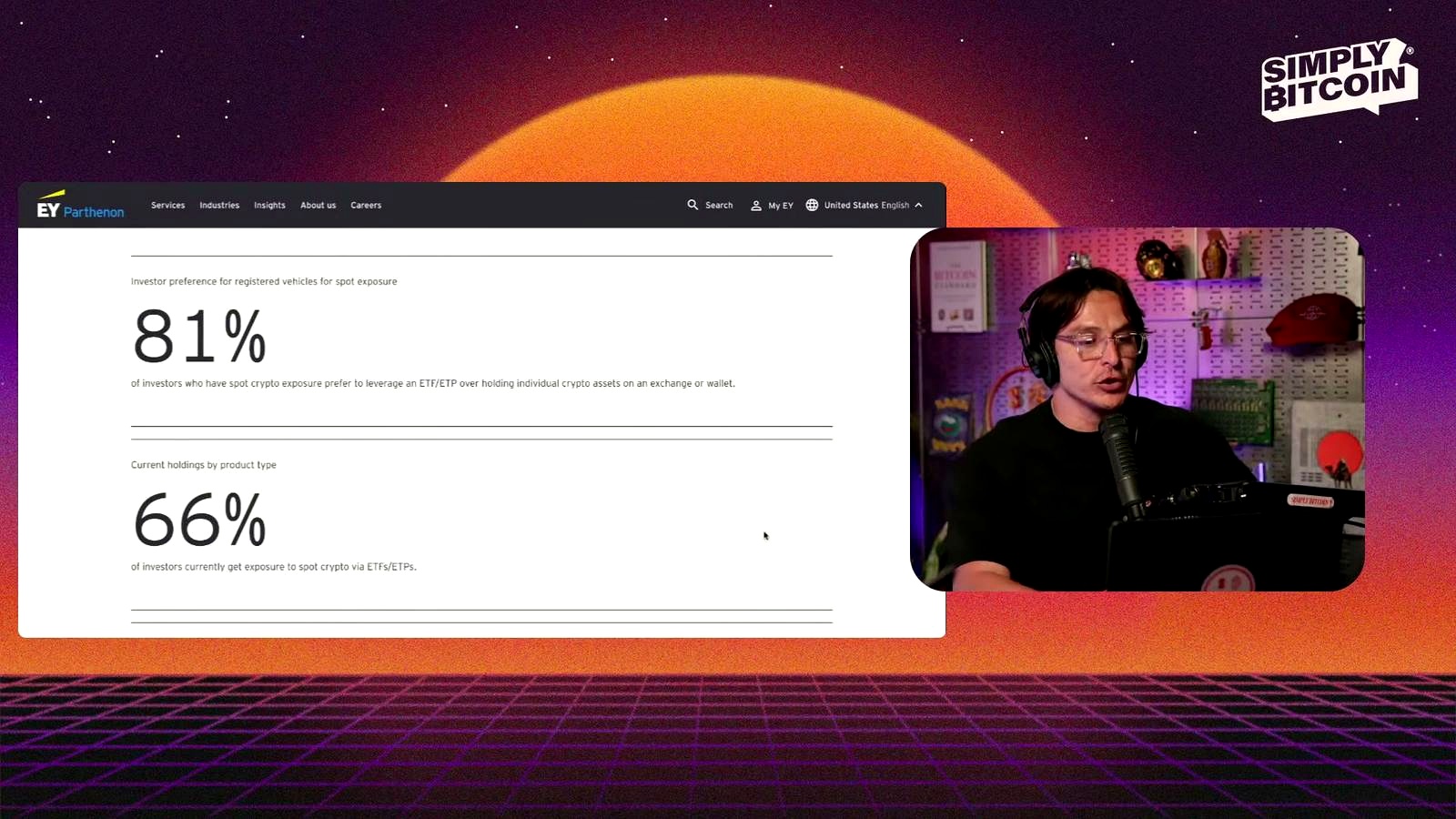
The data also shows a strong institutional preference for registered vehicles rather than direct holdings.
Preferred Forms of Spot Exposure
- 81% prefer registered vehicles for spot exposure
- 66% are basically buying ETFs
- 36% hold spot Bitcoin or spot crypto directly
That preference aligns with the broader institutional focus on regulated access, familiar structures, and managed custody arrangements rather than direct self-custody.
Bitcoin Supply and Institutional Demand

The discussion around the report also highlighted a tightening supply picture. It was noted that the amount of Bitcoin being bought daily by Strategy and Metaplanet is more than the amount of Bitcoin being actively mined on a weekly basis.
The argument presented is that this creates the conditions for an incoming supply shock, especially as more institutions move from research and evaluation into active allocation.
Why Supply Stands Out
- Bitcoin mined daily stays the same regardless of price
- The amount mined gets cut in half every four years
- Some companies are already buying more than new supply
- Institutional interest is increasing at the same time
The combination of growing institutional demand and fixed issuance is presented as one of the most important dynamics behind Bitcoin’s next move.
Current Bitcoin Market Snapshot

At the time of recording, the market figures shared in the discussion were as follows:
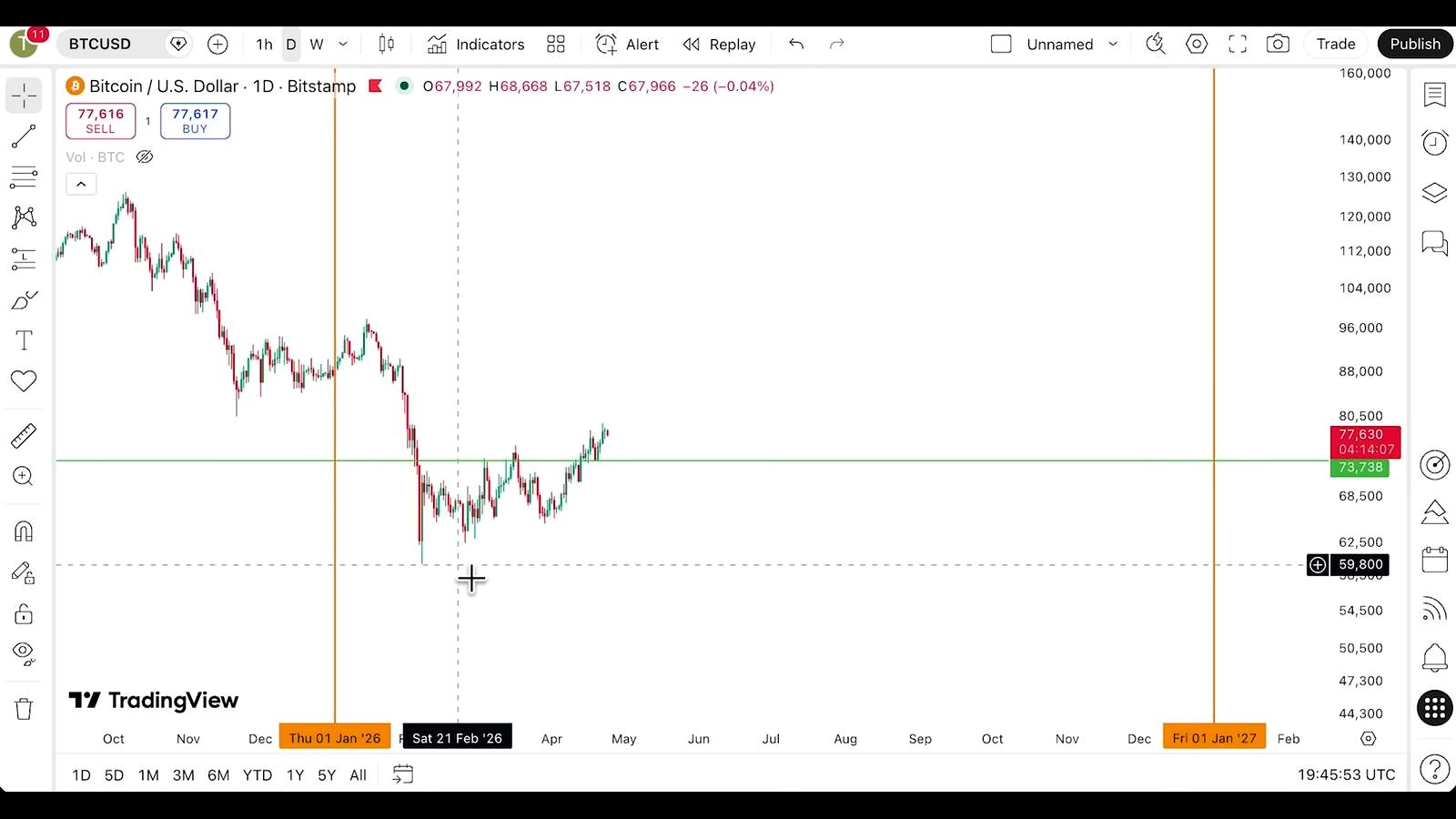
- Bitcoin price: $69,880
- Block height: 941,453
- Realized monetary inflation: 0.83%
- Bitcoin market cap: $1.4 trillion
- Bitcoin versus gold market cap: 4.66%
- Percentage issued: 95.25%
- Decline from all-time high: 44.6%
These figures were used to frame the current market as a period where Bitcoin remains below its all-time high while institutional interest continues to build in the background.
The Clarity Act and the Push for Market Structure

The discussion also turned to the Clarity Act, a legislative effort tied to digital asset market structure. Senator Lummis said the goal is clear rules, clear regulations, and clear jurisdiction, and that it is time to get digital asset market structure across the finish line.
She said the bill is expected to be marked up in April after the Easter recess, with efforts focused on bipartisan support and reaching more than 60 votes in the Senate.
Challenges Around the Clarity Act
The main issue described in the discussion is that large banks do not want stablecoins or exchanges paying yield, interest, or dividends to users holding assets such as USDC. That point was described as one of the key speed bumps in getting the legislation passed.
At the same time, the broader case for clarity remains central to institutional adoption. The more defined the rules become, the more comfortable institutions appear to be with increasing Bitcoin exposure.
Institutional Confidence Appears to Be Growing
The overall tone of the survey and discussion is that Bitcoin is no longer being treated as something institutions can ignore. Large firms are studying it, building products around it, and preparing for greater participation through familiar regulated channels.
There is also a growing view that 2026 may be the year that real institutional money starts entering the space in a more visible way. That follows the period in 2025 when firms were evaluating Bitcoin, researching it, and deciding how much to allocate.
FAQ
What did the EY Parthenon and Coinbase survey find?
The survey found that institutional interest in digital assets is accelerating as markets mature and confidence in long-term adoption grows. It also found that firms allocating more than 5% of assets under management to digital assets are expected to rise from 18% to 29% by the end of 2026.
How many institutional decision makers were surveyed?
The report covered 351 institutional decision makers, and the broader discussion also referenced polling more than 350 institutional investors globally.
What kinds of institutions were included in the survey?
The survey included asset managers, asset owners, family offices, private banks, hedge funds, and VC firms.
Why is regulatory clarity so important for Bitcoin adoption?
According to the survey discussion, regulatory clarity is the biggest factor behind larger allocations to digital assets. The most important areas mentioned were market structure and tax treatment.
How do institutions want to gain Bitcoin exposure?
Institutions are primarily looking for spot cryptocurrency exposure through ETFs, exchange traded products, and other regulated vehicles.
Are institutions holding Bitcoin directly?
Some are, but the survey data cited shows that 81% prefer registered vehicles for spot exposure, 66% are basically buying ETFs, and 36% hold spot Bitcoin or spot crypto directly.
Why is 2026 being highlighted?
The discussion suggests that 2025 was the year institutions studied and evaluated Bitcoin, while 2026 is shaping up as the year they begin making more significant allocations.
What is the significance of the $70 trillion figure?
It refers to the scale of assets managed by institutions discussed in connection with the report. The figure highlights how much capital could be influenced by shifting institutional sentiment toward Bitcoin.
Video Reference

An Indian crypto journalist covering the developments in the Bitcoin and blockchain industries. Her work helps readers understand key changes in the world of digital assets.